
Experts Matter. Find Yours.
Connect for media, speaking, professional opportunities & more.

Maureen Leffler, D.O., Named ChristianaCare’s Chief Wellbeing Officer
Maureen “Mo” Leffler, D.O., MPH, has been appointed chief wellbeing officer of ChristianaCare, effective Nov. 25. In her role, Leffler leads the ChristianaCare Center for WorkLife Wellbeing and strategies to enhance the professional fulfillment and well-being of ChristianaCare’s nearly 14,000 caregivers, overseeing advocacy programs and initiatives to optimize their experience and foster a culture of well-being throughout the organization. She works closely with leaders across key departments to address factors impacting caregiver well-being. Leffler most recently served as the inaugural chief wellbeing officer at Nemours Children’s Health, where she helped the organization to achieve the 2022 Joy in Medicine distinction from the American Medical Association for prioritizing proven efforts to enhance the professional fulfillment of physicians. There, she established a Center for Associate Wellbeing; led the first systemwide assessment to strategically address well-being and burnout; and implemented a peer support program and expanded the scope of resources available to support the emotional and mental health needs of employees. In collaboration with organizational leaders, she supported targeted clinical team assessments and systems-based interventions to foster well-being. Prior to this role, Leffler served as a pediatric rheumatologist at Nemours and as an assistant professor of pediatrics in the Division of Rheumatology at Thomas Jefferson University. Since 2017, Leffler has served as the course director of the Chief Resident Leadership Training Program for the Accreditation Council for Graduate Medical Education (ACGME). In response to the COVID-19 outbreak, she co-chaired ACGME’s National Task Force on Well-Being. She and her team developed a national graduate medical education well-being community, which she continues to convene, to understand the evolving challenges and share strategies to improve well-being. She represents the ACGME as a coach for the National Academy of Medicine Action Collaborative on Clinical Well-Being and Resilience. She also serves as a consultant to the Professional Satisfaction team at the American Medical Association. Leffler earned her medical degree from the Philadelphia College of Osteopathic Medicine, followed by a residency in pediatrics at Nemours and Thomas Jefferson University Hospital, where she served as chief resident. She subsequently trained in pediatric rheumatology at Nemours and Jefferson. She also earned a Master of Public Health from Temple University and studied chemistry at St. Joseph’s University. Recently, Leffler completed the Georgetown Executive Leadership Certification Program.


ExpertSpotlight: The History of Presidential Pardons in America
Presidential pardons have long been a cornerstone of executive power in the United States, granting the president the ability to forgive federal offenses. Rooted in the Constitution and modeled after the British royal prerogative, this authority has sparked significant legal and ethical debates since the nation’s founding. Understanding the history and implications of presidential pardons provides insights into American governance, justice, and the balance of power. This topic presents compelling opportunities for journalists to delve into its historical and contemporary significance. Key story angles include: Origins of the Presidential Pardon: Exploring how and why the pardon power was enshrined in the Constitution, including influences from English law and debates among the Founding Fathers. The First Presidential Pardon: Detailing the story of George Washington’s 1795 pardon of participants in the Whiskey Rebellion and its impact on shaping the use of executive clemency. Controversial Pardons in History: Investigating high-profile pardons, such as those granted by Presidents Andrew Johnson, Gerald Ford, and Donald Trump, and their political and social ramifications. Legal and Ethical Perspectives: Examining what legal scholars and historians say about the scope of pardon power, including debates over its limits and potential for misuse. Pardons and Social Justice: Highlighting cases where pardons were used to address systemic injustices, such as civil rights-era convictions or drug-related offenses. Comparing Global Practices: Analyzing how the U.S. approach to executive clemency compares to pardon systems in other democracies and the broader implications for justice. The history and evolution of presidential pardons open the door to meaningful discussions about justice, accountability, and the executive branch’s influence, offering journalists a wealth of perspectives to explore. Connect with an expert about the History of Presidential Pardons in America: To search our full list of experts visit www.expertfile.com

NYS Elected Officials Worry About Retribution
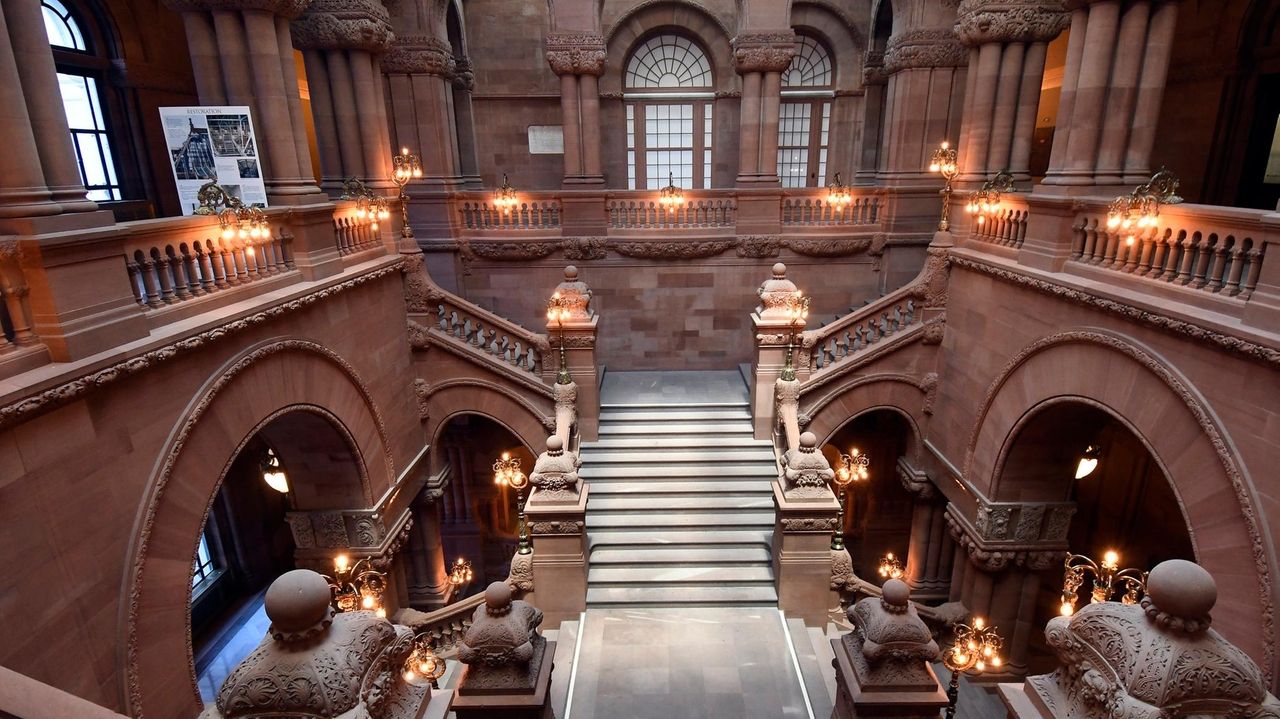
Meena Bose and Lawrence Levy were interviewed for the Newsday article, “NYS Democrats facing a red reality with Trump’s return to power.” New York Democrat officials worry that President-Elect Trump’s return to office may have consequences for federal aid, environmental and public health regulations, and immigrants and marginalized groups. “New York residents and those of others in blue states that again weren’t hospitable to Trump have to hope that he and his allies won’t declare a war of retribution,” said Dean Levy. “If nothing else, it could punish millions of Republicans who live in the same neighborhoods as the Democrats who voted against him.” Dr. Bose added that states have a better chance under the U.S. Constitution to push back on federal measures involving reproductive rights, but less legal authority to fight the White House or Congress on immigration and environmental issues that require national policies. Dr. Bose is a Hofstra University professor of political science, executive dean of the Public Policy and Public Service program, and executive director of the Kalikow Center for the Study of the American Presidency. Lawrence Levy is associate vice president and executive dean of Hofstra’s National Center for Suburban Studies.



ExpertSpotlight: The True History of Thanksgiving in America
Thanksgiving is often seen as a time for gratitude and togetherness, but its origins tell a far more complex story that intertwines indigenous history, colonialism, and the reshaping of cultural narratives. Understanding the true history of Thanksgiving invites reflection on the ways history is remembered, celebrated, and taught. As the holiday approaches, uncovering its deeper meaning is vital to fostering awareness of indigenous perspectives, historical accuracy, and the evolution of American traditions. This topic presents rich opportunities for journalists to explore its broader societal implications, with story angles including: Indigenous Perspectives on Thanksgiving: Highlighting how Native American communities view the holiday, including the National Day of Mourning and efforts to preserve indigenous cultures and histories. The Pilgrim-Indian Narrative: Investigating the historical accuracy of the widely taught Pilgrim-Indian story and its role in shaping American identity and myth-making. The Role of Thanksgiving in National Unity: Exploring how Thanksgiving was solidified as a national holiday during the Civil War and its significance in fostering unity amid division. Food, Culture, and Tradition: Examining how Thanksgiving has evolved as a culinary and cultural tradition, including the blending of indigenous and immigrant foodways. Education and Historical Accountability: Analyzing how schools and institutions teach the history of Thanksgiving, with efforts to address inaccuracies and promote indigenous voices. Thanksgiving and Modern Social Issues: Investigating the holiday’s intersection with modern challenges, such as food insecurity, consumerism, and environmental sustainability. Revisiting the history of Thanksgiving offers a chance to deepen public understanding of American history, honor indigenous contributions, and spark meaningful conversations about cultural heritage and national identity. Connect with an expert about the History of Thanksgiving: To search our full list of experts visit www.expertfile.com

The ISS is Leaking! What Happens Now? Florida Tech's Don Platt Can Explain
There's an issue on the International Space Station (ISS) that is becoming a growing concern for both the Russian and American space programs. The ISS is leaking, and the matter is rightfully getting attention from media around the world. The reporters looking for answers are connecting with Florida Tech's Don Platt to explain what exactly is happening and what it means for the future of this $100 billion facility. Dr. Platt's work has involved developing, testing and flying different types of avionics, communications and rocket propulsion systems. He teaches about space systems. The problem exemplifies how NASA is contending with aging but critical space infrastructure: The orbiting laboratory, with a living area larger than a six-bedroom house, is the agency's only way to learn about health impacts to astronauts, develop or test life support systems for future missions, and advance a plethora of space technologies. NASA wants to keep it running until 2030 — but doing so will require constant surveillance and, literally, patching. "It's an old station, and it has done some amazing things," Don Platt, an associate professor of space systems at Florida Tech, told Mashable. Mashable, Nov. 19 Local television and national networks like NPR were also seeking Platt's expert insights. NASA and Russian space officials are at odds over the significance of a long-standing air leak aboard the International Space Station. The leak, originating from a Russian module, has reportedly persisted for about five years. Don Platt, an associate professor at the Florida Institute of Technology, explained the potential risks. “There’s definitely concerns about this leak and the potential for it to get worse over time,” Platt said. While NASA views the issue as a serious safety concern, Moscow insists the situation is under control and the module is safe. “NASA is quite concerned about it, and the Russians are more or less saying, ‘We have it under control. Don’t worry about it,’” Platt said. The affected module is one of the oldest on the station, having been operational for more than 20 years. “One of the Russian modules on the space station, one of the oldest, is starting to lose some of the air that astronauts need to breathe,” he said. November 18 - NBC News The coverage featuring Platt's insight is also being carried by Russian media and news sites. Are you following this developing story? Let us help with your coverage. Dr. Don Platt's work has involved developing, testing and flying different types of avionics, communications, rocket propulsion systems as well as astrobiology/biotechnology systems and human deep space exploration tools. Don is available to speak with media. Simply click on the icon below to arrange an interview today.


Is America Not Ready for a Woman President?
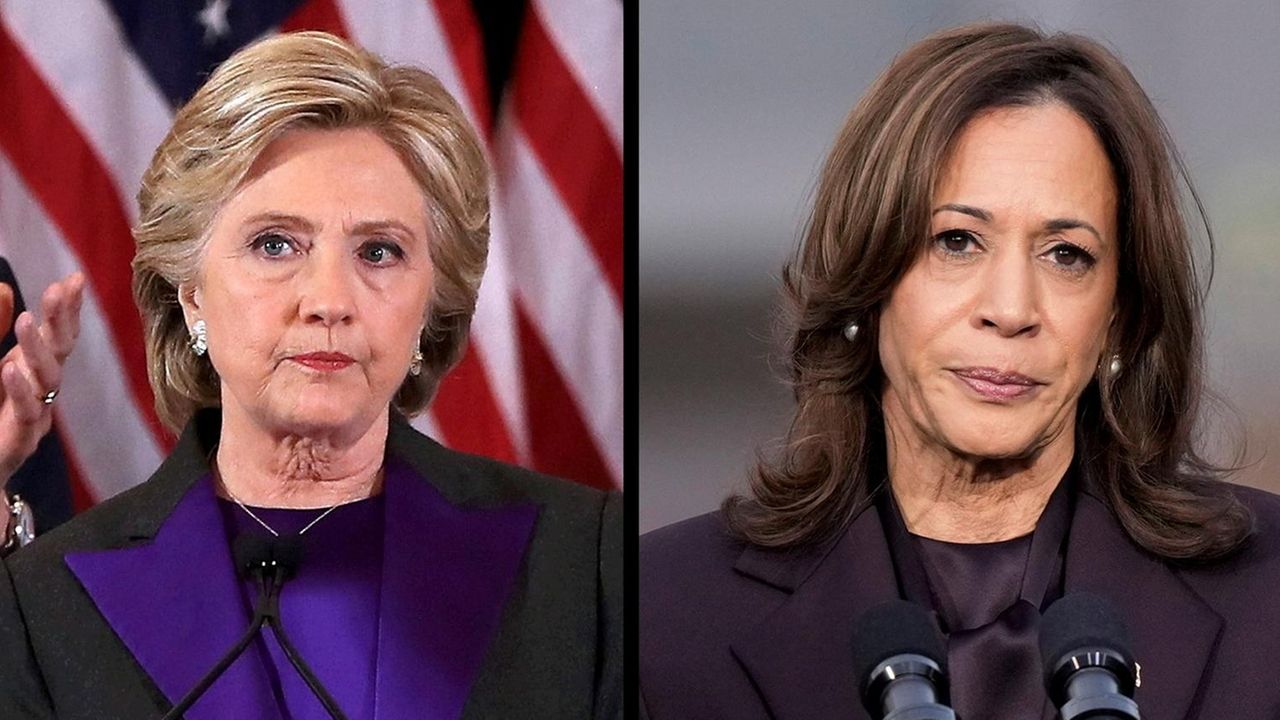
Newsday interviewed Dr. Meena Bose for the article, “After Kamala Harris loses, is America just not ready for a woman to be president? Experts say it’s not that simple.” Dr. Bose said that while gender may have played a role in Harris’ defeat, it’s the “not the dominant explanation” for Trump’s victory. “I don’t think that 2024 is a referendum on whether a woman can be president,” she said. “That’s not the dominant message here. The dominant message really is the economy and immigration. And for multiple reasons, the Democratic agenda was less persuasive to voters than the Republican agenda.” Dr. Bose is a Hofstra University professor of political science, executive dean of the Public Policy and Public Service program, and executive director of the Kalikow Center for the Study of the American Presidency.

Former President Donald Trump was re-elected as the 47th president of the United States. He will be only the second president to serve two nonconsecutive terms—the first being Grover Cleveland in the 1800s. Much of the country shifted right this election cycle, resulting in Trump earning the electoral vote and the popular vote. This is the first time the Republican candidate has the earned the popular vote since 2004, during George W. Bush's reelection campaign. Political expert, Dr. Mark Caleb Smith focused in on how the Christian vote may have affected this outcome.In a recent Christianity Today article, Dr. Mark Caleb Smith provides some insight into how Christians voted in the most recent election. Here are some key points from the recent article: President Joe Biden is a lifelong Catholic, but since he dropped out of the presidential race, many Catholics voted for Trump rather than Vice President Kamala Harris. How did the Catholic vote for Trump shift from the last election? Trump's victory seems to indicate the importance of economics for American voters. Did Trump's economic policies sway the votes of evangelicals, rather than his stances on social issues like abortion? Although Trump had the majority of the evangelical vote, there is still a minority that rejects Trump on account of his character and tone. Did these voters lean towards the Democratic candidate, Kamala Harris, or did their votes go to third-party candidates? If you are a journalist covering the election results and transition of power, our experts are here to help with all of your questions and stories. Dr. Mark Caleb Smith is the Director of the Center for Political Studies at Cedarville University. Mark is available to speak with the media regarding election emotions, the election results, and upcoming transition of power. Simply click on his icon or email mweinstein@cedarville.edu to arrange an interview.


The election is over, and Republicans have swept the White House and Congress
The race for the White House is over, and the Republicans have been swept into power with historic gains in Congress and control of the executive branch. What will their policy priorities be and how will the new political landscape mold the direction of the new Trump administration? What will the Democrats, now a minority opposition party, do? Can they adapt to a winning strategy in time for the midterms in two years? If you are covering American politics, how do you make sense of all the changes? How do you know what issues are going to drive decisions in Washington, D.C.? What can polling tell us about what happened? Where did the polls fall short? What will pollsters be looking at moving forward? We have an expert who can help. Kevin Wagner, Ph.D., is Florida Atlantic University’s renowned political science expert and co- executive director of Florida Atlantic University Political Communication and Public Opinion Research Lab (PolCom Lab) —the university’s extensive and nationally covered polling operation. View profile View some of Kevin Wagner's recent media here: ABC News Florida Atlantic University professor of political science Kevin Wagner says Florida’s shift started several years ago and it’s due to a variety of factors. "Certainly, there was some pretty good evidence that we had people moving from states like California and New York looking for a more conservative environment, and they brought their politics with them when they came to Florida," Wagner said. "That influx of more conservative voters certainly mattered. It's not the only thing that mattered." WINK Some voters believe the 60% mark is too high to make constitutional changes. For the threshold to change, it has to be put on the ballot for voters to decide and would need at least 60% of the vote. “Getting 60% of the voters to agree on anything is really hard and when it’s something that’s highly contested. It makes it even harder,” Florida Atlantic University Political Science Professor Kevin Wagner said. THE PINNACLE GAZETTE Political analysts point to various factors contributing to Florida’s Republican shift. Kathryn DePalo-Gould, a political scientist from Florida International University, aptly stated, “It’s now so solidly Republican it is crimson.” This sentiment was echoed by Kevin Wagner from Florida Atlantic University, highlighting how previously competitive races have now become predictable Republican wins. Indeed, Trump’s haul of 61 out of 67 counties stands as a testifier to this changing political tide. Looking to connect? He is here to answer all your questions and is available for interviews. Simply click on his icon now to arrange an interview today.


Election Coverage with Dr. Meena Bose
Meena Bose was interviewed on and after Election Day by a number of media outlets, including WNYW-TV Fox 5 and News 12 Long Island. Dr. Bose is a Hofstra University professor of political science, executive dean of the Public Policy and Public Service program, and executive director of the Kalikow Center for the Study of the American Presidency.

International Education Week: University of Delaware leads the way in global studies
The University of Delaware has a lot to boast about in regards to International Education Week, which takes place from Nov. 18-22. This includes a four-year academic program that immerses students in both culture and classrooms of host countries; a mentoring program for international students on UD's campus; and the oldest study abroad program in the nation. UD's World Scholars program offers students a four-year global education that begins with a semester of study in Greece, Italy, England, New Zealand or Spain where students earn credits in their majors while becoming immersed in the culture and history of the respective host country. The 101-year-old Study Abroad Program – the oldest program founded by a U.S. institution – offers programs in 40 countries. More than 30 percent of UD undergraduates study abroad at least once, and while one in 10 American students study abroad, at UD the number is 3 in 10. Finally, UD’s Center for Global Programming and Services offers the iBuddy Mentoring Program, which pairs incoming international students with trained and experienced UD student mentors. After undergoing iBuddy training, these mentors offer friendship and guidance on academic matters, social life, housing options and more. They also organize events to help them get socialized.
