
Experts Matter. Find Yours.
Connect for media, speaking, professional opportunities & more.

One week to go - Let's look at the role debates play in US Elections
US Presidential debates are a cornerstone of American democratic tradition, playing a critical role in shaping public perception and voter decision-making during election cycles. This topic is not only newsworthy because of its historical significance but also due to its influence on political discourse, media coverage, and the democratic process. The evolution of these debates reflects broader societal changes, technological advancements, and shifts in political strategy. Furthermore, presidential debates provide a platform for candidates to present their policies and personalities, thereby directly impacting election outcomes. Key story angles include: Historical Evolution of Presidential Debates: Exploring the origins, key moments, and changes in format and style of presidential debates from the Kennedy-Nixon debate in 1960 to the present day. Impact on Voter Perception and Behavior: Analyzing how debates influence public opinion, voter turnout, and the overall electoral process. Media's Role in Shaping Debates: Investigating the role of media in organizing, broadcasting, and moderating debates, including the influence of television, social media, and real-time fact-checking. Debate Strategies and Candidate Performance: Examining how candidates prepare for debates, notable performances, gaffes, and their impact on campaign momentum. Civic Engagement and Public Discourse: Discussing the role of debates in promoting civic engagement, political education, and public discourse on key issues facing the nation. Technological Advancements and Future Trends: Exploring how technology has transformed debates, from live streaming and interactive features to virtual debates and the use of AI in analysis. These angles offer journalists a comprehensive framework to explore the historical significance and ongoing impact of US Presidential debates on American politics and society. Connect with an Expert about the history of Presidential Debates: Jingsi Christina Wu Associate Professor of Journalism, Media Studies, and Public Relations · Hofstra University John Koch Senior Lecturer and Director of Debate · Vanderbilt University Kevin Wagner, Ph.D. Professor and Department Chair · Florida Atlantic University Juliana Fernandes Assistant Professor · University of Florida Sandra Pavelka, Ph.D. Expert in political science and justice · Florida Gulf Coast University To search our full list of experts visit www.expertfile.com Photo credit: Library of Congress


Juneteenth is tomorrow - our experts are here to help with your coverage
Juneteenth, celebrated on June 19th, commemorates the emancipation of enslaved African Americans and marks a pivotal moment in American history. This event is significant to the public as it highlights the ongoing journey towards equality and justice, reflecting on past struggles while inspiring current and future generations to continue the fight against systemic racism. Juneteenth provides numerous compelling story angles for journalists to explore: The historical significance of Juneteenth and its journey to becoming a federal holiday Personal stories and testimonies from descendants of those who were emancipated The role of Juneteenth in contemporary movements for racial justice and equality Cultural celebrations and traditions associated with Juneteenth across different communities The impact of education on understanding and commemorating Juneteenth in schools and universities Local and national initiatives aimed at addressing and rectifying racial disparities As we commemorate Juneteenth, journalists have an opportunity to delve into these rich and multifaceted narratives, highlighting the historical importance and contemporary relevance of this significant event in American history. Connect with an Expert about the History of Juneteenth: Amilcar Shabazz Professor of History and Africana Studies, W.E.B. Du Bois Department of Afro-American Studies · University of Massachusetts Amherst Dexter Gabriel, Ph.D. Associate Professor of History · University of Connecticut Mia Moody-Ramirez, Ph.D. Professor · Baylor University Tracy Sharpley-Whiting Gertrude Conaway Vanderbilt Distinguished Professor of African American and Diaspora Studies · Vanderbilt University Jessica Millward Associate Professor of History and African American Studies · UC Irvine To search our full list of experts visit www.expertfile.com Photo credit: Tasha Jolley

Easier Access to Doulas for Mothers on Medicaid
Dr. Martine Hackett, associate professor and chair of Hofstra’s Department of Population Health, was interviewed by Newsday about the New York state health commissioner issuing a standing order that allows all pregnant women with Medicaid access to doula services. In the past, they needed to get an order from their individual licensed health care practitioner. The order removes “a barrier to doula services," said Dr. Hackett, who serves as co-founder of Birth Justice Warrior of Long Island, which advocates for healthier pregnancies and babies. “This is one of many steps being taken to simplify and streamline the process of connecting Medicaid members to community doulas,” she said, noting that the state has been trying to make it easier for doulas to handle the complex billing and claims process. Dr. Hackett's research focuses on public health and health inequities, particularly in the American suburbs and minority communities. She's available to speak with media - simply click on her icon now to arrange an interview today.


The anniversary of the Watergate arrests marks a pivotal moment in American political history, symbolizing the enduring importance of accountability, transparency, and the role of the media in a democratic society. This event matters to the public because it highlights the critical function of investigative journalism and its impact on government oversight. The Watergate scandal fundamentally transformed American politics and media, providing numerous compelling story angles for journalists to explore: The role of investigative journalism in uncovering the Watergate scandal The impact of Watergate on American political culture and public trust in government Personal accounts from journalists, political figures, and historians who lived through the era The evolution of political scandals and their handling in the media since Watergate The influence of Watergate on contemporary issues of government transparency and accountability Educational initiatives and resources for teaching the significance of Watergate to new generations As we commemorate the anniversary of the Watergate arrests, journalists have an opportunity to delve into these multifaceted narratives, shedding light on the historical significance and lasting impact of this monumental event in American history. Connect with an Expert about the history of Watergate: Stephen Griffin W.R. Irby Chair and Rutledge C. Clement Jr. Professor in Constitutional Law · Tulane University Thomas Schwartz Distinguished Professor of History · Vanderbilt University Michael A. Genovese Professor of Political Science and International Relations · Loyola Marymount University Jim Riddlesperger Professor · Texas Christian University Walter Isaacson University Professor · Tulane University To search our full list of experts visit www.expertfile.com Photo credit: Library of Congress

Need to know more about the importance of Miranda Rights? Our experts are here to help
The anniversary of the landmark Supreme Court decision in Miranda v. Arizona, which established the Miranda Rights, is a pivotal moment in American legal history. This ruling, which ensures that individuals are informed of their rights during an arrest, has profound implications for the criminal justice system, civil liberties, and police procedures. The importance of Miranda Rights remains a relevant and critical topic, especially in discussions about law enforcement practices and legal protections. Understanding the impact of this decision helps to illuminate broader issues of justice and rights in the United States. Key story angles include: Historical Context and Significance: Exploring the background of the Miranda v. Arizona case, its significance at the time, and its long-term effects on the criminal justice system. Impact on Law Enforcement: Analyzing how the Miranda ruling has changed police procedures, training, and accountability measures. Civil Liberties and Legal Protections: Investigating the role of Miranda Rights in protecting individual freedoms and ensuring fair treatment under the law. Contemporary Legal Challenges: Discussing ongoing legal debates and challenges related to Miranda Rights, including Supreme Court interpretations and potential reforms. Public Awareness and Education: Examining efforts to educate the public about their rights during interactions with law enforcement and the importance of knowing one's rights. Personal Stories and Case Studies: Sharing stories of individuals whose cases were affected by Miranda Rights, highlighting the human impact of this legal protection. These angles provide journalists with a comprehensive framework to explore the historical significance and enduring impact of Miranda Rights on the American legal landscape. Connect with an Expert about the importance of Miranda Rights: Christopher Smith Professor of Criminal Justice · Michigan State University Patricia Wilson, J.D. Associate Dean & Professor of Law · Baylor Law School Stephen Griffin W.R. Irby Chair and Rutledge C. Clement Jr. Professor in Constitutional Law · Tulane University Julian Ku Professor of Law and Interim Dean · Hofstra University Ganesh Sitaraman New York Alumni Chancellor's Chair in Law · Vanderbilt University To search our full list of experts visit www.expertfile.com Photo credit: Claire Anderson

Naronda Wright elected President of NAGAP, the Association for Graduate Enrollment Management
Naronda Wright, Ed.D., associate dean of Graduate Student Services in Georgia Southern University’s Jack N. Averitt College of Graduate Studies, was recently elected president of NAGAP, the Association for Graduate Enrollment Management. She is the first African American to hold the role of president in the association. Wright, a seasoned professional in the field of graduate enrollment management, brings more than 15 years of experience to her new role. In her position at Georgia Southern, Wright has been instrumental in implementing innovative recruitment strategies and enhancing student services, contributing significantly to the growth and diversity of the graduate programs. Under her leadership for NAGAP, Wright plans to focus on expanding the association’s reach, enhancing member engagement and advancing the association’s strategic initiatives aimed at supporting its members’ professional development. “I am deeply honored to serve as the president of NAGAP and look forward to working closely with our members across the globe to foster an environment of knowledge sharing and professional growth,” said Wright. Wright’s election comes at a pivotal time as the association seeks to navigate the challenges of the ever-evolving educational landscape and harness opportunities to drive positive change in graduate enrollment practices worldwide. “We are thrilled to welcome Dr. Wright as the new president of NAGAP,” said Haley Brust, executive director of NAGAP. “Her extensive experience and dedicated leadership are vital as we continue to support our members and advocate for the importance of graduate enrollment management.” Wright holds a Doctor of Education in Higher Education Leadership from Clark Atlanta University and a Master of Education in Higher Education Administration from Georgia Southern. She has previously served NAGAP as vice president, secretary and conference committee chair. NAGAP is dedicated to the professional advancement and support of individuals in graduate enrollment management. NAGAP offers its members professional development opportunities, cutting-edge research and a community network to foster best practices in graduate education. For additional information about NAGAP and its services, please visit www.nagap.org. If you're interested in learning more or a reporter looking to speak with Naronda Wright - simply Contact Georgia Southern's Director of Communications Jennifer Wise at jwise@georgiasouthern.edu to arrange an interview today.


Presidential Race Continues After Trump’s Guilty Verdict
Dr. Meena Bose, professor of political science, executive dean of the Public Policy and Public Service program, and executive director of the Kalikow Center for the Study of the American Presidency, was interviewed by Courthouse News about the guilty verdict in former President Donald Trump’s “hush money” trial and how it might impact voters this coming election. Trump is the first U.S. president to be charged with — and now convicted of — a crime “The presidency is the highest office in the land, and there is an expectation that presidents are supposed to represent kind of the best the United States has as far as character, leadership, responsibility,” said Dr. Bose. “And the convicted felon obviously doesn’t meet those expectations.” Dr. Bose added that Trump has proven himself repeatedly to be a “different candidate” from any other who has preceded him, primarily for his ability to evade career-crushing consequences since he first emerged on the presidential ticket in 2016. “Politically, other politicians would feel pressure to step aside,” she said. “But Donald Trump didn’t do so in 2016, he did everything he could to try and stay in office in 2020, and even after January 6 and an unprecedented second impeachment in 2021, ran for reelection and kind of effectively ended the primary contest very early without participating in a single primary debate.” Dr. Meena Bose is Executive Dean of Hofstra University’s Peter S. Kalikow School of Government, Public Policy and International Affairs. She is available to speak with media - simply click on her icon now to arrange an interview today.

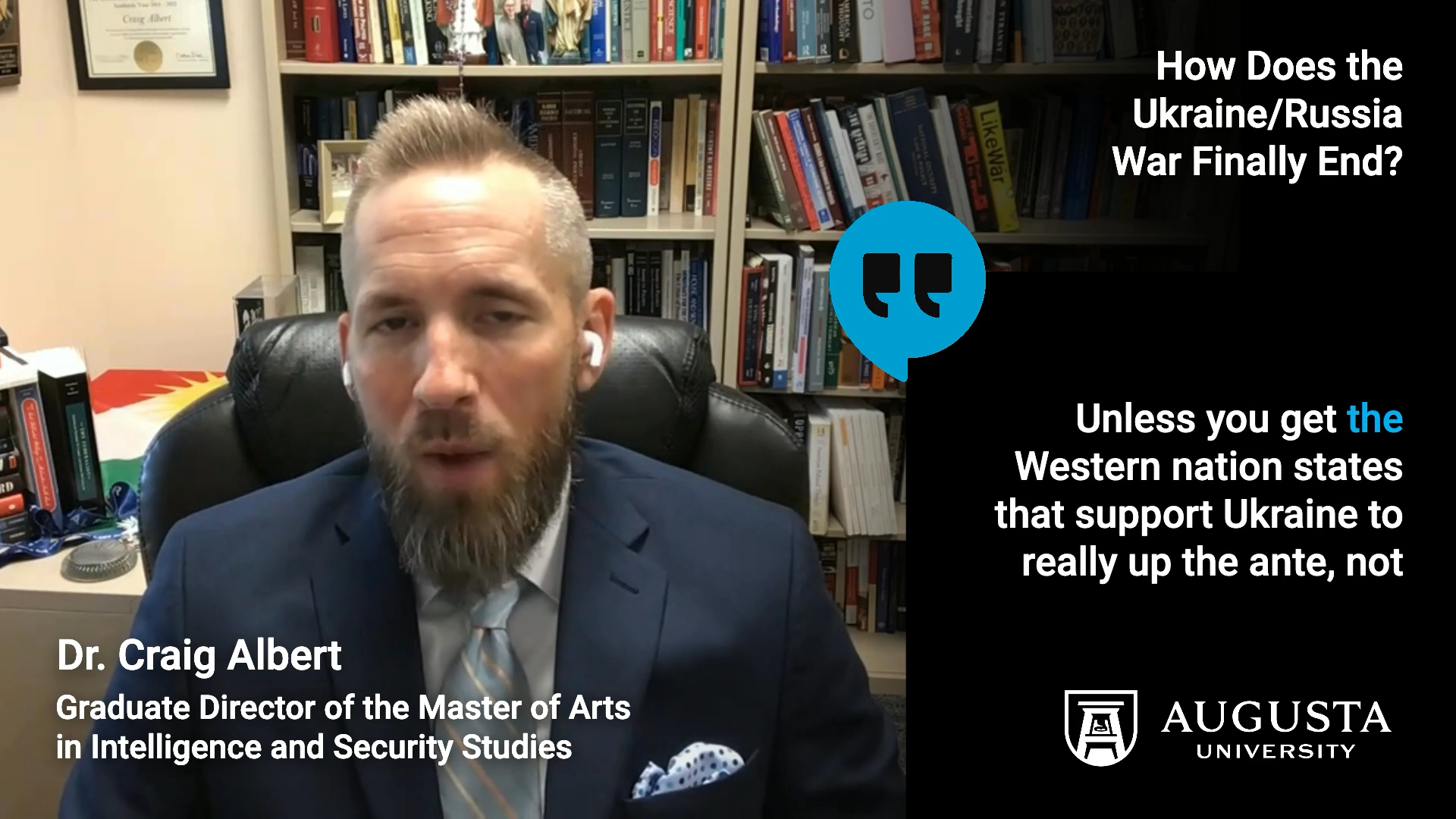
#ExpertSpot: How Does the Ukraine/Russia War Finally End?
With the war between Russia and Ukraine now approaching two and a half years - there's no end in sight. How does it end? Check out this ExpertSpot from Augusta's Dr. Craig Albert for some insight and perspective. Craig Albert, PhD, is director of the Master of Arts in Intelligence and Security Studies at Augusta University. He is a leading expert on war, terrorism and American politics. AI and the upcoming election is a serious topic. Albert is available to speak with media – simply click on his name to arrange an interview today.


#Expert Perspective: Where did all the medical appointments go?
Dr. Martine Hackett, associate professor and chair of Hofstra’s Department of Population Health, spoke to Newsday about why patients are finding it more difficult to make medical appointments and what options they have. Dr. Hackett noted over the past decade, more people have enrolled in insurance plans and sought a wider array of treatments because of the Affordable Care Act and policies that expanded the reach of Medicaid. The Medicaid and Medicare acceptance rates are plunging raising concerns as doctors tend to drop these insurance plans first because they pay lower rates. Setup is becoming illusive in an industry that has undergone immense changes in recent years, Dr. Hackett added. New Yorkers with Medicaid may want to find federally-qualified health centers, which are designed for Medicaid patients, Dr. Hackett said. People may also be able to get appointments more quickly if they see non-physician providers like nurse practitioners or midwives instead of OB-GYNs, she added. Healthcare is an important topic - and if you're covering, let us help. Dr. Martine Hackett's research focuses on public health and health inequities, particularly in the American suburbs and minority communities. She's available to speak with media - simply click on her icon now to arrange an interview today.

Trump now a convicted felon.... let our experts explain this unprecedented situation.
Just six months before the upcoming election, former President Donald Trump has become the first U.S. president to be convicted of a felony, following his involvement in the hush money scandal. A Manhattan jury delivered a guilty verdict on 34 counts, raising profound questions about the implications for Trump's political future, the Republican Party, and the broader landscape of American politics. This unprecedented situation marks a historic moment in American politics, as no former president has ever faced such legal repercussions so close to an election. From constitutional debates to shifts in public opinion, and from international reactions to financial impacts, the scope of the story is immense. Here are several journalistic angles to explore this multifaceted issue: Constitutional implications of a felon running for presidency. Republican Party's internal conflicts after Trump's felony conviction. Public opinion on Trump's candidacy post-conviction. Trump's legal appeals and their impact on his campaign. Media's role in shaping perception of Trump's conviction. International reactions to Trump's felony and candidacy. Trump's campaign strategy adjustments after the conviction. Financial implications for Trump's businesses and fundraising. Historical instances of political candidates facing legal troubles. Impact of Trump's legal issues on down-ballot races. The ramifications of Trump's conviction are vast and unpredictable, potentially reshaping the political landscape in ways that are still unfolding. Let our experts assist with your understanding of this complex and evolving situation. Connect with an Expert about the Trump conviction: John Clinton | Vanderbilt University Abby and Jon Winkelried Professor of Political Science Brian Kalt | Michigan State University Professor of Law & Harold Norris Faculty Scholar Mean Bose | Hofstra University Professor of Political Science, Executive Dean for Public Policy & Public Service Programs Michael Genovese | Loyola Marymount University Professor of Political Science and International Relations, President of Global Policy Institute David RedHawks | University of Delaware Professor and Chair, Political Science Political Science and International Relations Tony Smith | UC Irvine Professor of Political Science James Sample | Hofstra University Professor of Law Todd Collins | WCU Steed Distinguished Professor Mark Caleb Smith | Cedarville University Professor of Political Science Stephen Farnsworth | University of Mary Washington Professor of Political Science and International Affairs To search our full list of experts visit www.expertfile.com