
Experts Matter. Find Yours.
Connect for media, speaking, professional opportunities & more.

The countdown is on for the total solar eclipse on April 8 and Adam Frank, professor of astrophysics, science commentator, and popular author, is available to comment on: Earth's eclipses are the result of a cosmic accident! No other world has such a relatively large moon. Our Moon is the result of a titanic collision with a Mars sized planet more than 4 billion years ago. Earth is likely the only planet that experiences a solar corona/ring of fire during a total eclipse. That's because the size of the moon and the size of the sun appear to be roughly the same from Earth. The moon is slowly drifting away from the Earth so the kind of eclipses we experience are also an accident in time. Were not possible before, won't be possible later. Eclipses must have been terrifying for early humans. Learning to predict them helped establish the possibility for science. Today eclipses can be a way to help people understand and appreciate the sciences. The science surrounding the eclipse is the same science that gives us vaccines and helps us understand climate change (science is science). The "devil comet" may be visible during the eclipse. The comet passes by Earth every 71 years. The comet, which glows green and red, gets its nickname from outbursts that take on the shape of horns. Adam Frank is a frequent on-air commentator for live interviews and segments in national media outlets. He also regularly contributes to written publications, including The Washington Post, The Atlantic, The New York Times, and Scientific American. In 2021 he received the Carl Sagan Medal, which recognizes and honors outstanding communication by an active planetary scientist to the general public. It is awarded to scientists whose efforts have significantly contributed to a public understanding of, and enthusiasm for, planetary science. His most recent book is The Little Book of Aliens (Harper Collins, 2023).



Improving Care for Black Patients With Heart Failure and Hypertension
ChristianaCare’s Center for Heart & Vascular Health has dramatically improved the clinical outcomes of Black patients living with heart failure and hypertension by using a digital hybrid platform that provides patients with a dedicated health coach to ensure their care plan is followed and treatment goals are achieved. Through this innovative approach, ChristianaCare achieved a significant improvement in the number of Black patients adhering to prescribed doses of guideline-directed medical therapy (GDMT) for heart failure. “At ChristianaCare, we are deeply committed to eliminating disparities and achieving health equity in the communities we serve,” said Kirk Garratt, M.D., medical director of the Center for Heart & Vascular Health. “We are proud that we have been able to significantly improve the health outcomes of our patients, especially addressing health disparities in the Black population for patients with heart failure and hypertension.” Approximately 32% of ChristianaCare’s heart failure patient population identify as Black, which is a higher percentage compared to the Black population nationally (12.4%). Historically, Black Americans have experienced racial disparities in heart failure treatment and experience worse patterns of adherence to guideline-directed medical therapy (GDMT) . Additionally, Black Americans have a 30% greater risk of death from heart disease than white Americans. Combining technology and human-powered guidance This novel approach to care is powered by Story Health, a leading health technology services company. Its digital platform and health coaches have been able to deliver superior outcomes for ChristianaCare’s patients regardless of race. Black patients in particular have made remarkable gains: 6 times improvement on target doses of beta blockers (76%). 7 times improvement on target doses ACE/ARB/ARNIs (54%). 2 times improvement on target doses of MRAs (57%). ChristianaCare was also able to achieve improvement in Black patients taking SGLT2 inhibitors, rising from a 32% baseline to 74%. Despite their vital role in treating heart failure, SGLT2 inhibitors are historically underprescribed and see lower adherence – largely due to affordability challenges, as costs can be $500 per month or more. Helping patients overcome cost barriers is critical, which is why the health coaches directly engage with patients to identify those who may need assistance and will work on their behalf to qualify for prescription assistance programs. “Along with their digital platform, the health coaches from Story Health understand the unique needs of our patients and have helped us create deeper, more accessible relationships with our patients to help improve their health and outcomes,” said Sourin Banerji, M.D., medical director of Advanced Heart Failure and Mechanical Circulatory at ChristianaCare. The health coaches serve as an extension of the clinician to identify and resolve challenges such as medication adherence, lab work coordination, transportation arrangement and even prescription assistance that cause disruptions in a patient’s care journey and lead to negative outcomes. Improved control of hypertension In addition to heart failure patients, ChristianaCare’s collaboration with Story Health supported patients with hypertension, delivering significant reductions in blood pressure for those enrolled regardless of race. Among Black patients specifically, there were significant decreases in average absolute systolic and diastolic blood pressure levels (17 mm Hg and 8 mm Hg, respectively) after 120 days, compared to 8 mm Hg and 5 mm Hg decreases for uncontrolled hypertensives in another digital program after 12 months. As a result of this initial success, ChristianaCare’s Center for Virtual Health is expanding the use of this care model beyond cardiology to support all patients in the population. Many of these patients struggle to manage high blood pressure, and the use of a continuous care program will be an important tool to help with medication management and addressing social barriers. “Health equity is an incredibly important initiative, and we see our mission as critical to helping specialty and primary care providers drive more equitable care,” said Story Health Co-founder and President Nita Sommers. “As an industry leader, ChristianaCare understands that every individual deserves compassionate care that is accessible, so we are honored to be working with its cardiology team and now the Center for Virtual Health to improve the health of patients.” ChristianaCare has been recognized numerous times for high-quality heart care. Among the many achievements are the American College of Cardiology HeartCARE National Distinction of Excellence Award for three consecutive years (2020-2023) and being named among Healthgrades top 100 hospitals for heart care in the U.S. for the past two years (2022-2023).



Year three: What fate awaits the fighting in Ukraine?
As we enter year three of the war between Ukraine and Russia, the death toll continues to rise, and there doesn’t appear to be any end in sight to the war. Craig Albert, PhD, professor of politics and director of the Master of Arts in Intelligence and Security Studies at Pamplin College of Arts, Humanities, and Social Sciences at Augusta University, said it appears victory does not seem likely for either side, and he expects it to form into a “frozen conflict.” “There are two ways out of this, however,” said Albert. “The first is that the West, mainly the United States, does not continue to arm Ukraine. If this becomes the new normal, then Ukraine will not be able to keep up against Russia and will eventually fall through a war of attrition being waged by Russia.” “The second, less likely but far more threatening scenario, is that Russia expands the war to other states in the area or inadvertently hits a NATO-member state with either kinetic or massive cyberattacks. It may draw NATO into the war directly. In this case, Ukraine takes the advantage, but the war expands to something not seen since World War II.” Albert added that the war is becoming a war of attrition, and, if one side maintains morale, weapons and supply-chain logistics and if one side can maintain air superiority, it’s likely to have an advantage. “If Ukraine manages to get F-16s in the fight sooner rather than later, and longer-ranged missiles are given to them as well, this could cause a stalemate and force Russia into negotiation,” Albert said. He noted Ukraine is making significant gains in the air and has managed to shoot down seven sophisticated aircraft recently, forcing Russian air units to be more cautious about their tactics and even move further away from the frontline. “If this continues, Ukraine can exploit this as Russian forces would likely be left without air cover in future battles.” With everything that has happened in the first two years of the war, it has not deterred Russian President Vladimir Putin from ramping up his resolve. “Putin has doubled-down,” Albert said. “He has increased his forces in the fight, made more aggressive postures to NATO member states and has unleashed his cyber and informational capabilities across the world to take advantage in those realms. Putin continues to pursue pure power politics and is unlikely to back down.” Craig Albert, PhD, is director of the Master of Arts in Intelligence and Security Studies at Augusta University. He is a leading expert on war, terrorism and American politics. This is an important international and national issue. Albert is available to speak with media – simply click on his name to arrange an interview today.


Leap Years and the Connection Between Astronomy and Our Lives
Most of us know February 29 as a whimsical anomaly—nothing more than a chance to tease our friends or colleagues born on this day as technically being a quarter of their purported age. But how often do we think about the origins of the day as we now know it? Or about the near-universal implementation of this specific way to keep track of time? Do we ever consider the impact a leap year could have on everyday life? Frank Maloney, PhD, an associate professor of astronomy and astrophysics at Villanova University, has been teaching for nearly 12 leap years (47 years). He is an expert in timekeeping and calendaring, calling them a “fundamental connection to our lives, ruled by the motion of objects in the sky,” because “everyone has to agree what day and time it is.” Dr. Maloney currently teaches a course called “Earth: Our Habitable World,” where he discusses this and other connections between astronomy and people’s lives. In the case of leap years, the astronomical phenomenon from which they originate—the Earth’s time to orbit the sun—is a very important one to accurately track. “You want your calendar to keep pace with the seasons,” Dr. Maloney explained. “There are all sorts of ways of measuring the pace of the Earth around the sun, but the way that [also] keeps pace with seasons is called the tropical year, and unfortunately, there’s not an integer number of days in that year. We can’t ignore it, because after the first year you’re off by a quarter of a day and after four years off by a full day, and so on.” Ancient civilizations were aware there were slightly more than 365 days in a solar year but didn’t know exactly how much more. Gradually, the seasons would become unsynchronized with the calendar, and those various civilizations added days back in at random times to realign. “In those days, it might be possible to leave one area in April, and arrive [somewhere else] the previous December,” Dr. Maloney joked. The concept of a leap year began with the Roman Empire’s implementation of Julius Caesar’s namesake calendar on January 1, 45 B.C.E., at his behest. The Julian calendar was a solar calendar, which consisted of a 365-day year, and a 366-day leap year every four years, without exception. It was often added as a duplicate day in the middle of February. “But a year is not exactly 365 and a quarter days. It’s a little bit less,” Dr. Maloney explained. “By the Middle Ages, it was 10 or so days out of whack with the tropical year. Astronomers would have seen that very easily... but the reason to change it was not there.” Not until the late 16th century, that is. And the reason it did change was because Easter had moved out of line with the vernal equinox. “Nearly all calendars have a mystical, religious or theological component,” Dr. Maloney said. “In the Roman Church, Easter is reckoned as the first Sunday after the first full moon on or after the vernal equinox, or first day of spring.” In order to have Easter fall back in line with the equinox, Pope Gregory XIII issued a papal bull in 1582, which declared a year to be a more accurate 365 days, 5 hours and 49 minutes in length (roughly). What that meant for leap years was that, instead of every four years without exception, they would now occur every four years except on century marks, unless that century mark was divisible by 400. For example, 1900 was not a leap year, but 2000 was. The years 2100, 2200 and 2300 will not be leap years. The global switch to a new calendar was not easy or done in haste. To enact the initial calendar change, 1582 went from October 4 to October 15 to eliminate extra accumulated days. Catholic countries mostly followed suit soon after, but many others resisted, as citizens feared it was a political trick. It took centuries to get to the near-universal use of the Gregorian calendar we have today. Great Britain and other Commonwealth nations did not adopt the Gregorian calendar until 1752. An individual such as George Washington could have been considered to be born on one day in the Julian calendar and have a different birthday in the Gregorian calendar. In the American colonies, September 1752 skipped to the 14th day of the month from the second. The most recent country to switch from the Julian to Gregorian calendar was Greece in 1923. By then, the calendar was roughly two weeks off from the tropical year. In the early 1900s, when globalization was commencing, this was a big deal. “You could get in an airplane and fly someplace, and not even know what day you’d be landing. According to the calendar, it’d be time travel,” Dr. Maloney said. Saudi Arabia still used a few elements of the Islamic calendar for fiscal purposes until 2016, and Afghanistan, Iran, Nepal and Ethiopia are the only countries in the world that do not officially use the Gregorian calendar currently. So, what does all this mean for people today? For starters, historians and genealogists must be careful when studying historical dates and events. For example, a country may have still been using the Julian calendar during a particular time period, or perhaps an event might have occurred during the time days were skipped to make the switch from the Julian to the Gregorian calendars. “If an infant were born [in the American colonies] on the second of September 1752, for example, and died on the 14th, they were not really 12 days old,” Dr. Maloney said. “Or if a war began in a country one day but started on a different day in a different country, it causes confusion.” Leap years and other adjustments to timekeeping can also cause a plethora of computing and software issues, impacting multiple industries. This is especially true in the digital age where time-stamping is so ubiquitous. Case in point, on occasion, we actually have to add a leap second to time to account for the slowing of Earth’s rotation. These leap seconds are added after 11:59:59 on either December 31 or June 30, when needed. “There’s a great deal of controversy about this particular practice,” Dr. Maloney said. “It really confounds software. A jet airplane, for example, can travel a fairly long distance in one second. Time has to be kept now to fractions of seconds, [even for things like] lawsuits and insurance policies. Timekeeping is a very important task for astronomers.” It seems those astronomers have it figured out... for now. Even the Gregorian calendar will eventually need an adjustment, as its margin of error is about 27 seconds per year. That means every 3,236 years—so sometime in the early 4800s—an additional extra day will need to be added somewhere to correct it. Luckily, we have some time to plan ahead.


2024 presidential and Michigan state elections: MSU experts can comment
MSU experts can discuss national political issues to the Supreme Court and constitutional issues to Michigan's state politics and races The 2024 presidential election is in full swing. As President Joe Biden is set to cruise to the Democratic nomination and former President Donald Trump is likely poised to receive the Republican nomination, 2024 is setting up to be a rematch of 2020. Michigan’s primary is now earlier on the calendar, Feb. 27, with the Republicans holding a caucus to award their remaining delegates on March 2. Despite being a presidential election year, Michigan has important statewide elections. An open U.S. Senate seat, vacated by retiring Sen. Debbie Stabenow, could tip the balance of power in the Senate, potentially deciding which party holds the majority. Michigan’s seventh and eight congressional races have incumbents leaving office, making those set to be some of the most nationally watched and funded races nationally. The state House currently has an exact bipartisan split, setting up races with very high stakes. Michigan State University experts are available to comment on many issues of the presidential election including: political parties and their evolution, campaign strategy and polling, Trump’s legal troubles and the U.S. Supreme Court, political diversity and messaging and local elections and voting. Additionally, several of these experts can comment on Michigan’s federal and state elections. General presidential and Michigan election issues Corwin Smidt is an associate professor of American politics and research methods in the Department of Political Science in the College of Social Science. He can comment on national elections and polling for the presidential election as well as statewide elections. Contact: smidtc@msu.edu "Michigan continues to trend toward being a battleground state, but right now it looks like a battle of attrition. Donald Trump's poll numbers really haven't improved as much since 2021 as Joe Biden's have declined, but Governor Whitmer's popularity remains high. The state Republican party continues to have fights over its management and will have a contested and possibly divisive Senate primary. Despite this, Republicans have a chance to pick up seats in the US House and state legislature because of Democratic retirements and ongoing redistricting changes." Matt Grossmann is the director of MSU’s Institute for Public Policy and Social Research and a professor of political science. He is an expert on a broad range of topics surrounding the 2024 election, including political parties ,campaigns and elections. He also oversees survey research, candidate development and legislative training at MSU. Additionally, he can discuss Michigan’s primary and elections. Contact: grossm63@msu.edu “The presidential nomination process evolved out of reforms to the delegate selection process for those conventions, which now means delegates are overwhelmingly selected based on presidential primary results. From the voters’ perspective, it often looks like any other election where you select your preferred candidate. But the parties still have power to coordinate their rules and selection procedures. Michigan has an opportunity to set the terms for future elections, showing that it can become engaged, with diverse interests, and earn the right to vote early in the process in 2028. Since Michigan does not have party registration, voters will be able to participate in the primary of their choice, which has provided an incentive for individuals to vote in the contest that presents the most uncertainty.” Read more from Grossmann on MSUToday. Dante Chinni is a research specialist in MSU’s School of Journalism and is the director of the American Communities Project in the College of Communication Arts and Sciences. He can discuss polling and changes in the parties over time, as well as the voting patterns among groups in specific places. He can also comment on various Michigan political issues. Contact: chinni@msu.edu “In Michigan, and in other states, the 2024 election will be determined by the margin of victory in different kinds of places. Can the Democrats get what they need out of the big city and college town communities, like Wayne, Ingham and Washtenaw counties? Can the Republicans get the numbers they need out of blue-collar middle suburbs, such as Macomb? The turnout and margins in those kinds of places, and others, will determine who wins in November.” Constitutional issues and the Supreme Court Jordan Cash is an assistant professor of political theory and constitutional democracy in James Madison College. He can comment on general requests about the presidency and national elections as well as issues surrounding the Supreme Court. Contact: cashjor1@msu.edu “The 2024 election is already shaping up to be one of the most unusual elections in American history, but one of the most unique aspects is the role that the judiciary is likely to play in the process. With former president and likely Republican nominee Donald Trump facing indictments at both the state and federal levels, the election season is as likely to be punctuated with legal news and updates as it is with campaign speeches and negative advertising. Moreover, the Supreme Court will be critical as it has heard or will likely be hearing cases surrounding whether states can disqualify Trump from the ballot under the 14th Amendment and whether he has absolute immunity from when he was president. When we also consider that President Joe Biden is facing his own investigations from House Republicans, the election seems poised to not only raise the political stakes but also considerable constitutional and legal questions.” Read more from Cash about presidential elections on MSUToday. Brian Kalt is a professor of law and the Harold Norris Faculty Scholar in the College of Law. He can comment on 20th Amendment issues, the electoral college and presidential prosecution and immunities. Contact: kalt@law.msu.edu “A lot of constitutional law questions that seemed purely theoretical are now front and center in our election campaign. Hopefully, the Supreme Court will move quickly and provide some clarity and certainty on these issues so that when November rolls around, voters can make a fully informed choice.” Ryan Black is a professor of American politics in the Department of Political Science in the College of Social Science, and a faculty affiliate in the College of Law. His expertise includes public opinion and the Supreme Court, and he can speak to appointments and vacancies. Contact: rcblack@msu.edu “Results of the 2024 election have the potential to profoundly shift the center of gravity in the politics of appointments to the federal judiciary, which includes, most importantly, the Supreme Court. There is no doubt that a president's most enduring legacy is who they put on the High Court, but confirmation politics today make the partisan makeup of the Senate a prominent roadblock in a president’s path to success.” Erica Frantz is an associate professor of comparative politics in the Department of Political Science in the College of Social Science. She is a specialist on issues and themes relating to authoritarianism. Contact: frantzer@msu.edu “Today’s democracies typically fall apart at the hands of their elected leaders, such that elections are critical focal points for understanding democratic trajectories. Importantly, research shows that where leaders come to power backed by personalist parties – or parties that are synonymous with the leader’s persona – the risk of democratic erosion increases substantially. For the U.S., this implies that the more the Republican Party becomes indistinguishable from Trump, the more American democracy is vulnerable to collapse from within should Trump return to the presidency.” Political messaging and diversity Dustin Carnahan is an associate professor in the College of Communication Arts and Sciences. His work focuses on how exposure to political information influences people’s attitudes, beliefs and decisions. His recent research focuses on how people come to encounter and believe misinformation and the effectiveness of messages designed to correct misinformed beliefs. Contact: carnaha9@msu.edu “While research suggests that political misinformation does not have a profound impact on voters’ decisions, the proliferation of misinformation can have more subtle effects on voters and elections – such as fostering toxic discourse around issues and candidates, promoting political polarization and distracting from more substantive matters. Concerns around misinformation are likely to be of great interest during the upcoming election cycle as advances in AI technology pose significant challenges to voters’ ability to identify what is real and what is fake.” Eric Juenke is an associate professor of American politics in the Department of Political Science in the College of Social Science. He can comment on issues relating to minority candidates, specifically the candidacy and election of minority candidates. Additionally, he teaches in the Chicano/Latino Studies program. Contact: juenke@msu.edu “While we do seem to have a rematch at the top of the ticket, with a vice president who is a woman of color and another vice president who has yet to be announced but could also be a woman candidate, we will be seeing a continued diverse candidate pool this cycle, I expect. It’s still early yet in the congressional races, but there should be a number of high-profile races in the country and in Michigan that should highlight a more diverse candidate pool. While the parties still have a long, long way to go in recruiting and supporting women and racial and ethnic minority candidates to run for office, the trajectory is positive.” Daniel Bergan is an associate professor and the director of master’s studies in the College of Communication Arts and Sciences, who also has an appointment in James Madison College. His research focuses on constituent communications with policymakers. Contact: bergan@msu.edu “When communicating with a policymaker, especially one with whom you disagree, you want to prevent them from discounting your opinion. One way to do this is by citing quality evidence to support your position. When contacting a policymaker about an issue, be aware that they may discount your opinion if they disagree. But note also that carefully crafted communications can convey your position without being written off — and could improve how accurately the policymaker understands public attitudes about public policies.” Read more from Bergan on MSUToday. Importance of local elections Sarah Reckhow is a professor of American politics in the Department of Political Science in the College of Social Science. She can comment on topics related to education policy in the presidential election. She is a specialist on local elections and school board elections. Contact: reckhow@msu.edu “Partisan polarization is having a growing impact on education politics, and we can see growing disagreement between Democrats and Republicans on key issues such as school choice and curriculum. This polarization is playing a role in elections, even nonpartisan school board elections, and it will be an important trend to watch in 2024.” Erin Kramer is the community liaison coordinator for MSU Community and Student Relations. She also advises MSUVote to support students and the local community voting. She can comment on efforts to promote voting efforts and resources that can be offered by universities and municipalities. Contact: kramere6@msu.edu “Michigan State University is home to MSUvote, an Initiative that strives to support students in their civic engagement. Student participation in voting is both a right and a responsibility. MSUvote is committed to getting out the vote,getting out the vote, reducing barriers to registration, and supporting all educational initiatives. Over the years, Michigan State has been fortunate to work with the East Lansing, Lansing, Meridian Township, and Bath Clerks to support our students in exercising their right to vote. Participation is foundational to the function of democracy, and we are committed to supporting students in that activity. MSUvote has hosted registration rallies, absentee parties, and worked to facilitate awareness of elections through multiple campus channels over the years to support participation and education. This year, the MSU STEM Building will be home to one of East Lansing’s Early Voting Centers, it will be operating Saturday Feb. 17 through Sunday Feb. 25.” Top issues for voters David Ortega is an associate professor in the Department of Agricultural, Food and Resource Economics in the College of Agriculture and Natural Resources, where he is also a faculty laureate. He can comment on consumer, producer and agribusiness decisions that affect the agricultural and food sectors, including the cost of food, which remains a concern for many Americans. Contact: dlortega@msu.edu “Persistent high food prices are a constant reminder of the economic difficulties facing voters. Although overall inflation has cooled and grocery price increases have moderated, food costs 25% more today than it did four years ago. And given the frequent nature of grocery shopping, food costs have a disproportionate impact on how voters perceive inflation.” Robert Brathwaite is the associate dean for research and an associate professor with a specialization in international relations in James Madison College. He can comment on foreign conflict and relations, including how it will impact U.S. policy and the presidential election. Contact: brathwa1@msu.edu “As the war between Russia and Ukraine approaches it two-year mark, the political and economic ramifications of this conflict are becoming more profound. Some political dynamics to watch this year associated with this conflict include changes in NATO’s military posture, political unity of the European Union, deepening Sino-Russian strategic cooperation, and the 2024 US presidential election. This conflict will also impact important global economic trends this year that include global energy supplies, food security, technology export controls, and the role of the US dollar in the global economy. More importantly, this ongoing conflict is a catalyst to evolving changes in the global security architecture with costs and consequences that are unknown.” Jason Miller is the interim chairperson of them Department of Supply Chain Management and the Eli Broad Professor in Supply Chain Management in the Broad College of Business. He can comment on various supply chain issues such as the impact of Suez Canal diversions on disruptions and inflation as well as the impact of tariffs on U.S. firms and consumers, as foreign conflict and trade are top of mind this presidential election. Contact: mill2831@broad.msu.edu “Business leader across industries ranging from manufacturing and mining to retailing are closely watching the 2024 election cycle, as the outcome could substantially shape the business landscape in the form of tariffs, foreign policy toward China and Russia, and the extent of military escalation in the Mideast. All of these policies affect strategic, long-term decisions regarding global sourcing, market entry strategies, and capacity and demand planning.” Antonio Doblas Madrid is an associate professor in the Department of Economics in the College of Social Science. He can comment on the economy and the effect of inflation, which remains a top issue for voters this year. Contact: doblasma@msu.edu “The economy and inflation is an issue on the minds of many Americans.Forecasters and market-based measures of expectations both predict that inflation is likely to continue falling gradually in 2024, to about 2.5%. Thus, the inflation shock that hit the economy is expected to continue fading, although it may take some time to go that last mile from 3% to 2%. The Fed also appears to be quite optimistic on inflation, given its latest forward guidance.” Read more from Doblas Madrid on the economy and inflation on MSUToday.


ChristianaCare Opens Three New School-Based Health Centers in Delaware Elementary Schools
To address health concerns when they are at their earliest, most preventable stages, ChristianaCare has opened three new school-based health centers in Delaware elementary schools: Brookside Elementary School in Newark – part of the Christina School District. Silver Lake Elementary School in Middletown – part of the Appoquinimink School District. Richardson Park Elementary School in Wilmington – part of the Red Clay School District. “At ChristianaCare, we recognize that early intervention is vital in order to address the comprehensive health needs of adolescents in our community,” said Erin Booker, chief bio-psycho-social officer at ChristianaCare. “Childhood trauma hurts the ability of children to learn and increases their risk of chronic disease and mental health issues. Through the opening of these three new school-based health centers, these children now have convenient access to medical services, behavioral health services and wraparound social care. These centers can improve their health and education and set them on a lifelong path of wellness.” These new elementary school Wellness Centers are a partnership between ChristianaCare, the Delaware School-Based Health Alliance, the schools and school districts, supported by New Castle County government with funds from the American Rescue Plan Act. With the latest additions, ChristianaCare now operates school-based health centers in seven elementary schools and 19 high schools and middle schools. Each ChristianaCare school-based health center includes a health care team of medical, mental health, community health and nutrition experts. The health centers also provide a host of services by appointment during the school day. A parent or guardian must provide a signed permission form prior to a student’s first visit to a health center. Priscilla Michelle Mpasi, M.D., FAAP speaks at the ribbon-cutting at Richardson Park Elementary School. “At ChristianaCare, we serve together, guided by our values of love and excellence, and that mission of service is why we are committed to improving the health and wellbeing of the community,” said Priscilla Michelle Mpasi, M.D., FAAP, assistant medical director for the Clinically Integrated Network and Delaware Medicaid Partners. “School-based health centers are the connection of whole-child health and education. As we all know, early intervention is the key to wellness. Children can learn better when they are happy and healthy and know they have a safe place to go when they need care.” At no cost to the students, and located within each elementary school, the three school-based health centers also alleviate the need for parents and students to find transportation to address their health care needs. “Ensuring that our students are prepared to learn is crucial, but it can be challenging when they are dealing with various obstacles,” said Dan Shelton, Ed.D., superintendent of Christina School District. “That’s why our collaboration with ChristianaCare and New Castle County presents an incredible opportunity to bring essential services directly to our school. By establishing an in-school wellness center at Brookside Elementary School, we are thrilled to provide our students with the support they need to be fully prepared and eager to learn.” “Empowering our future starts with nurturing the health and well-being of our youngest minds,” said Dorrell Green, Ed.D., superintendent of the Red Clay Consolidated School District, which oversees the new school-based health center at Richardson Park. “Elementary school-based health centers play a pivotal role in fostering a thriving community by providing accessible, comprehensive healthcare, ensuring every child has the opportunity to learn, grow, and succeed.” “We are so grateful to open the first school-based health center at an elementary school in Appoquinimink School District,” said Matt Burrows, superintendent of the Appoquinimink School District. “This wouldn’t be possible without the partnership of New Castle County Government and the Delaware School-Based Health Alliance. The services provided by school-based health centers span a large array of care – including physicals, vaccinations, mental health, and more. As fast as our community is growing here in the MOT area, we know access to health care can be a challenge for many of our families. Having these services inside one of our elementary schools will be incredibly helpful for our families. The services that are being provided by ChristianaCare are invaluable for our students and their families.”

Countdown To the Big Game: Dr. Tyrha’s Top Five Super Bowl Commercials for the Past Five Years
Advertising executive and multicultural media expert Tyrha M. Lindsey-Warren, Ph.D., clinical assistant professor of marketing at Baylor University's Hankamer School of Business, , is a sought-after media commentator on the brands who win big during the game's commercial breaks. Commercials always are the most anticipated and talked-about aspect of the Super Bowl, but the expanding digital landscape requires advertisers to use more authentic and nuanced strategies to reach consumers. Advertising executive and multicultural media expert Tyrha M. Lindsey-Warren, Ph.D., clinical assistant professor of marketing at Baylor University’s Hankamer School of Business, is a sought-after media commentator on the brands who win big during the game’s commercial breaks. How do companies break through the noise and make a lasting impression on viewers? Lindsey-Warren – or Dr. Tyrha, as she is known – says the key is empowered storytelling. As a consumer behavior scholar, Dr. Lindsey-Warren’s research is rooted in narrative transportation theory – in other words, storytelling – that exudes the emotion of empowerment and its impact on consumer attitudes, behaviors, purchase intention and message recall. “There is a growing space for cleverly crafted and positive storytelling that can break through the clutter and competition and get the attention of Millennials, Gen Z and Alpha generations in an authentic and meaningful manner,” Lindsey-Warren said. At the top of every year, Dr. Tyrha always enjoys exposing the juniors and seniors in her advertising class to the joys of storytelling in advertising by way of the Super Bowl commercials. By leveraging the Super Bowl as an “edutaining” entry point for student learning, Dr. Lindsey-Warren finds it to be a fun and wonderful way to bring many advertising lessons to life for her students, including branding, consumer targeting and segmentation, social media campaign analysis, and more. To that end, here are Dr. Tyrha Lindsey-Warren’s top picks for the best Super Bowl commercials over the past five years. COUNTDOWN TO THE SUPER BOWL: DR. TYRHA’S TOP 5 SUPER BOWL COMMERCIALS FOR THE PAST 5 YEARS #5: Company/Brand: AMAZON Title of the commercial: “#BeforeAlexa” (With Ellen Degeneres and Portia de Rossi) Year it ran in the Super Bowl: 2020 Link to the commercial: https://www.youtube.com/watch?v=PLUwmnPJIGk Ad Agency that produced the commercial: Droga5 Dr. Tyrha’s rationale as to why this ad is so good: In my opinion, this was a wonderfully creative and clever introduction of the Alexa product by Amazon. The nostalgic storytelling in the spot humorously does make you wonder and realize how “did” we all live “before Alexa?” The commercial is multigenerational, incorporates women extremely well, and is so funny! #4. Company/Brand: NFL Title of the commercial: “Bring Down the House!” Year it ran in the Super Bowl: 2022 Link to the commercial: https://www.youtube.com/watch?v=8PhfMtZce1k Ad Agency that produced the commercial: Co-directed by Peter Berg of Film 47 and Arthur Mintz of Swaybox Studios Dr. Tyrha’s rationale as to why this ad is so good: In 2022, the NFL creatively leveraged the power of animation to get our attention with this wonderfully told story with children as the lead Talent and set in a situation that all families can relate to! The spot is so much fun and keeps you guessing as well as laughing with Grandma saving the day in the end. The commercial is multigenerational, multicultural, and incorporates women and girls extremely well. #3. Company/Brand: MOUNTAIN DEW & DORITOS (OWNED BY PEPSICO) Title of the commercial: “Doritos Blaze vs. Mountain Dew Ice” (with Morgan Freeman and Peter Dinklage) Year it ran in the Super Bowl: 2018 Link to the commercial: https://www.youtube.com/watch?v=C2tyVjEuqcY Ad Agency that produced the commercial: Goodby, Silverstein & Partners Dr. Tyrha’s rationale as to why this ad is so good: The “in your face” storytelling of this commercial – performed exquisitely by acclaimed actors, Peter Dinklage and Morgan Freeman, and accompanied by the perfect voiceover narrators in Rappers Missy Elliot and Busta Rhymes – is so much fun and truly unforgettable! The commercial also cleverly makes you pay attention to the presentation of the products being promoted as well as compels you to wonder as to “when did you last have a Mountain Dew and some Doritos?” This commercial is multicultural, multigenerational, multibodied, and incorporates women well and UBER memorable! #2. Company/Brand: NFL Title of the commercial: “The 100-Year Game” Year it ran in the Super Bowl: 2020 Link to the commercial: https://www.youtube.com/watch?v=tJjiIuH1VnY Ad Agency that produced the commercial: 72 and Sunny Dr. Tyrha’s rationale as to why this ad is so good: If you love the game of football, you have to love this ad that celebrates the fun and contagious spirit of the game. Truly, this commercial has something for everyone who loves the game of football! The unassuming opening of the ad’s storytelling set at an awards banquet and led by NFL Commissioner Roger Goodell quickly evolves into a fun and rambunctious game of football with NFL players of all ages in their tuxedos destroying the ballroom with their play. The musical hip-hop soundtrack alone for the spot is amazing, current, and supports the action of the storytelling extremely well. This spot is multigenerational, incredibly diverse in age ethnicity and more, as well as weaves women and girls into the spot ever so cleverly. A truly memorable ad and so much fun! #1. Company/Brand: Mr. Clean (OWNED BY P&G) Title of the commercial: “Cleaner Of Your Dreams” Year it ran in the Super Bowl: 2018 Link to the commercial: https://www.youtube.com/watch?v=ozuWoZITX3Y Ad Agency that produced the commercial: Leo Burnett Dr. Tyrha’s rationale as to why this ad is so good: Every year I show this commercial to my Advertising students at Baylor University and they absolutely LOVE this ad! The storytelling of this commercial leverages the animated Mr. Clean in such a clever manner, while showing the product benefits at the same time, and not being “in your face” with the product’s selling proposition. The music and the dancing accompaniment to the storytelling all help to bring an emotional connection to the viewer, especially the female audience. Plus, the spot is just super funny and so much fun! Every time I see this ad, I want to run and buy Mr. Clean. And, I tell my female students every year that when they get older, they are going to LOVE a man who can clean a house!!!! Additionally, this was an incredibly smart move by P&G to put this ad in the Super Bowl. This is due to the fact that the “current and future market power of women – as a whole and by segments – is undeniable and truly cannot be ignored by marketers, especially the NFL.” Today, women influence more than 80% of all consumer spending; 89% of the financial decisions are made by women; and globally, women control more than $20 trillion in worldwide spending. In addition, nearly 24.3 million African American women are brand loyalists and cultural trendsetters who have influence over the $1.2 trillion in Black spending power. And, Forbes reported in 2018 that “women constituted about 49 % of the 108 million-plus people who watched” that year’s Super Bowl – and they paid closer attention to the ads!


American College of Surgeons Recognizes ChristianaCare for ‘Meritorious’ Surgical Outcomes
ChristianaCare has been honored as one of only 78 institutions out of 615 by the American College of Surgeons (ACS) Clinical Congress for achieving “meritorious” outcomes in surgical patient care. This is the 10th time that ChristianaCare has been recognized through the organization’s National Surgical Quality Improvement Program – also known as ACS NSQIP – which is the only nationally validated quality improvement program that measures and enhances the care of surgical patients. “Patients can be confident that when they come to ChristianaCare for surgery, they are receiving care from a team that has a long track record of national recognition for outstanding quality and safety. Receiving this recognition for the 10th time is a direct result of our commitment to excellence and providing world-class surgical care to our community,” said Matthew Rubino, MD, MBA, FACS, interim chair of ChristianaCare’s Department of Surgery. “These awards reflect the commitment to excellence by all our surgeons and caregivers within Perioperative Services. We look forward to progressing on our journey of continuous improvement, anchored by our values of love and excellence.” The award recognizes ChristianaCare’s coordinated delivery of perioperative care within the general, colorectal, neurologic, orthopaedic and oral and maxillofacial and otorhinolaryngology (ear, nose and throat) surgery specialties. It includes Christiana Hospital and Wilmington Hospital, as well as the Christiana Surgicenter in Newark, Delaware, representing a combined total of nearly 38,000 surgical procedures a year. That volume represents the 46th highest volume of surgeries among health systems nationwide. The ACS NSQIP measures actual surgical results 30 days after the operation and makes risk adjustments to compensate for differences among patient populations and acuity levels. Participating hospitals are required to track the outcomes of inpatient and outpatient surgical procedures and then analyze their results, which direct patient safety initiatives within the hospital and impact the quality of surgical care. ChristianaCare was honored with ACS NSQIP recognition for its performance in eight clinical areas: Mortality. Cardiac arrest and heart attack. Pneumonia. Unplanned intubation. Ventilator use for longer than 48 hours. Renal failure. Surgical site infections. Urinary tract infection.


Big shift coming to the EV industry
Already a pioneer in the industry, the University of Delaware has once again played a key role in taking electric vehicles to the next level. Researchers there helped bring about new automotive standards that will drive lower-cost charging and vehicle-to-grid (V2G) integration and standardize Tesla’s connector so that future U.S.-made EVs will have this technology on it. The two newest standards for electric cars, both approved this month by standards committees of SAE International (formerly the Society of Automotive Engineers), should bring EV drivers great joy, according to Willett Kempton, professor at the University of Delaware’s Center for Transportation Electrification on UD’s Science, Technology and Advanced Research (STAR) Campus. Center director Rodney McGee was chairman of the two SAE committees, while postdoctoral researcher Garrett Ejzak, Kempton and administrative assistant Becky Cox played key roles in the engineering, research and policy work undergirding the new EV standards. “These developments mark a big shift for the EV industry,” said Kempton, who is affiliated with research centers in both the College of Earth, Ocean and Environment and the College of Engineering at UD. “Drivers will gain access to more charging stations and lower-cost charging. They will have new options for using their EV to help fight climate change and even make money when plugged in. These changes are likely to spur even greater adoption of EVs for clean, affordable transportation.” The so-called “V2G standard” (SAE J3068) provides the missing link for widespread use of vehicle-to-grid (V2G) technology, which Kempton and his colleagues invented at UD more than two decades ago. “We’ve been doing V2G for 20 years here at the University of Delaware, wondering when the rest of the world would catch on,” Kempton said. “One key missing piece has been a complete standard for controlling and managing V2G, which now exists within SAE J3068.” V2G allows you to plug your EV into an electrical outlet and send power from the car battery back to your local energy utility, making a little income while helping the nation’s power grid. This is becoming increasingly more important as more renewable sources of energy come online. When the sun isn’t shining or the wind isn’t blowing, EV owners can plug in and “perform important energy-balancing services,” according to Kempton. The savings from V2G can add up. “Our V2G demonstrations show an EV can earn between $100 a year and $1,500 a year. The wide variation is due to different markets and to regulations in different utilities. It also depends on the EV’s capabilities,” Kempton explained. Current EVs need a substantial update or retrofit to be able to do V2G, while new EVs equipped with the signaling technology are expected to be available by 2025. This standard also will make it possible to use your EV as backup power for your house. As extreme weather increases with climate change, that’s a good energy reserve to have when the lights go out. It takes one-and-a-half kilowatts to power the average house, Kempton said. Your electric car can produce 80 kilowatts of power, enough to run a whole house and more. “So, your EV can both help fight climate change and keep your house going when extreme storms happen,” Kempton said. With SAE J3400 now approved, the connector system Tesla developed for EV charging will now be standardized and can be included on future EVs of any brand. The first non-Tesla cars with this technology, also known as the North American Standard Connector, are expected to hit the market in 2025. “This will eliminate Tesla’s monopoly on their charging stations, making them available for use by any new EV,” Kempton said. According to Statista, the U.S. had more than 53,000 public EV charging stations and over 138,000 public charging outlets in May 2023. Visit Kempton's profile and click on the contact button to arrange an interview.


Georgia Southern University launches ‘Together We Soar’ Campaign
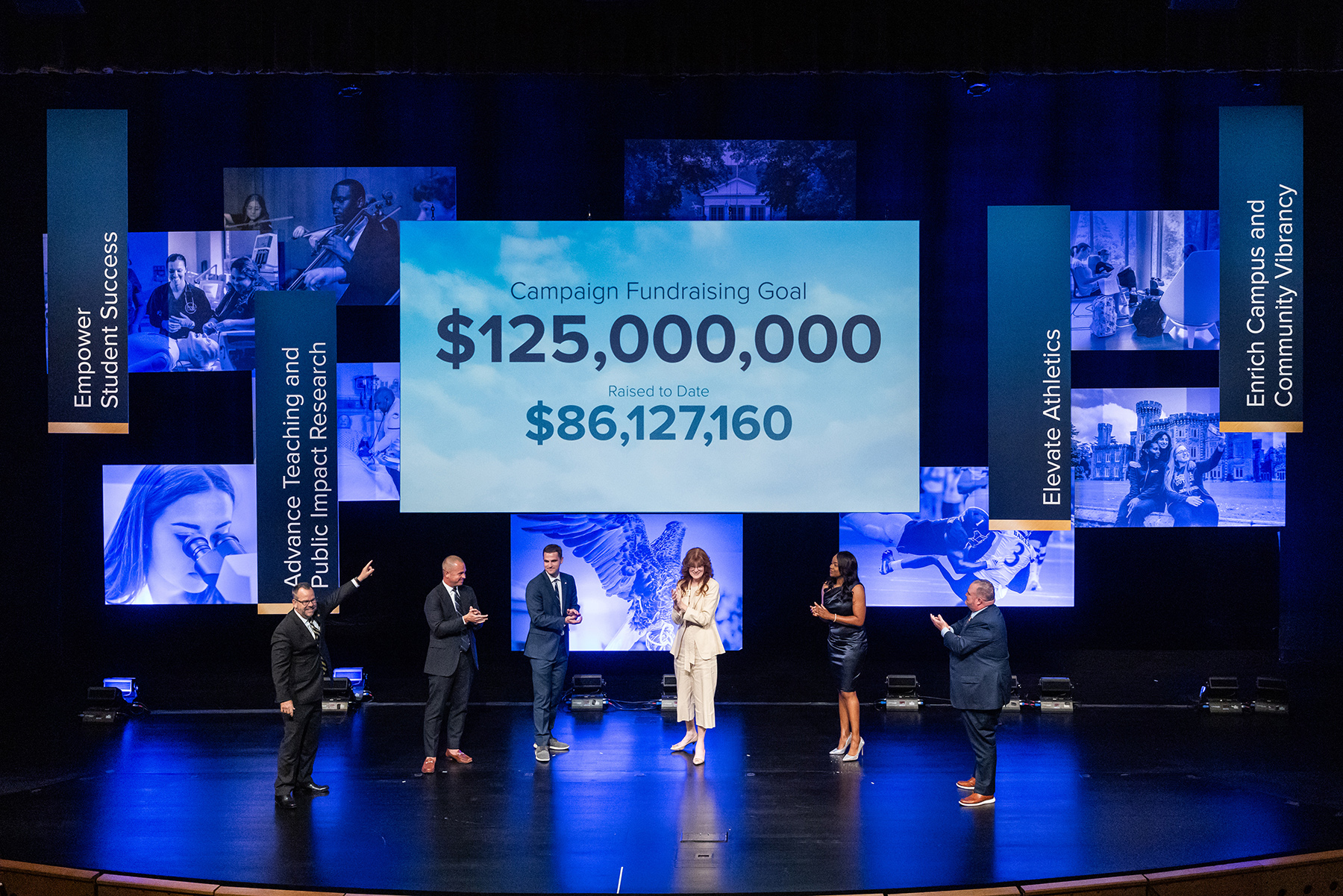
Georgia Southern University proudly announces the launch of its comprehensive campaign, “Together We Soar: The Campaign for Georgia Southern University.” This transformative initiative aims to elevate the University’s impact on students, faculty, research, athletics, and the communities it serves. Georgia Southern, renowned for its majestic campuses adorned with southern live oaks and towering pines, symbolizes not just American freedom but also the promise, achievement and boundless potential of its students. The University’s trajectory is on the rise, reaching for greater heights in education and community impact. Central to this momentum is the unwavering support from alumni, friends and the community. Publicly launched last Friday evening, Together We Soar: The Campaign for Georgia Southern University aims to raise $125 million by 2026. More than $86 million has already been secured. Dr. Kyle Marrero, President of Georgia Southern, expressed his gratitude and vision for the University. “Georgia Southern is on the move, in motion, and soaring to new heights. The ‘Together We Soar’ campaign—fueled by the generous support of our alumni, friends, and partners—will ensure our ability to drive innovation, develop talent, transform lives, and propel the economic development of a growing region.” (L-R) Georgia Southern President Kyle Marrero, Vice President for University Advancement Trip Addison, Deputy Athletics Director of Development Davis Hendrickson, Executive Director of Development Julie Gerbsch, Director of Alumni Relations Ava Edwards, and University Campaign Co-chair Leonard Bevill on stage at the Oct. 20 launch event for Together We Soar: The Campaign for Georgia Southern University. The campaign has identified four primary objectives: Empower Student Success: The campaign aims to stimulate learning by recruiting high-achieving students, increasing student access, and promoting inclusive excellence and career readiness. Advance Teaching and Public Impact Research: The focus is on meeting regional economic needs, increasing faculty expertise, and enhancing research capacity. Elevate Athletics: The campaign seeks to attract and retain elite student-athletes, provide top-notch facilities, and boost the Competitive Excellence Fund. Enrich Campuses and Community Vibrancy: The goal is to improve the communities surrounding the campuses and teach about local wildlife, among other initiatives. Campaign co-chairs Mike Sanders and Leonard Bevill shared their excitement for the campaign and what it will mean for Georgia Southern. “I could not be more excited about Georgia Southern and its possibilities. Opportunities abound for our University and the Together We Soar Campaign is the catalyst. It is time to do ‘more with more.’” - Mike Sanders “‘Together We Soar’ is spot on. From across campus to athletics and throughout our community, we’re perfectly aligned and equipped to launch to historic heights. I’m very blessed and excited to be involved.” Leonard Bevill The campaign also highlights the significant economic impact of Georgia Southern, with a regional economic contribution of $1.1 billion in fiscal year 2022. The University plays a critical role in the economic growth and transformation of Southeast Georgia. Marrero said Georgia Southern invites all its supporters, alumni and the community to join this transformative journey. With collective support, there’s no limit to how high Georgia Southern can soar. For more information or to contribute to the “Together We Soar” campaign, visit GeorgiaSouthern.edu/TogetherWeSoar.
