
Experts Matter. Find Yours.
Connect for media, speaking, professional opportunities & more.
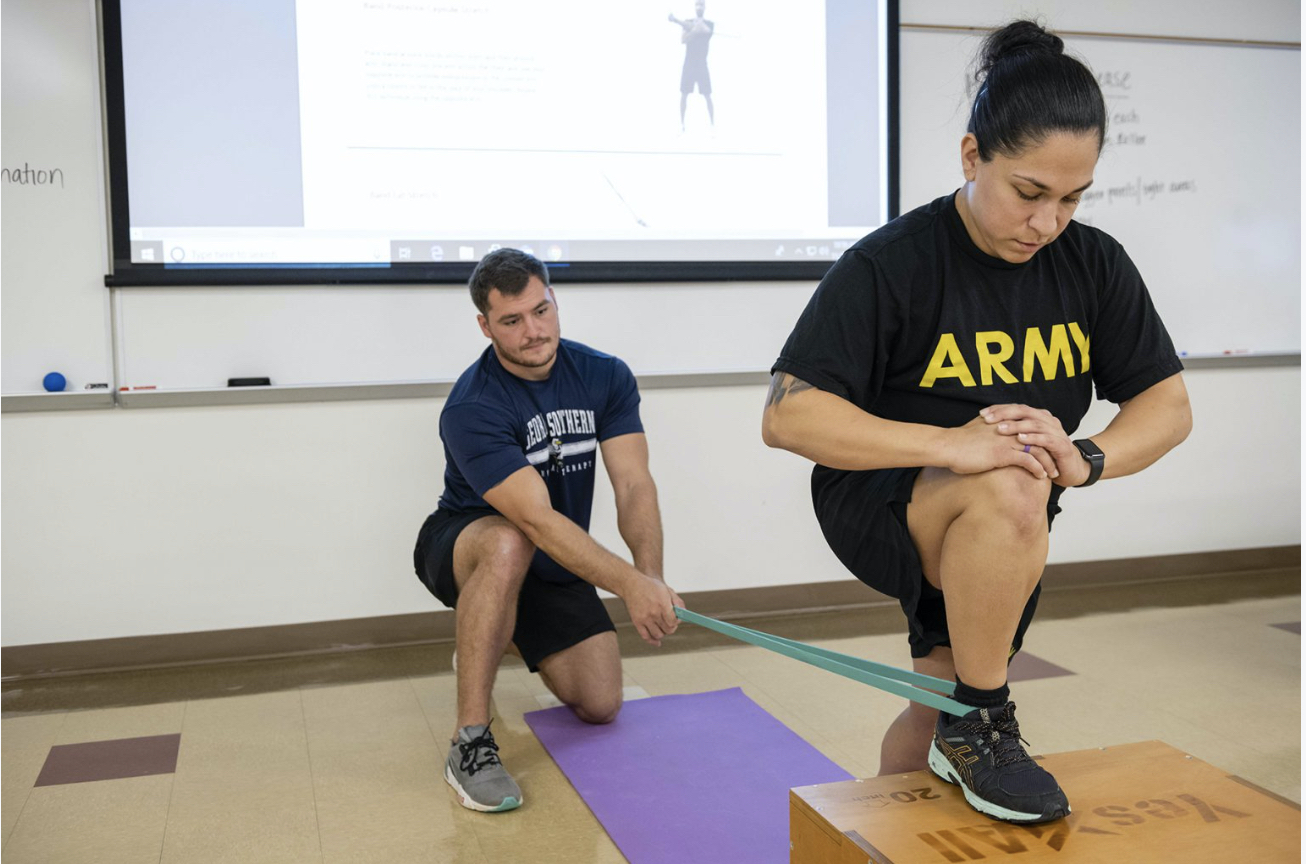
The Georgia Southern University Soldier Performance and Readiness (SPAR) program received a $1.5 million, two-year grant from the Department of Defense’s U.S. Army Medical Research and Development Command (USAMRDC). The grant will expand Georgia’s Southern research and programming capacity in injury prevention techniques that ensure force readiness for the Army. “Through this large-scale research study, Georgia Southern doctoral students have opportunities to be involved in the research process and work directly with soldiers,” said Nancy Henderson, Ph.D., assistant professor in the Doctor of Physical Therapy (DPT) program. “Additionally, the grant will fund graduate assistant positions in the Doctor of Physical Therapy program.” USAMRDC’s mission is to provide solutions to medical problems for American service members at home and abroad, as well as to the public at large. The scope of this effort and the priorities attached to specific projects are influenced by changes in military and civilian medical science and technology, operational requirements, military threat assessments and national defense strategies. Extramural research and development programs play a vital role in the fulfillment of the objectives established by the organization. Research and development funded through this are intended to benefit both military and civilian medical practices. “The grant investigates different physical training programs to identify those practices that best prevent non-combat injuries,” said Henderson. “Faculty on the research team will seek to advance the body of literature by determining the best educational models to educate soldiers on injury-prevention topics.” This is the first time that Georgia Southern will act as lead investigator on a collaborative research project with an Army research institute. However, SPAR has long been involved in multiple branches of research with community impact. “Georgia Southern has several initiatives underway to help improve the health, fitness and performance of military service members, law enforcement personnel and firefighting and rescue personnel,” said Joseph Kardouni, Ph.D., director of the Tactical Performance Group. “The Tactical Athlete Certificate (TAC) program is one of these initiatives that teaches service members exercise fundamentals to help mitigate training-related injuries. The funding coming through Medical Research and Development Command will improve evidence-based teaching methods and inform similar efforts to teach service members within this field. Leaders from health and human performance programs within the Army understand the importance of leveraging partnerships with academic institutions to work toward improving the quality of life, health and occupational performance of soldiers.” Faculty and students in the DPT program have educated soldiers on injury prevention topics since 2016 and this grant further provides students with the opportunity to assess effectiveness while learning how to improve educational methods with military service members. “This research is an important next step in delivering on the promise of the SPAR program and Georgia Southern’s close working relationship with Army research partners,” said Interim Vice President for Research and Economic Development Christopher Curtis, Ph.D. Curtis also noted that funding was made possible by the advocacy of U.S. Rep. Buddy Carter and the strong support of Georgia’s legislative delegation in Washington D.C. Interested in learning more or looking to talk with Nancy Henderson? Simply click on her icon now or Contact Georgia Southern's Director of Communications Jennifer Wise at jwise@georgiasouthern.edu to arrange an interview today.


President Joe Biden is set to meet Chinese president Xi Jinping during this week’s APEC Summit in California, marking the first in-person communication between the two leaders since they spoke in Bali almost exactly a year ago. While this meeting is not expected to produce notable changes to the United States’ policy toward China, or new initiatives between the countries, the hope is that it will at least keep the doors cracked on such conversations moving forward. “The purpose of this summit—for both the U.S. and China—is to show that each country is willing to talk to the other,” said Preston Jordan Lim, an assistant professor of international law at Villanova University and expert in Chinese foreign policy. “The fact that both leaders are willing to meet face to face and restart their conversation could well lead to more regularized bilateral communication and, down the road, to some small, bite-sized agreements.” However, that does not mean the upcoming meeting – and the careful language from both countries during the leadup – are just for show. Lim says that it is very likely the two heads of state will discuss “topics of real concern,” noting that President Biden indicated following their talk in November 2022 that they had “been very blunt with one another.” There is even more at stake now. Tensions have been soaring over the last 12 months between the U.S. and China, figuratively and literally. The incident with the Chinese balloon flying over the U.S, along with aggressive maneuvers from Chinese fighter jets near American military planes have earned harsh condemnation from U.S. officials. Separately, China believes the U.S. is trying to “economically cripple” them through a “mix of measures,” according to Lim. Those are not the only factors fueling tensions. “The U.S. continues to express significant concerns about aggressive Chinese actions in the South China Sea,” Lim said. “U.S. officials also continue to criticize China’s ongoing genocide of the Uyghur people. “On top of that, the geopolitical situation is even more tempestuous than it was in November 2022. In addition to the Russia-Ukraine war, both countries are now dealing with the effects of the Israel-Hamas War.” These are all topics Lim thinks could be discussed this week, in a meeting he says President Xi has more incentive to go through with than President Biden. “The Chinese economy entered a prolonged economic slowdown in April and there is mounting domestic dissatisfaction with how the Party-state has handled the economy,” Lim explained. “Xi has, on several recent occasions, indicated that the two countries should cooperate more closely. After Governor of California Gavin Newsom’s recent meeting with Xi, the Chinese Ministry of Foreign Affairs emphasized that China’s U.S. policy ‘remains one of mutual respect, peaceful coexistence and win-win cooperation.’ “Clearly, Xi and the Chinese government want to give off the impression that they are willing to have cooperative conversations with the U.S. government, even if they are unlikely to respond in good faith to U.S. concerns.” That unlikeliness to respond in good faith underscores the true nature of the meeting between the two powers, despite the largely positive messaging from both parties in advance. Does simply meeting at the table mean they will break bread? “U.S.-China relations are at a nadir right now and may well decline further, even if Xi and Biden meet,” Lim said. “There are serious roadblocks standing in the way of more harmonious bilateral relations, even though cooperation between the two countries has never been so necessary. It remains to be seen whether the U.S. and China will be able to work together on areas of mutual concern given the many stressors in the relationship.”


Is too much of a good thing actually a bad thing? That’s what researchers in Georgia Southern’s Biodynamics and Human Performance Center aim to find out through a recent study of 75 ultramarathon runners during the 50th anniversary of the Western States 100-mile Endurance Run (WSER) in California. The study focuses on the benefits of physical activity beyond the typical recommended amount by examining the cardiovascular effects of extreme exercise in the WSER, a 100-mile trail race through the Sierra Nevada mountains that climbs more than 18,000 feet and descends nearly 23,000 feet before runners reach the finish. Drs. Grosicki and Babcock (University of Colorado, Anschutz Medical Campus) work through the night to collect cardiovascular measures on race finishers. “We know that exercise is beneficial for health, and national and international public health agencies, such as The American Heart Association, advise that adults get at least 150 minutes of moderate or 75 minutes of vigorous physical activity per week,” said Gregory Grosicki, Ph.D., associate professor in the Waters College of Health Professions Department of Health Sciences and Kinesiology. “Moreover, there is a dose-response relation between exercise and health, whereby an individual can gain even more health benefits by being active for up to 300 minutes per week,” he continued. “However, it is uncertain whether exercising for greater than 300 minutes will confer any additional health benefits, and importantly, excess exercise may actually detract from cardiovascular health.” It is important to note, Grosiciki said, that this apparent “partial loss of health benefits” from excess exercise is theoretical for the time being. “Studies such as ours will help to determine whether this hypothesis is valid, and if so, what can be done about it,” he said. This is the third year Grosicki and colleagues attended WSER to collect data on some of the world’s most extreme athletes. Previous studies focused on changes in gut health during exercise, which, believe it or not, may actually be linked to changes in cardiovascular health. Associate Professor Gregory Grosicki, Ph.D., and research colleagues stand at the start line of the Western States Endurance Run. Grosicki recruited 10 research faculty and students from Auburn University, Florida State University, San Francisco State University and the University of Colorado Anschutz to assist in the data collection. “We measured blood pressure, arterial stiffness, heart size and function and kidney blood flow, and we collected blood and urine from 75 athletes pre-race, 55 of which completed the race and returned for post-race measures,” stated Grosicki. “This is, without question, the largest and most comprehensive dataset ever to be collected at a single event like this.” WSER begins in Olympic Valley, California, and ends in Auburn, California, and is considered one of the oldest and most competitive ultramarathons in the United States. Participation is highly selective, and if chosen, athletes have only 30 hours to cover the distance. The Western States Endurance Run Research Foundation funded this project. This is exciting research and you are a reporter looking to contact Gregory Grosicki, Ph.D. from the Waters College of Health Professions Department of Health Sciences and Kinesiology - then let us help. Simply contact Georgia Southern's Director of Communications Jennifer Wise at jwise@georgiasouthern.edu to arrange an interview today.

Wilmington Hospital Emergency Department Earns Lantern Award for World-Class Excellence
ChristianaCare’s Wilmington Hospital Emergency Department is one of 53 emergency departments around the world to receive the Emergency Nurses Association (ENA) Lantern Award for 2023, recognizing the excellence of its caregivers in incorporating evidence-based practice and innovation. The ENA Lantern Award celebrates emergency departments that demonstrate exceptional leadership, practice, education, advocacy and research performance. It honors the late Florence Nightingale, who is credited as the founder of modern nursing and is referred to as the “Lady With the Lamp” for her round-the-clock care given to wounded soldiers during the Crimean War. “Every day, our caregivers bring to life the ChristianaCare values of love and excellence through the ways they care for our neighbors who come to the Wilmington Hospital Emergency Department,” said Danielle Weber, MSN, MSM, RN-BC, NEA-BC, chief nurse executive and chief nursing officer of Wilmington Hospital. “By putting the patient first and rethinking outdated models of care, we have created a better experience for patients at a time when they are often most in need. This recognition signifies the transformative effect of our commitment to being exceptional today and even better tomorrow.” Rooted in history, focused on the future Wilmington Hospital has served the community for nearly 125 years, meeting diverse medical needs and providing a safety net for people in underrepresented communities. The Wilmington Hospital Emergency Department is the second-busiest ED in the state, with 58,744 visits in fiscal year 2023. Combined, ChristianaCare’s emergency departments are ranked 12th in the United States and 7th on the East Coast in number of patient visits, according to the American Hospital Association. A highly engaged staff supports the high volume of work in the department, where nurses serve in collaborative decision-making, shared governance and nurse autonomy, “practicing in an environment of empowerment,” said ED nurse Christina Hoddinott, MSN, RN, FNP-BC, CEN, CPE, who helped work on the Lantern application for Wilmington ED. “The staff who perform the work participate in decision-making that directly affects their practice,” Hoddinott said. “When our patients walk through our emergency department doors in their unexpected and stressful moments of need, we do everything we can to see that they receive the highest level of care.” Doreen Nord, MSN, RN, CEN, NPD-BC, nurse manager for Wilmington Hospital ED, said the Lantern award reflects the greatness seen every day among its nursing caregivers. “Their commitment and compassion shine, and there is never a doubt about who is most important — our patients,” Nord said. “We are honored by this recognition, the highest available in emergency nursing.” A collaborative effort Wilmington Hospital ED and the other Lantern recipients were recognized in the Hall of Honor at Emergency Nursing 2023, ENA’s annual conference, Sept. 21-23, in San Diego, California. See the list of other award recipients here. “Each and every emergency department on this list has worked extremely hard implementing innovations to better their emergency department for staff and patients alike,” said ENA President Terry Foster, MSN, RN, CEN, CPEN, CCRN, TCRN, FAEN. “Hearing the excitement these EDs had when notified that they were a recipient was so heart-warming and reminded me of the commitment that ED nurses have to continuous improvement.” In Wilmington, the spirit of collaboration and support among caregivers creates an environment that ensures patients receive the highest level of care. Hoddinott likens her fellow caregivers to puzzle pieces — each one is dynamic and unique. “When the pieces come together, we have one big complete puzzle. We are a team that supports each other during stressful moments, happy occasions and all the in between,” she said. “Our team does not take for granted the ‘specialness’ we have here, and our patients can truly feel that when they come through our doors.”



Expert Q & A: What led to the Hamas attack on Israel and what role will the United States play?
The conflict between Israel and Palestine dates back many years, but the recent escalation can be attributed to issues centering around Palestinian rights and access to the Al-Aqsa Mosque, according to Craig Albert, PhD, program director of the Master of Arts in Intelligence and Security Studies at Pamplin College of Arts Humanities, and Social Sciences at Augusta University. Albert, who is a leading expert on relations in the Middle East and American interests in the region, also notes that Hamas has been fighting against what it believes is unwarranted and illegal Israeli settlements being extended into Palestinian territory, while Israel has had a serious blockade on the Gaza Strip for over a decade. Hamas views this as state-oppression and thus, when combined, led to this horrific attack. Q: Now that Israel is declaring war, what should we expect to see in the upcoming days/weeks? A: We should expect more attacks by Hamas and Islamic Jihad, as well as Hezbollah from Lebanon. This means that there is a serious possibility of a two front war for Israel as it strikes towards the Gaza Strip near the sea, and more north into Lebanon. Concerning the State of Israel, look for a massive air bombardment over the next few days until the conditions on the ground are satisfactory, according to Israeli intelligence, to send in massive ground forces. One can expect a full infantry onslaught with all that entails within the Gaza Strip and perhaps other areas as well. We could also seem so strikes against Iran, especially cyber in nature, but perhaps, much more kinetic than we can imagine given the emotions being felt by the Israeli security council. Unfortunately, we can expect massive civilian casualties on both sides as this continues especially when Israel invades with its heavy ground forces. Q: What role does the U.S. play in all of this? A: The United States is already sending in a carrier fleet to show support for Israel; but one can imagine a scenario where Israel and Iran get into a serious confrontation, resulting in direct action by the U.S. on the side of Israel. The U.S. is also already supplying munitions and intelligence to the Israelis, and we should expect to see more in this area over the coming weeks and months. Note that the U.S. might have to take drastic actions itself as its war materials are being dramatically reduced because of arming the Ukrainians against Russia, and now, looking to arm heavily Israel. It is quite possible that the U.S. could be pulled into this in a direct way but currently, it just does not have the war material to conduct massive military operations if called to do so. This is quite a dramatic situation for the U.S., and of course for Israel. Looking to know more or connect with Dr. Albert for an interview? Dr. Albert is available to speak with media – simply click on his name to arrange an interview today.


One of the most extensive ways humans modify the planet is through agricultural practices. At the University of Delaware, assistant professor Kyle Davis has been conducting research on sustainable agricultural food systems on a global scale for many years, thinking about how these systems, because of their vast impact, can also act as a catalyst for addressing issues related to sustainability. This research, as well as the mentoring of graduate students and the research they are conducting in his lab, earned Davis a 2023 Global Environmental Change Early Career Award from the American Geophysical Union (AGU). Davis, an assistant professor in the Department of Geography and Spatial Sciences and the Department of Plant and Soil Sciences, as well as a resident faculty member with UD’s Data Science Institute, said he was honored and humbled to receive the award and that he feels deeply fortunate to get to do research he loves and to work on new science with students from across the university. “One of the greatest joys of the job is being able to mentor graduate students,” Davis said. “I feel really lucky to get to work with a group of incredibly talented and enthusiastic graduate students who come from all over the world.” Davis said that, in a lot of ways, the research he conducts has grown through working with graduate students, coming up with ideas and exploring those ideas together. “So much of my research is the result of their passion, abilities, drive, and creativity,” Davis said. The Davis Lab conducts research on a global scale and also has a key focus on four main countries: the United States, China, India and Nigeria. The research in those areas takes on different forms and looks at different questions. In the U.S., for instance, the research is primarily focused on addressing questions related to water scarcity and food production in the West. The research in Nigeria concentrates on addressing agricultural data and information needs across the country, while the work in India and China is focused on questions related to crop production, nutrition, farmer livelihoods and water sustainability. “We look at the nutritional supply and climate resilience of different crops and their associated water, energy, fertilizer and pesticide needs and try to find opportunities to improve all of these outcomes simultaneously,” Davis said.


For the second consecutive time, ChristianaCare has earned the Joy in Medicine™ recognition from the American Medical Association (AMA). ChristianaCare earned Gold Level recognition, the highest level of recognition in the Joy in Medicine™ Health System Recognition Program. It was one of only 10 health systems nationwide to achieve Gold Level. The recognition underscores ChristianaCare’s demonstrated commitment to the well-being of clinical care team members. “Receiving the Joy in Medicine Award the first time was certainly an honor, but achieving gold level status a second time is an even greater achievement, as the requirements are more exacting,” said ChristianaCare Chief Wellness Officer Heather Farley, M.D., MHCDS, FACEP. “It is a testament to the fact that at ChristianaCare and our Center for WorkLife Wellbeing, we are not comfortable resting on our laurels. We continue to raise the bar in our efforts to support the well-being of our caregivers, effectively respond to the changing health care landscape and foster an environment where each of our caregivers can thrive.” Continued Excellence in Support of Caregivers In 2022, ChristianaCare’s Center for WorkLife Wellbeing launched Psychological First Aid training to help organization leaders build skills to identify and support colleagues impacted by stress. More than half of ChristianaCare leaders completed the training in 2022. The training is now available to all caregivers. In addition, ChristianaCare’s peer support program, known as Care for the Caregiver, offers confidential individual peer support and group support following a range of stressful events at work. The program completed nearly 2,500 encounters from 2015 to 2022. ChristianaCare also has established the Workplace Civility Steer Team, which provides strategic direction in establishing an environment that is safe and free of violence for caregivers, patients and visitors. The team performs this through program and process development for the identification, prevention and response to workplace violence, a challenge increasingly faced by health care workers nationwide. “Health organizations that have earned recognition from the AMA’s Joy in Medicine Health System Recognition Program are leading a national movement that has declared the well-being of health professionals to be an essential element for providing high-quality care to patients, families and communities,” said AMA President Jesse M. Ehrenfeld, M.D., M.P.H. “Each Joy in Medicine recognized organization is distinguished as among the nation’s best at creating a culture of wellness that makes a difference in the lives of clinical care teams.” Burnout rates among the nation’s physicians and other health care professionals spiked dramatically as the COVID-19 pandemic placed acute stress on care teams and exacerbated long-standing systemic issues. While the worst days of the pandemic have passed, the lingering impact of work-related burnout remains an obstacle to achieving national health goals. Since its inception in 2019, the Joy in Medicine™ Health System Recognition Program has recognized more than 100 organizations across the country. In 2023, a total of 72 health systems nationwide earned recognition with documented efforts to reduce system-level drivers of work-related burnout and demonstrated competencies in commitment, assessment, leadership, efficiency of practice environment, teamwork and support.

Concerns Persist Over the State of Ecuadorian Democracy
On August 9, 2023, Ecuadorian presidential candidate Fernando Villavicencio was ambushed and killed following a campaign rally in Quito. The Alausí-born journalist-turned-assemblyman had long been a proponent of social and governmental reform, framing his election bid as a crusade against the drug traffickers, corrupt corporate interests and “political mafia” besetting his country. His assassination has, in turn, sparked concerns and discussion over the current state of democracy in Ecuador. Lowell Gustafson, PhD, is an expert on Latin American affairs and a professor of political science in Villanova University’s College of Liberal Arts and Sciences. From his perspective, Villavicencio’s murder stands as the latest chapter in a saga of malfeasance, intimidation and violence in the region. “This is not new in Latin American political history,” said Dr. Gustafson. “The role of private armies funded by economic sectors beyond state control has been an issue often for the national period. It has taken a stark turn with the riches pouring in from illegal drugs.” In Ecuador, “narco-capitalism” has emerged as a particularly corrosive force. According to Dr. Gustafson, Albanian, Mexican and South American criminal outfits established themselves within the nation by the early 2010s, drawn by the country’s vast network of ports and its proximity to coca-rich Colombia and Peru. “That became a problem for stability in 2016, when the government of Colombia signed a peace agreement with the Revolutionary Armed Forces of Colombia [or FARC],” he stated. “FARC had long controlled cocaine trafficking routes from southern Colombia to Ecuador’s ports on the Pacific Ocean. With their dominance gone, other cartels began to compete for control.” Since the opening of this power vacuum, the situation in Ecuador has grown increasingly volatile, with the governmental response ham-fisted at best and faciliatory at worst. Under the presidential administrations of Rafael Correa, Lenín Moreno and Guillermo Lasso, the cartels succeeded in infiltrating the country’s privatized ports and airports, seizing control of the nation’s prison system and contributing to an ever-growing wave of crime. “Violence against public officials and by vigilante groups have steadily increased since 2018,” Dr. Gustafson said. “With the familiar choice between bribes and cooperation or violence, it is no wonder that cartel influence throughout the Ecuadorian state and military is widely discussed.” While Dr. Gustafson acknowledges the Ecuadorian government’s culpability for this disastrous situation and its escalation, he also cites another factor: the United States’ “war on drugs.” According to the professor, the longstanding U.S. policy has only served to prop up criminal enterprises south of the border, fueling a market for illicit substances. “After a half-century of the war and over a trillion dollars spent on it, coca cultivation in Colombia in 2020 was at an all-time high,” he shared. “The war on drugs has led to the continued power of illegal drug cartels in many countries, now including Ecuador.” In Dr. Gustafson’s estimation, the recent murder of Villavicencio only brings greater attention to this unfortunate state of affairs—a state of affairs common throughout Latin America. “With his consistent and outspoken critique of the cartels’ influence in Ecuador, Villavicencio courageously knew he faced the threat of violence,” he concluded. “The assassination of a presidential candidate brings all of this to a higher level within Ecuador, but the likely reason for [his murder] plagues Mexico, El Salvador and other Latin American nations.”


As Popularity of Weight Loss Medicine Soars, Professionals Caution Against “Magic Pill” Mindset
A growing weight-loss fad has been dominating headlines this summer. No, it isn't a new type of trendy diet, exercise regimen or social media influencer-touted superfood. It's two medications—Ozempic and Wegovy—that have skyrocketed in popularity as more Americans turn to these once-weekly injections to aid in their weight loss efforts. But, while acknowledging the drugs' effectiveness, their intended patient populations and appropriate usage has become far more nuanced and situational, and the intended outcome of long-term weight loss and health is dependent on more than just taking either of these medications once a week. "While these medications can be helpful for some people who struggle with weight loss, it's important to remember that they are not a magic solution," said Rebecca Shenkman, MPH, RDN, LDN, director of the MacDonald Center for Nutrition Education and Research at Villanova University's M. Louise Fitzpatrick College of Nursing. First, it's important to understand the components and histories of both Ozempic and Wegovy. They are prescription medications of the same drug, semaglutide, which belong "to a class of drugs known as glucagon-like peptide-1 (GLP-1) receptor agonists, originally developed to treat type 2 diabetes," per Shenkman. It was discovered by researchers that significant weight loss was a side effect of semaglutide. Ozempic is the 2017 FDA-approved drug used to help treat diabetes. Currently, it is not FDA approved for weight loss and typically not covered by health insurance when used for that purpose, per Shenkman, but is often prescribed off label for "weight management in certain individuals who do not have diabetes, but struggle with obesity or [are] overweight." Wegovy was approved by the FDA in 2021 as an anti-obesity drug used for individuals living with obesity or individuals with excess weight, but not classified as living with obesity, who also have other associated health problems. "When used correctly, the drugs can have many benefits," Shenkman said. "[Semaglutide] is shown to improve diabetes and body weight in addition to seeing improvements in cardiovascular health and risk factors." However, "correct use" is what concerns Shenkman and other health and nutrition professionals. "Anti-obesity drugs are a valuable tool for people who have not experienced adequate benefit from self-directed or professionally directed lifestyle treatment," she said. "However, what we are seeing more and more of now is that people are requesting anti-obesity medications without meeting eligibility criteria for drug use, [such as] body mass index and weight criteria, [or] having the foundational knowledge and application of healthy lifestyle behaviors prior to medication use." To Shenkman's first point, there are several factors, especially in American society, driving those who may not meet the criteria for these medicines or even truly need them to request and ultimately receive the drugs. The media's portrayal of ideal body image is an enormous influence, which can lead to "body dissatisfaction and a desire for quick weight loss solutions," said Shenkman. Advertisements for these drugs often promote those ideas, and even downplay side effects, making them more appealing. Intrinsically tied to body image is the struggle many individuals have with psychological issues related to food, such as emotional or binge eating. "They feel that their self-worth is tied to their weight, and they will do almost anything to lose weight, whether it be five or 50 pounds." Shenkman said. "These individuals might believe that medication will help them control their eating habits more effectively." Identification of such issues prior to prescription approval is something that providers need to be aware of and screen for, Shenkman said. "It is so important for providers to complete a comprehensive pre-treatment assessment of their patients who start on weight loss medications. Unsupervised or improper use can lead to malnutrition, unhealthy weight loss or even a worsening of an undiagnosed or undertreated eating disorder or mental health condition." But even users who meet all pre-treatment criteria may be turning to the drugs in haste, or believe that they alone will solve their problems, and do so quickly. "Americans are known for having that 'quick-fix mentality' where people often seek quick solutions to their problems, including weight loss," Shenkman said. "Weight loss medications might promise faster results compared to lifestyle changes, which can take time and dedication." Compounding this "quick-fix mentality" is the frustration many feel when they fail to see results after multiple unsuccessful attempts at weight management. "The abundance of information on diets, exercise routines and weight loss programs can be overwhelming… Some may turn to medications as they seem more straightforward and require less effort to understand," explained Shenkman. But, as health care providers know, they are far from straightforward. All drugs, including Ozempic and Wegovy, come with the potential for side effects, which can vary with the individual. Headlines this summer focused on reports of users experiencing gastroparesis, described by Shenkman as the "the slowing down or 'paralysis' of the digestive system and gastric (or stomach) emptying." Though most often reported to cause nausea and vomiting, complications of gastroparesis can be quite serious. "If someone continues the medication and experiences chronic gastroparesis, complications to be aware of include malnutrition, dehydration, acid reflux, blood sugar control and even bowel obstruction," Shenkman said. The American Society of Anesthesiology also recently issued guidance on the use of such drugs prior to surgery, given potential life-threatening complications. "When prescribing anti-obesity medication, it is the responsibility of healthcare providers to inform patients about potential side effects and risks associated with the medication," Shenkman said. "It is also the right of the patient/consumer to ask questions and understand what they are putting in their body. A thorough discussion about benefits and possible adverse effects can help patients make informed decisions about their treatment." Many users may also not fully understand that these drugs are usually taken long-term, even after reaching a desired weight. Stopping without the knowledge of how to keep the weight off may lead to its return. Considering the pros and cons of the drugs, Shenkman's advice is simple. "Weight loss medications should always be used as part of a comprehensive weight management plan, which includes a balanced diet, regular physical activity and lifestyle changes. Relying solely on medications without addressing other aspects of weight management is not likely to lead to long-term success no matter how long you stay on a medication."


Artificial intelligence has been hogging headlines around the world in recent months. In late March 2023, an unprecedented coalition of tech CEOs signed an open letter calling for a moratorium on AI training. The race to empower powerful artificial minds should be paused, argued signatories (including Elon Musk) to give humanity time to review and reassess the potential risks of developing “human-competitive intelligence”–intelligence that “no one–not even their creators–can understand, predict, or reliably control.” Concerns about the unchecked rise of AI are not new, and global media is increasingly sounding the alarm, citing concerns that range from invasion of privacy to an existential threat to human existence. Weighing in on this with compelling new evidence around the “unintended consequences” of AI is research by Goizueta’s Ramnath Chellappa and Information Systems PhD candidate, Jonathan Gomez Martinez. Uncovering the Threat Their paper, Content Moderation and AI: Impact on Minority Communities, takes a hard look at how the use of AI in social media could disadvantage LGBTQ+ users. And what they find is worrying. Chellappa, who is Goizueta Foundation Term Professor of Information Systems & Operations Management, explains that he and Gomez Martinez homed in on Twitter to explore how unchecked artificial language moderation might (mistakenly) censor the use of “otherwise toxic” language by failing to understand the context or nuanced use of the LGBTQ+ lexicon. Examples of this include “reclaimed language”—verbiage that would be a slur in other contexts—but is reclaimed and prosocial if used by the originally targeted community. Their paper, Content Moderation and AI: Impact on Minority Communities, takes a hard look at how the use of AI in social media could disadvantage LGBTQ+ users. And what they find is worrying. Chellappa, who is Goizueta Foundation Term Professor of Information Systems & Operations Management, explains that he and Gomez Martinez homed in on Twitter to explore how unchecked artificial language moderation might (mistakenly) censor the use of “otherwise toxic” language by failing to understand the context or nuanced use of the LGBTQ+ lexicon. Examples of this include “reclaimed language”—verbiage that would be a slur in other contexts—but is reclaimed and prosocial if used by the originally targeted community. “This is a community that has ‘reclaimed’ certain words and expressions that might be considered offensive in other contexts. Terms like ‘queer’ are used within the community both in jest and as a marker of identity and belonging. But if used by those outside the community, this kind of language could be deemed inflammatory or offensive.” Gomez Martinez adds: “We wanted to measure the extent to which AI’s lack of a nuanced understanding of what is ‘acceptable’ affects minority users’ online interactions. As humans, we understand that marginalized communities have long used ‘reclaimed words’ both in jest and as a kind of rallying cry. Our intuition was that the machine simply wouldn’t understand this without context—context that is more immediately apparent to people.” Determining the Impact of AI-Based Moderation To test this, he and Chellappa looked at data from social media behemoth, Twitter. During the pandemic in 2020, the platform made a significant shift to AI-based content moderation to accommodate stay-at-home measures. Data from Twitter’s proprietary Academic Research API afforded Gomez Martinez and Chellappa access to a complete listing of historical tweets and replies before, during and after this period. Together they analyzed a total of 3.8 million interactions (1.8 million tweets and 2.0 million replies) from a panel of 2,751 users, of which 1,224 self-identified as LGBTQ+ in their Twitter bios. Their study ran over four months, from January to May 2020, before, during and after the switch to machine-based moderation. Using the same tools that Twitter moderators deploy to moderate interactions, Gomez Martinez and Chellappa were able to measure any increase or decrease in pro-social, in-group teasing and toxic language among LGBTQ+ users: terms such as “bitch” or “queer,” which research shows to be a form of ritualized insults—dubbed “reading” by the community—which can appear inappropriate or incoherent to outsiders, says Chellappa. “Analyzing the language, we find a notable reduction in the use of terms that could be considered toxic. When the AI moderation is in effect, you see these users’ language become more vanilla,” he adds. Quantifiably so, in fact. Chellappa and Martinez find a 27 percent reduction in the use of reclaimed language among LGBTQ+ users. And while that doesn’t sound like much, it’s significant for the community, says Gomez Martinez. Using in-language and reading each other is one way for this marginalized group to create a sense of community and social status. Not just that, we know from research that LGBTQ+ people use slurs and insults as a way of preparing themselves emotionally and psychologically for hostile interaction with heterosexual individuals. This kind of teasing and playing helps build resilience, so any reduction in it is significant.” Jonathan Gomez Martinez Good Intentions May Breed Unexpected Consequences So what does this mean for social media, for the LGBTQ+ community or any marginalized group for that matter, that might be prone to automated censorship? And how does any of this play out in the context of broader concerns around AI? For Chellappa and Gomez Martinez, there is a major hazard in granting technology any degree of control over how human beings interact. And it’s rooted in the mismatch between good intentions and unexpected consequences. Their paper, one of the first to dig into the impact of AI on actual business and society, lays bare some of the real-world impact AI has already had on marginalized people. While this study looks at the LGBTQ+ community, it could equally apply to any group that is prone to bias or exclusion—racial minorities or any other underrepresented demographic. “Wherever you have user-generated content, you are likely to find communities with their own, unique way of interacting. We looked at LGBTQ+ Twitter users, but you could also look at the African American community, for instance.” Ramnath K. Chellapa At a time when social media platforms have become almost newslike in their influence, this is a concern. On the one hand, censoring certain demographics might earn Twitter et al an unwanted reputation for being anti-LGBTQ+ or racist, he adds. But there are even bigger stakes here than bad publicity. “Twitter has long aspired to be a kind of global town square,” says Gomez Martinez. “But you end up pretty far from that scenario if only some voices are truly heard, or if you start reinforcing biases because you are using a time-saving technology that is not equipped yet to understand the complexity and nuance of human interaction.” AI isn’t there yet, say Chellappa and Gomez Martinez. And they caution against using AI indiscriminately to expedite or streamline processes that impact human communication and interchange. If we don’t keep track of it, their research shows that AI has the potential to start dictating and moving people into normative behavior—effectively homogenizing us. And that’s a problem. Looking to know more? Ramnath Chellappa is available to speak with media. Simply click on his icon now to arrange an interview today.

