
Experts Matter. Find Yours.
Connect for media, speaking, professional opportunities & more.
UCI experts available to discuss Roe v. Wade ruling
With the Supreme Court set to rule on Roe v. Wade, UCI would like to provide experts you can reach out to for comment: • Michele Goodwin, Chancellor of Law at UCI’s School of Law, focuses on constitutional law, torts, health law, and feminist jurisprudence. An internationally renowned pioneer and pathbreaker, She has spoken often to media about reproductive rights issues and the Roe vs. Wade issue. Goodwin has helped to establish the field of health law and subspecialties in law and medicine, including biotechnology and biosciences and the law, as well as race and bioethics. Her scholarship has been cited by courts, congress, civil society organizations, and news media worldwide. If you are interested in speaking with Michele, you can reach her directly at (773) 543- 6160 or mgoodwin@law.uci.edu. • Aziza Ahmed, UCI professor of law, examines the intersection of law, politics, and science in the fields of constitutional law, criminal law, health law, and family law. Her work advances multiple scholarly conversations including those related to law and social movements, race and the law, and feminist legal theory. You can reach Aziza on her mobile at (510) 778-3031 or coordinate with our team for an interview. • Charles Anthony “Tony” Smith, UCI professor of political science and law, received his PhD from the University of California-San Diego and his JD from the University of Florida. His research is grounded in the American judiciary but encompasses work in both comparative and international frameworks using a variety of methodologies. The unifying theme of his research is how institutions, and the strategic interactions of political actors relate to the contestation over rights, law & courts, and democracy. He has published seven books and more than 30 articles on the history and politics of the Supreme Court. You can reach Tony via email casmith@uci.edu. • David Meyer, professor of sociology, political science, and planning, policy & design, can discuss the effect of the decision on political mobilization, especially the anti-abortion and abortion rights movements. He can also talk about those movements and the courts more generally. You can reach David via emaildmeyer@uci.edu.


Covering SCOTUS? Our experts are ready to help with your stories
It's looking like the next couple weeks could be busy and monumental for any reporter covering the Supreme Court. Important decisions are coming down regarding abortion, environmental protections, gun laws and more. It will be a busy news week; if you are a reporter the time is now to line up your expert sources and key contacts. If you are a journalist covering the Supreme Court and how these decisions are impacting American life and politics, that’s where Augusta University can help. Dr. Martha Ginn, professor of political science at Augusta University, is an expert on the judicial process, constitutional law and the U.S. Supreme Court. Dr. Ginn is available to speak with media about this topic — simply click on her icon to arrange an interview today.


Black culture expert on history and significance of Juneteenth
Tracy Sharpley-Whiting, Gertrude Conaway Vanderbilt Distinguished Professor of African American and Diaspora Studies, is available for inquiries on Juneteenth. Tracy is an expert in comparative Black cultural movements and African American literature and culture. Her research examines Black culture and the impacts of politics and society. She can discuss the history and significance of Juneteenth, the continuing relevance of African American history (including slavery) today and the work still yet to be done.


There's some important research taking place by an expert at Georgia Southern University - and the findings could result in serious and positive changes to nutrition for those living in rural, remote and under-served communities in Latina America and around the world. Ana Palacios, Ph.D., assistant professor in the Department of Public Policy and Community Health in the Jiann Ping Hsu College of Public Health, is working on a clinical trial with a community in Honduras to find out whether giving eggs to kids between the age of 6 to 24 months will help them in terms of growth, food security and dietary diversity. Her work was recently featured in Forbes Magazine. "My heart, of course is in Latin American populations, and I have a community-based trial in Honduras that is assessing the effectiveness of an egg intervention," she says, adding that this community-based participatory research project is covering about 600 young children from more than 30 rural under-served communities in the Honduras Highlands. "Some evidence has shown that eggs can improve linear growth in some populations of Latin America," she says, "We are passionate in that this will provide a replicable, inexpensive, scalable and sustainable alternative to improve young children's nutrition, dietary diversity, food insecurity, economic development and overall reduce disparities." Palacios hopes the study will provide a solution that can be used in a wide variety of contexts in under-served rural areas throughout Latin America and the Caribbean, and other regions around the globe. June 16 - Forbes It's a fascinating topic - and research that could truly be impactful on a global scale. The full article about Palacios' work is attached. If you are a journalist looking to know more about this research - then let us help. Palacios' research is focused on addressing disparities in access to nutrition, health, and education in under-served populations. She is available to speak with media - simply reach out to Georgia Southern Director of Communications Jennifer Wise at jwise@georgiasouthern.edu to arrange an interview today.

‘Rising star’ graduate: Sylvia Ofori’s journey from Ghana to Georgia Southern to Harvard
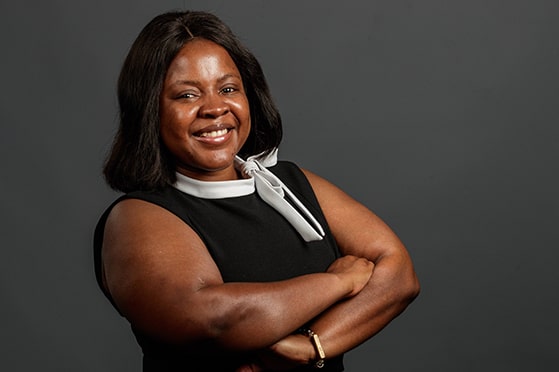
On her first flight from Ghana to the United States, Sylvia Ofori arrived in Atlanta, Georgia, at 1 a.m. By 4 o’clock the next afternoon, Ofori was in her first American classroom in Georgia Southern University’s Jiann-Ping Hsu College of Public Health on the Statesboro Campus. Jet-lagged and attempting to absorb a foreign campus and classroom procedures, Ofori was out of sorts when her professor, Isaac Chun-Hai Fung, Ph.D., encouraged her to apply for a student research position following class introductions. Within days, she’d interviewed and earned the spot, supported by funding from the Centers for Disease Control and Prevention. In their first meeting, Fung challenged Ofori to publish 10 papers by the end of her public health doctoral program. “I wasn’t familiar with publications, but he threw that challenge at me from the beginning,” Ofori remembered. “Wow. His plan was for me to start working on dissertation-related projects immediately.” Ofori’s first project was a scoping review on the use of digital technology to improve and monitor handwashing in children. Following a presentation of her review at the University’s 2019 Research Symposium, her work was published in an academic journal, and many more followed as co-author with Fung and another mentor, Kamalich Muniz-Rodriguez, DrPH. By the end of her doctoral training, Sylvia had published 11 papers with Fung, and three more manuscripts will be submitted. On May 13, Ofori earned a DrPH in public health with a concentration in epidemiology as she crossed the stage in one of two Savannah commencement ceremonies. In June, she’ll begin as a Postdoctoral Fellow in the Department of Epidemiology at Harvard University to continue global public health research she began at Georgia Southern. There's a full article detailing Sylvia's amazing story - and her success to date. It's attached here: If you're a reporter looking to know more about Sylvia's story, or how Georgia Southern has students from around 100 countries across the world currently studying on both the Statesboro Campus and the Armstrong Campus in Savannah. Simply reach out to Georgia Southern Director of Communications Jennifer Wise at jwise@georgiasouthern.edu to arrange an interview today.

Georgia Southern launches Asian Studies Digital collection
Georgia Southern University Libraries and Nalanda Roy, Ph.D., recently launched a digital collection, “An Integral History: Asian Studies Digital Archive.” The archive provides a curated collection of multidisciplinary resources in support of the Asian American and Pacific Islander community in the United States. Contributions are curated from Digital Commons, the University’s open-access institutional repository, and highlight Georgia Southern’s scholarly and cultural assets related to the Asian Studies minor. The collection represents faculty and student research, books, videos, community resources and campus events. “The Asian Studies Digital Archive is an important addition to Georgia Southern’s collections because developing an understanding of other cultures will create a cultural awareness,” said Roy, an associate professor of international studies and Asian politics and coordinator of the University’s Asian Studies program. “It will also teach us to have more meaningful interactions with others around us, and celebrate our differences and similarities.” Each May, Asian American and Pacific Islander Heritage Month is observed to recognize the Asian Americans and Pacific Islanders who have contributed to American history, society and culture. The Asian Studies Digital Archive will carry that legacy forward, and continue to grow, as faculty are encouraged to participate in the initiative. “As the coordinator of the Asian Studies program at Georgia Southern University, creating the Digital Archive has been a dream project,” said Roy, who is a Certified Diversity Executive and a former Inclusive Excellence Faculty Fellow at Georgia Southern. “I am very happy to work with the Georgia Southern Libraries to create a resource that will be helpful to both the Georgia Southern and local communities.” For more information on the Asian Studies Digital Archive, visit: Facts about Asian American and Pacific Islander Heritage Month *U.S. Census Bureau 1978 — Congress passed a resolution creating Asian/Pacific American Heritage Week. 1992 — The observance expanded to a month (May), timed to coincide with two important milestones in Asian/Pacific American history: arrival of the first Japanese immigrants in the United States (May 7, 1843) and completion of the transcontinental railroad on May 10, 1869 (the majority of workers who laid the tracks were Chinese immigrants). 2020 — Total Asian population in the U.S. is roughly 6% or 20 million. 5.1 million — The estimated number of the Asian population of Chinese, except Taiwanese, descent in the U.S. in 2020. The Chinese (except Taiwanese) population was the largest Asian group in the U.S. 690,000 — The estimated number of total Native Hawaiian and Other Pacific Islander population in the U.S. 607,010 — Native Hawaiian residents make the largest NHPI group in the U.S If you're a reporter looking to know more about "An Integral History: Asian Studies Digital Archive" - then let us help with your coverage and stories. Nalanda Roy, Ph.D., is available to answer your questions - simply reach out to Georgia Southern Director of Communications Jennifer Wise at jwise@georgiasouthern.edu to arrange an interview today.

Georgia Southern students expand communication disorder awareness amidst Deaf Culture Renaissance
At Georgia Southern, a group of students is taking courses to grow the number of interpreters in their communities and their fields. Each student comes to class with their own motivations to learn ASL. “Most of the deaf people, myself included, feel kind of depressed,” signed Angellia Burnett, a volunteer assistant in Georgia Southern University’s American Sign Language (ASL) course. “We miss a lot of things in life, because it has always been a struggle with communication.” Burnett grew up deaf, and is the only person in her family who is deaf. Members of her family speak ASL, but she said many in the Deaf community continue to be left out of family conversations because not everyone will sign all of the time. This leaves Deaf family members feeling isolated even within their own homes. “Not everyone accepts my deafness,” Burnett signed. “They need to know Deaf culture. They need to accept that.” One of the most effective ways of accepting someone is by understanding the challenges they face. Over the past few years, the world has experienced a Deaf culture renaissance, where the inclusion of people who are deaf becomes more mainstream. Recently, the film “CODA,” which stands for “children of deaf adults,” won the 2022 Academy Award for Best Picture. This brought Deaf culture further into the spotlight, opening many eyes into the lives of those with hearing impairments. “What that means is it embraces the entire community,” said Dana Taylor, Ph.D., Georgia Southern adjunct professor and sign language interpreter. “It’s not isolating one group as being different. Individuals get to see the struggles and challenges and the triumphs that people experience.” At Georgia Southern, a group of students is taking courses to grow the number of interpreters in their communities and their fields. Each student comes to class with their own motivations to learn ASL. Some are learning sign language because they have people in their lives with hearing impairments or other communication disorders where sign can be advantageous. Others are there to develop their Sign skills as a professional tool. “If I had a client who spoke ASL, I’d be able to communicate with them better or make them feel more comfortable,” said Ricki Botsford, speech pathology student. “I’ve learned a lot about how broad communication can be, because there are so many ways to communicate outside of the verbal option.” When the students were asked if they had tried learning other languages like Spanish or French, every hand was raised. When asked if they stuck to learning them, all but a few went down. So what makes Sign different? “It’s a lot easier to integrate into every day,” said Adia Greer who’s studying to be an athletic trainer for Deaf athletes. “I can speak it verbally, but I can also sign it. I’ve picked up signing to my cat a lot. She doesn’t understand it, but it allows me to practice.” While the students practice Sign with their pets and favorite TV shows, Burnett continues to come to class to help show her students the world they share, but not the one they see. Georgia Southern has a network of Student Accessibility Resource Centers on the Statesboro and Savannah campuses providing interpreters for students who want to attend classes and interact with their environment, as well as many other resources for students who are hard of hearing. “The whole world needs to learn Sign,” Burnett signed. “I want to see people motivated to learn. I see a lot of Hearing people who are motivated to learn, and a lot of Deaf people that want to help make them successful. I’m really proud that I can help in that.” If you're a reporter looking to know more about this important topic - then let us help with your coverage and stories. Dana Taylor, Ph.D., is available to answer your questions - simply reach out to Georgia Southern Director of Communications Jennifer Wise at jwise@georgiasouthern.edu to arrange an interview today.

Housing bubbles, student debt, stagnant salaries – America need a reset?
There’s an old saying we all know about those who don’t pay attention to history … they’re doomed to repeat it. Over and over and over sometimes. One would think after the 2008 housing crisis that nearly decimated the American and global economy – that we’d all be somewhat wiser. According to some, that may not be the case. America is once again approaching the same cliff it took a decade to climb up from. The measures that were put in place to prevent massive amounts of foreclosures a decade ago are now coming home to roost. “This massive problem of underwater homeowners could not be resolved only by shutting off the spigot of foreclosures. That is why a total of 25 million permanent mortgage modifications and other so-called 'workout plans' were put in place from 2008 until June 2018 according to data provider Hope Now. Modifying mortgages as an alternative to foreclosure just kicked the can down the road. It succeeded in bringing these delinquent homeowners into current status. Yet millions of them are re-defaulting on these modified mortgages. The number of re-defaults is increasing relentlessly around the U.S. Worse yet, many re-defaulters are on their second- or third mortgage modification.” - MarketWatch Mortgages once again are vulnerable as the housing market remains painfully out of sync with the rest of the economy. As well, with millennials facing massive student debt, a shortage of new builds means fewer people can enter the market nor can they afford to. Combine that with salaries flatlining and not keeping pace with the rising price of goods – it’s not a sunny forecast. Are you covering this potential financial crisis? What will America have to do to course correct and ensure we don’t have a repeat of the 2008 meltdown? And how did the country’s leaders allow this to happen? Did no one see this coming? There are a lot of questions and that’s where an expert from New Jersey Institute of Technology can help. Professor Michael Ehrlich's research focuses on financial markets and institutions, with an emphasis on market failures. He has written about the unintended consequences of financial market innovation and is Associate Director of the Leir Center for Financial Bubble Research. To reach Michael, simply click on the button below.


Using biosensors to detect disease, pain, pollution and weapons
Air pollution, chemical weapons, diseases, drugs and signs of life on other planets — all can be detected with biosensors. The development of high tech to do this job — when canines or conventional tests aren’t practical — is a field that spurred NJIT’s Omowunmi Sadik into action. Case in point: Sadik created a sensor that detects the novel coronavirus using the power of a smartphone — "So simple it can be 3D-printed by undergraduates," she explained — and there are even biosensors that can measure pain. The latter are especially useful for those who can't accurately communicate due to age or health. Sadik, a distinguished professor of chemistry and environmental science, leads NJIT's BioSMART Center and is a fellow of the American Institute of Medical and Biological Engineering, Royal Society of Chemistry and African Academy of Sciences. To interview her, simply click on the button below.


Sharks, remoras, cavefish: how they move
Anatomy, biomechanics, physiology and hydrodynamics can tell you a lot about how fish swim, hitch rides, even walk. And that knowledge has myriad applications, including designing sensors that stay stuck to mammals and amphibious vehicles for the U.S. Navy. A pioneer in such research is NJIT’s Brooke Flammang, a Harvard-trained expert in fish locomotion. As director of the university’s Fluid Locomotion Laboratory, Flammang can answer all kinds of questions about fish but is particularly knowledgeable about: How sharks use their fins to propel themselves How remoras stay attached to whales despite relentless currents How cavefish walk As she explains, “I’m really interested in the anatomy and physiology of animals … how it works and how they’re able to just do the things that they do.” To interview Flammang, who Scientific American recognized as “one of the best shark biologists,” simply click on the button below.
