
Experts Matter. Find Yours.
Connect for media, speaking, professional opportunities & more.
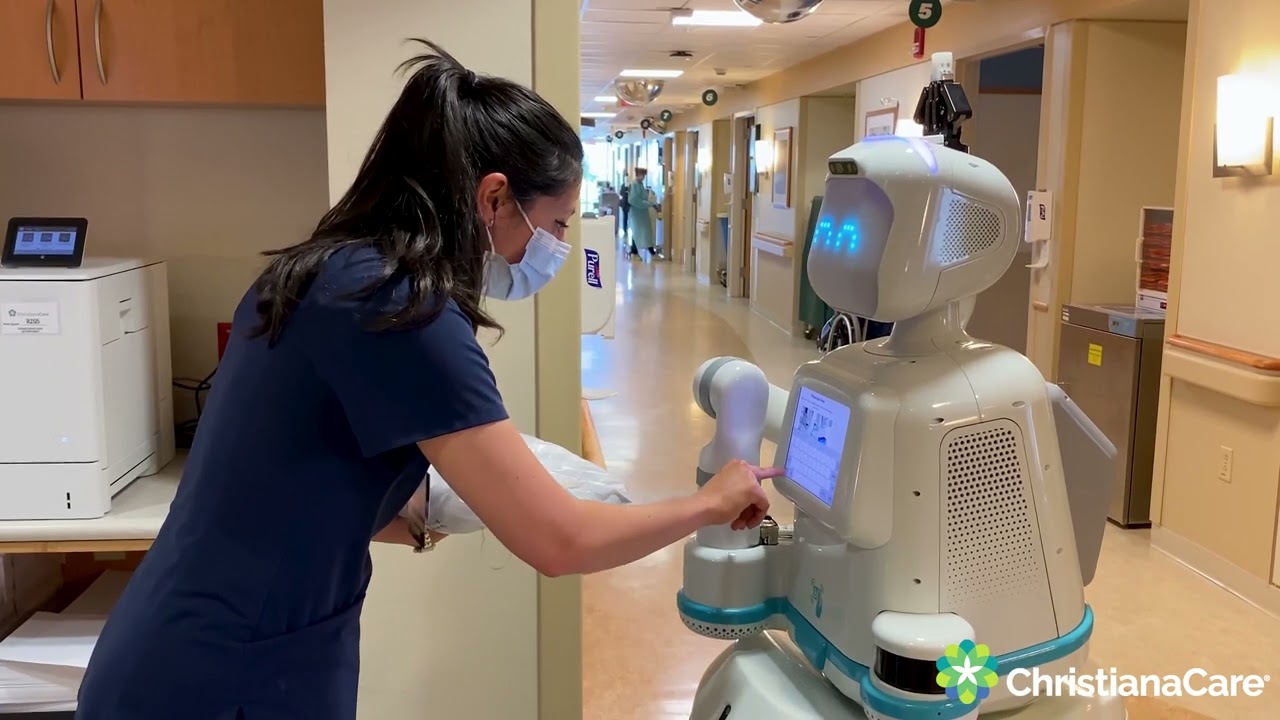
ChristianaCare is the first health system in the Philadelphia region piloting an innovative tool called Moxi, a collaborative robot — or “cobot”— that can assist in the hospital by making deliveries and performing other non-clinical tasks so that nurses and other clinical staff can spend more time focused on what they do best—caring for patients. With a landmark $1.5 million grant from the American Nurses Foundation, ChristianaCare will deploy a total of five Moxi cobots at Christiana Hospital. It is the largest single grant in the history of Nursing at ChristianaCare. Research published in the Journal of Nursing Management shows that nurses spend a significant amount of time — up to 33% of their shifts — on time-consuming but simple tasks such as dropping off lab specimens, collecting supplies or picking up medications from the pharmacy. By taking over these time-consuming but simple tasks, Moxi enables nurses to focus on patient care, where their skills are most needed. “Nurses need the time and space to deliver care and patient education at the top of their license,” said Ric Cuming, Ed.D., MSN, RN, NEA-BC, FAAN, chief nurse executive and president, ChristianaCare HomeHealth. “Moxi will be doing those hunting and gathering tasks such as getting equipment and supplies, which nurses are doing today but don’t need to be doing.” Cobots are designed to share workspace and interact directly with people. In ChristianaCare’s initiative, the Moxi cobots will be integrated with the Cerner Corporation electronic health record (EHR) platform and use artificial intelligence to proactively identify when nurses will need equipment, supplies, medications and lab tests. The Moxi cobots will be deployed to 11 inpatient units, partnering with more than 400 nurses. The American Nurses Foundation grant will enable ChristianaCare to evaluate the impact of cobots on nursing practice with the goal of scaling the technology if successful. “Moxi is not a replacement for a nurse or nursing position — or any position,” Cuming said. “It is an additional resource for nurses and their teams. “With robotic technology, we are using resources wisely and effectively, creating more efficient workflows, reducing repetitive tasks and freeing up nurses’ time for the complex clinical work that they excel at doing.” Reimagining Nursing ChristianaCare is one of 10 grant recipients from the American Nurses Foundation Reimagining Nursing (RN) Initiative. “We are proud that the American Nurses Foundation has the confidence in bold nurse-led ideas that will lead to large-scale, replicable change,” said Katherine Collard, MS, RN-BC, chief nursing informatics officer at ChristianaCare. “This grant will support nurses at ChristianaCare and our nursing colleagues across the nation in realizing their full potential, giving them the tools, resources and power to improve health care now and in the future.” With the American Nurses Foundation grant, ChristianaCare will conduct research on driving nursing outcomes through robotics. “We have a transformative opportunity to generate new knowledge and to move the science forward around robotics in nursing and in health care,” said Susan Birkhoff, Ph.D., RN, nurse scientist at ChristianaCare. “Through research, we will study Moxi’s impact to nursing caregivers that will have broad implications for nursing practice, workforce and education,” she said. ChristianaCare began exploring the potential of robotics to support Nursing with two Moxi cobots acquired in February, funded through the generosity of donors including Good Samaritan, Inc. and E.J. “Woody” Rice. With the grant, said Birkhoff, ChristianaCare will take Moxi to the next “bold frontier,” adding three more cobots with the goal of automating and optimizing nurses’ workflow without interrupting care. With five total cobots, ChristianaCare will be home to the largest number of Moxi robots in health care. The Little Bot That Can Before Moxi can become fully part of the care team, it must learn to navigate the hospital and respond to the nurses’ needs. Using artificial intelligence, Moxi is mapping out Christiana Hospital through sensors and other machine-learning technology so that the cobots can ultimately navigate and work autonomously. “When the Moxi cobots are fully integrated, we anticipate that they will complete up to 200 delivery tasks a day,” Collard said. “By making point-to-point deliveries, Moxi can save nurses hours of time and thousands of steps.” Designed to be compatible with the busy environments of hospitals, Moxi’s features include: Social intelligence: Moxi won’t bump into people or objects in hallways, waves when it sees someone new and happily poses for selfies. Mobile manipulation: Moxi can learn to use its robotic arm to operate existing automatic doors and elevator panels. Human-guided learning: The more Moxi is used, the more Moxi learns and adapts to the environment and specific ways of doing things. Friendly and safe design: With heart-shaped eyes and a friendly appearance, Moxi is designed to navigate safely and get the job done so nurses can focus on patient care. “What Moxi is doing in health systems like ChristianaCare is really transforming the way we think about health care and allowing staff to focus on the people in the hospital as opposed to the tasks,” said Dr. Andrea Thomaz, CEO and co-founder of Diligent Robotics, which created Moxi. “Robots are not something way in the future. Our robots work side-by-side with humans to ease the stress and workload of one of the most demanding jobs in society, nursing. The partnership between Diligent and ChristianaCare shows that the future is now.” Hospital Helper Directly from the Cerner EHR, Moxi will be able to anticipate clinician and patient needs and perform tasks without human involvement. Examples could include: Delivering items to patients based on nurses’ order requests. Making rounds across units to deliver lab samples on collections completed in the electronic health record. Making just-in-time deliveries of pharmaceuticals not stocked on the floor. Prioritizing tasks based on the nursing workload in a unit, so that the busiest nurses will get help first. “Connecting Moxi to the existing technology that clinicians use on a daily basis is key to making it easier to anticipate needs so clinicians can spend more time on patient care,” says Eva Karp, DHA, MBA, RN-BC, senior vice president, chief clinical and patient safety, Cerner. “Moxi could make a real difference in a nurse’s day — alleviating burnout and staffing shortages, which have become especially prevalent since the pandemic.” Incorporating the electronic health record into Moxi is part of the study funded by the American Nurses Foundation. “It’s absolutely in the best interest of our patients that Moxi can work alongside nurses so we can spend more time working directly with our patients to do what we do best,” said Pam Owen, MSN, RN-BC, nurse manager on 7E, one of the pilot units. “And Moxi brings a smile to people’s faces.” Fast Facts About Moxi Works in 22-hour shifts. Needs only two hours of charging time. Weighs about 300 pounds. Can carry a total weight of 70 pounds. Gender-neutral. Pronouns are “it” for a single Moxi cobot and “they” for more than one. Named one of America’s Greatest Disruptors in 2021 by Newsweek and one of the Best Inventions of 2019 by Time Magazine. About ChristianaCare Headquartered in Wilmington, Delaware, ChristianaCare is one of the country’s most dynamic health care organizations, centered on improving health outcomes, making high-quality care more accessible and lowering health care costs. ChristianaCare includes an extensive network of primary care and outpatient services, home health care, urgent care centers, three hospitals (1,299 beds), a freestanding emergency department, a Level I trauma center and a Level III neonatal intensive care unit, a comprehensive stroke center and regional centers of excellence in heart and vascular care, cancer care and women’s health. It also includes the pioneering Gene Editing Institute. ChristianaCare is nationally recognized as a great place to work, rated by Forbes as the 2nd best health system for diversity and inclusion, and the 29th best health system to work for in the United States, and by IDG Computerworld as one of the nation’s Best Places to Work in IT. ChristianaCare is rated by Healthgrades as one of America’s 50 Best Hospitals and continually ranked among the nation’s best by U.S. News & World Report, Newsweek and other national quality ratings. ChristianaCare is a nonprofit teaching health system with more than 260 residents and fellows. With its groundbreaking Center for Virtual Health and a focus on population health and value-based care, ChristianaCare is shaping the future of health care.



Expert Opinion: Understanding Whiteness to Understand White Supremacy
In the aftermath of last week's tragic shooting in Buffalo, many have described the violence as representative of a mental health crisis, growing extremism, hatred, and bigotry, likening manifestos left by shooters as the racist rhetoric of radicalized individuals. "But that conclusion is a pleasant fiction," writes Matthew Hughey -- a professor of sociology at UConn and a renowned scholar of racism and racial inequality in identity formation, organizations, media, politics, science, religion, and public advocacy -- in a powerful new essay for Slate. As part of his work as a researcher, Hughey examines the manifestos of white-supremacist shooters as well as their intersection with race, knowledge, media, power, religion, and science. To understand white supremacy and the violence it precipitates, Hughey explains, we need to first understand whiteness: The category of whiteness, like “race,” is a biological fiction with a social function. Whiteness emerged early in American history to rationalize exploitation. Early American colonists were slow to develop racial worldviews. But by the mid-1600s, philosophers and scientists like Bernard Varen, John Ray, and François Bernier began to publish ideas about African savagery and European civilization, which were progressively applied to resolve who should be the rulers versus the ruled. These ideas were codified into our legal system. In 1662, for instance, British statutory law conferred slavery with a biological status: Any child born to an enslaved woman would also be a slave. Over time, through a series of laws and social mores, a hierarchy that conferred legal privileges to “white” men, while stripping Black people and Native Americans of their humanity and standing in the legal and political arenas, was cemented. Put another way, whiteness is not an inherent identity so much as a consolidation of lofty biological, legal, and theological notions that serve to buttress the social and political power of people bearing lighter skin. As W.E.B. Du Bois points out in his 1920 essay “The Souls of White Folk,” whiteness is a modern concept: "The discovery of personal whiteness among the world’s peoples is a very modern thing. … The ancient world would have laughed at such a distinction. … This assumption that of all the hues of God whiteness alone is inherently and obviously better than brownness or tan leads to curious acts. … I am given to understand that whiteness is the ownership of the earth forever and ever, Amen! Now what is the effect on a man or a nation when it comes passionately to believe such an extraordinary dictum as this?" The effect is a Faustian bargain. And as a result, whiteness exists in a state of perpetual social anxiety. White people are taught that their biological, cultural, and/or God-given nature is to be “inherently and obviously better” than people of color and to have “ownership of the earth.” These ideals are, of course, so lofty that they are unachievable. Discontent is inevitable. Whiteness is a deal with the devil. Consequently, white people move neither into nor out of moments of racial anxiety, nor do they—despite the popularity of the cliché—experience flashes of “white fragility.” Whiteness does not wax or wane relative to racial pressures, cracking to expose either reactionary political movements or even the occasional mass shooting. Rather, whiteness is an omnipresent imbroglio; it cannot live up to the greatness it assumes it can naturally realize. Reconciling the peril that results from the inability to fully manifest white power necessitates a scapegoat. And so the crisis of whiteness is continually externalized onto racial “others.” This helps to explain why an increasing number of white people now believe they have been cheated out of their birthright—an inheritance of domination stolen by people of color. White nationalism and supremacy could not function under absolutist apartheid; it is an ideology and practice that requires the presence of people of color to justify its own shortcomings. White peril and white power go hand in hand. Professor Hughey is available for interviews -- click on his icon to contact him today.



In a post-COVID workplace, do employees hold the cards when it comes to work-life balance?
For the most part, COVID-19 is in the rearview mirror for the businesses, restaurants and workplaces it played havoc with for the better part of two years. As Americans pivot back to normal, there are a few things the pandemic may have changed for good. How we work and the dynamics of the traditional American workplace are likely among those permanent changes. For some Americans, the novelty of working from home may shift back to the traditional workplace, but experts say that is dependent on industry, job roles and location. Meanwhile, some employers are now realizing the benefits and efficiencies of working from home with less rigid 9-5, Monday-to-Friday schedules. Employees are working more, costing less and still delivering. The new workplace is a topic that is top of mind. Work-life integration is quickly becoming part of policy and procedure for employers as it remains a priority for employees. "Some employers simply don’t have a choice," said Melissa Furman, a leading management consultant and lecturer in the James M. Hull College of Business at Augusta University. "If they are not recognizing the needs of their employees, they are going to have a hard time recruiting and retaining employees. 'Work-life balance' is a dated term that is recognized by the older generations. "The younger generations are seeking 'work-life integration' and in some cases view their jobs as 'side hustles' to support their career of 'life.'" There are many different mindsets present in the workplace and employers need to better understand the needs and preferences of their employees and “one size does not fit all,” adds Furman. "This environment has created some new/unique challenges for organizational leaders." There are a lot of questions to consider when it comes to how America adapts to the new working environment, and if you are a journalist covering this topic, that’s where Augusta University can help. Furman is a respected leader in management with over 20 years of business coaching, mentoring and higher education administration. She's available to speak with media; simply click on her icon to schedule an interview today.


UConn Expert Weighs In On 'What Drives a Black Mass Shooter?'
“We would be missing a critical moment," says Dr. Wizdom Powell, "for us to look at the systems that we have set up and ask ourselves, are we serving every person who has a mental health need well, and if we’re not, what are we going to do about it?” Director of the Health Disparities Institute and associate professor of psychiatry at UConn Health, Dr. Powell studies the impact of modern racism and gender norms on African American male health outcomes and healthcare inequities. In a recent interview with the Amsterdam News following a mass shooting incident involving an alleged Black suspect, Dr. Powell weighed in the ways in which implicit racism can frame how law enforcement classifies shootings, the importance of deconstructing harmful racial and gender stereotypes, and the delivery of mental health services to communities and individuals in need: “When you call something gang violence, I think people’s empathy goes down to zero because they think those people are killing themselves,” said Powell. “You know, it’s their problem. Nevermind the victims.” Powell said that in the event of a mass shooting incident there is usually a “sympathy” conveyed for a person as a “complicated human” as opposed to a person of color who was involved in a gang shooting. “When do you get a full picture of that person? Who they were as a child, all of the traumas they experienced, their lack of resources,” said Powell. Powell thinks there’s a conflation in general between individuals who are mentally ill and those who commit mass shootings. She said mass shootings are a massive public health crisis with many factors contributing, with mental illness being one of many. ********** Powell said that the emotionality or interior lives of Black men are always spoken about with an undue amount of concentrated attention on their anger. She strives to deconstruct the stereotype of the ‘angry Black male.’ She said that there is a prevailing presumption that anger is somehow bad or pathological when it’s actually a legitimate response to emotional suffering and injustice. So when an incident that fits the stereotype of the ‘angry Black male’ occurs, people hyper focus on it because it confirms their bias. “I think there is a disproportionality in our reporting about these incidents by race,” said Powell, “we also tend to paint the picture of these shooters more sympathetically, when the shooters are non-Hispanic white males as opposed to males from other socially marginalized groups.” In the 1960s, said Powell, there was a shift in the way that the field of psychology and psychiatry viewed Black men and their symptomatology while civil rights protests were erupting around the country. Prior to the ’60s “middle class, white housewives” were diagnosed with schizophrenia more often, but there was a sharp uptick among Black males afterwards. “Again, reminiscent of an earlier time where Black people’s quest for liberation was pathologized,” said Powell. Powell said that health and science is still at the “tip of the iceberg” in identifying symptoms of depression in Black men. She said her studies have found that societal racism or experiencing racism or secondary traumas of racial reckoning is definitively at the root of Black and Brown male depression. Dr. Powell is available to speak with media – simply click on her icon now to arrange an interview today.

Disney, DeSantis, and Corporate Dilemmas
The Florida state legislature recently voted to end the Walt Disney Co.’s special tax district, which has permitted the Orlando amusement park to govern its land and save millions each year in taxes. The decision followed a clash between Disney executives and Florida Gov. Ron DeSantis over recent legislation that prohibits instruction on sexual orientation or gender identity for children in kindergarten through Grade 3. UConn's Professor Robert Bird, the Eversource Energy Chair in Business Ethics and past president of the Academy of Legal Studies in Business, sat down with UConn Today to talk about clash between the corporation and Florida government as well as the implications for other companies that may be facing similar moral and ethical dilemmas: Q: There are so many layers to this story, from taxation to self-governance, political power to human rights. What strikes you as most significant? From one perspective, this is a debate over the role of LGBTQ+ education in schools. From another perspective, this raises the broader issue of the implications of private companies speaking and acting on matters of public policy. Corporations can no longer remain neutral or silent on major issues facing American society. Consumers, employees, shareholders, and the public are increasingly expecting companies to take a stand on controversies that matter to them. Just as some companies are being punished for not severing their relationships with Russia, because of Russia’s invasion of Ukraine, so are companies like Disney expected to speak out against public policies that contradict the values of its stakeholders. Q: Why does Disney play an important role in this issue? Disney is an important participant in the underlying “Don’t Say Gay” dispute. Disney has a powerful public brand and takes care to cultivate a family-friendly image worldwide. Disney has also been a long-standing leader in supporting LGBTQ+ rights. Disney has provided health benefits to same-sex partners since 1995, and allowed “Gay Days” at Walt Disney World since 1991. Public opinion was more hostile toward LGBTQ+ rights then, and Disney stood by its values even with the ensuing controversy. For Disney to “stand down” when so many people were advocating for Disney’s support in opposition to the bill, would have eroded its long-standing support of gay rights generally. Q: What message does this send to other CEOs who might be caught in a moral, ethical, or environmental debate with government leaders? The message sent to other companies is that politicians will not remain idle if a company opposes favored legislation or enters the sphere of public debate. Firms need to walk a fine line between standing up for their values and eroding relationships with political leaders. This is an important story, and if you're a reporter looking to know more or would like to schedule and interview with Professor Bird, then let us help. Click on his icon now to arrange an interview today.


What the CDC's Updated Developmental Guidelines Mean for Parents
The Centers for Disease Control and Prevention (CDC) recently revamped their developmental guidelines for children for the first time in years, allowing parents to know earlier if their kids may be experiencing any delays. Villanova University nursing professor Michelle Kelly, PhD, CRNP, CNE, recently commented on the new guidelines: "The CDC and American Academy of Pediatrics (AAP), in response to birth provider and parent input, took a critical look at existing developmental milestones tools and handouts. Surveillance and handouts are typically parent facing items that can be used to determine if a child is meeting age-expected developmental targets." "That is in contrast to screening which is more structured, based on the surveillance but done by a primary care provider and used for referral for services, and evaluation which is done by a developmental specialist with the intent to diagnosis." "The CDC and AAP have done a thorough overhaul of developmental milestone surveillance (as opposed to screening and evaluation) to attempt to make the milestones 'evidence-based' and where possible norm-referenced." "Another major change is that the milestones are set for greater than 75%, rather than 50%. This means they are targets that 75% of children that age would have met. This eliminates phrases in the previous milestones that were confusing, such as a child 'may begin' a task at one age, but also should be doing it at the next age." "Perhaps the biggest win for children born preterm and others at risk for developmental delays is the 75% expectation virtually eliminates the 'wait and see' that occurred when the expectation was that 50% of children would exhibit a skill at that age. This means that families who have concerns, or whose children are not meeting the age-appropriate milestones, should be more readily referred for evaluation and intervention." "Additionally, an increased emphasis is placed, compared to the previous version, on open-ended questions to elicit parent concerns and ways for families to promote age-appropriate development."


Questions about colon cancer? Our experts are here to help with your coverage
Every year, National Colorectal (colon) Cancer Awareness Month is observed during the month of March in an effort to raise awareness of the importance for colon cancer screenings. The recognition offers health care providers the opportunity to educate the general public about a disease that can be preventable, but can sometimes be seen as difficult for patients to discuss with their doctors. In the spirit of education, one of Augusta University’s experts has provided some insight into the subject of colon cancer. Dr. Asha Nayak-Kapoor is an associate professor of medicine in the Division of Hematology/Oncology in the Department of Medicine at the Medical College of Georgia at Augusta University. Nayak is certified by the American Board of Internal Medicine in Hematology and Oncology Specialties. Q: What are the primary risk factors for colon cancer? “Risk factors for colon cancer include: being overweight or obese, not being physically active, certain types of diets, smoking, alcohol use, being older, a personal history of colorectal polyps or colorectal cancer, a personal history of inflammatory bowel disease, a family history of colorectal cancer or adenomatous polyps, having an inherited syndrome. Common symptoms of colorectal cancer include: bloody stool or rectal bleeding, an ongoing change in bowel habits (diarrhea, constipation, chance in stool consistency), abdominal pain or cramping, gas or persistent abdominal discomfort, you feel like your bowels are not voiding completely, weakness, fatigue, or unexplained weight loss.” Q: How can a person protect themselves from the risks of colon cancer? “Colon cancer is largely preventable if patients undergo screening tests, like a surveillance colonoscopy starting at 45 years or earlier depending on family history. Many lifestyle-related factors have been linked to colorectal cancer. In fact, the links between diet, weight, and exercise and colorectal cancer risk are some of the strongest for any type of cancer. Getting to and staying at a healthy weight may help lower your risk. A diet that's high in red meats (such as beef, pork, lamb, or liver) and processed meats (like hot dogs and some luncheon meats) raises your colorectal cancer risk. Cooking meats at very high temperatures (frying, broiling, or grilling) creates chemicals that might raise your cancer risk. It’s not clear how much this might increase your colorectal cancer risk. Stop smoking. It is best not to drink alcohol. People with a history of colorectal cancer in a first-degree relative (parent, sibling, or child) are at increased risk. The risk is even higher if that relative was diagnosed with cancer when they were younger than 50, or if more than one first-degree relative is affected.” Q: It sometimes seems that colon cancer prevention is aimed more towards men compared to women, but cancer.org lists the risks at 1 in 23 (4.3%) for men and 1 in 25 (4.0%) for women. Is there a reason why perhaps a stigma about colon cancer affecting men more has been created? “According to focus group studies, it can be seen as a taboo topic that is uncomfortable to discuss, and it is not discussed as openly in public as prostate and breast cancer screenings. It can seem embarrassing or humiliating, and can be seen as distasteful dealing with prolonged bowel preparation.” Nayak is a member of several committees, including Onyx and Bayer Speaker Bureau for Nexavar, MCG Cancer Center Molecular Oncology Programme, and MCG Cancer Center Gastrointestinal Tumor Board Committee. If you are a journalist looking to know more about colorectal cancer and would like to speak with an expert for your stories, then let us help. Nayak is available to speak with media about this important subject. Simply click on her icon now to arrange an interview today.


ChristianaCare MICU becomes first in United States to renew Beacon Award for Excellence for fifth-consecutive three-year cycle ChristianaCare’s Medical Intensive Care Unit (MICU) has earned an unprecedented honor from the American Association of Critical-Care Nurses. Among the thousands of intensive care units in the United States, ChristianaCare’s MICU is the first unit in history to earn a Beacon Award for Excellence from the association, also known as AACN, five times in a row. The Beacon Award is one of the highest achievements in nursing. The recognition lauds hospital units that employ evidence-based practices to improve patient and family outcomes. The award provides gold, silver and bronze levels of recognition to hospital units that exemplify excellence in professional practice, patient care and outcomes. Of the six Beacon Award-winning patient care units currently in the state of Delaware, five are at ChristianaCare: MICU (gold – five-time winner). Cardiovascular Critical Care Complex (gold – three-time winner). Transitional Medical Unit (silver). Surgical Critical Care Complex (silver). Transitional Surgical Unit (silver). ChristianaCare was one of 34 hospitals in the nation in 2021 with multiple units receiving Beacon Awards. Beacon Award designations are active for three years. “Through their relentless and uncompromising pursuit to deliver care that is nonpareil, the nurses of ChristianaCare’s MICU have become the paragon of what our profession can accomplish,” said Ric Cuming, EdD, MSN, RN, NEA-BC, FAAN, ChristianaCare’s chief nurse executive and president of ChristianaCare HomeHealth. “The success of our ChristianaCare MICU, even in the face of this pandemic, also has inspired our health system’s other intensive care units to achieve unprecedented gains in safety and quality that have been recognized with the AACN’s Beacon Award, the touchstone by which all critical care nursing excellence and quality are measured.” Success in caring for patients amidst COVID-19 ChristianaCare’s values of love and excellence are at the heart of the 24-bed MICU at Christiana Hospital, which holds the most Beacon Awards in Delaware. This year’s award is especially meaningful on the heels of yet another difficult surge of COVID-19. “It is a testament to our nurses and the entire care team that we continued to reach milestones in patient safety and satisfaction even during the COVID-19 pandemic,” said Carol Ritter, MSN, RN, CCRN-K, CNML, who has been nurse manager on the MICU for 10 years and a leader on the unit during all of its Beacon Award wins. “Everyone brings a level of expertise to the unit. We truly serve together.” Beacon awards celebrate the professional dedication that a nursing team demonstrates in going above and beyond to provide respectful, expert care. “Meaningful recognition takes on even greater relevance and importance as we continue to meet the challenges of the COVID-19 pandemic,” said AACN President Beth Wathen, MSN, RN, CCRN-K. “Being recognized as a Beacon unit underscores these teams’ ongoing commitment to providing safe, patient-centered and evidence-based care to patients and families. This achievement is a tremendous honor to those who have worked so hard to achieve excellence in patient care and positive patient outcomes.” ChristianaCare is one of only 152 health care institutions in the nation and the only in Delaware to have gold-level units. In 2008, the MICU was the first unit in the state to receive the Beacon Award. MICU’s culture of continuous improvement The MICU’s commitment to data-driven, evidence-based care proved especially valuable during the pandemic’s early days. Prone positioning, a technique to help patients with acute respiratory distress syndrome (ARDS) to breathe better, had been a longtime practice in ChristianaCare’s ICU. ChristianaCare critical care nurses Maureen Seckel, MSN, APRN, ACNS-BC, CCNS, FCCM, FCNS, and Dannette Mitchell, MSN, APRN, ACNS-BC, CCRN, published an article in AACN Advanced Critical Care that described ChristianaCare’s pioneering adoption of this technique, which ultimately became standard practice nationally in the treatment of patients with COVID-19 and ARDS. “On our unit, we empower the team to provide evidence-based care and have the tools to guide the practice,” Seckel said. “Because of this we were able to incorporate a highly effective, life-saving measure into COVID-19 care early in the pandemic.” Continuous improvement is a hallmark of the unit. The MICU has seven Comprehensive Unit-based Safety Program teams that follow data-collection processes to view trends and compare them to national standards to improve care and outcomes. “The whole unit is involved in collecting data to assess and make changes,” said MICU nurse Olivia Ross, BSN, RN, CCRN. Among the MICU’s accomplishments are excellent outcomes in preventing common hospital-acquired infections, even during the pandemic: Zero instances of catheter-associated urinary tract infections in three years. Zero instances of central line bloodstream infections in one year. The unit’s dedication to being exceptional today and even better tomorrow also focused inward during the pandemic. During a time of constant change, the team recognized the need for support to handle the unprecedented stress and strain of the pandemic. “To give the most vulnerable patients the highest levels of care on a consistent basis, we needed to take care of ourselves and one another too,” Ritter said. Ritter and team leaders committed to open-door policies throughout the pandemic, and they partnered with ChristianaCare’s Center for WorkLife Wellbeing to enable licensed psychologists to round on the unit, offering real-time check-ins with caregivers to provide support. The Beacon Award has been a resounding lift and reward for the MICU team members. “Having this recognition, especially during times of distress in the community and the world, signifies excellent nursing care,” said MICU nurse Paige Merring, MSN, RN, CCRN. “And to me it signifies an amazing team and great outcomes, which is the primary purpose of why we are all here.”

Market jitters making you anxious? Our expert might have the remedy to calm your nerves.
So far, 2022 has been, in a word, volatile. With the emergence of omicron, supply chain issues choking the economy, inflation the highest it has been in decades and now the war drums beating in Europe, investors are getting nervous and the markets are showing the strain. As political guru James Carville once said, "It's the economy, stupid!" Following that sage advice, Augusta University’s Wendy Habegger is here to offer expert perspective to journalists looking to figure out just what’s going on with the markets and what investors and the public can expect in the coming months. Q: What's the best advice to give people when the stock market is on such a roller coaster ride? “Frankly put, if one can't stomach when the roller coaster drops, don't get on the ride. If one does not have much tolerance for risk, they should not invest in the stock market. If one is already invested in the stock market and breaking into a cold sweat every time they look at their stocks, then they need to take a cash position, meaning cash out of the stock market. The market does not reward anyone based upon their level of anxiety. What good is making gains on stocks if one will turn around and spend those gains treating their ulcers? I liken it to pro sports athletes who don't retire when they are still healthy. What good is all the money they earned if they are only going to be spending it on medical treatments for the rest of their lives? What kind of quality of life is that?" Q: With the market trending down right now, if people can invest, is this the best time to do so? “Whenever the market trends down, it is always a great time to buy stable companies with solid cash flows and certain commodities. Look for those companies and commodities that always do well regardless of what is happening in the economy. But remember my response to the above question. One should do this if and only if they can tolerate risk.” Q: Should people look at safer places to put their money for the time being, and what would some of those places be? “Again, this depends upon their level of risk tolerance. If they are risk tolerant, they should shift into less risky investments. If they are not risk tolerant, cash out and put it in their savings accounts or CDs.” Q: Does the emergency fund rule of thumb still come in to play, maybe now more than ever? “Yes, but I don't go by the standard rule of thumb for emergency savings – having three to six months of expenses saved. I teach students their goal should be to have 12 months of expenses saved. The three to six months rule is obsolete. We saw this with the recession of 2007-09 and with the pandemic. People need to be able to live without employment longer because there is no definitive time frame for when one will find gainful employment and the government should not be relied upon to support the mass population in the meantime. Also, even when the government does provide assistance, not everyone receives it and some still never recover from the aftermath. “ The economy is front and center for just about every American business, investor and household – and if you’re a reporter looking to know more, then let us help. Wendy Habegger is a respected finance expert available to offer advice on making the right money moves during volatile times. If you’re looking to arrange an interview, simply click on her icon now to arrange an interview today.


Dr. Janice Nevin named among Modern Healthcare’s 2022 ‘Top 25 Women in Health Care’
Nevin praised for her work expanding ChristianaCare’s efforts in health equity, value-based care and emerging technology ChristianaCare President and CEO Janice E. Nevin, M.D., MPH, has been named one of Modern Healthcare’s Top 25 Women in Healthcare for 2022. This is the second time Dr. Nevin has received this distinction. Modern Healthcare chose awardees – female executives from different sectors of the health care industry – who are guiding health care improvement by influencing policy and care delivery models across the country. A panel of judges and the top editors of Modern Healthcare made the selections. The publication focused on Dr. Nevin’s leadership in ChristianaCare’s use of innovation and technology to aid in the battle against COVID-19 and improve health equity. It also called attention to her leadership in ChristianaCare’s collaboration with Highmark Health; through a new joint venture company, ChristianaCare and Highmark are combining their expertise and capabilities to create better health and to make health care more affordable for everyone by taking costs out of the system. “I am deeply gratified by this award, but it is even more so a recognition of the incredible work all of ChristianaCare’s caregivers do every day to create better health,” said Dr. Nevin. “Living our values of love and excellence, we are transforming care and becoming not just a health system—but a system that truly impacts health.” Dr. Nevin has overseen growth at ChristianaCare during the past year that includes a joint venture with AccentCare (formerly Seasons Hospice & Palliative Care) to expand in-home hospice and palliative care services throughout Delaware and a recently announced letter of intent to acquire Crozer Health, as well as the continued integration into the health system of Union Hospital in Cecil County, Maryland, which joined ChristianaCare in January 2020. At the same time, she has worked tirelessly to ensure the system continued its tradition of clinical excellence while maintaining financial health and stability. This year, ChristianaCare was recognized for the second consecutive year by Healthgrades as one of America’s 50 Best Hospitals and by Forbes as one of the best health systems to work for in the United States. Dr. Nevin continues to promote caregiver wellbeing and health equity. For the work of ChristianaCare’s Center for WorkLife Wellbeing to support its caregivers, ChristianaCare earned a 2021 Joy in Medicine recognition from the American Medical Association. The American Hospital Association’s Institute for Diversity and Health Equity named ChristianaCare a 2021 Carolyn Boone Lewis Equity of Care Award honoree for demonstrating health equity as a priority across the organization. “ChristianaCare is lucky to have Dr. Nevin’s leadership,” said Nicholas M. Marsini, Jr., chair of the ChristianaCare board of directors. “Having Modern Healthcare recognize her extraordinary efforts and passion is a wonderful acknowledgement of what we see on an ongoing basis. Dr. Nevin is incredibly invested in the wellbeing of ChristianaCare’s workforce, the communities we serve and the future of the U.S. healthcare system.” The recognition also highlighted Dr. Nevin’s work in promoting gender equity – from building an executive cabinet evenly split between women and men to the creation of ChristianaCare’s Gender Equity Taskforce, which focuses on issues like pay equity and leadership access. The profiles of all the winners were featured in the February 21 issue of Modern Healthcare.