
Experts Matter. Find Yours.
Connect for media, speaking, professional opportunities & more.
As the war rages in Ukraine, what's next? Augusta University expert answers key questions
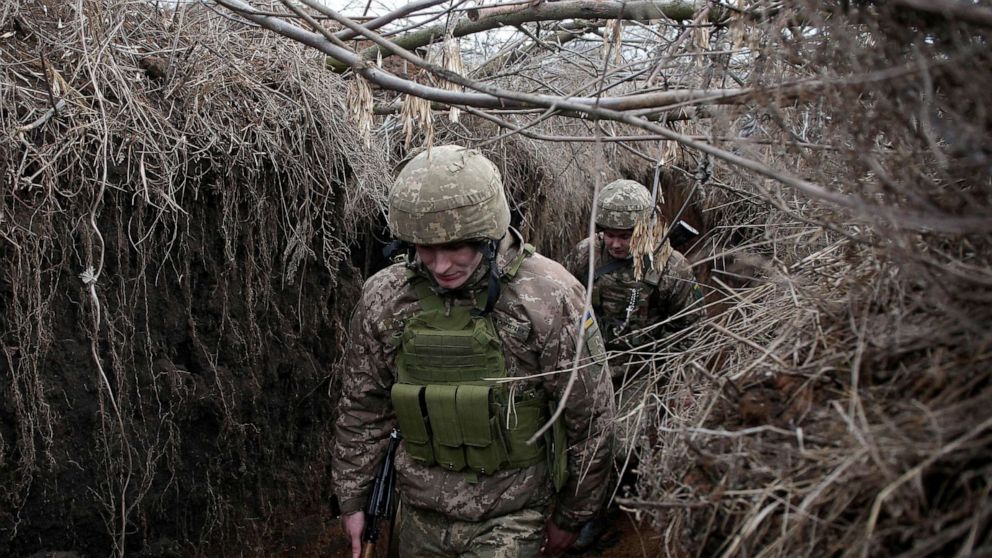
For a month now, the world has watched the invasion of Ukraine by Russian forces. The war has dominated news coverage since before the invasion, with journalists asking why Russia would invade a sovereign country and whether this could expand to an all-out war in Europe for the first time since World War II? There are still many questions to be asked, which is why we’ve enlisted Dr. Craig Albert, from Augusta University. Albert has been speaking extensively with the media answering key questions about the invasion. Q: How has Russia ramped up their war efforts and are the latest attacks a signal that they are going "all in" in taking over Ukraine? “Right now, Russia is still not fighting the war they are prepared for. In other words, they have a massive war-machine but are still only using small parts of it in this war. There are several reasons for this: they may not want to expose their hands to great powers; they may want to bring Ukraine back to the fold, so annihilating them, vis-à-vis, Grozny, might not be the best play. As it is, Russia is still poised to take Kyiv within a few months unless Ukraine has alliance boots on the ground, which is not likely since it will raise the specter of WWIII." Q: What do you expect we will see next? "I think we will most likely see the rise in dirty war tactics and techniques, with more mercenaries, more artillery bombardment, and more foreign fighters joining on both sides, especially former NATO special operations forces moving into the Ukraine International Legion, and well-paid Syrians on the side of Russia. With this increase in contract soldiers, we can expect more human rights atrocities and atrocities committed against soldiers as well as a relaxation of Geneva rules for armed conflict amongst combatants." Q. Do you expect to see Russia direct more cyber warfare the U.S. way? "I expect a steady, prolonged consistent cyber-conflict campaign waged by Russia against Ukraine and its allies, including the US. I don’t expect an escalation on this front at least at it applies to NATO forces. Russia is saving its most savvy cyberweapons for a possible larger-scaled conflict against a major power." If you’re a journalist looking to know more about what lies ahead as the war between Ukraine and Russia continues and how it may impact the United States, then let us help with your questions and coverage. Dr. Craig Albert is director of the Master of Arts in Intelligence and Security Studies at Augusta University. He is a leading expert on war, terrorism, and American politics. This is an important national and international issue. Albert is available to speak with media – simply click on his name to arrange an interview today.


(WILMINGTON, Del. – March 15, 2022) For the second consecutive year, Forbes magazine has ranked ChristianaCare as one of the best large health systems to work for in the United States. ChristianaCare ranked as the 29th best health system overall, within Forbes’ list of the 500 best large employers in the United States. ChristianaCare was the only health system in Delaware to make Forbes’ list. “At ChristianaCare, we anticipate the needs of others, help with compassion and generosity, and show respect to everyone,” said Neil Jasani, M.D., MBA, FACEP, chief people officer at ChristianaCare. “These values and behaviors start with our workforce, as we create a supportive environment that enables our caregivers to find joy in their work and provide consistently excellent care to everyone we serve.” While the pandemic has taken a significant toll on the health care workforce nationally, ChristianaCare has been recognized for its success in supporting its caregivers. The American Medical Association recently recognized ChristianaCare with the highest honor in its Joy in Medicine program, which recognizes health systems that demonstrate a commitment to preserving the wellbeing of health care team members by engaging in proven efforts to combat work-related stress and burnout. This work has been largely driven by ChristianaCare’s innovative Center for WorkLife Wellbeing, which was founded in 2016 to tackle the growing national problem of burnout in health care and help caregivers to reconnect with joy and meaning in their work. All employees at ChristianaCare are referred to as “caregivers.” Other highlights of how ChristianaCare creates a great place to work include: Benefits that include medical, dental and vision coverage, as well as a wellness incentive program and free healthy lifestyle coaching and care management, as well as access to ChristianaCare’s innovative and always-on virtual primary care, which makes health care options for busy caregivers more convenient than ever. Twelve weeks of paid parental leave for the birth or adoption of a child. An organizational commitment to anti-racism and a robust Inclusion and Diversity program that includes 10 employee resource groups (ERGs). Forbes ranks ChristianaCare as the No. 1 overall employer for diversity and inclusion in Delaware and No. 14 among U.S. health systems nationwide. A caregiver recognition program that supports a culture of gratitude and rewards caregivers who exemplify the core values of ChristianaCare. Care@Work, which provides backup care services when working families are faced with a disruption in regular childcare or other dependent care coverage. Free medical plan option for caregivers under certain income thresholds. Competitive pay at all levels. ChristianaCare was the first health system in Delaware to adopt a $15 minimum wage, in 2018. To create the list of America’s Best Large Employers, Forbes partnered with the market research firm Statista, which surveyed 60,000 Americans working for businesses with at least 1,000 employees. All responses were anonymous. Using a scale of zero to 10, the respondents rated how likely they were to recommend their employer to others. The participants also nominated organizations other than their own. The final ranking features companies with the most recommendations.


Journalism, Libel, and Political Messaging in America - UConn's Expert Weighs in
Former Alaska governor and vice presidential candidate Sarah Palin didn't cause the deadly 2011 shooting in Tuscon, Arizona, that injured Congresswoman Gabrielle Giffords, says former journalist and UConn expert Amanda Crawford in a new essay for Nieman Reports. Palin is asking for a new trial after a jury in February rejected her libel lawsuit against the New York Times. Palin sued the newspaper after it published a 2017 editorial that erroneously claimed she was responsible for the shooting. The Times quickly issued a correction. But Crawford says that, in her opinion, Palin has contributed to increased vitriol in American politics today, and that libel laws protecting freedom of the press need to be guarded: Palin, the 2008 Republican vice presidential nominee known for her gun-toting right-wing invective, is now asking for a new trial in the case that hinges on an error in a 2017 Times editorial, “America’s Lethal Politics.” The piece, which bemoaned the viciousness of political discourse and pondered links to acts of violence, was published after a man who had supported Sen. Bernie Sanders opened fire at congressional Republicans’ baseball practice, injuring House Majority Whip Steve Scalise. The Times editorial noted that Palin’s political action committee published a campaign map in 2010 that used a graphic resembling the crosshairs of a rifle’s scope to mark targeted districts. It incorrectly drew a link between the map and the shooting of Rep. Gabrielle Giffords, the Democratic incumbent in one of those districts, while she was at a constituent event in a grocery store parking lot in Tucson less than a year later. I was a political reporter in Arizona at the time, and I remember how Giffords herself had warned that the map could incite violence. “We’re on Sarah Palin’s targeted list,” she said in a 2010 interview, according to The Washington Post, “but the thing is that the way that she has it depicted has the crosshairs of a gun sight over our district, and when people do that, they’ve got to realize there are consequences to that action.” In the wake of the mass shooting in Tucson, some officials and members of the media suggested that political rhetoric, including Palin’s, may be to blame. In fact, no link between the campaign map and the shooting was ever established. As the judge said, the shooter’s own mental illness was to blame. That is where the Times blundered. An editor inserted language that said, “the link to political incitement was clear.” (The Times promptly issued a correction.) This was an egregious mistake and the product of sloppy journalism, but both the judge and the jury agreed that it was not done with actual malice or reckless disregard for the truth. That’s the standard that a public figure like Palin must meet because of the precedent set in the Sullivan case and subsequent decisions. Even if Palin is granted a new trial and loses again, she is likely to appeal. Her lawsuit is part of a concerted effort by critics of the “lamestream media,” including former President Donald Trump, to change the libel standard to make it easier for political figures to sue journalists and win judgments for unintentional mistakes. They want to inhibit free debate and make it harder for journalists to hold them accountable. -- Nieman Reports, March 14, 2022 If you are a reporter who is interested in covering this topic, or who would like to discuss the intersection between politics and media, let us help. Amanda Crawford is a veteran political reporter, literary journalist, and expert in journalism ethics, misinformation, conspiracy theories, and the First Amendment. Click on her icon now to arrange an interview today.


Understanding Ukraine and Russia's long history - let UMW's expert help
As the war in Ukraine now extends past a week, many people are trying to understand the reasoning behind Russia’s invasion of its neighbor. Like most of Eastern Europe, the ink that draws the modern borders we see now on maps is still not dry. If you are a journalist looking to know more about this topic and how the past is now affecting the future of Russia, Ukraine and likely Europe – then let our experts help with your stories. Steven Harris is a professor in the University of Mary Washington's Department of History and American Studies. He is a sought-after expert on modern Russian and European history. Dr. Harris is available to speak with media about this important aspect of the crisis in Ukraine – simply click on his icon now to arrange an interview today.



As the world watches Russia invade Ukraine – what’s next?
For a week the world has watched as Russian forces have pounded Ukraine from the sky and a full-on ground invasion is now underway. Support in the form of sanctions, speeches and supplies has poured in from NATO and non-NATO allies from across the globe. Ukraine’s army is out-manned and out-gunned, but their resistance has so far defied expectations. But how will this outright show of unprovoked forces that has shocked the world impact global relations moving forward? If you are covering the ongoing invasion of Ukraine by Russia, then let our experts help with your questions and coverage. University of Mary Washington Political Science and International Affairs Professor Jason Davidson is an expert in American foreign and security policy, and international security. To arrange an interview with Dr. Davidson, simply click on his icon.


It’s official — President Biden has selected Ketanji Brown Jackson as his nominee to the Supreme Court. If confirmed, she will the first Black woman to sit on the highest court in the nation. This is a momentous occasion for American history and reporters are clamoring to learn more. Our experts are ready with answers to help with your stories. Dr. Martha Ginn, professor of political science at Augusta University, is an expert on the judicial process, constitutional law and the U.S. Supreme Court. She discussed Jackson's credentials and the significance of her nomination. What is Ketanji Brown Jackson’s background and what credentials would bring to the Supreme Court? Why is she President Biden's top choice? President Biden made a campaign promise to nominate a Black woman to the SCOTUS if he had a vacancy to fill. While he had several strong contenders, Judge Brown Jackson is an obvious choice for many reasons. Like all current Justices, excluding Justice Barrett, Judge Brown Jackson has an Ivy League education. She has also clerked at the Supreme Court for Justice Breyer (whom she would replace). Interestingly, Justice Kavanaugh clerked for the Justice he replaced (Justice Kennedy) as well. Background and experience: Judge Brown Jackson was a federal district court judge for eight years (appointed by President Obama) and was just confirmed to the DC Court of Appeals last summer. The DC circuit court is seen as a training ground of sorts for Supreme Court Justices, as many nominees serve there first. What makes Judge Brown Jackson different is her experience as a public defender and then vice chairman of the sentencing commission. Bringing that experience to the Court will provide a much needed perspective on the rights of the accused. The Court recently heard a case regarding implementing the First Steps Act retroactively and it was apparent in the oral argument that some Justices did not appreciate the realities and complexities of sentencing in our criminal justice system. Judge Brown Jackson’s background will help fill that void. What does her appointment signify, seeing as she would be the first Black woman (but only third Black justice) in the history of the Supreme Court, as well as the first former public defender? Having four women on the Court at the same time will be important. More women than men attend law school now but the higher ranks of the profession are still male dominated, so having near parity in the nation’s highest Court is meaningful. Her race is also significant, since she will be only the third Black member of the Court and this would be the first time we have two Black members serving together. It’s likely she and Justice Thomas will be very different ideologically but regardless, demographic representation matters. More than ever the Supreme Court is deciding very controversial matters that impact everyone. Having a Court that represents all voices is significant in maintaining its legitimacy and making sure opposing viewpoints are considered in decision-making. With everything going on currently the nation and world, when do you project a vote will happen, and do you see it going through? Even with all that is going on in the world right now, this will be a top priority to the Democratic Party, particularly with President Biden’s low polling numbers and the upcoming midterm elections. With the slimmest of voting margins possible, the sooner the vote occurs, the better for the Democrats. The Republicans set the precedent with the Barrett nomination that the process can be done in weeks rather than the months taken in previous nominations. I anticipate the Democrats will follow that expedited model. It will be interesting to see if the three Republican senators who voted for her Court of Appeals appointment less than a year ago will oppose her nomination here. Justice Breyer conditioned his retirement on the successful appointment of his replacement. He intends to retire at the end of this year’s term (likely early July), so I would anticipate her confirmation vote by then at the latest. If you are a journalist covering this story, that’s where our experts on this topic can help. Dr. Martha Ginn, professor of political science at Augusta University, is an expert on the judicial process, constitutional law and the U.S. Supreme Court. Ginn is available to speak with media about this topic — simply click on her icon to arrange an interview today.

ChristianaCare’s renowned Center for Heart & Vascular Health has earned the highest quality rating—three stars—from the Society of Thoracic Surgeons (STS) for its patient care and outcomes in isolated coronary artery bypass grafting (CABG) procedures. The prestigious three-star rating places ChristianaCare among the elite health care organizations for heart bypass surgery in the United States and Canada. The STS star rating system is one of the most sophisticated and highly regarded overall measures of quality in health care, rating the benchmarked outcomes of cardiothoracic surgery programs across the United States and Canada. The star rating is calculated using a combination of quality measures for specific procedures performed by an STS Adult Cardiac Surgery Database participant. “Earning a three-star rating for heart bypass surgery places us among the top heart hospitals in the nation,” said Ray Blackwell, M.D., the W. Samuel Carpenter Chief of Cardiac Surgery at ChristianaCare. “Delaware residents can be confident that they have one of the best heart surgery teams in the nation right here, close to home, at ChristianaCare.” The three-star rating from STS adds to ChristianaCare’s long list of awards for quality heart care. For the past two years, the Center for Heart & Vascular Health has earned the designation HeartCARE Center National Distinction of Excellence from the American College of Cardiology for its commitment to high quality cardiovascular care. In addition, the Center for Heart & Vascular health received the American Heart Association’s 2021 Mission: Lifeline Gold Quality Achievement Award for the treatment of patients who suffer severe heart attacks; the 2021 Get With The Guidelines NSTEMI Silver Award for patients with a less severe form of heart attack; and the 2021 Get With The Guidelines Gold Plus Award for Heart Failure. “Our Center for Heart & Vascular Health and our community have much to be proud of,” said Kirk Garratt, M.D., medical director of the Center for Heart & Vascular Health. “We provide great outcomes, and we also listen to patients and families and work to ensure that the stressful experience of surgery is as easy as it can be. That kind of commitment leads to this kind of recognition.” Heart Disease Remains a Leading Killer in the U.S. According to the American Heart Association (AHA), heart disease remains a leading killer in the nation—claiming more than 600,000 lives each year. In addition, the AHA anticipates the effects of COVID-19 are likely to influence cardiovascular health and mortality rates for many years. “February is American Heart Month, and there is no better time for us to take stock of our heart health than now,” Dr. Garratt said. “The COVID-19 pandemic has presented new challenges to people living with chronic conditions such as heart disease. People with heart conditions are at greater risk of complications from the virus and also continue to need assistance managing their heart health. If you are a heart patient, please do not postpone your regular visit with your cardiologist.” The STS is a not-for-profit organization that represents more than 7,600 surgeons, researchers and allied health care professionals worldwide who are dedicated to ensuring the best possible outcomes for surgeries of the heart, lung and esophagus, as well as other surgical procedures within the chest. The STS National Database was established in 1989 as an initiative for quality improvement and patient safety among cardiothoracic surgeons. “The Society of Thoracic Surgeons congratulates STS National Database participants who have received three-star ratings,” said David Shahian, M.D., chair of the Task Force on Quality Measurement. “Participation in the Database and public reporting demonstrates a commitment to quality improvement in health care delivery and helps provide patients and their families with meaningful information to help them make informed decisions about health care.” About the Center for Heart & Vascular Health ChristianaCare’s Center for Heart & Vascular Health is among the largest, most capable regional heart centers on the East Coast. It is one of the only centers in the region that integrates in a single location and under one roof cardiac surgery, vascular surgery, vascular interventional radiology, cardiology and interventional nephrology. Its team of experienced cardiovascular surgeons and heart experts perform nearly 700 open-heart procedures each year and treat more than 8,000 total heart and vascular cases annually. For more information, visit https://christianacare.org/services/heart/.


Operation Allies Welcome -- the official name for the American government's ongoing effort to assist vulnerable Afghans following the U.S. withdrawal from Afghanistan -- is the most significant U.S. resettlement effort since 1975. As of February 2022, some 65,000 Afghans have evacuated and settled in American communities. UConn School of Social work professors Kathryn Libal and Scott Harding have extensively studied the refugee resettlement process in America. In a recent essay for The Conversation, they detailed the resettlement process that refugees face -- and the challenges that individuals, families, agencies, and volunteers are enduring as the effort strains an already overburdened system. U.S. agencies brought in Afghans under humanitarian parole, rather than standard refugee procedures, because of the urgency of the evacuation. But the consequences may be profound. Some parolees had to wait weeks or months for the government or social service organizations to file paperwork granting them the right to work. Another challenge for parolees is securing family members’ admission to the U.S., which requires a high level of proof of threat to that particular individual. Many Afghan parolees should eventually qualify for asylum, but applying is a lengthy and complex process that generally requires significant legal assistance. More than 400,000 asylum cases are pending in the U.S. asylum system. Refugee resettlement organizations and voluntary groups that could normally help with filing asylum claims are already stretched thin. Evacuees’ advocates have called for approval of the Afghan Adjustment Act, which would allow Afghans to apply for lawful permanent resident status without waiting for the asylum system to rule on their cases or processing of special immigrant visa applications. Governors, businesses, celebrities, universities, military members, veterans and individuals across the U.S. have stepped in to support recent Afghan evacuees – many in locales with no history of resettling refugees. The responsibilities of resettlement, however, extend beyond helping evacuees in their first few weeks, to helping them secure a stable future. -- The Conversation, February 18, 2022 An associate professor of social work and human rights, Kathryn Libal is the director of UConn's Human Rights Institute and is an expert on human rights, refugee resettlement, and social welfare. She is available to speak with media – click on her icon now to arrange an interview.


Kelley professor’s M-Score model remains most viable means of predicting corporate fraud
BLOOMINGTON, Ind. — Enhanced oversight over the auditing profession and firms’ financial reporting has led to a proliferation of models to predict financial statement fraud. But one of the first forensic models, the M-Score, devised by an Indiana University Kelley School of Business professor in the late 90s, remains accurate and is the most economically viable for investors to use, according to a forthcoming paper in The Accounting Review — the official journal of the American Accounting Association. The article, “The Costs of Fraud Prediction Errors,” co-authored by M. Daniel Beneish, professor of accounting and the Alva L. Prickett Chair at Kelley, compares seven fraud prediction models with a cost-based measure that nets the benefits of correctly anticipating instances of fraud against the costs borne by incorrectly identifying non-fraud firms as fraudulent. Even though newer fraud models early doubled the success rate of M-Score, which Beneish developed, they did so at the cost of a much larger number of false positives. As a result, the other models are not used in practice by auditors because they are too costly to implement as all flagged firms must be carefully investigated. “I have long known from my experience consulting with Arthur Andersen — for whom my model detected Enron before the debacle — and other public accounting firms, that litigation concerns relating to false positives — firms incorrectly flagged as having fraudulent financial statements — created an unwillingness by auditors’ general counsel to use fraud prediction models in practice,” Beneish said. “My efforts back then to improve the M-Score in the context of auditing failed because I could not increase the model’s success rate without increasing the number of false positives. It seems that the new models cannot either,” he added. Interestingly, as early as 2017 the M-Score flagged Kangmei Pharmaceutical, a Chinese publicly traded company that was involved in financial reporting fraud between 2016 and 2018. Like the Enron scandal in the U.S., the Kangmei Pharmaceutical scandal helped trigger new regulation in China that increased regulatory penalties for financial fraud (effective March 2020) and last November became China’s first successful class-action lawsuit involving corporate fraud. Its chairman was sentenced to 12 years in prison. “The main purpose of our paper is to provide evidence on the costs and benefits of using fraud prediction models, and to show whether using these models is economically viable for auditors, investors and regulators,” Beneish said. “This is important because the traditional measures commonly used in recent research to justify new models are misleading about model performance in fraud samples as the proportion of fraud firms in the population is very small, and as they typically assume that the cost of a false positive and false negatives (missed detections) are equal.” For example, assume that among 10,000 publicly traded firms, there are about 60 fraud firms and 9,940 firms without misreporting. The newer models detected 42 frauds (70% of the total frauds), and incorrectly flagged 3,976 firms (40% of the non-frauds). The latter is too large a number for most decision makers to investigate. “Our evidence that a cost-based assessment of models is preferable to traditional model comparison measures (e.g., area under the curve), should become even more important as efforts by future researchers in the areas of data mining and machine learning intensify,” Beneish said. Patrick Vorst of Maastricht University, assistant professor in financial accounting and accounting & information management, co-authored the paper with Beneish.


Troops are amassing along both sides of the border separating Russia and Ukraine. Diplomatic efforts from leaders from across Europe are in high gear as the concerns of an invasion and potentially all-out war between Russia and Ukraine could send the region into chaos. As the world watches and both sides gather allies for support, there are a lot of questions to ask, history to explore and explanations needed about what’s going on now and why. Dr. Craig Albert, associate professor of political science and director of the Master of Arts in Intelligence and Security Studies at program at Augusta University, sat down with ABC News to answer some of those lingering questions. Q: What is the reason for Russia’s interest in Ukraine? "If NATO allows Ukraine to become a member of NATO, which is what Putin is fearing here, he might think that they might want to go to Belarus next. Where else are they going to go? Georgia, the Republic of Georgia? Putin does not want NATO literally bordering the Russian federation. He thinks that’s a threat and would allow NATO to put missiles and missile defense in those countries, which as you know, is much more of a direct threat to Russia." Q: Maybe it comes down to the possibility of military threats. Why does the US care what’s happening way over there? "So, when you have any type of European possible land mass war, conventional war, that’s going to be a cataclysmic problem for the world. I think of the untold numbers of dead that would happen in some type of land conventional war, kinetic operations on Europe. The last time we had something like that was the wars in the former Republic of Yugoslavia in the early ’90s. That resulted in up to 300,000 to 400,000 dead in two or three years. So, we live in a globalized world, so if you have Eastern or Central Europe that gets confronted with a massive conventional war, that’s going to effect the security and the economy of the entire world including us." Q: So, is it just the US being world police again? "Each side is viewing the other as acting aggressively and I think both sides are just trying to sure up their defenses, just trying to make sure that they can handle the current situation. The United States is entering in what’s called a status quo power cycle, where the United States just wants the power of the international arena to stay where it is.” With news reports of an invasion potentially happening soon, there will be an enormous amount of coverage on this topic – and that’s where the experts from Augusta can help with your stories. Dr. Craig Albert is director of the Master of Arts in Intelligence and Security Studies at Augusta University. He is a leading expert on war, terrorism, and American politics. This is an important national and international issue. Albert is available to speak with media – simply click on his name to arrange an interview today.