
Experts Matter. Find Yours.
Connect for media, speaking, professional opportunities & more.

Hormone Supplementation in Rhesus Monkeys Points to Potential Autism Treatment
For years, Florida Tech’s Catherine Talbot, assistant professor of psychology, has worked to understand the sociality of male rhesus monkeys and how low-social monkeys can serve as a model for humans with autism. Her most recent findings show that replenishing a deficient hormone, vasopressin, helped the monkeys become more social without increasing their aggression – a discovery that could change autism treatment. Currently, the Centers for Disease Control and Prevention report that one in 36 children in the United States is affected by autism spectrum disorder (ASD). That’s an increase from one in 44 children reported in 2018. Two FDA-approved treatments currently exist, Talbot said, but they only address associated symptoms, not the root of ASD. The boost in both prevalence and awareness of the disorder prompts the following question: What is the cause? Some rhesus monkeys are naturally low-social, meaning they demonstrate poor social cognitive skills, while others are highly social. Their individual variation in sociality is comparable to how human sociality varies, ranging from people we consider social butterflies to those who are not interested in social interactions, similar to some people diagnosed with ASD, Talbot said. Her goal has been to understand how variations in biology and behavior influence social cognition. In the recent research paper published in the journal PNAS, “Nebulized vasopressin penetrates CSF [cerebral spinal fluid] and improves social cognition without inducing aggression in a rhesus monkey model of autism,” Talbot and researchers with Stanford, the University of California, Davis and the California National Primate Research Center explored vasopressin, a hormone that is known to contribute to mammalian social behavior, as a potential therapeutic treatment that may ultimately help people with autism better function in society. Previous work from this research group found that vasopressin levels are lower in their low-social rhesus monkey model, as well as in a select group of people with ASD. Previous studies testing vasopressin in rodents found that increased hormone levels caused more aggression. As a result, researchers warned against administering vasopressin as treatment, Talbot said. However, she argued that in those studies, vasopressin induced aggression in contexts where aggression is the socially appropriate response, such as guarding mates in their home territory, so the hormone may promote species-typical behavior. She also noted that the previous studies tested vasopressin in “neurotypical” rodents, as opposed to animals with low-social tendencies. “It may be that individuals with the lowest levels of vasopressin may benefit the most from it – that is the step forward toward precision medicine that we now need to study,” Talbot said. In her latest paper, Talbot and her co-authors tested how low-social monkeys, with low vasopressin levels and high autistic-like trait burden, responded to vasopressin supplementation to make up for their natural deficiency. They administered the hormone through a nebulizer, which the monkeys could opt into. For a few minutes each week, the monkeys voluntarily held their face up to a nebulizer to receive their dose while sipping white grape juice – a favorite among the monkeys, Talbot said. After administering the hormone and verifying that it increased vasopressin levels in the central nervous system, the researchers wanted to see how the monkeys responded to both affiliative and aggressive stimuli by showing them videos depicting these behaviors. They also compared their ability to recognize and remember new objects and faces, which is another important social skill. They found that normally low-social monkeys do not respond to social communication and were better at recognizing and remembering objects compared to faces, similar to some humans diagnosed with ASD. When the monkeys were given vasopressin, they began reciprocating affiliative, pro-social behaviors, but not aggression. It also improved their facial recognition memory, making it equivalent to their recognition memory of objects. In other words, vasopressin “rescued” low-social monkeys’ ability to respond prosocially to others and to remember new faces. The treatment was successful – vasopressin selectively improved the social cognition of these low-social monkeys. “It was really exciting to see this come to fruition after pouring so much work into this project and overcoming so many challenges,” Talbot said of her findings. One of Talbot’s co-authors has already begun translating this work to cohorts of autism patients. She expects more clinical trials to follow. In the immediate future, Talbot is examining how other, more complex social cognitive abilities like theory of mind – the ability to take the perspective of another – may differ in low-social monkeys compared to more social monkeys and how this relates to their underlying biology. Beyond that, Talbot hopes that they can target young monkeys who are “at-risk” of developing social deficits related to autism for vasopressin treatment to see if early intervention might help change their developmental trajectory and eventually translate this therapy to targeted human trials. Catherine F. Talbot is an Assistant Professor in the School of Psychology at Florida Tech and co-director of the Animal Cognitive Research Center at Brevard Zoo. Dr. Talbot joined Florida Tech from the Neuroscience and Behavior Unit at the California National Primate Research Center at the University of California, Davis, where she worked as a postdoc on a collaborative bio-behavioral project examining naturally occurring low-sociability in rhesus monkeys as a model for the core social deficits seen in people with autism spectrum disorder, specifically targeting the underlying mechanisms of social functioning. If you're interested in connecting with Catherine Talbot - simply contact Adam Lowenstein, Director of Media Communications at Florida Institute of Technology at adam@fit.edu to arrange an interview today.


Julian Ku Reviews Book on U.S. Economic Warfare and Separation of Powers
Hofstra Law Professor Julian Ku wrote a book review on Edward Fisherman’s Chokepoints: American Power in the Age of Economic Warfare in the National Review. In his review, he provides legal insight on the United States’ use of economic warfare and how it can interfere with the separation of powers in government.



Springtime swarms: What you need to know about termite alates
As temperatures warm up across Louisiana, so does termite activity. Homeowners may soon begin to notice large swarms of winged insects in and around their homes. These are termite alates, also known as swarming termites. “Swarming is how termites establish new colonies,” said LSU AgCenter entomologist Aaron Ashbrook. “Seeing swarms around your home doesn’t necessarily mean you have an infestation, but it does mean termites are nearby.” Alates are the reproductive members of a future termite colony if they can successfully establish. Each spring, usually following a warm rain, these termites leave their established colonies to find new places to nest. Many alates are produced because a low percentage of them are able to establish a colony. After swarming, they shed their wings and pair off to begin new colonies, which is how they end up in homes. Louisiana’s warm, humid climate makes it an ideal environment for termites, especially the Formosan subterranean termite, one of the most destructive species in the United States. Termites can silently cause thousands of dollars in damage before homeowners know they’re there. Tips for homeowners: Don’t panic, but don’t ignore it. Seeing swarms outside is common, but if they're inside your home, call a licensed pest control professional. Look for signs. Discarded wings, mud tubes, water stains, moisture buildup, and soft or hollow-sounding wood can all indicate a problem. Reduce moisture. Termites thrive in damp environments and require moist wood to attack structures. Fix leaks and ensure proper drainage around your home. Schedule regular inspections. Annual termite inspections are recommended, especially in high-risk areas like Louisiana. “Termites can cause extensive structural damage to your home that may go unnoticed,” said Carol Friedland, director of LaHouse Research and Education Center. “Early detection and prevention can save homeowners a lot of stress and money.” The LSU AgCenter’s Department of Entomology and LaHouse Research and Education Center provide research-based guidance to help Louisiana residents protect their homes from termites and other structural pests. Learn more by searching for “termites” at www.LSUAgCenter.com. Article by Shelly Kleinpeter, originally posted here.



An Expert Guide to the Papacy and Pope Francis
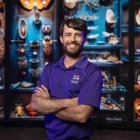
The death of Pope Francis marks a pivotal moment for the Catholic Church, ending a papacy that redefined the Church's relationship with the modern world. As the College of Cardinals prepares to gather in conclave, Catholics across the globe are closely watching to see whether the next pontiff will build upon Francis' legacy or chart a new course. The following experts are available to provide insight into a range of related topics, including Pope Francis' enduring impact and what lies ahead for the world's 1.4 billion Catholics: Massimo Faggioli, PhD Professor, Theology and Religious Studies Dr. Massimo Faggioli is a world-renowned expert on the history and administrative inner workings of the Catholic Church, with specific expertise in the papacy, Vatican II, the Roman Curia, liturgical reform, new Catholic movements and Catholicism and global politics. As quoted on NPR: "Historically, we see in different conclaves a certain swinging of the pendulum. What the conclave and the next pope cannot do is to ignore and deny the changing features of global Catholicism, which is much less European, much less white, less North American and more Global South..." Kevin Hughes, PhD Chair, Theology and Religious Studies Dr. Kevin Hughes is a leading historical theologian, offering insights into the life, legacy and impact of Pope Francis. He can also speak to the significance of the Pope in Catholicism and the influence of his teachings on the global Catholic Church. As quoted on Scripps News: "[Pope Francis' selection] was really the Church extending beyond the limits of its European imagination. His Latin American identity was really crucial to embracing a new moment within the Church and opening the door in so many ways, and I think he bore witness to that throughout his papacy." Jaisy Joseph, PhD Assistant Professor, Systematic and Constructive Theology Dr. Jaisy Joseph is a trained ecclesiologist, able to address a wide range of topics relating to the papacy, conclave process and Catholic Church. Previously, she has commented on the Church's presence in Asia and the Global South, offering expert commentary on its growth, challenges and shifting influence. As quoted by ABC News Digital: "[The election of someone from the Global South would be] a move in that direction of how to be a global church. That move from a Eurocentric church to a truly global church—I think that's what Francis really inaugurated." Patrick Brennan, JD Professor of Law; John F. Scarpa Chair in Catholic Legal Studies Professor Patrick Brennan is an expert on the conclave process and the main rules that govern it. He can also speak to topics such as the contemporary and historical importance of secrecy in the conclave, what the cardinals may be looking for in the next Pope and the factors that cause similarities and differences from one conclave to the next. As quoted on Fox 29's Good Day Philadelphia: "The purpose of the general congregation is for the cardinals, who don't know each other in some cases, to get to know each other better as they learn about the current state of the Church and together decide on the needs of the Church and priorities for the new pontificate." Brett Grainger, ThD Associate Professor, Study of Spirituality and American Religious History Dr. Brett Grainger is a go-to source for discussions of the changing face and role of modern spirituality in America. He serves as an expert on contemporary religious trends and can also speak to the broader public reaction to Pope Francis' passing, especially outside of the Catholic faith. As quoted by Courthouse News Service: "People are disaffiliating from a tradition—that doesn't necessarily mean in fact that they don't believe in God anymore...What's more important is 'Is this giving me life? Is this making my life more meaningful? Is this giving me the kind of energy and purpose that I'm looking for?' That's where religion is going." Michael Moreland, JD, PhD Professor of Law and Religion; Director, Eleanor H. McCullen Center for Law, Religion and Public Policy Dr. Michael Moreland is a renowned scholar of constitutional law, religious freedom, public policy and ethics. He can provide expert commentary on items related to the Catholic right and the state of religious politics in the United States. As featured on NBC News Digital: Michael Moreland said the mass appeal of "Conclave" captured how, even in a secular modern age, there is still pervasive intrigue around "the ancient rituals of the Catholic Church." "The significance of the theological and spiritual aspects of Catholicism and this process of electing a pope was kind of reduced into partisan politics," he said. Ilia Delio, OSF, PhD Josephine C. Connelly Endowed Chair in Christian Theology Sister Ilia Delio addresses topics in her work such as theology and evolution, technology and human becoming and understandings of Catholicity in a world of complexity. She can provide expert insight into Laudato si', Pope Francis' position on the environment, the relationship between science and religion and integral ecology. As featured in the National Catholic Reporter: "We are clearly an Earth in crisis," with a reversal necessary to secure a sustainable future, said Ilia Delio... Delio posed a series of questions: about the relationship between religion and science; what Laudato si', and Christianity more broadly, can offer ecological movements; and whether the concept of kinship or creation as family might better reflect humanity's place within nature than "care for creation." To speak with any of these faculty experts, please contact mediaexperts@villanova.edu.




Julian Ku Writes Article on Logan Act
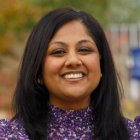
Maurice A. Deane Distinguished Professor of Constitutional Law Julian Ku recently wrote the article, “Governor Newsom’s tariff gambit risks violating federal law,” for The Daily Journal. Ku argues that Governor Gavin Newsom of California risks prosecution for trying to negotiate tariff exemptions for California companies. His efforts could potentially violate the Logan Act, which prohibits any unauthorized American citizens from negotiating with foreign governments on matters of dispute with the United States.

Trump Holds Firm on Resolving Trade Deficit with China
Dr. Meena Bose, Hofstra University professor of political science, executive dean of the Public Policy and Public Service program, and director of the Kalikow Center for the Study of the American Presidency, was featured on Fox News Radio stations around the country, talking about President Trump’s unwillingness to negotiate with China on tariffs. He said that the United States’ trade deficit with China amounts to more than $1 trillion, and he’s not open to making a deal with them until that surplus is resolved. Dr. Bose appeared on WTVN in Columbus, OH; KFTK in St. Louis, MO; WFRK in Florence, SC; WILS in Lansing, MI; WBAP in Dallas, TX; WJR in Detroit, MI; and WHO Des Moines, IA.


For three decades, Frederik Meijer Gardens & Sculpture Park has grown from a visionary idea into one of America’s most beloved cultural destinations, a place where art, nature, community, and imagination intersect. At the heart of this evolution is Charles Burke, the President and CEO guiding the institution through its 30th anniversary year and helping shape its legacy as a transformative cultural force. Charles Burke is President & CEO of Frederik Meijer Gardens & Sculpture Park. Under his direction, the organization has been recognized as Best Sculpture Park in the United States by USA Today’s 10Best Readers’ Choice Awards in 2023, 2024, and 2025, and consecutively named one of the Best Places to Work in West Michigan, solidifying its reputation as a cultural landmark of international acclaim. View his profile “As a place where art, culture and nature come together, Meijer Gardens offers something truly special for everyone. We look forward to welcoming guests of all ages to discover the joy, beauty and inspiration that await around every corner.” — Charles Burke, President & CEO, Frederik Meijer Gardens & Sculpture Park. The park's legacy and cultural impact was highlighted in a full feature in the Grand Rapids Press and MLive. In the article, journalists conveyed that Meijer Gardens is not just a museum, not just a botanical garden, and not just a sculpture park — it is all of these at once. Since opening in 1995, it has grown into an internationally recognized cultural institution celebrated for its world-class art, immersive natural environments, dynamic programming, and vibrant community engagement. Its influence extends far beyond regional boundaries, attracting millions of visitors, inspiring artists and gardeners, and elevating public appreciation for the arts and environment. The piece underscores how Meijer Gardens has become a cultural home for diverse audiences, blending artistic expression, horticultural beauty, and community connection into a holistic experience that resonates across generations. Celebrating a Cultural Legacy Under Burke’s leadership, Meijer Gardens has: Achieved record attendance and global recognition as a destination for art and nature. Hosted nationally significant sculpture exhibitions alongside beloved botanical showcases. Fostered public access to artistic and environmental education for students, families, and lifelong learners. Created immersive experiences that bring people together — from summer music series to seasonal exhibitions — forging emotional connections to art and landscape. Charles Burke leads Frederik Meijer Gardens & Sculpture Park with a vision that combines artistic ambition and community purpose. Under his direction, the institution has expanded its cultural reach while strengthening educational mission, accessibility, and artistic excellence. His perspective helps journalists cover not just the milestone itself, but the broader significance of what a cultural institution can mean to a region, a generation, and the public imagination. Expert Insight - What Charles Burke Brings to Your News Story or Speaking Roster How the intersection of art, culture and nature builds healthy communities How Meijer Gardens has shaped community identity and regional tourism The role of art institutions in fostering lifelong learning and inclusive engagement The vision and meaning behind three decades of creative stewardship As cultural institutions navigate questions of relevance, community value, and public engagement in the 21st century, Meijer Gardens stands as a compelling example of success. Its 30-year journey, and Burke’s leadership, offers rich context for stories about how art and nature can inspire civic pride, foster cross-generational connection, and elevate the cultural fabric of a community.

Executive Order - Energy and Power Perspective
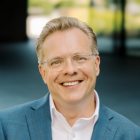
The tariffs imposed by the Executive Order (EO) are expected to significantly impact the energy and infrastructure sectors. New build energy projects in the United States heavily depend on importing components such as inverters, transformers, cabling, solar panels, mounting racks, and batteries from regions such as Southeast Asia, China, and the European Union. These tariffs are likely to affect all energy and infrastructure projects. We are seeing large capital projects across the United States impose caveats within their EPC contracts; allowing for steep and continual price adjustments upward. This is impacting billions of dollars of critical material and contractual obligated componentry. This also includes all materials with high volatility (steel, copper, aluminum). Not only are projects costs on the rise but so are supply chain disruptions, potentially causing delays in project timelines and/or project cancellations. The United States continues to grow in energy demand requirements, provided the vast deployment of data centers. Because of this grid reliability, modernization and new build implementation is critical in the coming decade. The tariffs are likely to have a large impact on these projects as well, given their requirement for componentry from all the regions impacted. As this situation continues to develop, the full implications and responses for the energy and infrastructure industry will become more apparent. Jeremy Erndt is a seasoned power development, engineering, and operations professional, with experience in power generation, infrastructure, and the sector with J.S. Held. He has led utility-scale power, transmission, port, and water projects from early development and conceptual design through NTP and eventual operation. He is an international development expert and supports a variety of programs for capital project development. Jeremy is a subject matter expert in project due diligence, engineering, and constructability for large-scale projects. Jeremy has been involved in various project-related and company mergers and acquisitions, thus providing a comprehensive track record and perspective of financial transactions at all stages. He has nearly two decades of experience in the development, engineering, construction, and operations of energy and infrastructure projects, spanning more than 30 GW within energy projects and over $60B of capital expenditures within infrastructure. Looking to know more or connect with Jeremy Erndt? Simply click on the expert's icon now to arrange an interview today. For any other media inquiries - contact : Kristi L. Stathis, J.S. Held +1 786 833 4864 Kristi.Stathis@JSHeld.com


Virtual reality training tool helps nurses learn patient-centered care
University of Delaware computer science students have developed a digital interface as a two-way system that can help nurse trainees build their communication skills and learn to provide patient-centered care across a variety of situations. This virtual reality training tool would enable users to rehearse their bedside manner with expectant mothers before ever encountering a pregnant patient in person. The digital platform was created by students in Assistant Professor Leila Barmaki’s Human-Computer Interaction Laboratory, including senior Rana Tuncer, a computer science major, and sophomore Gael Lucero-Palacios. Lucero-Palacios said the training helps aspiring nurses practice more difficult and sensitive conversations they might have with patients. "Our tool is targeted to midwifery patients,” Lucero-Palacios said. “Learners can practice these conversations in a safe environment. It’s multilingual, too. We currently offer English or Turkish, and we’re working on a Spanish demo.” This type of judgement-free rehearsal environment has the potential to remove language barriers to care, with the ability to change the language capabilities of an avatar. For instance, the idea is that on one interface the “practitioner” could speak in one language, but it would be heard on the other interface in the patient’s native language. The patient avatar also can be customized to resemble different health stages and populations to provide learners a varied experience. Last December, Tuncer took the project on the road, piloting the virtual reality training program for faculty members in the Department of Midwifery at Ankara University in Ankara, Turkey. With technical support provided by Lucero-Palacios back in the United States, she was able to run a demo with the Ankara team, showcasing the UD-developed system’s interactive rehearsal environment’s capabilities. Last winter, University of Delaware senior Rana Tuncer (left), a computer science major, piloted the virtual reality training program for Neslihan Yilmaz Sezer (right), associate professor in the Department of Midwifery, Ankara University in Ankara, Turkey. Meanwhile, for Tuncer, Lucero-Palacios and the other students involved in the Human-Computer Interaction Laboratory, developing the VR training tool offered the opportunity to enhance their computer science, data science and artificial intelligence skills outside the classroom. “There were lots of interesting hurdles to overcome, like figuring out a lip-sync tool to match the words to the avatar’s mouth movements and figuring out server connections and how to get the languages to switch and translate properly,” Tuncer said. Lucero-Palacios was fascinated with developing text-to-speech capabilities and the ability to use technology to impact patient care. “If a nurse is well-equipped to answer difficult questions, then that helps the patient,” said Lucero-Palacios. The project is an ongoing research effort in the Barmaki lab that has involved many students. Significant developments occurred during the summer of 2024 when undergraduate researchers Tuncer and Lucero-Palacios contributed to the project through funding support from the National Science Foundation (NSF). However, work began before and continued well beyond that summer, involving many students over time. UD senior Gavin Caulfield provided foundational support to developing the program’s virtual environment and contributed to development of the text-to-speech/speech-to-text capabilities. CIS doctoral students Fahim Abrar and Behdokht Kiafar, along with Pinar Kullu, a postdoctoral fellow in the lab, used multimodal data collection and analytics to quantify the participant experience. “Interestingly, we found that participants showed more positive emotions in response to patient vulnerabilities and concerns,” said Kiafar. The work builds on previous research Barmaki, an assistant professor of computer and information sciences and resident faculty member in the Data Science Institute, completed with colleagues at New Jersey Institute of Technology and University of Central Florida in an NSF-funded project focused on empathy training for healthcare professionals using a virtual elderly patient. In the project, Barmaki employed machine learning tools to analyze a nursing trainee’s body language, gaze, verbal and nonverbal interactions to capture micro-expressions (facial expressions), and the presence or absence of empathy. “There is a huge gap in communication when it comes to caregivers working in geriatric care and maternal fetal medicine,” said Barmaki. “Both disciplines have high turnover and challenges with lack of caregiver attention to delicate situations.” UD senior Rana Tuncer (center) met with faculty members Neslihan Yilmaz Sezer (left) and Menekse Nazli Aker (right) of Ankara University in Ankara, Turkey, to educate them about the virtual reality training tool she and her student colleagues have developed to enhance patient-centered care skills for health care professionals. When these human-human interactions go wrong, for whatever reason, it can extend beyond a single patient visit. For instance, a pregnant woman who has a negative health care experience might decide not to continue routine pregnancy care. Beyond the project’s potential to improve health care professional field readiness, Barmaki was keen to note the benefits of real-world workforce development for her students. “Perceptions still exist that computer scientists work in isolation with their computers and rarely interact, but this is not true,” Barmaki said, pointing to the multi-faceted team members involved in this project. “Teamwork is very important. We have a nice culture in our lab where people feel comfortable asking their peers or more established students for help.” Barmaki also pointed to the potential application of these types of training environments, enabled by virtual reality, artificial intelligence and natural language processing, beyond health care. With the framework in place, she said, the idea could be adapted for other types of training involving human-human interaction, say in education, cybersecurity, even in emerging technology such as artificial intelligence (AI). Keeping people at the center of any design or application of this work is critical, particularly as uses for AI continue to expand. “As data scientists, we see things as spreadsheets and numbers in our work, but it’s important to remember that the data is coming from humans,” Barmaki said. While this project leverages computer vision and AI as a teaching tool for nursing assistants, Barmaki explained this type of system can also be used to train AI and to enable more responsible technologies down the road. She gave the example of using AI to study empathic interactions between humans and to recognize empathy. “This is the most important area where I’m trying to close the loop, in terms of responsible AI or more empathy-enabled AI,” Barmaki said. “There is a whole area of research exploring ways to make AI more natural, but we can’t work in a vacuum; we must consider the human interactions to design a good AI system.” Asked whether she has concerns about the future of artificial intelligence, Barmaki was positive. “I believe AI holds great promise for the future, and, right now, its benefits outweigh the risks,” she said.


Florida Tech Welcomes Visiting Australian Scholar to Aid in Antifouling Research
Florida Tech’s Center for Corrosion and Biofouling Control is welcoming a new teammate for the semester. Tamar Jamieson, a postdoctoral researcher hailing from Australia’s Flinders University, is in Melbourne, Fla. to collaborate on biofouling research with assistant professor of marine sciences Kelli Hunsucker and professor of oceanography and ocean engineering Geoffrey Swain. Biofouling is the growth of a bacterial film or larger marine life, such as barnacles, after an object’s surface is submerged in water. It can inhibit a ship’s functionality by creating drag and slowing it down, which forces the vessel to use more fuel and emit more greenhouse gases. Over the course of the semester, Jamieson will help Hunsucker’s team develop a collaborative experiment to test antifouling techniques, combining Jamieson’s expertise with that of the lab. “I’m excited to have someone here who has this kind of wealth of knowledge in her field,” Hunsucker said. “She’ll be able to use her knowledge to help move our research forward and then kind of in return, use our knowledge to help move hers forward.” The Center for Corrosion and Biofouling Control aims to understand and improve corrosion and biofouling control systems. Part of Hunsucker’s research involves evaluating materials that can protect surfaces, such as a ship’s hull, from unwanted growth. She is currently working with the U.S. Navy to see how antifouling techniques perform under different conditions. Jamieson’s research through Flinders’s ARC Training Centre for Biofilm Research & Innovation focuses on the small-scale microorganisms that make up biofilm. She also studies the genetic makeup of microbial communities, which Hunsucker wants to add to her own research. Jamieson is especially interested in learning how antifouling materials interact with local waters. Florida’s seascape is warmer than Australia’s, so fouling grows quicker here than it does there. She also wants to see how American antifouling materials vary from those used in Australia and collaborate on a versatile solution that can withstand a variety of conditions. “Materials that work well here will probably not work in other environments,” Jamieson said. “Seeing how to develop materials for all three environments will be an interesting pathway forward.” Hunsucker hopes this exchange will lead to even more collaboration with Flinders University. “The program that she’s involved with opens the door for collaborative efforts for us to maybe go to Australia in the future,” Hunsucker said. “Her colleagues can also similarly come back and work with us.” Jamieson’s scholarship is funded by the American Australian Association, a New York-based non-profit organization dedicated to deepening and strengthening ties between the United States and Australia. The South Australia Defense, Space and Cyber Scholarship funds scholars from the U.S. and South Australia undertaking Ph.D. or post-doctoral research in those fields. Kelli Hunsucker and Geoffrey Swain are available to speak with media. Contact Adam Lowenstein, Director of Media Communications at Florida Institute of Technology at adam@fit.edu to arrange an interview today.
