
Experts Matter. Find Yours.
Connect for media, speaking, professional opportunities & more.

The Legality of Potential U.S. Takeover of Gaza
Hofstra Law Professor James Sample appeared on CBS News New York to discuss the legality of a potential United States takeover of Gaza.


Annual Healthy Georgia Report looks at public health in the Peach State
The fourth edition of the “Healthy Georgia: Our State of Public Health” report has been released by the Institute of Public and Preventive Health in Augusta University’s School of Public Health. Within the 64 pages of the report is a snapshot of how healthy Georgians are compared to citizens across the 12 states that make up the Southeastern Region (Alabama, Arkansas, Florida, Georgia, Kentucky, Louisiana, Mississippi, North Carolina, South Carolina, Tennessee, Virginia and West Virginia) and the entire United States. The 2025 edition addresses 31 health topics and has been expanded this year to include multimorbidity; long COVID-19; HIV, chlamydia, gonorrhea and syphilis infection rates; opioid and methamphetamine drug use; suicides; and vaping. Biplab Datta, PhD, assistant professor in the Department of Health Management, Economics, and Policy in SPH, heads up the team of IPPH faculty and staff who create the report each year. Datta credits Jen Jaremski, research associate, and Kit Wooten, public health analyst, with handling much of the work of bringing the report to life. Together, Jaremski and Wooten collected and organized all of the needed assets and organized the 64-page document, preparing it for print and the web. “Every year we strive to present data in a way that policymakers may find helpful in making policy choices,” Datta said. “There are several new topics that were added to this year’s report and some of those are concerning for the state of Georgia, particularly the communicable diseases like HIV, chlamydia, gonorrhea and syphilis. High prevalence rates of these conditions in Georgia, compared to the rest of the U.S. and the Southeastern Region, warrant attention of the public health community.” Georgia has the second-highest rate of HIV infections in the U.S., fourth-highest rates of gonorrhea, sixth-highest for chlamydia and 13th for syphilis. Something that is also new in this year’s report is a comparison of numbers from 2019, or before the COVID-19 pandemic began, compared to after the pandemic for certain conditions. Also coming out of the pandemic, the report looks at how long COVID has affected Georgians, with the state ranking 24th in the nation for rates of long COVID. According to the U.S. Centers for Disease Control and Prevention, long COVID is defined as a chronic condition that occurs after COVID-19 infection and is present for at least three months. On top of looking at comparisons between Georgia and the Southeast and the nation, Datta noted a clearer picture is starting to emerge concerning the difference in urban and rural areas within the state. “For several chronic conditions, like hypertension, diabetes and multimorbidity, we clearly see a striking difference between rural and urban residents of Georgia,” Datta said. Hypertension affects 44.1% of adults in rural Georgia compared to 35% in urban areas, while diabetes affects 17.5% of adults in rural Georgia compared to 12.3% of those in urban areas. Hypertension and diabetes are major risk factors for cardiovascular disease, which affects 12.2% of adults in rural areas compared to 8.3% of adults in urban areas of Georgia. “Hypertension and diabetes are the major risk factors for heart disease, which is the leading cause of death in the U.S. and worldwide, so these are some concerning numbers to see,” Datta said. Multimorbidity, which is when a person has multiple chronic conditions, including obesity, asthma, chronic obstructive pulmonary disease, depression, kidney disease, diabetes, hypertension, high cholesterol, cardiovascular disease, cancer, skin cancer and arthritis, affects 57.4% of adults in rural Georgia compared to 49% of adults in urban areas of the state. These rates are significantly lower than the rest of the Southeast but on par with the rest of the country. When comparing Georgia to the U.S. national average, adults in Georgia have lower rates of cancer and methamphetamine use but higher rates of childhood asthma and adult obesity. At the same time, rates of adult asthma and adult obesity among Georgians were comparable to the averages seen in the Southeast. Interestingly, while adult health insurance coverage was significantly lower than the U.S. national and Southeast Regional averages, the child health insurance coverage in Georgia was comparable to both national and regional averages. The Healthy Georgia Report is the only report of its kind in the state Looking to know more or connect with Biplab Datta, PhD? Then let us help. Dr. Datta is available to speak with media regarding this important topic. Simply click on his icon now to arrange an interview today.



J.S. Held Experts Examine Sustainability Investments and Headwinds in Annual Global Risk Report
In the 2025 J.S. Held Global Risk Report, scientific, technical, financial, and risk management experts explore the implementation of new and existing Environmental, Social & Governance (ESG) regulations across different regions along with significant compliance challenges for organizations operating on a global scale. As sustainability continues to be a critical issue worldwide, businesses are facing an increasingly complex regulatory landscape. While some jurisdictions are advancing sustainability frameworks, others, most notably the United States, are likely to see new environmental and energy policies which disfavor sustainability advancements as reflected by recent executive orders following the change in administrations. The European Union’s Corporate Sustainability Due Diligence Directive (CS3D), adopted in 2024, is a landmark regulation requiring both EU and non-EU companies to conduct due diligence to identify and prevent adverse environmental and human rights impacts throughout their operations and supply chains. J.S. Held environmental risk and compliance expert John Peiserich, Esq., observes, “Compliance with CS3D poses significant challenges for multinational corporations, especially those selling into the EU market, as they navigate conflicting regulatory requirements across jurisdictions.” In the United States, ESG-related policies have become a polarizing issue. Some states have mandated ESG criteria—such as climate risk assessments—for state-related investment decisions, while others have actively opposed such measures. Kim Logue Ortega, Associate Vice President at J.S. Held, adds, “Despite these contrasting approaches, businesses must continue addressing sustainability concerns, as environmental considerations are increasingly tied to permitting and regulatory approvals.” Following the June, 2024 United States Supreme Court ruling in Loper Bright, a team of environmental risk experts at the Verdantix Green Quadrant recognized consultancy J.S. Held, examined in Crosscurrents: Companies Face Regulatory Uncertainties in Wake of SCOTUS Decisions, how the Supreme Court further complicated the regulatory environment by undermining agency authority to define compliance standards. This ruling is expected to lead to increased legal challenges to environmental and sustainability-related regulations, adding further uncertainty for businesses seeking to comply with evolving standards. With the second Trump administration expected to roll back key environmental justice directives and sustainability-related incentives introduced under the previous Administration, businesses must remain vigilant in monitoring regulatory developments. Strategic planning and proactive risk management will be crucial for navigating the evolving ESG landscape and maintaining compliance across multiple jurisdictions. J.S. Held experts present insights into how organizations can align with evolving frameworks while driving innovation and managing risk, as they explore: 1. EU Corporate Sustainability Due Diligence Directive, where non-compliance could lead to fines and civil liability, necessitating companies to rigorously assess environmental and human right impacts. 2. Regulatory Fragmentation and Greenwashing / Greenhushing, summoning businesses to avoid exaggerated or underreported sustainability claims to mitigate the rising threat of litigation and regulatory scrutiny. 3. Shareholder Activism and Litigation, as investors demand greater transparency on sustainability goals, which may present legal consequences for failing to meet expectations. One week into the new Administration in the United States, the anticipated rollback of environmental justice directives and sustainability-related incentives introduced under the previous Administration have begun to take shape in the form of various Executive Actions and other directives. J.S. Held experts are actively monitoring regulatory developments, providing strategic guidance to multinational clients as they navigate the evolving ESG landscape and compliance requirements across multiple jurisdictions. Sustainability is just one of the five key areas analyzed in the J.S. Held 2025 Global Risk Report. Other topics include global supply chain challenges, the rise of crypto and digital assets, AI and data regulations, and managing cyber risk. If you have any questions or would like to further discuss the risks and opportunities outlined in the report, please email GlobalRiskReport@jsheld.com. For any other media inquiries - simply contact : Kristi L. Stathis, J.S. Held +1 786 833 4864 Kristi.Stathis@JSHeld.com


Expansion Plans? What's Behind Donald Trump's Approach to Canada, Greenland and Panama?
With the inauguration of President Donald Trump just days away, there are many people in America and abroad who are watching and waiting on the first moves of the incoming Trump administration. President Trump has been giving some bold suggestions about the importance of places like Greenland, Canada and Panama to America's national and economic security. Some are explaining Trump's approach as a negotiating tactic to spur on deeper conversations. Others are concerned there's some seriousness to his plans for expansion. Either way, it's getting a lot of coverage as the countdown is on to his resumption of the country's leadership. Last week, Trump waded boldly into global affairs — but he barely touched on those purported priorities. Instead, at a news conference at Mar-a-Lago, he focused on a list of obscure, arguably eccentric goals: acquiring Greenland from Denmark, absorbing Canada as a very large 51st state, and retaking control of the Panama Canal. The president-elect said he would bring all three territories under U.S. control through economic coercion, but did not rule out using force to seize Greenland and the canal. January 13 - Los Angeles Times “That would really be something,” Trump said of the United States' taking control of Canada. “You get rid of that artificially drawn line, and you take a look at what that looks like. And it would also be much better for national security,” Trump said. “They’re great, but we’re spending hundreds of billions here to protect it.” Trump said that the subsidies include substantial military support and that the United States loses out through trade deficits. January 07 - NBC News President-elect Donald Trump has reiterated his desire for the US to acquire Greenland and the Panama Canal, calling both critical to American national security. Asked if he would rule out using military or economic force in order to take over the autonomous Danish territory or the Canal, he responded: "No, I can't assure you on either of those two. "But I can say this, we need them for economic security," he told reporters during a wide-ranging news conference at his Mar-a-Lago estate in Florida. Both Denmark and Panama have rejected any suggestion that they would give up territory. January 08 - BBC The coverage has been intense, but there are still some questions to be asked: How would the world and America's allies react if President Trump applies pressure or force to make any of these countries comply? How might relations between Trump and the U.S. military and intelligence community change in his second term? And, is this just a tactic or could President Trump possibly be serious about his plans? Looking to know more? Professor Peter Campbell studies international security, civil-military relations, international relations and policy relevance. Peter is available to speak with media about this ongoing topic - simply click on is icon now to arrange an interview today.


Trump, Trade and Tariffs What to Expect, Will They Work and Who Benefits?
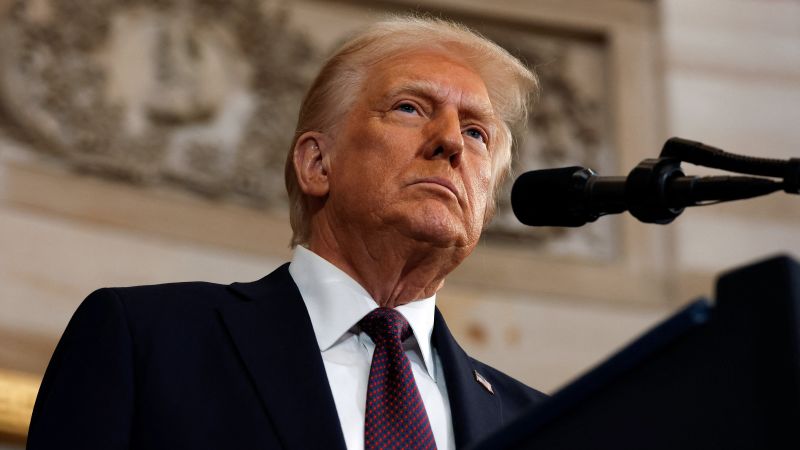
The threat of 25 % tariffs on Canada and Mexico had newsrooms buzzing, politicians scrambling and economists calculating who wins and who loses when trade wars break out among usually amicable neighbors. Factor in Greenland and China - and the story went global. It was a topic that headlined the news as many have watched and waited since the election for President Trump's first days in office to see what the country can expect with incoming policy changes. President Donald Trump said in an Oval Office signing ceremony Monday evening that his administration will impose 25% tariffs on Mexico and Canada on February 1, an extraordinary change in North American trade policy that could raise prices for American consumers. Trump still outlined his broader trade policy for his second term in an executive action Monday. But that action — described by sources as a “placeholder” — doesn’t institute new global tariffs that Trump promised on Day One. As a candidate, Trump proposed sweeping and across-the-board tariffs: up to 20% on imports from all countries, with a 25% tax on goods from Mexico and Canada, plus a punishing 60% levy on goods from China. He also pledged to use tariffs as a negotiating tool on other countries, including, for example, Denmark — putting pressure on the European nation to give control of Greenland to the United States. Asked Monday at an Oval Office signing ceremony about tariffs on China, Trump noted extensive tariffs he imposed during his first administration were still in effect after former President Joe Biden largely left them in place. And on universal tariffs, Trump punted, saying, “We may, but we’re not ready for that just yet.” The executive action signed Monday directed the secretaries of Commerce and Treasury and the United States Trade Representative to investigate the causes of America’s trade deficits with foreign nations, to determine how to build an “External Revenue Service” to collect tariffs, to identify unfair trade practices and to review existing trade agreements for potential improvements. It also directs the government agencies to analyze how the US-Mexico-Canada trade agreement (the USMCA) signed by Trump in his first term is affecting American workers and businesses — and whether America should remain in the free trade agreement. January 21 - CNN As business and political leaders in many countries, especially North America wait for what's ahead, there are questions to be asked: What industries will be targeted? Will tariffs cause higher prices for consumers and increased inflation? Who wins if an all-out trade war happens? How will interwoven sectors like the auto industry and agriculture be impacted? If you're a journalist covering this ongoing story - then let us help. William J. Luther, Ph.D., is an associate professor of economics at Florida Atlantic University, director of the American Institute for Economic Research’s Sound Money Project, and an adjunct scholar with the Cato Institute’s Center for Monetary and Financial Alternatives William is available to speak with media. Simply click on his icon now to arrange an interview today.


J.S. Held Releases 2025 Global Risk Report Addressing Critical Risks Amid Uncertainty
On the first day of the new presidential administration in the United States, global consulting firm J.S. Held unveils its annual report focused on critical areas impacting industries and economies worldwide. Explore the 2025 J.S. Held Global Risk Report here: In an increasingly uncertain and volatile global landscape, businesses, governments, and investors face a growing array of challenges that demand immediate attention and innovative solutions. The 2025 J.S. Held Global Risk Report explores five interconnected topics that organizations must consider in managing risk and opportunity in the year ahead. These include: 1. Sustainability Investments & Headwinds: With various ESG regulations across jurisdictions and increasing scrutiny over corporate environmental and social practices, experts explore how organizations can align with evolving frameworks while driving innovation. 2. Global Supply Chain Challenges: From geopolitical conflicts to climate disruptions, the report analyzes how companies can build more resilient and sustainable supply chains. 3. Crypto & Digital Asset Intensification: As the crypto landscape transitions through regulatory shifts and technological advancements, the report highlights both the risks and opportunities for businesses and investors. 4. Artificial Intelligence, Data & Digital Regulatory Response: With Artificial Intelligence (AI) systems reshaping industries, experts examine the regulatory, ethical, and operational challenges, as well as the competitive advantages for organizations that harness this transformative technology responsibly. 5. Cybersecurity Complexities: From AI-powered cyberattacks to evolving data protection laws, the report provides insights into how organizations can safeguard operations and maintain customer trust in a rapidly shifting digital environment. The 2025 J.S. Held Global Risk Report includes an analysis of these categories of risk and actionable opportunities for companies to gain a competitive edge while addressing critical vulnerabilities. “The 25 technical, scientific, financial, and strategic advisory experts who contributed to the J.S. Held Global Risk Report have collaboratively parsed not only each risk independently but also at their unique points of intersection to create a framework to support business decision-making,” noted Greg Esslinger, Executive Vice President and Global Investigations Practice Leader. “Our experts’ deep understanding of the external factors related to the topics that keep CEOs, CFOs, COOs, CLOs, and Boards of Directors up at night drives the curated insights shared in the report and helps clients navigate risks and capitalize on emerging opportunities in the year ahead,” adds John Peiserich, Esq., Executive Vice President and Environmental, Health, & Safety Practice Leader. The depth and breadth of J.S. Held’s work in the insurance market provides a strong foundation in risk assessment, data analysis, global awareness, regulatory compliance, technological adaptability, and risk mitigation. Collectively, these skills better equip the firm’s experts to assess business risk across diverse geographies, geopolitical landscapes, compliance frameworks, and digital advancements. "In a world where uncertainty is the only constant, there is a need for something solid you can hold onto," observes J.S. Held Chief Executive Officer Jonathon Held. "Our name is our promise," he adds. "Our role as strategic advisor is emblematic of this promise, even in the face of the most daunting risks, clients have the expertise and guidance to act with confidence" "Agile, collaborative, and creative client-centric teams provide solution-forward advisory to our clients across the globe, no matter the scope or complexity of a project; the J.S. Held Global Risk Report is reflective of the trusted advisor role we have earned over the last 50 years," noted J.S. Held President and Chief Operating Officer Lee Spirer. J.S. Held's expertise in strategic advisory is built upon five decades of experience in the most rigorous venues – state, federal, and international courts – and spans more than 150 different industry segments. If you have any questions or would like to further discuss the risks and opportunities outlined in the report, please email GlobalRiskReport@jsheld.com. To connect with John Peiserich simply click on the expert's icon now. For any other media inquiries - simply contact : Kristi L. Stathis, J.S. Held +1 786 833 4864 Kristi.Stathis@JSHeld.com

Just before the holiday season, as he entered his final month as President of the United States, Joe Biden announced that he would be granting clemency to roughly 1,500 American citizens. The clemency acts, which included sentence commutations for individuals placed on home confinement during the pandemic and pardons for 39 individuals with non-violent offenses, were touted by the administration as the most ever in a single day in modern history. A month later, on January 17, he commuted the sentences of roughly 2,500 individuals convicted of non-violent drug offenses, shattering December's mark and giving him the most pardons and commutations of any president in United States history. The unprecedented size of the actions has been underscored throughout The White House’s press materials and has headlined most subsequent news coverage. But for Anton Robinson, JD, associate professor of law and director of Villanova’s Caritas Clemency Clinic in the Charles Widger School of Law, the importance of the clemency went far beyond the impressive scale. “Acts like these bring much needed awareness to the clemency process, and to the epidemic of excessive sentencing in United States courtrooms,” Professor Robinson said. “At our clinic, we are already having people call to ask about opportunities for pardons and additional support for their cases.” Public perception of presidential acts of clemency can, at times, be marred by partisan divisiveness. To some, these latest acts were overshadowed by President Biden’s earlier pardon of his son, Hunter, and eyes are already on incoming President Trump regarding how he might handle those charged in relation to the January 6 insurrection. Professor Robinson acknowledges that acts like these can cause people to “rightfully question the power that is being used,” but those are the outliers, not the norms, and steer the conversation away from the root purpose of clemency. “People deserve a second chance,” Professor Robinson said. “There’s a tendency for system actors to focus primarily on the crime committed when considering whether a person’s sentence should be cut short. But many are different people today—sometimes decades later—than they were at the time of the crime’s commission. “There is also no shortage of individuals in prison for whom a charge doesn’t tell the whole story. For example, a young person’s involvement in a crime, while sufficient for a legal conviction, might be weighed differently today, given increasing acceptance of scientific research on the portion of the human brain which controls decision-making, impulse control and executive function. Research shows all of that continues to develop well into adulthood.” Determining who fits the criteria for clemency, Professor Robinson says, is not always easy to do. Collecting records of good behavior that illustrate change while in a carceral setting is much more difficult than collecting records of bad behavior. That’s why entities like the Caritas Clemency Clinic, in which Villanova Law students work directly on behalf of such clients under Professor Robinson’s guidance, spend so much time talking to anyone who has had a relationship with the incarcerated person. “What we often find is that despite being incarcerated and having very little given opportunity, these individuals make their own opportunities to build community and rich relationships and try their best to contribute to society in a positive way,” Professor Robinson said. A military veteran who helped church members in poor health perform tasks. A nurse who spearheaded COVID vaccination efforts and natural disaster response. A counselor who helps guide youth away from destructive behavior and involvement with gangs. Those are the types of actions Professor Robinson references, all of which were highlighted specifically in the White House’s fact sheet for President Biden's December acts, just before the words “The United States is a nation of second chances.” “I'm hoping that these large acts of clemency encourage folks to think, ‘Hey, what about my loved one? What about me? I am a completely different person than I was 20 years ago, what can I do to try to secure my freedom and my ability to live the life that I've missed out on?’” Professor Robinson said. “It really is a great opportunity to remind ourselves that people are far better than the worst things that they've ever done, and that we have an opportunity to acknowledge that as a society and to encourage more of this action, both on a federal and state level.”


The History Behind National Days of Mourning
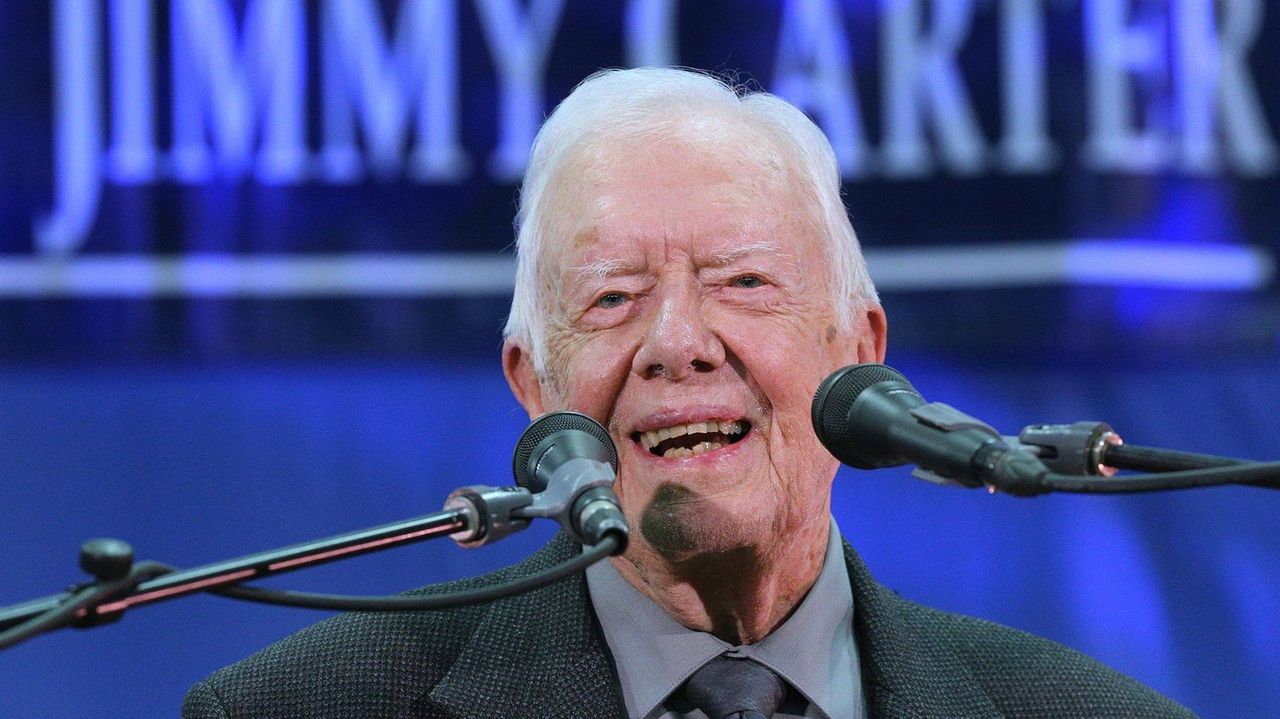
A national day of mourning for Jimmy Carter, the 39th president of the United States, was held on January 9. Professor of Education Alan Singer talked to Newsday about the history of national days of mourning and how they are observed. Dr. Singer said, “There are no official criteria” for what constitutes a nationwide time to mourn or another symbolic nationwide pause. He also noted that a handful have been declared in modern American history for incidents besides the death of a president. President George W. Bush declared a national day of mourning for 9/11. In 1968, Dr. Singer said, President Lyndon B. Johnson declared national days of mourning for both Martin Luther King Jr. and Robert F. Kennedy because “they were national leaders who were assassinated.”

Legacy of Former President Jimmy Carter
Following the death of Jimmy Carter, the 39th president of the United States, Dr. Meena Bose was featured in a Newsday article about his legacy. Dr. Bose is a Hofstra University professor of political science, executive dean of the Public Policy and Public Service program, and director of the Kalikow Center for the Study of the American Presidency. She noted that Carter served under difficult economic and political times. “But then, of course, he went on to have a highly successful post-presidency winning the Nobel Peace Prize, being highly active in public housing policy, voting rights … and really was quite active on the public scene until just a few years ago,” she said. The article also referenced the Hofstra Cultural Center’s 1990 three-day presidential conference on the Carter administration, which President Carter and First Lady Rosalynn Carter attended.


The History and Significance of Taiwan
Taiwan’s history is a rich and complex tapestry of indigenous cultures, colonial influences, and evolving sovereignty, making it a critical subject for understanding regional and global geopolitics. From its indigenous roots to its modern status as a thriving democracy and global tech leader, Taiwan plays a pivotal role in shaping international conversations about identity, governance, and economic innovation. This topic matters to the public because of Taiwan's strategic importance in global trade, its cultural vibrancy, and its position in ongoing geopolitical tensions. Key story angles that may interest a broad audience include: The indigenous heritage of Taiwan: Exploring the rich traditions, languages, and contributions of Taiwan’s indigenous communities. Colonial and post-colonial history: Examining Taiwan’s transformation under Dutch, Spanish, Chinese, and Japanese rule and its modern implications. Taiwan’s role in global technology: Highlighting its leadership in semiconductor manufacturing and contributions to the global tech supply chain. Geopolitical significance: Analyzing Taiwan’s relationship with China, the United States, and the international community in the context of cross-strait relations. Taiwan as a democratic model in Asia: Discussing its political evolution, vibrant civil society, and significance in promoting human rights. Cultural preservation and innovation: Showcasing how Taiwan balances its traditional arts, cuisine, and festivals with contemporary innovation and creativity. Connect with an expert about Taiwan: To search our full list of experts visit www.expertfile.com
