
Experts Matter. Find Yours.
Connect for media, speaking, professional opportunities & more.

Georgia Southern students expand communication disorder awareness amidst Deaf Culture Renaissance
At Georgia Southern, a group of students is taking courses to grow the number of interpreters in their communities and their fields. Each student comes to class with their own motivations to learn ASL. “Most of the deaf people, myself included, feel kind of depressed,” signed Angellia Burnett, a volunteer assistant in Georgia Southern University’s American Sign Language (ASL) course. “We miss a lot of things in life, because it has always been a struggle with communication.” Burnett grew up deaf, and is the only person in her family who is deaf. Members of her family speak ASL, but she said many in the Deaf community continue to be left out of family conversations because not everyone will sign all of the time. This leaves Deaf family members feeling isolated even within their own homes. “Not everyone accepts my deafness,” Burnett signed. “They need to know Deaf culture. They need to accept that.” One of the most effective ways of accepting someone is by understanding the challenges they face. Over the past few years, the world has experienced a Deaf culture renaissance, where the inclusion of people who are deaf becomes more mainstream. Recently, the film “CODA,” which stands for “children of deaf adults,” won the 2022 Academy Award for Best Picture. This brought Deaf culture further into the spotlight, opening many eyes into the lives of those with hearing impairments. “What that means is it embraces the entire community,” said Dana Taylor, Ph.D., Georgia Southern adjunct professor and sign language interpreter. “It’s not isolating one group as being different. Individuals get to see the struggles and challenges and the triumphs that people experience.” At Georgia Southern, a group of students is taking courses to grow the number of interpreters in their communities and their fields. Each student comes to class with their own motivations to learn ASL. Some are learning sign language because they have people in their lives with hearing impairments or other communication disorders where sign can be advantageous. Others are there to develop their Sign skills as a professional tool. “If I had a client who spoke ASL, I’d be able to communicate with them better or make them feel more comfortable,” said Ricki Botsford, speech pathology student. “I’ve learned a lot about how broad communication can be, because there are so many ways to communicate outside of the verbal option.” When the students were asked if they had tried learning other languages like Spanish or French, every hand was raised. When asked if they stuck to learning them, all but a few went down. So what makes Sign different? “It’s a lot easier to integrate into every day,” said Adia Greer who’s studying to be an athletic trainer for Deaf athletes. “I can speak it verbally, but I can also sign it. I’ve picked up signing to my cat a lot. She doesn’t understand it, but it allows me to practice.” While the students practice Sign with their pets and favorite TV shows, Burnett continues to come to class to help show her students the world they share, but not the one they see. Georgia Southern has a network of Student Accessibility Resource Centers on the Statesboro and Savannah campuses providing interpreters for students who want to attend classes and interact with their environment, as well as many other resources for students who are hard of hearing. “The whole world needs to learn Sign,” Burnett signed. “I want to see people motivated to learn. I see a lot of Hearing people who are motivated to learn, and a lot of Deaf people that want to help make them successful. I’m really proud that I can help in that.” If you're a reporter looking to know more about this important topic - then let us help with your coverage and stories. Dana Taylor, Ph.D., is available to answer your questions - simply reach out to Georgia Southern Director of Communications Jennifer Wise at jwise@georgiasouthern.edu to arrange an interview today.

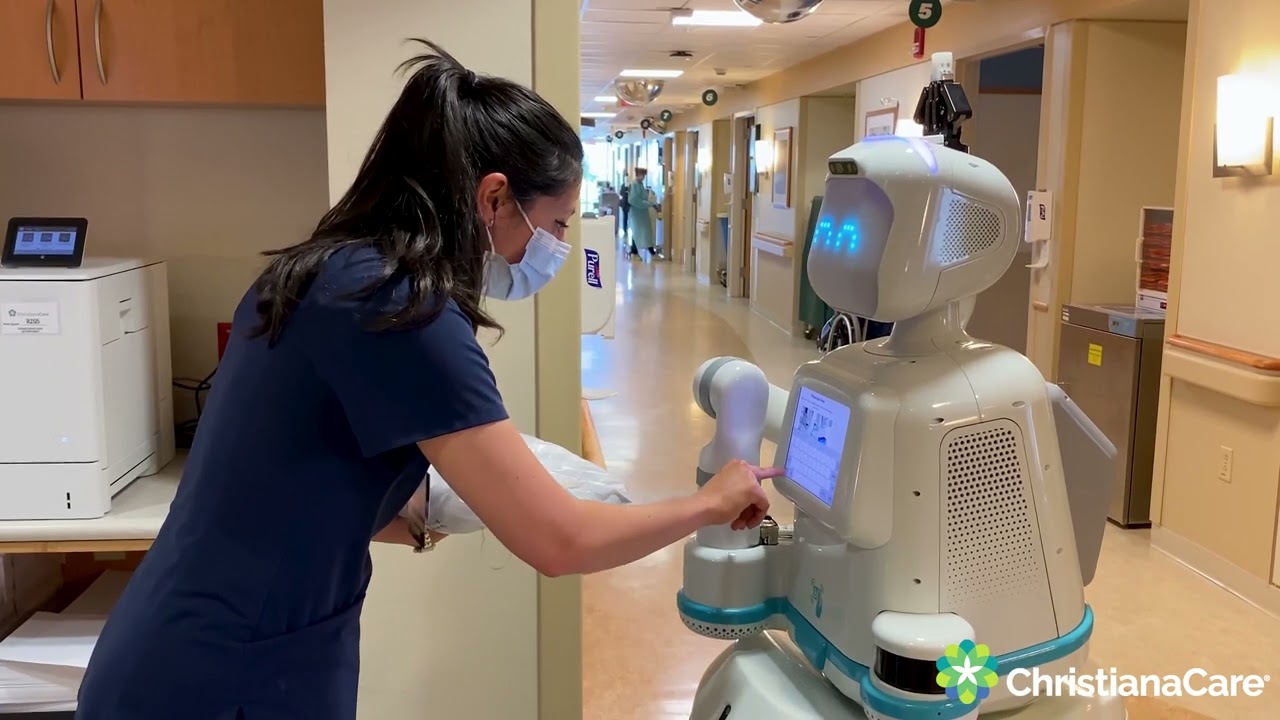
ChristianaCare is the first health system in the Philadelphia region piloting an innovative tool called Moxi, a collaborative robot — or “cobot”— that can assist in the hospital by making deliveries and performing other non-clinical tasks so that nurses and other clinical staff can spend more time focused on what they do best—caring for patients. With a landmark $1.5 million grant from the American Nurses Foundation, ChristianaCare will deploy a total of five Moxi cobots at Christiana Hospital. It is the largest single grant in the history of Nursing at ChristianaCare. Research published in the Journal of Nursing Management shows that nurses spend a significant amount of time — up to 33% of their shifts — on time-consuming but simple tasks such as dropping off lab specimens, collecting supplies or picking up medications from the pharmacy. By taking over these time-consuming but simple tasks, Moxi enables nurses to focus on patient care, where their skills are most needed. “Nurses need the time and space to deliver care and patient education at the top of their license,” said Ric Cuming, Ed.D., MSN, RN, NEA-BC, FAAN, chief nurse executive and president, ChristianaCare HomeHealth. “Moxi will be doing those hunting and gathering tasks such as getting equipment and supplies, which nurses are doing today but don’t need to be doing.” Cobots are designed to share workspace and interact directly with people. In ChristianaCare’s initiative, the Moxi cobots will be integrated with the Cerner Corporation electronic health record (EHR) platform and use artificial intelligence to proactively identify when nurses will need equipment, supplies, medications and lab tests. The Moxi cobots will be deployed to 11 inpatient units, partnering with more than 400 nurses. The American Nurses Foundation grant will enable ChristianaCare to evaluate the impact of cobots on nursing practice with the goal of scaling the technology if successful. “Moxi is not a replacement for a nurse or nursing position — or any position,” Cuming said. “It is an additional resource for nurses and their teams. “With robotic technology, we are using resources wisely and effectively, creating more efficient workflows, reducing repetitive tasks and freeing up nurses’ time for the complex clinical work that they excel at doing.” Reimagining Nursing ChristianaCare is one of 10 grant recipients from the American Nurses Foundation Reimagining Nursing (RN) Initiative. “We are proud that the American Nurses Foundation has the confidence in bold nurse-led ideas that will lead to large-scale, replicable change,” said Katherine Collard, MS, RN-BC, chief nursing informatics officer at ChristianaCare. “This grant will support nurses at ChristianaCare and our nursing colleagues across the nation in realizing their full potential, giving them the tools, resources and power to improve health care now and in the future.” With the American Nurses Foundation grant, ChristianaCare will conduct research on driving nursing outcomes through robotics. “We have a transformative opportunity to generate new knowledge and to move the science forward around robotics in nursing and in health care,” said Susan Birkhoff, Ph.D., RN, nurse scientist at ChristianaCare. “Through research, we will study Moxi’s impact to nursing caregivers that will have broad implications for nursing practice, workforce and education,” she said. ChristianaCare began exploring the potential of robotics to support Nursing with two Moxi cobots acquired in February, funded through the generosity of donors including Good Samaritan, Inc. and E.J. “Woody” Rice. With the grant, said Birkhoff, ChristianaCare will take Moxi to the next “bold frontier,” adding three more cobots with the goal of automating and optimizing nurses’ workflow without interrupting care. With five total cobots, ChristianaCare will be home to the largest number of Moxi robots in health care. The Little Bot That Can Before Moxi can become fully part of the care team, it must learn to navigate the hospital and respond to the nurses’ needs. Using artificial intelligence, Moxi is mapping out Christiana Hospital through sensors and other machine-learning technology so that the cobots can ultimately navigate and work autonomously. “When the Moxi cobots are fully integrated, we anticipate that they will complete up to 200 delivery tasks a day,” Collard said. “By making point-to-point deliveries, Moxi can save nurses hours of time and thousands of steps.” Designed to be compatible with the busy environments of hospitals, Moxi’s features include: Social intelligence: Moxi won’t bump into people or objects in hallways, waves when it sees someone new and happily poses for selfies. Mobile manipulation: Moxi can learn to use its robotic arm to operate existing automatic doors and elevator panels. Human-guided learning: The more Moxi is used, the more Moxi learns and adapts to the environment and specific ways of doing things. Friendly and safe design: With heart-shaped eyes and a friendly appearance, Moxi is designed to navigate safely and get the job done so nurses can focus on patient care. “What Moxi is doing in health systems like ChristianaCare is really transforming the way we think about health care and allowing staff to focus on the people in the hospital as opposed to the tasks,” said Dr. Andrea Thomaz, CEO and co-founder of Diligent Robotics, which created Moxi. “Robots are not something way in the future. Our robots work side-by-side with humans to ease the stress and workload of one of the most demanding jobs in society, nursing. The partnership between Diligent and ChristianaCare shows that the future is now.” Hospital Helper Directly from the Cerner EHR, Moxi will be able to anticipate clinician and patient needs and perform tasks without human involvement. Examples could include: Delivering items to patients based on nurses’ order requests. Making rounds across units to deliver lab samples on collections completed in the electronic health record. Making just-in-time deliveries of pharmaceuticals not stocked on the floor. Prioritizing tasks based on the nursing workload in a unit, so that the busiest nurses will get help first. “Connecting Moxi to the existing technology that clinicians use on a daily basis is key to making it easier to anticipate needs so clinicians can spend more time on patient care,” says Eva Karp, DHA, MBA, RN-BC, senior vice president, chief clinical and patient safety, Cerner. “Moxi could make a real difference in a nurse’s day — alleviating burnout and staffing shortages, which have become especially prevalent since the pandemic.” Incorporating the electronic health record into Moxi is part of the study funded by the American Nurses Foundation. “It’s absolutely in the best interest of our patients that Moxi can work alongside nurses so we can spend more time working directly with our patients to do what we do best,” said Pam Owen, MSN, RN-BC, nurse manager on 7E, one of the pilot units. “And Moxi brings a smile to people’s faces.” Fast Facts About Moxi Works in 22-hour shifts. Needs only two hours of charging time. Weighs about 300 pounds. Can carry a total weight of 70 pounds. Gender-neutral. Pronouns are “it” for a single Moxi cobot and “they” for more than one. Named one of America’s Greatest Disruptors in 2021 by Newsweek and one of the Best Inventions of 2019 by Time Magazine. About ChristianaCare Headquartered in Wilmington, Delaware, ChristianaCare is one of the country’s most dynamic health care organizations, centered on improving health outcomes, making high-quality care more accessible and lowering health care costs. ChristianaCare includes an extensive network of primary care and outpatient services, home health care, urgent care centers, three hospitals (1,299 beds), a freestanding emergency department, a Level I trauma center and a Level III neonatal intensive care unit, a comprehensive stroke center and regional centers of excellence in heart and vascular care, cancer care and women’s health. It also includes the pioneering Gene Editing Institute. ChristianaCare is nationally recognized as a great place to work, rated by Forbes as the 2nd best health system for diversity and inclusion, and the 29th best health system to work for in the United States, and by IDG Computerworld as one of the nation’s Best Places to Work in IT. ChristianaCare is rated by Healthgrades as one of America’s 50 Best Hospitals and continually ranked among the nation’s best by U.S. News & World Report, Newsweek and other national quality ratings. ChristianaCare is a nonprofit teaching health system with more than 260 residents and fellows. With its groundbreaking Center for Virtual Health and a focus on population health and value-based care, ChristianaCare is shaping the future of health care.



How should we measure faculty expertise? This week the UK provides its answer to this question via its highly significant and formal (government-directed) assessment of academic research - which grades academic teams on a scale of 1* to 4* for their ability to deliver, share and create impact globally outstanding research. This process is known as the REF (the Research Excellence Framework) - and the results will be publicly released this Thursday (12th May) with universities themselves finding out how they’ve performed in advance today (Monday 9th May). The process was last carried out 8 years ago and has been delayed by a year due to the pandemic. Why is the Research Excellence Framework (REF) Significant? The Research Excellence Framework steers the level of UK public funds - allocated via research councils - that will be invested in research for each academic department (or so-called “Unit of Assessment”) for the next few years. It is also a way of comparing performance against other universities that are offering similar research expertise, and of strengthening (or weakening) global research reputations. During the next three days, UK universities will be digging into the detail of their REF gradings and the accompanying feedback. There will be some very nervous university leaders and research heads delving into why this peer-assessed review of their research has not gone as well as they expected and why their percentages in each of the four grade areas have dropped - or even been given the “unclassified” career-damaging stamp. How are the REF Scores for Universities Determined? The measurement process is based on three aspects: Quality of outputs (such as: publications, performances, and exhibitions), Impact beyond academia The environment that supports research The preparation, participation, and assessment process takes a massive amount of time, attention and energy. Last time (2014) there were 1,911 submissions to review. Research teams, designated REF leaders and senior staff will have spent long hours across many months preparing their submissions and making sure they are presenting hard evidence and the best case possible to meet the above criteria at the highest possible level. There are 34 subject areas that are covered in the latest REF - and three tiers of expert panels (some with about 20 or more senior academics, international subject leaders, and research users) will have reviewed each submission and compared notes to come to decisions. How do these Key Categories within the REF Contribute to the Rating for a University? The Research Excellence Framework is actually an intensive and highly important approach to expert assessment. These are the key factors and their definitions (with the assigned weighting of each of the criteria in steering final grades): Outputs (60%): the quality of submitted research outputs in terms of their ‘originality, significance and rigour’, with reference to international research quality standards. This element will carry a weighting of 60 per cent in the overall outcome awarded to each submission. Impact (25%): the ‘reach and significance’ of impacts on the economy, society, culture, public policy or services, health, the environment or quality of life that were underpinned by excellent research conducted in the submitted unit. This element carries a weighting of 25 per cent. Environment (15%): the research environment in terms of its ‘vitality and sustainability’, including the approach to enabling impact from its research, and its contribution to the vitality and sustainability of the wider discipline or research base. This element accounts for 15 per cent. Taking a Closer Look at the Categories - Are We Focusing Enough on Research Impact? In 2014 a formal review was carried out in order to improve and evolve the REF process which made a number of recommendations. Most notably the weighting for “impact” was increased by five percent, with “outputs” being reduced by the same percentage. This is certainly a recognition that the external contribution difference that research makes is more important - but is it enough? Should there be greater emphasis on the return on investment from a beneficiaries and user experience perspective? Many argue that academic research should retain a strong element of ‘”blue sky” experimentation - where outright evidence of impact may take several years (even decades) and so can’t demonstrate such immediate value. A particularly notable benefit of the timing of the COVID-19 pandemic and the effect of this in REF deadlines has allowed the extended assessment period for ‘proof of impact’ from 1 August 2013 to 31 December 2020. This is an extension from the previous end date of 31 July 2020. The extension has been put in place to enable case studies affected by, or focusing on the response to, COVID-19 to be assessed in REF 2021. Going back to the original question: how should we measure faculty expertise? It will be interesting to monitor the views and responses of university leaders and faculty members at the end of this week as to whether they feel that - standing back from it all - this UK-centric method of measurement is the best that can be done, a neat compromise or isn’t really what we really need. For more information on the Research Excellence Framework visit www.ref.ac.uk/ Justin Shaw Justin is UK and Ireland Development Director for ExpertFile and Chief Higher Education Consultant at Communications Management. An authority on University strategy and communications, he has worked in and with leadership teams at UK universities for over 30 years. In his role he has advised universities on how to promote their expertise and on communications strategies related to the REF.



School to provide increased access to preventative health services for young students so they can learn, grow and thrive To address health issues at the earliest and most preventable stages, provide whole child health, and advance health equity in the community, ChristianaCare opened a new school-based health center at Kuumba Academy Charter School in Wilmington on Friday, May 6th. The creation of the center, made possible through ChristianaCare’s partnership with the Community Education Building (CEB), which houses Kuumba Academy, means that students at the kindergarten-through-8th grade school will have increased access to an array of health services. “At ChristianaCare, we recognize the comprehensive health needs of adolescents in our community and are committed to partnering and using our resources wisely and effectively to expand our school-based health centers,” said Bettina Tweardy Riveros, J.D., chief health equity officer and senior vice president of Government Affairs and Community Engagement at ChristianaCare. “We know that childhood trauma adversely affects the ability of children to learn and build healthy relationships and it increases their risk of mental health issues and lifelong chronic disease. The opening of our school-based health center at Kuumba Academy means that ChristianaCare can support medical and behavioral health services and wraparound social care our children need, so we can positively influence their health, their education and their futures.” With the latest opening, ChristianaCare now operates 21 school-based health centers throughout the First State, in partnership with the Delaware Department of Health & Social Services, the Delaware Division of Public Health and several school districts. Kuumba Academy students, who spoke at an event Friday to celebrate the grand opening, will have access through its school-based health center to the following: Comprehensive behavioral health services. Crisis intervention and suicide prevention. Substance use disorder treatment. Tobacco cessation. Nutrition and weight management. Physical examinations. Health screenings. Treatment for minor illnesses and injuries. Reproductive health. In addition, Kuumba Academy students also will have access to resources that help their families surmount obstacles such as transportation, challenging appointment times, and worries about cost and confidentiality. “Kuumba Academy remains committed to meeting the needs of the whole child and family,” said Sally Maldonado, head of school at Kuumba Academy, the mission of which is to provide an innovative learning environment for the whole child from kindergarten through eighth grade. “The opening of this school-based health center means that our students and families will have daily access to the high-quality behavior and health services that they deserve, and we are grateful to ChristianaCare and CEB for their partnership. We are beginning to see ourselves on the other side of this pandemic and we are energized to emerge with these newfound partnerships focused on health and wellness for our village.” ChristianaCare has partnered with CEB and Kuumba Academy on community-focused health initiatives in the past. In February 2021, ChristianaCare provided more than 800 vaccinations to community members and staff at CEB. On February 7th of this year, ChristianaCare vaccinated 38 people, including 19 children, against COVID-19. This added to the more than 6,000 vaccinations that ChristianaCare Community Health has administered since 2021. “At CEB, we understand the importance that health plays on a child’s ability to learn and succeed,” said Linda Jennings, CEO at CEB. “We are beyond excited to partner with Kuumba and ChristianaCare to launch the Kuumba Academy School-Based Health Center at CEB and add to the list of holistic and integrated support we provide to students and their families.” Today’s event coincides with Better World Day, an annual, national event on the first Friday in May. During Better World Day, students showcase their learning about initiatives that they believe will have a positive impact on their community and the world. Through collaboration and acts of service, students learn the power of their voice to make change. About ChristianaCare Headquartered in Wilmington, Delaware, ChristianaCare is one of the country’s most dynamic health care organizations, centered on improving health outcomes, making high-quality care more accessible and lowering health care costs. ChristianaCare includes an extensive network of primary care and outpatient services, home health care, urgent care centers, three hospitals (1,299 beds), a freestanding emergency department, a Level I trauma center and a Level III neonatal intensive care unit, a comprehensive stroke center and regional centers of excellence in heart and vascular care, cancer care and women’s health. It also includes the pioneering Gene Editing Institute. ChristianaCare is nationally recognized as a great place to work, rated by Forbes as the 2nd best health system for diversity and inclusion, and the 29th best health system to work for in the United States, and by IDG Computerworld as one of the nation’s Best Places to Work in IT. ChristianaCare is rated by Healthgrades as one of America’s 50 Best Hospitals and continually ranked among the nation’s best by U.S. News & World Report, Newsweek and other national quality ratings. ChristianaCare is a nonprofit teaching health system with more than 260 residents and fellows. With its groundbreaking Center for Virtual Health and a focus on population health and value-based care, ChristianaCare is shaping the future of health care. About Kuumba Academy Charter School Kuumba Academy Charter School’s mission is to provide an innovative learning environment for the whole child from kindergarten through eighth grade. Our directors, staff, and families share the core belief that parents are children’s primary educators. KACS parents, in partnership with teachers and administrators, believe that every child can maximize his or her learning potential given the opportunity to do so. In response to the outcry from Wilmington parents looking for a high-quality public education and increased access to arts education for their children, Christina Cultural Arts Center leaders, parents, and community supporters took action and were granted a Department of Education charter to create Kuumba Academy Charter School (KACS) in 2001. KACS was the first school model in the state that partnered a public charter school with a nonprofit community organization. Christina Cultural Arts Center (CCAC) and KACS form a unique nonprofit/public school partnership committed to educational excellence. Through the innovative union of academics, arts, technology, and family engagement, each KACS student’s individual learning style is nurtured—resulting in creative learners who are agents of positive change in the community. The CCAC/KACS model is regarded by many as the single most significant achievement in Wilmington’s post public school desegregation history. About the Community Education Building (CEB) CEB was established in 2012 after Bank of America donated the former MBNA Bracebridge IV building to The Longwood Foundation. Living up to its commitment of increasing access to education, the Longwood Foundation created CEB as an independent entity, and transformed the space into an ecosystem to support the social, emotional, physical, and academic development of Wilmington’s youth. CEB is an innovative co-location and shared services model. Focused on supporting the entire family, CEB offers vibrant programs and support systems that provide a sound foundation for each student. It serves as a hub for families by offering services such as healthy meals, life coaches, and mental health services. This model leads to deeper family engagement in their child’s learning and allows schools to focus on teaching and learning, not operations and overhead. CEB is an educational ecosystem that holistically integrates programs and resources for students and their families, ensuring that every student has an equitable opportunity to succeed.


In a post-COVID workplace, do employees hold the cards when it comes to work-life balance?
For the most part, COVID-19 is in the rearview mirror for the businesses, restaurants and workplaces it played havoc with for the better part of two years. As Americans pivot back to normal, there are a few things the pandemic may have changed for good. How we work and the dynamics of the traditional American workplace are likely among those permanent changes. For some Americans, the novelty of working from home may shift back to the traditional workplace, but experts say that is dependent on industry, job roles and location. Meanwhile, some employers are now realizing the benefits and efficiencies of working from home with less rigid 9-5, Monday-to-Friday schedules. Employees are working more, costing less and still delivering. The new workplace is a topic that is top of mind. Work-life integration is quickly becoming part of policy and procedure for employers as it remains a priority for employees. "Some employers simply don’t have a choice," said Melissa Furman, a leading management consultant and lecturer in the James M. Hull College of Business at Augusta University. "If they are not recognizing the needs of their employees, they are going to have a hard time recruiting and retaining employees. 'Work-life balance' is a dated term that is recognized by the older generations. "The younger generations are seeking 'work-life integration' and in some cases view their jobs as 'side hustles' to support their career of 'life.'" There are many different mindsets present in the workplace and employers need to better understand the needs and preferences of their employees and “one size does not fit all,” adds Furman. "This environment has created some new/unique challenges for organizational leaders." There are a lot of questions to consider when it comes to how America adapts to the new working environment, and if you are a journalist covering this topic, that’s where Augusta University can help. Furman is a respected leader in management with over 20 years of business coaching, mentoring and higher education administration. She's available to speak with media; simply click on her icon to schedule an interview today.


VANCOUVER IMAGING TO IMPLEMENT REALTIME MEDICAL AI
ORIGINALLY PUBLISHED IN CHT MAGAZINE VANCOUVER – Vancouver Imaging, a group of over 70 radiologists, has signed on to use RealTime Medical’s smart workload-balancing, physician skills development and error-avoidance platform. Vancouver Imaging, which provides reading services for hospital and out-of-hospital imaging centres, will implement the system in the first half of 2020 at its non-hospital clinics. Vancouver Imaging offers a wide variety of sub-specialty readings across all disciplines, including specialized expertise in emergency trauma radiology. The organization is the only group of radiologists in Canada offering around-the-clock, on-site, sub-specialty emergency reading services. “Emergency radiology is itself a sub-specialty and requires a unique set of skills,” said Dr. Savvas Nicolaou (pictured), the CEO of Vancouver Imaging and director of Emergency & Trauma Imaging at Vancouver General Hospital. “It’s unpredictable, with frequent interruptions. You often have to work with a limited amount of information from clinicians, and it can include everything from head-to-toe, including mass casualty situations that require proactive decision-making.” He added, “You’re always on, and never off.” The Emergency & Trauma sub-specialty requires “appropriate, patient-centered judgement in a matter of seconds.” Vancouver Imaging will deploy RealTime Medical’s AICloudWorks and AICloudQA platforms within their clinics. Collectively, the offerings encompass several AI applications, including high throughput workload balancing. RealTime Medical holds the U.S. and Canadian patents for its workload balancing algorithms and is one of only two patent holders for diagnostic workload balancing, along with the U.S. company, Virtual Radiologic. The cases are assigned to the appropriate radiologists based on sub-specialty, current workload and other parameters, creating an intelligent, diagnostic operations platform that is “context-aware,” a term originally coined by RealTime Medical to describe the capabilities of the platform. For example, radiologists with expertise in neurology will be the first to receive neuro cases, while thoracic or pediatric experts will be the first to receive cases of that type. The system also “balances” the work, to ensure that radiologists are receiving equal caseloads, subject to the case-specific service levels and business parameters established by the group. “The AI additions to this proven platform make it even more advantageous for us as a group as we pursue the delivery of Emergency Radiology services globally,” said Dr. Nicolaou, a world-renowned expert in Emergency & Trauma radiology, often referred to as the Founder and Pioneer of Emergency/Trauma Radiology in Canada. Dr. Nicolaou noted that AICloudWorks is vendor-neutral and can work with any HL7 and DICOM-based HIS, RIS and PACS solutions. “PACS integration can be very problematic,” said Dr. Nicolaou. “Being vendor-neutral is important to our flexibility as a group.” Vendor neutrality is important to Vancouver Imaging as their current environment includes workflows across multiple PACS solutions. Download CHT Reprint of Full Article


ChristianaCare also ranks as No. 2 overall health care employer nationwide for diversity and inclusion, No. 40 overall For the second consecutive year, Forbes magazine has ranked ChristianaCare as one of the best employers for diversity and inclusion in the United States in its list of Best Employers for Diversity 2022. ChristianaCare ranked as the No. 2 employer for diversity and inclusion in the health care industry and the No. 40 employer in the nation overall. “Through purposeful actions, we commit to valuing diversity and fostering an environment for inclusion as we support all caregivers and serve all our neighbors with love and excellence, in our actions and in our words,” said Neil Jasani, M.D., MBA, FACEP, chief people officer at ChristianaCare. “We know when we support our caregivers and they can be their authentic selves, they will be exceptional today and even better tomorrow.” ChristianaCare, Delaware’s largest private employer, has committed to being an anti-racism organization and works to ensure that commitment is reflected through the organization’s policies, programs, and practices. (Read more about ChristianaCare’s anti-racism commitment here.) All employees of ChristianaCare are referred to as caregivers, whether they provide direct patient care or support that care indirectly. ChristianaCare’s inclusion efforts include 10 employee resource groups, which connect caregivers who have a common interest or bond with one another. Formed by employees across all demographics – such as disability, gender, race, military status, national origin, sexual orientation, etc. – these voluntary grassroots groups work to improve inclusion and diversity at ChristianaCare. More than 1,100 caregivers at ChristianaCare participate in employee resource groups. ChristianaCare also has developed LeadershipDNA, a leadership development program that is specifically targeted to underrepresented, diverse populations early in their leadership journey within the organization and is designed to foster professional and career development. ChristianaCare President and CEO Janice E. Nevin, M.D., MPH, has signed the CEO Act!on for Diversity & Inclusion Pledge, which outlines a specific set of actions the signatory CEOs will take to cultivate a trusting environment where all ideas are welcomed, and employees feel comfortable and empowered to have discussions about diversity and inclusion. More than 1,600 of ChristianaCare’s caregivers have also signed the pledge. “This recognition shows that we are making progress in our commitment to invest in our caregivers and to make all who join us feel included,” said Pamela Ridgeway, chief diversity officer and vice president of talent at ChristianaCare. “Taking care of people is what we do, and our ability to help people achieve optimal health is tied directly to how successful we are at embracing diversity and creating an inclusive environment for our caregivers.” Forbes’ Best Employers for Diversity were identified from an independent survey of more than 60,000 U.S. employees working for companies employing at least 1,000 people in their U.S. operations. Respondents were asked to rate their organizations on criteria such as age, disability, ethnicity, gender and sexual orientation equality, as well as general diversity. More than 10,000 companies were reviewed and approximately 2,000 were given a diversity score that is derived from employee surveys and publicly available information. The final list ranks the 500 employers that not only received the most recommendations, but also have the most diverse boards and executive leadership, and the most proactive diversity and inclusion initiatives.

Findings point to potential new therapeutic targets for this highly aggressive, drug-resistant breast cancer subtype In breakthrough research at ChristianaCare’s Helen F. Graham Cancer Center & Research Institute, scientists have discovered that a protein secreted by tumor cells can switch off the body’s natural defenses against triple negative breast cancer (TNBC). The study, led by Jennifer Sims-Mourtada, Ph.D., lead research scientist at the Cawley Center for Translational Cancer Research (CTCR), at the Graham Cancer Center, is reported in The Journal of Translational Medicine, available online. “What we found is that TNBC tumor cells can effectively shut down the body’s defense systems against the tumor by secreting a type of protein called IL-10,” Dr. Sims-Mourtada said. “The presence of this immune system protein forces the antibodies that would normally be created to attack the tumor to become non-reactive and not do what they are supposed to do.” The study was initiated in partnership with The Wistar Institute of Philadelphia, Pennsylvania, in collaboration with the late Raj “Shyam” Somasundaram, Ph.D., a cell biologist at the Melanoma Research Center. “Dr. Sims-Mourtada and her team have brought us tantalizingly close to understanding what drives the aggressive nature of triple negative breast cancer, a treatment-starved disease that disproportionately affects Delaware women,” said Nicholas J. Petrelli, M.D., Bank of America endowed medical director of the Helen F. Graham Cancer Center & Research Institute. “Their work underscores our belief that scientific collaborations such as this one between our Cawley CTCR clinicians and Wistar scientists can smooth the way for new findings to become effective therapies, especially for hard-to-treat and aggressive forms of cancer like TNBC.” Understanding the mechanism behind TNBC Delaware ranks highest in the nation for incidence of triple negative breast cancer. TNBC is an aggressive form that affects Black women at twice the rate of white women with poorer outcomes. Patients have higher rates of early recurrence than other breast cancer subtypes, particularly in the first five years after diagnosis. Currently there is no targeted therapy for TNBC. “One of our missions within the Cawley CTCR is to understand the mechanisms behind TNBC and find a treatment for it,” Dr. Sims-Mourtada said. “Our study sheds new light on what is prompting the body’s immune response to the cancer cells and offers clues to potential new therapeutic targets.” Normally it is the job of the B cells to regulate the immune response against foreign invaders like cancer. Among other jobs, they control inflammation at the site of an attack by releasing proteins including IL-10 to signal the defender cells to stand down. “Previously it was thought that the immune cells were the ones to express IL-10 to regulate themselves,” Dr. Sims-Mourtada said. “But our study shows that the tumor cells also release this protein, which means they are driving how the immune system behaves.” Within the tumor microenvironment, IgG4 is one of four antibody subclasses expressed and secreted by B cells. Whereas another type of antibody would urge the immune system to press on with the attack, activation of IgG4 signals the job is done. TNBC and activation of IgG4 “Our findings support that TNBC may create a tumor environment that supports activation of IgG4, and messaging from IL10 is triggering the switch,” Dr. Sims-Mourtada said. As previously reported with other cancers, such as melanoma, this study confirms that the presence of IgG4-positive B cells within the tumor associates with advanced disease increased recurrence and poor overall breast cancer survival. It is also possible that IL-10 expression by tumor cells may also be a cause of poor outcomes in TNBC, and this may be independent of IgG4+ B cells. “At this point, we don’t know what causes tumor cells to start secreting IL-10, but we know that B cell-tumor cell interactions are involved,” Dr. Sims-Mourtada said. “We still have to look at what is really going on in the B cell population to determine which subtypes of B cells are affected by this tumor crosstalk and why some forms of TNBC express IL-10 (the ones with poor outcomes) and others do not. “We think that the presence or absence of other immune cells in the microenvironment may affect how B cells interact with tumor cells to drive IL-10 expression,” she said. Resources for the study, including blood and tissue samples from consenting patients, were obtained through the Graham Cancer Center’s Tissue Procurement program. Interestingly, in a small subset of samples, the researchers found that IL-10 expression was significantly higher in Black patients than non-Hispanic white patients. These findings need to be confirmed in a larger more diverse population with different TNBC subtypes. Understanding tumor-infiltrating B cells “Our growing understanding of the contribution of IgG4+ cells to the immune microenvironment of TNBC and what drives IL-10 expression may reveal ways in which tumor-infiltrating B cells can contribute to tumor growth and provide new targets to increase the immune response to TNBC,” Dr. Sims-Mourtada said. As partners for more than a decade, Graham Cancer Center research clinicians and Wistar scientists collaborate across disciplines to translate cancer research into more effective therapies for patients everywhere. In addition to providing high-quality, viable tissue samples for Wistar research studies, Graham Cancer Center clinicians actively participate in concept development, sharing their unique understanding of the everyday patient experience.

The research looked into the means for achieving higher sustainability performance through circular economy adoption The project was led by Professor Prasanta Dey and Professor Pawan Budhwar from Aston Business School Data was gathered from around 100 SMEs from Greece, France, Spain and the UK. New findings from an Aston University-led study have found Small and Medium Sized Enterprises (SMEs) are likely to achieve higher environmental performance through circular economy (CE) adoption. CE is a systemic approach to economic development designed to benefit businesses, society, and the environment. In contrast to the 'take-make-waste' linear model, a circular economy is regenerative by design and aims to gradually decouple growth from the consumption of finite resources. The project was led by Professor Prasanta Dey and Professor Pawan Budhwar from Aston Business School along with Soumyadeb Chowdhury (Toulouse Business School), Krishnendu Saha (Birmingham City University), Debashree De (University of Essex) and Chrysovalantis Malesios (Agricultural University of Athens). Data was gathered from around 100 SMEs from each of the four selected countries – Greece, France, Spain and the UK using a survey to study the current state of CE adoption, and subsequently, focus groups were organised which involved SMEs owners and managers, policymakers, SMEs' customers and suppliers, in each country to derive means for improving sustainability performance. The study reveals that SMEs in all the participating countries are likely to achieve higher environmental performance through CE adoption. SMEs in France were likely to achieve higher overall sustainability performance than other participating countries. It also found products, processes and facilities design is likely to help SMEs most in all the participating countries to adopt CE, while their waste management all needed improvement. Professor Budhwar, head of Aston Business School, said: “Although from prior research there is evidence of SMEs achieving superior environmental performance by adopting CE, economic and social performances are not assured. This motivated us to undertake empirical research to reveal the means for achieving higher sustainability performance (economic, environmental, and social) through CE adoption”. “The findings of this research enable us to continue CE adoption not only in other European countries but also in India, Thailand, Vietnam and Kenya”. Professor Dey, a professor in operations and information management at Aston Business School, said: “SMEs in the EU countries are likely to have sustainable design practices aligned with the CE philosophy. On the contrary, SMEs in the participating countries are likely to have worst recover function. “This implies that customers' pressure works for SMEs to adopt CE principles as design function in most of the SMEs' businesses is governed by SMEs' customers. Whereas effective recover function depends on SMEs' self-motivation and policymakers’ pressure.” “CE adoption needs a structured approach of analysing current state of CE through analysing correlation of organisational value functions with sustainability performance, identifying issues and challenges, and suggesting means for improvement across value functions.” You can read the full report here.


Aston University experts to take part in Pint of Science 2022
Pint of Science, the world’s largest festival of public science talks, will run from 9 – 11 May Experts from universities, including Aston University, will take part across 32 UK cities Aston University academics will appear in front of audiences at Birmingham venues: The Woodman, Grain & Glass and Café Artum at Hockley Social Club. Tickets have gone on sale for Pint of Science 2022 which is returning on its 10th anniversary. The festival will bring thousands of scientists and their research out of the lab and into our pubs, cafes and community halls from 9 to 11 May 2022. Experts from universities in Birmingham including Aston University, Birmingham City University and University of Birmingham, will take part in 16 events across the city. The festival will take place in 32 UK cities, with events in hundreds of cities across 25 countries. Each event will provide a unique line up of talks, demonstrations and live experiments, held in a relaxed and informal environment. Aston University academics taking part in Pint of Science will appear in front of audiences at a number of Birmingham venues, including, The Woodman, Grain & Glass and Café Artum at Hockley Social Club. They will host talks on topics around the Pint of Science themes of: Beautiful Mind; Atoms to Galaxies; Our Body; Planet Earth; Tech me out; Our Society. Seven Aston University experts are leading talks including ‘The science of swearing’, ‘How much microplastic is in your pint: does it matter?’ and ‘How facial expressions guide our eating behaviour’. Dr Robbie Love, a lecturer in English at Aston University, who is taking part in Pint of Science 2022 and who is hosting a talk about the science of swearing said: “I am really looking forward to an evening of linguistic libations at Café Artum for Pint of Science 2022. “Swearing might seem like a bit of fun, but the science behind swearing shows us that it plays a really important role in human communication. Plus, I’m looking forward to hearing everyone’s favourite swear words!” Katie Edwards, a PhD student at Aston University who is taking part in Pint of Science 2022 said: “I am really looking forward for this year’s Pint of Science festival to chat about eating behaviour. “I will be talking about how other people's food enjoyment can impact our eating. “It is a great opportunity to hear about current scientific research whilst relaxing with a drink.” You can find out more about full line up of events in Birmingham, which includes experts from the University of Birmingham and Birmingham City University, here.