
Experts Matter. Find Yours.
Connect for media, speaking, professional opportunities & more.
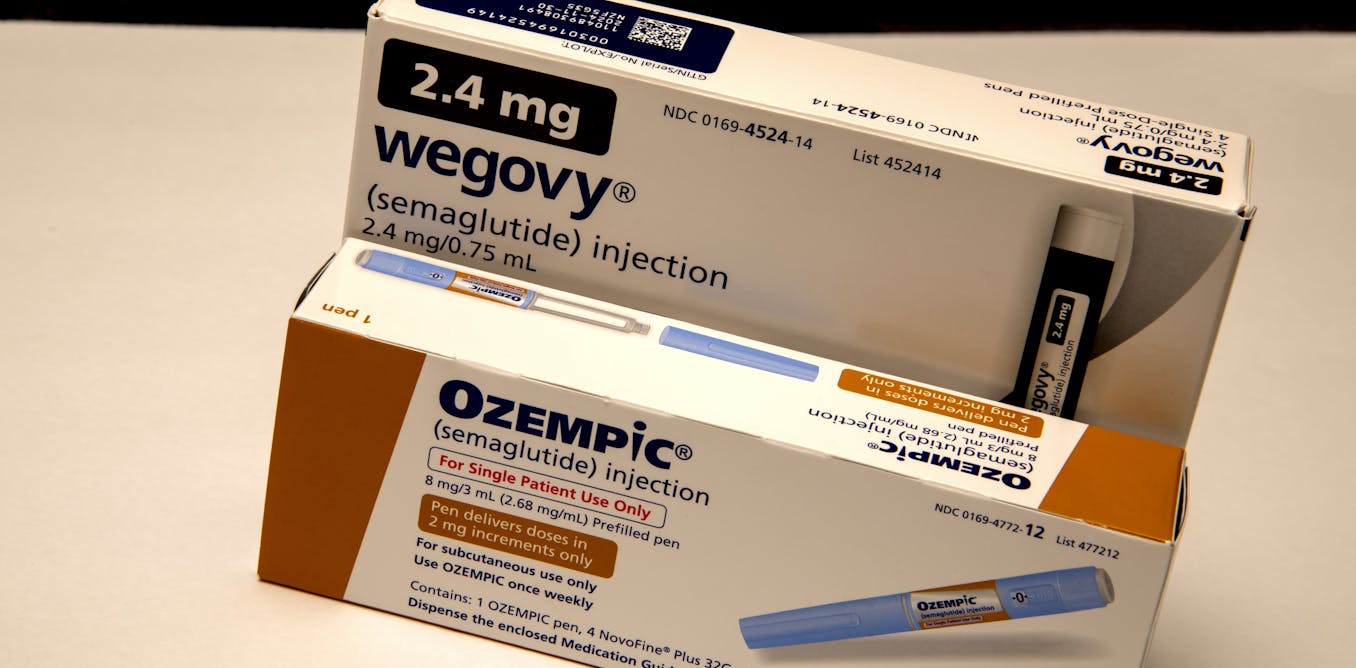
Expert Opinion - The Undisclosed Risks of Off-brand Ozempic and Other Weight Loss Products
The popularity -- and price -- of brand-name injectable drugs like Ozempic, Wegovy, Mounjaro, and Zepbound has skyrocketed. But the soaring demand for these drugs -- used for weight loss as well as to control blood sugar levels and reduce the risk of heart disease -- and the limited supply as well as lack of generic options has also led to a flood of non-brand alternatives in the market. In a recent article for The Conversation, UConn expert C. Michael White, Distinguished Professor of Pharmacy Practice, issued a warning to consumers about the potential undisclosed risks of these off-brand products: High demand is driving GLP-1 wannabes The dietary supplement market has sought to cash in on the GLP-1 demand with pills, teas, extracts and all manner of other products that claim to produce similar effects as the brand names at a much lower price. Products containing the herb berberine offer only a few pounds of weight loss, while many dietary supplement weight loss products contain stimulants such as sibutramine and laxatives such as phenolphthalein, which increase the risk of heart attacks, strokes and cancer. The role of compounding pharmacies Unlike the dietary supplements that are masquerading as GLP-1 weight loss products, compounding pharmacies can create custom versions of products that contain the same active ingredients as the real thing for patients who cannot use either brand or generic products for some reason. These pharmacies can also produce alternative versions of brand-name drugs when official drug shortages exist. Since the demand for GLP-1 medications has far outpaced the supply, compounding pharmacies are legally producing a variety of different semaglutide and tirzepatide products. These products may come in versions that differ from the brand-name companies, such as vials of powder that must be dissolved in liquid, or as tablets or nasal sprays. Just like the brand-name drugs, you must have a valid prescription to receive them. The prices range from $250-$400 a month – still a steep price for many consumers. Compounding pharmacies must adhere to the FDA’s sterility and quality production methods, but these rules are not as rigorous for compounding pharmacies as those for commercial manufacturers of generic drugs. In addition, the products compounding pharmacies create do not have to be tested in humans for safety or effectiveness like brand-name products do. Proper dosing can also be challenging with compounded forms of the drugs. Companies that work the system For people who cannot afford a compounding pharmacy product, or cannot get a valid prescription for semaglutide or tirzepatide, opportunistic companies are stepping in to fill the void. These include “peptide companies,” manufacturers that create non-FDA approved knockoff versions of the drugs. From November 2023 to March 2024, my team carried out a study to assess which of these peptide companies are selling semaglutide or tirzepatide products. We scoured the internet looking for these peptide companies and collected information about what they were selling and their sales practices. We found that peptide sellers use a loophole to sell these drugs. On their websites, the companies state that their drugs are for “research purposes only” or “not for human consumption,” but they do nothing to verify that the buyers are researchers or that the product is going to a research facility. By reading the comments sections of the company websites and the targeted ads on social media, it becomes clear that both buyers and sellers understand the charade. Unlike compounding pharmacies, these peptide sellers do not provide the supplies you need to dissolve and inject the drug, provide no instructions, and will usually not answer questions. Peptide sellers, since they allegedly are not selling to consumers, do not require a valid prescription and will sell consumers whatever quantity of drug they wish to purchase. Even if a person has an eating disorder such as anorexia nervosa, the companies will happily sell them a semaglutide or tirzepatide product without a prescription. The average prices of these peptide products range from $181-$203 per month. Skirting regulations Peptide sellers do not have to adhere to the rules or regulations that drug manufacturers or compounding pharmacies do. Many companies state that their products are 99% pure, but an independent investigation of three companies’ products from August 2023 to March 2024 found that the purity of the products were far less than promised. One product contained endotoxin – a toxic substance produced by bacteria – suggesting that it was contaminated with microbes. In addition, the products’ promised dosages were off by up 29% to 39%. Poor purity can cause patients to experience fever, chills, nausea, skin irritation, infections and low blood pressure. In this study, some companies never even shipped the drug, telling the buyers they needed to pay an additional fee to have the product clear customs. If a consumer is harmed by a poor-quality product, it would be difficult to sue the seller, since the products specifically say they are “not for human consumption.” Ultimately, consumers are being led to spend money on products that may never arrive, could cause an infection, might not have the correct dose, and contain no instructions on how to safely use or store the product. Dr. C. Michael White is an expert in the areas of comparative effectiveness and preventing adverse events from drugs, devices, dietary supplements, and illicit substances. Dr. White is available to speak with media -- click on his icon now to arrange an interview today.



Covering the Fed's Interest Rate Decision? Our Expert can Help
The Federal Open Market Committee has three meetings left in 2024 and markets expect interest rates to be cut. This could have a serious impact on the economy as inflation trends downward and restrictive monetary policies are now ready to be loosened. There will be a lot of media attention and speculation around the September 18 decision and its anticipated effects on the global economy. It's why experts like Florida Atlantic's William Luther are ready to help with any questions or coverage. William J. Luther, Ph.D., is an associate professor of economics at Florida Atlantic University, director of the American Institute for Economic Research’s Sound Money Project, and an adjunct scholar with the Cato Institute’s Center for Monetary and Financial Alternatives. The Social Science Research Network currently ranks him in the top five percent of business authors. *** Recent Media: Fox News: GOBankingRates: Newsweek: William Luther, Ph.D., an assistant professor in FAU’s Economics Department, has expertise in economic growth, monetary policies, business cycles and cryptocurrencies. Luther’s research has obtained media interest across the nation, including recent coverage by The Wall Street Journal, Politico and Florida Trend. If you're looking to know more - let us help. Simply click on William's icon now to set up an interview today.


Trending News: Women in Politics
Gender and politics - it's a trending topic these days as Kamala Harris' surging in the polls may put her in the position to be America's first female president. And, when media are covering the topic, it's the experts from University of Mary Washington they're contacting. Rosalyn Cooperman is an Associate Professor of Political Science at the University of Mary Washington in Fredericksburg, VA. Cooperman’s research focuses on the relationship between political parties, PACs, and women candidates, as well as elite attitudes regarding women’s political participation. Recently she has been featured in and the Arizona Mirror, the Centre for American Women in Politics. View profile *** Recent Media Arizona Mirror “I don’t know that there’s any real fidelity to any stance on an issue unless it’s perceived to be useful — abortion being one of a very long list,” said Rosalyn Cooperman, who studies Republican candidates and political leaders at the University of Mary Washington. “If you look at what he has said over time, it is what is politically expedient.” Marketplace "They are a political action committee, but they can raise unlimited amounts of money from corporations, unions, individuals, but they can’t coordinate directly with the parties or candidates." CAWP "Progressive PACs are continuing to use abortion-related messages in fundraising appeals while conservative women’s PACs are not" - Rosalyn Cooperman Dr. Cooperman is available to speak to media – simply click on her icon to arrange an interview today.



If You Hate University Rankings Here’s One You Might Like
If your university cares about fostering research and innovation and you haven’t heard of the PitchBook Startup Index, you might want to pay closer attention to this data. While it doesn't look like the PitchBook folks are aiming to be a big player in the world of academic rankings, their detailed tracking activity of startup investments, which includes deal size, school affiliation, and employees, gives us a window into how each institution is performing on startup activity. Why This Is a University Ranking We Can Trust It's Objective: These rankings are based on detailed startup data that PitchBook dutifully tracks as part of many paid services it provides for clients that include VC's, Private Equity Funds and government agencies. The investors who pay for access to the underlying data expect accuracy and there is a considerable amount of meta information available for tracking as startups raise money and hire employees. It's Simple: The PitchBook rankings are free of the typical complexity found in other rankings such as the US News & World Report. They simply use a few key metrics including the number of startup founders affiliated with new ventures created at each institution and how much investment capital they have raised. It's Revealing: Ranking this data as a Top 100 Index gives us a good comparative view of which Universities are doing a good job of creating an entrepreneurial environment that stimulates learning and research while attracting investment capital and creating high-value jobs. Universities Need to Tell the Story Behind this Data to Build Support for Their Research & Startups This data is followed closely by University Research and Tech Transfer Offices. However, it should also be actively used by other departments, such as University Marketing and Communications, Government Affairs, Enrolment and Fundraising/Development which need to build support with legislators, policymakers, funding agencies, donors, and corporate partners - and yes, new student prospects. The relevance and accuracy of these rankings make this an important opportunity for you to tell your story and engage these audiences. "Promoting stories about your startups provides the perfect opportunity to demonstrate the relevance of your programs and narrow the gap between "town and gown." It's an opportunity to show how your faculty experts and researchers are nurturing innovation through startups to improve the lives of people in your local community and beyond." Did Your University Make the List? If the answer is yes, congrats! We would be remiss if I didn't recognize our clients who made the Top 100. Take a bow University of Florida, Vanderbilt University, University of Massachusetts, Michigan State University, University of California, Irvine and Rensselaer Polytechnic. Now it's time to get to work. As someone who has worked closely with startups and Universities over the past two decades, I see the immense value they create. That's why I'm surprised whenever I see university marketing teams missing valuable opportunities for promoting their faculty and research through the lens of startup activities. The Benefits of Celebrating Startups Research on startups (Shenkoya, 2023) shows that key factors such as access to research funds, dedicated faculty, size of dedicated staff (academic and non-academic), access to practical entrepreneurship courses, and non-regular curriculum startup activities are key factors responsible for success of University startups. However, proper funding for these programs in a challenging environment requires that Universities more effectively communicate the value they are delivering. Here's where you can shine: Media: This is an obvious opportunity, especially with local outlets. It provides the perfect opportunity to demonstrate the relevance of your programs and narrow the gap between "town and gown." Show how these startups are looking to improve the lives of people in the community. Corporate Partners: Startups are a natural focal point for conversations with industry partners, especially when you can speak to key market sectors and breakthrough research that faculty are focused on. Speak to how you are giving them more direct access to a pool of talented graduates. Also, don't forget to speak to programs you may be running in the areas of internships, mentorship programs, sponsored research, and curriculum development. Don't forget that engaging in educational partnerships helps companies improve their CSR profile, which can enhance their public image and brand. Also, explore how partners can financially support needed infrastructure improvements on the campus with funding for new facilities or new equipment. Students: Giving startups an opportunity to tell their stories and celebrate their achievements is one of the best ways to demonstrate how you are aligning your educational and entrepreneurship programs with industry needs. And don't forget to include your corporate partners. As employers, they are in the best position to show how you are preparing students for next-generation jobs. Show students how they will get direct exposure to the industry through programs you may be running, such as co-op terms, internships, and mentorships, and startup events such as boot camps and pitch competitions. Government: The data clearly shows that startups create high-value jobs and contribute to GDP growth. But governments today need constant reassurance that the funds they put into education and research are generating impact. You have to show the relevance of your startups by outlining how they are solving big societal problems that matter to voters. How are your startups leading socio-economic transformation for local communities and competing effectively on a global stage? Tips for Telling Your Startup Stories Focus on People Humanize your story by speaking directly to how founders and their teams are approaching key market and societal challenges. Focus on important "origin story" elements such as their personal challenges or insights that led them to their first discovery. Focus on notable collaborations they formed. How were faculty members or alumni involved in helping with research and market development or industry relationships? Create a story arc. Give your audience an appreciation for how hard startups are and the amount of uncertainty and risk they face in developing new innovations. Startups are not an overnight success. People are even more inspired by non-linear journeys that show the grit and determination that founders need to bring to their startups. Focus on Programs Always be thinking about how founders and their stories can help boost student enrolment by connecting their origin stories to specific experiences they had on the campus. Ask them how specific courses and programs prepared them for their entrepreneurial journey. Also ask them what other experiences such as campus mentorship programs, hackathons or pitch competitions helped them achieve specific breakthroughs and milestones. Focus on Photos & Videos Startups provide a great opportunity to engage your audience visually. Go beyond boring headshots, monolithic campus buildings, and staged stock images. Instead, use imagery that shows people creating new and exciting things together. This is not a time to be shy about asking founders, faculty, and funders to get in the shot and be recognized for their contributions. While you may think photo ops are overly promotional, they often help your partners communicate back to their constituency the importance of supporting your work. Walk the campus to get behind the scenes and show lab facilities, technology prototypes, and in-field work. Partners Profile notable investors, faculty, foundations, government agencies, alumni and corporate partners who may have invested time, money and other resources that help validate the quality of the startups you are helping build. Remember, startups are like a barn-raising, that involves a larger community. Give these partners an opportunity to be visible part of the story and they will celebrate with you and amplify your message to reach a bigger, more engaged audience. Proof Show evidence that the startups you are supporting are making a difference. Use your startups as an opportunity to speak to the bigger picture of why your institution matters. Speak to how they are tackling bigger challenges in areas such as environment, healthcare, social justice, the economy, physical infrastructure, security, election integrity and social innovation. Also make sure to demonstrate measurable impact in key areas such as: Total Addressable Market Job creation Investment activities Industry Awards Partnerships Patents Customer /Revenue Milestones It's Your Time to Shine In an era where impact is increasingly measured by the ability to translate research into real-world applications, universities have a unique opportunity to show the value of their startup ecosystems. But you need to get the stories out beyond the campus. Use your momentum to build a compelling narrative that makes your startups the heroes of your institution's story.


Hofstra Experts Weigh In on the 2024 Presidential Election
Hofstra University boasts a team of distinguished media-ready experts, ready to talk about the newest developments in the 2024 presidential race. They include presidential scholar Meena Bose, constitutional law professor James Sample, media expert and former NBC executive Mark Lukasiewicz, and Lawrence Levy, an expert in suburban studies and suburban voting trends More details on their expertise and recent media appearances are provided below, along with information on how to connect with them for interviews and commentary. Dr Meena Bose Executive Director of the Kalikow Center for the Study of the American Presidency & Professor of Political Science Dr. Meena Bose brings her extensive experience and frequent media presence to discussions on the historic nature of the 2024 presidential race. Recent topics she has been interviewed about include next steps for the Democrats now that President Biden has withdrawn from the 2024 presidential race, former President Donald Trump’s selection of J.D. Vance as his running mate, how the assassination attempt on Trump may have impacted the race, and the Supreme Court’s presidential immunity rulings View Profile & Connect Recent Media Dr. Meena Bose has recently been called on by media to discuss: CNN's Biden-Trump debate; how President Biden may recover from his poor debate performance; and the Supreme Court’s presidential immunity ruling. She has appeared on WABC-TV, WNYW Fox 5, Fox radio stations across the country, and Reuters TV. She is frequently interviewed by Newsday and Newsweek, and her expertise has also been prominently featured in The Washington Post and The New York Times. She is the author of the forthcoming book: Pragmatic Vision: Obama and the Enactment of the Affordable Care Act. James Sample Professor, Maurice A. Deane School of Law James Sample, a constitutional law professor, is a sought-after legal and political commentator on legal challenges facing former President Donald Trump, Supreme Court ethics, the broader implications of presidential immunity, and the guilty verdict delivered in the Senator Robert Menendez trial. He most recently was interviewed about President Biden leaving the race and throwing his support behind VP Kamala Harris. View Profile & Connect Recent Media James Sample is a regular commentator for Reuters, CNN, CBS, WNYW Fox 5, and WCBS on topics like the Supreme Court’s ruling on presidential immunity; ethics questions facing Supreme Court Justices Alito and Thomas; former President Donald Trump’s legal challenges, including the election interference case and the “Hush Money” trial. In addition to his broadcast media interviews, Professor Sample has been interviewed by The New York Times, The Washington Post, The Economist, U.S. News & World Report, the Los Angeles Times, National Public Radio, Salon, USA Today, and The National Law Journal, as well as in leading blogs and regional outlets throughout the country. Mark Lukasiewicz Dean of the Lawrence Herbert School of Communication Mark Lukasiewicz offers his expertise on media coverage of the presidential race, drawing on his vast experience in planning and supervising election coverage. Before joining Hofstra, Dean Lukasiewicz was senior vice president of specials at NBC News, planning and supervising coverage of major breaking news events, including presidential elections and debates from 2004 to 2016. View Profile & Connect Recent Media A former NBC executive, Dean Lukasiewicz is available to speak about media coverage of the 2024 presidential race. Recent examples include the June 27th debate and expectations for President Biden’s interview on July 5 with George Stephanopoulos. Before joining Hofstra, Dean Lukasiewicz was senior vice president of specials at NBC News, planning and supervising coverage of major breaking news events, including presidential elections and debates from 2004 to 2016. He has been interviewed in recent weeks by the Wall Street Journal, Newsday, Tribune News Service, Scripps Morning News, and the AP. Lawrence Levy Associate Vice President and Executive Dean of the National Center for Surburban Studies (NCSS) In his leadership role at NCSS, Dean Levy has worked with Hofstra's academic and local communities to shape an innovative, interdisciplinary agenda for interdisciplinary suburban study. He has commented on a variety of political issues – most recently President Biden dropping his reelection bid and what that means for down-ballot elections. View Profile & Connect Recent Media Prior to joining Hofstra, Dean Levy spent 35 years as a reporter, editorial writer, columnist and PBS host, winning many of journalism's top awards (including Pulitzer finalist) for in-depth works on suburban politics, education, taxation, housing and other key issues. As a journalist, he was known for blending national trends and local perspectives and has covered seven presidential campaigns and 15 national conventions. Visit our Expert Center for a full directory of Hofstra experts insights.


Can the Olympics Help Americans Forget Politics (at Least for 16 Days)?
Americans are divided on a multitude of different issues, but could the Olympic Games unite the country – at least for the duration of an Olympiad? A Baylor University sports marketing and branding expert says yes, the Olympics can help bring people together even when it’s hard for them to agree about anything else. In his latest Forbes Sports Money column, Baylor University sports marketing and branding expert Kirk Wakefield, Ph.D., executive director of the Curb Center for Sales Strategy in Sports and Entertainment (S3E) program at Baylor’s Hankamer School of Business, analyzed a July 8 national population poll that asked Americans questions about politics but also included the Steen Happiness Index (SHI). The 20-item happiness index provides a series of statements for participants to read and choose the one from each group that describes their state at that moment. Happiness items focus on three types of happy lives: the pleasant life (experiencing and savoring pleasures), the engaged life (losing the self in engaging activities) and the meaningful life (participating in meaningful activities). Are people happier when watching the Olympics? “Happy people follow the Olympics and people who follow the Olympics are happy people,” Wakefield wrote. The higher people scored on the happiness index, the more likely they are to: Watch at least some of the Olympics (49.75%) Root for the U.S. to win (31.8%) Follow the results of the Olympics (28.1%) Read stories about athletes in the Olympics (19.6%) Will talk with others about the Olympics events (18.7%) “Controlling for age, gender, income, education, race and marital status, Americans who follow the Olympics in one, two, or three of these ways are somewhat more happy people (+4% on the SHI). But those who follow the Olympics in four or all five of these ways are significantly happier people (+10% on the SHI),” Wakefield wrote. Who is happiest when the Olympics are on? The happiest? Those would be the Americans who love to talk about the Olympics with others while also cheering for U.S. athletes to win. In fact, they are about 14% happier than those who don’t follow the Olympics, according to the SHI. “Perhaps best of all, people of all political leaning and presidential preferences are equally likely to follow the Olympics. No matter the party, people can party together in unity following the Olympics,” Wakefield wrote. “Maybe we can’t forget politics. But we can give it a break to watch the Olympics.” ABOUT KIRK WAKEFIELD, PH.D. Kirk Wakefield, Ph.D., is The Edwin W. Streetman Professor of Retail Marketing at Baylor University, where he is the Executive Director of the Curb Center for Sales Strategy in Sports and Entertainment (S3E) program in the Hankamer School of Business. The author of Team Sports Marketing and founder of Wakefield Research Partners, Wakefield has conducted fan research on partnerships, pricing, promotions, sportscape, service, and anything else that explains why fans do what they do in nearly every venue in sports, including the NBA, NFL, MLB, MLS, NHL and NASCAR. His scholarly works appear in a breadth of journals: Journal of Marketing, Journal of Consumer Research, Journal of the Academy of Marketing Science, Journal of Service Research, Journal of Retailing, Journal of Advertising, Journal of Advertising Research and Journal of Sport Management, among others. Wakefield is a regular contributor to Sports Money on Forbes.com. ABOUT THE CURB CENTER FOR SALES STRATEGY IN SPORTS AND ENTERTAINMENT (S3E) The Center for Sales Strategy in Sports and Entertainment (S3E) at Baylor University is the only program in the U.S. focused on generating revenue for sports. S3E graduates have career opportunities in sales, digital marketing or business analytics for major league teams, university athletics, corporations and agencies. Baylor is the only university combining learning with practice in partnership with the Athletics Department to prepare graduates for careers in the business of sports. The S3E program is unique in vision, values, mission and culture to transform the business of sports and entertainment. Consistent with the Christian mission and purpose of Baylor University, we prepare passionate servant leaders to positively influence lives in places people go to play or watch others play.


It Has to Matter Who Wins: Futurecasting the MLB All-Star Game
Globe Life Field in Arlington, home of the 2023 World Series champion Texas Rangers, will play host to the 94th edition of the Major League Baseball All-Star Game on July 16, marking the second time in franchise history the Rangers will host the Midsummer Classic. MLB’s All-Star game – which matches up the best players from the American League and National League as selected by fans, managers and players – is considered one of best all-star contests among professional sports, said Kirk Wakefield, Ph.D., executive director of the Curb Center for Sales Strategy in Sports and Entertainment (S3E) program at Baylor University’s Hankamer School of Business. However, the game faces continued headwinds, Wakefield said, ranging from lagging viewership to fan voting to a game that is more an exhibition than a meaningful game. Wakefield Weighs In: Five Thoughts on MLB's All-Star Game Is the MLB All-Star game the best All-Star contest of all major leagues? Wakefield: Yes, it’s the only one where players seem to try their best. The NBA and NFL – who have practically given up – have declining viewership since 2011. Unfortunately, MLB All-Star game is on the same downhill skid. (According to Statista, viewership has declined from 22 million in 1993 to seven million in 2023.) The reason why is it doesn’t really matter who wins. If the players don’t care who wins, neither will fans. Further, fans aren’t particularly a fan of only one league so that it really matters if one league has bragging rights. That was less the case years ago before interleague play. How could viewership improve in any of the All-Star games? Wakefield: It has to matter who wins. MLB tried this with home field advantage for the World Series. They gave that up. The current approach in baseball is truly an exhibition because every player gets to play, so it’s like three players at every position playing three innings. That’s not how a manager would play it if trying to win. And it’s not like it used to be when the starters (who were more likely to be the best at their positions) played longer. One suggestion I’ve heard is to make the payoff big enough for the winners so that the players gave it their best. Get a sponsor to put up the money so the winners each make seven figures and could be the players and managers will play more like a team trying to win. Does Monday’s prelude, the hugely popular Homerun Derby, enhance Tuesday’s game? Wakefield: The Homerun Derby is popular because fans do follow individual players. It matters more who wins. That said, the HR derby’s viewership has still lagged. Bottom line: Fans are loyal to teams more than to leagues or individual players. Fan voting… Need we say more? Wakefield: Major market teams with huge fan bases will dominate, but what about the Kansas City Royals, who at one point in the season were on pace for the biggest year-over-year improvement in wins and losses? Given the way fan voting has become essentially a promotion game to get more fans to vote more often, it’s hardly representative of anything other than largest markets with the best promoters. The good news is that the MLB All-Star game will be quite the occasion in Arlington, Texas, with a bevy of game-related activities and events July 13-16. Wakefield: Arlington is an optimal location central to the U.S. with plenty of space to blow out the occasion. It’s like the Texas State Fair came to baseball, where all the rides and attractions are baseball-happy. ABOUT KIRK WAKEFIELD, PH.D. Kirk Wakefield, Ph.D., is The Edwin W. Streetman Professor of Retail Marketing at Baylor University, where he is the Executive Director of the Curb Center for Sales Strategy in Sports and Entertainment (S3E) program in the Hankamer School of Business at Baylor University. The author of Team Sports Marketing and founder of Wakefield Research Partners, Wakefield has conducted fan research on partnerships, pricing, promotions, sportscape, service, and anything else that explains why fans do what they do in nearly every venue in sports, including the NBA, NFL, MLB, MLS, NHL and NASCAR. His scholarly works appear in a breadth of journals: Journal of Marketing, Journal of Consumer Research, Journal of the Academy of Marketing Science, Journal of Service Research, Journal of Retailing, Journal of Advertising, Journal of Advertising Research and Journal of Sport Management, among others. Wakefield is a regular contributor to Sports Money on Forbes.com. ABOUT THE CURB CENTER FOR SALES STRATEGY IN SPORTS AND ENTERTAINMENT (S3E) The Center for Sales Strategy in Sports and Entertainment (S3E) at Baylor University is the only program in the U.S. focused on generating revenue for sports. S3E graduates have career opportunities in sales, digital marketing or business analytics for major league teams, university athletics, corporations and agencies. Baylor is the only university combining learning with practice in partnership with the Athletics Department to prepare graduates for careers in the business of sports. The S3E program is unique in vision, values, mission and culture to transform the business of sports and entertainment. Consistent with the Christian mission and purpose of Baylor University, we prepare passionate servant leaders to positively influence lives in places people go to play or watch others play.

Can you benefit in transferring high-interest credit card debt?
Photo credit: paulaveryevans According to Lendingtree, Americans have over $1 trillion in credit card debt. The average American has around $6,500 in credit card debt. When you factor in the high interest that credit cards charge, it can be a daunting task to get the balance to zero. Many cards offer 0% APR on balance transfers for certain length of times. But is it worth it if you don’t plan on paying off the entire balance during the promotional period? Wendy Habegger, PhD, senior lecturer in the James M. Hull College of Business, said you need to be careful when taking advantage of such offers. “The benefit one would get in this situation is short-lived,” said Habegger. “While one might enjoy no interest for the promo period, when that period is over, the interest rate they are charged could be more than the credit card from which they transferred. My recommendation is that if one does a balance transfer, then only do so if you are able to pay off the balance before the period ends.” Some may think of doing a second balance transfer but Habegger said that it is not a good idea and could have a negative impact on a person’s credit score. It also gives the appearance the customer is at increased risk of default, which could trigger an even higher interest rate and higher fees. Not only may one incur higher rates, it could certainly impact their credit score, which can have a long-lasting financial impact. Even a large purchase on a 0% APR card will affect someone’s credit score. “A large purchase indirectly impacts one’s credit score based on credit utilization,” she added. “If one uses more than 30% credit utilization, it could impact credit scores.” Personal debt and credit are trending and important topics in America today - and if you're looking to know more, we can help. Wendy Habegger is a respected finance expert available to offer advice on making the right money moves during volatile times. To arrange an interview, simply click on her icon now.


Presidential Race Continues After Trump’s Guilty Verdict
Dr. Meena Bose, professor of political science, executive dean of the Public Policy and Public Service program, and executive director of the Kalikow Center for the Study of the American Presidency, was interviewed by Courthouse News about the guilty verdict in former President Donald Trump’s “hush money” trial and how it might impact voters this coming election. Trump is the first U.S. president to be charged with — and now convicted of — a crime “The presidency is the highest office in the land, and there is an expectation that presidents are supposed to represent kind of the best the United States has as far as character, leadership, responsibility,” said Dr. Bose. “And the convicted felon obviously doesn’t meet those expectations.” Dr. Bose added that Trump has proven himself repeatedly to be a “different candidate” from any other who has preceded him, primarily for his ability to evade career-crushing consequences since he first emerged on the presidential ticket in 2016. “Politically, other politicians would feel pressure to step aside,” she said. “But Donald Trump didn’t do so in 2016, he did everything he could to try and stay in office in 2020, and even after January 6 and an unprecedented second impeachment in 2021, ran for reelection and kind of effectively ended the primary contest very early without participating in a single primary debate.” Dr. Meena Bose is Executive Dean of Hofstra University’s Peter S. Kalikow School of Government, Public Policy and International Affairs. She is available to speak with media - simply click on her icon now to arrange an interview today.

Trump now a convicted felon.... let our experts explain this unprecedented situation.
Just six months before the upcoming election, former President Donald Trump has become the first U.S. president to be convicted of a felony, following his involvement in the hush money scandal. A Manhattan jury delivered a guilty verdict on 34 counts, raising profound questions about the implications for Trump's political future, the Republican Party, and the broader landscape of American politics. This unprecedented situation marks a historic moment in American politics, as no former president has ever faced such legal repercussions so close to an election. From constitutional debates to shifts in public opinion, and from international reactions to financial impacts, the scope of the story is immense. Here are several journalistic angles to explore this multifaceted issue: Constitutional implications of a felon running for presidency. Republican Party's internal conflicts after Trump's felony conviction. Public opinion on Trump's candidacy post-conviction. Trump's legal appeals and their impact on his campaign. Media's role in shaping perception of Trump's conviction. International reactions to Trump's felony and candidacy. Trump's campaign strategy adjustments after the conviction. Financial implications for Trump's businesses and fundraising. Historical instances of political candidates facing legal troubles. Impact of Trump's legal issues on down-ballot races. The ramifications of Trump's conviction are vast and unpredictable, potentially reshaping the political landscape in ways that are still unfolding. Let our experts assist with your understanding of this complex and evolving situation. Connect with an Expert about the Trump conviction: John Clinton | Vanderbilt University Abby and Jon Winkelried Professor of Political Science Brian Kalt | Michigan State University Professor of Law & Harold Norris Faculty Scholar Mean Bose | Hofstra University Professor of Political Science, Executive Dean for Public Policy & Public Service Programs Michael Genovese | Loyola Marymount University Professor of Political Science and International Relations, President of Global Policy Institute David RedHawks | University of Delaware Professor and Chair, Political Science Political Science and International Relations Tony Smith | UC Irvine Professor of Political Science James Sample | Hofstra University Professor of Law Todd Collins | WCU Steed Distinguished Professor Mark Caleb Smith | Cedarville University Professor of Political Science Stephen Farnsworth | University of Mary Washington Professor of Political Science and International Affairs To search our full list of experts visit www.expertfile.com