
Experts Matter. Find Yours.
Connect for media, speaking, professional opportunities & more.
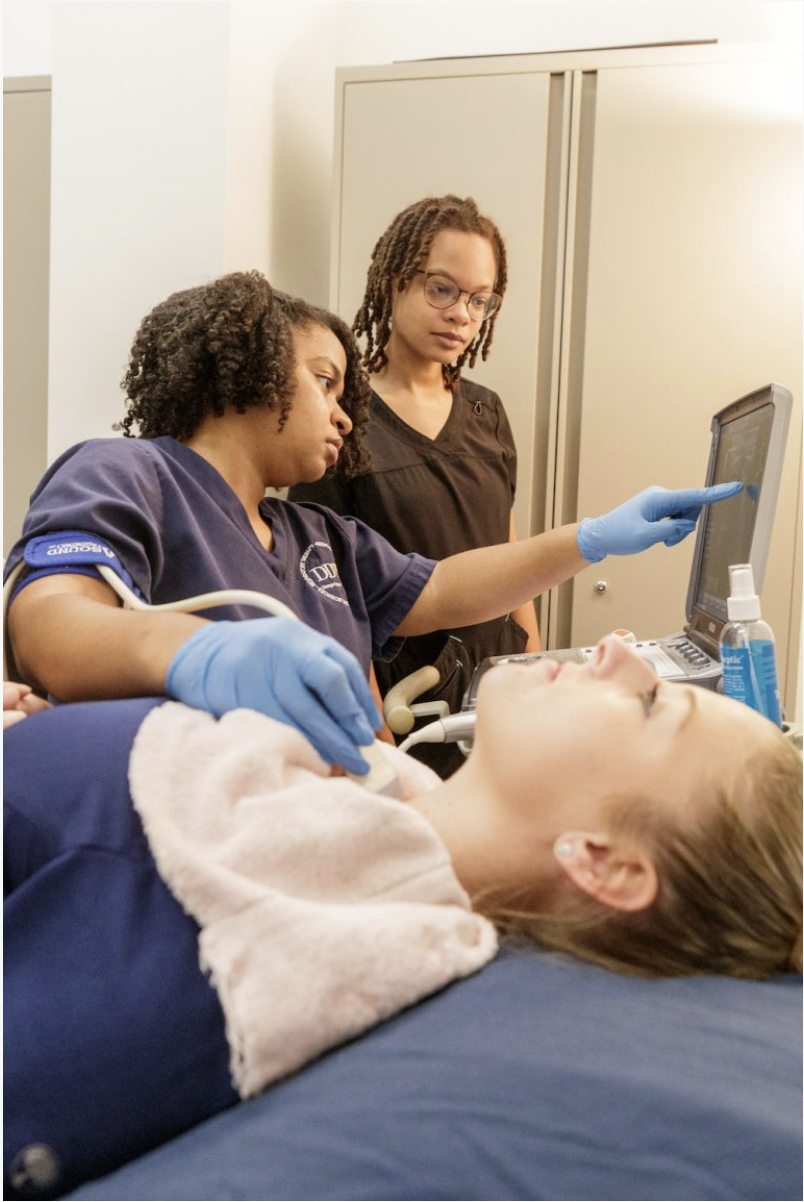
Georgia Southern’s public health center receives $4 million to assist rural hospitals nationwide
Georgia Southern University’s Center for Public Health Practice and Research at the Jiann-Ping Hsu College of Public Health (JPHCOPH) received a $4 million grant from the Health Resources and Services Administration (HRSA) to provide targeted technical assistance to rural hospitals nationwide. The funding will support the team’s implementation of the Targeted Technical Assistance for Rural Hospitals Program over a five-year period (2023-2028). “Many rural hospitals are struggling financially across the U.S.,” said JPHCOPH Dean Stuart Tedders, Ph.D. “Long-term, the primary program goal of this grant is to ensure that all rural hospitals are financially viable and positioned to serve their communities with the essential health care services that we all need and expect. A viable health care system is essential for assuring that all communities and their residents thrive. I am very proud of the Center for Public Health Practice and Research at the JPHCOPH and the commitment they have made to improving the quality of life of rural and underserved populations across the country.” Bettye Apenteng, Ph.D., and Charles Owens, both professors of health policy and management, serve as the co-principal investigators for the grant. “We are proud to be selected to work cooperatively with rural hospitals across the U.S. to strengthen their viability so they can continue to provide essential health care locally so the residents, the local hospital and the community may thrive,” said Owens. As part of this cooperative agreement, the team will work in partnership with HRSA and rural health stakeholders to provide in-depth and tailored technical assistance to rural hospitals at risk of financial distress nationwide. Technical assistance delivered as part of this program will help rural hospital communities implement a prioritized strategy for maintaining essential services locally through capacity building in evidence-based decision-making, operational and financial improvement, strategic management, community partnership, project implementation and evaluation. “We are excited to extend the work we have done in Georgia with rural hospitals, for close to a decade, to the rest of the nation,” said Apenteng. “We look forward to building strong collaborative relationships with rural hospital communities nationwide.” The grant activities will be executed by a multidisciplinary team that includes additional JPHCOPH faculty Angie Peden; Andrew Hansen, DrPH; Linda Kimsey, Ph.D.; William Mase, DrPH; Tilicia Mayo-Gamble, Ph.D., and Samuel Opoku, Ph.D.; and Parker College of Business’ Kwabena Boakye, Ph.D.; and the College of Arts and Humanities’ Jason Murdock. Interested in learning more or looking to talk with Bettye Apenteng, Ph.D., and Charles Owens about this grant? Simply click on an expert's icon or contact Georgia Southern's Director of Communications Jennifer Wise at jwise@georgiasouthern.edu to arrange an interview today.


Research explores recreational shark fishing's impact on protected species
In Delaware, recreational shark fishing is popular, with anglers taking part in half- and full-day shark fishing trips. However, they are prohibited from keeping protected species of sharks. A University of Delaware research team led by Aaron Carlisle, assistant professor in UD's School of Marine Science and Policy (SMSP), is studying the impact of releasing these sharks, aiming to understand their post-release survival and how fishing operations handle them. Carlisle, graduate student Bethany Brodbeck and Ed Hale, assistant professor and aquaculture specialist for Delaware Sea Grant, are conducting the field research for the study, riding along with recreational fishing vessels to better understand what happens to sharks when they are caught and released. Another component to the research is being led by George Parsons, E.I. du Pont Professor at UD’s College of Earth, Ocean and Environment, who is looking at the economic aspect, using survey-based research to value the shark fishery and study anglers’ perceptions and attitudes toward sharks and their management. Carlisle said the two concurrent studies will help gauge the biological and economic impacts of the shark fishery in Delaware. “We want to find out how much money the fishery is actually drawing to the economy,” Carlisle said. “We also want to find out how the fishery is actually impacting the populations of sharks in Delaware, especially the protected ones.” The research was funded by Delaware Sea Grant, which helps communities wisely use, manage and conserve coastal resources. To arrange an interview with Carlisle, simply click on the link to his profile. Pressing the contact button and using the form will send your request directly to him and a member of UD's media relations team.


New Goizueta Research: Fandom and the Republican Party and Why It Matters
When we think about “fans” we typically think about sports or entertainment … but new research from the Goizueta Business School shows that political figures are showing increased levels of fandom. Fans of political figures often support candidates, providing a very knowledgeable base for them. Political fans work to use their knowledge to influence others, raise money, attract volunteers and win elections. Professor Mike Lewis from Emory University’s Marketing Analytics Center looked at political fandom among Republicans and the current slate of presidential candidates. The survey of likely Republican voters found former President Donald Trump has a hold on Republican fandom that actually impacts the other candidates in a surprising way. Candidates who are openly anti-Trump see their fandom negatively impacted. The study found former New Jersey Governor Chris Christie has a 90% rate of anti-fandom followed by South Carolina’s Tim Scott at 56%. Both have had negative opinions of Trump. The survey can be found here: The survey is a must read for anyone interested in politics, it showed: Political Fandom by Generation: Millennial Republican voters had the strongest Trump fandom (63%) followed by Generation X (58%). Ramaswamy had the second highest fandom among Millenials while DeSantis was second among Gen X. Having a Beer with Trump: The survey of almost 1,000 Republican voters was asked which candidate would participants most likely meet to have a coffee or beer. Former President Trump was the overwhelming choice among respondents in all age groups. Vivek Ramaswamy was the second choice among most age groups. Christie was the last choice in most age groups. Voters and President Biden: A final question asked likely Republican voters how they feel about President Biden. The Biden Positive segment was 23.6% of those asked versus 76.4% in the Biden Negative segment. The largest Biden negative group was among Trump fans which because of the number of supporters was also the largest Biden positive group. The smallest Biden negative group was fans of former Governor Chris Christie. Campaigns and elections are won or lost on polling, market research and the data collected by surveys just like this. And if you are interested in knowing more about this survey and how fandom is becoming an essential piece of political campaigning - then let us help. Mike Lewis is an expert in the areas of analytics and marketing. This approach makes Professor Lewis a unique expert on fandom as his work addresses the complete process from success on the field to success at the box office and the campaign trail. Michael is available to speak with media - simply click on his icon now to arrange an interview today.



ChristianaCare expands Health Literacy Partnership through Support from Highmark Health
ChristianaCare has received an $80,000 grant from Highmark Blue Cross Blue Shield (BCBS) Delaware to support the Health Literacy Council of Delaware. Funded through Highmark’s BluePrints for the Community grant program, the money will be used to fund education and awareness for clinicians and other caregivers on best practices in making health care information much easier for patients to understand. “Health literacy is essential to good health,” said Greg O’Neill, MSN, APRN, AGCNS-BC, director of Patient & Family Health Education at ChristianaCare. “Personal health literacy is the degree to which individuals are able to find, understand and use information and services to inform their health-related decisions and actions. At ChristianaCare we are committed to communicating with our patients in ways that enable them to understand so that they can make informed decisions and achieve their best health. “We are deeply grateful that Highmark Health Options shares our commitment to health literacy. Their generous grant will enable us to support our caregivers in their efforts to deliver clear, consistent communication to every patient in every interaction, improving their lives.” In addition to work within health care in Delaware through the Health Literacy Council, the grant also will be used by ChristianaCare to provide education in the community to support increased health literacy and enable people to make informed, healthy choices. Housed by the Delaware Community Foundation, Highmark’s BluePrints for the Community has contributed over $35 million to the community since its inception in 2007. It was established to increase access to care and reduce health care disparities in Delaware. In addition to ChristianaCare, the Health Literacy Council of Delaware is supported by the Delaware Division of Public Health and the University of Delaware’s Partnership for Healthy Communities. “Highmark Blue Cross Blue Shield Delaware and Highmark Health Options are actively engaged with statewide literacy improvement efforts and are pleased to support the Health Literacy Council of Delaware,” said Nick Moriello, president of Highmark Blue Cross Blue Shield Delaware. “By ensuring Delawareans have the tools and resources they need to understand their health information, while simultaneously making inclusive accommodations as health care organizations, we can promote better health decisions and ultimately improve health outcomes.”


The World Cup proved to be big for sports and Qatar's business future
The 2022 FIFA World Cup was one of the world’s most-watched sporting events, but it also provided an opportunity for exponential growth for business development in the Middle East. Qatar was selected as the first country from the Middle East to host the worldwide tournament over 12 years ago, allowing plenty of time to prepare for the competition and create everlasting business relationships. Kyriaki Kaplanidou, a UF professor and researcher, published a study in 2016 for the Journal of Business Research, working alongside her fellow colleagues. The study followed the industrial progress made in Qatar after its 2010 selection and demonstrated how their networking efforts improved the Persian Gulf region business infrastructure. “The country has invested a great deal of time and money to expand its physical and human resources. They’ve had to understand how business is done in other countries, learn innovative construction techniques and develop their human capital in areas of knowledge, skill and awareness of other cultures and business practices,” Kaplanidou said. Kaplanidou and her team interviewed 24 Qatar sports organizations stakeholders, both indirectly and directly involved with the 2022 World Cup. Her research found that almost all the interviewees highlighted Qatar’s characteristics that either impede or improve their current development status. The most highlighted criteria pertained to labor cases pertaining to hazardous working conditions and displayed racial discrimination, as the United Nations put Qatar on blast for their treatment of infrastructure workers. The government decided to implement changes and with the introduction of new, stricter labor laws, Qatar is now considered one of the most worker-friendly places in the Gulf Region. Despite all the controversy surrounding the FIFA World Cup host country, fans were still excited to cheer on their team of choice, and the tournament provided Middle East countries with something to be proud of. “It will be interesting to see if the country can reposition itself in the business world and establish its presence in other industries now that it has gained new experience and knowledge through the process of preparing for this mega event,” Kaplanidou said. By Halle Burton


Health Professions Academic Building on the Armstrong Campus in Savannah Georgia’s only public medical school has received funding approval to open a new four-year campus in Savannah, an expansion that will provide greater access to education and training for medical students and ease the state’s ongoing shortage of physicians. The new campus of Augusta University’s Medical College of Georgia (MCG) is expected to enroll its first students on the Armstrong Campus of Georgia Southern University by Fall 2024, pending approval by the Liaison Committee on Medical Education, the accrediting body for medical schools in the U.S. and Canada. The campus will be located in the existing Armstrong Center and the Health Professions Academic Building of Georgia Southern’s Waters College of Health Professions. Located down the street from Savannah’s St. Joseph’s Hospital, it would be MCG’s third four-year campus in Georgia. The MCG educational experience is anchored at its main campus in Augusta, with another four-year campus located in Athens in partnership with the University of Georgia. “Georgia ranks 40th in the nation for both the number of active physicians and the number of primary care doctors,” Georgia House Speaker Jon Burns said. “Georgians experience this reality every day. Increasing opportunities within the University System of Georgia allows Augusta University’s Medical College of Georgia to educate and train more students and meets a clear need to make sure our communities receive better health care. Georgia needs more doctors, and I’m proud we are making this investment in our future.” The Board of Regents of the University System of Georgia (USG) on Tuesday approved $1.7 million for renovations at Georgia Southern’s Armstrong Campus to help make the new campus a reality. The money was included in the fiscal year 2024 state budget passed earlier this year by the Georgia General Assembly and signed by Gov. Brian Kemp on May 5. “We’re grateful to Governor Kemp, Speaker Burns, Lt. Gov. Jones and the General Assembly for their support in helping MCG and the university system expand one of the best public medical colleges in the nation and help get more doctors into our local communities,” USG Chancellor Sonny Perdue said. Four-year campuses provide the full spectrum of medical education, from basic sciences to clinical experiences. “This campus expansion is a momentous milestone for Augusta University and the Medical College of Georgia, standing as a testament to the unwavering support we have received from Speaker Burns, state Rep. Butch Parrish, Governor Kemp, the entire General Assembly and Chancellor Perdue,” said Augusta University President Brooks A. Keel, PhD. “Through this collaboration, we are forging a brighter future for health care in Georgia and fulfilling our shared commitment to producing more doctors for our state. I extend my deepest gratitude to all those who have championed this vision, including St. Joseph’s/Candler Health System, whose exceptional partnership has provided invaluable clinical experiences for our students. Together, we are bolstering the state’s medical community and strengthening Southeast Georgia’s access to quality health care.” MCG’s statewide educational model also has students learning at two-year, clinically focused regional campuses in every corner of the state, including the Southeast Campus, established in 2011 and based at St. Joseph’s/Candler in Savannah, and Southeast Georgia Health System in Brunswick. Other regional campuses include the Southwest Campus based in Albany and the Northwest Campus based in Rome. “This partnership with Augusta University and the Medical College of Georgia is another example of how together, the governor, our legislators, the University System of Georgia and Georgia Southern University are collaborating to meet the growing needs of Southeast Georgia,” added Georgia Southern University President Kyle Marrero. “These programs on our Savannah campus further Armstrong’s history of being a leader in training health care professionals and complement our efforts to expand nursing education and develop our future physician assistant program.” Through this partnership, Georgia Southern is providing approximately 23,000 square feet of instructional and lab space in its Armstrong Center and the Waters College of Health Professions’ Health Professions Academic Building. This includes 10,000 square feet of dedicated student group workspace and faculty and staff offices and 13,000 square feet of shared anatomy lab and large classroom space. The renovations include the creation of a new anatomy lab within the Health Professions Building, as well as minor renovations and new furniture, fixtures and equipment for the student group workspace and faculty and staff offices. The new campus would allow MCG to accept 40 more students per year, increasing its class size, already one of the nation’s largest, to 304 students per class. “As the state’s only public medical school, it is both our responsibility and commitment to produce more doctors for Georgia, and this growth in our class size is one way we can fulfill what I consider to be our most critical mission” said MCG Dean David Hess, MD. “This expansion would not be possible without the support of Governor Kemp, the Georgia Legislature, the University System of Georgia, Augusta University President Brooks Keel, and our colleagues at Georgia Southern University. I am also thankful for the unwavering support of St. Joseph’s/Candler Health System, including its CEO Paul Hinchey and chief medical officer Dr. Julia Mikell, a 1976 MCG graduate. Physicians and staff at St. Joseph’s/Candler have been exceptional educational partners, serving as a home base for our Southeast Campus, and providing rich clinical experiences for our third- and fourth-year students, for well over a decade. I know that commitment will extend to students at this new four-year campus.” “This is a sentinel event not only for the future of health care in Georgia, but also for Savannah and the region,” added Paul P. Hinchey, president and CEO of St. Joseph’s/Candler. “We have had a great relationship with MCG for more than a decade and our physicians have been instrumental as faculty in teaching third- and fourth-year students in Savannah. SJ/C has also served as a longstanding clinical site for nursing students from Georgia Southern and from the Armstrong campus. Creating a four-year medical school campus in Savannah will strengthen the medical community in Savannah and throughout Southeast Georgia. I want to thank Speaker Burns, Dr. Hess and the University System of Georgia for making this great vision a reality.” “I am excited to help build a campus that will continue MCG’s mission of educating the next generation of physicians,” said Elizabeth Gray, MD, associate dean at MCG’s Southeast Campus, based in Savannah and Brunswick. “I am confident that Georgia Southern will be an exceptional educational partner, and am excited to continue working with the leadership, physicians and staff at our longtime partners St. Joseph’s/Candler to help increase the number of physicians in this area of the state and beyond.” Interested in learning more? For more information about this exciting new development — simply reach out to Georgia Southern's Director of Communications Jennifer Wise at jwise@georgiasouthern.edu to arrange an interview today.

Aston University staff to take on zip wire challenge in aid of the Midland Met Appeal
Four University staff will take on the 160ft high zip wire challenge on 1 July 2023 The event is set to take place at the Midland Metropolitan University Hospital in Smethwick The event aims to raise awareness and funds for the Midland Met Appeal. Four Aston University staff members are set to take on a 160ft high zip wire challenge on Saturday 1 July to raise money for the Midland Met Appeal. The event is run by Your Trust Charity, the Sandwell and West Birmingham NHS Trust's registered charity will take place at the Midland Metropolitan University Hospital in Smethwick. The zip wire challenge will take place from the top of a crane positioned on-site, with a length of 220 metres and speeds of up to 35mph. The challenge will see colleagues Rosa Amato, Sarah Collins, Matilda Blackwell and Adam Basdogan taking the plunge. The event aims to raise awareness and funds for the Midland Met Appeal, a campaign to raise £2 million to fund healthcare and facilities in the new hospital. All money raised from the challenge will go directly to the appeal. Rosa said: “We are thrilled to be taking on this exciting challenge in support of the Midland Met Appeal. “It's a great opportunity for us to raise funds for a cause we are passionate about while having a lot of fun in the process. “Members of the public can show their support for the Aston University team and the Midland Met Appeal by making a donation to the Your Trust Charity's JustGiving page. “Every donation counts, and together, we can make a real difference in improving healthcare for patients in the Midlands.” For more information and to make a donation, click here.


Experts from the Centre for Personal Financial Wellbeing will examine the daily financial struggles of low to moderate income UK households The Real Accounts project will capture day-to-day financial fluctuations, understanding household money management strategies It is hoped the results will help inform policy and market innovation and debate. New research by the Centre for Personal Financial Wellbeing at Aston University will shine a light on the real day-to-day experience of financial uncertainty among UK households and help inform policy and market innovation and debate. The Real Accounts project will build an in-depth understanding of the lived experience of financial uncertainty among low to moderate income households across the country. Believed to be the first of its kind in the UK and in contrast with the snapshot data achieved by annual surveys, this long-term study will provide a fully joined-up view of household finances, capturing the day-to-day, week-to-week ups and downs, working with households to understand the situations they face and the strategies they use to manage their money. The project will be a collaboration with Nest Insight and the Yunus Centre for Social Business and Health at Glasgow Caledonian University. Experts will use a research data collection app that has been custom designed by Moneyhub to capture real-time income and expenditure transaction data over six months for a sample of around 50 low to moderate income households, combined with monthly interviewing. Professor Andy Lymer, director of the Centre for Personal Financial Wellbeing at Aston University, said: “We are really pleased to be part of this innovative project, directly focusing on real experiences of managing financial volatility and the impact that has on broader aspects of wellbeing. Too little is currently known about the scope and scale of income and expense volatility experienced by UK households. This research is really timely given people are currently facing the very significant impact of the cost-of-living crisis and often enormous uncertainty about both their incomes and their expenditures. The outcomes of this work will generate deeper understanding of what it means to experience financial challenges in reality and over sustained periods of time. It will contribute to finding better ways to help people in their everyday lives and is a perfect fit for the focus of our Centre that seeks to deepen our understanding of what matters in creating personal financial wellbeing.” Sope Otulana, head of research at Nest Insight, said: “As the rising cost of living continues to impact households across the country, and levels of household debt climb, this research is more crucial than ever. The project aims to shine a light on exactly what it is like for households today managing volatile income and expenditure, sharing their first-hand stories. While large income and expenditure datasets track individuals and their behaviour out in the world, this research puts individuals back into the contexts where their financial lives play out, focussing on the overall household – partners, parents, siblings, friends and other social connections. It will look beyond the balance sheet to also analyse social, environmental, and health factors, as well as other dynamics that can come into play and affect household finances. The research will identify trends but also capture the variation within households, recognising that there is no ‘average’ household circumstance or experience.” Alex Christopoulos, Aviva Foundation lead and senior strategic adviser and consultant, said: “Millions in the UK are struggling and worried about money. The Real Accounts research provides us with an opportunity to understand how these households are managing to get by day-to-day; the choices they make, the strategies they take and the knock-on effects this has on other areas of their life. In uncertain times, we need to better understand how people deal with fluctuations in their incomings and outgoings – and what kinds of financial support and services might enable them to build a buffer, and a plan, to deal with today’s pressures, as well as what tomorrow may bring. The Aviva Foundation is proud to be supporting Nest Insight and its partners to deliver to the Real Accounts research.” Samantha Seaton, CEO of Moneyhub, said: “It is only when we have in-depth and holistic data on a person's or household’s finances that we can truly know and begin to understand the impact of the rising cost of living. This can only be successfully achieved by bringing all of an individual's or household’s financial data together in one place, from every-day spending to long-term projects such as buying a property and saving for retirement. At Moneyhub, we’re absolutely delighted to be providing our cutting-edge technology to enable Nest Insight and its partners to collect and analyse this crucial data. We know from our own users the pressure that the current economic situation is placing on them, with many unable to save resorting to borrowing to get by each month. Having thorough data and insight will enable any solution to be highly personalised in its approach and have a much more positive impact on those that require it most. Ultimately the more real-time financial data points, the more informed the decisions can be. It has always been our purpose at Moneyhub to improve financial wellness, and this project is just one example of how we’re using Open Finance to do exactly that.” You can find out more about the project here.


Podcast: Research into household chores reveals fascinating home truths
The notion of ‘women’s work’ still deeply embedded in today’s society Men’s choice of housework centred around machinery and perceived physical strength Some household tasks have ‘shifted’ over the years A fascinating study by an academic at Aston University has revealed that women still do certain traditional tasks within the home. The research by Dr Emily Christopher, a lecturer in sociology and policy, found that ‘woman-type’ tasks often involve multi-tasking while men’s roles often include solo duties such as mowing the lawn. Dr Christopher, whose research focuses on the reproduction of gender inequalities in paid and unpaid work, spoke about her study in the latest episode of the 'Society matters' podcast series, presented by journalist Steve Dyson. The episode is sub-titled 'Did you iron my shirt? Why household work, and who does it, matters'. Dr Christopher explained that men are doing much more household work than they did 50 years ago, and that there was “general agreement” among the couples she interviewed that household work should be shared. The lecturer, who invited couples to assign ‘task cards’ during interviews in their homes, said past research found that women still perform the ‘lion’s share’ of household work. This, she said, followed on from the “age old idea” of women being more caring and nurturing which was “deeply embedded in the way society thinks”. While some tasks were still more likely to be done by women, some had shifted over time. Tasks still “overwhelmingly gendered” today include women remembering birthdays, organising presents, and remembering whether a child needs PE kit or money for a cake sale, all the cognitive labour of household management. She said: “The problem is it’s invisible, so it isn’t recognised as work.” Dr Christopher said that men tend to do the ironing if they find it “enjoyable”, often while listening to football or music, or if they have “particular standards”, such as creases in their sleeves. However, some women choose ironing as a “form of protest”, doing their own and their children’s clothes but refusing to iron men’s shirts. Dr Christopher pointed out that some other tasks traditionally seen as women’s, which had ‘shifted’, included cooking. She said: “Men are more likely to do this now, arguably this might be because they are less likely to be seen as less masculine for doing so, this helped by the rise of celebrity chefs like Gordon Ramsay, Rick Stein and Jamie Oliver.” Her research also revealed that men are more likely to wash up and stack the dishwasher but, like ironing, men doing these tasks was often driven by standards such as liking them stacked a particular way. They are also more likely to hoover than to clean, which fell mostly to women, with Dr Christopher suggesting: “I wonder whether sometimes this is something to do with the fact that hoovering involves technology and machinery, so it conceptualises more as a masculine form of housework.” Similarly, Dr Christopher said men are more likely to do outside jobs such as DIY, washing the car and mowing the lawn, with the emphasis again on physical strength. Significantly, tasks which men are more likely to be responsible for, such as DIY, are less likely to “interfere” with paid work, whereas those done by women often involve a reduction in their hours with “very wide implications” such as a gender pay gap, restrictions in career progression, and restricted access to pensions in later life. As a result, she said the state needs to do more, particularly around parental leave and the lack of affordable childcare provision. Dr Christopher said: “If you take maternity leave, it’s 12 months maximum in comparison to one or two weeks’ paternity leave, so straight away we are sending a message about who’s the natural carer. Parental leave needs to change to challenge this reinforcing of gender roles.” She added that childcare provision needs to be seen as integral to the way society and the economy works, so needs funding. Increasingly, Dr Christopher said couples are relying on their parents for help with childcare, and “interestingly, it tends to be the grandmothers who take on this work”. Individuals wanting to put a monetary value on household work can complete the Office for National Statistics’ domestic labour calculator, although she said it was a crude measure and only gives a rough idea. “Using this measure, my household work, on top of a full-time job at Aston University, is worth £18,000 a year,” she said. Listen to all episodes of the 'Society matters' podcast


CAA Insurance Company is excited to announce the launch of the CAA Head Start Discount™, a program designed to help young drivers save on their insurance costs. The discount is available to the children or dependents of CAA Insurance auto policyholders in good standing. Effective April 15 for new business and June 15 for renewals, the CAA Head Start Discount offers 25 per cent savings to youth in Ontario under the age of 25 with a clean driving record. This discount is part of CAA Insurance's commitment to innovation and offering the best possible options to its customers. "We are proud to be the first company to bring 25 per cent savings to market for young drivers in good standing," says Matthew Turack, group president CAA Insurance. "This new discount is another way that we can help Ontario families save money." CAA Insurance has always made decisions with the best interests of its customers in mind. When designing programs, products, or initiatives, CAA Insurance makes data-driven decisions by polling both policyholders and the public and by asking ourselves the question, "What would a customer like and benefit from?" This question helps the company stay modern and relevant. "We are confident that continuing to innovate and offer savings and programs that cater to the lifestyles of our customers is a strong business decision," says Turack. "The CAA Head Start Discount gives CAA Insurance the ability to be responsive to the needs of our customers and to ensure that we are there for them in every stage of life." Parents or legal guardians of safe drivers who are CAA Insurance policyholders in Ontario can talk to an agent or broker to see if their children or dependents are eligible for the discount.

