
Experts Matter. Find Yours.
Connect for media, speaking, professional opportunities & more.

In this Era of Fake News and Alternate FactsExperts are King
There’s nothing new about fake news. Satirical media outlets such as The Onion have been around for a decade giving us a good laugh. But somewhere in the past 12 months, something changed for the worse. The wool that was being pulled over people’s eyes wasn’t so obvious anymore. Satire and bad humour were replaced by visceral accusations, conspiracies, and smear campaigns. How did we get to this point, and what can be done to stem the tide? A sure sign that we had a problem was a development that was apparent in the last presidential election. New voices were on the national scene branding our traditional media outlets as biased, and elitist. We saw the phrase “mainstream media” become a bigger part of the conversation. Now we have to contend with “fake news.” Unlike traditional journalism fake news outlets deliberately spew wrong information. In an effort to get a story out, mistakes will happen. But in the world of fake news there is no retraction or correction of these mistakes — even when they are exposed as blatantly untrue. Further damage ensues when social media then acts as an enabler as fake news articles get amplified to millions of people, who are clicking away, feeding advertising revenues to these publishers. No matter what your political stripe or where you stood regarding the recent US election, fake news was rampant on both sides spreading false information, invoking anger, and deceiving the public. More recently, a fresher version of fake news has emerged as “Alternate Facts.” A term made famous by Trump adviser Kellyanne Conway as she defended the statements made by Press Secretary Sean Spicer who lectured and insisted that the crowd present for President Trump’s swearing-in was “the largest audience ever to It seems that the whole nature of the game has changed almost overnight. Even the White House press gallery isn’t immune to these developments. This week’s Saturday Night Live sketch brilliantly sums up the aversive relationship that we’re seeing develop between the media and the new administration. (Note: For the record, the photo at the bottom is NOT a C-SPAN broadcast. It’s a comedy sketch. It did not really happen. This is NOT Sean Spicer in the photo below — it’s an actor portrayal). Perhaps most ironic for me is how believable fake news can appear to be. A friend of mine, a former investigative journalist commented that “given the outright absurdity of the actual “real” news cycle,” it’s getting hard for people to sort fact from fiction.” Perhaps this says as much about society as it does about media. So Where Does All This Leave Us? Some say the solution is as simple as removing the bias from our news media. The problem is, I know quite a few (real) journalists and they are serious about reporting facts. They work in newsrooms and report the news, they tell stories, but gathering and checking facts are what define them. As they work to a set of professional standards and deliver real information. However, we’re witnessing a massive change in the way that ideas are shaped and communicated to the public. Sadly, the traditional avenues of information flow and the mutual respect that even democratic nation states have had with the media appears to be eroding. There is also a disturbing undercurrent of thought that traditional news organizations are biased, and every outlet is always serving a hidden agenda. Recent events have prompted the need for news organizations to brief their journalists on how to govern themselves in these very “interesting times.” John Daniszewski, Vice President for Standards for Associated Press in a recent blog post called for clarity regarding the definition of the so-called “alt-right.” “We should not limit ourselves to letting such groups define themselves, and instead should report their actions, associations, history and positions to reveal their actual beliefs and philosophy, as well as how others see them,” writes Daniszewski. Other news organizations are looking at recent events and taking the opportunity to internally brief their journalists. In a recent message to staff, Reuters Editor-in-Chief Steve Adler wrote about covering President Trump the Reuters way: “The first 12 days of the Trump presidency (yes, that’s all it’s been!) have been memorable for all — and especially challenging for us in the news business. It’s not every day that a U.S. president calls journalists “among the most dishonest human beings on earth” or that his chief strategist dubs the media “the opposition party.” It’s hardly surprising that the air is thick with questions and theories about how to cover the new Administration. So what is the Reuters answer? To oppose the administration? To appease it? To boycott its briefings? To use our platform to rally support for the media? All these ideas are out there, and they may be right for some news operations, but they don’t make sense for Reuters. We already know what to do because we do it every day, and we do it all over the world. To state the obvious, Reuters is a global news organization that reports independently and fairly in more than 100 countries, including many in which the media is unwelcome and frequently under attack. We don’t know yet how sharp the Trump administration’s attacks will be over time or to what extent those attacks will be accompanied by legal restrictions on our news-gathering. But we do know that we must follow the same rules that govern our work anywhere.” Adler goes on to provide a set of rules for the Reuters team that I think are very wise, especially given the current environment. Do’s: Cover what matters in people’s lives and provide them the facts they need to make better decisions. Become ever-more resourceful: If one door to information closes, open another one. Give up on hand-outs and worry less about official access. They were never all that valuable anyway. Our coverage of Iran has been outstanding, and we have virtually no official access. What we have are sources. Get out into the country and learn more about how people live, what they think, what helps and hurts them, and how the government and its actions appear to them, not to us. Keep the Thomson Reuters Trust Principles close at hand, remembering that “the integrity, independence and freedom from bias of Reuters shall at all times be fully preserved.” Don’ts: Never be intimidated, but: Don’t pick unnecessary fights or make the story about us. We may care about the inside baseball but the public generally doesn’t and might not be on our side even if it did. Don’t vent publicly about what might be understandable day-to-day frustration. In countless other countries, we keep our own counsel so we can do our reporting without being suspected of personal animus. We need to do that in the U.S., too. Don’t take too dark a view of the reporting environment: It’s an opportunity for us to practice the skills we’ve learned in much tougher places around the world and to lead by example — and therefore to provide the freshest, most useful, and most illuminating information and insight of any news organization anywhere. Winning back the public trust — Why Experts Matter Perhaps a way to help reverse this trend is to ask more of our experts within our organizations, and get them to contribute more to these important conversations. It’s about getting our academics, physicians, professionals, and leaders in their respective fields to contribute more to help the media present a more balanced set of perspectives in ways that engage the public. In this new era, it appears that many experts are invisible to the media on a range of big issues such as climate change, economic data, security, crime and healthcare policy. Opinions — not always informed opinions — are taken as fact. People without qualifications are being asked to speak on topics that require years of study, research, and experience. This is why, now more than ever, we need to see a return of intelligence and knowledge to present true facts. Credible Experts Matter Credible sources are vital in helping ensure the proper degree of research has been done. Published work, peer-reviewed studies, as well as policy that has been developed and practised all play key roles in determining an actual expert. Proven credibility cuts through rhetoric. It promotes the delivery and flow of facts as opposed to feeding only one side of a debate. Being Approachable Matters We have to agree that the current sentiment that many have toward traditional institutions and their experts is that they are not providing enough practical information of benefit to the public. The term “ivory tower” comes up frequently to describe environments such as universities and think tanks. While we need these environments of intellectual pursuit they cannot be seen as disconnected from the practical concerns of everyday life. Transparency Matters Do you know where your information is actually coming from? The flow of money into the development of fake news and so-called “experts” who are pushing agendas is tremendous. We’ve seen it recently with the sugar industry — much like the tobacco industry who literally wrote the book on manipulating and re-wrapping expertise and research in the middle of the last century — setting ideas on nutrition back decades. The market is crying out for a more consistent way to discover and evaluate the credibility of experts. We need a quick and trusted way to review their education, background, publications as well as their affiliations. We need to be able to conduct a front-line background check before we give them the platform to share their perspectives on television, radio, or in print. We need to vet the expert before they reach an audience that relies on the information being communicated to form opinions and make critical decisions that affect their lives. Local News Matters Local media is shrinking. Newsrooms are currently being threatened by constant shifts in both consumption and business models. If we are to promote accurate information and win the war on actual facts, we must make it easier for local journalists to do their jobs. Mainstream media still carries a lot of weight, especially online and television where the nightly news reaches a massive audience. Though the ratings are large, the subject matter doesn’t always resonate with viewers at home. We need to do a much better job helping local media get better access to the experts in our organisations so they can localise issues and tell stories, and do it in ways that everyone can understand. For example, a story on national unemployment numbers has a different context in San Francisco than it does in Flint, Michigan. Climate change is impacting Miami a lot differently than it is in the Great Lake states. In the end, all news is local. Speed Matters News is increasingly a speed game. With social media, a 24-hour news cycle, and the race to be first, time is of the essence. But in this game, haste may not only make waste, the truth may be a casualty as well. Most recently Fox News reported on a violent shooting at a mosque in Quebec City, Canada. Six people were killed by a lone gunman. Fox News reported that the suspect was of Moroccan origin — that was false. The shooter was in fact of Canadian origin. It wasn’t until the Canadian Prime Minister’s office requested a retraction that Fox walked the story back…but it took almost two full days. In true Canadian fashion, Kate Purchase, Communications Director for Prime Minister Trudeau thanked Fox News. In the meantime, wrong information was shared across multiple platforms and seen by millions of people. This is when having your experts prepared, media-trained, and trusted internally to speak with media is key. In times of emergency and chaos, it may be the words, advice and perspective of a high-level expert that can calm a nervous public, or at the very least, clearly explain a situation and its outcomes with accuracy and trust. So Why Should This Matter to You? If you are focused on building your market visibility and brand reputation, making your organization’s experts more discoverable and responsive to media is as much a function of good public relations as it is a public service. In these days of fake news, alternate facts, and unclear agendas, an unbiased and objective point of view presented by a credible expert may be one of the few remaining pillars of integrity we have left. Experts bring credibility, reliability, and an elevated level of perspective and advice that the public can trust. It’s up to all of us to ensure our thought leaders rise above the fray and help rebuild the trust that is essential to building a civil society. How is your organization working with its experts to respond to these challenges? I’m particularly interested in speaking with communications and media relations professionals in higher education, healthcare and professional services as our team conducts more research in this area. Let us know what you think by sharing below. I read every comment.



Top 5 Lessons on how Wake Forest Won a Bulldog Award for Best Online Newsroom
“The primary goal of redesigning our online newsroom has been to help journalists covering Wake Forest do their jobs quicker, easier and better.” – Katie Neal, Executive Director, News and Communications In late 2015, the Communications & External Relations group at Wake Forest University embarked on an ambitious goal: “Tell Wake Forest stories and create a positive experience for news media by providing them as much content, access and support as possible.” Being in the midst of a $1 billion capital campaign, Wake Forest realized that the newsroom was a pivotal tool for helping shape the perception of the university to key audiences. Facing the challenge of dealing with an old newsroom, packaged in a way which made it frustrating for journalists to access the information they needed, the news team was tasked with creating a new and improved visually-compelling, mobile responsive and easy-to-navigate online newsroom. The news team was guided by two goals to address their primary audience of journalists: Give journalists what they want. Help them find the information they need to do their jobs easily and quickly. Make it easy for anyone to share Wake Forest news. And, to achieve these goals, they implemented their strategy which focused on four areas of emphasis: Offer a useful combination of newsworthy content, facts and resources. Showcase visual storytelling capabilities with multimedia options and a flexible web design. Establish a best-in-class expert guide. Prominently feature experts on trending topics and breaking news. Provide easy ways to share news stories, expert pitches, photos and videos to increase visibility on social media while reinforcing the brand. Since the launch of the Wake Forest newsroom in the spring of 2016, they have achieved notable success. They have seen a significant increase in media coverage stemming from their expert pitch efforts, they’ve had a positive social impact in their local community, and they’ve noticed an increase in content consumption. Just last month, Wake Forest was recognized for these efforts by winning the bronze Bulldog Award from the Bulldog Reporterfor “Best Online Newsroom of the Year.” The panel of judges was comprised of working and award-winning journalists, including a Pulitzer Prize winner, and represented a number of different media outlets including The Washington Post, USA Today, Forbes and The Oregonian. So what can we learn from Wake Forest? Here are the Top 5 lessons on how they made their newsroom stand out above the rest. 1. They Wrote Stories for Journalists Instead of taking a reactive approach to getting their experts in the media, the team at Wake Forest opted to be more proactive in getting their experts noticed. This meant presenting relevant news items, story ideas and expert pitches in a central and very visible location. They called it “Headlines”. Realizing that some stories needed a longer shelf life, the news team created the Headlines section to help journalists by providing storyline options. Here, journalists have a picklist of potential stories, a recommended angle and relevant Wake Forest experts who can comment. It’s a one-stop-shop for journalists. Even more, with Headlines, Wake Forest is getting the added advantage of telling their stories. How are you helping with getting your stories out there? 2. They Brought their Experts Forward With leading researchers ready to comment on a range of newsworthy topics – including the unprecedented U.S. election cycle – the news team brought their experts to the forefront by putting them on display in multiple locations of the newsroom. Using ExpertFile’s REST API, Wake Forest was able to extend its expert content on multiple pages, while still having the ability to manage that content from one central dashboard location. This has allowed the news team to be more proactive in updating expert content, capture key engagement metrics and respond to potential opportunities in a timely manner. For instance, the team created a special portal in their newsroom to direct journalists to the best experts that could speak on the election. From The New York Times to NPR’s “All Things Considered,” more than three dozen Wake Forest faculty shared their election-related expertise with top-tier news outlets around the world. Wake Forest professors had more than 1,300 media mentions for expert commentary alone, with the potential to reach more than 2 billion people. What is your organization doing to bring your people forward? 3. They Provided a Clear Path of Communication You’d be hard-pressed to find a page that didn’t provide some sort of contact method in the Wake Forest newsroom. Between having the news team’s contact email and phone number available on every page, and multiple contact buttons on the expert profiles, a journalist would have no problem finding the best method of reaching out. It’s important to present a clear path of communication between the journalist and the institution. Safe to say, journalists tend to be very busy and often time constrained. So, if they don’t find what they’re looking for right away, to put it in the words of Jay-Z, on to the next one. How are you making it easier for journalists to reach you and your communications group? 4. They Made it Easy to Find the Best Person Katie Neal once said it best, “We’re not under the delusion that media wake up and think they should go to Wake Forest first when they are looking for experts.” For the Wake Forest team, providing multiple avenues for experts to be discovered was a major objective. And, where do media look first for experts? Google. “We’re not under the delusion that media wake up and think they should go to Wake Forest first when they are looking for experts.” Google likes good content. Enhancing the discoverability of Wake Forest’s expert content on the world’s most commonly used search engine, is one of the best ways to attract media. However, the Wake Forest News and Communications team didn’t stop there. They added easy search functions to their pages. How are you ensuring your experts’ discoverability? 5. They Didn’t Limit Themselves to the Newsroom It’s important to think outside the box. Wake Forest exemplified this by extending their reach beyond the newsroom. Through syndicating expert content on different networks (ExpertFile.com) and promoting with various social platforms (Twitter), Wake Forest was able to access a much wider audience. Remember, distribution can take you from good to great. How are you thinking outside of your website? So, there you have it. By following these lessons learned from Wake Forest University, you too can begin to engage with media more proactively. To summarize, the key questions to ask yourself when creating a newsroom to engage with media are: How am I putting my stories in front of media? How am I currently presenting my media experts on my website? How am I making it easier for media to contact me and my team? How am I enhancing my experts’ discoverability? How am I extending beyond the reach of my website?

Secrets to Promoting your Experts to Chase Producers: What exactly do they need from you?
Many moons ago, when I worked in a newsroom, my Executive Producer once said to me, “We only really work five days a year, the other 360 are just filler.” He was being cheeky and clearly exaggerating – but what he meant was that outside of elections, plane crashes and visits by the Pope or President, assignment editors are constantly scrambling to feed the beast and fill a newscast or a paper. It’s even worse in what we now know as the 24-hour news cycle. The news doesn’t sleep anymore. There’s no down time and a lot of time and space to fill. The reality is, with the modern news cycle now being immediate, never ending, online and everywhere the need for content is greater than ever before. From local papers, radio affiliates and even national broadcasts, the need for expertise, opinion and perspective is one of the few common denominators in journalism. And, when it comes to the 24-hour national TV news networks, the demand is even higher with reporters, researchers, technicians, assignment editors, executive producers and chase producers all hunting and scraping for issues and experts to illustrate those issues. This is great insight to be aware of if your role is to get your experts in the news. I worked with Mark Borchiver early in my career. He’s the Associate Producer, CTV National News with Lisa Laflamme which has a viewership of millions across the country. He helps put the show together every night and can tell you that the chase desk is busy all day to feed 24-hour news. They rely on a steady stream of guests and experts. On National News, CTV has a lot of go-to people who either contact CTV or CTV will call them. “The real challenge is to bring fresh talent to the newscast,” Borchiver says. “We need to bring new experts and talking heads into the news family because there’s a certain audience fatigue and predictability factor, when the same guests keep showing up. “ And with media, presentation is just as important as being primed. If you are going to be interviewed or appear on a show that has an audience of a million critical viewers, be prepared. If you are not prepared, there’s a good chance you won’t be invited back, says Borchiver. “Experts need to be media trained and ready for air. Not everyone has the same skill level and not everyone can be taught.” Every news market is different. There are different perspectives, news approaches and quite honestly finding and accessing credible and reliable expertise isn’t as easy as one would think. Even for a news giant like Al Jazeera, in Qatar, finding that ideal person to lend perspective or context isn’t easy. “Part of my job is selecting which stories deserve analysis or reaction from what we call ‘guests’,” Morgan Waters tells me. Morgan, who I also worked with back in my early TV days is now the Executive Producer, Aljazeera English Global. A big job, with high expectations and obviously little room for error. “For us this means a segment, usually live, where anchors conduct interviews for about three to five minutes on a particular subject. This is very important for our organization so I usually deal with about a dozen guest segments every day, plus next day guest planning.” At Al – Jazeera they have a team of interview producers whose job it is to find, pre interview and book these people. They usually go for people through credible organizations that the network trusts, such as NGOs, think tanks, and academic institutions although each interview producer has their own contact list which also include activists, bloggers and civil society. But that isn’t where the credibility check ends. Waters also reminds me, “An expert may work for a credible organization and appear regularly in the media but if I suspect his information is questionable then I won’t ask to book him. “ So in a nutshell, here it is plain and simple. There’s a never-ending news cycle out there. And it needs to be constantly fed. Some organizations wait to be called, while others or pro-actively building relationships with reporters and producers to get their experts seen, heard and read. Many have signed on with ExpertFile, a procured expert database full of people who want to be interviewed and are ready for it. Offering up your in-house expertise and providing someone who is credible, reliable, objective and can shed light, a unique perspective or a fresh angle on news story helps journalists deliver the content they need to the audience that wants. You win. They win. Win-Win. So go feed the beast. Have your organization seen in the news, heard by a massive audience and promoted across multiple media platforms. All for free. Well, free with the exception of some serious effort and savvy on your part. But cost-free for your organization. So what do organizations need to know? Be Fast: When news breaks be responsive. Take advantage of the moment and offer up your expert. Delays reduce your chances that you will get scooped by another organization. Be Prepared: If you offer someone up to media – make sure they have some degree of media training. Be Pro-Active: Don’t wait for media to come to you. Go to them. Be Current: Ensure your expert information such as biographies, publications, photos, videos are easy to review and up to date. Be Discoverable: Get your content outside of your own website. Often media won’t look there first. Ensure your experts can be found in other ways such as the ExpertFile database at Expertfile.com which is home to thousands of experts who are just a click away for media.

When online advertising stops motivating and starts irritating
The holiday shopping season is in full swing with deals around every corner. But what happens when those ads become annoying to consumers? Assistant Professor Vilma Todri and colleagues looked into the phenomenon.


Sesame Street Celebrates 50 Years
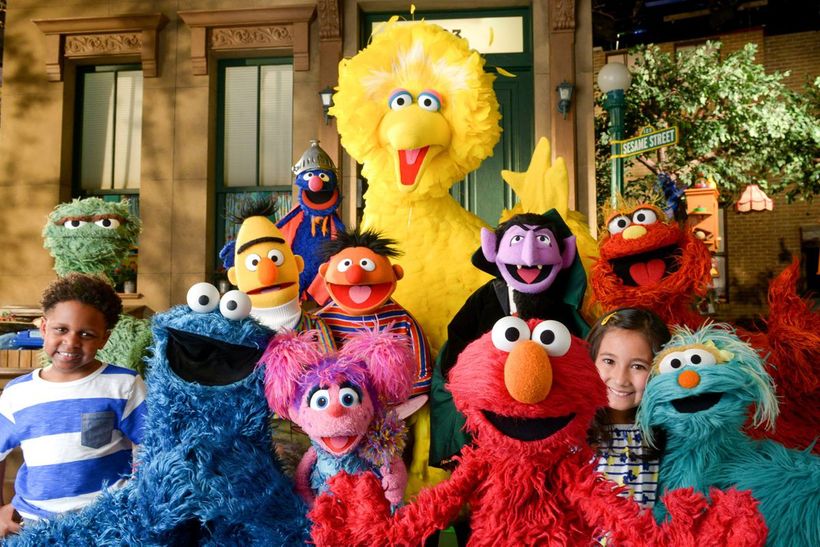
Sesame Street, the longest-running children's show in American history, recently celebrated its 50th anniversary. Villanova's Emory Woodard, PhD, Dean of Graduate Studies in the College of Liberal Arts and Sciences, spent time working at Children's Television Workshop (now Sesame Workshop), the nonprofit organization that puts on Sesame Street. He reflects back on its legacy, its important focus on diversity and what lies ahead. Concerning the Program's Legacy "Sesame Street transformed the landscape for educational television at a time when very few content producers were paying attention to quality content for children. The show has effectively reduced the school readiness gap and prepared millions for scholastic success." On Special Memories "My parents could not afford to send me to preschool but used Sesame Street to reinforce the literacy and numeracy skills they taught me. I have fond memories of learning to count with Count von Count, learning the alphabet with Cookie Monster and even getting phonetics lessons with Big Bird. I cannot tell you how much of a delight it was to have Big Bird speak at one of our Commencement Ceremonies... "Perhaps more than the literacy and numeracy skills that I learned from Sesame Street, I remember the prosocial lessons of the show. At such a formative stage, I remember learning about sharing, cooperation and appreciating the differences between people." On Sesame Street and Diversity "Sesame Street has been keenly aware of the dual audiences it engages: children and their parents. At the preschool age, parents tend to be very involved in the media diet of their children. Sesame Street has taught a generation of parents to be more sensitive to issues of diversity." On the Program's Future "I think the future is bright. With the advent of increasingly diverse content distribution platforms (e.g., Netflix, Sling, Roku, Apple TV, etc.), the demand for quality content will remain strong. The makers of Sesame Street may have to be creative in figuring out how to support the production of their high-quality content while still serving their primary mission. Nonetheless, their longevity is a testament to the good thinkers they have charting the course to ongoing success. "The partnership with HBO is an industry reality. The funding for public television remains under threat and the choice is to either fold or be financially creative. I am delighted that the makers of Sesame Street have chosen to be financially creative. Moreover, they chose to partner with an outlet that has demonstrated itself to be a purveyor of high-quality content. As long as that content is shared with platforms that are more accessible to the economically disadvantaged, I do not see this much differently than the decision to use television as a distribution platform that was not universally accessible back in the late 1960s. "Sesame Street will remain relevant as long as they remain true to their original mission of bringing literacy and numeracy skills to disadvantaged populations through high-quality content. No one is and perhaps will ever be better at it than the makers of Sesame Street."


Responding to increased pressure, Facebook has "doubled down" on identifying and removing posts by online extremists and the groups they use to share content. As noted in a recent NBC News article, these increased efforts include using artificial intelligence and machine learning to proactively identify and remove posts and groups that break the rules, and promoting tools that would hold group administrators more accountable for posted content." Megan Squire is a professor of computer science who has conducted extensive research tracking connections between online hate groups and how they leverage social media platforms to recruit new members and spread propaganda. Squire told NBC News that she's skeptical that even these more high-tech efforts will meaningfully curtail the activity of online extremists. “Same stuff, different day,” Squire told NBC News. “Just in the past month, I reported groups calling for a global purge of Islam, extermination of people based on religion, and calling for violence through a race war, and Facebook’s response was that none of these groups was a violation of community standards.” If Dr. Squire can assist with your reporting about social media and online extremism, please reach out to Owen Covington, director of the Elon University News Bureau, at ocovington@elon.edu or (336) 278-7413. Dr. Squire is available for phone, email and broadcast interviews.


Covering Climate Change? Let Our Experts Help with Your Coverage
It took a long time, but climate change is part of everyday life. It is now part of the constant news cycle, it is used in shaping public policy, incorporated into marketing plans and owns a part of (most) political party platforms. Climate activism is growing as well. One year ago, 16-year-old Greta Thunberg skipped school to sit in front of Swedish Parliament to protest our climate. Today, those same one-day strikes inspired by her take place in over 800 cities across the planet. Climate change is real and with any growing topic or cause, there’s also a lot of misinformation shared, and some facts just aren’t being interpreted correctly. If you’re a journalist covering climate change – that’s where our experts can help with your questions, stories and ongoing coverage. Dr. Pamela Grothe is an assistant professor in the Department of Earth and Environmental Sciences as the University of Mary Washington. She recently completed a Ph.D. in the Paleoclimatology Lab at the Earth and Atmospheric Sciences department at Georgia Institute of Technology. She’s an #expert in climate change and is available to speak with media – simply click on her icon to arrange an interview.



Conspiracy Theories & Social Media
A recent Rolling Stone article examining an FBI memo focused on the spread of conspiracy theories includes analysis from Kathleen Stansberry, assistant professor of strategic communications. The article was prompted by reporting by Yahoo News on the memo, which cited a number of violent incidents believed to be linked to conspiracy theories and offered that "these conspiracy theories very likely will emerge, spread, and evolve in the modern information marketplace, occasionally driving both groups and individual extremists to carry out criminal or violent acts." In the Rolling Stone article, reporter EJ Dickson focused specifically on the activity of QAnon, a far-right conspiracy theory about a supposed "deep state" effort targeting President Donald Trump and his supporters. In the article, Stansberry explains the role that social media — in particular the YouTube and Twitter platforms — have played in propagating these theories and why conspiracy theories can be so dangerous. This, says Stansberry, is precisely what makes conspiracy theories so dangerous: because they are impossible to disprove, any outsider attempt to poke holes in them is always viewed as just another sign, just another breadcrumb, just another reason for you to keep fighting to get the real story out into the world. “You’re trying to share the truth as you see it, and there’s some reason why that truth is being hidden,” she explains. “If you truly believe in the conspiracy theory, then you’re David against Goliath.” She suggests that the memo “could certainly have stoked some of the desire for people to push what they see as their truth out.” If Dr. Stansberry can assist with your reporting about social media and the spread of conspiracy theories, please reach out to News Bureau Director Owen Covington at ocovington@elon.edu or (336) 278-7413. Dr. Stansberry is available for phone, email and broadcast interviews.

'The wrong way to fix social media'
In a recent column published by the St. Louis Post-Dispatch, Associate Dean and Professor Enrique Armijo of the Elon School of Law addresses flaws in a plan to crack down on social media content many find objectionable. Armijo, an expert on how new technologies affect free speech issues, explains how the Communications Decency Act prevents internet websites and applications from being liable for the content of their users. Now more than 20 years since that protection was codified, there is a movement to legislatively revoke that immunity from liability as debate about whether internet platforms should assume more responsibility for the content they publish and distribute. Anyone who calls himself a conservative should be embarrassed to be associated with this idea. As an initial matter, the legislation ignores the fact that a publisher's decisions as to what to publish are protected First Amendment speech. Armijo goes on to note that "the actual First Amendment rights of platforms cannot be sacrificed to protect rights of access to the platform's users claims but don't exist. We can all hope that neutrality will guide the hands of power, but the government cannot command neutrality from the powerful." If Dr. Armijo can assist with your reporting about free speech, social media and new technologies, please reach out to News Bureau Director Owen Covington at ocovington@elon.edu or (336) 278-7413. Dr. Armijo is available for phone, email and broadcast interviews.
Experts in the media - Will Facebook, Google take over blockchain?
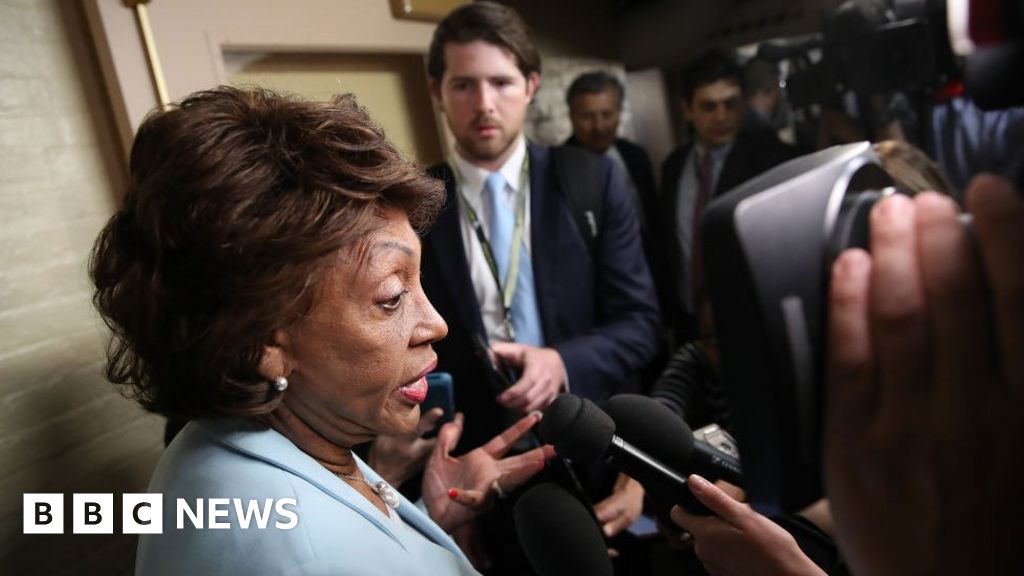
Banking and big tech are going ‘all-in’ on blockchain initiatives – and it is getting a lot of attention from investors, regulators and the industry. In an announcement this week, Facebook stated it was moving full speed ahead with its cryptocurrency ‘Libra”. With this announcement, Facebook isn’t just moving into the cryptocurrency space—it’s also setting itself up as a financial services company. Unlike many other cryptocurrencies, Libra will be specifically designed for use as a payment medium, rather than a speculative asset. Bitcoin, Ethereum, and other digital currencies are generally difficult to transfer back and forth for everyday payments, partly because the price of the tokens is based primarily on market demand. The value thus fluctuates dramatically. If it works, Libra should be much less volatile since it will be pegged to traditional financial assets, including a raft of government-issued currencies. Slate, June 18, 2019 Recently, Dr. Eric Overby, associate professor of information technology at Georgia Tech's Scheller College of Business was interviewed by Blockchain Tech News to get his perspective on what to expect now that Google and Facebook are adopting blockchain as part of their platforms. The interview is attached below. Eric Overby's research focuses on the transition from physical to electronic modes of interaction and its effect on market efficiency. Eric is available to speak to media regarding blockchain or any other technology related topics – simply click on his icon to arrange an interview.
