
Experts Matter. Find Yours.
Connect for media, speaking, professional opportunities & more.

WACO, Texas (May 13, 2019) – The movie-watching experience continues to evolve. And while directors wish all people could experience their movies on the silver screens in theaters, they know most people these days will be watching on the big screens in their living rooms or on the small screens in their hands. The movie-watching experience and the takeaways matter, said award-winning filmmaker Chris Hansen, M.F.A., who serves as professor and chair of the film and digital media department in Baylor University’s College of Arts & Sciences. “As a director, I want people to engage with the story and the characters. I want you to be able to put yourself in the characters’ shoes and see the world from their points of view so that, whether you agree or disagree with their actions, you understand where they’re coming from,” Hansen said. Hansen has directed five independent films. His most recent project, Seven Short Films About (Our) Marriage, is now in post-production. In the following Q&A, Hansen shares thoughts on how we – as audience members – can do our part to get the best movie-watching experience and what he – as the director – hopes we take away from that experience. Q: As a director who puts in countless hours and organizes a team that puts in countless hours on a project, what do you hope audiences take away from your film? A: Film critic Roger Ebert once called films “a machine that generates empathy.” I see my films falling within that description. I want to generate empathy in the viewer for these characters and their situations, and I want audiences to come away talking about and thinking about their struggles. Q: So much goes into making a movie. There’s the script, cinematography, setting, dialogue, music, costumes, etc. Is there any one thing you hope your audiences notice? A: I hope that I, along with the other artists who have collaborated on the film, have created an experience where none of those things stands out above the other, except that they create a moment or moments that move people. If you’re thinking, “That was great dialogue,” then that can take you out of the world of the movie. Q: Your films are all available on various streaming platforms, which means that people are most likely watching them on televisions in their homes. What are your thoughts on the home viewing experience? A: The quality of the home viewing experience has gotten better and better over the years. We now have (or have access to) better and larger television screens, terrific audio systems and movies available in high-resolution formats. On the flip side, the home does not afford the best viewing environment because it’s not immersive the way a theater is. The experience of the theater provides fewer interruptions and allows the viewer to be fully immersed in the world of the movie, although even that environment is being disrupted by people using their cell phones in the middle of a movie. Still, it’s better than the home viewing experience, which gives the viewer many distractions and interruptions. Q: When you watch films at home, what steps do you take to limit distractions? A: As a person with a wife and children, I try to plan viewings of movies around their schedules, so I can watch uninterrupted when I know people won’t be home. And I try to control my own distraction level, but the “always on” nature of email and texting are hard to resist. My preference would always be to have people turn the phone off, turn the lights off and turn their attention solely to the screen. That’s hard to get people to do at home. Q: What are your thoughts about people watching movies on their smartphones or tablets? A: Very few filmmakers I know would express a preference that people watch their work on smaller screens. It’s just not ideal, and there are so many carefully planned details that can be missed. Having said that, I’ll admit to having watched films and TV shows on my tablet, especially when I’m traveling. The truth is, given the changing nature of the world we live in, people are going to watch in whatever way is most convenient for them. But watching on a screen as small as a phone means you’re getting a much more utilitarian experience of the film. You can say you watched it and can probably recount the plot accurately. But you will often have missed the fuller experience of seeing the film on a larger screen. Q: When students come to you and say, ‘I want to make movies!’ what’s the first thing you say to them? A: One of the first things I tell people is that the best way to learn how to make movies is to make movies. You learn by doing and getting critical feedback from someone who has done it and understands the form. And of course, in our program at Baylor, we also teach the theory side of things. We believe in a solid balance between theory and practice. We teach our students how this is done, but then they just actually have to do it and learn from their successes and their failures. Q: Do students in Baylor’s film and digital media program have the opportunity to work on your films? If so, in what ways? A: Students in our program do indeed have the opportunity to work on faculty-led projects. We make our films in the summer and offer the opportunity as a credited course so that they can have a lab-like learning experience. Students rotate through crew roles while working under professionals who help them understand their jobs. Some of our students have called this one of their best learning experiences in our major because it takes all the things they learn in the classroom and puts those to the test on a project that’s much larger in scope than what they’ve been able to experience before. And being a crew member on a film set can be a stressful experience. We’re dependent on the weather and limitations of time and money. It’s a great way for them to understand the ups and downs of the process and how they’ll respond to the pressure. Q: What can you share about your newest project and where can people find your previous films? A: My latest film, currently in post-production, is a feature film called Seven Short Films About (Our) Marriage. It’s the story of one marriage that unfolds over seven episodes over a number of years, as this couple struggles with the common issues that marriages face and try to make their love last. My films are currently all available on various streaming platforms. You can find Blur Circle, Where We Started, Endings, and The Proper Care & Feeding of an American Messiah either on Amazon Prime, iTunes, and in some cases, on Blu-ray disc via Amazon and other outlets.

Transparency from charities about how funds are used builds trust and increases giving
BLOOMINGTON, Ind. -- Charitable and humanitarian organizations are increasingly tapping into a $30 billion crowdfunding market, not only to raise funds but to build donors' trust by being more transparent, according to research from Indiana University's Kelley School of Business. Certified charities like the American Red Cross regularly use crowdfunding after hurricanes and wildfires. But other, often local, organizations that are quickly created after emergencies can compensate for their lack of government certification by posting frequent updates about how funds are being used. Authors of the paper are Jorge Mejia, assistant professor of operations and decision technologies; Alfonso Pedraza-Martinez, associate professor of operations and decision technologies and Grainger Faculty Fellow; and Gloria Urrea, a visiting scholar of operations and decision technologies. Mejia, the paper's lead author, noted its timeliness in light of several recent fraud cases involving charitable giving, such as the college admissions scandal and questions about the charitable status of politicians' private foundations and religious organizations. "Our paper tackles some of these challenges head on by providing a way to increase the transparency of these organizations online," he said. The paper's findings also have implications for donors, who need to pay attention to how charities are using donations, as shown through regular operational updates and other communication and certification. "Our results indicate that individuals and humanitarian organizations willing to start crowdfunding campaigns benefit from transparency," the researchers said. "As updates have a positive effect on donations, organizations can increase funding by keeping donors informed on a regular basis about the campaign's progress." The process of receiving approval from the Internal Revenue Service as a certified 501(c)(3) tax-exempt organization can take months, long after the immediate needs of a disaster have passed. In the meantime, local organizations accept donations to help with recovery efforts immediately using crowdfunding. "Donations increased both when campaigns provided frequent updates about the work of the charity and when campaigns were certified," the Kelley professors said. "Strikingly, we found that the size of the positive effect derived from operational transparency -- from communications work -- is much greater than the size of the effect of conventional transparency, from being a certified tax-exempt charity. "But not all updates are the same. Operational transparency increases the financial benefits of updates," they added. "Campaign organizers should focus their efforts on posting work-related updates to describe how the campaign is achieving its objective." Researchers collected data from a large online platform for charity crowdfunding and analyzed nearly 108,000 emergency campaigns over a seven-year period. Just over half of the campaigns posted at least one campaign update, and just 9 percent of the campaigns were certified. Each work-related word in updates increased donations on average by $65 per month, while being a certified campaign raised funds on average by $22 a month. The research article, "Operational Transparency on Crowdfunding Platforms: Effect on Donations for Emergency Response," appears online in the journal Production and Operations Management.


What Is Black Twitter and How Is it Changing the National Conversation? Baylor Expert Explains.
“Black Twitter” is a social media phenomenon that is changing the national conversation, but many people – including professional and strategic communicators – do not understand what it is or how it works, says Baylor University’s Mia Moody-Ramirez, Ph.D., professor of journalism, public relations and new media. Moody-Ramirez is a nationally recognized expert on mass media representations of minorities, women and other underrepresented groups. She coauthored the 2018 book From Blackface to Black Twitter: Reflections on Black Humor, Race, Politics, & Gender with Janette L. Dates, Ph.D., educator and critical commentator on the images of African-Americans in media. First things first, Moody-Ramirez said, Black Twitter is not a separate entity from Twitter. Black Twitter is a grassroots movement within Twitter that has provided a virtual community of mostly African-American Twitter users a collective voice on a variety of issues, including Black Lives Matter. Black Twitter users often identify themselves using the #blacktwitter hashtag or by focusing on issues related to the black experience. “We conclude [in our book] that alternative spaces, such as Twitter, offer a platform for ideas and concerns from a black perspective about social inequalities, politics and social justice, that were historically prohibited from taking root in other communication venues,” Moody-Ramirez said. In the following Q&A, Moody-Ramirez further explains Black Twitter. Q: When do you see the most Black Twitter activity? A: Much of the content on Black Twitter surfaces during a crisis that impacts black people such as race-related incidents that had less than favorable outcomes for the black community. As the saying goes, if society doesn’t handle it, then Black Twitter will step in to handle it. On a lighter note, Black Twitter users also collectively discuss media content such as TV shows, movies and award ceremonies from the black perspective. Q: How can people monitor what’s happening via Black Twitter? A: "Black Twitter" users often identify themselves using the #blacktwitter hashtag or other hashtags such as #BlackGirlJoy, #blackboyjoy, #blacklivesmatter, or any other hashtag focuses on issues related to the black experience. You can also monitor Black Twitter by following individuals who are known for sharing content about the black experience. Q: If someone outside the African-American community feels passionate about an issue or supports an issue raised by the Black Twitter community, how can they engage? Should they? A: As with any other platform, they should be considerate and proceed with caution. Anyone who is not a regular should make sure what they are sharing is appropriate. Q: Do you see Black Twitter or similar movements emerging on other social media platforms? A: Not to the same extent because Black Twitter is driven by hashtags and certain Twitter users who are trendsetters. Q: Is Black Twitter a reflection or an extension of other historical, social African-American grassroots movements? A: African Americans have used Twitter to share narratives on issues of interest to the black community, particularly in the United States. In her 2015 dissertation, Dr. Meredith Clark writes that African-American Twitter users have emerged as a subset of interest for two reasons – (1) their representation on Twitter has eclipsed that of White U.S. users; (2) because of their representation, they possess a unique ability to dramatically influence Twitter trends. Q: How do you feel Black Twitter will evolve? Will it? A: Scholars such as Feminista Jones and Dr. Meredith Clark have traced the history and content of Black Twitter, noting that the platform is used to share content on timely topics such as racial inequalities, politics, police brutality and women’s rights. In 2013, Feminista Jones described “Black Twitter” as a “collective of active, primarily African-American Twitter users who have created a virtual community that participates in continuous real-time conversations.” ABOUT BAYLOR UNIVERSITY Baylor University is a private Christian University and a nationally ranked research institution. The University provides a vibrant campus community for more than 17,000 students by blending interdisciplinary research with an international reputation for educational excellence and a faculty commitment to teaching and scholarship. Chartered in 1845 by the Republic of Texas through the efforts of Baptist pioneers, Baylor is the oldest continually operating University in Texas. Located in Waco, Baylor welcomes students from all 50 states and more than 80 countries to study a broad range of degrees among its 12 nationally recognized academic divisions. ABOUT THE COLLEGE OF ARTS & SCIENCES AT BAYLOR UNIVERSITY The College of Arts & Sciences is Baylor University’s oldest and largest academic division, consisting of 25 academic departments and seven academic centers and institutes. The more than 5,000 courses taught in the College span topics from art and theatre to religion, philosophy, sociology and the natural sciences. Faculty conduct research around the world, and research on the undergraduate and graduate level is prevalent throughout all disciplines. Visit www.baylor.edu/artsandsciences.


What's in Store for the ICT Industry in 2019?
Get in the front of 10 key technology predictions we expect to see in 2019 and beyond! At this year's IDC Canada Predictions 2019 webcast, IDC Canada's Lars Goransson and Tony Olvet discussed what's in store for the Canadian ICT industry, including the massive jump in technology trends and the pace of innovation that's expected for 2019 and beyond. Watch the replay today! The forces of multiplied innovation are powering up, with an explosion of digital innovation platforms and ecosystems, enabled by a new wave of application deployment, AI, trust and ambient interface technologies, all built on a new generation of the cloud. How will enterprises race to reinvent their IT organizations and what are the IT skills needed to grow and compete in the years ahead? Hear more from Tony Olvet, Lars Goransson and a selected group of IDC Canada analysts at this year's Predictions 2019 Webcast. Don't miss out! Watch now the replay and access the presentation deck here: https://bit.ly/2yACbqw


It used to be a big deal – but has the once mighty blog gone bust?
In the days before Facebook … there were blogs. Blogs written by corporate leaders, academics, foodies, pundits and enthusiasts of every stripe. At one point, a blogger’s opinion could greenlight a film or sink a rising star. Blogs have massive influence. But those days are gone. Where blogs were once a salon for opinion and interest – the role that survived was usually as part of a larger institution’s communications strategy. It blended internal and external engagement – and it was effective. Until now, recently even Harvard acknowledged they were getting out of the blogging realm. But as blogs fade into the sunset – will the information, data and value be preserved? Should archives be created to maintain the history of these online conversations for future generations? Or, is it simply a delete and all that information is gone? Martha Burtis is the director of the digital knowledge center at the University of Mary Washington. An expert on this topic, she recently spoke with media regarding the winding down of blogs at Harvard. She is available to speak to media regarding this topic – simply click on her icon to arrange an interview. Source:


Reducing home equity bias through transparency
One of the goals of global stock exchange mergers is to create a consolidated trading platform that makes listed firms available to a greater number of investors while providing firms with larger pools of liquidity. But the problem of equity home bias—the tendency of investors to overinvest in domestic securities and underinvest in foreign securities—can thwart optimal global portfolio diversification. In a recent study, Grace Pownall, professor of accounting; Maria Vulcheva 05MBA 11PhD (FIU); and Xue Wang (Ohio State) examine such home bias in Euronext, which was created in 2002 when four European countries merged their stock exchanges. The researchers focus in particular on two structural mechanisms adopted by Euronext: (1) the integration of trading platforms across the four exchanges, and (2) the creation of named segments open to firms that voluntarily pre commit to greater transparency in financial reporting and corporate governance. In their investigation of these mechanisms, the researchers find that firms that choose not to join the segmented list see no diminution of home bias, while the segmented, more transparent firms reap significant increases in all categories of foreign holdings relative to domestic holdings. Source:



Identity and the digital world
According to research from Jagdish Sheth, Charles H. Kellstadt Professor of Marketing, and Michael Solomon (UNC), the idea of identity is evolving, impacted by the growing influence of the digital world. The authors’ groundbreaking study builds on a seminal paper from Russell Belk, written in 1988, which identified the role that possessions play in an individual’s life and how external elements are critical to how people self-identify. The duo uses Belk’s findings on consumer behavior, taking it a step further by applying his concepts to current day, with the online world in mind. Sheth and Solomon found that traditional boundaries between an individual’s offline and online life are increasingly blurred, resulting in what they term the “digital extended self.” People are creating a new sense of identity, courtesy of the information posted, the persona created, and the relationships developed online. They write, “A social footprint is the mark a consumer leaves after she occupies a specific digital space (e.g., today’s Facebook posts), while her lifestream is the ongoing record of her digital life across platforms (e.g., registrations in virtual worlds, tweets, blog posts).” Not surprisingly, the notion of just what defines a consumer is changing. User-generated content and online consumer reviews have altered the nature of relationships between the producer and consumer. The authors’ findings have critical implications for marketers looking to get a better understanding of consumer behavior. Source:


Using social media to assess public sentiment
Large corporations, government agencies, and political campaigns increasingly are using social media listening platforms and software to monitor public sentiment online. According to research from David Schweidel, associate professor of marketing, and Wendy Moe (U of Maryland), the information gleaned from social media can provide useful insights for decision making, but only if the “comments are measured appropriately.” Since prior marketing research has focused on one social media venue or failed to acknowledge the differences in multiple social media venues, Schweidel and Moe discovered that these measurements of public sentiment fell short. Instead, they analyzed brand sentiment for an enterprise software company and a telecommunications business across a variety of social media platforms. Accounting for factors that varied across different social media platforms, the authors derived a measure of general brand impression (GBI). They showed that general brand impression was a leading indicator of shifts in brand tracking studies and stock price movements. Taken together, Schweidel and Moe’s “measure of GBI effectively captures movement in the underlying sentiment toward the brand.” Source:


Trump's Twitter Practices Unconstitutional: New Media, First Amendment Expert Weighs In
On Wednesday, a federal judge declared that President Trump's practice of blocking critics from his Twitter account is unconstitutional. The ruling was reached after several plaintiffs accused the president of violating their First Amendment rights by blocking their access to his Twitter feed. The plaintiffs argued they’d been blocked specifically because of their critical viewpoints. Trump’s 9-year-old @realdonaldtrump account has more than 50 million followers. "Yesterday’s ruling is important because it gives people freedom to consume the opinions of public figures on social media platforms. This is the same right individuals have with any other public forum such as newsprint and broadcast media," said Mia Moody- Ramirez, Ph.D., professor of journalism, public relations and new media at Baylor University. Moody-Ramirez is a nationally recognized expert in topics of new media, race, class and culture. She studies the media framing of various issues, including people of color, women and political candidates. Her book "From Blackface to Black Twitter: Critical Reflections on Black Humor, Gender, Race & Politics" will be available this summer. "Justice Department lawyers argued that it was Trump’s choice and blocking individuals should be no different from the president deciding in a room who not to listen/talk to. However, the ruling distinguishes Trump’s Twitter account — which, like public parks, is under government control. In public forums, the First Amendment protects the freedom of speech, regardless of a person’s viewpoint," Moody Ramirez explained. "Worth noting," she said, "is this ruling will not affect ordinary Twitter users who can block and follow other Twitter users. President Trump’s account @realdonaldtrump is a space operated by the government for government business, and therefore, cannot limit speech based on an individual’s viewpoints." Moody-Ramirez is the author of several books, including: * "From Blackface to Black Twitter: Critical Reflections on Black Humor, Gender, Race & Politics" (Peter Lang), summer 2018 * "The Obamas and Mass Media: Race, Gender, Religion, and Politics" (Palgrave Macmillan) with Dr. Jannette Dates, 2013 * "Black and Mainstream Press’ Framing of Racial Profiling: A Historical Perspective" (University Press of America), 2009 She is available to speak to reporters. Source:
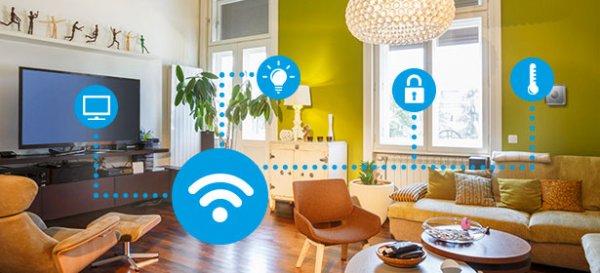
As Canadian consumers continue their Connected Life journey – one in which they have seen technology transition from the front office to our homes, from our homes to our fingertips and in our pockets - we are now at stage where tech is now on our bodies and soon will become omni present in our life. Canadian consumers have to decide how deep they want dive into the waters of the next wave of Connected Smart Home products. Join IDC Canada's Research Analyst of Consumer and Mobility Research, Manish Nargas as he explores the current status of the Smart home market, the consumer connected life and today's key players, platforms, technologies and early success stories. This dynamic and interesting session is being held on April 26. If you want to attend this this event as part of the press or for other media inquiries - simply click the analyst's icon to connect with us. To learn more about IDC Directions, please click the image below. Source: