
Experts Matter. Find Yours.
Connect for media, speaking, professional opportunities & more.

Experts explore the gap between research and practice in disaster management
The COVID-19 pandemic has attracted public attention to crisis management globally, writes Aston University's Oscar Rodriguez-Espindola. Although authorities and international organisations are still actively and diligently trying to mitigate the impact of the pandemic, some of the attention is shifting towards understanding the decisions made and learning from our experience. Indeed, this experience has inadvertently shown different areas for improvement for emergency management systems. The experience gained during the pandemic should lead governments and organisations to refine crisis management processes to prepare for challenges ahead. Leveraging research and specialist groups have been essential to support and inform decisions, as these can provide key insights guiding policy decisions. However, the integration of research and practice should not take place at the response stage only, but as part of the core crisis management system at every stage. It is crucial to maintain and strengthen the relationships between research and practice forged during the pandemic for different emergencies in the future. With the increasing number of different disasters happening and the threats stemming from climate change, it is not surprising that between 1994 and 2013 around 1.35 million lives have been claimed annually by natural disasters. Therefore, the value of partnerships between research and practice needs to be strengthened and implemented globally. Academics from Aston University in the UK and the Universidad Autónoma de Occidente in Mexico have investigated the current status of the integration of research and practice for crisis management. A systematic literature review of decision models for humanitarian logistics has been used to understand the way these models have reflected the real conditions experienced by decision-makers and catered to their priorities. Afterwards, interviews with two civil protection authorities of the state of Sinaloa, Mexico, have been undertaken to understand the conditions faced by them for crisis management, their processes and their view of decision models to support crisis management in the country. Next, a multicriteria decision analysis was used to capture their preferences regarding the objectives set for humanitarian operations to develop an analysis of their priorities. Practice needs to be informed by research, but for that guidance to be impactful, research needs to have a thorough understanding of the conditions and challenges faced by practice. The literature focused on models for humanitarian logistics has shown that the engagement of academics with practitioners in the design of solutions to support decision-making has been declared in less than a quarter of the contributions, as shown in Table 1. That means the design of solutions is based on prior secondary information or founded on a theoretical basis, which is not necessarily reflecting the current reality faced by authorities. It is noteworthy that there is an increasing trend in the number of articles involving practitioners in recent years, with more than half of them published in the previous three years. Despite that growth, however, the relative percentage of contributions incorporating practitioners has never been beyond 40% of all the models published in any year, which highlights that there is still a long way to go to support research development. Table 1: Involvement of practitioners in the design of models for humanitarian logistics Our interviews highlighted that authorities perceive the potential of systems to improve information management forecasting and decision-making, but they also unveiled the concerns about these systems providing unrealistic or unfeasible solutions. Optimisation models are formulations in which a metric is maximised or minimised subject to a series of constraints. If the objective does not reflect the objectives and priorities of decision-makers, then results can be less relevant for decision-makers. For instance, models solely aiming to minimise cost would struggle to give useful solutions to authorities focused primarily on providing support to all the victims equally. Therefore, the lack of involvement from decision-makers can lead practitioners to be cautious about using decision-making models. To examine the link between contributions in the literature and the objectives and priorities of authorities, data about them was gathered and analysed using a technique known as Fuzzy-TOPSIS. The purpose was to identify the importance given to different objectives by authorities for different activities in order to rank them based on importance as shown in Table 2. Although humanitarian logistics are characterised by a focus on the overarching ideas of saving lives and reducing suffering, it is still surprising to note that cost was the least important objective for authorities. Conversely, more than three-quarters of the models surveyed are using cost as the main objective function, which makes it the most prominent objective in humanitarian logistics. As preferences from authorities seem considerably more focused on maintaining a reliable flow of support, with high levels of service and ensuring to reach the most affected population, our findings suggest a misalignment between research and practice. Hence, neglecting to incorporate practitioners in decision-making models for humanitarian logistics can lead to omitting their needs and priorities, rendering the models less effective to provide workable solutions. Table 2: Ranking of objectives from civil protection authorities Additionally, it is important that research guides and influences practice in relevant aspects for further development. For instance, understandably, the chaotic and urgent conditions faced by authorities in humanitarian logistics force them to prioritise response over any other considerations. Our interviews confirmed this, as they mentioned that even though sustainability is becoming a crucial element in regular times, it is undermined by the urgency of the response and only included in recovery activities. This is an aspect worth looking into because research has shown that sustainability can be integrated into crisis management, even with the potential to provide improvements in terms of efficiency. Hence, a more thorough integration between research and practice would allow to positively influence activities on the field based on findings and results proposed and tested by cutting-edge investigations. Overall, our findings suggest that despite the increasing remarks about the intention of joining research and practice, there is still a significant divide between them. Reducing that divide can be beneficial for both sides. More practice-informed research can allow to development of feasible solutions that can enhance the support provided to disaster victims in practice, whereas more research-informed practice can provide stronger foundations for effective decision-making and guide research to focus on key aspects to make it more impactful. Therefore, it is essential to put more emphasis on integrating research and practice from the roots, to make their interaction more fruitful. Current trends seem to be going towards that direction, especially with the current focus on the impact on research, but further efforts are required to motivate researchers and practitioners to work together to improve crisis management. This article was co-written by Oscar Rodriguez-Espindola, Pavel Albores, Hossein Ahmadi, Soumyadeb Chowdhury, Prasanta Dey from Aston University and Diego Chavira and Omar Ahumanda from the Universidad Autónoma de Occidente. This work was supported by an Institutional Links grant, ID 527666998, under the Newton UK-Mexico partnership. The grant is funded by the UK Department for Business, Energy and Industrial Strategy and delivered by the British Council. For further information, please visit www.newtonfund.ac.uk


MEDIA RELEASE: What Canadian travellers need to know before beginning their next trip.
Orion Travel Insurance highlights how travelling around the world will be different With the recent announcement of relaxed quarantine restrictions for fully vaccinated Canadians, many eager travellers may be considering embarking on international travel as soon as possible. Orion Travel Insurance reminds travellers, that a Level 3 Global Affairs travel advisory remains in effect, and Canadians need to understand the ongoing uncertainty associated with international travel. “Entry requirements can vary by destination whether it be a different province, state or country. Travellers need to monitor those requirements closely and be prepared to carry additional documentation like proof of vaccination, and proof of valid COVID travel insurance,” says Kellee Irwin, Vice President, Orion Travel Insurance. “Many Canadians are excited to resume travelling, however a government advisory to avoid non-essential travel remains in place, and Canadians need to take the necessary precautions to ensure they protect themselves before embarking on their vacation.” With many Canadians now looking to book future vacations, Orion Travel Insurance wants to ensure travellers are protected. As of July 1st, Canadians are eligible for full emergency medical coverage with Orion Travel Insurance, even during a Level 3 COVID-19 related travel advisory, if they are fully vaccinated (having received all doses of a Health Canada-approved vaccine) at least 14 days prior to departure. Irwin advises travellers that insurance policies do vary by provider, and may have changed due to COVID-19, so it’s important to review your policy, and understand what you’re covered for before you travel. “Orion Travel Insurance supports the safe return to travel and recognizes the health and safety of Canadians should remain top of mind. We strongly encourage all travellers to ensure their travel insurance includes appropriate medical coverage, and that they continue to monitor evolving entry requirements of their destinations.” Anyone Canadians travelling in the near future should also consider the following tips: A Level 3 Global Affairs travel advisory remains in effect. Before planning any form of travel, Canadians should take steps to protect themselves and others. Canadians and permanent residents will be able to upload a copy of their vaccine certificates to the ArriveCAN app, allowing them to bypass mandatory hotel quarantine when they return to Canada. Travelling standards will vary by destination, and not all services or businesses may be open, or offer full services. Book your accommodations and activities before you go and check out their protocols in advance. Pack face masks, cleaning supplies, travel-sized snacks, water, and hand sanitizer – not only for the trip, but to have on hand at your destination. Monitor local media and government websites to stay informed of conditions and potential changes to entry requirements at your destination. Update your passport so it is ready when you are. And be prepared to pack additional documentation required for your destination, such as proof of vaccination, negative COVID test documentation, and proof of travel insurance. Insurance policies vary by provider. Review your policy and understand what you’re covered for before you travel. Don’t travel if anyone in your party or household is sick.




At the age of 88, American political giant and two-time former Secretary of Defense Donald Rumsfeld is dead. Donald Rumsfeld, the two-time defense secretary and one-time presidential candidate whose reputation as a skilled bureaucrat and visionary of a modern U.S. military was unraveled by the long and costly Iraq war, died Tuesday. He was 88. In a statement Wednesday, Rumsfeld’s family said he “was surrounded by family in his beloved Taos, New Mexico.” President George W. Bush, under whom Rumsfeld served as Pentagon chief, hailed his “steady service as a wartime secretary of defense — a duty he carried out with strength, skill, and honor.” Regarded by former colleagues as equally smart and combative, patriotic and politically cunning, Rumsfeld had a storied career in government under four presidents and nearly a quarter century in corporate America. June 30 - Associated Press If you're a journalist looking to know more about Rumsfeld's legacy and impact on American foreign policy, then let our expert help. Professor of Political Science and International Affairs Jason Davidson is an expert in American foreign and security policy, and international security. His study, The Costs of War to United States Allies Since 9/11, recently received an onslaught of media attention, landing in Forbes, The Guardian and Daily Mail. If you’re looking to arrange an interview with Dr. Davidson, simply click on his icon now to arrange an interview today.



Psychologists tackle childhood obesity by studying avid eating behaviour
• Psychologists at Aston University, Loughborough University, University College London and Kings College London to collaborate on childhood obesity study • £1-million project awarded by the Economic and Social Research Council • Three-year project to develop practical interventions to tackle obesity in early childhood A team of psychologists are to start work on a three-year project that will assist parents to address over-eating in pre-school children who have large appetites. The group, which specialises in childhood eating behaviour is led by Aston University, and includes researchers from Loughborough University, University College London and Kings College London. It is a result of a long-standing collaboration between the team members. The team have been awarded almost £1-million pounds, by the Economic and Social Research Council. The project aims to help support parents whose children are very focused on and motivated by food and the project will produce guidelines based on the findings that can be used to develop interventions. Childhood obesity is one of the most serious public health challenges of the 21st century and of major societal concern. It places children at high risk of diseases such as diabetes, cardiovascular disease and some cancers in adulthood. According to the charity World Obesity, in just 40 years the number of school-age children and adolescents with obesity has risen more than 10-fold, from 11 million to 124 million (2016 estimates). Professor Jackie Blissett, Aston University and lead academic on the study said: “Childhood obesity usually begins in infancy and early childhood, with up to 90% of children who have obesity at 3 years continuing to have overweight or obesity in adolescence. Some children however, are more vulnerable to the development of obesity than others, due to their genetic susceptibility. “A better understanding of the factors which may help to prevent or reduce the risk of childhood obesity, and applying this understanding to develop effective interventions, is of key importance to solving this complex policy and practice challenge.” The team will use existing longitudinal data from the Gemini study to monitor trends in children’s eating and examine the development of the relationship between children’s appetite and parents’ feeding practices across early childhood. In the second phase of the project, which will be lab-based, the team at Aston University are set to recruit two members of research staff to support the study. In the lab, around 120 children will be observed whilst taking part in various food related tasks, to assess which feeding practices change their eating behaviour and help the researchers find the best way of regulating their food intake. The team intend to test the effectiveness of certain feeding practices and plan to recruit around 2000 new families who will take part in an online survey to assess children’s appetite traits. Professor Claire Farrow, Aston University, and collaborator on the study said: “At present, public health advice regarding children's eating and weight is generic, ineffective, and does not tackle variability in children's appetite avidity, which makes behaviour change even more challenging for parents who struggle to manage their child's eating behaviour.” “Using current theory to inform complex intervention development, our research will examine how parents interact with their pre-school children with avid appetites in the food context, evaluate how these interactions predict short and long-term effects on eating behaviour and develop recommendations for interventions in the future.”


"Apocalypse" - A period of mass extinction threatens insects – and the world that depends on them
UConn entomologist and professor David Wagner says all kinds of insects are at risk for “a death by a thousand cuts" -- decline attributed to multiple factors, including the climate crisis, agricultural intensification, development, deforestation, and the introduction of exotic and invasive species into new environments. He discusses the threats to the world's insect populations in this compelling new video report from UConn Today: Wagner cautions that many of these creatures will not be with us for much longer, and says people must act swiftly to help prevent these tremendous losses before it is too late. Wagner remains hopeful, and says there are many actions that can be taken now — from encouraging political leaders to enact policy changes, to simply letting part of the front lawn grow freely to provide a food-rich environment for insects. “This planet isn’t here for us to exploit,” Wagner says. Dr. David Wagner is an expert in caterpillars, butterflies, moths, insect conservation, and global insect decline, and he’s available to speak with media. Simply click on his icon now to arrange an interview today.



Emily Baum: Chilling academic exchanges between China and the U.S. Emily Baum is an associate professor of modern Chinese history and director of the Long U.S.-China Institute, which aims to bridge the gaps between academia, journalism and the public sector. Baum says the pandemic will likely affect study abroad for years to come, in both directions, with negative impacts on both sides. There was already a significant disparity with roughly 370,000 Chinese students studying in the U.S. and only 11,000 Americans studying in China annually. “A drop in Chinese enrollments will have major consequences for the future of higher education in the U.S., where many schools rely on the full tuition paid by international students to stay afloat,” Baum says. But equally worrisome: “The educational decoupling that had already begun before COVID-19 — and will be greatly exacerbated by it — means that there will be far fewer opportunities for each country’s students to gain firsthand knowledge of, and mutual understanding about, the other.” Reach Baum at: emily.baum@uci.edu Wang Feng: China has passed its peak Wang Feng is a professor of sociology and an adjunct professor at Fudan University in Shanghai, China. He is an expert on global social and demographic changes and social inequality. He has served on expert panels for the United Nations and the World Economic Forum, as well as he served as a senior fellow and director at the Brookings Institution Brookings-Tsinghua Center for Public Policy. Wang sees the ascendance of China in the last 40 years as the result of a unique confluence of circumstances: a dynamic leader in Deng Xiaoping, plus a significant rural population that moved to cities and provided a huge labor force. In the last 20 years, China has produced 600 billionaires — and gaping wealth disparities. “When China was poor, people thought it would be poor forever. Now that China is rich, people think it will be rich forever. But China has passed its peak,” he says. “The headwinds of an aging population, the legacy of the one-child policy, and tremendous social inequality will present enormous internal challenges in the years ahead.” Reach Wang at fwang@uci.edu. Jeffrey Wasserstrom: China’s box office changes Hollywood portrayals Jeffrey Wasserstrom is a Chancellor’s professor of history. A specialist in modern Chinese history, he has testified before a Congressional-Executive commission on China, conducted a State Department briefing on contemporary Chinese politics, and worked with the Hong Kong International Literary Festival. His articles have been published by TIME, The Nation, Wall Street Journal, Financial Times, The New York Times and others. Wasserstrom notes that Hollywood films and TV often negatively present whichever East Asian country is most feared at the time. However, the power of China’s box office is changing that. “Due to concern with the massive market for movies in the People’s Republic of China, you do not often see negative portrayals of that country on American screens,” says Wasserstrom. “A telling example of our living in a new era is that when filmmakers were setting out to make a new version of ‘Red Dawn,’ a film that originally portrayed a Russian invasion of the U.S., the plan was to have Chinese soldiers serve as the enemies. Concern about PRC box office receipts led to a change in nationality — the enemies became North Korean soldiers.” Reach Wasserstrom at: jwassers@uci.edu. Yong Chen: Chinese food in the U.S. and China Yong Chen is the author of several books including "Chop Suey, USA: The Story of Chinese Food in America" (Columbia University Press, 2014). He also co-curated “‘Have You Eaten Yet?’: The Chinese Restaurant in America” in Atwater Kent Museum, Philadelphia (2006), and the Museum of Chinese in the Americas, New York City (2004–05). He is professor of history. He points out that the COVID-19 pandemic hastened changes to culinary habits that were already underway in China, including less consumption of wild animals, greater demand for fast food, and a shift away from communal or “family style” meals. Meanwhile, in the U.S., Chinese restaurants have been hit hard by anti-Asian sentiments, while also showing signs of resilience thanks to the popularity of Chinese takeout. “If the seriously strained relationship between China and the US continues to deteriorate, it is possible that more people in America will lose their appetite for Chinese food, to say the least,” Chen says. Reach Chen at: y3chen@uci.edu.


New research published in BMJ Open shows that community pharmacy could play a ‘key clinical role’ in the future role of COVID-19 vaccination programmes, according to a study led by Aston University in Birmingham, UK, in collaboration with UK and international researchers. The team found that community pharmacists, as a ‘skilled clinical workforce’, could positively contribute, supporting the community in which they serve - by playing a critical role in ongoing COVID-19 vaccination campaigns. The researchers working on the PERISCOPE study found that community pharmacy is uniquely placed to support individuals, because it is seen by the public as a credible, trustworthy service, which could be key to any future clinical role it might play, especially where addressing vaccine hesitancy in ‘seldom heard’ communities. They are therefore calling on decision-makers to endorse and provide their support for a public health role for community pharmacy. Across the UK, community pharmacy is a critical part of primary care. According to the Kings Fund, as of the end of March 2019, there were more than 11,500 community pharmacies in England alone. It is viewed as one of the four pillars of the primary care system, along with general practice, optical services and dentistry. It has also, in areas of the UK, helped to deliver COVID-19 vaccinations. The study included partners from the Universities of Sheffield, Oxford, Hull and Bradford in the UK, as well as internationally, the University of British Columbia and University of Tasmania. The group reviewed more than a hundred documents including peer reviewed articles, blogs and websites on the role of community pharmacy during COVID-19 and other previous pandemics. Their findings were discussed with more than 30 health professionals and members of the public, to ensure that the findings made sense in the real world. Health professionals included pharmacists, pharmacy technicians, dispensers, counter assistants, and GPs, together with members of the public from a range of diverse ethnic backgrounds. Several recommendations were made by the researchers from the findings of the study. Most significantly the group found it was imperative that policy and practice should focus on the clinical role of community pharmacy. Dr Ian Maidment, reader in clinical pharmacy at Aston University and former community pharmacist leading PERSICOPE, said: “We need to use community pharmacy to a much greater extent for COVID-19 vaccination, particularly for boosters against new variants such as the Delta (Indian) variant. The current model (for example, the large hubs) may not be sustainable in the longer term, particularly if annual COVID-19 vaccination is required. “Our work found some key ways to make this happen. The easy access and local convenience of high street pharmacies makes them an ideal location for vaccinating at-risk populations.” The study includes guidance for policy makers: • Have a clear role for community pharmacy in response to the public health agenda, with that role championed by decision-makers • Involve frontline community pharmacists in the development of policy and service specification in relation to vaccination • Provide prompt, clear, consistent guidelines with adequate detail and enough flexibility to allow community pharmacies to adapt the guidelines to meet the needs of their local population • Provide adequate funding and reimbursement for the delivery and necessary adaptations of any new services community pharmacies are asked to deliver • Provide pharmacy teams with adequate systems to deliver this new role and then trust them to deliver. Hadar Zaman, head of pharmacy and medical sciences at University of Bradford and a community pharmacist, said: “Our research has highlighted the important role community pharmacy has played in overcoming vaccine hesitancy, particularly in ethnic minority communities who have been disproportionately affected by COVID and subsequent mortality. “What comes out very strongly, especially in areas of high social deprivation, is that community pharmacists have worked very closely with their local communities addressing concerns around vaccine safety. “It is through these strongly rooted relationships in local communities that we will ensure vaccine uptake rates in ethnic minority and the wider population can be further improved. Therefore, community pharmacy needs to be seen as an essential delivery partner if the Government is to achieve its national vaccination coverage in the short and long term”. PERISCOPE searched for the best evidence across the world and the team included international collaborators. The findings therefore have international relevance. Maura MacPhee, professor of nursing, University of British Columbia and member of the research team, said: “Our review findings and recommendations for decision-makers, community pharmacists and pharmacy users are adaptable and relevant internationally, including my country, Canada, where community pharmacy has a major role to play in COVID-19 vaccination programmes.” Juanita Breen, also a member of the PERISCOPE team and associate professor of dementia studies at Wicking Dementia Centre, School of Health and Medicine, University of Tasmania, added: "This study demonstrates how pharmacists can contribute towards this important public health initiative and enhance the uptake of the vaccine. “It provides important learnings for other countries on how best to utilise the skills of our most accessible health professional - the community pharmacist." Professor Claire Anderson, chair of the Royal Pharmaceutical Society’s English Board said: “This research clearly demonstrates the vital role community pharmacy has played during the pandemic, providing essential advice to communities and tackling health inequalities in areas of high social deprivation. “Policy makers and commissioners need to take forward the recommendations of this research and ensure the strengths of the community pharmacy network are maximised for the benefits of patients.” Alastair Buxton, director of NHS Services at the Pharmaceutical Services Negotiating Committee, said: “This research provides a timely examination of the role community pharmacy teams have played in supporting their communities to fight back against COVID-19. “By keeping their doors open throughout, pharmacies have maintained day-to-day activities, and managed increased demand for many services - including advice on the management of minor illness. They have also substantially increased the number of flu vaccinations administered and played a key part in the COVID-19 vaccination programme. “These findings will help guide policy in the later stages of the pandemic and guide practice in any future pandemics.” Tony Kelly, a diabetes ambassador, Diabetes Strategic Patient Partner - NHS Birmingham and Solihull Clinical Commissioning Group and member of PERISCOPE, said: "Community pharmacists are ideally placed at the forefront of the vaccination agenda as they are the nucleus of ethnically diverse communities and are often the first point of contact for most people." PERISCOPE was jointly funded by UK Research and Innovation (UKRI) and the National Institute for Health Research (NIHR).


Weight stigma is a burden around the world – and has negative consequences everywhere
Rebecca Puhl, Professor of Human Development and Family Sciences and Deputy Director, UConn Rudd Center for Food Policy and Obesity, University of Connecticut was recently featured in The Conversation discussing this very important topic. An excerpt of her article is included with the full piece attached. It's an excellent article and well worth the read. Lazy. Unmotivated. No self-discipline. No willpower. These are just a few of the widespread stereotypes ingrained in American society about people who have a higher body weight or larger body size. Known as weight stigma, these attitudes result in many Americans being blamed, teased, bullied, mistreated and discriminated against. There is nowhere to hide from societal weight stigma. Decades of research confirm the presence of weight stigma in workplaces, schools, health care settings, public accommodations and the mass media, as well as in close interpersonal relationships with friends and families. It’s everywhere. I’m a psychologist and researcher at the Rudd Center for Food Policy & Obesity at the University of Connecticut. For 20 years my team has studied weight stigma. We’ve examined the origins and prevalence of weight stigma, its presence across different societal settings, the harm it causes for people’s health and strategies to tackle this problem. We conducted a recent international study that clearly shows that weight stigma is widespread, damaging and difficult to eradicate. This societal devaluation is a real and legitimate experience for people across different countries, languages and cultures. June 01 – The Conversation The issue of weight stigma and shaming is having a devastating impact on all facets of American society – and if you are a reporting looking to cover this topic or to learn more, then let us help. Dr. Rebecca Puhl is Deputy Director for the Rudd Center for Food Policy & Obesity and Professor in the Department of Human Development and Family Sciences at UConn. She is responsible for identifying and coordinating research and policy efforts aimed at reducing weight bias. Dr. Puhl is available to speak with media regarding this important subject – simply click on her icon now to arrange an interview today.

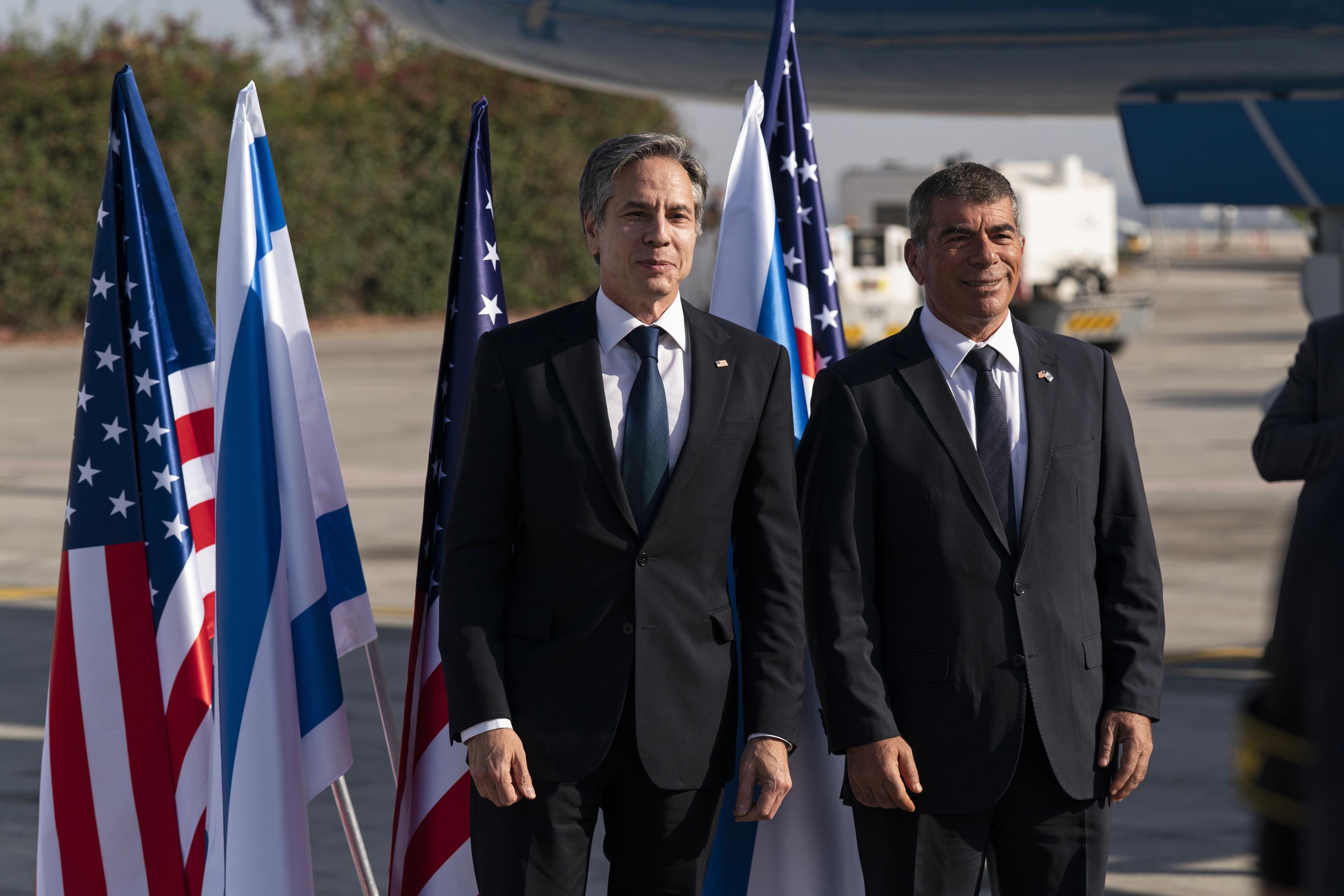
As the eleven-day war between Palestine and Israel sits on a razor-thin ceasefire, it is hoped that American intervention and influence can deliver support, aid and even a lasting truce between two warring factions. For diplomats, it will be like walking a tight rope in an effort to calm both the Israelis and Palestinians while also ensuring Hamas remains on the sidelines. U.S. Secretary of State Antony Blinken is in the region now, leading the cause. The truce that came into effect Friday has so far held, but it did not address any of the underlying issues in the Israeli-Palestinian conflict, something Blinken acknowledged after meeting with Israeli Prime Minister Benjamin Netanyahu. “We know that to prevent a return to violence, we have to use the space created to address a larger set of underlying issues and challenges. And that begins with tackling the grave humanitarian situation in Gaza and starting to rebuild,” he said. “The United States will work to rally international support around that effort while also making our own significant contributions.” He added that the U.S. would work with its partners “to ensure that Hamas does not benefit from the reconstruction assistance.” Blinken will not be meeting with Hamas, which does not recognize Israel’s right to exist and which Israel and the U.S. consider a terrorist organization. May 25 - Associated Press This will be a long and delicate process and there are a lot of questions to consider: Is it possible to negotiate in Gaza and not include Hamas? With Palestinian President Mahmoud Abbas and Israeli Prime Minister Benjamin Netanyahu both facing a political ousting - can a solution even be found? And what are the issues and is there any negotiating the long-sought after two-state solution? If you’re a journalist looking to cover the ongoing tensions between Israel and Palestine – then let us help with your stories and questions. Professor Ralph Carter is an expert in the areas of international politics, U.S. foreign policy, and Mideast conflicts. Dr. Carter is available to speak with media regarding the ongoing developments between Israel and Palestine – simply click on his icon now to arrange an interview today.


Baylor Expert Shares Four Keys to Leadership from Ulysses S. Grant’s Reflections on Civil War
Near the end of his life, as he battled spiraling health and an empty bank account, former United States President – and iconic Civil War General – Ulysses S. Grant penned his memoirs and gave the world a glimpse into the mind of one of the nation’s most celebrated figures. The book, “Personal Memoirs of U.S. Grant,” was published in 1885 and has been pored over for more than 135 years. Peter Campbell, Ph.D., author, associate professor of political science at Baylor University and a nationally recognized scholar on military strategy and international security, recently wrote an essay about Grant and his memoirs for Classics of Strategy and Diplomacy. He said Grant’s personal reflections provide valuable insights into his view and practice of leadership, specifically as he led Union forces in the Civil War. Below, Campbell offers four keys to leadership that he found in Grant’s writings. 1. Know Yourself. Grant was a careful observer of himself. He was able to reflect on his experience, see where he had made errors and learn from them. In July 1861, moments before what Grant thought would be his first engagement as a commander in the Civil War, he was terrified. His heart was in his throat. When he and his forces crested a rise that they thought would reveal the enemy force, they saw that the enemy had fled. “My heart resumed its place,” Grant wrote. “It occurred to me at once that [the enemy] had been as much afraid of me as I had been of him. This was a view of the question I had never taken before; but it was one I never forgot afterwards.” Grant absorbed this lesson and it transformed him as a leader and planner. 2. Know Your Enemy. The great Chinese strategists counseled that commanders must know their enemies. Grant shows us what this looks like in practice. Rather than dwelling on his fears, those things that his opponent might do that would spell disaster, Grant put himself in the shoes of his adversary and asked himself: What would my gravest fears be, were I in his position? He then designed his plan of campaign to raise the specter of his enemy’s fears, knowing that this would compel the enemy to be blinded by fear and compel them to react. To be fair, this was easier for Grant because in the Civil War he was fighting against fellow graduates of West Point and veterans of the Mexican War, including Robert E. Lee. Grant was not in awe of Lee. “I had known [Lee] personally,” Grant wrote, “and knew that he was mortal; and it was just as well that I felt this.” This does not diminish, but rather reinforces, the importance on studying one’s adversary carefully in any kind of competition. 3. Know Your People. As Grant rose in the ranks of the Union Army, he was pulled away from the sound of the guns and the command of troops in battle. This is true in any organization – the higher one rises the further one gets from the ground truth, whether in an army or a Fortune 500 company. Grant recognized that to influence the battles he could no longer superintend, he had to select the right subordinates for the job and then give them the authority to exercise the initiative in their area of responsibility. This meant that Grant also had to be a careful observer of the strengths and weaknesses of his subordinates. Even a hero of the Battle of Gettysburg like Major General Gouverneur Warren was not spared Grant’s penetrating character assessments. Warren’s weakness, Grant wrote, was that he could not trust his subordinates to carry out his orders, which meant that he could not be give a large command. “[Warren’s] difficulty was constitutional and beyond his control,” Grant wrote. “He was an officer of superior ability, quick perception, and personal courage to accomplish anything that could be done with a small command.” When you know your people, you know where to place them where their strengths will reinforce success and their weaknesses will be least disastrous. 4. Unleash the Power of Humility. The most decisive virtue that Grant practiced was humility. As a leader he did not allow pride in his own designs to blind him to the wisdom of his subordinates. Late in the war, Grant wrote up a campaign plan for attacking the Shenandoah Valley, the key source of supply to the Confederacy. He brought the plan to General Philip Sheridan for execution. However, when he met with Sheridan, the cavalry officer presented Grant with his own plan. Grant wrote that Sheridan “was so clear and so positive in his views and so confident of success, I said nothing about [my campaign plan] and did not take it out of my pocket.” When you lead, don’t let pride get in the way of the best ideas bubbling up from your subordinates. ABOUT PETER CAMPBELL, PH.D. Peter Campbell, Ph.D., is an associate professor of political science in Baylor University’s College of Arts & Sciences. He is the author of two books: “Military Realism: The Logic and Limits of Force and Innovation in the U.S. Army” and “Farewell to the Marshal Statesman: The Decline of Military Experience Among Politicians and its Consequences.” Campbell studies international security, civil-military relations, strategy and national security decision-making, international relations scholarship and policy relevance, insurgency and counterinsurgency, the just war tradition, unconventional warfare and advanced military technology, military culture, and the effects of cyber capabilities on conflict escalation. ABOUT BAYLOR UNIVERSITY Baylor University is a private Christian University and a nationally ranked research institution. The University provides a vibrant campus community for more than 19,000 students by blending interdisciplinary research with an international reputation for educational excellence and a faculty commitment to teaching and scholarship. Chartered in 1845 by the Republic of Texas through the efforts of Baptist pioneers, Baylor is the oldest continually operating University in Texas. Located in Waco, Baylor welcomes students from all 50 states and more than 90 countries to study a broad range of degrees among its 12 nationally recognized academic divisions. ABOUT THE COLLEGE OF ARTS & SCIENCES AT BAYLOR UNIVERSITY The College of Arts & Sciences is Baylor University’s largest academic division, consisting of 25 academic departments and eight academic centers and institutes. The more than 5,000 courses taught in the College span topics from art and theatre to religion, philosophy, sociology and the natural sciences. Faculty conduct research around the world, and research on the undergraduate and graduate level is prevalent throughout all disciplines. Visit baylor.edu/artsandsciences.

