
Experts Matter. Find Yours.
Connect for media, speaking, professional opportunities & more.

Spring 2021 begins a season of resiliency. After a long and particularly snowy winter in New York, I look forward to welcoming my favorite cherry blossoms. It’s been a year now since the COVID shutdowns took hold and the pandemic pause has required enormous energy from all of us at Japan Society, from remote work with constant online meetings, to safeguarding our 50-year-old building, to pivoting to online programming and finding new ways to bring in revenue. It’s not really been a “pause” in the traditional sense, it’s been a race for organizational transformation, adaptation to new ways of communicating with our colleagues and our members, and now — a reopening! This spring, we are delighted to celebrate our reopening with When Practice Becomes Form: Carpentry Tools from Japan, a special exhibition that explores the extraordinary, centuries-long tradition of Japanese architecture and woodworking artistry, and features a range of hand tools and models that reflect techniques used for hundreds of years to build and restore Japan’s wooden architectural masterpieces — temples, shrines, and bridges. Philosophy of Japanese woodworking The philosophy that undergirds Japanese woodworking is deeply engrained in Japan Society’s own history. As master woodworker George Nakashima wrote in his book, The Soul of a Tree, “We can walk in step with a tree to release the joy in her grains, to join with her to realize her potentials, to enhance the environments of man.” Fifty years ago, Junzo Yoshimura, the architect of Japan Society’s now-landmarked building, asked that Japanese hinoki cedar be used for the coffered ceilings in the Society’s lobby and selected with his own hands stones to be shipped from Japan for the foyer garden. He also specified furniture to be crafted by Nakashima in his New Hope, Pennsylvania workshop, furniture that has stood the test of time and is still in use today. Precision is a hallmark of the Japanese experience. One of the many ways to view this is through the concept of kodawari — a unique Japanese notion that is difficult to translate — referring to the uncompromising, relentless devotion to one’s art, pursuit, profession, or activity. In a world turned upside down by a pandemic, there has never been a more welcome time to explore this relentless pursuit of precision and quality in one’s work at all levels of kodawari — in the form of Japanese woodworking. Tools of leadership, alliance & innovation The resilient spirit of Japanese craftsmanship resonates, especially in these unusual times. The presence of tools in our galleries and an exploration of their longstanding heritage for a broad audience highlights the persistent strength of U.S.-Japan relations and human ingenuity. As a leader, I take my own inspiration from Nakashima, using the strength of the oak tree in the West and flexibility of bamboo in the East to bring out the strength, resiliency, and innovation of the U.S.-Japan alliance through my own set of tools. These are the tools of leadership, which require the knowledge and precision of a master carpenter, building for the present while planning for the future. As Nakashima writes, “Each cut requires judgments and decisions on what the log should become.” In kigumi — traditional Japanese wooden joinery — each part plays a crucial role since the joints are fitted together without any nails or fasteners. To have structural integrity, the work — whether furniture or architecture — needs to be weight bearing, and with its direct connections, the whole will ultimately be stronger than its separate elements. In an ongoing cycle of repair and renewal, old joints are replaced by new ones, allowing traditional Japanese buildings to stand for hundreds of years. I find a parallel in the U.S.-Japan alliance, where our direct connection is the strength of our relationship — a collective strength where each nation can accomplish more together. Fifty years ago, as Japan Society’s new building was preparing to open to the public, Deputy Executive Director Daniel J. Meloy wrote to George Nakashima: “Your first shipment to us arrived safely today with all pieces in good shape. We have unwrapped them, dusted them, carried them to their respective rooms, and we love them.” This spring, I invite you to visit When Practice Becomes Form, and help us celebrate our reopening. Let’s work together, using the tools of tradition and innovation, to build the next 50 years of our alliance. Given the challenges the world has faced this past year, the U.S.-Japan alliance has never been more necessary — as acknowledged by the fact that the first world leader to visit President Biden’s White House will be Japanese Prime Minister Yoshihide Suga. The personification of the importance of this relationship through this visit, along with the elevation of the “Quad” meeting between the leaders of Australia, India, Japan, and the United States, indicates a new emphasis in American foreign policy. In addition to the geopolitical challenges confronting our nations, Americans have been struggling domestically with the rise in anti-Asian hate crimes and harassment — a powerful reminder of critical battles still to be fought at home. The Japanese American experience, including forced relocation to internment camps during World War II and the 1980s discrimination triggered by economic tensions with Japan, are only two examples of the long history of anti-Asian racism we continue to confront as a country and community. Now, more than ever, we must bring our collective strength to bear to fight hate and bigotry — and build a stronger and more resilient society. Joshua Walker (@drjwalk) is president and CEO of Japan Society. Follow @japansociety. The views expressed in this article are the writer’s own.


Public health education soars in wake of pandemic
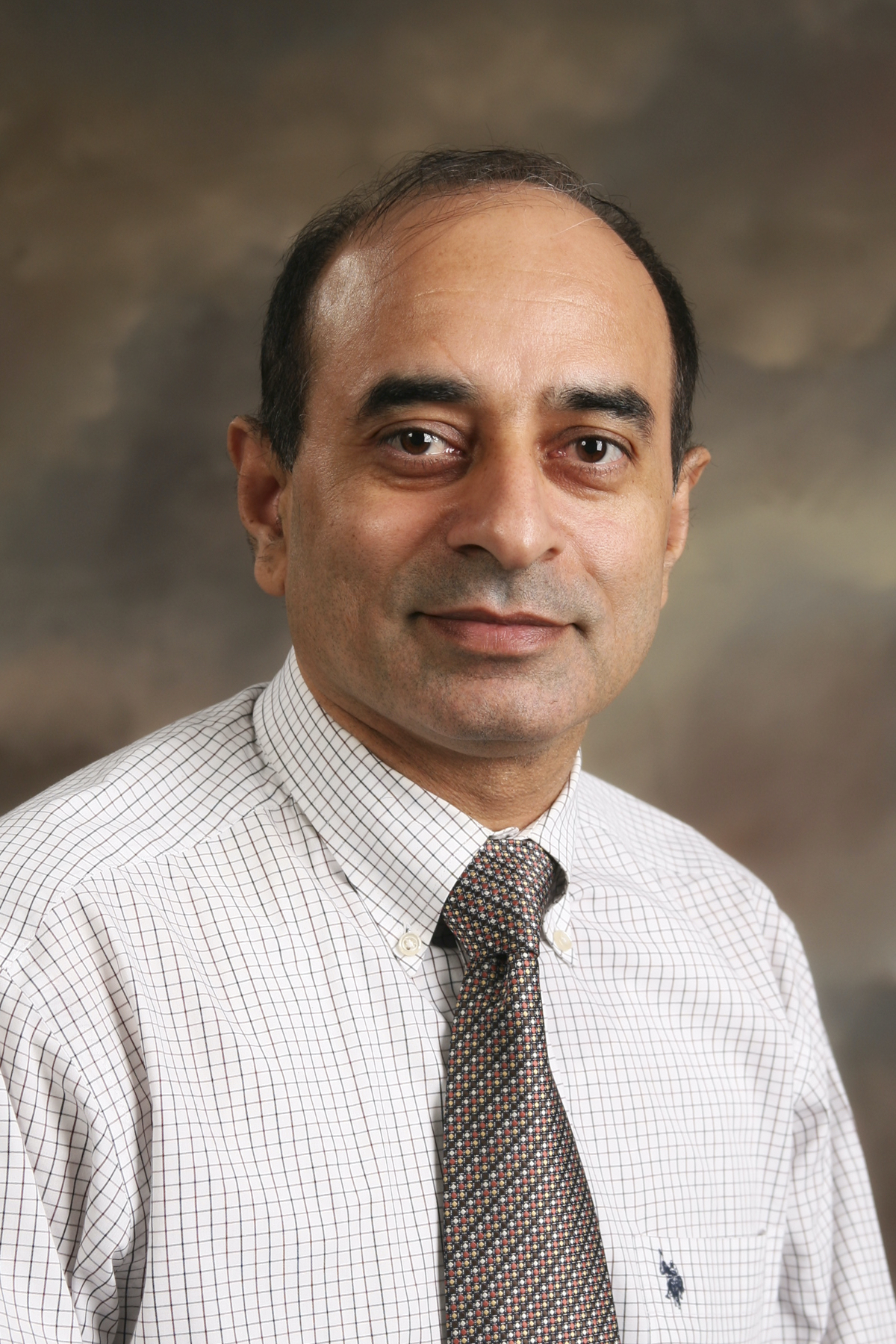
Maybe a silver lining can be found from the COVID-19 pandemic, as interest in public health education is soaring at U.S. colleges and universities, says a nationally prominent public health professor. Public health education has become a logical choice for students when looking at changing public health practice trends and their implications for public health education, explained Gulzar Shah, Ph.D., who authored an invited editorial in the March issue of the American Journal of Public Health (AJPH). Shah is department chair and professor of health policy and community health in Georgia Southern University’s Jiann-Ping Hsu College of Public Health. His editorial is titled “Public Health Education and Changing Public Health Realities in the Public Health 3.0 Era.” “For many of the 19 million college students enrolling annually in public and private colleges in the United States, public health is becoming a logical choice,” he said. “Because of COVID-19, interest in public health careers is soaring, evident from the 20% increase nationwide in Master of Public Health applicants.” The editorial also drew insights from the Association of Schools and Programs of Public Health’s national-level data from schools and programs of public health about the first employment destinations of public health graduates. “The emphasis on aligning public health practice and policy with the Public Health 3.0 framework, in which leaders partner across various sectors to address social, environmental and economic factors that affect population health and health inequity, has attracted the spotlight on generalist, behavioral education and health policy degrees,” Shah noted. “The Public Health 3.0 framework has also underscored the desirability of adopting the Health in All Policies approach and encouraging public health leaders to act as chief health strategists in influencing policies in other sectors affecting population health. Increasing focus on Health in All Policies and higher salary positions in health care may further explain the popularity of health policy and management and health law programs.” If you are a journalist looking to know more about Dr. Shah’s work, and the importance public health education in America of the programs Georgia Southern is offering – then let us help. Dr. Gulzar H. Shah is a Professor and Department Chair, Health Policy and Community Health at the Jiann-Ping Hsu College of Public Health (JPHCOPH), Georgia Southern University. He is available to speak with media regarding this important topic - simply click on his icon now to arrange an interview today.


As President Biden Lays Out Infrastructure Plan, Experts Available to Discuss Proposals
As President Joe Biden lays out his plan for improving the nation's infrastructure, experts from Rensselaer Polytechnic Institute are available to discuss the ways in which proposed projects could affect shipping and delivery of goods, congestion in cities, and emissions in the environment, among other topics. José Holguín-Veras, the director of the Center for Infrastructure, Transportation, and the Environment at Rensselaer, and Cara Wang, an associate professor of civil and environmental engineering at Rensselaer, are leading experts in the role of infrastructure on freight and transportation systems, and the environmental impacts of both. Their research focuses on improving transportation and freight systems in order to increase efficiency, reduce traffic congestion and, in turn, reduce vehicle emissions. Holguín-Veras and Wang can also discuss what their research has uncovered that could guide policy makers as new projects are planned.


Marijuana law scholar on legalization in New York
Robert Mikos, professor of law, is available for commentary on the legalization of recreational marijuana in New York. Professor Mikos is one of the nation’s leading experts on federalism and drug law. His most recent scholarship analyzes the struggle among federal, state and local governments for control of marijuana law and policy, which includes a first-of-its-kind casebook, Marijuana Law, Policy, and Authority. He has written, testified and lectured on: States’ constitutional authority to legalize marijuana Federal preemption of state marijuana regulations Political and budgetary considerations that limit enforcement of the federal marijuana ban Federal law’s influence on state regulation and taxation of the marijuana industry Desirability of marijuana localism


What Can A Forgotten Piece of Our Opioid Addiction and Treatment History Teach Us?
As the nation struggles with the third wave of a continuing opioid epidemic, a newly republished book co-authored by Nancy Campbell, the head of the Department of Science and Technology Studies at Rensselaer Polytechnic Institute, offers insight into present-day drug addiction and treatment by exploring a complex chapter from the nation’s past. Written with JP Olsen and Luke Walden, The Narcotic Farm: The Rise and Fall of America’s First Prison for Drug Addicts details the history of the United States Narcotic Farm, a federal institution that opened in 1935 outside of Lexington, Kentucky. Jointly operated from 1935 to 1975 by the U.S. Public Health Service and the Federal Bureau of Prisons, the Narcotic Farm was a combination prison, hospital, working farm, rehabilitation center, and research laboratory. “All of our scientific knowledge about human opioid addiction comes from that time, comes from that place,” said Campbell, a leading figure in the social history of drugs, drug policy, and harm reduction, on an episode of the Landmark Recovery Radio podcast. The facility, which was also the subject of a 2009 documentary featuring Campbell, has a complicated legacy. It revolutionized treatment methods commonly accepted today, such as using methadone to medically manage heroin detox and the development of drugs like naloxone and buprenorphine. But it fell under a cloud of suspicion in 1975, when Congress learned that researchers had recruited patients as test subjects for CIA-funded LSD experiments as part of the notorious MK-Ultra project. “With the ongoing opioid epidemic worsening this past year in the midst of the COVID-19 pandemic, the lessons learned in this book continue to be relevant today,” Campbell said. Campbell is also the author of Using Women: Gender, Drug Policy, and Social Justice and Discovering Addiction: The Science and Politics of Substance Abuse Research, as well as the co-author of Gendering Addiction: The Politics of Drug Treatment in a Neurochemical World. Her most recent book, OD: Naloxone and the Politics of Overdose, was published in 2020. “Nobody should die of overdose. A high overdose death rate signals that we have not cared for the people who have been hurt most by the war on drugs, first pursued by President Dwight D. Eisenhower in 1954,” Campbell said in a recent “Academic Minute” segment. Campbell is available to discuss a wide range of topics relating to drug policy and history, including the Narcotic Farm.


Product Returns Represent Billion-Dollar Strategic Blind Spot for Major Retailers
“Product returns have never, to our knowledge, been explicitly included as a stage in a major customer journey model,” the authors note in their paper. “This exclusion represents a strategic blind-spot for marketers.” In December 2020, Linne Fulcher, vice president, customer strategy, science and journeys at Walmart U.S., published a blog post that outlined Walmart’s new return policy. Dubbed “Carrier Pickup by FedEx,” the service was just in time for the holidays, free, and “here to stay,” Fulcher wrote. She described the policy as “an incredibly convenient way to make that unwanted gift ‘magically’ disappear,” whether customers bought items in a store, online, or from a third party vendor. “We want the returns experience to be easy, safe and seamless,” she added. Returns are big business. According to the National Retail Federation (NRF), U.S. consumers returned an estimated $428 billion worth of merchandise last year—approximately 10.6 percent of total U.S. retail sales. The numbers for ecommerce are even more startling: online shopping accounted for roughly $565 billion of 2020 retail sales, of which $102 billion in merchandise—about 18 percent—was returned. However, retail advisory firm Optoro noted in 2019 that of 117 top retailers, not even a third of them quantify the full cost of returns. Even before the pandemic hit, Sandy Jap, Sarah Beth Brown professor in marketing, Ryan Hamilton, associate professor of marketing, and former Goizueta Business School dean, Tom Robertson, were perplexed at how little academic research existed regarding returns. “Instead of viewing returns as a nuisance and an added cost, they are an opportunity to engage with customers and build brand loyalty,” explains Robertson. “Returns are part and parcel of the new retail landscape. This has been exacerbated by the strong uptick in online.” To help retailers identify opportunities, Jap, Hamilton, and Robertson wrote “Many (Un)happy Returns? The Changing Nature of Retail Product Returns and Future Research Directions,” published in Journal of Retailing last year. The article is essentially a researcher’s road map for exploring this “strategically important area,” says Jap. Some retailers, such as Warby Parker and Stitch Fix, have built returns into their business models. Others, like Zappos and Nordstrom, have made consumer-generated returns easy, assuming that doing so engenders brand loyalty and repeat business. Yet most retailers seem “to lack a coherent philosophy” on returns and “appear not to have built return rates into their business models at all,” the trio state in their paper. “There are so many interesting and important questions to be answered around product returns,” says Hamilton. “Important as returns are, the academic marketing research has barely scratched the surface.” “Many (Un)happy Returns” highlights five specific areas where advancements in theory and practice would provide opportunity for greater understanding: 1. How product returns transform the customer journey 2. The “dark side” of returns—exploring the gray area between justified returns and outright fraud 3. The effects of returns on traditional retailer supply chains 4. Customer response to easy product returns and practices 5. The effect of retailers’ product return practices on their reputation “These questions represent a range of important directions for assembling a body of work on retailer-initiated and customer-initiated return behaviors and processes,” they write. “Ultimately, these might serve to improve the performance of return forecasting models, illuminate optimal go-to-market strategies and distribution processes in the evolving, technology-oriented marketplace that characterizes retailing today.” Each of the five points above are detailed in a piece recently published by Emory University. That article is attached here: If you are a journalist looking to cover this topic or if you are simply interested in learning more, then let us help. Ryan Hamilton, associate professor of marketing at Emory’s Goizueta Business School. Sandy Jap holds the Sarah Beth Brown Endowed Professorship of Marketing Chair at Emory’s Goizueta Business School. Both are available to speak with media, simply click on eithr expert's icon now – to book an interview today.




CAA Insurance continues to lead the way in providing Ontario auto policyholders with financial relief during the pandemic. CAA Insurance Company is renewing its commitment to customers by enhancing its industry-leading rate relief for Ontario auto policyholders to 15 per cent for a 12-month term. The announcement is one way that CAA Insurance is helping our customers with meaningful relief to help manage expenses during the COVID-19 pandemic. “We recognize that people are either driving less or driving differently, and we don’t expect this to change in the short-term,” says Matthew Turack, president of CAA Insurance Company. “We understand there are many people facing challenges brought on by the pandemic. We believe that insurance companies should step up, give back and help Ontarians manage expenses during the COVID-19 pandemic.” In 2020, CAA Insurance led the insurance industry by providing both rate reductions and financial relief benefits, and we are pleased to continue leading the industry in 2021. Over the past year, CAA Insurance’s initiatives include: In April 2020, CAA Insurance was the first and only insurance company to offer a 10 per cent rate reduction on both auto and home insurance policies for the duration of a 12-month policy term. In May 2020, we announced a $100 auto insurance relief benefit. In October 2020, we provided an additional $50 relief benefit for our active Ontario auto policies. The total amount of pandemic relief that CAA Insurance will give back to home and auto insurance customers during 2020 and 2021 is estimated to be over $130 million. Coupled with our pandemic relief, new customers who have made the switch to CAA Insurance see significant savings. By calling and speaking to one of our agents or brokers, motorists could find savings averaging over $700 per policy. Today’s announced rate relief applies automatically to all new customers effective April 15, 2021, and to existing customers whose auto policies renew on or after June 15, 2021. Customers whose auto policies renewed between January 1 and June 14, 2021, can apply for the incremental rate relief by completing an online form at https://www.caainsurancecompany.com/rate-reduction-policy-details



With the topic of reparations under discussion and debate, Thomas Craemer -- an expert from the University of Connecticut -- had this to offer in a new essay for The Conversation: The cost of slavery and its legacy of systemic racism to generations of Black Americans has been clear over the past year – seen in both the racial disparities of the pandemic and widespread protests over police brutality. Yet whenever calls for reparations are made – as they are again now – opponents counter that it would be unfair to saddle a debt on those not personally responsible. In the words of then-Senate Majority Leader Mitch McConnell, speaking on Juneteenth – the day Black Americans celebrate as marking emancipation – in 2019, “I don’t think reparations for something that happened 150 years ago for whom none of us currently living are responsible is a good idea.” As a professor of public policy who has studied reparations, I acknowledge that the figures involved are large – I conservatively estimate the losses from unpaid wages and lost inheritances to Black descendants of the enslaved at around US$20 trillion in 2021 dollars. But what often gets forgotten by those who oppose reparations is that payouts for slavery have been made before – numerous times, in fact. And few at the time complained that it was unfair to saddle generations of people with a debt for which they were not personally responsible. There is an important caveat in these cases of reparations though: The payments went to former slave owners and their descendants, not the enslaved or their legal heirs. Dr. Craemer discusses such aspects as the “Haitian Independence Debt,” British ‘reparations,’ and paying for freedom. Dr. Craemer is an expert on slavery reparations, racial bias, and the psychology of racism, and he is available to speak with media – simply click on his icon now to arrange an interview today.


Evaluating the Impact of Facebook's Ban on Vaccine Misinformation
A new Facebook policy has banned misinformation about all vaccines on its platform. Villanova University professor Jie Xu, PhD, who specializes in science and health communication, examined this decision. "On one hand, there clearly is a lot of mis/disinformation on social media regarding vaccines; some of them are simply uninformed and, of course, harmful to public health," said Dr. Xu. "On the other hand, many details relating to the COVID-19 vaccine, in my view, are still open to scientific debate." So, what determines what is labelled misinformation? Dr. Xu believes this is a complicated determination. "Science itself is evolving with falsification and revision to previous claims when new evidence comes in," Dr. Xu noted. "Who is to say that some claims deemed true at this moment won't be overturned in the future? What are the standards to be used in defining what is true information or misinformation? And perhaps more importantly, who are the 'fact-checkers' that are considered trustworthy to the majority of Americans?" However, there are some benefits to Facebook's decision. "On a more positive note, there is some preliminary evidence indicating that labeling misinformation on social media may help to alleviate the negative influence of vaccine misinformation claims," Dr. Xu said. "The challenge is that the people that are most susceptible to misinformation, and those that health professionals really want to reach out to, are the ones that have the least level of trust on this type of intervention. In some corners, this will likely to be viewed as violation to free speech and perhaps backfire." How does Facebook's banning align with free speech? "My understanding of free speech is that it's not that we don't pay a price for it—unless it's inciting violence, most information has been allowed to flow relatively freely—but it's that the alternative could be much worse," said Dr. Xu. "At the end of the day, we need to create an environment in which honest, open and critical conversations are welcomed, and we do need each other to find the truth."


As the pandemic enters its second year, household expenses remain top of mind for consumers, as does the cost of auto insurance. It’s one of the reasons why CAA Insurance has seen a dramatic increase over the past ten months in the number of drivers who have signed up for Canada’s only pay-as-you-go auto insurance payment program, CAA MyPace™. New CAA Insurance data reveals, that the number of new CAA MyPace policies between April and December 2020 increased by almost 300 per cent compared to the same period in 2019. “While the growth is remarkable, it reinforces what consumers are telling us, that a one-size-fits-all solution to auto insurance isn’t working for them, especially during these challenging times where many vehicles are not being used as much,” says Matthew Turack, president of CAA Insurance. “CAA MyPace is a one-of-a-kind payment program that lets customers take control of their car insurance costs by giving them the freedom to pay for the distance they drive.” On average, people who switch to CAA MyPace are saving 50 per cent on their auto insurance costs, compared to a traditional policy. The pay-as-you-go program was launched in 2018, and benefits motorists who drive less than 9,000 kilometres per year. In 2020, CAA Insurance provided over $60 million in relief to support policyholders in managing their expenses during the pandemic. The Financial Services Regulatory Authority of Ontario (FSRA) identified CAA Insurance as the leading insurer, providing the highest percentage of rate relief to its policyholders. Nearly one year ago, CAA Insurance led the insurance industry by providing a 10 per cent rate reduction for a 12-month term to all active CAA Auto and Property Insurance policyholders. CAA Insurance will continue to apply this rate reduction in 2021 for its active policyholders. No action is necessary by policyholders to receive this reduction.