
Experts Matter. Find Yours.
Connect for media, speaking, professional opportunities & more.

Inauguration day - Trump's legacy, Biden's priorities
Speaking this morning on BBC radio, Dr McCrisken said: "President Trump’s legacy is being written right now. He’s ending his presidency under such dark clouds - he’s been impeached, there’s going to be a trial in the Senate that could convict him and prevent him from becoming a candidate again for the Presidency, so he’s leaving with lots of controversy – which of course is something that he’s always cultivated to a large extent, he wants to make everything about him. "Even today, by not showing up at the inauguration, by having a separate departure address, by issuing pardons including to his close former adviser Steve Bannon, he’s still cultivating that attention. That’s going to be the biggest Trump legacy - the degree to which he has attempted to shake up American politics – but the normality of American politics continues, we’re going to have a handover of power today through this inauguration, in the way that it always happens, every 4 years and the pendulum will swing again politically back to the Democrats. "There’s lots of pomp and circumstance around the Inauguration but the main moment is at noon, when Joe Biden will take the oath of office to become President of the United States – place his hand on a bible and say the sacred words with the Supreme Court Chief Justice presiding, and then Kamala Harris, very significantly, will also be sworn in as Vice President. She’s the first woman to become VP and the first VP of Black and South Asian heritage. It’s a really significant moment for both of them. "After the swearing in the next significant moment is the Inaugural Address, the first time Joe Biden speaks to the country as President. He’ll try and set the tone for his presidency – we can expect him to seek unity and healing but also assert his policy positions and his approach and set himself apart from the last four years under Trump. "Biden wants to hit the ground running, as soon as all the ceremonies are over today he’s going to be heading up to the White House and he’ll start business as President. One of the first things he’ll do, which a lot of Presidents do when they take office, is issue a series of Executive Orders – these are orders that are given directly by the President to the rest of the Executive Branch to implement policy in particular ways, and he’s going to use these to very quickly overturn some of the things that Trump did, like re-joining the Paris Climate Agreement, changing policies around immigration, changing policies around COVID-19 as well. "But he’s also putting forward some really significant legislative proposals to Congress, he’s seeking a very quick economic stimulus, another 1.9 trillion dollars of COVID relief, and a new immigration policy is in the offing. COVID-19 particularly is the thing he really wants to challenge as quickly as possible and try to turn around the situation in the United States where the virus is still ripping though the country – from his position as President, he’s going to try and get 100 million vaccinations in his first 100 days, that’s what he’s promising. "There’s a lot of challenges here and it’s going to be very difficult for him - particularly being overshadowed perhaps by the impeachment trial – so it will be an interesting few weeks and months ahead at the start of his Presidency." 20 January 2021

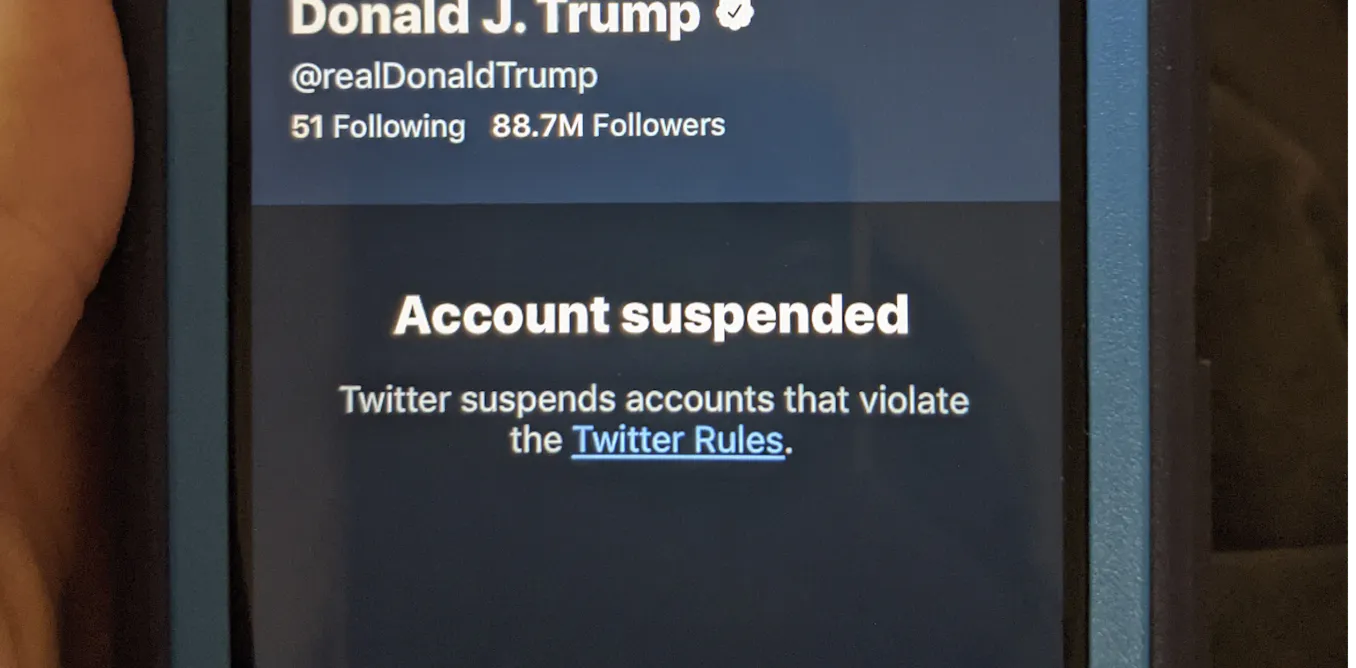
After an incited and encouraged crowd of Trump supporters stormed the Capitol buildings last earlier this month – social media, or at least the executives that run companies like Twitter and Facebook had had enough and opted to oust President Donald Trump from their platforms. Donald Trump has been ‘deplatformed’ and no longer has easy access to an audience of millions of followers. The concept of deplatforming is being widely debated. And recently, University of Connecticut’s Ugochukwu Etudo was asked to lend his expert perspective on the idea. Does the deplatforming of prominent figures and movement leaders who command large followings online work? That depends on the criteria for the success of the policy intervention. If it means punishing the target of the deplatforming so they pay some price, then without a doubt it works. For example, right-wing provocateur Milo Yiannopoulos was banned from Twitter in 2016 and Facebook in 2019, and subsequently complained about financial hardship. If it means dampening the odds of undesirable social outcomes and unrest, then in the short term, yes. But it is not at all certain in the long term. In the short term, deplatforming serves as a shock or disorienting perturbation to a network of people who are being influenced by the target of the deplatforming. This disorientation can weaken the movement, at least initially. However, there is a risk that deplatforming can delegitimize authoritative sources of information in the eyes of a movement’s followers, and remaining adherents can become even more ardent. Movement leaders can reframe deplatforming as censorship and further proof of a mainstream bias. There is reason to be concerned about the possibility that driving people who engage in harmful online behavior into the shadows further entrenches them in online environments that affirm their biases. Far-right groups and personalities have established a considerable presence on privacy-focused online platforms, including the messaging platform Telegram. This migration is concerning because researchers have known for some time that complete online anonymity is associated with increased harmful behavior online. In deplatforming policymaking, among other considerations, there should be an emphasis on justice, harm reduction and rehabilitation. Policy objectives should be defined transparently and with reasonable expectations in order to avoid some of these negative unintended consequences. January 15 – The Conversation If you’re a journalist covering deplatforming and would like to talk with Ugochukwu Etudo – simply click on his icon today and we’ll arrange an interview today.


As Flexible Voting Options Scrutinized, Expert Says Online Voting Not a Safe Alternative
The popularity of — and controversies surrounding — early voting and mail-in ballots demonstrates a demand for more flexible voting options. But online voting shouldn’t be up for consideration, according to James Hendler, the head of the Institute for Data Exploration and Applications at Rensselaer Polytechnic Institute. Hendler also chairs the U.S. Technology Policy Committee of the Association for Computing Machinery, the world’s largest and oldest society of individuals involved in all aspects of computing. In public statements expressing his own opinion and on behalf of the ACM, Hendler has discussed the vulnerabilities of online voting and the organization’s effort to press against its adoption. Hendler argues that online voting is not, and cannot be made to be, secure against malware and denial of service attacks — and that no app or underlying technology, including blockchain, holds potential to overcome those challenges. "The current state of mobile voting is that we are not ready to deploy it at scale, that it has significant technical and socio-technical aspects, particularly cybersecurity, that we need to worry about, and that there are alternatives,” Hendler said. “The ACM has worked hard as an organization to explain our evidence-based reasoning, and to express the hope that online-voting won’t be used now and in the foreseeable future.” In explaining why online voting is more complicated than online banking, shopping and other common internet activities, Hendler said, “The main reason that online voting is more complex is that it must maintain anonymity, no one is allowed to know how you voted. Securing online voting without providing access to identity is extremely difficult. There are other reasons as well including the staggering cost and the lack of a centralized US authority, but identity management remains the number one.” Under his leadership, the ACM’s U.S. Technology Policy Committee, along with leading organizations and experts in cybersecurity and computing, sent a letter to all governors, secretaries of state and other state election directors urging them not to allow the use of internet or voting app systems. Hendler has extensive experience in policy and advisory positions that consider aspects of artificial intelligence, cybersecurity and internet and web technologies as they impact issues such as online voting and the regulation of social media and powerful technologies including facial recognition and artificial intelligence. In light of ongoing political unrest, Hendler is available to speak to diverse aspects of information technology as related to the election, AI in applications like policing, and the politics related to social media.



Renowned educator and author Gloria Ladson-Billings to present Georgia Southern 2021 Fries Lecture
Gloria Ladson-Billings, Ph.D., renowned pedagogical theorist, teacher educator and author, will present the 2021 Norman Fries Distinguished Lecture, hosted by Georgia Southern University’s College of Education. In her lecture, “Culturally Responsive Pedagogy: Educating Past Pandemics,” Ladson-Billings will discuss how pandemics provide opportunities for revisioning and reimagining culturally relevant teaching practices. She suggests that instead of “getting back to normal,” it is time to get on to new and more equitable ways of educating all students and creating a more democratic society. Ladson-Billings is the former Kellner Family Distinguished Professor of Urban Education in the Department of Curriculum and Instruction and faculty affiliate in the Department of Educational Policy Studies at the University of Wisconsin-Madison. She also served as the 2005-06 president of the American Educational Research Association (AERA). Ladson-Billings’ research examines the pedagogical practices of teachers who are successful with Black students. She also investigates critical race theory applications to education. She is the author of critically acclaimed books The Dreamkeepers: Successful Teachers of African American Children and Crossing Over to Canaan: The Journey of New Teachers in Diverse Classrooms, as well as numerous journal articles and book chapters. About Ladson-Billings Former editor of the American Educational Research Journal and a member of several editorial boards, Ladson-Billings’ work has won multiple scholarly awards including the H.I. Romnes Faculty Fellowship, the National Academy of Education/Spencer Postdoctoral Fellowship and the Palmer O. Johnson Outstanding Research Award. She is a 2018 recipient of the AERA Distinguished Research Award and was elected to the American Academy of Arts and Sciences in 2018. About the Norman Fries Distinguished Lectureship series The annual Norman Fries Distinguished Lectureship series began in 2001. It is funded by an endowment in honor of Norman Fries, founder of Claxton Poultry. In his more than 50 years of business, Fries built the company from a one-man operation into one of the largest poultry production plants in the U.S. Past Fries lecturers include David Oreck of Oreck Vacuums, South African apartheid author and lecturer Mark Mathabane, NASA director James W. Kennedy, Pulitzer Prize-winning author and historian Gordon S. Wood, Nobel Prize laureate William D. Phillips, Ph.D., bestselling author Susan Orlean, concussion expert Dr. Russell Gore, and PricewaterhouseCoopers Network chief operating officer Carol Sawdye. The lecture will take place virtually via Zoom on Feb. 8 at 7 p.m. The event is free and open to the public. If you are a journalist looking to know more about the Norman Fries Distinguished Lectureship or would like to interview Gloria Ladson-Billings -- simply reach out to Georgia Southern Director of Communications Jennifer Wise at jwise@georgiasouthern.edu to set and time and date.


Are vaccine passports legal in a post-COVID-19 era? Let our experts explain
As America and the world look to slowly round the corner of the safety measures enacted during the COVID-19 pandemic, the new coronavirus vaccines are giving hope of an eventual return to normal. However, with an active anti-vaccination movement afoot and many still skeptical of getting that essential poke in the arm, the World Health Organization said some government officials are suggesting the idea of vaccine passports. A simple piece of identification would end the uncertainty that comes with travel, work and the much sought-after leisure that often means crowded places and smaller spaces. The idea has already caught on in countries in Europe and South America. It may be the safety blanket many seek, but are vaccine passports actually legal? It is a question that’s beginning to get serious coverage. “Having proof of vaccination can be essential for a number of sectors other than health, but we cannot overlook the potential discriminatory consequences that may arise,” said Dr. William Hatcher, an expert in public policy and interim chair of the Department of Social Sciences at Augusta University. Another idea being floated is immunity passports, but Hatcher suggests¬ allowing only people with immunity to work might disadvantage those who haven’t gotten sick or those without the antibodies to prove it. It’s as if, in the eyes of their employer, their lack of infection constitutes a disability. The inequality that immunity passports could foster in these situations may be illegal under the Americans with Disabilities Act. There are also other ethical, practical, and cultural aspects to consider as well. If you are covering this emerging topic and are looking to know more, our experts can help. Dr. Hatcher is a professor of political science and interim chair of Augusta University’s Department of Social Sciences. He is an expert in the areas of public administration and social, economic, and political institutions in local communities. Hatcher is available to speak with media regarding the concept of vaccination and immunity passports. To arrange an interview, simply click on his name.



Is hospital advertising actually good for our health?
Hospitals and healthcare organizations in the U.S. spend $1.5 billion on advertising every year. It’s a topic that provokes lively debate and a certain amount of controversy. Medical bodies, policy makers, and scholars alike question the ethics and efficacy of using (constrained) budgets to promote hospitals to patients. Diwas KC, professor of information systems & operations management at Emory University’s Goizueta Business School, and Tongil Kim, an assistant professor of management at Naveen Jindal School of Management in Texas, conducted a large-scale study of hospitals and patients in the state of Massachusetts to better understand the impact of hospital advertising. What they found is striking: Not only does television advertising work, it significantly drives demand, attracting patients living far from the hospital and beyond its regular area. And that’s not all. KC and Kim discovered that limiting hospital advertising or imposing an outright ban, as some groups have called for, might actually have serious negative effects on patient healthcare. “There has been a lot of discussion about banning advertising over recent years because of uncertainties around wasting money and resources,” KC said. In the paper “Impact of hospital advertising on patient demand and outcomes,” KC shows that there is a correlation between the amount spent on TV advertising and the quality of the hospital in question. Healthcare facilities that invest more in advertising tend to be “better” hospitals, he adds; they offer higher caliber care and services and, as such, they see much lower patient readmission rates—a key quality metric in healthcare. To get to these insights, KC and Kim looked at more than 220,000 individual patient visits to hospitals in the state of Massachusetts over a 24-month period. Among the data they collected were things like hospital type, location, and dollars spent on advertising. Patients were documented in terms of medical conditions, insurance, zip codes (to determine residence), and median household income. They were able to contrast those hospitals that invested in television advertising and those that did not. With the former, they uncovered a significant uptick in patient visits, with people coming from far further afield. This was particularly true of wealthier patients. Then there’s the question of patient outcomes. Here the data showed unequivocally that it’s the high-quality, low-readmission hospitals that advertise more—something that KC attributes to the natural tendency to get “more bang for the advertising buck when the quality of your product or service is better.” As for banning advertising, this would negatively impact these hospitals, he argues, limiting their ability to attract patients. It could also lead to an increase in population-level readmission rates. “Patient readmission rates are one of the key metrics along with mortality rates that tell us how well a healthcare facility is working,” said KC. “If a patient gets discharged but has to come back to a hospital in, say, 30 days, unless it’s a chronic condition or ongoing treatment, it’s a good indication that the patient didn’t get the level of care they should have the first time.” Indeed, “when we looked at all of the data, we found that the hospitals where there were fewest revisit rates were those that advertised more,” he said. KC finds that a blanket ban on hospital advertising could lead to an extra 1.2 readmissions for every 100 patients discharged. It’s a significant and “surprising” finding. And one that should inform the debate around healthcare advertising spend in the U.S. “There’s also the idea that this is a zero-sum game because if a patient doesn’t go to hospital A, they’re just going to go to hospital B—the one that advertises more—splitting the pie in different ways but not increasing that pie,” KC said. “What our study finds is that yes, advertising does draw patients away from one facility and towards another, but that the latter generally delivers better patient outcomes,” he said. “So, there is a social welfare benefit right there that suggests that you should not ban hospital advertising. There are real health benefits in allowing [advertising] to happen.” If you are a journalist looking to cover this topic - then let our experts help. Diwas KC is a Professor of Information Systems & Operations Management at Emory University’s Goizueta Business School. He is an expert in the areas of Data Analytics, Operations, and Healthcare. If you are interesting in arranging an interview - simply click on his icon to set up a time today.



New York Times, Pornhub, Visa & Mastercard: The Debate
Yet another example of no one listening to sex workers Pornhub just made major changes to how their platform works, including expanded moderation and new guidelines for content uploads. Now, only verified users can upload videos to the platform – a decision which meant the total number of videos hosted on Pornhub were more than quartered overnight from 13.4 million to 2.9 million – and users can no longer download videos from the site. This comes after an expose on the New York Times, The Children of Pornhub, which investigated the number of rape videos being hosted on the site, including those of minors. The article, written by Nicholas Kristof, followed the lives of child sexual assault victims whose videos were uploaded onto the site. The op-ed launched a huge debate within the adult industry over censorship & moderation. People, rightfully so, do not trust Kristof because of his ties to anti-porn organisations and his reputation when it comes to reporting on sex work. In the past he has been accused of conflating sex work with sex trafficking, using misleading statistics, and was instrumental in the shutting down of Backpage, a vital safeguarding tool for sex workers, calling it “the pillar of sex trafficking”. He also quoted Laila Mickelwait in the op-ed, who is an activist and director of Traffickinghub, a campaign launched by Exodus Cry which has anti-sex work, anti-LGBTQ and anti-abortion links (it’s founder reportedly compared abortion to the holocaust). This week, two days after Pornhub announced their changes, Visa and Mastercard started an investigation and soon announced that their cards would no longer be accepted on the platform. This has left Pornhub with no way to process payments other than with cryptocurrencies. It goes without saying that the decision from Visa & Mastercard has panicked adult content creators who make their living from paid content on Pornhub. Because let’s be clear, Mastercard & Visa’s decision will not hurt Pornhub, who always have and always will continue to make money off of stolen content, this decision hurts sex workers – the people that Pornhub has never cared for. Adult performers, producers and directors have spent years speaking out about the exploitation within Pornhub and the tube site business model, yet no one has listened. MindGeek, the parent company of Pornhub, dominates online porn. It has completely demolished the industry and drained money out of the industry by stealing performers’ work and giving it away for free, and by monopolising the industry. MindGeek is an aggressive tech company through and through, it does not care about porn or adult content creators, it cares about traffic and advertising. It also owns production companies which means performers who may want to speak out about the system ultimately can’t for fear of being black listed from the production companies and therefore having less work and even less money. "Adult performers have spent years speaking out about the exploitation within Pornhub and the tube site business model, yet no one has listened" Pornhub does not care about performers and it’s clear that Kristof doesn’t either, but it wasn’t until the New York Times covered this issue that Pornhub did something. I wonder why? If properly implemented by Pornhub, their new regulations could have had a significant impact on illegal and stolen content, which would be a win for adult performers who have no choice but to use the platform. But with the new ban from Mastercard & Visa, they could now be in an even worse position than before. This is yet another example, just like SESTA/FOSTA, that shows that when it comes to making changes to the adult industry we must speak to sex workers & have their involvement in policy. Pornhub, Mastercard, & Visa, do not care about the issue of rape videos or of pirated material, these are policies that were brought in under pressure to “do something” out of fear of negative publicity. We know that Pornhub does not care about the content it hosts, the people it hurts or the lives it ruins – they have shown us this time and again. Just last year they demonstrated this with the Girls do Porn case. Despite 22 women coming forward to sue Girls Do Porn for uploading explicit videos of them to Pornhub without their consent, Pornhub refused to remove the videos from the platform, even promoting them, until Girls do Porn were finally charged with sex trafficking. Now is not a time to protect Pornhub, it’s time to protect and support the people who will actually be harmed by this. We must remember who have been talking about this for years whilst no one has listened; sex workers. Please go and find performers and indie producers that you want to support and pay them for their work. Whether it’s on Only Fans or through their personal websites, pay & support sex workers & adult content creators.

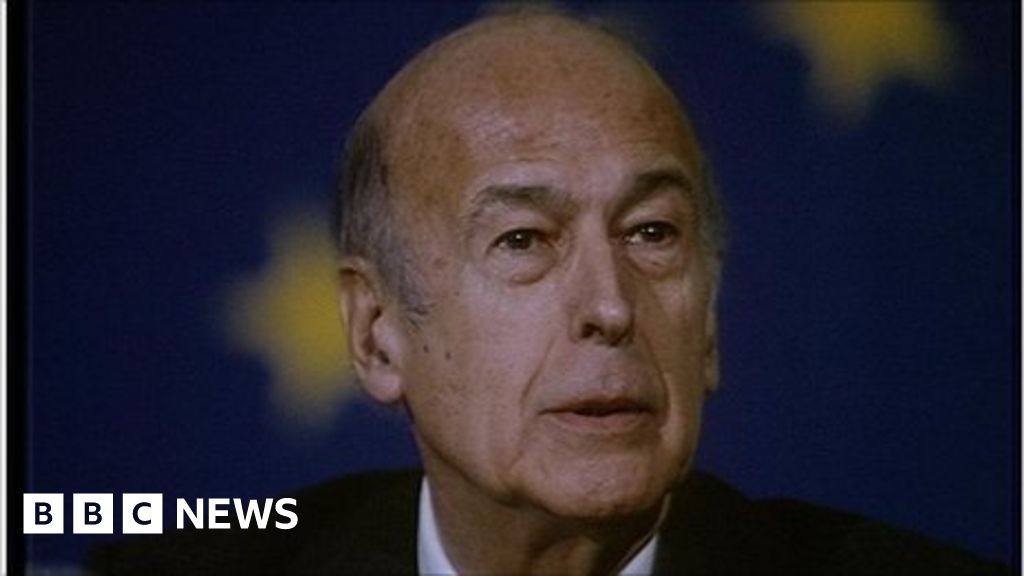
Dr David Lees from the School of Modern Languages and Cultures at the University of Warwick said: “France has lost a fascinating political leader. “Valery Giscard d’Estaing, who has died aged 94, was a modernising if controversial President of the Fifth French Republic between 1974 and 1981. “Giscard was the first non- Gaullist president of the Republic and signalled an end to the continuity following de Gaulle’s presidency. Giscard was an ardent Europhile and one of the architects of the European Constitution that was rejected by the French in 2005. In the course of his presidency, Giscard was responsible for pushing through the reduction in the age of voting to 18, the Veil reforms which legalised abortion and major changes to cultural policy. Giscard was very active in foreign policy, becoming embroiled in a scandal over diamonds gifted to him by the dictator Jean-Bedel Bokassa of the Central African Republic. “The legacy of Giscard remains one of modernity mixed with controversy. Having recently been accused of sexual misconduct, Giscard continued this trend until his death in hospital in Tours in this most exceptional of years.”

U.S.-Iran Crisis: Outlook and Implications
Executive Summary: The immediate crisis following the death of Iranian general Qassem Soleimani in a U.S. airstrike and Iran’s retaliatory missile strikes against two U.S. airbases appears to have settled down. However, the conditions for a future flare-up remain in place because the underlying conditions have not changed. Going forward, each side is likely to double down on its stated strategic objective, with Iran pushing for an end to U.S. presence in the region and the U.S. pushing for an end to the Iranian nuclear program. Further, the norms that had previously prevented an open exchange of fire between the two sides have been eroded. Why It Matters: The events of January 3rd and 8th represent the first time since the skirmishes of the “Tanker Wars” of 1987-88 that the military forces of the United States and Iran have directly and openly exchanged fire with each other. For the last three decades, the contest between the two states has been a shadow war of proxy conflicts, plausible deniability, and non-military measures. The American decision to strike Soleimani and the Iranian decision to fire missiles in response removed many of the guardrails that have set limits on previous escalations of tensions. The Iranian decision to renounce cooperation with the 2015 nuclear agreement places back into contention an issue that had previously brought the U.S. and Israel to the point of war with Iran in 2012-13. Business Impact: Markets have been largely taking a wait-and-see approach in order to determine the form of Iranian response to Soleimani’s death, and they responded with relief when President Trump signaled that the U.S. would not retaliate. To an extent, uncertainty in the Middle East had already been priced into the markets due to tensions in the second half of 2019. A significant or prolonged conflict would have an obvious negative impact on energy markets and regional economies. In addition, American and Western companies operating internationally or their employees could suffer collateral damage from any future Iranian proxy attacks against visible symbols of U.S. presence overseas. Looking Forward: In the immediate term, the resolution of the crisis represented one of the best possible outcomes: Iran has publicly signaled that the missile launches conducted on January 8th constituted the extent of their military retaliation to Soleimani’s death and President Trump’s White House address acknowledged Iran’s desire to de-escalate and spoke of finding mutually beneficial outcomes with no further mention of military action. Going forward, both Iran and the United States are likely to double down on their desired strategic outcomes. Iran will seek to use all of the levers of its influence to drive the United States from the region, beginning with Iraq but also including indirect pressure on the Gulf states that host U.S. forces. Offensive cyber operations and deniable proxy attacks against civilian infrastructure in the Gulf could be part of that campaign, returning to tactics observed in the past. For its part, the United States will continue its maximum pressure campaign over the Iranian nuclear program, with President Trump promising additional economic sanctions even as he stepped back from military action. Therefore, although both sides appear to be committed to non-military means, the points of tension that caused the most recent crisis are all still present and have arguably increased based on Iran’s increased non-compliance with JCPOA. It remains to be seen whether coming close to the brink of open conflict will have changed the risk tolerance of either side or whether the first acknowledged exchange of fires between the U.S. and Iran for 32 years will usher in a new period of low-level conflict. The View from Tehran: Iran has played Soleimani’s death for maximum strategic benefit. The messaging of the past 96 hours was aimed at various audiences within the country, the region, and around the world. Having been caught on the backfoot by the U.S.’s strike on Soleimani, the Supreme Leader allowed the IRGC to retaliate against U.S. forces in Iraq in a calibrated manner, likely calculating that a strike with limited casualties would satisfy demands for vengeance while not prompting a response. Khamenei’s Decision: Ayatollah Khamenei is an inherently conservative figure and one who is above all else motivated by the priority of regime survival. Given their long-standing personal relationship, there is ample reason to believe that his displays of emotion of Soleimani’s death, including weeping over his coffin during the funeral on January 6th, were genuine and heart-felt. However, his expressed desire for revenge has been tempered by the overarching imperative to avoid a conflict that would have threatened the regime’s hold on power, either from within or without. Rally Around the Flag: Within Iran, the regime is seeking to use Soleimani’s death and their subsequent retaliation to build national unity following a period of significant domestic unrest. This has been emphasized by the extended period of mourning for Soleimani, days-long funeral spectacle, and the invocation of religious and cultural symbols associated with Shi’a martyrs. The death of Soleimani comes on the heels of a series of mass protests in Iran that originally began on November 15th in response to proposed increase in the price of gas, but which have since expanded to a wider challenge to the regime. Media reporting from late December suggested as many as 1,500 Iranian civilians have been killed as part of a regime crackdown on the protests, which have been characterized as the most serious challenge to the regime since the Green Movement of 2009. JCPOA as a Wedge Between U.S. and Europe: Iran announced on January 5th that it would cease compliance with the remaining provisions of the 2015 Joint Comprehensive Plan of Action but would be willing to return to compliance if sanctions are removed. The nuance in Iran’s position highlights the fact that it is continuing to attempt to use the nuclear issue to drive a wedge between European signatories to the agreement and the United States, which unilaterally walked away from the treaty in May 2018. Regime Dynamics: Soleimani was a high-profile figure within Iran, but his outsized influence on Iranian foreign policy also created friction with other stakeholders in the regime, including leaders of the conventional military forces, the ministry of foreign affairs, and the intelligence services. He was one of few genuinely strategic thinkers in the Iranian national security apparatus and the one with the most extensive and deepest connections within the Arab-speaking world. His replacement as commander of the Quds Force is his long-time deputy who will be familiar with the day-to-day operations of the IRGC’s external operations arm but will not have the stature or the network of Soleimani. As a result, other stakeholders may jockey to move into the vacuum created by his death. The View from Washington: The present challenge for the U.S. is how to maintain both a deterrent posture and establishing the means to avoid further escalation. The policy on Iraq going forward will have to balance President Trump’s desire to disengage from the conflict while not creating the appearance of having been pushed out by Iran. Escalate to Deter: President Trump’s decision to kill Soleimani reflected an “escalate to deter” strategy, using a sudden and unexpected escalation of force during a crisis in order to reestablish deterrence after previous provocations in 2019 had gone largely unanswered. However, deterrence is only as good as the last demonstration of a willingness to respond. The decision to not respond to Iran’s retaliatory missile strikes reflected a pragmatic decision to de-escalate. National Security Decision-Making: Nearly three years into his presidency, Donald Trump feels increasingly confident making national security decisions based on his own instincts. The original coterie of experienced national security establishment members such as Jim Mattis and H.R. McMaster who had populated the Situation Room during the early days of the administration have largely resigned or been fired and replaced with individuals of lower profile and/or proven loyalty. Although the mechanisms of the formal interagency process continue to function, President Trump increasingly makes decisions based on a network of informal advisors and media sources. Domestic U.S. Considerations: The decision to launch the strike on Soleimani came during a period of high political tension in Washington, as it had been expected this month that the U.S. Senate would begin a trial in response to articles of impeachment passed by the House of Representatives in December. The Soleimani strike is being taken up by both Trump’s supporters and opponents as evidence of either his credentials as a decisive commander-in-chief or his unsuitability for office, depending on their perspective. Congress has proposed votes to limit President Trump’s independent authority to initiate hostilities with Iran, but this is unlikely to gain traction in the Senate. Separately, the first voting in the Democratic primary is less than one month away, and a sudden shift in focus to national security issues could have results that are difficult to predict, either boosting those with national security credentials (such as former vice president Joe Biden and military veteran Pete Buttigieg), or rallying support among primary voters for anti-war (such as Bernie Sanders). Third-Party Perspectives and Responses: Iraq: The strike at Baghdad International Airport that killed Soleimani also killed the deputy commander of Iraq’s Popular Mobilization Front, a coalition of militias that forms a part of Iraq’s official security apparatus. Iraq’s new Prime Minister Adel Abdul Mahdi has condemned the attack as a “massive breach of sovereignty” and an “aggression on Iraq”. Iraq’s parliament passed a draft law on January 5th calling for the removal of all foreign troops from Iraqi soil, but the law was non-binding and the session had been boycotted by most of the Sunni and Kurdish members of the legislature. Iranian presence has also been the recent target of Iraqi ire, such as in November when a crowd of Iraqis burned down the Iranian consulate in the Shi’a holy city of Najaf, and the Iraqi government will likely try to play both sides against each other to maximize its leverage for military and financial support. Withdrawal from Iraq would mean that the remaining American forces in Syria could no longer be supplied or supported through the western desert of Iraq and would therefore also have to be withdrawn. Iran will likely seek to use all its considerable levers of influence in Iraq to convince the government to see through the expulsion of American forces. The United States leaving Iraq and Syria due to Soleimani’s death would be a fitting legacy from the Iranian perspective and a perverse one from the American perspective given that Soleimani was responsible for the deaths of hundreds of American servicemembers in Iraq (and thousands of Iraqi civilians) through his support for Shi’a militias in the mid-to-late 2000s. Europe: Statements from European capitals emphasized the need for restraint and de-escalation. French President Macron is likely to view this event as further justification for his proposals that the EU develop a defense and security apparatus independent of NATO in order to avoid being entangled by potentially reckless American actions. Iran will likely continue to use this event as an opportunity to drive a wedge between the U.S. and Europe on the nuclear program and other issues, and their chosen retaliation was likely calibrated at least in part to allow them to continue positioning themselves as a responsible actor. For his part, Trump is urging the European signatories to join him in walking away from the JCPOA in order to increase Iran’s international isolation. United Kingdom: The British government has tried to tread a fine line in its responses to the strike, with Prime Minister Johnson calling for de-escalation while also stating that he “will not lament” the fact that Soleimani is dead. The U.K. is likely trying to balance its desire to remain aligned with France and Germany in trying to keep the JCPOA together with its traditional close alliance with the United States and Johnson’s personal relationship with President Trump. Russia: Unsurprisingly, Russian President Vladimir Putin condemned the American strike, which removed a valuable interlocutor for Russian forces in Syria. Russian troops and Iranian-backed militias in Syria had periodically found themselves with diverging interests in their campaign to support the Assad regime, and Soleimani performed a critical function in directing the activities of those militias to ensure that both Russia and Iran achieved their strategic objectives in Syria. A potential American withdrawal from Iraq and Syria would advance Russia’s interest in establishing itself as the indispensable foreign power in resolving the crisis in Syria and within the region more broadly. China: In line with their long-standing principle of non-intervention and their own interest, China condemned the strike, but the response was muted overall. Chinese interests are primarily economic and tied to ensuring a steady supply of petroleum. One of China’s newest and most capable naval destroyers recently participated in trilateral naval exercises with Iran and Russia in the Gulf of Oman. Although such exercises primarily serve a strategic messaging and diplomatic function, they do signal an emerging alignment of interests between the three states that would be significant for the response to any future crises.



The new initiative is in addition to the $100 Auto Insurance Relief Benefit and 10 per cent rate reduction announced earlier in the year. CAA Insurance Company is introducing a $50 relief benefit for its active auto policies in effect as of October 28, 2020. No action is required by insureds or their brokers to receive the benefit. Eligible policyholders should expect a $50 cheque in the mail, just in time for the holiday season. “As the pandemic continues, so do the financial hardships faced by many households,” says Matthew Turack, president of CAA Insurance Company. “Ontarians have been looking to their insurance companies to help them save on their insurance premiums. We are very proud that CAA Insurance continues to lead the industry by helping drivers save on auto insurance costs and provide financial relief to families impacted by the pandemic.” President & CEO of CAA Group, Jay Woo further adds, "We fully recognize that insurance is among the highest costs of every household and we are pleased to provide this additional financial relief to our valued Members. All throughout the CAA group of companies, we are continuing to find more ways to help our Members and Customers get through this global crisis." Earlier this year, CAA Insurance was the first and only insurance company to offer both a 10 per cent rate reduction on home and auto policies for the duration of a 12-month policy term, and a $100 rebate for all active auto policies. In total, including this latest benefit, CAA Insurance will have given back over $60 million to help policyholders manage their expenses during these difficult times. In a recent study, the Financial Services Regulatory Authority of Ontario (FSRA) examined rate relief measures by insurance companies during the pandemic (through June 30, 2020). CAA Insurance was identified as the top insurer, providing the highest percentage of rate relief to its policyholders. In April 2020, a survey conducted by CAA South Central Ontario found that auto insurance is the area where Members (43 per cent) are most likely looking to reduce costs because of COVID-19, exceeding groceries, telecommunications and mortgages/rent payment. CAA Insurance agents and brokers continue to assist customers in finding additional ways to adjust coverage and reduce payments to reflect changes in driving behaviour such as: CAA MyPace, Canada’s first and only pay-as-you-go auto insurance program, so you only pay for the kilometres you are using Reducing annual mileage amounts on policies Insurance adjustments for multiple cars that aren’t being driven A discount for drivers that install four matching winter tires for use during the winter months Ontario drivers are encouraged to check with their agent or broker and make sure they explore all available options, as every insurance company is taking a different approach during the COVID-19 pandemic.

