
Experts Matter. Find Yours.
Connect for media, speaking, professional opportunities & more.
Major trial shows increasing bone density fails to cut fracture risk in brittle bone disease
An international clinical trial involving Aston University researchers has challenged long held assumptions about how brittle bone disease is treated in adults, after finding that substantially increasing bone density did not reduce the risk of fractures. The study, published in the Journal of the American Medical Association (JAMA), examined whether a two stage treatment using the bone building drug teriparatide followed by the bone preserving drug zoledronic acid could reduce fractures in adults with osteogenesis imperfecta, often referred to as brittle bone disease, a rare genetic condition that causes bones to break easily throughout life. Researchers followed 349 adults treated at 27 specialist centres across the UK and Europe. While the treatment led to clear increases in bone density in the spine and hip, fracture rates were no lower than among patients receiving standard care, suggesting that bone quality may matter more than bone density alone in preventing fractures in people with the condition. The findings underline a key distinction between brittle bone disease and more common bone conditions such as osteoporosis, where increasing bone density is known to reduce fracture risk. In osteogenesis imperfecta, the study suggests that bones can become denser without becoming less likely to break, indicating that the underlying quality and structure of bone tissue may play a greater role in fracture risk than density alone. Dr Zaki Hassan Smith, an endocrinologist at Aston Medical School who contributed to the research, said: “This study shows that in osteogenesis imperfecta, simply increasing bone density doesn’t necessarily translate into fewer fractures. That’s important, because it tells us that the disease is more complex than what we see on a scan. The findings help shift the focus towards understanding bone quality and how bones behave in real life, which is essential if we are to develop more effective treatments that genuinely reduce harm for patients.” Osteogenesis imperfecta is a genetic condition that affects collagen, leaving bones fragile and prone to fracture throughout life. There is currently no licensed treatment specifically approved to prevent fractures in adults with the condition, and patients often experience repeated fractures, chronic pain and long term disability. The trial tested a sequential treatment strategy commonly used in osteoporosis, where a bone building drug is followed by a treatment designed to preserve gains in bone strength. Although this approach successfully increased bone density in people with osteogenesis imperfecta, it did not reduce fracture rates, suggesting that treatment strategies effective in osteoporosis may not directly translate to rare bone diseases. Researchers did observe improvements in some quality of life measures among participants receiving the treatment, including reduced pain interference and improved mobility. However, fracture prevention remained unchanged, reinforcing the need for new approaches that target the fundamental properties of bone in osteogenesis imperfecta rather than density alone. The study was led by the University of Edinburgh and funded by the Medical Research Council and the National Institute for Health and Care Research. Aston University contributed clinical and academic expertise through Aston Medical School as part of the large international collaboration, which involved specialist centres across the UK and Europe. The study was led by the University of Edinburgh, with Aston University contributing clinical and academic expertise as part of a wider international collaboration involving multiple specialist centres across the UK and Europe. The research was funded by the Medical Research Council and the National Institute for Health and Care Research. Researchers say the findings provide important guidance for future research, helping to steer efforts towards treatments that focus on bone quality, strength and resilience in everyday life. They also highlight the value of large scale clinical trials in rare diseases, where learning what does not reduce harm is an essential step towards better care. The paper, Teriparatide Plus Zoledronic Acid for Osteogenesis Imperfecta, is published in JAMA. https://doi.org/10.1001/jama.2026.6889


Why disaster recovery in the Himalayas needs a rethink
After five weeks of fieldwork across Nepal, Bhutan and Northwest India, Aston University researcher Dr Komal Raj Aryal is calling for a more locally grounded approach to resilience and post-disaster recovery in one of the world’s most hazard-prone regions. What happens after the headlines fade from a disaster? That question sits at the heart of new field research led by Dr Komal Raj Aryal, Lecturer in Crisis and Disaster Management at Aston Business School. After returning from a five-week research visit across Nepal, Bhutan and Northwest India, Dr Aryal says the evidence points to a troubling reality: many communities remain highly vulnerable long after major recovery programmes are supposed to have helped them rebuild. The trip brought together field visits, stakeholder consultations and community observations linked to ongoing UKRI, NERC and ISPF-supported research on earthquake risk, disaster governance, resilience and post-disaster recovery in the Himalayan region. The aim was not only to understand current conditions, but to ask why repeated losses continue despite years of international development assistance, scientific research and investment. Across the region, the research found that resilience is being undermined by a combination of persistent governance challenges, fragmented institutions, weak local preparedness systems, livelihood insecurity and mounting environmental pressures. In other words, recovery is not simply about rebuilding infrastructure; it is about whether communities are genuinely better equipped to cope with the next shock. This challenge is especially striking in places still living with the legacy of the 2015 Nepal earthquakes, where long-term vulnerabilities remain visible despite the scale of international support directed towards recovery and reconstruction. Reflecting on his findings, Dr Aryal said: “One of the most striking observations from the field is that many communities affected by the 2015 Nepal Earthquakes continue to face similar vulnerabilities today, despite significant international support allocated for recovery and reconstruction. This raises important questions about how disaster recovery is planned, implemented, and sustained over time.” The fieldwork also highlighted the growing complexity of future disaster risks in the Himalayas. Large-scale earthquakes do not exist in isolation; they interact with environmental degradation, cascading hazards, climate-related stresses and rapid urbanisation in fragile mountain settings. He added: “The Himalayan region is entering a period of growing uncertainty where environmental change, socio-economic inequality, weak governance systems, and seismic risks are becoming increasingly interconnected. There is an urgent need to rethink conventional development approaches and invest more seriously in locally grounded, community-centred resilience strategies.” For Aston University, this work reflects a broader commitment to international research on disaster risk reduction, resilience governance and humanitarian response across South Asia. Aston researchers are working with government agencies, local authorities, universities, emergency responders and humanitarian organisations to strengthen evidence-based approaches to preparedness and recovery. The findings feed into wider international debates about sustainable development, climate resilience, risk communication and the future of disaster governance in vulnerable mountain regions. They also underline the importance of moving beyond short-term recovery models towards approaches that are participatory, practical and rooted in local knowledge. Dr Aryal’s research emphasises the value of integrating community knowledge, participatory governance, youth engagement and long-term livelihood security into resilience planning. As future collaborations and policy discussions develop, these themes are likely to be central to how the region prepares for the risks ahead. The recent fieldwork is expected to inform future international research partnerships, policy dialogue and resilience-focused initiatives between the UK and South Asian partners.

Exploring everyday finance, gender, and the future of pensions
Money in everyday life For Dr Hayley James, finance isn’t just numbers on a balance sheet - it’s woven into the realities of everyday life. From saving and borrowing to the challenge of long-term pension planning, her work at Aston University’s Centre for Personal Financial Wellbeing (CPFW) explores how financial decisions are shaped by family, gender, life stage, and stability of income. Her research stems from her PhD, which examined how people make decisions after being automatically enrolled into workplace pensions - a starting point that sparked her continuing focus on pensions and everyday financial behaviour. “Finance is often portrayed as objective, but in reality, our money decisions are tied up with all the other meaningful factors in our lives.” – Hayley James At CPFW, Dr. James and her colleagues have observed a shift in policy and industry thinking. Where once the focus was on pushing people to act in “rational” financial ways, attention is now turning to redesigning systems that reflect how people actually manage money. Gender and the pension gap A key focus of Dr. James’ research has been pensions, particularly how gender and life events shape saving habits. She has found that parenthood has very different impacts on men and women’s retirement planning: Motherhood often discourages pension saving - reducing both capacity and perceived importance. Fatherhood often encourages saving - reinforcing traditional financial roles. While many assume household specialisation balances out, reality shows otherwise: separation or divorce often leaves women financially disadvantaged. These insights underpin her book Pension Saving in a Gendered Lifecourse (2025), which argues for pension systems that move beyond gender neutral models to become gender friendly - systems that acknowledge the very different realities men and women face across their life course. Tracking real lives: the “Real Accounts” project Beyond pensions, Dr James has led research into how people actually manage day-to-day finances. In the Real Accounts project, she and colleagues followed UK households for 10 months, recording income and spending in real time. The findings reveal how income volatility — sudden drops, irregular hours, unexpected bills — creates stress and undermines financial stability. These insights are helping policymakers and providers rethink how products like pensions, credit, and debt advice are designed. Collaboration and impact Dr. James’ work bridges academia, policy, and practice. Partnerships include: Nest Insight – public-benefit research centre, co-leads on Real Accounts. Glasgow Caledonian University – joint research on household finances. Christians Against Poverty – literature review on measuring the impact of debt advice, aimed at improving frontline support for the most vulnerable. Through these collaborations, her findings are already shaping practical change in how organisations design support for households under financial strain. Looking ahead With her British Academy Innovation Fellowship concluding, Dr. James is turning to new questions: How do diverse households — across sexuality, ability, ethnicity, and household structure — navigate finance? How can financial systems evolve to reflect real lives, not abstract models? Her book sets out a roadmap for rethinking pensions through a gendered lens — offering policymakers, providers, and households a new way to understand and prepare for later life. Selected publications For readers who want to explore her research in more depth, here are a few recent publications: • James, H. (2022). Everyday finance and the politics of financial subjectivity. Review of International Political Economy. • James, H. (2022). Financial wellbeing and the lived experience of income volatility. New Political Economy. • James, H. (2023). Household finance and the gendered lifecourse: Reframing pensions research. In Handbook on Everyday Finance (Edward Elgar). Available via RePEc. ⸻ About Dr. Hayley James Dr. Hayley James is a Senior Research Fellow at Aston University’s Centre for Personal Financial Wellbeing. Her research spans pensions, household finance, and the social context of money. She has published widely and works closely with policy and community partners to translate research into action. To explore more of the Centre’s work and access project reports, visit the CPFW Projects page at Aston University. Connect with Hayley by clicking the profile icon below.


Aston University economists say Prime Minister can reduce UK trade vulnerability with China visit
Greenland episode exposed UK’s lack of effective response to economic coercion from allies Research shows tariff retaliation would have cost the average UK household up to £324 per year Economists say China visit is “portfolio risk management” – diversification reduces vulnerability. The Prime Minister’s visit to China – the first by a British PM since 2018 – is an opportunity to reduce the UK’s vulnerability to economic coercion, according to new research from Aston University. A policy paper from Aston Business School’s Centre for Business Prosperity analyses the January 2026 Greenland tariff episode, when President Trump threatened and then withdrew tariffs on eight European countries. The researchers found that the UK had no good options: retaliation would have made Britain worse off, while absorbing the tariffs left Europe without credible deterrence. Director of the centre for business prosperity, Professor Jun Du, said: “The Greenland episode was a wake-up call. When your principal security ally threatens economic coercion, the old assumptions about who is safe and who is dangerous no longer hold. “The PM’s China visit should be framed as portfolio risk management – building diversified trading relationships that reduce the UK’s exposure to any single partner. Just as investors don’t put all their money in one stock, countries shouldn’t put all their trade into one basket. A UK with multiple strong partnerships is harder to pressure, whether the pressure comes from Washington or Beijing.” The research found that coordinated UK–EU tariff retaliation would have cost British households up to £324 per year – the worst outcome modelled. But the authors argue that Europe has untapped leverage elsewhere: the US runs a €148 billion annual services surplus with the EU, and mutual investment exceeds €5.3 trillion. Associate professor of economics and co-author, Dr Oleksandr Shepotylo, said: “Tariff retaliation fails because it hurts consumers and distorts the economy – the retaliator suffers similarly to the target. But Europe has cards it isn’t playing. Services, investment screening, and regulatory access are pressure points where Europe can respond effectively.” UK exports to China fell by 10.4% in the year to Q2 2025, with goods exports down 23.1% – the sharpest decline among major trading partners. The researchers argue that this closes off the UK’s largest alternative market at precisely the moment US reliability is in question. The paper identifies three priorities for UK policy: Recognise the permanent incentives behind US tariffs. US tariff revenue hit $264 billion in 2025. Trade negotiations alone cannot resolve revenue-driven policy. Build UK–EU coordination on non-tariff instruments. Services, investment, procurement, and regulation offer leverage that tariffs do not. Treat China engagement as portfolio risk management. Concentration in any single market creates vulnerability. Diversification is not about picking sides – it’s about resilience. Professor Du added: “The question for the Prime Minister is whether to use this breathing space to build resilience – or wait for the next Greenland.” To read the policy paper in full, click on this link:



Professor Ian Maidment is a professor in clinical pharmacy at Aston Pharmacy School His inaugural lecture will explain why patients struggle with taking medication and present possible solutions to the problem Professor Maidment is a former practising pharmacist and an expert in medication optimisation and management in mental health and dementia. Professor Ian Maidment, professor in clinical pharmacy at Aston Pharmacy School, will give a public lecture about his life’s work on 5 February 2025. In his inaugural lecture, Professor Maidment will reflect on his journey from a childhood in Kent to becoming a leading researcher in clinical pharmacy. After more than two decades working in the NHS, in community pharmacy, mental health, dementia care, and leadership roles, he joined Aston University in 2012. His research focuses on the real-world challenges of medication optimisation for patients, carers, and healthcare professionals. The title of Professor Maidment’s lecture is ‘Medication adherence: Why it matters and how we can improve it’. Every year, the UK spends nearly £21 billion on medicines. Yet up to half of people with long-term conditions do not take their medication as prescribed—a problem known as non-adherence. This has profound clinical consequences and significant financial implications for the NHS. Professor Maidment will draw on his experience to explore how factors such as medication burden and side-effects influence adherence, the challenges posed by conditions such as dementia and severe mental illness, the role of pharmacy in supporting adherence and why tackling non-adherence requires a system-wide approach. He will also offer practical solutions to one of healthcare’s most persistent problems. Professor Maidment said: “We need to understand why patients struggle to take their medication and then develop and test solutions that work well.” The lecture on Thursday 5 February 2026 will take place at Aston Business School. In-person tickets are available from Eventbrite. The public lecture will begin at 18:00 GMT with refreshments served from 17:30 GMT. It is free of charge and will be followed by a drinks reception. The lecture will also be streamed online.


As Disney’s “Zootopia 2” barrels toward becoming the highest-grossing animated Disney movie of all-time, the box office isn’t the only place fans of the franchise are apparently flocking. Recently, CNN reported that “Zootopia 2” fans in China—where the wildly popular movie has already been crowned it’s highest-grossing foreign animated film ever—have expressed increased interest in owning Indonesian pit vipers, a striking blue and highly venomous snake portrayed as an anthropomorphic protagonist named Gary De’Snake in the film. The outlet spoke to individuals who purchased the animal after seeing “Zootopia 2” and noted surges in searches and prices among exotic pet retailers. The reported phenomenon prompts the question: can blockbuster movies really be drivers of the exotic pet trade? “I think they can,” said Ryan Almeida, PhD, an assistant teaching professor of Geography and the Environment at Villanova University who studies the exotic pet trade. “There have been a lot of anecdotal reports of movies and TV shows influencing the pet trade, but the peer-reviewed evidence isn’t there.” Causation or Correlation? Reasons for Pet Demand are Tricky to Single Out While the increased interest in the pit viper may be the latest pet trend influenced by the entertainment industry, it is certainly not the first, says Dr. Almeida, who has recently been conducting research at wildlife expos in an effort to understand more of the intricacies of various pet-related trends. In the 1980-90s, red-eared slider turtles became massively popular pets, and it just so happened to coincide with a popular new show based off the animal. “The Teenage Mutant Ninja Turtles craze, especially in the United Kingdom, probably helped drive demand for these turtles as pets,” Dr. Almeida said. “Turtle exports from the United States exploded in popularity during this time, there just is a not a peer-reviewed study demonstrating it was definitely caused by the show.” In the 2000’s, Pixar’s “Finding Nemo” and its sequel, “Finding Dory,” reportedly bolstered purchases of clownfish and blue tangs—the fish for whom those characters were modeled. Interest in owning owls as pets was also said to have spiked among Harry Potter fans in certain parts of the world amid the height of the joint movie/book popularity. Though much of the evidence of these trends is anecdotal, anecdotal doesn’t necessarily mean it didn’t happen. For instance, it’s difficult to completely discredit an exotic pet retailer who reported a 500% sales increase of an animal featured in a recent, very popular movie. But it’s also difficult to prove the causation, not to mention the scale. Dr. Almeida, who is interested in the qualities that make exotic pets desirous to consumers, says that even if sales of an animal from a movie did increase, the reasons are likely far more nuanced than just their appearance on screen. “Rarity is one important factor. We have good evidence that that certain [consumers] care a lot about rarity, that prices rise as animals become rarer and that retailers sell more animals if they are rare.” Another is morphology, or the physical structure of the animal. “Animals with unique morphology or distinctive colorations and patterns are more susceptible for these spikes in demand,” he said. “If Gary De’Snake was a brown, common garter snake and not a striking blue colored viper, I doubt we would see this attention. “I suspect that that's partially why this snake species, Trimeresurus insularis, was chosen for this movie, and why the fish representing Nemo and Dory are the ones they are, and not one of the millions of more boring looking fish species out there.” Even the on-screen portrayal, he suspects, makes a difference. “If the characters are protagonists, that could potentially either consciously or subconsciously, lead to more positive associations with the pet, especially for something like a pit viper, which probably has sort of a negative connotation to go with it in the first place. Also, the way these animals are anthropomorphized likely matters to some degree to people who report buying these animals because of the movie.” Case in point, one purchaser of the highly venomous viper told CNN that the movie helped give “reptile pets a better image,” saying of Gary De’Snake “I love his enthusiastic attitude and his sense of responsibility,” which would not be qualities associated with or displayed by the actual living species. “Attention to all of this falls in line with the same sort of things we are already know are drivers of demand in the pet trade,” Dr. Almeida said. Blockbuster Movies Probably Don’t Make Blockbuster Pet Trends Yet, while Dr. Almeida cedes that there is likely some degree of real demand for exotic pets based on movies (as evidenced by the self-reporting of people doing so for that reason), he cautions that there is very little to suggest these types of trends typically occur on large scales, especially those large enough to make any ecological impacts. He referenced a 2019 paper published by researchers at the University of Oxford, which looked at the purported increase of clownfish and blue tang sales after “Finding Nemo” and “Finding Dory.” “They found that there was an increase in the amount of people searching for the animal online, but not any evidence that retailers were importing more blue tangs, consumers were buying more blue tangs, or even that people were going to an aquarium to see them.” The findings, per the University of Oxford, suggested “that the impact of movies is limited when it comes to large scale buying of animals.” The authors also noted the role of viral media articles in suggesting this plausible causation was a hard-and-true phenomenon. Similarly, a 2017 study concluded that, contrary to popular belief, the Harry Potter series was unlikely to have increased demand for pet owls in the United Kingdom. Even if the demand was there at those larger scales, Dr. Almeida says meeting that demand could be a challenge, depending on the species. “You’d potentially have to poach them in large numbers from the wild, and that's challenging in and of itself. Or they would have to be captive bred, which for some animals is relatively easy but others not so much.” Not to mention the other roadblocks to mass exotic pet ownership. “Some of them may be tough to obtain or even illegal to own in the first place. Also, many of the consumers of films like ‘Zootopia 2’ who might feel a strong emotional pull to an animal are children, and children aren’t the ones going out and buying pets. And, even if something like this did become a large-scale trend, trends are fleeting. The long-term impact, ecologically, would be hard to predict.” But make no mistake. Pet trends certainly do happen on large scales, and whether they are caused by movies in part or not at all, they can have dire ecological consequences. Look at the case of the red eared slider. “Regardless of any possible influence from the show, these turtles are relatively easy to captive breed, so therefore relatively easy to acquire,” Dr. Almeida said. “But they are tough pets. They live a really long time and are kind of hard to care for, and that leads to people releasing them into the wild. They are now among the most invasive reptile species on the planet.” So much so, that the UK banned their sale in 1996. “It ties back to the complications of assessing certain aspects of the wildlife trade. There are so many factors, how do we get the entire picture? It’s a wicked problem.” Whether that problem includes movies with venomous, anthropomorphic snake protagonists appears unlikely, outside of a few highlighted cases. “It certainly wouldn’t be supported by much hard evidence… yet,” Dr. Almeida said. “But this is very much an under-researched phenomenon. I know I’ll keep my eye out for blue insularis next time I attend a pet expo.”


New research partnership to develop biodegradable gloves from food waste for healthcare sector
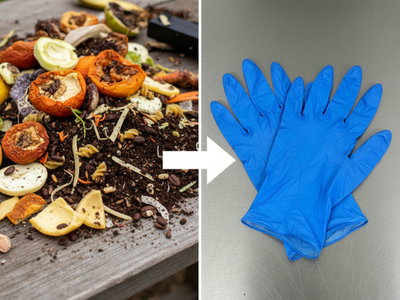
Knowledge Transfer Partnership between Aston University and PFE Medical to develop a biodegradable clinical glove from food waste The gloves will provide a low-cost, convenient and sustainable alternative to the 1.4bn disposable gloves used in the NHS each year The innovation will reduce clinical waste and costs and help the NHS reach its net zero goals. Aston University and Midlands-based company PFE Medical are teaming up to create biodegradable gloves made from food waste for use in the NHS. They will offer a low-cost, convenient alternative to disposable gloves without compromising patient safety. More than 1.4bn disposable gloves are used by the NHS each year. They create large volumes of clinical waste which has both an environmental and economic cost. The Knowledge Transfer Partnership (KTP) project will develop a more sustainable alternative made from polymers derived from food waste such as orange peel, able to degrade naturally. The gloves will initially be for use during low-risk tasks such as ultrasound scans, rather than in more critical situations such as operating theatres. The gloves would be designed to not only reduce clinical waste and costs in the NHS, but also carbon emissions, helping the NHS reach its goal to be the world’s first net-zero health service. With most personal protective equipment (PPE) currently sourced from Chinese manufacturers, the goal is to develop a biodegradable glove that can be manufactured using a UK supply chain. The challenging project draws on Aston University’s expertise in sustainable polymer chemistry, centred at Aston Institute for Membrane Excellence (AIME). Aston University has one of the largest research groups of polymer chemists in the UK. The project will be led at the University by Professor Paul Topham, director of AIME, and Dr James Wilson, AIME associate member. The research team have chosen to focus on polymers from food waste in order to ensure that the final product can be manufactured sustainably. Most polymers are currently made from petroleum. Polymers made from food waste, ranging from fruit waste to corn or dairy products, have the potential for antioxidant and antibacterial properties if designed appropriately. The team will manipulate the polymer molecules so that they include the right monomers (the smaller units which make up the molecules) in the right location to achieve the properties they require. Critical to the success of the project will be PFE Medical’s commercial and clinical experience of taking new innovations into medical use. It will be the third KTP between Aston University and PFE, following on from successful projects to develop an automated endoscope cleaner, now in use across University Hospitals Birmingham NHS Foundation Trust (UHB). Professor Topham said: “At Aston University, we have a long history of working with industry, of translating fundamental research into solutions for real world problems. This project with PFE Medical provides us with that route, to take our science and engineering and make a difference to peoples’ lives. That’s exactly where, as researchers, we want to be.” Rob Hartley, CEO of PFE Medical, said: “Our previous KTP with Aston University was a phenomenal success, thanks to the brilliant team we had on board. I’m just as excited by this project, which is looking to solve an equally long-standing problem. If we can achieve our goal, then the implications are huge, going far beyond the NHS to all the other situations where people are wearing disposable gloves.” KTPs, funded by Innovate UK, are collaborations between a business, a university and a highly qualified research associate. The UK-wide programme helps businesses to improve their competitiveness and productivity through the better use of knowledge, technology and skills. Aston University is a sector-leading KTP provider, ranked first for project quality, and joint first for the volume of active projects. For further details about this KTP, visit the webpage: www.aston.ac.uk/business/collaborate-with-us/knowledge-transfer-partnership/at-work/pfe-medical.


From Saint to Superstar: The Remarkable History of Santa — and His Many Global Identities
Santa Claus may look familiar — red suit, white beard, infectious laugh — but behind the modern icon is a centuries-long story shaped by religion, folklore, migration, marketing, and local tradition. Far from being a single character, “Santa” is a global collection of gift-givers, each reflecting the culture that shaped them. The Historical Roots: A Saint Becomes a Symbol The story of Santa Claus begins with St. Nicholas, a 4th-century Greek bishop known for generosity, compassion, and secret gift-giving. Stories of Nicholas helping the poor — often anonymously — spread across Europe, establishing a lasting connection between generosity and winter celebrations. Over time, St. Nicholas evolved from a religious figure into a folkloric one as traditions blended with local customs, seasonal festivals, and storytelling. The idea of a benevolent winter gift-giver became firmly embedded in European culture long before Santa ever boarded a sleigh. Santa in North America: Reinvention and Red Suits In North America, Santa Claus emerged as a cultural hybrid: Dutch settlers brought traditions of Sinterklaas 19th-century poems and illustrations reshaped Santa into a jovial, approachable figure 20th-century popular culture and advertising standardized the modern image: red suit, round belly, flying reindeer, North Pole address What began as a saintly figure became a universal symbol of generosity, childhood wonder, and seasonal joy — largely detached from religious roots but deeply tied to cultural celebration. Santa Around the World: Same Spirit, Different Stories Santa’s core traits — kindness, generosity, winter magic — remain consistent, but his appearance and habits vary widely: Europe Sinterklaas (Netherlands & Belgium): Arrives by boat, wears bishop’s robes, celebrated earlier in December Father Christmas (UK): Rooted in feasting and goodwill, later merged with Santa traditions Père Noël (France): Delivers gifts with a quiet, gentle presence La Befana (Italy): A broom-riding grandmother figure tied to Epiphany traditions Nordic Countries Joulupukki (Finland): Lives in Lapland, wears practical winter clothing, and feels distinctly grounded in nature Julenisse (Norway & Denmark): A blend of Santa and household folklore spirits Asia Hoteiosho (Japan): A cheerful monk associated with happiness and abundance Christmas gift-givers in many Asian countries are largely secular, tied to pop culture rather than religion Latin America Papá Noel: Often coexists with religious gift-bringers tied to Epiphany Emphasis may be placed more on community and family than individual gift-giving Why Santa Still Matters Santa’s endurance lies in his adaptability. He absorbs cultural values — generosity, kindness, joy — and reflects them back in familiar, comforting ways. Whether religious, secular, or purely symbolic, Santa represents shared traditions that bring people together during the darkest days of the year. Story Angles for Journalists How St. Nicholas became a global icon The commercialization of Santa — myth vs. modern marketing Cultural identity through holiday folklore Why children worldwide believe in gift-givers How immigrant communities blend Santa traditions Santa as a mirror of societal values across cultures Why This Matters Today In an increasingly globalized world, Santa Claus is a rare figure who crosses borders with ease — adapting, evolving, and uniting cultures through shared storytelling. His many forms remind us that traditions aren’t static; they grow with the people who keep them alive. Journalists covering culture, history, religion, folklore, or holiday traditions can connect with historians, anthropologists, religious scholars, and cultural experts through ExpertFile to explore how Santa continues to shape — and reflect — societies around the world. Find your expert here: www.expertfile.com


Tinsel, Tears, and Turkey: How Seniors Really Feel About the Holidays
Ah, the holidays. That magical season when cinnamon fills the air, grandkids are glued to their phones, and you're wondering if it's too early to spike the eggnog. (Answer: it's 5 o'clock somewhere, and that somewhere is your kitchen.) For many older adults, the season is a cocktail of nostalgia, joy, and melancholy—served in a glass rimmed with memories of when the house was full, and the turkey wasn't store-bought. Dealing With The Ghosts of Christmas Past The holidays used to mean full houses, laughter echoing off the walls, and more food than a Costco freezer aisle. Now? Smaller gatherings, missing faces, and a nagging feeling that you're somehow in the way at your own celebration. There's a certain ache that comes with the holidays as we age. It's not just arthritis—it's memory. The people who made our holidays special might no longer be around, and while their photos still grace the mantle, their absence can hit harder than a fruitcake to the forehead. It's the quiet that gets you. The stillness of a home that used to hum with chaos. The microwave hums where the oven once sang. The Christmas card list has ghosted us—literally—replaced by e-cards that can't be hung on the fridge or hugged. And yet, despite the ache, many seniors keep the traditions alive. They polish the silver, bake the cookies, and set the table—because ritual matters. It's a way to say, I'm still here, and this still matters. Loneliness: The Fear No One Talks About Let's name the holiday elephant in the room. Yes, it turns out that one really is the loneliest number. It's that heavy feeling that sneaks in right around the time commercials start showing perfect families in matching pajamas (who, let's be honest, probably fought about those pajamas in the parking lot). The numbers tell a sobering story: A report by the National Institute on Ageing, finds that as many as 41 per cent of Canadians aged 50 years and older are at risk of social isolation and up to 58 per cent have experienced loneliness before. The holidays often bring additional pressure for many. It's important to note, you don't have to live alone to feel lonely. Seniors often fear being forgotten—left out of the group chat, the dinner invite, or even the conversation at dinner. Some feel like a burden, convinced their presence is more "obligation" than "invitation." That fear of irrelevance can creep up faster than fruitcake at a church bake sale. The internal dialogue doesn't help: "They're busy." "They have their own lives." "I don't want to be a bother." But here's the truth: you're not a bother. You're the keeper of stories, the family's living archive, and—let's face it—the only one who actually knows how to carve a turkey without creating a crime scene. The health stakes are real: According to a 2023 research report from the U.S. Surgeon General, loneliness and social isolation have a profound effect on mortality, equal to smoking 15 cigarettes per day. That’s more impact than obesity or sedentary lifestyles. It's associated with increased risk of heart disease, stroke, dementia, depression, and anxiety. This isn't just about feeling blue; it's about actual health outcomes. When Depression Wears a Santa Hat Holiday depression doesn't always look like tears and tissues. Sometimes it's withdrawing from events, skipping meals, or not bothering to decorate. It's saying "I'm fine" with a smile that doesn't reach your eyes. A prominent research study of seniors in the UK over a 12-year period published in The Lancet, confirms what many seniors experience: loneliness is a significant predictor of depression in older adults. The study found that higher loneliness scores were consistently associated with increased depression severity. The relationship works both ways—people with mental health conditions are more than twice as likely to experience loneliness. It can also show up physically—fatigue, poor sleep, or that vague feeling that something's just... off. The sparkle of the season fades under the weight of grief, change, or just the exhausting pressure to be merry when you're not feeling it. A few sad moments are natural. We all get a little misty when "White Christmas" plays for the 47th time. But if the blues linger past Boxing Day, it might be time for a gentle check-in—with a friend, a doctor, or someone who actually listens (not just nods while scrolling). Remember: asking for help isn't a weakness. It's wisdom. And honestly? It's badass. The Magic of Rituals and Traditions For seniors, traditions aren't just habits—they're anchors. The same decorations, the favorite songs, the "don't touch that, it's Grandma's angel" moment that happens every. Single. Year. Research shows that rituals and traditions provide crucial psychological benefits for older adults, including a sense of stability, purpose, and belonging. They offer structure and comfort during challenging times, helping seniors feel grounded and connected to their roots. Studies have found that maintaining traditions contributes to overall mental well-being and can even reduce symptoms of anxiety and depression. These rituals offer stability in a world that keeps changing at warp speed (seriously, when did voice-activated ornaments become a thing?). But when traditions fade—when no one asks for the shortbread recipe or the ornaments stay boxed—it can feel like being erased in real time. So here's the trick: Evolve the traditions. Pass the torch, not the guilt. Let the grandkids lead carols (even if they insist on adding Mariah Carey). Use the good china. Pull out the silverware stored in the wooden case under the china cabinet that hasn't been opened since 1987. Keep the spirit alive, even if it looks different now. How Seniors Can Create a Joyful Holiday (Yes, Really!) Reach Out First: Don't wait for others to make the first move. Call, text, or—even better—show up with cookies. People are often grateful for the invitation but also afraid to impose. Be the one who breaks the ice. Host a Mini Gathering: Even if it's just tea with a neighbor, connection is the best seasoning of all. Bonus: smaller gatherings mean less cleanup and more actual conversation. Volunteer: Nothing lifts the spirit like helping someone else. Food banks, shelters, and local schools welcome extra hands. Plus, it's a great reminder that you're still needed—and you are. Laugh on Purpose: Watch old comedies. Tell those same stories (again). Laughter really is medicine—no prescription, no co-pay required. Decorate Anyway: Even if no one's visiting, do it for you. Light up your space, and your mood might just follow. And if the neighbors think you're overdoing it? Even better. What Families Can Do (Besides Show Up Hungry) Here's your holiday homework, families: Visit More, Scroll Less. You can't hug over FaceTime. And honestly, Grandma's WiFi probably can't handle it anyway. Listen Like It's a Gift. Because it is. Let seniors share their stories without rushing them or checking your phone. They're not just repeating themselves—they're reliving joy. (And yes, you've heard it before. Listen again.) Include Them in the Chaos. Let Grandma wrap presents, Grandpa set the playlist, or Aunt Sue take charge of... okay, maybe not the gravy. But give them a role. Purpose is the best present. Check In Regularly. A quick "thinking of you" text can mean more than an expensive gift. Though, to be fair, both are nice. Respect Their Pace. Big gatherings can be overwhelming. Sometimes small and meaningful beats loud and crowded. Not everyone wants to do the Macarena at Christmas dinner. (Looking at you, Uncle Bob.) Remember: the greatest present you can give an older adult is presence—yours. The Importance of Joy (and How to Find It Again) Joy doesn't always come in grand gestures. Sometimes it's hiding in the small stuff: • The smell of pine needles • The first snowflake (before it turns into gray slush) • That old ornament you swore you'd throw out • The laughter of family—even if it's at your expense Joy isn't found lying around like loose change. It's made. Sometimes it's coaxed out with a memory, a song, or a well-timed bad joke about Aunt Sue's lumpy gravy. And if all else fails, remember this: you've survived decades of holidays. Burnt turkeys. Broken ornaments. That unfortunate incident with the glue gun in 2003. You've earned the right to laugh through the tears and dance in your slippers if you damn well feel like it. The Real Gift The holidays remind us that connection—not perfection—is the true magic. For seniors, it's about being seen, heard, and loved. For families, it's about showing up, listening, and laughing together. Because one day, those elders' stories will become yours. And you'll want someone to care enough to hear them, too. So let's make this season count. Let's call more, visit more, and laugh more. Let's honor the past while making new memories. And let's remember that the best traditions aren't the ones that stay the same—they're the ones that adapt, evolve, and keep bringing us together. Now pass the eggnog. The spiked kind. Let's All Sit Under the Mistletoe and Sing the Retired Remix of "Jingle Bells" (To the tune of "Jingle Bells") Dashing through the snow, With a walker all in tow, To the mall we go, Moving nice and slow! Family's out of sight, Texting through the night, Oh, what fun it is to Zoom My grandkids once a night—hey! Chorus: Jingle bells, jingle bells, jingle all the way, Oh, what fun it is to chat With friends who won't delay—hey! Jingle bells, jingle bells, laughter saves the day, Lonely hearts can still feel joy— If love just finds a way. Happy holidays, everyone. May your turkey be moist, your family be present, and your eggnog be strong. Want more insights like this? Subscribe to my free newsletter here, where I share practical strategies, real-world stories, and straight talk about navigating retirement with confidence—not confusion. Plus, all subscribers get exclusive early access to advance chapters from my upcoming book. For Canadians 55+: Get actionable advice on making your home equity work for you, understanding your options, and living retirement on your terms. For Mortgage Brokers and Financial Professionals: Learn how to become the trusted advisor your 55+ clients—it's your opportunity to build lasting relationships in Canada's fastest-growing demographic. Sue Don’t Retire…Re-Wire! References & Resources for You or a Loved One On Loneliness and Social Isolation: • U.S. Surgeon General. (2023). Our Epidemic of Loneliness and Isolation: The U.S. Surgeon General's Advisory on the Healing Effects of Social Connection and Community. https://www.hhs.gov/sites/default/files/surgeon-general-social-connection-advisory.pdf • Medicare FAQ. (2024). Loneliness in Seniors Statistics: Combating Social Isolation. https://www.medicarefaq.com/blog/senior-loneliness-statistics/ • Mayo Clinic. (2023). Loneliness and Social Isolation Through the Holidays. https://newsnetwork.mayoclinic.org/discussion/loneliness-and-social-isolation-through-the-holidays/ On Depression and Mental Health: • Kok, R.M., & Reynolds, C.F. (2020). The association between loneliness and depressive symptoms among adults aged 50 years and older: A 12-year population-based cohort study. The Lancet Psychiatry. https://www.thelancet.com/journals/lanpsy/article/PIIS2215-0366(20)30383-7/fulltext • Cigna. (2021). The Loneliness Epidemic Persists: A Post-Pandemic Look at the State of Loneliness Among U.S. Adults. On Traditions and Rituals: • Oregon Counseling. Why Traditions Matter to Mental Health. https://oregoncounseling.com/article/why-traditions-matter-to-mental-health/ • Care365. Maintaining Traditions with Seniors. https://www.care365.care/resources/maintaining-traditions-with-seniors Additional Support: • National Council on Aging. Four Steps to Combat Loneliness in Seniors During the Holidays. https://www.ncoa.org/article/four-steps-to-combat-loneliness-in-seniors-during-the-holiday-and-beyond/ Emergency Services If the situation is urgent or someone is in immediate danger: Call 911. Canada Suicide Prevention Service (CSPS) • Call: 1-833-456-4566 (available nationwide, 24/7) • Text: 45645 (evenings) • Chat: available at 988.ca


Budget 25 – initial reactions related to personal financial wellbeing
As the director of the Aston Centre for Personal Financial Wellbeing, and a professor of taxation, I obviously take particular interest in the annual budget day as it sets a tone for much of the personal finance changes that are likely to occur in the near future. The lead up to this year’s budget had unprecedented levels of speculation with much of the press and commentators trying to get attention with ever more it seemed wilder guessing of what the chancellor might do – largely unhelpfully and worrying people and the markets unnecessarily. Almost all of this proved wide of the mark as the budget didn’t increase any of the main taxes at all, and where it might nudge National Insurance contributions (NICs) up for some, this won’t be for a few years and only in a small area (pension payments for employees) that won’t actually affect most people. Small and cautious steps to reform The reason for all this speculation of key changes needed was that everyone suspected there was a big hole in the national finances. This was shown not to be the case. In fact, predictions provided in the budget documents are we’d in fact be in budget surplus by the end of this parliament period even before the changes announced take effect. This was a surprise to many and meant the chancellor could actually focus on at least some small and cautious steps towards reforming how our tax, benefit and government spending systems work. What she proposed therefore is currently predicted will raise circa £26bn and give the government ‘head-room’ to cope with economic changes later rather than needed to fill a feared financial black hole now – good news all round! This meant what we actually got was lots of smaller changes with fewer ‘rabbit out of a hat’ big tax surprises than we have had in recent years – a welcome steadying trend I hope will continue. She also promised some short-term spending that can be paid for with a combination of extra borrowing now and with increased taxes later – again a trend of recent budgets. If these tax changes actually happen in the end, then it will be down to what happens between now and when these were proposed to commence – by no means a guarantee these will ever happen. Later budgets, or other rule changes in the future, could easily retract or counter them (all chancellors like to announce planned tax changes aren’t going to happen for obvious political gain reasons!). Income tax changes The largest share of the extra £26bn raised will come from extending the income tax thresholds for a further period – now to 2031. These have been fixed (at £12,570 for example for the point at which income tax starts to need to be paid on personal incomes) since at least 2023, some well before this. This matters, as, when wages rise due to inflation, people are not better off in reality (you get more income but things cost more), but may end up paying more tax than before as the thresholds haven’t increased with inflation to the same degree (what we call ‘fiscal drag’). As such, holding these thresholds fixed for longer will raise extra money for the government (predicted to be over £12bn a year in 2030-31 for example) – largely unnoticed as to many it doesn’t feel like the tax rise it clearly is. The threshold fixing extension announced today will mean that as many as 700,000 more people will start to pay some income tax when they wouldn’t currently, and up to 1 million more people will start to pay higher rates of tax than currently – all without being actually better off in real terms. Some call this stealth tax, but it feels very real when it starts to affect you if your total taxable incomes fall near these threshold levels. There were in total more than 70 other tax measure changes in this budget – a huge number and lots to get your head around. However, most of these will not affect most people and are relatively small in nature – targeted at making the tax system a little fairer (i.e. those on higher incomes, with more savings, dividends, receiving additional income from property they own etc – paying more taxes as a proportion of the total amount raised in tax from all sources). This is clearly welcome news (at least for those not being asked to pay this extra) in the current climate. The biggest changes for financial wellbeing As a research centre focusing on individual and family financial wellbeing, what do we think are the specifics announcements made that are most likely to affect people – several headline announcements are worth highlighting: - 1. The removal of the two-child limit on benefit eligibility is obviously a key headline – long touted as a key reason larger families are much more likely to be in poverty than smaller families. This is a key change that many Labour MPs wanted to see happen and the chancellor has delivered on it. This is very welcome news – although it won’t start to affect these families until after April 2026 to give time to bring these measures into place – but then predicted to lift 450,000 children out of poverty. 2. As part of making the tax system more progressive, a brand-new tax was announced on very expensive houses in England – to be snappily called the High Value Council Tax Surcharge (or HVCTS) – although expect it to be called the ‘mansion tax’ by everyone! The UK’s main local tax (council tax) isn’t going to be reformed as such in this change – despite being the target of much speculation that it is just too regressive to leave unreformed any longer after we haven’t revalued houses in most of the UK since 1991. This will instead be an additional tax, commencing in April 28, on those whose properties are valued (now) at £2m or more – with higher rates rising to those with properties over £5m. Clearly this will affect relatively few in most of the UK (only expected to affect 1% of properties nationally), but will affect some and will raise extra revenues (expected to raise circa £400m+ a year) to directly support provision of local services – much needed in many parts of the UK. 3. New taxes on electric cars – given fuel duty is not paid by those who drive electric cars (as they don’t buy petrol or diesel) there have been calls for new taxes to be charged to electric car drivers. While these cars may be better for the environment when driven, they continue to wear roads and contribute to congestion. The government is proposing a per mile charge from April 28 (to be called the Electric Vehicle Excise Duty or eVHD) for these vehicles which will be painful for electric car divers – not least as this cost as not known when purchase decisions were made. No-one likes a tax charged on something you have already made the decision to buy so expect this to be unpopular. It is proposed currently to cost EV drivers around £20/month – about half the rate of fuel duty on average – and expected to raise circa £2bn a year by 2030-31. I expect this tax will become more nuanced in future perhaps as technology enables perhaps different charges to be applied to use of congested city roads compared to open rural driving perhaps - we will see. 4. National Insurance deductibility for pension contributions via salary sacrifice schemes operated by many employers for their employees is to be capped at £2,000 (although only from April 29 – so no immediate effect). This now very widely used approach to making pension contributions if you are an employee that in effect avoids you having to pay NIC on this income going into your pension. For those with larger pension contributions the bit that can be made before NIC is due on the extra this will be capped in the future to £2,000 per year – again affecting those who receive higher pension contributions most and affecting those at the bottom of the income spectrum, little if at all (74% of employees are predicted not to be affected). Is this a breach of the Labour manifesto promises not to increase the main taxes? For some it certainly seems that way. What didn’t happen? There are many smaller measures to explore, or ones that are not coming into effect for the next year or more that might have been missed from the news headlines but that will almost certainly affect lots of people. To name just a few (including highlighting several things NOT going to happen – which will obvious not save people money per se, but help by not costing them more): - above inflation increases to national minimum (‘living’) wage for all age groups from April 2026 (+4.1% for those over 21)– although still not raising this to ‘real living wage’ levels. further extension of holding off on the 5p/litre fuel duty rise not increasing prescription charges (staying at £9.90 for the next year) confirming state pension rises by 4.8% from next April (worth £575/year) confirming £150 winter fuel payments again this winter to over 6 million homes freezing regulated rail fares – preventing the usual annual increases from January (the first time this has happened in 30 years) extending the government’s Help to Save scheme to more benefit recipients than previously No immediate impact for most Overall, this is therefore probably a welcome budget for many, those on lower incomes will likely get the most from these measures, if all are applied as proposed, but most won’t see much of an immediate impact immediately – and with the largest benefit likely to all on larger families in receipt of benefits from next April.
