
Experts Matter. Find Yours.
Connect for media, speaking, professional opportunities & more.

The research looked into the means for achieving higher sustainability performance through circular economy adoption The project was led by Professor Prasanta Dey and Professor Pawan Budhwar from Aston Business School Data was gathered from around 100 SMEs from Greece, France, Spain and the UK. New findings from an Aston University-led study have found Small and Medium Sized Enterprises (SMEs) are likely to achieve higher environmental performance through circular economy (CE) adoption. CE is a systemic approach to economic development designed to benefit businesses, society, and the environment. In contrast to the 'take-make-waste' linear model, a circular economy is regenerative by design and aims to gradually decouple growth from the consumption of finite resources. The project was led by Professor Prasanta Dey and Professor Pawan Budhwar from Aston Business School along with Soumyadeb Chowdhury (Toulouse Business School), Krishnendu Saha (Birmingham City University), Debashree De (University of Essex) and Chrysovalantis Malesios (Agricultural University of Athens). Data was gathered from around 100 SMEs from each of the four selected countries – Greece, France, Spain and the UK using a survey to study the current state of CE adoption, and subsequently, focus groups were organised which involved SMEs owners and managers, policymakers, SMEs' customers and suppliers, in each country to derive means for improving sustainability performance. The study reveals that SMEs in all the participating countries are likely to achieve higher environmental performance through CE adoption. SMEs in France were likely to achieve higher overall sustainability performance than other participating countries. It also found products, processes and facilities design is likely to help SMEs most in all the participating countries to adopt CE, while their waste management all needed improvement. Professor Budhwar, head of Aston Business School, said: “Although from prior research there is evidence of SMEs achieving superior environmental performance by adopting CE, economic and social performances are not assured. This motivated us to undertake empirical research to reveal the means for achieving higher sustainability performance (economic, environmental, and social) through CE adoption”. “The findings of this research enable us to continue CE adoption not only in other European countries but also in India, Thailand, Vietnam and Kenya”. Professor Dey, a professor in operations and information management at Aston Business School, said: “SMEs in the EU countries are likely to have sustainable design practices aligned with the CE philosophy. On the contrary, SMEs in the participating countries are likely to have worst recover function. “This implies that customers' pressure works for SMEs to adopt CE principles as design function in most of the SMEs' businesses is governed by SMEs' customers. Whereas effective recover function depends on SMEs' self-motivation and policymakers’ pressure.” “CE adoption needs a structured approach of analysing current state of CE through analysing correlation of organisational value functions with sustainability performance, identifying issues and challenges, and suggesting means for improvement across value functions.” You can read the full report here.


Aston University experts to take part in Pint of Science 2022
Pint of Science, the world’s largest festival of public science talks, will run from 9 – 11 May Experts from universities, including Aston University, will take part across 32 UK cities Aston University academics will appear in front of audiences at Birmingham venues: The Woodman, Grain & Glass and Café Artum at Hockley Social Club. Tickets have gone on sale for Pint of Science 2022 which is returning on its 10th anniversary. The festival will bring thousands of scientists and their research out of the lab and into our pubs, cafes and community halls from 9 to 11 May 2022. Experts from universities in Birmingham including Aston University, Birmingham City University and University of Birmingham, will take part in 16 events across the city. The festival will take place in 32 UK cities, with events in hundreds of cities across 25 countries. Each event will provide a unique line up of talks, demonstrations and live experiments, held in a relaxed and informal environment. Aston University academics taking part in Pint of Science will appear in front of audiences at a number of Birmingham venues, including, The Woodman, Grain & Glass and Café Artum at Hockley Social Club. They will host talks on topics around the Pint of Science themes of: Beautiful Mind; Atoms to Galaxies; Our Body; Planet Earth; Tech me out; Our Society. Seven Aston University experts are leading talks including ‘The science of swearing’, ‘How much microplastic is in your pint: does it matter?’ and ‘How facial expressions guide our eating behaviour’. Dr Robbie Love, a lecturer in English at Aston University, who is taking part in Pint of Science 2022 and who is hosting a talk about the science of swearing said: “I am really looking forward to an evening of linguistic libations at Café Artum for Pint of Science 2022. “Swearing might seem like a bit of fun, but the science behind swearing shows us that it plays a really important role in human communication. Plus, I’m looking forward to hearing everyone’s favourite swear words!” Katie Edwards, a PhD student at Aston University who is taking part in Pint of Science 2022 said: “I am really looking forward for this year’s Pint of Science festival to chat about eating behaviour. “I will be talking about how other people's food enjoyment can impact our eating. “It is a great opportunity to hear about current scientific research whilst relaxing with a drink.” You can find out more about full line up of events in Birmingham, which includes experts from the University of Birmingham and Birmingham City University, here.
Aston MBA students take top prize at Universities Business Challenge Global Masters 2022
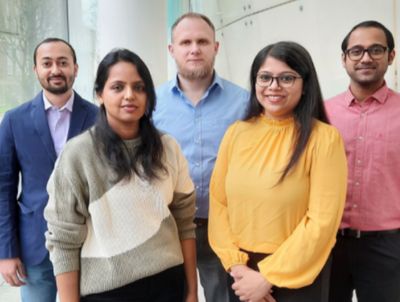
The competition helps develop the skills needed to move into corporate/public sector life The Grand Final took place in Liverpool where 10 teams from different universities competed for the title They were assessed on their team strengths and presented a one-minute pitch on a creative social business idea to an entrepreneur. A team of Aston MBA students has taken the top prize at the Universities Business Challenge (UBC) Global Masters 2022. Team GE7, which included Aishwarya Nagath Menon, Nashit Khalifa, Vasilijs Garbacevics, Divya Krisitipati led by Mithun Joy and mentored by Aston Business School’s Dr Julius Stephan, will receive a trophy on campus on 12 May. The competition offers postgraduate students a unique opportunity to develop the skills that you will need when moving into the working world and consists of 80 teams, drawn from a wide range of UK and Irish universities. The UBC Global Masters is a team-based business simulation event that provides participants with the opportunity to act as a board of directors, who have taken responsibility for improving the performance of a company. The finals took place in Liverpool where 10 teams from different universities, including two from Aston University, competed against each other tasked to run a simulated business under difficult trading conditions and also introduce an innovative idea to link the business to a social or environmental cause. The teams were assessed on their team strengths and presented a one-minute pitch on a creative social business idea to an entrepreneur. Mithun Joy, an Aston MBA student and team winner, said: “I am really proud to be part of the first Aston Business School team to win this competition. “It was a really competitive event against other universities, including the UBC's defending champion.” Clive Kerridge, course director at Aston Business School, said: “Although an Aston University MSc team made the podium in 2022, we are delighted to have our first ever winners of this excellent competition. “Taking part in the UBC Global Masters Challenge has been a great opportunity for our students to apply their theoretical knowledge to a complex, yet highly practical and topical business setting. “It allows for personal and professional development that is intellectually challenging and practically relevant, equipping participants with essential skills. Working in competitive teams enables peer to peer learning and interaction.” Find out more about the competition here.

Aston University expert to talk on gender diversity and inclusion at major cyber security event
The Ethnic Minority in Cyber (EMiC) network's flagship event is supported by the Department for Digital, Culture, Media and Sport Attendees will hear from inspirational speakers looking at current and future initiatives to increase diversity in the cyber sector Dr Anitha Chinnaswamy from Aston University will be presenting a talk on gender diversity and inclusion in cyber. An Aston University expert and founding group member of Ethnic Minority in Cyber (EMiC) is set to present a talk at a major cybersecurity event on 28 April 2022. The EMiC network's flagship symposium is supported by the Department for Digital, Culture, Media and Sport and will take place at Edgbaston Park Hotel in Birmingham. Attendees will hear from inspirational speakers looking at current and future initiatives aimed around increasing diversity in the cyber sector and will also be able to provide feedback into the initiative and policies going forward. The symposium will consist of a keynote speech, invited talks, panel sessions and round table workshops. Dr Anitha Chinnaswamy from the Cyber Security Innovation (CSI) Centre at Aston Business School will present a talk on gender diversity and inclusion in cyber and the outreach work of the Centre with schools to increase representation. Simon Hepburn, CEO UK, Cyber Security Council is the keynote speaker. The EMiC network, of which Aston University is a founding member, is a pilot network for Black, Asian and Ethnic Minority cyber academia, professionals and businesses, with the long-term aim of significantly improving representation across the cyber sector. Dr Anitha Chinnaswamy, lecturer in cyber security management at the CSI Centre at Aston Business School, says: “I am looking forward to speaking at such an important event about an ever-important topic in cyber. “While there is a growing cyber security skills gap and high shortage in the UK cyber sector, a recent survey found that only 17 per cent of cyber professionals are from ethnic minority backgrounds across all cyber roles. “The cyber sector remains relatively nondiverse in terms of gender. Just 16 per cent of the workforce across these firms is female, compared to 28 per cent in other UK digital sectors. “Those filling senior roles, typically with six or more years of experience, are particularly nondiverse across a range of characteristics including gender, ethnicity, disability and neurodiversity. “For example, just three per cent of senior roles are filled by women.” Aston University’s CSI centre, led by Professor Vladlena Benson, is the only female-led cyber security centre in the Midlands region and serves on the UK Cyber Security Council (UKCSC), alongside Simon Hepburn its CEO, to promote professionalism standards in cybersecurity. Professor Benson, director of the CSI Centre at Aston Business School, said: “Aston University CSI is actively involved in shaping diversity policy, such as with the launch of the NCS22 strategy in Birmingham and enabling the Cyber Explorer programme as a first schools’ engagement for girls from diverse backgrounds. “As ambassadors we are passionate about working towards closing the gender gap. This will help pave the way for a future of gender diversity, and hopefully other types of diversity, in the cyber security field. “Our work with female students in a highly diverse Midlands’ landscape highlights the challenges that are yet to overcome with the levelling up agenda.” To find out more about the event please visit the site here.


With an estimated 1.5-million faculty in the US and a near 50,000 growth in UK-based academics in the last decade (to 225,000), universities and colleges have a whole range of interests and expertise on offer. In fact, despite rumours to the contrary, academia is a large and growing global ‘industry’. If you’re responsible for external relations, communications, marketing, civic engagement, knowledge exchange - or any other aspect of external engagement or “connectedness” in a university or college - then the ability to choose which faculty experts you selectively promote and publicise can be a very tough assignment. I’ve had first-hand experience with this. I was once in that very position - trying to keep up with the opportunities and the expectations afforded by 800 academics at just the one mid-sized UK institution where I worked. With the benefit of that firsthand experience and having since worked with more than 100 higher education institutions in the UK, Europe and North America, here are a few observations and also a few tips on how to organize your expertise: Approach #1: The Focus on Expertise Clusters An approach taken by some universities nowadays is to promote their expertise as a group of “grand challenges” or “beacons of excellence” - drawing together as many areas of research expertise under (usually) three or four headings. While identifying “token clusters” of expertise for focus and prioritisation may seem logical, this approach doesn’t really work. It may help with internal politics but it fails to generate enough precision to be relevant to various communities such as the media and industry. Approach #2: Selectively Promoting Key Experts One trap that universities can also fall into is to focus on a small group of academics who appear to be more suitable to promote. The reasoning for this approach is often driven by the need to have a manageable number for internal communications/press office staff to work with. The easy route to take is to just work with academics who are more keen to work with comms staff in promoting their work and who are already at ease in speaking to the media. Selection of experts on these factors, while important, isn’t the optimal way to build up the profile for the institution with key audiences. First off, this approach often doesn’t yield the diversity that audiences such as journalists and potential student and faculty recruits want to see represented. This approach will also miss the mark if it just plays to popular disciplines or hot topics. Being more inclusive to promote a wider range of disciplines and specialized topics is better value all round. Approach #3: The Faculty “Expertise Audit” I’ve seen institutions make many mistakes in positioning their faculty as experts, given it’s a proven way to differentiate brand, build profile and reputation. That’s why I’ve started to work with several universities on what I refer to as a “faculty expertise audit”. This brings a more structured process that helps prioritize key areas of research expertise and identify specialist experts. The audit also looks at the resources and overall capacity that universities have available to support an “expertise marketing” program that optimizes all these elements to significantly boost performance. Start with The Business Case for Expertise At the heart of this more structured, targeted audit approach is ensuring you are generating “return-on-investment” and “value-for-effort.” A good starting point is to ask: Where is the budget coming from? Where is current and expected demand for your programs? When starting this assessment, you have to think longer than a year out. Instead, look very hard and in detail at the next three to five years (the typical cycle of research investment and university strategies) and identify which expertise is most likely to solve the problems and consequential explorations that governments, industry, benefactors/donors, and funding agencies will want to support. I’m not saying that research areas without such sizable levels of predicted investment should be ignored - far from it - but we are in a competitive climate and universities now have to secure ‘orders’ (for applied and contracted expertise) that will ensure institutional sustainability and success. In turn, that success will allow investment in other areas that are socially vital but financially a weaker bet as regarded by funding sources. Having proven where research funding is most available, pressing and externally directed, then the audit is designed to identify and match the institution’s research talent to these requirements. These audits involve shortlisting, enlisting and then coaching the appropriate academic experts. The best results come from one-to-one sessions with academics which create buy-in and yield a more detailed marketing plan to leverage your experts. While more inclusive, this is an efficient process designed to create a “shared roadmap” for where the university and the academic both want to take their expertise. A large part of this roadmap then covers off other important activities such as creating a more discoverable and engaging online presence with enriched academic profiles that perform far better than the traditional “faculty directory.” Keeping online academic profiles fresh, content-rich, jargon-free, and compelling makes the job of expert ‘mining’ so much easier. Developing a sustained program of content with an organized lead generation process is also necessary. These extra steps are where many universities miss the mark. The result is a significant loss of inbound opportunities for research grants, consulting revenues, academic collaborations as well as local and global media coverage. I recently spoke with a Vice Chancellor of a prominent UK University who admitted that they as an institution deserved a failing grade when it came to promoting their faculty research achievements, saying that he “doubted any of their academics would be happy with the way their work was being promoted online.” This is an important aspect of the faculty audit. As a consultative process, it is non-threatening and we’re listening to staff and academics. That not only enriches the information the University has to promote its brand better, it also helps to enlist the support of the academic community who see that the university cares and that it is getting their input to put together a plan – both for the university and for individual academics. The academic is happy (they understand the value for them personally and for their institution); the University is happy (it is able to focus and prioritise its expertise in an evidence-based manner), and Communications and press office staff are happy (they have so more to work with in connecting the work of the University to a variety of local and global communities). The Benefits of A Faculty Audit Having completed many of these, I’ve seen very clearly, the results of a well run Faculty Audit process that without exception yield an excellent return on investment. Here are just some of the benefits to consider: Greater Insights: Gain a deeper understanding of the hidden strengths and opportunities within your academic ranks. Better Planning: A detailed report from a Faculty Audit enables a more strategic approach to planning where faculty research and expertise can support various programs within the University - such as industry engagement, media coverage and recruitment. Building Trust: When conducted by a third-party, a Faculty Audit is seen as more credible and less prone to perceptions of internal bias. More Engaged Faculty: Increased collaboration with faculty is gained through a more consultative process that builds “shared awareness” and enables more proactive support of their research. Increased Capacity: Producing more proactive content with faculty yields better results in terms of media coverage, research engagements, etc. Demonstrate Diversity: A better understanding of expertise that goes beyond the “usual suspects” to engaging a more diverse set of faculty to promote the University. News Coverage: Positioning your faculty and their research in a more relevant way aligns with the interests of the outside world and what's on the mind of outsiders. Less Stress: A more proactive, well structured plan helps everyone to synchronise activities better versus scrambling too much to meet deadlines in the “here and now.” Is a Faculty Audit Right for Your Institution? Here are some key considerations when evaluating the value of a Faculty Audit for your institution. You are ideally suited to undertake a faculty expertise audit if: You have a stretched workload where there's little capacity for proactive comms. You're tending to turn to the same academics for expert commentary in the media or elsewhere. You tend to get complaints (or mild mutterings) about not supporting academics enough. You don't have time to get to know the range of academic experts in your institution - especially new arrivals or eager early career academics. You've adopted an 'inside out approach' rather than one that engages with the interests of the outside world and what's on the mind of outsiders. There's weak management of expectations with the academic community - and a need for clarity and shared pathways for publicity. You're operating too much in the here and now and don't have the time to plan for future events, milestones and opportunities. You want to be more strategic in your comms and engagement - and make a real difference via attracting interest, income and investment. You don't have an integrated approach to comms (where content can be repurposed and recycled). You want more global reach and presence and can exploit digital tools to enable this. Additional Resources Academic Experts and the Media (PDF) This report, based on detailed interviews with some of the most media-experienced academics across the UK and United States draws on their experiences to identify lessons they can share in encouraging other academics to follow in their path. Download the UK Report Here Download the US Report Here The Complete Guide to Expertise Marketing for Higher Education (PDF) Expertise Marketing is the next evolution of content marketing. Build value by mobilizing the hidden people, knowledge and content you already have at your fingertips. This win-win solution not only gives audiences better quality content, but it also lets higher ed organizations show off their smarts. Download Your Copy Click Here for Additional Resources



Aston University sets Meritics on course to become market leader in the bio-pharmaceutical sector
Aston University has completed a knowledge transfer partnership with Meritics Ltd to develop the company’s capability and underpinning knowledge to measure the size, concentration and distribution of biological entities, such as liposomes and exosomes, using proprietary particle analysers. The project will enable Meritics to enter the fast-growing biologics sector with their particle analysis instruments and services to significantly increase company turnover. It represented a significant change in direction for the company and focused on systems that would have the largest impact. Results provided Meritics with significant data and proof-of-concept applications required to widen the company’s product range into the biological market. It also broadened the company’s knowledge of biological applications and helped bridge gaps between the areas of interest and the limitations of the analysers. Meritics Ltd supplies and provides service support for a range of particle characterisation instrumentation to industrial, research and academic institutions in the UK. Additionally, it offers a range of consumables, analysis services and consultancy. A knowledge transfer partnership (KTP) is a three-way collaboration between a business, an academic partner and a highly qualified graduate, called a KTP Associate. The UK-wide programme helps businesses to improve their competitiveness and productivity through the better use of knowledge, technology and skills. Aston University is the leading KTP provider within the Midlands. The project was led by Dr Alice Rothnie and Dr Alan Goddard from Aston University’s Aston Centre for Membrane Protein & Lipid Research (AMPL), a specialist research group with a track record of biological particle characterisation. Dr Rothnie has over 14 years of experience working with liposomes, viral and cellular systems, while Dr Goddard brought over a decade of experience in biological membranes and nanoparticles ¬– mainly focusing on liposomes. Also working on this partnership as KTP Associate was Dr Megan Cox, whose proven expertise in biochemistry drove the innovation and research behind the project. Following the completion of the project, Dr Cox has been employed by Meritics as a Technical Specialist, using biological expertise to assess instrument parameters for biological entities. Brian Miller, founding managing director of Meritics, said: “The project has sped up the company’s plan to move into more biological application areas and widen our customer base. Aston University’s extensive knowledge in biology and biological entities is crucial for our wider sales and technical staff and provided invaluable visibility of the biological markets”. Dr Alan Goddard said: “Working in partnership with Meritics has allowed us to transfer our extensive experience of biological particles into industry. We have formed an exciting partnership which has continued past the end of the formal project, enabling cutting-edge research to be performed at Aston using the latest equipment.”


New research to help manage excessive weight gain in patients being treated with antipsychotics
New research led by Dr Gurkiran Birdi and Dr Ian Maidment in the College of Health and Life Sciences at Aston University will explore ways of managing excessive weight gain in patients being treated with antipsychotics for mental health illnesses such as schizophrenia. The project, known as RESOLVE and funded by the National Institute for Health Research (NIHR), will study non-pharmacological interventions for antipsychotic-induced weight gain in people living with severe mental illness (SMI) by working directly with patients to understand and explain how, why, for whom, and in what contexts non-pharmacological interventions could help service users to manage antipsychotic-induced weight gain. Antipsychotics are widely used in the treatment of schizophrenia and other severe mental illnesses (SMI). Over the last 20 years, the first generation of antipsychotics has been replaced by the newer second generation of antipsychotics. There are over 220,000 people being treated for schizophrenia in the UK at any one point in time. Up to 80% of people with schizophrenia or bipolar disorder are overweight or obese. Weight gains of up to 33kg have been reported with antipsychotics. This weight gain has devastating consequences: life expectancy is reduced by 20 years in people with schizophrenia, partly related to the consequences of this weight gain. Diabetes has been reported to be a major issue with second-generation antipsychotics. In RESOLVE - which includes partners from University of East Anglia, Oxford, Cambridge, Birmingham Universities, the NHS and the McPin Foundation - the researchers will combine literature what has been written about the subject. The team will also interview volunteers, both people who have suffered from the weight and healthcare staff involved to understand their lived experience of weight gain. We also want to find out what works to help manage weight. At the end of the project, the team plans to develop guidance for service users and practitioners on the best ways to treat and manage weight gain. Dr Ian Maidment, reader in clinical pharmacy and lead researcher, said: “Prior to moving to academia, I spent 20 years working in mental health services. This is a really important issue, I have seen patients literally “balloon” weight with their weight increasing from 80 to 120kg. We need to find better ways to help them.” One member of the RESOLVE Lived Experience Advisory Group said: “The RESOLVE study could provide a tailored solution to my antipsychotic weight gain, that could benefit my unique needs as an individual. I have found that weight gain from taking anti-psychotics has been a real health problem. I find that this is often ignored or stigmatized by friends, family and healthcare professionals. Added to which there seems to be no currently available solution that works”.


Aston University professor made deputy lieutenant for the West Midlands
Professor Monder Ram has been recognised for his work around ethnic minority entrepreneurship Six individuals have been given the honour for contributing significantly to either national life, to their local communities – or both He will support the Lord-Lieutenant in several ways including attending on Royalty during official visits to the County. The Lord-Lieutenant of the West Midlands, John Crabtree OBE, has announced the appointment of an Aston University professor as a deputy lieutenant for the West Midlands. Six individuals, whose backgrounds range from music to education, entrepreneurship, and tackling homelessness, have been given the honour for contributing significantly to either national life, to their local communities – or both. Professor Monder Ram, director of the Centre for Research in Ethnic Minority Entrepreneurship (CREME) at Aston University, has been recognised for his work around ethnic minority entrepreneurship. The new appointees will support the Lord-Lieutenant, Her Majesty’s personal representative in the West Midlands, in several ways including attending on Royalty during official visits to the County, representation at citizenship ceremonies, supporting the armed forces of the Crown particularly the reserve and cadet forces, encouraging charitable and voluntary work and local initiatives to benefit the community, as well as promoting and encouraging nominations for Honours and Queen’s Awards for the County of the West Midlands. Professor Monder Ram, director of the Centre for Research in Ethnic Minority Entrepreneurship (CREME) at Aston University, said: “I am delighted and honoured to be appointed a Deputy Lieutenant for the West Midlands region. This role will provide an invaluable opportunity for me promote the importance of diversity, inclusion and enterprise, which are central to my work at CREME.” The West Midlands Lieutenancy comprises Birmingham, Coventry, Dudley, Sandwell, Solihull, Walsall and Wolverhampton. It was established in 1974. John Crabtree OBE, the Lord-Lieutenant for the West Midlands and Aston University honorary graduate, said: “The six appointments came at a pivotal time for the West Midlands which this year is on the national and world stage with Coventry as UK City of Culture and the region hosting the Commonwealth Games in July and August - as well as participating fully in the Queen’s Platinum Jubilee. The West Midlands is this year welcoming visitors from throughout the world and the West Midlands Lieutenancy is committed to supporting and representing every community in the County.”


Aston University psychologists to take part in major study to improve concussion prognosis
Researchers from the Aston Institute of Heath and Neurodevelopment, in the College of Health and Life Sciences at Aston University, are taking part in a major multiple partner study to identify new ways to accurately predict whether patients will develop long-term complications as a consequence of concussion. Experts from the University of Birmingham and the Defence Medical Rehabilitation Centre, in collaboration with Defence Medical Services, are to lead the UK consortium carrying out the study. With year one funded by the Ministry of Defence (£2m) and projected to run over eight years, the multi-faceted study will include a trial involving 400 civilians and 400 military personnel aged over 18 with a new diagnosis of concussion (also known as a mild traumatic brain injury or mTBI) which has resulted in them needing hospital treatment or rehabilitation. At specific time intervals over two years, the participants will take part in nine different areas of research using a variety of medical techniques and assessments to establish if these can be used routinely by medics as ‘biomarkers’ to indicate prognosis and long term impact of concussion. Medical techniques and assessments being trialled include brain imaging and function, analysis of blood and saliva samples, and headache measures, as well as mental health, vision, balance, and cognitive performance. mTBI is common and has been declared a major global public health problem, with 1.4 million hospital visits due to head injury annually in England and Wales - 85% of which are classified as mTBI. It is also estimated that up to 9.5% of UK military personnel with a combat role are diagnosed with mTBI annually. The research will involve 20 University of Birmingham experts working across disciplines, including neurology, psychology, sports medicine, mathematics and academics within the University’s Centre for Human Brain Health, and will be coordinated by Birmingham Clinical Trials Unit. It will also be driven by experts at the Defence Medical Rehabilitation Centre Stanford Hall; Imperial College London; University of Westminster; University of Nottingham; Royal Centre for Defence Medicine; and University Hospitals Coventry & Warwickshire. Dr Caroline Witton, reader in psychology and scientific lead for magnetoencephalography (MEG) at the Aston Institute for Health and Neurodevelopment (IHN), Aston University said: "I am very excited to be part of this landmark study of traumatic brain injury. At IHN we are focussed on improving lives through brain imaging and this work has the potential to help the thousands of people each year who suffer long term disability following a concussion." Dr Jan Novak, lecturer in psychology and MRI lead at Aston University said: "It is outstanding that this prestigious work is being conducted at Aston University’s Institute of Health and Neurodevelopment. We will provide our expertise in brain imaging, prediction of outcomes in patient groups, and credentials in mTBI research to enrich the study. It is hoped that it will build upon existing collaborations with other local institutions and government bodies such as the Ministry of Defence." Alex Sinclair, professor of Neurology at the University of Birmingham and chief investigator of the mTBI-Predict project explained: “Although classified as mild, and many recover, the consequences of concussion can be profound with many patients suffering long-term disability due to persistent headaches, fatigue, imbalance, memory disturbance, and poor mental health including post-traumatic stress disorder, while it can have a significant impact on the economy through loss of working hours and demand on the health system. Identifying those patients most at risk of these disabling consequences is not currently possible. There is therefore a pressing need to develop accurate, reproducible biomarkers of mTBI that are practical for use in a clinical setting and can predict long-term complications. "Our programme of research will deliver a step change in the care of patients with mTBI, enabling a personalised medicine approach to target early intervention for those most in need but also identifying those with a good prognosis who can return rapidly to activities of daily living.” Co-Chief Investigator, Air Vice-Marshall Rich Withnall QHS Director of Defence Healthcare, UK Ministry of Defence said: “I am delighted that the Defence Medical Services, including the Defence Medical Rehabilitation Centre at Stanford Hall, will be working hand-in-glove with class-leading civilian colleagues and the National Rehabilitation Centre Programme. I fully support this ground-breaking research which I am confident will lead to significant clinical innovation to benefit military and civilian patients and have a translational positive impact for sporting activities from grass-roots to elite levels.” Chief Executive of Headway, Peter McCabe said: “We know that even a seemingly minor head injury can have a major impact on a person’s life – and often the lives of those closest to them. This is particularly the case if the brain injury goes undiagnosed or its effects are mistaken for other conditions. The frustration of not having an accurate diagnosis or receiving the right support can be compounded by the lack of a clear recovery pathway or timeline. We therefore welcome this study in the hope that it can advance our understanding of concussion and mTBI.”


Melatonin’s role in protecting the heart – the evidence so far
Many people know of melatonin as the sleep hormone – and, indeed, that’s what most of the research on melatonin has focused on. However, melatonin is also an antioxidant, protecting cells from harmful “free radicals” that can damage DNA – and this includes protecting cells in the heart and blood vessels. Given that heart disease is the leading cause of death in the world, killing around 17.9 million people each year, this action is of particular interest to researchers. Research shows that people with cardiovascular disease have lower levels of melatonin in their blood compared with healthy people. And there is a strong inverse relationship between melatonin levels and cardiovascular disease. In other words, the lower a person’s melatonin level, the higher their risk of cardiovascular disease. Melatonin supplements (2.5mg taken one hour before sleep) have been shown to reduce blood pressure. And, of course, high blood pressure (hypertension) is a known risk factor for cardiovascular disease. Also, so-called cardiovascular events, including heart attacks and sudden cardiac death (unexpected death caused by a change in heart rhythm), occur at a higher rate in the early morning when melatonin is at its lowest. These studies strongly suggest that melatonin protects the heart and blood vessels. Importantly, patients who have had a heart attack have reduced nighttime melatonin levels. This observation has led to the theory that melatonin may be able to improve recovery from a heart attack and form part of the standard treatment given immediately after a heart attack occurs. Laboratory studies of heart attack (using rats’ hearts kept alive outside of their bodies) have shown that melatonin does indeed protect the heart from damage after a heart attack. Similar studies have shown that when rats’ hearts are deprived of oxygen, as occurs in a heart attack, providing the heart with melatonin had a protective effect. Evidence less certain in people In humans, the evidence is less clear. A large trial where melatonin was injected into patients’ hearts after a heart attack showed no beneficial effects. A later analysis of the same data suggested that melatonin reduced the size of damage caused to the heart by being starved of oxygen during a heart attack. And a similar clinical trial suggested no beneficial effects of giving melatonin to people who had suffered a heart attack. So the evidence is contradictory and no clear picture of melatonin’s role in helping to prevent damage to the heart during a heart attack has emerged so far. It has been suggested that giving melatonin orally after a heart attack, rather than directly to the heart, could explain the contradictory findings in clinical trials. Trials looking at the effect of melatonin on heart attack are still in the relatively early stages, and it is clear further studies are needed to look at how and when melatonin could be administered after a heart attack. However, it is clear that melatonin levels decline as we get older, and this may lead to an increased risk of heart disease. As melatonin pills are only available on prescription in the UK, EU and Australia, melatonin levels can’t be topped up with a supplement – as can be done with other hormones, such as vitamin D. Ultimately, eating a diet that contains foods rich in melatonin, such as milk, eggs, grapes, walnuts and grains, may help protect you from cardiovascular disease. Melatonin is also found in wine, and some suggest that this may explain red wine’s heart-protective effects.