
Experts Matter. Find Yours.
Connect for media, speaking, professional opportunities & more.
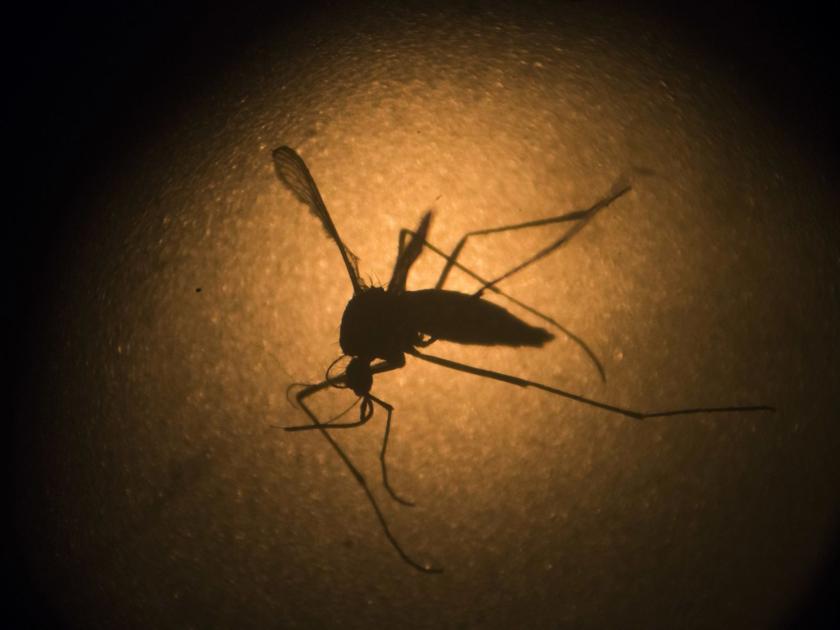
Is there a threat of contracting Zika from mosquitoes in Missouri?
Since it was discovered that the Zika virus has been transmitted by local mosquitoes in Miami, Florida, many people across the country have become increasingly concerned about getting bitten by a mosquito. But Missourians need not worry for now as probability of contracting Zika from mosquitoes in the state are low, according to Dr. David Claborn, Missouri State University associate professor of public health. As part of a contract from the Missouri Department of Health and Senior Services (DHSS), Claborn and his team of researchers have traveled across the southern part of the state since June, trapping mosquitoes at parks and wrecking yards, and studying them to see if any are Aedes aegypti (also known as the Yellow Fever mosquito), which is the primary vector of Zika. The collection of larvae and adult mosquitoes from different parts of the state are completed for this year and so far no specimens of Aedes aegypti have been found. Source:


"There's a lot of potential implications here. On the one hand, you know, it's somewhat troubling because we know that social connections tend to promote mental and physical health. So to the extent that wealthier people are spending less time attending to those relationships, this could have negative implications for physical and mental well-being," says Emory's Emily Bianchi. Source:



Erika James, Dean of the Goizueta Business School, studied at the University of Michigan and is a renowned researcher and speaker on the topic of Crisis Leadership -- What went wrong in Flint? Source:

Eastern University Experts Available to Discuss Pope's Proposed Reforms to Catholic Youth Ministries
Eastern University's Duffy Robbins is available to comment on Pope Francis' recent calls to reform Salesian youth ministries. Source:



Experts Available to Provide Commentary on Discovery of Breast Cancer "Trigger"
Experts from Cancer Care Ontario are available to provide commentary on the discovery of the influence that immune cells called macrophages have upon the spread of cancerous cells. Source:



Experts Available to Talk About Chinese Influence in the South China Sea
Auburn University Montgomery has experts available to provide commentary on current tensions in the South China Sea. Source:






Expert Perspective: From Texas to the World: The Energy Lesson Emerging From the Iran War
As global markets feel the ripple effects of the Iran war, a recent Fort Worth Star-Telegram feature highlights a critical lesson emerging from Texas: energy resilience depends on diversification. Drawing on more than two decades of policy, infrastructure investment, and market-driven growth, the state has built one of the most robust and flexible energy systems in North America - one that blends traditional fossil fuels with rapidly scaled renewable sources like wind. Dr. Mike Slattery of Texas Christian University’s Ralph Lowe Energy Institute points to Texas as a case study in how diversified energy systems can withstand extreme pressure - from geopolitical shocks to record-breaking demand. The state’s ability to avoid emergency conservation alerts, even during peak stress periods, reflects long-term strategic decisions and market alignment rather than short-term fixes. "Texas’s energy story is one of scale and speed," says Slattery. "The state’s grid operator, ERCOT, now manages roughly 90% of the state’s electrical load, and in the first nine months of 2025, that grid saw the fastest demand growth of any in the United States, up 23% compared with the same period in 2021. Wind and solar together met 36% of that surging demand, with utility-scale solar generating 50% more electricity than the prior year. Wind capacity, meanwhile, has grown from just 116 megawatts in 1999 to more than 40,000 megawatts today. Battery storage is now doubling year over year. These aren’t incremental gains. I believe they are the fingerprints of a system deliberately built to flex. One number really tells the story. About 90% of projects lined up for connection to the Texas grid are wind, solar, or battery storage. This reveals where investors believe the fastest, cheapest growth lies." Professor Mike Slattery is Director of the Institute for Environmental Studies and Lead Scientist on the TCU-Oxford-Nextera Wind Research Initiative at Texas Christian University. View his profile The Texas system didn’t emerge by accident. It was built in two deliberate stages. In 1999, Texas enacted one of the country’s first Renewable Portfolio Standards, a market signal that set a direction and let private capital follow. The state blew past its 2025 renewable energy target by 2009, sixteen years early. The second stage was infrastructure. The Competitive Renewable Energy Zones project — a nearly $7 billion transmission investment — physically connected wind-rich West Texas to the population centers in the east, building over 3,500 miles of high-voltage lines before developers were even required to commit. Policy led (interestingly, Republican policy) and then investment followed. "For policymakers watching global energy markets destabilize in real time, my read on the Texas model is direct: diversification isn’t an environmental argument — it’s a security argument. The lesson isn’t to replicate Texas, but to absorb its logic. Build transmission infrastructure ahead of demand. Set policy direction without picking winners and not based on ideology. And resist the temptation to anchor a grid to any single fuel source, because a grid with one input is a grid with one vulnerability." For journalists covering global energy volatility, supply disruptions, or the long-term implications of conflict, this story underscores a larger truth: resilience isn’t built overnight. It’s the result of sustained investment, policy alignment, and a willingness to embrace multiple energy pathways, lessons that are increasingly relevant as countries around the world scramble to stabilize supply and control costs.



Inside the Partnership Between Texas Christian University and Taylor Sheridan’s Four Sixes Ranch
A unique partnership between Texas Christian University and the legendary Four Sixes Ranch is giving students hands-on experience helping shape the future of one of the most recognizable brands in the American West. Recently featured at a major national rodeo event, the ranch’s newly designed retail booth, created by TCU faculty and students, blends heritage-inspired design with modern merchandising, reflecting the ranch’s growing national profile under the ownership of Taylor Sheridan and Nicole Sheridan. “We’re now written into the history of the Four Sixes Ranch.” The collaboration spans fashion merchandising, branding and business strategy, allowing students to contribute directly to product development, retail design and digital marketing initiatives. For students involved, the project offered a rare opportunity to see classroom ideas become real-world products tied to an internationally recognized Texas brand. Faculty members say the partnership reflects TCU’s focus on experiential learning while helping preserve and evolve an important piece of Texas cultural identity. Check out the video TCU and Four Sixes Ranch, and you can read more about this project in the full article below: Looking to connect with Chares Freeman, Kevin Smith, Nicole Bettinger or Rima Shrestha about this exciting project? Simply contact Holly Ellman, Associate Director of Communication, at h.ellman@tcu.edu today.