Experts Matter. Find Yours.
Connect for media, speaking, professional opportunities & more.
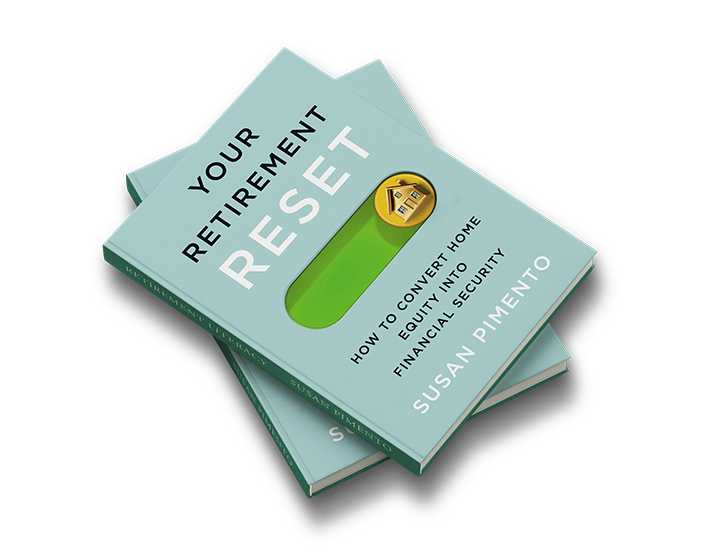
MEDIA ADVISORY: Your Retirement Reset Book
Cover art has been finalized and Your Retirement Reset (ECW Press) is now heading to print ahead of its September 8, 2026 release date. Pre-orders are now available on the ECW Press website. Written for Canadians navigating the realities of modern retirement — and the adult children supporting them — Your Retirement Reset delivers a clear, practical roadmap for converting home equity and other assets into lasting financial security. It tackles the defining challenges of today's retirement landscape: longer lifespans, eroding purchasing power, vanishing pensions, and the near-universal desire to age in place. Susan Pimento brings decades of experience in the financial industry to a conversation that's long overdue — one that goes beyond saving to address how Canadians can strategically and safely spend what they've built. Susan Pimento is available for media interviews and speaking engagements. To arrange, contact: Jennifer Smith ECW Press jsmith@ecwpress.com



Remembering the Ludlow Massacre of 1914
Mary Anne Trasciatti, Hofstra University’s director of the Labor Studies Program and professor of rhetoric, is referenced in an article on the website Counter Punch about how a dispute for fair wages and safer working conditions led to the 1914 massacre of 25 miners and family members in Ludlow, Colorado. The author, Robert Forrant, notes that he and Dr. Trasciatti co-edited “Where Are the Workers,” a collection of essays written by labor historians and archivists that explore nationwide efforts to bring the history of labor and working people into mainstream narratives of U.S. history. The Ludlow Massacre, he says, is one of the most dramatic and deadly of those stories.



April 1st is the one day we all expect to be fooled. Scammers are counting on the other 364
Breaking News: Free Cruise for All Retirees! Congratulations!!! If you are reading this, you have just been chosen for a luxury Caribbean cruise, a $5,000 shopping spree, and a lifetime supply of… well, something vaguely exciting. All you need to do is: Click this link, enter your banking info, confirm your SIN, and maybe your childhood pet's name for good measure. Still reading? Good. Because if that opening gave you even the tiniest thrill, the little flutter of wait, really? You've just experienced exactly what scammers are counting on. APRIL FOOL'S!!! And also: welcome to the world of phishing. Population: way too many of us. Phishing vs. Fishing: A Retirement Skill You Didn't Know You Needed There are two kinds of fishing in retirement. One involves a dock, a thermos of good coffee, and no deadlines at all. The fish might or might not cooperate. That's fine. That's the whole point. The other scenario involves someone trying to steal your identity by congratulating you on a cruise you never booked, a prize you never won, and a windfall that demands your banking details, your SIN, and, just for fun, the name of your first pet. (Buttons. It's always Buttons.) Let's make sure you're fluent in the first kind and bulletproof against the second. Fraud Doesn't Just Happen to Fools Here's something important to say aloud before we proceed. Fraud isn't caused by people being careless, gullible, or old. It is orchestrated by professionals whose full-time job is to manipulate human behaviour under pressure. There is a clear difference between these two, and how we discuss fraud influences whether victims come forward or stay silent out of shame. This issue is more significant than most realize. Canadians lost over $638 million to fraud in 2024, an increase from $578 million the previous year, according to the Canadian Anti-Fraud Centre. However, that figure only tells part of the story. The CAFC estimates that just 5 to 10 percent of total fraud losses are ever reported. Think about that for a moment. The number we see is already staggering, and the real total is almost certainly ten times higher. Seniors make up a disproportionate share of those losses, especially in investment fraud, romance scams, and the grandparent scam. But here's the part the statistics don't show: fraud is improving at its craft. These aren't the poorly written emails of 2005. Today's scams are refined, patient, and psychologically targeted. They're designed to create urgency, confusion, and fear — aiming to override careful thinking precisely when it's needed most. So let's talk about what that actually looks like. A Very Personal Fraud Story That Will Stay With You A family reached out to me recently, after reading one of my earlier posts on fraud and seniors. Their father had been the victim of a prolonged scam, one that unfolded over months and caused significant financial damage. They only found out after he passed away. Three things about this story stopped me cold. First, their father kept meticulous records. He journaled every interaction, every step, every decision. There was essentially a play-by-play account of how he became entangled and how difficult it became to find a way out. Second, he was an intensely private person. Not a single family member knew any of it was happening while it was happening. Third, he was a chartered professional accountant. Decades of financial training, discipline, and experience. Someone who understood numbers, risk, and how money moves better than most people ever will. And still. Under the right conditions, with the right psychological pressure applied at the right moments, he was drawn in. That is not a story about a foolish man. That is a story about how sophisticated fraud has become. And it is a story that is playing out in living rooms and email inboxes across this country every single day. Why Seniors Are Targeted (And It's Not What You Think) Scammers don't just go after older adults because they think we're naive. They go after us because we have assets. Savings. Home equity. Good credit. Pension income that actually shows up every month. We're not easy targets; we're valuable ones. They also go after us because retirement can come with conditions that fraud is specifically designed to exploit: financial anxiety about making savings last, changes in how we process decisions under pressure, and, for many, reduced opportunities to run something by a trusted person before acting. Social isolation is not a character flaw. It is a vulnerability, and the people running these operations know exactly how to use it. The Scams You Actually Need to Know About The Grandparent Scam. You get a call. It's your grandchild. They're in trouble, arrested, in an accident, stranded, and they need money right now. Please don't tell Mom and Dad. The caller may not even sound exactly right, but panic has a way of filling in the gaps. Sometimes a fake lawyer or police officer jumps on the line to add credibility. The script is designed to bypass your rational brain and go straight for your heart. If this ever happens: hang up. Call your grandchild directly on a number you already have. Every time. The CRA Impersonation Call. This one is especially popular at tax time. An official-sounding voice informs you that you owe back taxes and if you don't pay immediately via e-transfer or gift cards, a warrant will be issued for your arrest. The Canada Revenue Agency does not call you out of the blue demanding gift cards. Full stop. If you're ever unsure, hang up and call the CRA directly as 1-800-959-8281. The Romance Scam. Someone finds you online, charming, attentive, almost too good to be true. Weeks or months in, a crisis emerges. Could you help, just this once? These scams are emotionally brutal and financially devastating. If an online relationship moves unusually fast and a financial request follows, that's not love. That's a script. The Investment Opportunity. Guaranteed returns. Exclusive access. Limited time. These words belong together the way "healthy" and "deep-fried" don't. Legitimate investments don't come with countdown clocks. Phishing Emails and Texts. These mimic your bank, Canada Post, Service Canada, Amazon, and anything you'd recognize. They look almost right. The email address is a little off. The link goes somewhere slightly wrong. They want you to click, to enter information, to act now before something bad happens. The urgency is the tell. No Shame. Seriously. None. If this has happened to you, or someone you love, please hear this: falling for a scam does not mean you are getting old, losing it, or slipping cognitively. It means you are human and were placed under carefully engineered psychological pressure by someone who practices this for a living. That is it. The end. And if you need a reminder that this crosses every age and profession, consider the case of a retired district court judge who lost the equivalent of over $100,000 to a digital arrest scam. Fraudsters called claiming his phone number was linked to a trafficking investigation. Despite decades on the bench watching deception unfold in real time, fear and intimidation did what all that professional knowledge could not protect against. A judge. Still got hooked. That is what these scams do when they are built well. (Source: Devdiscourse) RCMP Sergeant Guy Paul Larocque of the Canadian Anti-Fraud Centre puts it plainly: "Fraudsters are professional salespeople who work a target until they close the deal and get their money." That framing matters. You would not blame yourself for being sold something by a skilled salesperson operating under false pretenses. This is no different. The embarrassment is real and completely understandable. However, it does not fairly reflect what occurred. The CAFC has pointed out that many individuals feel ashamed of being victims of fraud and hesitate to report it, but every report helps break up fraud schemes and protect others. Reporting to the Royal Canadian Mounted Police is not a sign of failure; it is a vital way to safeguard the next person. A Word to Family Members re: Fraud: Drop It Like It's Hot If someone you care about has been scammed, put down whatever you are holding, take a breath, and read this carefully. Do not scold them. Do not lecture them. Do not "grandsplain" them into the ground. Grandsplaining, for the uninitiated, is mansplaining for the aged, and it is just as unwelcome. Nobody needs a slow, patient, thoroughly detailed breakdown of everything they should have done differently while they sit there wishing the floor would open up and swallow them whole. They already know. They feel terrible. They have probably been replaying every moment of it since it happened, asking themselves how they missed it, why they trusted it, and what they were thinking. What they do not need is you asking those same questions out loud. Your role at this moment isn't to be the smartest person in the room. It's not to claim you would never have fallen for something like this. And it's certainly not to start a sentence with "well, I always said you should..." because if you finish that sentence, you're on your own. Your job is to be kind. Full stop. Help them contact the bank. Sit with them while they file the report. Make the tea. Handle the phone call they are too rattled to make. Be the calm in the room. That is what love looks like in a crisis, and this is a crisis. Now here is the part where the tables turn, so pay attention. Scammers are not ageist. They are not sitting in a room somewhere saying, "Let's only go after the over-65s today." They go after anyone with money, a phone, and a moment of distraction. Which means they go after everyone. Your inbox is not immune. Your judgment under pressure is not immune. Your "I would never fall for that" confidence is, frankly, exactly the kind of thing scammers count on. Fraud can happen to anyone, and sharing your experience with others, whether or not money was lost, can help prevent them from being victimized by the same or a similar fraud. Nobody is too sharp, too young, or too digitally savvy to be targeted. The call is coming for all of us eventually. So when it comes for you, and you call your mother in a panic, wouldn't you rather she answer with warmth instead of a very long "I told you so"? Be nice to her now. Consider it an investment. One day, she might be the one sitting you down for "the talk." And at that point, the only appropriate response is to make the tea and keep your opinions to yourself. What the Experts Say: Practical Tips to Stop Fraud In my book "Your Retirement Reset" (ECW Press: Now available for Pre-Order here), I cover the topic of fraud and scams." I wanted to address this issue in depth because fraud prevention is not a footnote in retirement planning. It belongs front and center. Here is an excerpt of Chapter 9 of the book: "Remember the old saying, 'Nothing ever comes free'? While it is hard for many seasoned Canadians not to trust a caller, unfortunately, that's the way of the world today. Here are some tips for protecting yourself. Be skeptical. Be wary of unsolicited phone calls, emails, or messages, especially those asking for personal information or money. Don't take their word for it. Ask the person for their details. If they say they are calling from your bank, get their name and branch number and call your bank for verification. If the message is in an email, contact the institution identified in the email. Do not respond right away, ever. Don't share personal information. Never share personal, financial, or health information with unknown individuals or organizations. Consult trusted individuals. Discuss suspicious offers or communications with family members, friends, or trusted advisors. This is especially important if you are asked to donate to a charity or make any kind of financial investment. Use technology wisely. Install antivirus software, create strong passwords, and stay alert to phishing tactics such as harmful links in texts or emails. Use the block feature on your phone to cut off repeat callers you suspect are fraud artists. Work closely with your financial institution. Ask your bank to send alerts for any unusual activity on your account. Review your statements every month and report unauthorized transactions immediately. Report suspicious activity. If you suspect a scam has targeted you, contact the police. Stay informed. Keep up to date on prevalent scams aimed at older adults. A quick Google search on any unsolicited information request can often tell you whether it has already been flagged. These scams are frequently reported to authorities and featured in the media and on consumer advocacy websites." How to Stay Off the Hook When It Comes to Fraud A little friction can be helpful. Scammers depend on speed, on you reacting before you think. The best thing you can do is slow down. Avoid clicking links in unexpected messages; instead, go directly to the company's website by typing it yourself. Call back on a number you find independently, not one provided in the suspicious message. Check email addresses carefully, as a transposed letter can sometimes be all it takes. Keep your devices updated, since those updates fix real vulnerabilities. Discuss these topics openly. With your kids, friends, book club, or the person behind you in the coffee line. Scams flourish in silence and shame. Talking honestly is one of our strongest protections. In retirement, urgency belongs in spin class. Not your inbox. What to Do If You Took the Bait No judgment here. These scams are truly sophisticated. Smart, experienced, financially educated people fall for them, as we've just established. If you think you've been scammed, stop engaging immediately, change your passwords, contact your bank to flag or freeze your account, run a security scan on your device, and report it to the Canadian Anti-Fraud Centre at 1-888-495-8501. Reporting matters even if you cannot recover the money. It protects the next person in line. Think of it as cutting the line before the fish swims off with your whole tackle box. 3 Things Worth Setting Up This Week to Protect Yourself from Fraud These take 20 minutes and quietly protect you around the clock. Two-factor authentication (2FA) adds a second verification step. It's usually a text code. And it helps ensure that a stolen password alone won't give access to your accounts. Credit Card controls allow you to lock and unlock your debit or credit card instantly through your bank's app, so if something seems suspicious, you can freeze it within seconds. Real-time alerts enable you to set notifications for any transaction over a threshold you specify, so if someone is spending your money, you are informed immediately, rather than finding out at the end of the month when the damage is already done. Don't Get Hooked by Fraud. Retirement should be about freedom. The freedom to fish from a proper dock, travel somewhere warm, and spend your money on things that truly bring you happiness. It's not meant to involve fake urgency, suspicious links, or people who want your SIN and the name of your childhood cat. We Need to Do More to Protect Seniors The fraud prevention system in this country, to be frank, hasn't kept pace with the rise of fraud itself. That gap is real, it's growing, and it needs more attention than it currently gets. Meanwhile, the best we can do is stay informed, keep in touch with trusted people, and not let embarrassment prevent us from seeking help or reporting what happened. You worked hard for what you have. You deserve to enjoy it without looking over your shoulder. So enjoy the lake. Take the cruise — a real one that you booked yourself. Spend wisely, live well, and protect what's yours. And if anyone ever tells you that you've won something you never entered? Smile. Wish them a Happy April Fool's. Then hang up. Have a scam story, a close call, or thoughts on what fraud prevention is getting right or getting wrong? I would love to hear from you. Drop it in the comments or send me a note. This is exactly the kind of conversation we should all be having, and the more real experiences we share, the better equipped we all are to protect each other. Sue Don't Retire…ReWire! My Book is Now Available for Pre-Order If this message speaks to you, or to someone you love, I hope you will pre-order a copy of Your Retirement Reset. Available September 8, 2026. Here's the link. And if you love supporting Canadian booksellers, please also check with your local independent bookstore. Most can easily order it for you.

When individuals sign up for direct-to-consumer genetic testing, the extent to which they ever think about their genetic data is likely in the context of the service for which they paid: information on predisposition to a genetic illness, or confirmation of an ethnic background, for example. But that data doesn’t just sit on a shelf, and while the most mainstream concern for such services is the privacy of your data, there is also the question of what else the companies do with it, and how. Ana Santos Rutschman, SJD, LLM, professor and faculty director of the Health Innovation Lab at Villanova University Charles Widger School of Law, is particularly interested in the latter. In June 2025, she co-authored an amicus brief centered on data protection and patient’s interests amid genetic testing company 23andMe’s bankruptcy proceedings. In December, many of those same co-authors published a paper in Nature Genetics, highlighting 23andMe’s bankruptcy as “an inflection point for the direct-to-consumer genetics market,” especially as it pertains to the broader corporate use of individuals’ scientific data. The reason? “How that data is used all depends on the policies of the individual companies,” she said. Genetic Testing Companies Use Your Data For More Than The Services You Pay For Those who utilize genetic testing companies—for any reason—are likely also consenting, often unknowingly, to other unrelated items. This includes acknowledgment of information related to how your data might be further used or monetized. “Most people don't think about secondary and tertiary uses of their data,” said Professor Rutschman. “[What they consent to] is displayed on the website somewhere, but it’s not easily understandable and accessible. It’s fine print.” Such companies often operate beyond the traditional “fee for a service” relationship with consumers. Yes, they will give you the information you paid for—finding out whether you have German ancestry or are predisposed to certain genetic disease—but instead of that genetic data just being stored somewhere, it’s often sold for research purposes. Today, in the age of AI big data, that might look something like this: The company puts your data in a box with parameters, along with thousands of others. Perhaps they are then able to observe a pattern that, until all that data was compiled, was previously unknown. They come up with a diagnostic or a medicine and patent it. That patent is licensed to somebody else, and the company makes money on the product. The use of that data for scientific purposes—even ones that turn a profit— is not problematic in itself, says Professor Rutschman. “Some people may even choose a company that allows scientific research over one that doesn’t. Many people may not care, but some will. The uses are not common knowledge, and that is worrisome. The public should be well-informed about what’s happening.” Deeper problems may arise when they aren’t informed of those potential uses of their data. Professor Rutschman cited the infamous Henrietta Lacks case, in which Lacks’ cells were, and continue to be, one of the most valuable cell lines in cancer research. Neither Lacks nor her family were paid for the widespread use of her genetic material until a settlement was reached long after her death. “When you have biologics involved, a concern is that if you have something potentially valuable, you may not see any money from it.” Bankruptcy Can Cause Policy Upheaval To understand the role bankruptcy can play in all of this, one needs to refer back to the power of individual company policy in this space. There are no external laws that dictate how these companies can further monetize their data, says Professor Rutschman, as long as they don’t violate other laws, such as privacy laws. That means that when a company like 23andMe goes bankrupt, as was the case in 2025, new ownership could enact completely different corporate policies for use of their property. In their specific case, the company was essentially bought back by 23andMe founder and CEO Anne Wojcicki’s non-profit, all but ensuring policies would remain the same. But that is exactly why Professor Rutschman and others are highlighting this specific case. “Bankruptcy is bad in the sense that there's a lot of uncertainty,” she said. “In this instance, the person coming in was the person who was there before, so the policy is likely to continue. But that's very rare. There are a roster of companies with access to biological materials. 23andMe is a good example of something not going horribly wrong, but with the understanding that it absolutely could.” Ways in which that could happen could be new ownership undermining the original intent of the data use by cessation of the company’s previous policies, or charging exorbitant prices to other entities to use that data for scientific research. “Because there is no law, these new owners can essentially do as they please with their proprietary data, unless they do something incredibly careless that amounts to the level of illegal,” Professor Rutschman said. “And that is concerning.” Onus Falls to Companies to Enact Safeguards To ensure a worst-case scenario for such companies does not unfold in a bankruptcy situation, Professor Rutschman points to a number of safeguards they could enact to protect their original commitments, ensure equitable access to data for scientific research and promote fair trade. One of which is implementing a company policy stating that commitments from a previous iteration of the company need to be honored if ownership is transferred. Those could include, as the authors recommend, policies “honoring original research-oriented commitments under which the data were collected,” as well as not “enclosing the dataset for exclusive commercial use.” She also highlights the need for Fair, Reasonable, and Non-Discriminatory (FRAND) voluntary licensing commitments, which are inherently more science and market friendly. “Companies in many sectors have committed to this approach, and we are saying it should apply in this space as well. You’ll charge your royalty, but it can’t be a billion dollars for a data set, nor would it be done by exclusively selling to one entity. You can get that billion dollars by selling to 15, 50 or 100 companies, and from a scientific research perspective, that’s what we want. Otherwise, you have a monopoly or duopoly. “There are a lot of different models that can be used, but ultimately what we are arguing is leaving this unaddressed is a really bad idea. It leaves everything exposed, and something bad is more likely to happen.”



Carney Cares. The Tax Code Doesn’t.
Retirement analyst and author Sue Pimento looks more closely at the just-announced "Canada Groceries & Essentials Benefit Program" in the broader context of the country's overall tax-and-benefit system. A closer analysis of steep GIS clawbacks layered on top of taxes shows that some seniors face tax rates comparable to those of the country's highest earners. Pimento argues that we should address this “participation tax” to ensure seniors earn more without being penalized for their work. Prime Minister Mark Carney just announced the Canada Groceries and Essentials Benefit. The intent is good. The relief is welcome. The tax code, however, did not get the memo. Important Disclaimer (Please Read) This article is for educational and discussion purposes only and does not constitute financial or tax advice. Canada's tax and benefit system is complex, highly individualized, and subject to frequent changes. Before making any financial or tax decisions, consult a qualified professional familiar with seniors' benefits, including GIS, OAS, CPP, and related clawbacks. Now that we've cleared that up, let's talk… Here’s a quick overview of what was announced. What the Canada Groceries & Essentials Benefit Program Covers Bigger Benefit Cheques: About 12 million Canadians will receive relief. Food Bank Relief: $20 million to food banks through the Local Food Infrastructure Fund. Food Supply: Immediate expensing for greenhouse buildings to bolster domestic production. Food Security: A national strategy including unit price labelling and enforcement by the Competition Bureau. Business Support: $500 million in supply chain support to help businesses absorb costs rather than passing them on to consumers. These ideas aren’t bad. Some are very sensible. Taken together, the Government estimates in its announcement that these measures would "provide up to an additional $402 to a single individual without children, $527 to a couple, and $805 to a couple with two children. They go on to say that at these levels, Canada’s new government will be offsetting grocery cost increases beyond overall inflation since the pandemic." On paper, this looks helpful. Unfortunately, paper has never had to buy groceries. But… You knew there was a “but” coming. Government announcements are legally required to include one. A Little-Known Tax Reality That Makes You Shake Your Head New research shows Canada's tax-and-benefit system disadvantages low-income seniors who work. The issue? It's hidden in the tax code. On January 28, 2026, a Zoomer Radio Fight Back discussion hosted by Libby Znaimer highlighted the issue. Guests included: • Gabriel Giguère, Senior Policy Analyst, Montreal Economic Institute • Jamie Golombek, Managing Director, Tax & Estate Planning, CIBC Financial Planning & Advice Their conclusion? Canada's tax system discourages low-income seniors from working exactly when they need income the most. Many seniors discover (usually the hard way) that a small side hustle doesn't always pay off. It can lead to higher taxes and benefit clawbacks. Work a little more, and Ottawa takes a lot more. Why Seniors Are Still Working Because the math doesn't add up. Either way. More than 600,000 older adults live below the poverty line. Meanwhile, rent, food, utilities, insurance, and property taxes are increasing faster than pensions ever did. More seniors are employed, particularly GIS recipients. MEI analysis indicates that GIS recipients with work income increased by 56% from 2014 to 2022, rising to 64% among those aged 65–69. These seniors aren't working for "fun money." They're working to keep the lights on and purchase medication. Reviewing the details reminded me of a long-standing issue in my research on income and cash flow for Canadians aged 55 and over. Many Canadians can’t make ends meet and are forced to work well past 65. Yet Canada’s tax system punishes low-income seniors for working—exactly when they need income most. To understand why, we need to look at the Guaranteed Income Supplement. The Guaranteed Income Supplement (GIS) Program for Low-Income Seniors Here's how the GIS benefits work: • A non-taxable monthly benefit on top of Old Age Security for low-income seniors. • Roughly one-third of OAS recipients also receive GIS—over 2 million Canadians. • For a single senior with no other income, the maximum annual benefit is about $13,000. (Source: Government of Canada GIS website) The program has done meaningful work. Combined with OAS, CPP, and private pensions, Canada dramatically reduced senior poverty over the past half-century. But there’s a catch hiding in the design. Think of GIS as a hug that tightens when you try to stand up. The GIS Clawback Problem for Canadians GIS recipients can earn only $5,000 per year in employment income before clawbacks begin. After that, GIS takes back 50 cents of every dollar earned—before income tax and payroll deductions. A partial exemption applies to the next $10,000, where 25–37.5% is clawed back. The program helps seniors—right up until they try to help themselves. How the GIS Clawback Works Against Working Seniors Let me illustrate this. Meet Agnes. She is about to learn more about marginal tax rates than any bookstore employee should. Agnes is between 65 and 69 years old, lives alone, and receives OAS and CPP. Rising costs push her to take a job at a local used bookstore. She works about 15 hours a week at roughly minimum wage. Here annual gross employment income is about $13,000 Here’s what happens: • Her employment income triggers GIS clawbacks once she exceeds $5,000. • She pays income tax, CPP contributions, and sometimes EI premiums. • Between taxes and clawbacks, much of her earnings disappear. Simple version: Agnes works more hours but keeps far less than expected. When you keep 20 cents on the dollar, even capitalism looks confused. Agnes didn’t go back to work for the thrill of alphabetizing mystery novels. She did it to afford her prescriptions. A Canadian Tax System That Punishes the Wrong Thing If we’re going to test income, test investment income. Fine. Tax it. But employment income? Showing up? Working? The system treats that like misconduct. Once you add income tax, CPP contributions, and the loss of other credits, low-income seniors can face effective marginal tax rates of 70–80% on modest earnings. Nothing says “fairness” like taxing a bookstore clerk harder than a boardroom executive. As Gabriel Giguère of the Montreal Economic Institute has noted, "this level of taxation normally applies to wealthy Canadians—not seniors living in poverty." In a well-researched economic brief, Giguère and Jason Dean, Assistant Professor of Economics at King’s University College at Western Ontario, present a compelling argument for policy change. This comment by Giguère and Dean nicely sums up their key findings: "For various reasons, including insufficient pensions to maintain their living standards, seniors are increasingly turning to work. Yet the current tax-and-benefit system merits reform as it undermines their efforts, with the harshest effect on low-income seniors." One-Time Credits Don’t Fix Structural Problems At Davos, Mark Carney famously said, “Nostalgia is not a strategy.” Fair point. So why does our benefit system still behave as if retirement lasts ten years and ends with a gold watch? The system still thinks retirement lasts ten years and includes a gold watch. People are living longer. Many will spend 25 to 30 years in retirement. Some want to work. Many need to. A grocery credit helps. But a broken incentive structure still breaks people. Common Sense Tax Solutions the Canadian Government Should Consider 1. Raise the GIS earnings exemption The Montreal Economic Institute recommends raising it to around $30,000. Estimated cost: $544 million annually. Modest relative to the program’s size. 2. Exempt employment income from GIS clawbacks (at least partially) Keep testing investment income. Stop penalizing work. 3. Rethink retirement assumptions Policy built around “retire at 65 and earn almost nothing” no longer matches reality. None of these ideas are radical. They’re just… current. What to Ask Your Accountant About Your Tax Rate Get professional advice. Not generic advice. Not from Google. Not from your unemployed nephew. Ask specifically about: • Pension income splitting • Strategic RRSP contributions • Consulting or corporate structures where appropriate • Creative but compliant barter arrangements • CPP and OAS deferral strategies • Documentation. Lots of documentation. When clawbacks are involved, paperwork is your lifeboat. A Short, Honest Take Grocery relief is appreciated. The intent is good. But until Canada fixes a tax system that punishes low-income seniors for working, affordability will remain fragile. This isn’t about blame. It’s about aligning incentives with reality. Right now, it feels like we’re helping seniors swim by handing them bigger life jackets—while quietly drilling holes in the boat. And yes… I need to lie down. I feel another blog coming on. Apparently, exercising this much common sense counts as cardio. Sue Don't Retire...Re-Wire! Want more of this? Subscribe for weekly doses of retirement reality—no golf-cart clichés, no sunset stock photos, just straight talk about staying Hip, Fit & Financially Free.

How to Make Your Experts “AI-Ready"
AI is changing how people discover expertise. Today, journalists, event organizers, researchers, and the public increasingly turn to tools like ChatGPT, Claude, Perplexity, and Google Search’s AI summaries powered by Gemini. Instead of clicking through pages of links, they expect clear, credible answers—often delivered instantly, with citations. That shift has major implications for organizations. It’s no longer enough for your experts to “rank well.” They need to be understood, trusted, and accurately represented by AI systems. So the real question becomes: When AI talks about your experts, does it get it right? This is where LLMs.txt plays an important role—especially when paired with an ExpertFile-powered Expert Center. What is LLMs.txt (In Plain English)? ...and why is it essential for expert content LLMs.txt is a small, machine-readable file placed on your organization’s website—in the case of your expert content alongside your main Expert Center. Its purpose is simple: to explain your expertise to AI systems clearly and unambiguously. “AI systems don’t just scan for keywords; they look for clear meaning, consistent context, and clean formatting — precise, structured language makes it easier for AI to classify your content as relevant.” Microsoft: Optimizing Your Content for Inclusion in AI Search Answers Rather than forcing AI to infer meaning from scattered pages, LLMs.txt explicitly tells systems: Who your experts are Which pages represent official, curated content How expert profiles differ from articles, Q&A, or research content How your organization’s expertise should be interpreted as a whole Think of it as a table of contents and usage guide for AI —helping large language models understand your site the way a communications professional would. Why This Matters for Visibility and Trust It Establishes Your Organization as the Source of Truth AI systems routinely synthesize information from multiple places. Without guidance, they may rely on outdated bios, scraped content, or secondary references. LLMs.txt provides a clear signal: This is our official expert content. This is what represents us. For ExpertFile clients, this matters because the platform already centralizes and curates expert content—from profiles and directories to Spotlights and Expert Q&A—ensuring that what AI sees is current, governed, and institutionally endorsed. The result: Greater accuracy, stronger attribution, and reduced risk of misrepresentation when your experts appear in the ever growing AI-generated overviews and answer. ahrefs: AI Overviews Have Doubled How It Improves Discovery Across AI Platforms It Makes Structured Expertise Easier for AI to Use ExpertFile is purpose-built to publish structured expert content at scale—content that goes well beyond static bios. LLMs.txt simply helps AI recognize and use that structure correctly. It clarifies the role of key ExpertFile content types, including: Expert Profiles → Canonical identity, credentials, and areas of expertise Spotlight Posts → Timely commentary, thought leadership, and research insights Expert Q&A → Authoritative answers to real-world questions Directories, Research Bureaus, and Speakers Bureaus → Curated collections of expertise by topic or audience This makes it easier for AI systems to: Match your experts to breaking news and trending topics Pull accurate summaries for AI-generated responses Identify the right expert for journalists, event organizers, and researchers Combined with ExpertFile’s extended distribution through expertfile.com and the ExpertFile Mobile App, your expertise is not only published—but actively discoverable across channels used by key audiences . How It Builds Organizational Authority It Connects Individual Experts to Institutional Credibility Without context, AI may treat expert pages as isolated profiles. LLMs.txt helps connect the dots. It tells AI that: Your experts are curated and endorsed by the organization Their insights are part of a broader expertise ecosystem Your institution has depth across priority subject areas This aligns closely with how ExpertFile structures content to support E-E-A-T (Experience, Expertise, Authority, Trust)—not just at the individual level, but across the organization . The outcome: Your organization is recognized not just as a collection of experts, but as an authoritative source of knowledge. How It Works with Google, Gemini, and AI Search Supports AI Summaries, Citations, and Knowledge Panels LLMs.txt helps ensure that when Google’s AI: Summarizes your organization Cites expert commentary Builds “about this topic” panels …it draws from your official, structured ExpertFile content, rather than fragmented third-party sources. This complements ExpertFile’s existing SEO and AI-discoverability foundation, which includes clean code, proper meta data, schema markup, and frequent crawling by both search engines and AI bots. How LLMS.txt Fits with SEO, Meta Tags, and Schema LLMS.txt doesn’t replace SEO—it builds on it. Traditional SEO elements such as page titles, meta descriptions, schema.org markup, and internal linking remain essential for helping search engines index and rank your content. ExpertFile already delivers these fundamentals out of the box, continually testing and evolving SEO and GEO (Generative Engine Optimization) standards as search changes . “Semantic SEO helps search engines understand context... it now helps bridge a critical gap between traditional SEO and newer generative engine optimization (GEO) and AI optimization (AIO) efforts.” Search Engine Land: Semantic SEO: How to optimize for meaning over keywords LLMS.txt adds a layer designed specifically for AI systems: Schema explains individual pages LLMs.txt explains your entire expertise ecosystem In simple terms: SEO helps your content get found LLMs.txt helps AI understand, summarize, and cite it correctly Together, they ensure your experts are not only visible—but accurately represented wherever AI is shaping discovery. Why This Is Especially Powerful on ExpertFile ExpertFile was designed to future-proof expert visibility—offering structured publishing, governance, distribution, inquiry management, analytics, and professional services as part of a continuously evolving SaaS platform . LLMS.txt acts as a multiplier on that foundation: Turning your Expert Center into a machine-readable expertise hub Strengthening AI discovery without adding operational burden Supporting emerging use cases like automated expert matching and AI-assisted research It’s not about chasing new technology. It’s about ensuring your expertise is clearly defined, properly attributed, and trusted—now and in the future. The Takeaway An LLMs.txt file on your ExpertFile organization page helps ensure that: Your experts are found by AI tools, not overlooked Your content is interpreted correctly, not flattened or misrepresented Your organization earns authority and trust in AI summaries, citations, and search results “AI search isn’t eliminating organic traffic. But it is reducing visits to source websites… Measure presence (citations, mentions) alongside traffic to see real impact.” Semrush: AI Search Trends for 2026 & How You Can Adapt As AI becomes the front door to information, LLMs.txt helps make sure that when people ask for expertise, your organization is the answer they get.



CPP, OAS, and the Retirement Timing Tango — The Most Important Dance of Your Life
You’ve been contributing to it your whole life—now let’s get it right. Every retiree dreams of mastering one crucial dance: the Retirement Timing Tango. And here’s the truth—next to good health, guaranteed, predictable income (GPI) sits at the top of every retiree’s wish list, mind list, and need list. Enough income opens the door to independence, autonomy, dignity, and the most sought-after prize of all: aging in place. Not enough income? That will rob you of sleep and enjoyment, creating a non-stop loop of 3 a.m. worry sessions that no melatonin can fix. A badge of a successful retirement starts with enough income to meet all your obligations. This matters far more than leaving an inheritance or making sure your ungrateful nephew gets the cottage. But here’s the thing about this particular tango: you need proper footwear. Orthopedic dance shoes, folks. Not slippers. Not boots. And definitely not Crocs (no shade here). Think support, stability, and a sole that won’t let you down over a long retirement. Here’s the sobering reality: 61% of Canadians fear running out of money in retirement. Women experience this anxiety even more—66% compared to 56% of men (CPP Investments, 2024). Meanwhile, 57% of working Canadians feel unprepared for retirement, and 13% don’t believe they’ll ever retire at all (HOOPP, 2024). Many overlook this, but two powerful government programs—the Canada Pension Plan (CPP) and Old Age Security (OAS)—can form the foundation of retirement income. The CPP fund holds over $675 billion in assets and is expected to remain sustainable for at least 75 years. Nearly three in four Canadians depend on it. The key is timing. Get it wrong, and you could leave serious money on the dance floor. Get it right, and your decisions could result in over $100,000 more in lifetime income. That’s not small change—that’s peace of mind. Think of CPP and OAS as your retirement dance partners—two leads working together to keep you steady and confident. But timing is crucial. When you decide to claim these benefits can mean the difference between a smooth glide across the dance floor and a financial stumble. How Much Money Do OAS and CPP Pay Out? Canadian Pension Plan (CPP): The maximum CPP retirement pension at 65 is $1,433 per month, though most Canadians receive between $830 and $899 based on their contribution history. Old Age Security (OAS): Payments for OAS are up to $740 monthly for ages 65–74 and $999 monthly for those 75 and older—these benefits can support your retirement if used strategically. You cannot start OAS before age 65. How to Calculate Your OAS Monthly Benefit The maximum monthly OAS payment for someone aged 65 to 74 is around $740–$742 per month in 2026, assuming you qualify for the full amount and do not have a clawback due to high income. If you defer OAS till Age 70, the monthly payments increase. Here's the formula. For each month you defer past age 65, your monthly OAS pension increases by 0.6%. That’s 7.2% per year. Over 5 years (age 65 → 70), this adds up to a maximum increase of 36%. Note: There’s no additional benefit to waiting past age 70; the 36% maximum applies at age 70. The Monthly OAS amount you receive depends on a Number of Factors: The age you start receiving benefits (see above) Your residency history in Canada (minimum of 10 years after age 18 to qualify; to reach the full payment amount generally requires 40 years). Income can reduce or eliminate your OAS benefit, even if you defer, due to an income-related “clawback”. Please note these amounts are subject to change. For updates, check the Government of Canada website here. Let’s be crystal clear: CPP and OAS are not handouts CPP is your deferred earnings—your money, matched by your employer. OAS is your citizens’ dividend, earned through residency in Canada. As Grant Roberts, CFP, a financial planner with the accounting firm Welch LLP, says, “OAS is a security blanket. Society is better when people aren’t impoverished at the end of life.” Lose the stigma. You earned this. This is where the choreography becomes tricky. You must make lifetime decisions without knowing how long you'll live (fun, right?). According to Statistics Canada, a 65-year-old Canadian can expect to live another 20 years on average, and if you’re already 65 in good health, your personal runway might be even longer. Taking CPP at 60 lowers benefits by 36%. Waiting until 70 increases benefits by 42%. Using average benefits, deferring can result in more than $100,000 extra in lifetime income. If you live long enough. Fred Vettese, a former chief actuary of Morneau Shepell (now Telus Health) and a national thought leader on retirement issues who has published the bestseller, Retirement Income for Life (ECW Press) has some important insights to share on how age impacts these OAS and CPP payouts. Vettese explains, “Approximately 75% of people win by deferring CPP to age 70 because they live past the break-even point.” His research indicates that about 75% of retirees benefit from delaying CPP until 70, while around 25% do not. Most people underestimate their longevity, but the odds are actually in favour of living long enough for the deferral to pay off. This is where inaction becomes dangerous. As Grant Roberts warns, “Inaction isn’t neutral—it’s a decision by default. While CPP does not start automatically at 65, OAS generally does for most people. The government won’t call to ask if you want to delay OAS for a higher payment—or remind you to apply for CPP at all. You have to ask, and you have to act.” And this isn’t theoretical. Roberts has seen seniors in their 70s who had never started CPP, simply because no one told them they had to apply. We’ve spent our entire adult lives being trained to save, so it’s unreasonable to think we can just flick a switch and suddenly become confident spenders the day we retire. As Grant Roberts puts it, “We teach saving for 50 years—no one teaches spending.” So here’s the real question: what’s your money brand? Saver? Spender? A hybrid in sensible shoes? Retirement requires a rebrand. Lifelong savers often need permission to spend—on experiences, joy, and yes, even dance lessons. Lifelong spenders may need to learn how to waltz with a budget (spoiler alert: let the budget lead). Either way, retirement isn’t about changing who you are—it’s about adjusting your rhythm so your money finally works for the life you’re living now. What About OAS Clawbacks? If your income exceeds about $90,000, the OAS clawback is 15 cents for every dollar. OAS clawbacks often discourage people unnecessarily. As I always say, "don’t let a dime stand in the way of a dollar." Strategic RRSP withdrawals between ages 65 and 70 can greatly reduce future clawbacks and enhance long-term results. This is choreography, not chaos. CPP and OAS planning should begin in your 50s, not at 64½. Ask yourself whether you intend to work past 65, whether you’re healthy enough to delay, and what income sources will fill the gap. Waiting for someone else to lead this dance is a sure way to step on your own toes. Proactively Managing Your OAS and CPP Benefits While most Canadians are automatically enrolled for Old Age Security (OAS) and will receive an enrollment letter around their 64th birthday, you may need to take action if you want to delay your start date to receive higher monthly payments. If you wish to delay, change your start date, or correct any information in your enrollment letter, you'll need to contact Service Canada directly. You can manage these choices in one of three ways: Go Online: Visit "My Service Canada Account" By Telephone: Call 1-800-277-9914 In-Person: Visiting a Service Canada Centre near you Don't assume automatic enrolment means the timing is right for you—review your options carefully, as the decision to delay could significantly increase your retirement income. The Last Dance (Remember the Poorly Lit High-School Gym?) Because the Retirement Timing Tango isn’t a sprint—it’s a 30-year dance marathon, and you are both the dancer and the charity you’re raising money for. CPP and OAS, timed well, aren’t about financial flash; they’re about stamina, balance, and staying upright long after the music changes. Get the timing right and your later years won’t feel like a frantic scramble under flickering gym lights—they’ll feel like a slow, confident final song where you know the steps, trust your footing, and aren’t worried about collapsing halfway through. That’s the point. Not just surviving retirement, but staying on the floor until the very last dance—with dignity, confidence, and enough income to enjoy the moment instead of counting the minutes until it’s over. Sue Don’t Retire… ReWire! Know someone who’s about to leave serious money on the dance floor? Forward this blog before the music stops. Consider it a public service announcement disguised as friendship. And if you want regular doses of retirement clarity, confidence, and choreography (no leotards required), subscribe here.
With OpenAI’s latest release, GPT-5.2, AI has crossed an important threshold in performance on professional knowledge-work benchmarks. Peter Evans, Co-Founder & CEO of ExpertFile, outlines how these technologies will fundamentally improve research communications and shares tips and prompts for PR pros. OpenAI has just launched GPT-5.2, describing it as its most capable AI model yet for professional knowledge work — with significantly improved accuracy on tasks like creating spreadsheets, building presentations, interpreting images, and handling complex multistep workflows. And based on our internal testing, we're really impressed. For communications professionals in higher education, non-profits, and R&D-focused industries, this isn’t just another tech upgrade — it’s a meaningful step forward in addressing the “research translation gap” that can slow storytelling and media outreach. According to OpenAI, GPT-5.2 represents measurable gains on benchmarks designed to mirror real work tasks. In many evaluations, it matches or exceeds the performance of human professionals. Also, before you hit reply with “Actually, the best model is…” — yes, we know. ChatGPT-5.2 isn’t the only game in town, and it’s definitely not the only tool we use. Our ExpertFile platform uses AI throughout, and I personally bounce between Claude 4.5, Gemini, Perplexity, NotebookLM, and more specialized models depending on the job to be done. LLM performance right now is a full-contact horserace — today’s winner can be tomorrow’s “remember when,” so we’re not trying to boil the ocean with endless comparisons. We’re spotlighting GPT-5.2 because it marks a meaningful step forward in the exact areas research comms teams care about: reliability, long-document work, multi-step tasks, and interpreting visuals and data. Most importantly, we want this info in your hands because a surprising number of comms pros we meet still carry real fear about AI — and long term, that’s not a good thing. Used responsibly, these tools can help you translate research faster, find stronger story angles, and ship more high-quality work without burning out. When "Too Much" AI Power Might Be Exactly What You Need AI expert Allie K. Miller's candid but positive review of an early testing version of ChatGPT 5.2 highlights what she sees as drawbacks for casual users: "outputs that are too long, too structured, and too exhaustive." She goes on to say that in her tests, she observed that ChatGPT-5,2 "stays with a line of thought longer and pushes into edge cases instead of skating on the surface." Fair enough. All good points that Allie Miller makes (see above). However, for communications professionals, these so-called "downsides" for casual users are precisely the capabilities we need. When you're assessing complex research and developing strategic messaging for a variety of important audiences, you want an AI that fits Miller's observation that GPT-5.2 feels like "AI as a serious analyst" rather than "a friendly companion." That's not a critique of our world—it's a job description for comms pros working in sectors like higher education and healthcare. Deep research tools that refuse to take shortcuts are exactly what research communicators need. So let's talk more specifically about how comms pros can think about these new capabilities: 1. AI is Your New Speed-Reading Superpower for Research That means you can upload an entire NIH grant, a full clinical trial protocol, or a complex environmental impact study and ask the model to highlight where key insights — like an unexpected finding — are discussed. It can do this in a fraction of the time it would take a human reader. This isn’t about being lazy. It’s about using AI to assemble a lot of tedious information you need to craft compelling stories while teams still parse dense text manually. 2. The Chart Whisperer You’ve Been Waiting For We’ve all been there — squinting at a graph of scientific data that looks like abstract art, waiting for the lead researcher to clarify what those error bars actually mean. Recent improvements in how GPT-5.2 handles scientific figures and charts show stronger performance on multimodal reasoning tasks, indicating better ability to interpret and describe visual information like graphs and diagrams. With these capabilities, you can unlock the data behind visuals and turn them into narrative elements that resonate with audiences. 3. A Connection Machine That Finds Stories Where Others See Statistics Great science communication isn’t about dumbing things down — it’s about building bridges between technical ideas and the broader public. GPT-5.2 shows notable improvements in abstract reasoning compared with earlier versions, based on internal evaluations on academic reasoning benchmarks. For example, teams working on novel materials science or emerging health technologies can use this reasoning capability to highlight connections between technical results and real-world impact — something that previously required hours of interpretive work. These gains help the AI spot patterns and relationships that can form the basis of compelling storytelling. 4. Accuracy That Gives You More Peace of Mind...When Coupled With Human Oversight Let’s address the elephant in the room: AI hallucinations. You’ve probably heard the horror stories — press releases that cited a study that didn’t exist, or a “quote” that was never said by an expert. GPT-5.2 has meaningfully reduced error rates compared with its predecessor, by a substantial margin, according to OpenAI Even with all these improvements, human review with your experts and careful editing remain essential, especially for anything that will be published or shared externally. 5. The Speed Factor: When “Urgent” Actually Means Urgent With the speed of media today, being second often means being irrelevant. GPT-5.2’s performance on workflow-oriented evaluations suggests it can synthesize information far more quickly than manual review, freeing up a lot more time for strategic work. While deeper reasoning and longer contexts — the kinds of tasks that matter most in research translation — require more processing time and costs continue to improve. Savvy communications teams will adopt a tiered approach: using faster models of AI for simple tasks such as social posts and routine responses, and using reasoning-optimized settings for deep research. Your Action Plan: The GPT-5.2 Playbook for Comms Pros Here’s a tactical checklist to help your team capitalize on these advances. #1 Select the Right AI Model for the Job: Lowers time and costs • Use fast, general configurations for routine content • Use reasoning-optimized configurations for complex synthesis and deep document understanding • Use higher-accuracy configurations for high-stakes projects #2 Find Hidden Ideas Beyond the Abstract: Deeper Reasoning Models do the Heavy Work • Upload complete PDFs — not just the 2-page summary you were given • Use deeper reasoning configurations to let the model work through the material Try these prompts in ChatGPT5.2 “What exactly did the researchers say about this unexpected discovery that would be of interest to my <target audience>? Provide quotes and page references where possible.” “Identify and explain the research methodology used in this study, with references to specific sections.” “Identify where the authors discuss limitations of the study.” “Explain how this research may lead to further studies or real-world benefits, in terms relatable to a general audience.” #3 Unlock Your Story Leverage improvements in pattern recognition and reasoning. Try these prompts: “Using abstract reasoning, find three unexpected analogies that explain this complex concept to a general audience.” “What questions could the researchers answer in an interview that would help us develop richer story angles?” #4 Change the Way You Write Captions Take advantage of the way ChatGPT-5.2 translates processes and reasons about images, charts, diagrams, and other visuals far more effectively. Try these prompts: Clinical Trial Graphs: “Analyze this uploaded trial results graph upload image. Identify key trends, and comparisons to controls, then draft a 150-word donor summary with plain-language explanations and suggested captions suitable for donor communications.” Medical Diagrams: “Interpret these uploaded images. Extract diagnostic insights, highlight innovations, and generate a patient-friendly explainer: bullet points plus one visual caption.” A Word of Caution: Keep Experts in the Loop to Verify Information Even with improved reliability, outputs should be treated as drafts. If your team does not yet have formal AI use policies, it's time to get started, because governance will be critical as AI use scales in 2026 and beyond. A trust-but-verify policy with experts treats AI as a co-pilot — helpful for heavy lifting — while humans remain accountable for approval and publication. The Importance of Humans (aka The Good News) Remember: the future of research communication isn’t about AI taking over — it’s about AI empowering us to do the strategic, human work that machines cannot. That includes: • Building relationships across your institution • Engaging researchers in storytelling • Discovering narrative opportunities • Turning discoveries into compelling narratives that influence audiences With improvements in speed, reasoning, and reliability, the question isn’t whether AI can help — it’s what research stories you’ll uncover next to shape public understanding and impact. FAQ How is AI changing expectations for accuracy in research and institutional communications? AI is shifting expectations from “fast output” to defensible accuracy. Better reasoning means fewer errors in research summaries, policy briefs, and expert content—especially when you’re working from long PDFs, complex methods, or dense results. The new baseline is: clear claims, traceable sources, and human review before publishing. ⸻ Why does deeper AI reasoning matter for communications teams working with experts and research content? Comms teams translate multi-disciplinary research into messaging that must withstand scrutiny. Deeper reasoning helps AI connect findings to real-world relevance, flag uncertainty, and maintain nuance instead of flattening meaning. The result is work that’s easier to defend with media, leadership, donors, and the public—when paired with expert verification. ⸻ When should communications professionals use advanced AI instead of lightweight AI tools? Use lightweight tools for brainstorming, social drafts, headlines, and quick rewrites. Use advanced, reasoning-optimized AI for high-stakes deliverables: executive briefings, research positioning, policy-sensitive messaging, media statements, and anything where a mistake could create reputational, compliance, or scientific credibility risk. Treat advanced AI as your “analyst,” not your autopilot. ⸻ How can media relations teams use AI to find stronger story angles beyond the abstract? AI can scan full papers, grants, protocols, and appendices to surface where the real story lives: unexpected findings, practical implications, limitations, and unanswered questions that prompt great interviews. Ask it to map angles by audience (public, policy, donors, clinicians) and to point to the exact sections that support each angle. ⸻ How should higher-ed comms teams use AI without breaking embargoes or media timing? AI can speed prep work—backgrounders, Q&A, lay summaries, caption drafts—before embargo lifts. The rule is simple: treat embargoed material like any sensitive document. Use approved tools, restrict sharing, and avoid pasting embargoed text into unapproved systems. Use AI to build assets early, then finalize post-approval at release time. ⸻ What’s the best way to keep faculty “in the loop” while still moving fast with AI? Use AI to produce review-friendly drafts that reduce load on researchers: short summaries, suggested quotes clearly marked as drafts, and a checklist of claims needing verification (numbers, methods, limitations). Then route to the expert with specific questions, not a wall of text. This keeps approvals faster while protecting scientific accuracy and trust. ⸻ How should teams handle charts, figures, and visual data in research communications? AI can turn “chart confusion” into narrative—if you prompt for precision. Ask it to identify trends, group comparisons, and what the figure does not show (limitations, missing context). Then verify with the researcher, especially anything involving significance, controls, effect size, or causality. Use the output to write captions that are accurate and accessible. ⸻ Do we need an AI Use policy in comms and media relations—and what should it include? Yes—because adoption scales faster than risk awareness. A practical policy should define: approved tools, what data is restricted, required human review steps, standards for citing sources/page references, rules for drafting quotes, and escalation paths for sensitive topics (health, legal, crisis). Clear guardrails reduce fear and prevent preventable reputational mistakes. If you’re using AI to move faster on research translation, the next bottleneck is usually the same one for many PR and Comm Pros: making your experts more discoverable in Generative Search, your website, and other media. ExpertFile helps media relations and digital teams organize their expert content by topics, keep detailed profiles current, and respond faster to source requests—so you can boost your AI citations and land more coverage with less work. For more information visit us at www.expertfile.com


The keys to holiday happiness: Gratitude, giving and genuine connection
The holiday ads insist that it’s the time for cheer, buying gifts and reconnecting with friends and family. Various factors – social media, remote work, politics – have made that more difficult than ever. There is hope: Research by the University of Delaware's Amit Kumar shows the path to genuine happiness this season. Kumar, assistant professor of marketing in UD's Lerner College of Business & Economics, offered the following three strategies. Gratitude: • Gratitude and giving thanks has benefits for both the giver and the receiver. It makes both parties feel good, and provides a real-life human connection at a time when those are hard to come by. "Investing in doing is a better route to social connection than spending on having." - Amit Kumar A shift in gift buying strategy: • Experiences can make for better gifts than trinkets, coats, jewelry or other items. There's a better chance of social connection if you're doing something rather than giving something. Type less, talk more: • It's important to keep in touch, but reconnecting during the holidays through a phone call or face-to-face interaction (virtually or in person) has a better chance of strengthening our bonds. More information on Kumar, who is also an assistant professor of psychological & brain sciences, can be found on his website. To contact Kumar directly and arrange an interview, visit his profile and click on the contact button. Interested reporters can also send an email to MediaRelations@udel.edu.


Generative AI may help turn consumers into active collaborators and creators, study finds
In the advertising world, generative AI is transforming the way brands connect with consumers, turning audiences from passive viewers into active creators who can shape and personalize campaign content. A recent study in the International Journal of Advertising, conducted by researchers at the University of Florida’s College of Journalism and Communications, determined that by letting people use AI tools to create images that fit a brand’s style, companies can invite customers to take part in their campaigns. This hands-on approach makes consumers feel more empowered, which can lead to more positive feelings about the brand and a higher likelihood of buying its products. “I came across the Coca-Cola and Heinz campaigns and was amazed by how AI can be used to transform and empower consumers,” said Yang Feng, Ph.D., an associate professor in artificial intelligence in the UF Department of Advertising, who co-conducted the study with assistant professor Yuan Sun, Ph.D. “This inspired me to reach out to Yuan to explore a potential collaboration.” The project began in 2023 following the success of Coca-Cola’s “Create Real Magic” campaign and Heinz’s “AI Ketchup” campaign, both of which allowed customers to engage directly with the brands using generative AI. To test the effectiveness of these types of campaigns, Feng and Sun set up two surveys. The first was given to participants to evaluate their familiarity with generative AI tools and the ways participants used them. This survey illuminated three areas that users felt were enhanced by generative AI: collaboration, creation and communication, which Feng and Sun refer to as the 3C framework. For the second survey, Feng and Sun mocked up a website for Harbor Haven Coffee, a fictional coffee brand committed to sustainability and ethical coffee bean sourcing. “We wanted a company that resonated with as many people as possible,” Sun said. “One of the other goals of the first survey was to find what participants cared about most, which is how we came up with the brand’s eco-friendly mission.” Along with the company’s description and mission statement, a generative AI tool was added to the homepage, encouraging participants to utilize it to produce images using prompts that fell within the brand’s guidelines. While participants were free to put whatever they wanted into the prompt box, each participant got back the same pre-generated image in order to reduce confounding factors. Participants were then asked a final round of questions to get a sense of how participating in this campaign made them feel. Findings from the surveys showed that incorporating generative AI into advertising campaigns increased the chances of turning potential customers into empowered consumers, or individuals who actively participate in brand development rather than passively receive ad content. Feng and Sun found that the reasons behind this empowerment were tied to their 3C framework. First, the collaborative nature of these campaigns fosters a sense of agency in the advertising process. Second, the reciprocal nature of human-generative AI communications boosts consumer confidence by making people feel more in control. Finally, directly engaging consumers and facilitating their creativity through AI builds stronger consumer relationships and reinforces positive brand associations. “This sense of empowerment can be further strengthened with a user interface that facilitates seamless human-generative AI interaction, which is my specialty,” Sun said. “It should prioritize user-friendly features, clear instructions for prompting GenAI and intuitive navigation to enhance the user experience.” However, among the benefits, the researchers also found a potential downside that could limit the success of these kinds of campaigns in the future. “Once AI’s creation capacity surpasses a certain point, consumers may start to feel overwhelmed and no longer view the output as their own creation but rather as the work of the AI, which ultimately diminishes their sense of empowerment,” Feng said. To this end, Feng intends to continue researching the 3C framework. Generative AI could play a big role in advertising going forward, and she hopes to explore its interpretive power in new contexts.