
Experts Matter. Find Yours.
Connect for media, speaking, professional opportunities & more.

Designing Reflection: An Expert’s View Inside Michigan’s Japanese Garden
As public gardens increasingly become spaces for artistic expression, cultural exchange, and mindful reflection, Steven LaWarre, Senior Vice President at Frederik Meijer Gardens & Sculpture Park, recently offered his expert insight to Homes and Gardens Magazine into how world-class garden design can shape human experience, invite contemplation, and connect visitors with nature in deeply meaningful ways. With decades of experience in professional horticulture and garden planning, LaWarre has played a central role in creating and nurturing Meijer Gardens' Richard & Helen DeVos Japanese Garden, guiding its interpretive programming, and curating visitor interaction with seasonal changes and design elements. Steve LaWarre is the Senior Vice President at Frederik Meijer Gardens & Sculpture Park, where his visionary leadership and passion for botanical excellence have been instrumental in shaping the Gardens' stunning landscapes and ensuring operational excellence. He leads efforts to sustain the Gardens' exceptional standards in landscape design, sustainable gardening practices, and the care of diverse plant collections. View his profile here The Richard & Helen DeVos Japanese Garden, an eight-acre landscape inspired by centuries-old Japanese horticultural principle, has rapidly evolved into one of the Midwest’s most beloved cultural destinations. Beyond aesthetic beauty, the garden embodies philosophical traditions that encourage visitors to slow down, observe impermanence, and appreciate harmony between the human spirit and the natural world. As audiences seek spaces that offer quiet reflection, seasonal observation, and cultural resonance, LaWarre’s expertise bridges horticulture, design intention, and visitor experience. Read the Homes and Garden Magazine article 'Beyond Wild Expectations: Michigan’s Very Own Slice of Japan – Where Ancient Garden Design Provides a Deep Connection to Nature' below: Expert Insight Steven LaWarre on the Japanese Garden Experience On Winter’s Quiet Presence “It’s just beautiful covered in snow. You hear the waterfalls differently, you see ice sweep over the pond. Everything feels a bit more muffled in the winter, but it somehow puts you at ease,” LaWarre explains, highlighting how seasonal change reveals structure, silence, and contemplative calm. On Spring’s Renewal “The first flush of leaves on the trees is a joyful sight after winter. The small chartreuse green buds contrast to the dark stems,” LaWarre observes, describing the ephemeral nature of bloom and the reminder of restoration that seasonal transformation offers visitors. On Core Garden Elements “The conifers create a backbone of the garden, recognizable in all four seasons… they have been pruned and shaped over time to really create the caricature of a tree,” LaWarre notes, outlining the horticultural artistry behind traditional practices like niwaki pruning. On Cultural Immersion and Mindful Reflection LaWarre describes the garden’s traditional teahouse experience as more than cultural spectacle: “It’s a way to really quiet the senses and participate in mindful reflection, aided by the serenity of garden views… It’s an opportunity to connect with the people you’re with, but also to connect with yourself.” On Design Intent and Human Experience “It’s taught me to look at things differently. As humans, we can be focused on achieving neat lines and symmetry, but taking a moment to observe your surroundings will reveal this isn’t usually how things are in the natural world,” LaWarre reflects, capturing how garden design can subtly reshape perception. In a cultural moment where audiences increasingly seek restorative outdoor experiences, cultural depth, and mindful engagement with public spaces, LaWarre offers perspective and insight into: How garden design influences perception, supports wellness, and fosters cross-cultural appreciation How public gardens are not solely as spaces of beauty, but also living environments that shape emotional and philosophical engagement with the natural world Steve can bring this perspective for media interviews and speaking engagements.



Online Dating in 2026: Are Apps Bringing Us Closer or Just Keeping Us Swiping?
In 2025, “We met on an app” is the most ordinary love story in the world. Swiping has replaced setups and chance encounters as the primary way couples connect in many countries. But as online dating becomes normal, a new question is emerging: Are app-born relationships actually as happy and secure as we think? Licensed Marriage & Family Therapist Gaea Woods, an expert in the Offline.now digital wellness directory, sees both sides in her practice. “Online dating is just a tool,” she says. “It can absolutely bring people together who would never have met otherwise. But the way we use it — the constant options, the ghosting, the parallel conversations — can quietly undermine trust even after you’ve deleted the app.” Woods says that she hears tension from from clients: “Singles tell me, ‘I hate the apps, but I don’t know another way to meet people.’ Couples tell me, ‘We met on an app, and I’m grateful — but there’s this low-level anxiety: Would you still be with me if you kept swiping?’ The technology amplifies questions that were always there about choice, commitment and comparison.” She emphasizes that how couples talk about their “app origin story” matters more than where they met. Unspoken assumptions — about whether exes stay in your DMs, if profiles stay active “just in case,” or how much flirting online is acceptable — often fuel insecurity more than the apps themselves. “Online dating is here to stay,” Woods says. “The question isn’t ‘Is it bad?’ It’s, ‘How do we use it in a way that supports real intimacy instead of keeping us one foot in and one foot out?’” Featured Expert Gaea Woods, MA, LMFT – Licensed Marriage & Family Therapist specializing in digital dependency, intimacy and communication in modern relationships. She can speak to app fatigue, the “online dating effect,” how apps change expectations around choice and commitment, and the kinds of conversations couples need to have once the swipe turns into something serious. Expert interviews can be arranged through the Offline.now media team.



Can You Reboot Your Family’s Screen Rules Before Going Back to School?
As kids head back to school after the holidays, many parents notice the same pattern: bedtimes drifted, screens crept into bedrooms, and mornings feel like a battle. Executive Function Coach Craig Selinger and Personal Development Coach Mark Diamond, both experts in the Offline.now directory, say the answer is yes; but only if families treat the last week of break as a “tech reset,” not just a scramble for school supplies. Selinger points out that today’s devices are structurally different from the TV many parents grew up with: “Phones and tablets are more addicting than the old living-room TV. There’s no natural ending — no episode, no credits, no ‘we’re done now.’ When the ‘TV’ lives in your child’s pocket, transitions to homework or sleep become a lot harder.” That matters because late-night screen habits have real consequences in the classroom. Reviews of adolescent media use consistently link bedtime and late-evening screen time with shorter sleep, poorer sleep quality, and worse next-day functioning; including attention, memory and mood that kids need to learn. On top of that, education and cognition research shows that media multitasking: juggling schoolwork with notifications, chats, and apps is associated with reduced sustained attention and weaker academic performance. Diamond, who ran a tech-free summer camp for 25 years, has seen how quickly kids’ brains and behavior respond when screens are dialed down and real-world activity is dialed up: “At camp, we watched kids go from anxious and distracted to confident and connected in a matter of days — without phones. Outdoor play, hands-on projects, chores, even just walking and talking with friends reset their mood and focus in a way no app can.” “Micro-routines make a macro difference,” says Diamond. “If you reclaim just an hour a day from screens for real-world activity, most kids feel the change in their bodies and brains within a week.” Selinger adds that the reset only sticks when adults go first: “You can’t tell a teen to stop scrolling at 11 p.m. while you’re answering work email in bed. Kids are watching how we transition off our own screens. If parents lead by example, the new school rules stop feeling like punishment and start feeling like the new normal.” For journalists covering back-to-school, kids’ mental health, learning and technology, this story connects the dots between holiday screen creep, sleep, attention, and how a simple, family-led “tech reset week” can set kids up to actually learn once they’re back in class. Featured Experts Craig Selinger, M.S., CCC-SLP – Executive Function Coach and child development specialist (Brooklyn Letters). He focuses on how kids actually learn, and how digital dependency, sleep loss and multitasking erode attention and academic skills. Mark Diamond – Personal Development Coach and former director of a tech-free summer camp. He specializes in outdoor wellness, behavior change, and helping families translate “camp magic” into everyday routines at home. Expert interviews can be arranged through the Offline.now media team.



Holiday Phones, Real Kids: “Don’t Give a 10-Year-Old a 24/7 Device Without a Plan”
Smartphones and tablets are among the hottest holiday gifts for tweens and teens. They’re also one of the biggest sources of parental anxiety. “We’re giving 9, 10, 11-year-olds a pocket device with the power to nuke their sleep, social life and self-esteem — and we’re doing it with almost no training,” says Eli Singer, founder and CEO of Offline.now. “The question isn’t ‘Should kids have phones?’ It’s ‘What’s the plan for this incredibly powerful tool?’” Singer, a coach and parent who lives with ADHD himself, takes a non-judgmental, shame-free approach with families. He’s blunt about the risks — social comparison, late-night scrolling, drama at school that now comes home in their pocket — but equally blunt that guilt doesn’t help. “Parents are overwhelmed and scared. They’ve seen the headlines linking social media to anxiety and depression, and they feel like they’re already behind,” he says. “My job isn’t to scare them; it’s to help them write the first draft of a family agreement they can actually live with.” Singer recommends three simple starting points over the holidays: Bedrooms are sacred. Phones charge overnight outside kids’ rooms and ideally outside parents’ rooms, too. Meals are for humans, not phones. A bowl or basket at the table becomes the visual reminder: we’re here together. Model what you ask. If parents scroll through dinner or answer work emails at fireworks, kids get the message long before any rule is written. Offline.now’s Digital Wellness Directory includes professionals who specialize in families, ADHD, and youth mental health; Singer positions Offline.now as the bridge between overwhelmed parents and the right expert help. Why now Late December is “first phone” season. January brings the real-world consequences: blown bedtimes, drama in group chats, school exhaustion. Singer can give reporters a nuanced, practical angle on holiday devices — beyond “phones are bad” vs. “phones are fine” — and concrete questions families can ask before they unwrap the box. Available for interviews Eli Singer - CEO of Offline.now; author of Offline.now: A Practical Guide to Healthy Digital Balance. I speak about practical behavior change, non-judgmental family agreements, and confidence-based starting points - and I can direct people to licensed professionals via the Offline.now Directory when needs go beyond coaching.


The holiday season is a whirlwind of joy, lights, and laughter, but sometimes it can also sneak in some added stress. Experts from the University of Delaware are here to remind us that our mental wellness shouldn’t take a backseat during these festive times. By weaving mindfulness into our holiday plans, we can maximize the joy and peace we experience. Prioritizing presence over presents Let's face it: the holiday rush often translates to an avalanche of consumerism. But Amit Kumar, a marketing professor who focuses on the scientific study of happiness, suggests focusing on being present rather than the presents. Carving out mindful time The holidays can stir up complex emotions as families come together. Psychology professors Franssy Zablah and Zachary Meehan offer strategies to support mental well-being this season. Valerie Earnshaw and Raphael Travis, professors who study health and wellbeing, can share guidance for supporting family members with substance use disorders this holiday season. Gifting intentionally this year Education professors Myae Han and Roberta Golinkoff can talk about gifts for children that promote reading or positive play. Keeping the spirts bright year after year Debra Hess Norris offers tips on how to preserve decorations and make them look brand new every year. To contact any of these experts, click on their expert profiles or email MediaRelations@udel.edu.





Changing Phone Habits Isn’t a Willpower Problem. It’s a Confidence Problem.
Every January, millions of people swear they’ll “spend less time on my phone.” By February, they’re right back where they started, only now they feel worse about themselves. Eli Singer, founder and CEO of Offline.now and author of Offline.now: A Practical Guide to Healthy Digital Balance, thinks we’re telling the wrong story. “Most people don’t need another productivity hack or a harsher version of ‘just put your phone down,’” Singer says. “They need one tiny experience that proves, ‘I can actually change this.’ That’s confidence. Without it, willpower doesn’t stand a chance.” Drawing on early data from Offline.now’s self-assessment tool, Singer sees a pattern: people are highly motivated to change, but don’t believe they can stick to anything. His framework sorts users into four Types — Overwhelmed, Ready, Stuck and Unconcerned — based on motivation and confidence. Each Type gets different starting moves, all designed to be done in under 20 minutes. “Telling an overwhelmed parent or burned-out executive to do a 30-day social media fast is like asking someone who’s never run to start with a marathon,” he says. “We focus on micro-wins — one phone-free dinner, ten minutes of swapping doomscrolling for something you actually enjoy — because that’s what rebuilds trust in yourself.” Singer is a coach, not a therapist, but Offline.now’s Digital Wellness Directory connects people with licensed therapists, social workers, coaches and dietitians when deeper clinical support is needed. He positions Offline.now as the “front door” for people who know their relationship with screens isn’t working, but don’t know where to start. Why now January is peak “resolution season” and peak disappointment season. Singer can speak to why traditional “digital detox” narratives don’t work, how confidence and micro-steps change the story, and what a realistic New Year phone reset looks like for real people with jobs, kids and ADHD. Featured Expert Eli Singer – Founder of Offline.now and author of Offline.now: A Practical Guide to Healthy Digital Balance. Singer can speak to the platform’s behavioral data on digital overwhelm, the confidence gap, the Offline.now Matrix, and how 20-minute micro-steps outperform all-or-nothing digital detoxes in the real world. Expert interviews can be arranged through the Offline.now media team.

Why 48 Hours Outdoors Does More Than a Week of Scrolling Breaks
When people feel burned out from their phones, the default solution is often a “digital detox”: delete the apps for a week, set a screen-time limit, maybe move social icons off the home screen. Then work, group chats and FOMO pull them right back in. Personal Development Coach Mark Diamond, an expert in the Offline.now directory who ran a tech-free summer camp for 25 years, says the real reset button isn’t a slightly less frantic version of the same life. It’s 48 hours of real-world experience outdoors. “I’ve watched kids and adults go from wired and anxious to relaxed and connected in a matter of days — not because we lectured them about screens, but because they were hiking, cooking over a fire, laughing with friends, actually living,” Diamond says. “Nature gives your nervous system something it can’t get from a feed.” The science backs up what he sees at camp. A large meta-analysis of nature exposure in adults found that as little as 10 minutes in natural settings improves markers of mental health — including mood and stress — with larger benefits for longer doses of time outside. A broad review on nature and health reports that regular contact with green and blue spaces is associated with: Better mental health and reduced stress Improved cognitive function and attention Higher levels of physical activity Better sleep quality Experimental work using brain imaging has also shown that short visits to green spaces can boost positive affect and change patterns of brain activation in ways consistent with reduced rumination and improved emotional regulation, the opposite of what many people experience after long periods of doomscrolling. Diamond’s camp experience maps directly onto these findings: after even a weekend of tech-free outdoor time, he sees kids and adults become more patient, more playful and more able to tolerate “boredom”: a key ingredient for real focus and creativity. Offline.now integrates this into its digital balance approach by treating offline, outdoor experiences as a core intervention, not a reward you earn after perfect screen behavior. Instead of asking, “How can I use my phone less?” the question becomes, “What can I do offline that naturally displaces my screen time?” “You don’t have to move to the woods,” Diamond says. “Two days of walks, parks, backyard projects, or local trails can do more for your brain than seven days of white-knuckling your way through a ‘detox’ while you stay indoors thinking about your phone.” For journalists covering digital wellness, mental health, or lifestyle resets, this story connects the dots between nature research, digital fatigue, and why a simple 48-hour outdoor reset might be more realistic and more powerful than yet another all-or-nothing break from apps. Featured Expert Mark Diamond – Personal Development Coach and longtime director of a tech-free outdoor camp. He specializes in outdoor wellness, sustainable behavior change, and helping families and individuals swap abstract “detox” goals for concrete, nature-based experiences that restore mood, focus and connection. Expert interviews can be arranged through the Offline.now media team.
School’s Out, Screens Are In: Why Your Kids Copy Your Phone Habits on Winter Break
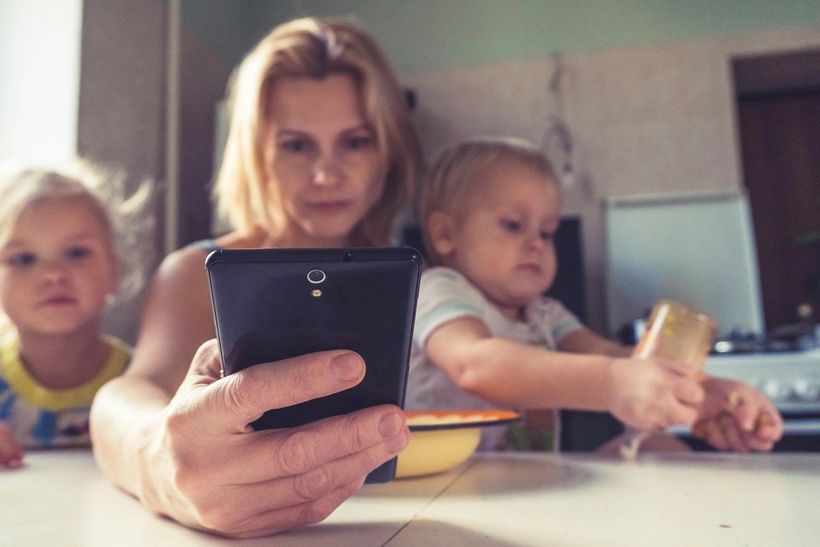
When the bell rings for winter break, most parents worry their kids will “disappear into their phones.” What often goes unmentioned? The adults usually disappear into theirs first. New behavioral data from Offline.now, the digital wellness platform founded by author Eli Singer, shows we now spend about 10 of our 16 waking hours on screens, roughly 63% of our day. Kids off school are simply mirroring the digital norms they see at home. Executive Function Coach and child development specialist Craig Selinger says winter break is less a test of kids’ willpower and more a test of family norms: “If you want behavior change in kids, start with the parent model. A 12-year-old will not put their phone away at dinner if their parents won’t.” Selinger points to what he calls the “mobility problem”: what used to be a TV in the living room is now a device in your child’s pocket. “Mobility makes tech sticky - there’s no natural ‘show’s over’ when Minecraft and TikTok never end.” Offline.now’s experts note that high, especially late screen use is tied to disrupted sleep and next-day behavior in children and teens, exactly when parents say, “They’re monsters over break.” Selinger’s work with families suggests the answer isn’t banning devices outright, but changing what kids see adults do with theirs. When parents put phones in a basket at meals, leave devices out of bedrooms, and actually join “old school” activities: cooking, board games, hands-on hobbies, kids’ attention and confidence start to rebound: “Micro-independence beats micromanagement. If you engineer small wins off-screen - a 20-minute task kids can complete without their phone - you rebuild their real-world confidence one brick at a time.” Key message for journalists: Over winter break, the real story isn’t just “kids are on their phones all day.” It’s that adult behavior quietly sets the ceiling on what’s realistic for children. The most effective “screen-time rule” is the one parents are willing to follow themselves. Featured Expert Craig Selinger, M.S., CCC-SLP - Executive Function Coach and child development specialist (Brooklyn Letters), focused on how kids actually learn and how digital dependency affects attention, writing, family systems, and school success. Expert interview availability can be arranged through Offline.now’s media team.

Holiday Anxiety Is Real — Here’s How People Can Actually Stay Sane This Season
The holidays promise joy, warmth, and “quality time,” but for many people they also deliver a cocktail of stress, expectations, forced cheer, family politics, and receipts longer than a CVS bill. Between travel chaos, financial pressure, social burnout, and attempting to assemble toys designed by engineers who clearly hate humans, holiday anxiety is soaring. The good news: experts who study mental health, behaviour, and stress management say there are ways to keep your nerves intact — and maybe even enjoy yourself along the way. Why the Holidays Stress People Out (Science Says It’s Not Just You) Adults report higher levels of stress in November and December than almost any other time of year. Common triggers include: Financial expectations: gifts, gatherings, travel, meals, and the sudden belief that every present needs to be “meaningful.” Time pressure: too much to do, too few days on the calendar. Social overload: introverts, extroverts, and “I’m-just-here-for-the-food-verts” all feel it. Family dynamics: every family has at least one person who always “starts something.” Nostalgia vs. reality: the pressure to create a “perfect holiday,” despite the fact that perfect holidays only exist in movies and greeting cards. Experts note that people often skip their routines (sleep, exercise, healthy meals) and then wonder why their stress spikes. The season demands more of people while simultaneously removing their coping mechanisms. Practical Ways to Reduce Holiday Anxiety — Backed by Psychology (and Common Sense) 1. Lower the Bar: “Good Enough” Is a Holiday Gift to Yourself Researchers consistently find that perfectionism fuels anxiety. A store-bought pie, a slightly messy house, or wrapping gifts in whatever paper you can find at 11 p.m. will not derail the season. 2. Set Boundaries (Even With the Loud Relatives) Experts often emphasize that saying “no” is one of the most effective stress-management tools. Fewer events, fewer obligations, fewer emotional landmines. 3. Budget Before You Shop Financial therapists note that anxiety drops when people pre-set limits and stick to them. You don’t need a MasterCard bill that arrives in January carrying the emotional weight of a Greek tragedy. 4. Protect Your Recharge Time A short walk, fresh air, or 10 minutes of solitude is not selfish — it’s psychological maintenance. Mental-health researchers recommend intentionally scheduling downtime before the calendar fills itself. 5. Keep Expectations Realistic Not every moment will be magical. Not every conversation will be smooth. Not every plan will unfold as imagined. Experts say acceptance, not forced positivity, lowers stress significantly. 6. Focus on Meaning, Not Perfection Studies show that people feel calmer when they shift their focus toward connection, gratitude, and small moments rather than elaborate performances of holiday cheer. Holiday Angles for Journalists The psychology behind holiday anxiety — what triggers it and why it’s so universal How family systems and old patterns surface at holiday gatherings The economics of holiday stress — debt, spending pressure, and emotional spending How introverts (and extroverts) navigate holiday overload differently Why holiday nostalgia makes people emotionally sensitive Healthy boundary-setting during family events How immigrant, multicultural, and blended families are reshaping holiday expectations Let's get you connected to an expert. The holiday season is increasingly fast-paced, commercialized, and socially demanding. Many people feel pressure to present a perfect life at a time when burnout, financial strain, and mental-health challenges are higher than ever. Helping audiences understand holiday stress — and giving them practical, research-grounded strategies — can make a measurable difference in their emotional well-being. For journalists covering mental health, family dynamics, holiday culture, or stress-management trends, ExpertFile’s roster of psychologists, counsellors, behavioural scientists, and wellness experts can offer insights, interviews, and real-world advice to support your reporting. Find your expert here: www.expertfile.com


Experts share practical guidance for a healthier, happier holiday season
The holiday season is a time of tradition, connection and celebration – but it also brings its own set of challenges, from food safety concerns to emotional stress. University of Delaware experts are available to speak with reporters and provide practical, research-backed guidance to help audiences make the most of the season. Avoid common food safety mistakes Holiday meals are a centerpiece of celebration, but preparing them safely is essential. Diane Oliver, UD Health and Well-being Extension agent, has identified the top five mistakes people make when handling and preparing turkey – and how to avoid them. She can offer timely food safety tips to ensure families enjoy their meals without risk. Protect your mental well-being The holidays can stir up complex emotions as families come together. UD psychology professors Franssy Zablah and Zachary Meehan can provide expert insight into how to maintain mental wellness, manage stress, and set healthy boundaries during holiday gatherings. Find genuine holiday joy Beyond checklists and shopping, how do people actually experience lasting happiness during the holidays? Assistant professor Amit Kumar can share research-backed strategies on pursuing meaningful, authentic joy rather than fleeting holiday pressure. Preserve your decorations for years to come Family ornaments and decorations often carry sentimental value. Art conservation expert Debra Hess Norris can explain how to properly store and care for holiday decorations so they remain vibrant and intact year after year. Connect with these experts All of these University of Delaware experts are available for media interviews and commentary. Reporters and editors interested in speaking with them can reach out to mediarelations@udel.edu for a quick response and support.