Adam Schiffer profile photo

Adam Schiffer

Professor Texas Christian University

  • Fort Worth TX

Professor Schiffer writes and speaks on media bias, presidential nomination contests, political news, elections, and public opinion.

Contact
Texas Christian University logo

Texas Christian University

View more experts managed by Texas Christian University

Spotlight

2 min

Less than a year after Democrats flipped a Texas Senate seat in Tarrant County, the two candidates are preparing for a November rematch — this time under very different electoral circumstances. Democratic State Sen. Taylor Rehmet defeated Republican Leigh Wambsganss by 14 percentage points in a January special-election runoff for Senate District 9, a district Donald Trump carried by 17 points in the 2024 presidential election. Now Rehmet and Wambsganss will face each other again on Nov. 3, with the winner securing a full four-year term. In a recent Fort Worth Report article examining the race, Adam Schiffer, professor of political science at Texas Christian University, explains why the dynamics of a regular midterm election could be significantly different from those surrounding January's special election. Special elections typically attract lower turnout, and January's runoff featured only Rehmet and Wambsganss. This fall, Tarrant County voters will see more than 70 races on the ballot, creating a much different political environment. “Democrats are extremely energized and motivated to vote right now, and Republicans are a bit dispirited,” Schiffer told the Fort Worth Report. “So that’s the kind of thing that then can work to Rehmet’s advantage.”  Professor Schiffer studies American politics, with an emphasis on the news media, elections, and public opinion. His recent work has covered the hot topics of media bias and presidential primary elections. View his profile Schiffer also points to competing forces that could influence the contest. A larger electorate and greater partisan attention could change the makeup of the voters who participate, while Democratic enthusiasm could continue to benefit Rehmet. The race provides a timely opportunity to examine broader questions about voter turnout, partisan loyalty, candidate positioning and whether the political conditions that produce a special-election upset can carry over into a midterm election. Schiffer can provide expert perspective on the Senate District 9 rematch, Tarrant County's changing political landscape, voter behavior and the role that turnout and partisan enthusiasm can play in closely watched elections. To arrange an interview today, simply click on his profile below.

Adam Schiffer

1 min

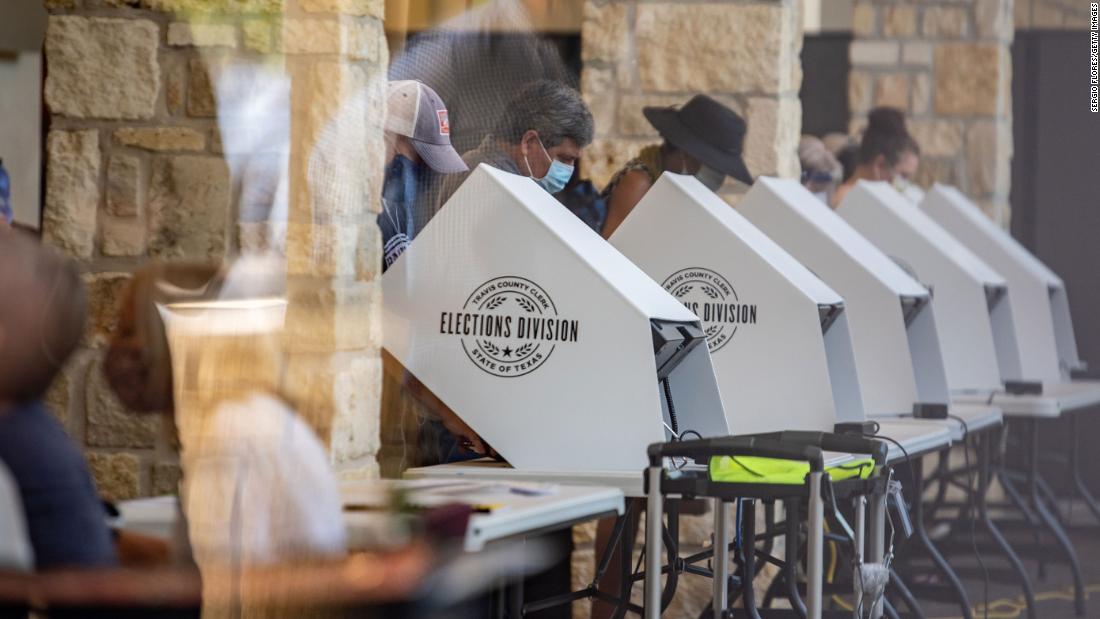
It’s finally here. The campaigns are on their final push and as of Tuesday night – the results will start rolling in. This has been one of the most unique elections in modern history. A divisive and bitter campaign fought during a global health crisis. Texas, which has 38 electoral college votes, second only to California in number – may be in play. Though Texas has not swung blue since 1976, Tuesday night a lot of eyes will be watching Texas to see what role it takes in deciding the outcome of the election. If you are a reporter covering the election in Texas, the key issues in the state and what motivates it to vote for either candidate – then let our experts help. Jim Riddlesperger is professor of Political Science at TCU and focuses on American politics, with emphasis in the presidency, Congress, and Texas politics. Professor Adam Schiffer writes and speaks on media bias, presidential nomination contests, political news, elections, and public opinion. Both are available to speak with media – simply click on either expert’s icon to book an interview today.

Adam Schiffer

Media

Social

Biography

Professor Schiffer studies American politics, with an emphasis on the news media, elections, and public opinion. His recent work has covered the hot topics of media bias and presidential primary elections.

He is an engaging speaker who has given non-partisan talks to a variety of groups across the state. His recent book, Evaluating Media Bias, is a timely look at a perennial controversy. He will be conducting a large-scale study of the media's role in the 2020 presidential nomination.

Areas of Expertise

Media Bias
Presidential Nomination Contests
Political News
National Elections
Public Opinion and American Politics

Education

Chapman University

B.A.

Political Science / Journalism

1996

Arizona State University

M.A.

Political Science

1998

University of North Carolina

Ph.D.

Political Science

2003

Media Appearances

...And why he might not get the nod

Axios  online

2026-05-04

If Talarico wins the 2026 Senate race and if he's named to a White House ticket and that ticket wins — a string of very big "ifs" — he would resign his Senate seat, likely in early January 2029, before being sworn in as vice president. "When push comes to shove in those conversations, that's often a decisive factor — you don't want to mess with a 50-50 Senate or one that's 51-49. You don't want to shake that up with other viable (running mate) options available, which there will be," said Adam Schiffer.

View More

From public health to politics: has an end come for vaccine politics?

TCU 360  online

2021-10-04

“[Things] should not map onto the political spectrum where you have different views on it depending on what side you’re on,” said Dr. Adam Schiffer, a professor of political science at TCU. “But somehow that happens and it becomes ‘politicized.'”

View More

Adam Schiffer Discusses Media Bias

TCU News  online

2019-02-01

The political science professor talks about media bias during the Donald Trump presidential campaign. Adam Schiffer, associate professor of political science, defines media bias and how that differs from media balance, and discusses other hot topics such as “fake news” with host James Creange ’17 in this TCU Magazine podcast.

View More

Articles

Teaching Media Bias: The Case of the Trump Presidency

Journal of Political Science Education

2021

This paper gives instructors of Introduction to American Politics a template for teaching about media bias, using the case of President Trump and his administration. I present material for a combination lecture/discussion, including (1) a framework for evaluating partisan bias in news content, (2) discussion questions that move sequentially from abstract principles to an evaluation of Trump’s coverage, and (3) findings from a new, original content analysis that concisely illustrate the most important implications of the framework.

View more

Debates and Partisan Enthusiasm Before the 2012 Republican Primaries

Presidential Studies Quarterly

Adam J. Schiffer

2017

To what degree do early presidential primary debates aid party‐loyalist decision making? And does this effect diminish as the debate season progresses? This study utilizes a unique, daily data set and time‐series regression to chart the effect of 13 pre‐primary debates on party‐loyalist enthusiasm in the 2012 Republican nomination contest—as measured by Facebook activity—along with news coverage and Google search volume...

View more

Information Flow, Grassroots Enthusiasm, and Candidate Standing in the 2012 Republican Nomination Contest

Journal of Political Science

Adam J. Schiffer

2015

Can a presidential candidate compensate for a lack of traditional press coverage through conversation-generating activity - retailpolitics, Internet activity, etc. - that in turn echoes into the media? This study uses time-series analysis of an original data set to model the day-to-day dynamics of the relationship between mainstream news coverage, social-media enthusiasm, and horserace standing in the earliest months of the 2012 Republican presidential nomination contest. Though some candidates are able to parlay spikes of grassroots enthusiasm into increased news coverage, this process bypasses the candidates who would stand to benefit the most from it - the "underground" candidates whose news coverage lags far behind their grassroots enthusiasm.
