Amanda Watson profile photo

Amanda Watson

Assistant Professor, School of Nursing University of Delaware

  • Newark DE

Prof. Watson is a passionate educator and advocate for women's reproductive health.

Contact
University of Delaware logo

University of Delaware

View more experts managed by University of Delaware

Spotlight

2 min

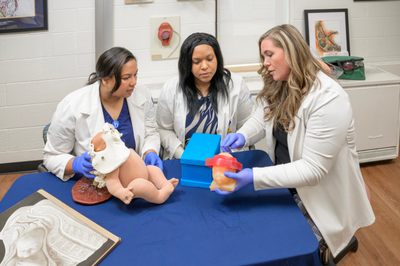
Counties across the U.S. are seeing an increase in “maternity care deserts” – areas that completely lack OB/GYNs, midwives or birthing facilities. The University of Delaware's School of Nursing will join the effort to address this shortage by launching the state's first nurse-midwife master’s program and post-graduate certificate this fall. Amanda Watson, director of the nurse-midwife program and assistant professor of nursing at UD's College of Health Sciences, can talk about the issue both on a national scale and at the hyper-local level. In Delaware, for example, 67 percent of pregnant women in Kent County and nearly half of pregnant women in Sussex County who experienced a stillbirth or infant death have late or no access to prenatal care, according to the Maternal and Child Death Review Commission (MCDRC). “The program is in direct response to workforce needs and healthcare shortages in the state and aligns with our mission in the School of Nursing to promote nurses at the earliest levels to the advanced practice level,” said Elizabeth Speakman, chief nurse administrator and senior associate dean of SON. She added that current nursing students wanted to see a program like this. “We’ve had undergraduate students tell us they want to continue their experience as a Blue Hen through a nurse-midwife program, so we expect this program to be quite popular, especially with our direct admission pathway,” Speakman said. The full-time, two-year program is being supported by a $1 million investment from the state of Delaware. It will be led by Watson and launch this fall with an eight-student cohort that will complete clinical rotations at Christiana, Bayhealth and Beebe hospitals, as well as The Birth Center in Newark. “We will prioritize students living and working in Delaware to make a quicker impact on the workforce shortage,” Watson said. The pipeline strategy is central to the program, said Dr. Meena Ramakrishnan, a consultant and epidemiologist with the MCDRC. “More nurse-midwives who train here, know Delaware and its resources, make connections and stay here to practice, is an important step toward improving outcomes,” Ramakrishnan said. Watson said the program reflects what makes change possible in Delaware’s healthcare system. “I saw a flawed healthcare system in this state, and I’m blessed to be in a state small enough that people who want to fix the problem are given opportunities to affect change,” she said. To connect with Watson directly and arrange an interview, visit her profile page and click the "contact" button. Interested reporters can also send an email to mediarelations@udel.edu.


Amanda Watson

Media

Social

Biography

Dr. Watson (she/her) is a Certified Nurse Midwife with over 19 years' experience in the field of women's health. She has served as Director of the Women's Health Department of La Red Health Center, a Federally Qualified Health Center in Sussex County Delaware where she has played an instrumental role in bridging healthcare access disparities for underserved women, and advocating for expanded health insurance coverage for populations denied coverage due to immigration status. She holds delivery privileges at Bay Health, Kent Campus in Dover and Tidal Health Nanticoke in Seaford where she previously provided full-scope Midwifery and Women's Health care. Prior to becoming a nurse, she graduated from San Francisco State University with a BA in International Relations and Women's Studies. She later became a Certified Professional Midwife (CPM) and attended deliveries in the home and freestanding birth center setting.

Her doctoral research studied improving entry to prenatal care in the first trimester for underserved women. She has written a Global Health column for the Journal of Perinatal and Neonatal Nursing where she explored international women's health issues. She is a passionate educator and advocate for women's reproductive health. When she is not caring for patients, catching babies or teaching she loves spending time with her two elementary aged children, traveling, cooking and enjoying friends and family.

Industry Expertise

Health Care - Services
Health Care - Providers

Areas of Expertise

Women's Reproductive Health
Health Disparities
Midwifery
Immigrant and Refugee Health
Prenatal Care
Women's Health

Media Appearances

Women’s health care is a ‘dire need’ in Sussex County. And pregnant women, doctors know it.

Delaware News Journal  online

2022-02-14

Providers like Amanda Watson, a certified nurse-midwife at La Red, as well as others like state Rep. Ruth Briggs King, said the issue of accessing reproductive or women’s health care may have never been as dire as it is right now in Sussex County.

View More

As small hospitals disappear nationwide, Seaford saved its hospital. But at what cost?

Delaware News Journal  online

2022-05-24

What this new TidalHealth-La Red relationship will ultimately look like isn’t entirely clear yet, but Amanda Watson, La Red’s clinical operations director for women's health, said she has been working with TidalHealth to develop a referral system.

View More

Access to prenatal health care isn’t equal for all Delaware mothers

Delaware News Journal  online

2022-05-25

“There's been several people that have missed their entire care during a pregnancy because they just didn't have a ride,” said Amanda Watson, a certified nurse-midwife at La Red Health Center.

View More

Articles

Effective Entry into Prenatal Care of Underserved Women in a Rural Federally Qualified Health Center

Frontier Nursing University Dissertation

2022

Background: Early entry to prenatal care mitigates poor obstetric outcomes of low birth weight and preterm birth, disproportionately burdened by Black non-Hispanic, and Hispanic women, whom also disproportionately enter late into prenatal care.
Local Problem: A chart audit (N = 20) of a federally qualified health center (FQHC) found that 25.0% (n = 5) of women entered care in the first trimester, a prenatal intake nurse identified 38.5% (n = 5) of present risk factors (N = 13), patient mean comprehension of perinatal topics scored 60.5%, and stakeholders rated team communication 3.1 on a 5 point Likert scale.
Methods: A quality improvement initiative mapped critical pathways, cultural barriers, and targeted workflow processes through surveys, chart audits, and root cause analysis, to focus interventions toward gaps in entry to prenatal care.
Interventions: Four interventions were implemented addressing scheduling of prenatal visits, risk screening, patient education, and team engagement. Tests of change were implemented in each intervention in each two-week Plan-Do-Study-Act (PDSA) cycle.

View more

Health workforce shortages: Do global healthcare dollars equate to workforce sense?

The Journal of Perinatal and Neonatal Nursing

2024

An adequate, skilled, and well-distributed workforce is essential to preserving the quality, accessibility, and sustainability of the global health system and efforts toward universal health coverage. Despite reduction of overall health workforce (HWF) shortage estimates to 10.2 million by 2030, from a previous estimate of 18 million, we are seeing HWF disparities more than double in the 47 countries identified in the World Health Organizationʼs (WHO) support and safeguard list. Midwives and their workforce equivalents contribute significantly to critical human resource pools needed to address maternal and infant health indicators worldwide, yet growth of jobs and educational programs continue to lag. Medical technology and foreign labor exchanges reflect migration patterns from low-to middle-income countries (LMICs) toward high-income countries (HICs) in North America and Western Europe, despite regulatory efforts and ethical guidelines regarding human resource trade. Natural disasters, conflict, and disease pandemics, such as COVID-19, further stress already compromised healthcare education, training, and workforce pools, in ways we have yet to fully understand. The responsibility for resolution to this crisis lies internationally, as the fluidity of medical technology and labor exchanges across international borders uniquely characterize the global workforce issues of our generation.

View more

Global “maternal” mental health from a non-binary life course perspective

The Journal of Perinatal and Neonatal Nursing

2024

View more

Accomplishments

Best in Nursing

2017

American Health Council

Top Nurses, Honorable Mention

2024

Delaware Today

Education

San Francisco State University

BA

International Relations

2006

Wilkes University

BS

Nursing

2013

Frontier Nursing University

MSN

Certified Nurse Midwife

2019

Affiliations

  • American College of Nurse Midwives
  • Association of Women’s Health Obstetric and Neonatal Nurses
  • American College of Obstetricians and Gynecologists
  • Delaware Nurses Association
  • National Association of Nurse Practioners in Women’s Health

Languages

  • English
  • Spanish

Event Appearances

Black Maternal Mortality

DETV, Every Woman  

2024-08-31

Disparities in Black Maternal/Child Health

Star Campus, University of Delaware  

2024-04-18

Delaware’s Playbook to Address Social Determinants of Health to Advance Health Equity in Maternal and Child Health Panel

Delaware Healthy Mother & Infant Consortium Summit (18th Annual)  

2024-04-17