Facial Recognition: Convenience and Controversy Facial recognition technology is everywhere, making our day-to-day tasks faster and more convenient. It offers substantial benefits, from enhanced security measures to streamlined user experiences. Airports utilize it for faster check-ins, smartphones use it for secure authentication, and law enforcement agencies employ it for identifying suspects.
However, the technology also raises considerable privacy concerns. The pervasive deployment of facial recognition without adequate oversight can lead to unwarranted surveillance, potential biases in profiling, and the erosion of personal privacy.
The Rise of Deepfake Technology Meanwhile, deepfake technology has advanced rapidly, leveraging AI to create highly realistic synthetic, or "fake", media. These hyper-realistic videos, showing individuals doing or saying things they never actually did, have become a significant concern. The potential misuse of deepfakes ranges from spreading misinformation and manipulating elections to causing personal distress by enabling crimes like fraud and defamation.
Dr. Derek Riley, a seasoned media expert, professor and program director of the B.S. in Computer Science program at Milwaukee School of Engineering, is available to discuss how these technologies work, how they're regulated, how they can be used in a positive manner, and how individuals can protect themselves.
·
3 min
As the Republican National Convention 2024 begins, journalists from across the nation and the world will converge on Milwaukee, not only to cover the political spectacle but also to cover how the next potential administration will tackled issues that weren't likely on the radar or at least front and center last election: Artificial Intelligence, Machine Learning and Cybersecurity With technology and the threats that come with it moving at near exponential speeds the next four years will see challenges that no president or administration has seen before. Plans and polices will be required that impact not just America but one a global scale.
To help visiting journalists navigate and understand these issues and how and where the Republican policies are taking on these topics our MSOE experts are available to offer insights.
Dr. Jeremy Kedziora, Dr. Derek Riley and Dr. Walter Schilling are leading voices nationally on these important subjects and are ready to assist with any stories during the convention.
. . . Dr. Jeremy Kedziora Associate Professor, PieperPower Endowed Chair in Artificial Intelligence
Expertise: AI, machine learning, ChatGPT, ethics of AI, global technology revolution, using these tools to solve business problems or advance business objectives, political science. View Profile “Artificial intelligence and machine learning are part of everyday life at home and work. Businesses and industries—from manufacturing to health care and everything in between—are using them to solve problems, improve efficiencies and invent new products,” said Dr. John Walz, MSOE president. “We are excited to welcome Dr. Jeremy Kedziora as MSOE’s first PieperPower Endowed Chair in Artificial Intelligence. With MSOE as an educational leader in this space, it is imperative that our students are prepared to develop and advance AI and machine learning technologies while at the same time implementing them in a responsible and ethical manner.” MSOE names Dr. Jeremy Kedziora as Endowed Chair in Artificial Intelligence
MSOE online March 22, 2023
. . . Dr. Derek Riley Professor, B.S. in Computer Science Program Director
Expertise: AI, machine learning, facial recognition, deep learning, high performance computing, mobile computing, artificial intelligence View Profile “At this point, it's fairly hard to avoid being impacted by AI," said Derek Riley, the computer science program director at Milwaukee School of Engineering. “Generative AI can really make major changes to what we perceive in the media, what we hear, what we read.” Fake explicit pictures of Taylor Swift cause concern over lack of AI regulation
CBS News January 26, 2024
. . . Dr. Walter Schilling Professor
Expertise: Cybersecurity and the latest technological advancements in automobiles and home automation systems; how individuals can protect their business operations and personal networks. View Profile Milwaukee School of Engineering cybersecurity professor Walter Schilling said it's a great opportunity for his students. "Just to see what the real world is like that they're going to be entering into," said Schilling. Schilling said cybersecurity is something all local organizations, from small business to government, need to pay attention to. "It's something that Milwaukee has to be concerned about as well because of the large companies that we have headquartered here, as well as the companies we're trying to attract in the future," said Schilling. Could the future of cybersecurity be in Milwaukee?: SysLogic holds 3rd annual summit at MSOE
CBS News April 26, 2022
. . . For further information and to arrange interviews with our experts, please contact: Media Relations Contact To schedule an interview or for more information, please contact: JoEllen Burdue Senior Director of Communications and Media Relations
Phone: (414) 839-0906
Email: burdue@msoe.edu . . . About Milwaukee School of Engineering (MSOE) Milwaukee School of Engineering is the university of choice for those seeking an inclusive community of experiential learners driven to solve the complex challenges of today and tomorrow. The independent, non-profit university has about 2,800 students and was founded in 1903. MSOE offers bachelor's and master's degrees in engineering, business and nursing. Faculty are student-focused experts who bring real-world experience into the classroom. This approach to learning makes students ready now as well as prepared for the future. Longstanding partnerships with business and industry leaders enable students to learn alongside professional mentors, and challenge them to go beyond what's possible. MSOE graduates are leaders of character, responsible professionals, passionate learners and value creators.
·
2 min
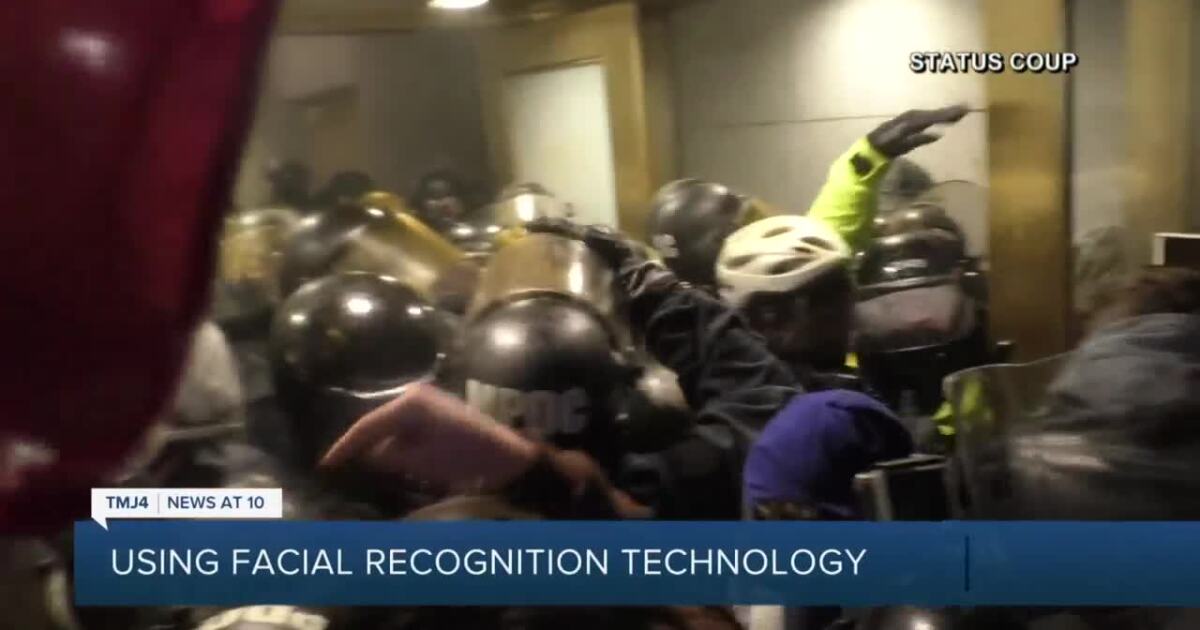
On January 06, America watched with shock as a mob of protesters stormed the gates in Washington, D.C. and invaded the Capitol buildings. For hours, the rioters looted and occupied America’s halls of power and though some were apprehended, many found a way to get out and get back home avoiding arrest.
However, media coverage was substantial and some of the protesters were even bold enough to be caught posing for social media. Slowly, authorities are tracking them down, and Dr. Derek Riley, an expert at Milwaukee School of Engineering (MSOE) in the areas of computer science and deep learning, has been explaining how artificial intelligence (AI) technology that’s taught at MSOE is capable of enabling law enforcement's efforts to identify individuals from pictures.
"With these AI systems, we’ll show it example photos and we’ll say, 'OK, this is a nose, this is an ear, this is Billy, this is Susie,'" Riley said. "And over lots and lots of examples and a kind of understanding if they guess right or wrong, the algorithm actually tunes itself to get better and better at recognizing certain things." Dr. Riley says this takes huge amounts of data and often needs a supercomputer—like MSOE's "Rosie"— to process it. To get a computer or software to recognize a specific person takes more fine-tuning, Riley says. He says your smartphone may already do this. "If you have a fingerprint scan or facial recognition to open up your phone, that’s exactly what’s happening," Riley said. "So, they’ve already trained a really large model to do all the basic recognition, and then you provide a device with a fingerprint scanning or pictures of your face at the end to be able to fine-tune that model to recognize exactly who you are." Riley says this technology isn't foolproof—he says human intelligence is needed at every step. He added we might be contributing to the data sources some of the technology needs by posting our pictures to social media. "Folks are uploading their own images constantly and that often is the source of the data that is used to train these really, really large systems," Riley said. January 14 – WTMJ, Ch. 4, NBC News
The concept of facial recognition and the use of this technology in law enforcement (and several other applications) is an emerging topic – and if you are a reporter looking to cover this topic or speak with an expert, then let us help.
Dr. Derek Riley is an expert in big data, artificial intelligence, computer modeling and simulation, and mobile computing/programming. He’s available to speak with media about facial recognition technology and its many uses. Simply click on his icon now to arrange an interview today.
Multimedia
Education, Licensure and Certification
Ph.D.
Computer Science
Vanderbilt University
2009
M.S.
Computer Science
Vanderbilt University
2006
B.S.
Computer Science
Wartburg College
2004
Biography
Dr. Derek Riley joined the MSOE faculty in 2016 and is a Professor in the Diercks School of Advanced Computing. He is also program director of MSOE’s Bachelor of Science in Computer Science program, which has a focus in artificial intelligence. In addition to teaching at MSOE, Riley provides consulting services and expert witness services related to Large Language Models, deep learning, facial recognition, computational modeling, high-performance computing, and other related fields. His areas of expertise include deep learning, computer vision, Large Language Models, process modeling and simulation, Scrum, and mobile computing. He is an NVIDIA DLI Certified Instructor.
Areas of Expertise
Large Language Models, Generative AI
Machine Learning
Deep Learning
Computer Science
Algorithms
High-Performance Computing
Scrum
Generative AI
Affiliations
Association for Computing Machinery (ACM) : Member
Social
Media Appearances
Experts warn of surge in AI-generated misinformation amid Iran war
Spectrum News tv
2026-03-05
Experts warn that fast-spreading information and misinformation on social media can cause secondary trauma, especially if you don’t know whether the videos or photos are real or fake.
Milwaukee tech leaders discuss deepfakes and advancing Artificial Intelligence technology
WDJT - Ch. 58 - CBS tv
2023-12-14
Dr. Derek Riley discusses the latest addition to the world of artificial intelligence known as deepfake models, an extension of deep learning, which creates false videos or images which have been altered to misrepresent a person or situation which has never happened.
Fact check: No, Snapchat filters are not a facial recognition database created by the FBI
USA Today online
2022-10-11
The claim: Snapchat filters are a facial recognition database created by the FBI The use of facial recognition technology has become commonplace, with many people using it on a daily basis to unlock their phones or sort their photos.
A recent Facebook post, though, claims a popular photo messaging app uses the technology to collect data for federal law enforcement.
“Snapchat filters are a facial recognition database created by the FBI,” reads text included in the Oct. 3 post, which has been shared over 100 times in two days. “You don’t believe me? Google: Patent US9396354.”
But the claim is false. ...
The technology used by the app doesn't require any private data to be collected, Derek Riley, a computer science professor at the Milwaukee School of Engineering, told USA TODAY.
Riley described the patent mentioned in the post as a "big red flag" that the claim was wrong, since it's actually for a privacy-protecting technology. He said there isn't any indication Snapchat is using the technology in the patent.
To Promote 'Stranger Things,' These Businesses Developed an App That Lets You Order a Pizza With Your Mind
Inc. online
2022-06-02
At the start of the fourth season of the popular Netflix series Stranger Things, the character Eleven has lost her telekinetic abilities. But thanks to some small business innovation, viewers can now channel her powers for a vital task: ordering a pizza.
Working with ad agency WorkInProgress and content creation company UNIT9, Domino's released a new "mind-ordering" app in partnership. According to Derek Riley, the electrical engineering and computer science program director at Milwaukee School of Engineering, there are a variety of ready-made facial recognition software programs, and adding them to an app isn't significantly more complicated than introducing any other feature.
MSOE professor explains facial recognition technology used to catch riot suspects
WTMJ Ch. 4 tv
2021-01-14
The FBI released pictures of ten more suspects it needs help naming and finding. One of the agency's tools for searching for people is facial recognition technology.
Aside from the FBI, the Milwaukee School of Engineering is leading the way with teaching artificial intelligence as part of its computer science degree. To be clear, the school is not working with law enforcement about the events in D.C.
What Makes a Supercomputer "Super? Dr. Derek Riley, program director for MSOE's B.S. in computer science degree, explains the differences in configuration between your laptop or desktop computer, and MSOE's GPU-powered supercomputer.
New MSOE Supercomputer Aims To Help Milwaukee With Artificial Intelligence
WUWM
2019-09-13
Computer power and artificial intelligence technology are officially ramping up in Milwaukee — that's with Friday’s opening of the Dwight and Dian Diercks Computational Science Hall at the Milwaukee School of Engineering. A specially-designed supercomputer in the building will be able to help local businesses and community groups with data projects.
MSOE Is Getting a New Supercomputer, Changing the School As We Know It
Milwaukee Magazine
2018-07-06
The computer – it doesn’t have an official name yet, but here’s a vote for Dwight 9000 – will be the fastest in Southeastern Wisconsin, unless someone has built a faster one in secret, according to Derek Riley, director of the electrical engineering and computer science department.
Dr. Derek Riley named computer science program director at MSOE
MSOE
2018-01-30
Derek Riley, Ph.D. has been named program director of the new Bachelor of Science in Computer Science program at Milwaukee School of Engineering. Riley joined the MSOE faculty in 2016 and is an associate professor in the Electrical Engineering and Computer Science Department.
Harmful algal blooms, which are a danger to the lives of humans and animals, are caused by a sudden increase in the concentration of cyanobacteria in freshwater lakes. Cyanobacteria concentrations can be reliably measured using chemical and biological indicators, but the measurement process of the indicators is either labor-intensive or very costly. These limitations do not allow the general public to measure concentrations, so local health organizations or departments regularly assume the responsibility of measuring water quality. While computational models exist to predict algal concentrations, the accuracy of these models and need for customization due to varied lake conditions make them generally not yet reliable. We find that common regression-error functions cannot sufficiently evaluate the performance of cyanobacteria prediction models because the occurrence of harmful algal blooms is rare. Therefore, we present a method of forecasting cyanobacteria concentrations in freshwater lakes based on a machine-learning model trained on a dataset from Lake Utah with automatically-measured indicators from lake buoys. We compare several models and find that a support vector machine with a radial basis function kernel for regression reliably forecasts harmful algal blooms using comparatively few and easy-to-obtain input parameters. The special feature of the model is that it exclusively uses variables that can be measured by the general public without great effort and costs, and the amount of data necessary to train such a model is relatively minimal, allowing different models to be trained to accommodate for the nuances of different lakes.
Diurnal vertical migration of cyanobacteria and chlorophyta in eutrophied shallow freshwater lakes
Fundamental and Applied Limnology / Archiv für Hydrobiologie,
von Orgies-Rutenberg, M., Rolfes, C., Eckel, T., Quiroz, A., Skalbeck, J., Riley, D., Sander, H.
2017
Circadian rhythms are thought of as means for adaptation helping survival fitness of a species. For algal species associated with harmful algal blooms (HAB) in eutrophied freshwater lakes usually light and nutrient availability, especially phosphate, seem to drive patterns of the vertical migration within the water column. The vertical migration patterns of species associated with HAB in freshwater lakes (Cyanobacteria) should be taken as input parameters for modelling algae. As HAB present a health risk to the public they should be monitored and predicted via simulation models, and the results of the predictions should be shared with the public using familiar tools such as smartphone apps or websites. To gather the data on which the model will be formulated, two shallow freshwater lakes (eutrophic condition: Lake Stadtgraben, Northern Germany, oligotrophic condition: Lake Russo, Wisconsin, USA in temperate climates were selected to serve as models for investigating the vertical migration in different seasonal times under natural conditions. Phosphate concentrations, as well as light and temperature over time in hourly increments at the lake surface and bottom were monitored. In addition the vertical migration pattern of Cyanobacteria and Chlorophyta populations was followed over 24 hrs in spring (May) and fall (August) in order to derive a behavior assumption as input for a model predicting HAB. In Lake Stadtgraben the vertical migration pattern was strongly influenced by light rather than by phosphate availability in spring, as phosphate was readily available at that time in all depths, while temperature was significantly different between the top and -bottom. The vertical migration pattern was dampened in fall season in both, the oligotrophic and the eutrophic lake, while temperature was not significantly different from the top to the bottom. Thus, vertical migration patterns observed may change slightly with season, which will impact on the outcome of simulation models dependent on the time of day and lake depth, at which input parameters such as Chlorophyll-a are measured.
Using Data Mining in Combination with Machine Learning to Enhance Crowdsourcing of a Formal Model of Biodiesel Production
Midwest Instructional Computing Symposium
Fischer, M., Riley, D.
2016
Formal modeling, simulation, and analysis of complex systems is valuable because it can provide insights into complex systems that are too expensive or difficult to analyze otherwise. In this work, we present an approach for improving simulation trajectory choices in a Monte Carlo framework using a combination of crowdsourcing, machine learning, and data mining. We apply machine learning to analysis of a formal model of biodiesel production as a method of improving the efficiency of the crowd sourced mobile simulation analysis of the model. Data is collected and data mined in a central server where machine learning is applied and recommendations from the machine learning algorithm are fed back to crowd workers via suggestions on the mobile app. Ultimately, we show that this approach can improve efficiency of optimal safe state identification in the biodiesel model analysis.
Development of a Mobile Phone Application for the Prediction of Harmful Algal Blooms in Inland Lakes
Fundamental and Applied Limnology / Archiv für Hydrobiologie
Gotthold, J.P., Deshmukh, A., Nighojkar, V., Skalbeck, J., Riley, D., Sander, H.
2016
Harmful algal blooms mainly caused by cyanobacteria in freshwater ecosystems often present a health risk to the public within eutrophied shallow lakes due to algal toxins released into the water during the final stage of an algal bloom. Thus, algal growth should be carefully monitored during the summer season, especially in fre- quented recreational areas. Traditionally, water samples must be sent to a lab to analyze the data to predict algal blooms, costing time and money. Models on a smartphone predicting harmful algal blooms from easily measurable parameters could help individuals to take precautionary measures in order to prevent health risks from drinking and bathing in water and help to raise public awareness. In this work we present a mobile smartphone application that generates a prediction of the likelihood of an algal bloom from a variety of easily-measured input parameters that could be obtained by an informed smartphone user with simple instruments. Our model was implemented in an Android mobile phone application using App Inventor. The model we use is based on the Verhulst equation and allows users to enter any of the following measurements to predict and algal bloom: surface temperature, inverse Secchi depth, dissolved oxygen (DO) at the surface, and chlorophyll fluorescence (Chl-a).
Mobile Technologies in Healthcare: Approaches and Architecture
AIMS International
Mukherjee, M., Chalasani, S., Riley, D.
Accepted 2016
Crowdsourcing Automobile Parking Availability Sensing Using Mobile Phones
UWM Undergraduate Research Symposium
Villalobos, J., Kifle, B., Riley, D., Torrero, J.U.Q.
2015
A lack of reliable knowledge about automobile parking availability in areas such as schools, work, or major cities wastes time, energy, and fuel as people try to find available parking spaces. Real-time parking monitoring phone applications exist, but keeping accurate, reliable parking availability information proves to be a difficult task due to the unreliability of real time information, especially in less densely populated areas. In this paper, we present a parking monitoring system that uses crowdsourcing in combination with mobile phone sensors to provide accurate, reliable real-time parking availability information. We present a study of the use of the application on a university campus to demonstrate its effectiveness.