Elise King, MID, M.A.

Associate Professor of Interior Design, Interim Chair Baylor University

  • Waco TX

Interior designer, historian & researcher who explores community relationships with built environments, architectural history & sleep

Contact

Baylor University

View more experts managed by Baylor University

Spotlight

3 min

Trim the Clutter, Keep the Cheer

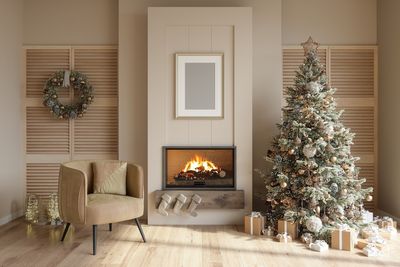
The holiday season brings warmth, joy and a touch of magic into our homes, but it also can bring excess clutter, waste and energy consumption, making it hard to feel festive. However, there are simple and creative ways to decorate sustainably without sacrificing the festive spirit. Baylor University human sciences and design professor Elise King, M.I.D., M.A., an expert in interior design and built environments, says embracing sustainable decorations, changing to energy-efficient lights, eliminating clutter and reducing waste can help maintain a tidy, eco-friendly home – and create a holiday atmosphere that resonates with joy and meaning. “The holidays can often feel busy and stressful, so it’s helpful to focus on traditions and decorations that bring joy and add meaning to the season,” King said. By taking simple steps to reuse materials, reduce energy consumption and focus on what matters most, families can celebrate the season with both heart and mindfulness, King said. Decorating sustainably One of the easiest ways to approach sustainable decorating is by reusing or repurposing materials you already have or finding decorations at resale shops. "Upcycling items from thrift stores or turning last year’s Christmas cards into garlands are simple and creative ideas," King said. “Beyond thriftiness, these practices add a personal and nostalgic touch to decorations.” King also said that it is important to consider the lifecycle of a product, beyond just being recyclable. "Also consider elements such as durability/longevity, manufacturing processes, transportation, energy consumption and disposal,” she said. “I recommend people make the best-informed decisions they can, while also remembering not to let it become overwhelming. Switch to LED Christmas lights Changing from incandescent to LED Christmas lights is good for both style and sustainability. LED lights reduce energy usage, are more durable and typically last longer than incandescent. Plus, they have come a long way over the past few years. “The criticism used to be that LEDs had a blue hue and were ‘cold’ compared to incandescent,” King said. “That isn’t really the case anymore. You have to be particular about what you purchase, but several companies offer lights that are virtually indistinguishable from vintage lights.” A clutter-free peaceful mindset While holiday decorations create a festive touch around the house, they can add to the clutter and busyness, which ultimately takes away the joy, King said. Decluttering and organization can help create a peaceful environment. “Most people enjoy Christmas decorations, but over the years we tend to accumulate a lot of them,” King said. “Sadly, for many, the thought of decorating for Christmas no longer brings feelings of excitement and joy. Instead, we dread going into the attic, dragging out the tree and boxes of ornaments, checking strands of lights, fixing broken bulbs, etc., only to know that we’ll have to put it all back in about a month. "Keep decorations that bring joy and let go of what no longer feels fulfilling can make a big difference in decreasing the excess while emphasizing what is important to you and your family," she said. By clearing both physical and mental space, families can better prioritize the activities and moments that truly matter. Reducing paper use It can be difficult to go fully paperless because of gift wrapping, but there are ways to reduce paper in the holidays from reusing materials or gifting experiences. “You can reuse paper shopping bags or even cut up the bags or other paper you have around the house and wrap gifts,” King said. Gifting experiences rather than physical items is another growing trend. “I find that many people are interested in receiving or gifting experiences, which can also reduce wrapping needs,” King said. “Not only does this minimize waste, but it also emphasizes shared moments over material possessions.” King noted that since COVID, there has been a trend to go paperless and people tend to be more comfortable with virtual communication and remote collaboration in general, which can also eliminate the need for Christmas cards and other paper products.

Elise  King, MID, M.A.

4 min

Turning Assisted Living into a Home: Baylor Interior Design Faculty Members Discuss 3 Ways to Create Sense of Home for Residents

When people hear the term “assisted living,” they might think “nursing home” or “old folks’ home.” But what people don’t know is that interior designers are working hard to ensure that these facilities provide a sense of comfort and a sense of home to their residents. “Designing for assisted living environments requires careful consideration of the needs of the residents living there. But really, in that way, it is no different from designing for any population,” said Elise King, assistant professor of interior design in Baylor University’s Robbins College of Health and Human Sciences. Baby boomers would rather live at home or in a residential setting, according to SeniorLiving.org. This will require more locations to have independent and assisted living available. With the baby boomer generation transitioning into retirement, many will require additional care but don’t want to be in nursing homes like their parents. “You should always begin by understanding the users of the space and assessing their needs and requirements,” King said. “And what you’ll find is that across the lifespan, while there are different needs which must be met by various functional requirements, our innate desires are not that different.” 1. Bring outdoors inside by incorporating nature into facility design. One way designers enhance facilities is by incorporating nature into their design and bringing the outdoors inside. At Baylor, Debra Harris, Ph.D., associate professor of interior design — who has researched the impact of health care facility design on patients, families and health care workers — teaches a sustainability course that addresses some aspects of nature in design. “We reinforce all aspects of indoor environmental quality through research activities and through the entire design process,” Harris said. “For years, architects have discussed the concept of organic architecture and more recently, the term ‘biophilic design’ has been used,” King said. “And in the past 30 or so years, we’ve seen a growing body of research that supports what we’ve assumed for a long time, essentially that humans desire a connection with nature and that nature can have a positive impact on health and well-being.” She said one way this can be accomplished is by having ample windows, particularly those that look onto greenspaces or treetops. It also is important to consider that some residents will be using walkers, canes or wheelchairs. Window height should be considered so that all residents can benefit. Another way to incorporate nature into the design is by using natural materials when possible or using materials that have textures or patterns reminiscent of nature. Harris agrees that incorporating nature into a facility’s design is important and beneficial to the residents living there. “Direct access to nature, like gardening or nature walks, and indirect access to nature, through a window, provide real tangible benefits,” Harris said. 2. Access to natural light, as well as artificial light that mimics daylight, provides benefits to seniors that are associated with well-being. Harris said having access to natural light provides benefits associated with well-being, such as reinforcing our natural clock, known as circadian rhythms, which helps with the quality of sleep and may contribute to management of chronic conditions. Designing to provide access to nature through gardening and walking also can increase physical activity and social interactions, she said. Artificial lighting is also an important factor in interior design, especially for seniors. Harris said there are lighting systems that can mimic daylight, changing over the course of the day to support our circadian rhythms, which can lead to an elevated sense of well-being. This may contribute to other aspects, such as social interactions, physical activity, and satisfaction, she said. 3. Designing for all five senses is critical for making a facility feel more like home. King said it’s important to design for all the senses, not just the visual aspect of the facility. She said sound, smell and touch are other critical aspects that need to be taken into consideration to make a facility feel more like a home. “Designers have to use research to understand how we can best address the specific needs of a mature population through design,” King said. “By creating environments that value and support these innate needs — self-actualization, esteem, love and belonging, safety needs and physiological needs — we’re reinforcing a sense of place and hopefully, a sense of home.” ABOUT BAYLOR UNIVERSITY Baylor University is a private Christian University and a nationally ranked research institution. It provides a vibrant campus community for more than 17,000 students by blending interdisciplinary research with an international reputation for educational excellence and a faculty commitment to teaching and scholarship. Chartered in 1845 by the Republic of Texas through the efforts of Baptist pioneers, Baylor is the oldest continually operating University in Texas. Located in Waco, Baylor welcomes students from all 50 states and more than 90 countries to study a broad range of degrees among 12 nationally recognized academic divisions. ABOUT ROBBINS COLLEGE OF HEALTH AND HUMAN SCIENCES AT BAYLOR UNIVERSITY The Robbins College of Health and Human Sciences at Baylor University was established in 2014, a result of identified priorities for strengthening the health sciences through Baylor’s strategic vision, Pro Futuris, and the University’s Illuminate  strategic plan. The anchor academic units that form Robbins College – Communication Sciences and Disorders; Family and Consumer Sciences; Health, Human Performance and Recreation; Public Health; and Division of Health Professions – share a common purpose: improving health and the quality of life. The College’s curricula promotes a team-based approach to transformational education and research that has established interdisciplinary research collaborations to advance solutions for improving quality of life for individuals, families and communities. For more information, visit www.baylor.edu/chhs.

Elise  King, MID, M.A.

4 min

Baylor Researchers Share Sleep and Memory Recall Tips to Help Tackle College Finals

It’s final exam season for college students across the country. And final exams often come with all-night study sessions and gallons of coffee. But do such things really help? In recent years, Baylor University researchers have identified a few practices that could help students get enough sleep and retain information for their exams. Here are some tips pulled from their research. Say No to All-Nighters Poor sleep during finals is common as students sacrifice bedtime for study time. Students are under more stress, use more caffeine to stay awake and are exposed to more bright light. Fewer than 10 percent of undergraduates maintain the recommended average of 8 hours per night of sleep or even the recommended minimum of 7 hours of sleep per night. Baylor researchers Michael Scullin, Ph.D., assistant professor of psychology and neuroscience in Baylor’s College of Arts & Sciences and director of Baylor’s Sleep Neuroscience and Cognition Laboratory, and Elise King, M.I.D., M.A., assistant professor of interior design in Baylor’s Robbins College of Health and Human Sciences teamed together to find out if more sleep equaled better success. Their December 2018 study found that students who succeeded in averaging eight hours of sleep for five nights during final exams week did better than those who did not. Sleeping for eight hours was associated with a four-point grade boost. “Better sleep helped rather than harmed final exam performance, which is contrary to most college students’ perceptions that they have to sacrifice either studying or sleeping. And you don’t have to be an ‘A’ student or have detailed education on sleep for this to work,” Scullin said. King said students know that sacrificing sleep to complete school work is not a healthy choice, but they assume they don't have a choice, often remarking that there aren't enough hours in the day for coursework, extracurriculars, jobs, etc. “This removes that excuse,” King said. Sleep Consistency is Key In a study of sleep and creativity done in 2017, King and Scullin found that interior design students with highly variable sleep habits — cycling between “all-nighters” and “catch-up” nights — had decreased cognition in attention and creativity, especially with major projects. “Whether or not they ‘pull an all-nighter,’ when students cut their sleep, the effects are obvious,” King said. “They have trouble paying attention during class, and they aren't as productive during studio time.” To be successful at the challenge, students need to manage their time better during the day. Getting more sleep at night then allows them to be more efficient the next day. “By training students in their first year of college, if not earlier, that they can sleep well during finals week without sacrificing performance, we may help to resolve the ‘global sleep epidemic’ that plagues students in America and abroad,” Scullin said. Looking for Better Recall? Tell a Friend What You Learned Students who are given information and tell someone about it immediately recall the details better and longer, according to a 2017 study led by Baylor psychologist Melanie Sekeres, Ph.D., assistant professor of psychology and neuroscience in Baylor’s College of Arts & Sciences. She said this “replaying” method takes a lot of effort but is worth it in the long run. “A week later, the memory was just as good,” Sekeres said. “Telling someone else about what you’ve learned is a really effective way for students to study instead of just re-reading the textbook or class notes.” In the study, students were shown 24-second clips from 40 films over a period of about half an hour. The study focused on their retention of both the general plot of the films as well as such details as sounds, colors, gestures, background details and other peripheral information that allow a person to re-experience an event in rich and vivid detail, said Sekeres. “We tell students to test yourself, force yourself to tell someone about the lecture,” Sekeres said. “Even by writing out some question for yourself about the information, then later answering them yourself, you are more likely to remember the information. Unfortunately, simply re-reading or passively listening to a recording of your lecture in hopes of remembering the information isn’t a great study strategy by comparison.” ABOUT BAYLOR UNIVERSITY Baylor University is a private Christian University and a nationally ranked research institution. The University provides a vibrant campus community for more than 17,000 students by blending interdisciplinary research with an international reputation for educational excellence and a faculty commitment to teaching and scholarship. Chartered in 1845 by the Republic of Texas through the efforts of Baptist pioneers, Baylor is the oldest continually operating University in Texas. Located in Waco, Baylor welcomes students from all 50 states and more than 90 countries to study a broad range of degrees among its 12 nationally recognized academic divisions.

Elise  King, MID, M.A.Michael Scullin, Ph.D.
Show More +

Biography

Elise King is an Assistant Professor in Interior Design at Baylor University. As an interior designer and design historian she believes that examining critically the designers and built environments of the past can enhance our understanding of contemporary life and design practice. Her research focuses on twentieth-century design innovators and exploring the intersection between theory and practice.

Areas of Expertise

Frank Lloyd Wright
Interior Design and Architectural History
Digital Humanities

Education

The University of Texas at Austin

MID

The University of Texas at Austin

M.A.

Architectural History

Baylor University

B.S.

Interior Design

Affiliations

  • Interior Design Educator's Council (IDEC) - Member

Languages

  • English
  • German - Reading Proficient

Media Appearances

How Automated Floor Plan Detection Supports Historical Analysis of Interiors

Interiors and Sources  online

2020-12-02

Elise King, assistant professor in interior design, writes about her work with colleagues in computer science to use digital tools to extract information from scans of historical floor plans and make that information accessible to researchers, designers and the public.

View More

'Catch-Up' Sleep Spoils Attention and Creativity, Study Suggests

CBC News  

2017-05-14

While lack of sleep is a universal post-secondary experience, studio-based disciplines like the fine arts, architecture and interior design are notorious for taking sleep deprivation to an unhealthy extreme, according to Elise King. King is an assistant professor of interior design at Baylor University and lead author of a new paper that looks at students' sleep habits...

View More