Francis Galgano, PhD

Associate Professor, Geography and the Environment | College of Liberal Arts and Sciences Villanova University

  • Villanova PA

Francis A. Galgano, PhD, specializes in coastal geography and military geography.

Contact

Villanova University

View more experts managed by Villanova University

Spotlight

4 min

Strategic Closure of Strait of Hormuz Puts Pressure on US, Threatens Global Oil Trade Stability

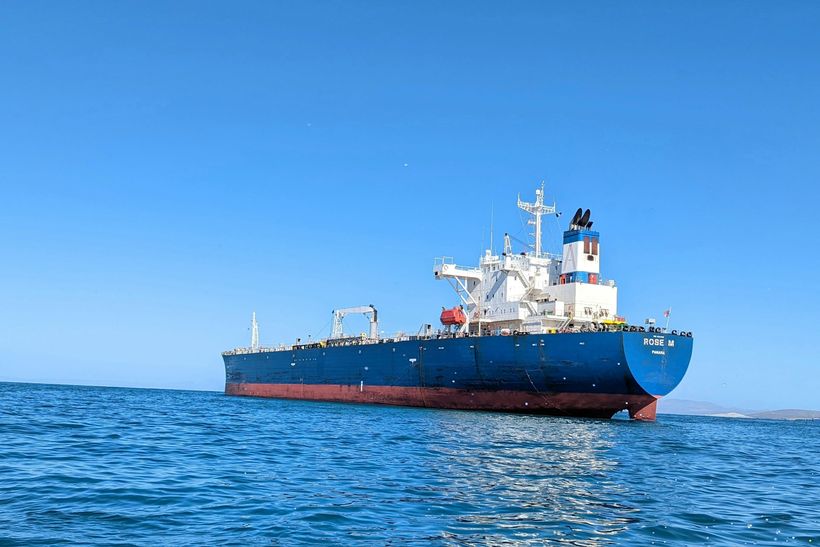
Less than a week after the onset of the war in Iran, and amid escalating conflict in the region, Iran effectively closed the Strait of Hormuz to shipping tankers moving oil from the Middle East by threatening attacks against any vessel who entered the waterway. Thus, the small body of water, which moves a large percentage of the world’s crude oil, has become one of the most discussed places in the world in recent days. Frank Galgano, PhD, is a professor of Geography and the Environment at Villanova University. He is an expert in military and Middle East geography and has also studied global maritime shipping and access to natural resources. Dr. Galgano says there geographic, geopolitical, military and economic factors at play, along with widespread potential consequences, as Iran holds steady on their closure of the strait and the U.S. considers how, or if, it will attempt to help escort oil ships through. Geography and Significance of Strait of Hormuz Situated between Iran to the north and Oman and the United Arab Emirates to the south, the Strait of Hormuz is a narrow shipping lane that connects the Persian Gulf to the Gulf of Oman and, further out, the Arabian Sea. It is one of the most vital chokepoints in the Middle East, along with the Suez Canal, Straits of Tiran, Bab al-Mandab and the Turkish Straits. “Right now, because of oil, it is the most important,” Dr. Galgano said. “Every day, roughly 20 percent of global petrochemical use goes through Hormuz.” The strait itself is barely over 20 nautical miles at its narrowest, but only a small portion of that is shipping lanes. Depth constraints limit shipping to two lanes, each two miles wide, with a two-mile buffer between. “You’re essentially looking at all of that shipping constrained to six nautical miles, and the ships are relatively slow,” Dr. Galgano said. “There are usually about 14-25 tankers every 24 hours transiting the Gulf, so there is always a ship in line." By Iran threatening military action against any oil-carrying ships in Hormuz—and by shipping companies refusing to attempt to traverse it— one-fifth of the global oil trade is essentially cut off indefinitely. That is concerning, given that it takes very little to send global oil prices skyrocketing. Dr. Galgano referenced the 2010-11 Somali pirate issue that caused supertankers—which cost upward of $50,000 a day to operate—to be rerouted. “That alone caused gas prices to raise 10 cents per gallon,” he said. In this case, the biggest impact will be felt throughout Asia, which relies more heavily on oil imports. But the U.S., despite being the second-biggest producer of crude oil last year, will still feel significant effects, since oil is traded globally. “It takes these supertankers eight or 12 days to reach the East Coast from Hormuz,” Dr. Galgano said. “So, a few days later you might see diminished supplies, but there is a critical point where we would face a real shortage.” Attempting to Move Ships Through Hormuz Poses Huge Danger Unlike the Iranian-backed Houthi rebels attacks on Israeli ships and those belonging to its allies in the Red Sea last year, Iran itself has far more sophisticated weapons, along with a strong motive to do whatever it can to put pressure on the U.S. and involved allies. In addition to drones designed for attacking ships—like the ones used by Houthis—Iran also possesses Chinese and Russian anti-ship missiles, according to the professor. “Ships are very vulnerable,” he said, then referencing the 2000 bombing of the USS Cole by Al Qaeda operatives. “That was just two guys in a rubber boat with an explosive device, and it almost sunk the whole ship. If one is carrying oil, it becomes almost like a large fuel bomb.” The United States has weighed the idea of sending a convoy to help escort and protect these ships. They did as much in the late 1980s in Operation Earnest Will, in which President Reagan ordered Kuwaiti supertankers—which were being fired at—to reflag under the U.S. flag so the Navy could legally escort them. But weapons technology has changed, and while U.S. naval ships could certainly defend themselves, “supertankers are slow and it is still an incredibly dangerous operation,” Dr. Galgano said. “The convoy would have to be lucky 100 percent of the time. Iran would only have to be lucky once to hit a ship and cause an immediate fiasco, both physically and in the media.” Global Dependance on Shipped Goods According to Dr. Galgano, between 75 and 90 percent of all items you handle on a day-to-day basis come from inside the hull of a ship: shocks on your car, clothes on your back, or components of your computer. When shipment is disrupted, it can cause supply chain and cost issues. “During the pandemic, Ford was waiting on chips for F-150s, and HP was waiting in chemicals to make ink,” Dr. Galgano said. “Even the ship that got stuck in the Suez Canal a few years ago caused $10 billion in losses per day due to the backup.” For commodities like oil, the indefinite inability to utilize perhaps the most important shipping lanes in the world due to large scale conflict quickly raises the economic stakes to even greater levels. “Iran absolutely knows that, and they see this as a bargaining chip,” Dr. Galgano said. “Cause economic pain to force cessation of the attacks.”

Francis Galgano, PhD

3 min

“Three-Dimensional” Warfare Adds to Uniqueness, and Danger, of an Israeli Offensive in Gaza

In the weeks following the attacks perpetrated by Hamas in Israel, all signs indicate that the Israeli Defense Forces (IDF) are planning a ground offensive within the Gaza Strip. An incursion into the strip, where Hamas is headquartered, would be distinct by nature; Israel has engaged within Gaza only a handful of times since 2005, when it dismantled its own settlements there. But according to Frank Galgano, PhD, an associate professor of geography and the environment at Villanova University and an expert in military geography, any ground offensive in Gaza would be unique—and dangerous—given the geography of the territory. “It's not a traditional geography of a conflict,” Dr. Galgano said. “Gaza is basically the size of Philadelphia. When you go into it, you’re fighting in a city, or a densely populated urbanized area, and it becomes three-dimensional warfare.” By “three-dimensional,” Dr. Galgano is referencing the ability of Hamas combatants to engage by ground, from high up inside or on top of buildings and from below, using the vast network of tunnels Hamas has constructed throughout Gaza. These dimensions complicate planning and add to the danger for Israeli soldiers. Conversely, they provide a serious advantage to Hamas militants. “It's also a very confined area,” he said. “It's so densely populated and heavily urbanized. That's the operational environment… With all operations in urban environments, you’re dealing with cultural features, too. In Gaza, you’ve got mosques, schools, museums; you have civilian population integrated into the battlefield. That makes things very difficult. Hamas will take advantage of that urban geography.” That population density, which is among the highest in the world with more than 2.2 million people on 140 square miles of land, significantly impacts the strategy and abilities of Israeli ground forces. Galgano contrasted it with other operational environments, such as the Palestinian-controlled West Bank. “There are movement corridors, ridges, valleys, avenues of approach and communication—all this stuff that makes sense from moving units around the battlefield,” Dr. Galgano said. “It is not the same in Gaza. It’s highly condensed in that vein.” There are other unique factors at play, too. Hamas reportedly has nearly 200 hostages from their October 7 attack. Dr. Galgano believes they are being strategically held throughout Gaza. “[these hostages are] probably in subterranean areas and bunkers well underground,” he said. “That, or they will put them in their headquarters [as a deterrent to Israeli strikes]. Israel probably knows exactly where some of these hostages are, [but] what do they do?” Dr. Galgano also considers the battle inexperience of IDF reservists as well. The IDF are “very well trained,” he said, and have many professional standing units, but in an offensive like this, “they need manpower and that’s going to be their reservists. “In 1967, 1973 and 1983, when Israel called up their reservists, [many] were war veterans already. Now, it’s different. They haven’t fought a ‘big’ war since 1983, so there is an inexperience level at play too.” Ultimately, Galgano thinks that if the IDF enter Gaza, they are going to “go up the middle and split the Gaza Strip in half… They are going to take out Hamas infrastructure in [Gaza City and Khan Younis], their two centers of gravity.” He thinks they will be able to do so, barring something unforeseen, “fairly easily.”

Francis Galgano, PhD

Social

Areas of Expertise

Environmental security
Environmental Change
Geophysical Processes
Military Geography
Piracy
Geography of Conflict
Strait of Hormuz

Biography

Geography and environment are two of the determinant factors in a location's habitability and prosperity. Intrinsic geographic features such as climate, topography, and susceptibility to natural disasters have far reaching social, political, and economic implications. Whether it's discussing earthquakes or floods, volcanic eruptions or the environmental impact of oil spills, Dr. Galgano is the source to turn to when working on environmental stories. His areas of specialty include coastal geography and military geography.

Education

Virginia Military Institute

BS

University of Maryland, College Park

MA

University of Maryland, College Park

PhD

Select Accomplishments

Academy Professor and Director of Geography Program, United States Military Academy

2002-2007

United States Army, Lieutenant Colonel, Ret.

1980-2007

Select Media Appearances

Water shortages are likely brewing future wars — with several flashpoints across the globe

CNBC  online

2024-09-05

The diminishing availability of water resources across the globe should be considered one of the most pressing environmental security challenges of the century.

That’s the view of one military geography and environmental security specialist, who recently published a study examining the relationship between water scarcity, geopolitics and the potential for violent conflict in a warming world.

Francis Galgano, an associate professor at the department of geography and the environment at Villanova University in Pennsylvania, said poor governance in acutely vulnerable areas — especially in transboundary river basins — and the deepening climate crisis were two major concerns.

View More

Are U.S., Iran already at war?

The Hill  online

2024-01-31

Galgano said anti-piracy laws at the U.N. and in other maritime organizations may be able to justify action against the rebel group, even on land-based targets.

“This represents a form of piracy,” he said. “The Houthis are not interested in robbing ships, unlike the Somali pirates or somebody else. But the idea is to create pressure and economic pain on the West, which is what [the Houthis are] doing at the behest of the Iranians.”

View More

‘A very unique battle’: How geography could shape Israel’s expected ground offensive in Gaza

CNBC  online

2023-10-16

Francis Galgano, an associate professor at the Department of Geography and the Environment at Villanova University in Pennsylvania, described Gaza as an essentially flat, “heavily urbanized” and “heavily tunneled” coastal enclave, similar in size to the city of Philadelphia.

In his view, Israel’s impending ground incursion “is going to be a mess” but ultimately a battle that its forces should be able to get under control. He warned, however, that any kind of ground offensive from Israel’s military would be a highly dangerous “cat and mouse game” of urban warfare, one with a particularly unique subterranean element.

View More

Show All +

Answers

Are there any underlying security motives for the Trump administration wanting to acquire Greenland?
Francis Galgano, PhD

"The Greenland [acquisition] talk has roots in a real issue about the Northwest Passage. The receding sea ice, and the shipping lane that's been created up there because of that, brings the passage into contact with Greenland. And the point is, what are you going to do if the Russians—who cause all kinds of problems within those different, varied sovereignty claims—set up a base in northern Greenland now? Or even the Chinese? It is a real national security issue, one I would say is moderately critical, and I think the national security people understand what he's talking about. It's about maintaining control over the Northwest Passage."

Select Academic Articles

The 1964 Jordan River Diversion Plan: Transboundary Water Basins and Conflict

Case Studies in the Environment

Galgano, Francis A.

2024
Water scarcity and its management have emerged as critical factors shaping the global security landscape, especially in transboundary river basins. Population growth is outstripping water supply, and climate change is affecting it as well. Since 1990, freshwater resources have declined by 58%, globally, and the situation is more acute in some regions. Thus, the potential for violent conflict triggered by water is a realistic scenario. Nevertheless, the literature implies that water conflicts are typically settled by peaceful means. This case study suggests that continued peaceful resolution of interstate water conflicts is inconsistent with the realities of the emerging global security landscape. This case study examines the complex relationship between water, geopolitics, and conflict, exposing how competition over this finite resource has fueled tensions and ignited interstate war.

View more

Hostis humani generis: Pirates and lobal maritime commerce

Research in Globalization

Galgano, Francis A.

2024
Maritime piracy is a pressing global economic and security challenge, posing significant threats to international shipping and global trade. Contemporary piracy is intrinsically linked to matters of governance and economic marginalization fostered by the globalization of the world economy. The first and second order costs of piracy are not inconsequential. It is estimated that they cost the global economic community about $18 billion a year. Indeed, during their peak the Somali pirates clearly demonstrated the vulnerability of global maritime commerce to aggressive and effective pirate attacks. Using data from the International Maritime Bureau, this paper aspires to provide an understanding of important trends in contemporary maritime piracy, shedding light on the core issues that enable their persistent geographic reach and permanency on the global security landscape.

View more

Water and Conflict: The Evolving Environmental Security Landscape

Middle States Geographer, 45: 29–39

Galgano, F.A.

2013
Environmental security refers to a range of security problems triggered by environmental factors.
Water is a particularly complicated factor in the environmental security milieu because it is an essential resource that promises to become scarcer in a greenhouse world. By 2015, about 40 percent of the global population will live in regions that are unable to provide sufficient freshwater to meet basic human needs. Historically, water-related conflicts have been resolved by cooperative means, however, I argue that the security landscape has changed, and the history of cooperative conflict resolution may no longer be a reliable guide to the future. Indeed, 25 percent of all water–related disputes during the past 50–years have resulted in some form of hostilities, and 37 have resulted in violence or military action. This paper suggests that continued peaceful resolution of interstate
water conflicts is not consistent with the realities of the emerging national security landscape: climate change is
affecting water supply in many critical water basins, and the proliferation of failing states has reduced the potential for diplomatic resolutions. This paper examines linkages between environmental stress, water availability, and conflict and uses the three principal river basins in the Middle East as a case study to highlight these points. The analysis suggests that the region is now more vulnerable to environmental stress and water–related conflict.

View more

Show All +
