Gareth Fraser profile photo

Gareth Fraser

Associate Professor University of Florida

  • Gainesville FL

Gareth Fraser's research focuses on the diversity of fishes and how they evolve and develop their unique adaptations.

Contact
University of Florida logo

University of Florida

View more experts managed by University of Florida

Biography

Gareth Fraser's research is focused on the evolution and development of diversity in a range of aquatic vertebrates, such as sharks, chimaeras and pufferfish. He uses these unconventional models to answer questions in evolution, development and regenerative biology. His primary research focus is evolution and development of teeth, specifically in sharks. His interdisciplinary research spans biodiversity, ecology and evolution, paleontology, stem cell and regenerative biology, dental biology and evolutionary developmental biology. He teaches courses on evolution, development, genetics, marine ecology and biodiversity.

Areas of Expertise

Evolutionary Developmental Biology
Stem Cell and Regenerative Biology
Ecology and Evolution
Biominetics
Evolution
Sharks
Marine Biology
Fish Diversity
Developmental Biology
Biodiversity
Paleontology
Dental Biology

Media Appearances

It's been 50 years since the blockbuster movie 'Jaws,' but there's more to be revealed about shark biology

PBS News  online

2025-06-21

In addition to scaring many moviegoers that “it’s not safe to go in the water,” “Jaws” has over the years inspired generations of researchers, including Gareth Fraser. The scientific curiosity sparked by this horror fish flick has helped reveal so much more about what lies beneath the waves than was known 50 years ago.

View More

Watch the hammerhead shark gets its hammer

Science  online

2023-09-28

With their broad, flattened snout tipped at each end with giant google eyes, hammerhead sharks are both charismatic and easy to spot. Now, for the first time, scientists have captured step-by-step how this “hammer” forms in developing embryos.

View More

UF researchers study ghost shark and its teeth regeneration abilities

WUFT News  online

2023-08-03

University of Florida researchers explored the Pacific Northwest's deep waters this summer to learn about the mystifying ghost shark. The researchers discovered a way to locate ghost shark eggs using remotely-operated vehicles. From there, the researchers can study the shark's teeth to understand teeth regeneration better.

View More

Social

Articles

Teeth Outside the Jaw: Evolution and Development of the Toothed Head Clasper in Chimaeras

bioRxiv

Cohen, et al.

2025-04-05

We investigate the development of the tenaculum and its teeth throughout the ontogeny of the Spotted Ratfish, Hydrolagus colliei, to assess homology and convergence between this novel craniofacial feature and oral jaws.

View more

Evolution, development, and regeneration of tooth-like epithelial appendages in sharks

ScienceDirect

Nicklin, et al.

2024-12-01

Our observations have begun to decipher the developmental and genetic shifts that separate these seemingly similar dental units, including elements of the regenerative nature in both oral teeth and the emerging skin denticles from the small-spotted catshark (Scyliorhinus canicula) and other chondrichthyan models. Ultimately, we ask what defines a tooth at both the molecular and morphological level.

View more

Embryonic development in the bonnethead (Sphyrna tiburo), a viviparous hammerhead shark

Developmental Dynamics

Byrum, et al.

2023-09-28

We present the first comprehensive embryonic staging series for the Bonnethead, a viviparous hammerhead shark. Documenting the development of hard-to-access vertebrates, like this viviparous shark species, offers important information about how new and diverse morphologies arise that otherwise may remain poorly studied.

View more

Media

Spotlight

3 min

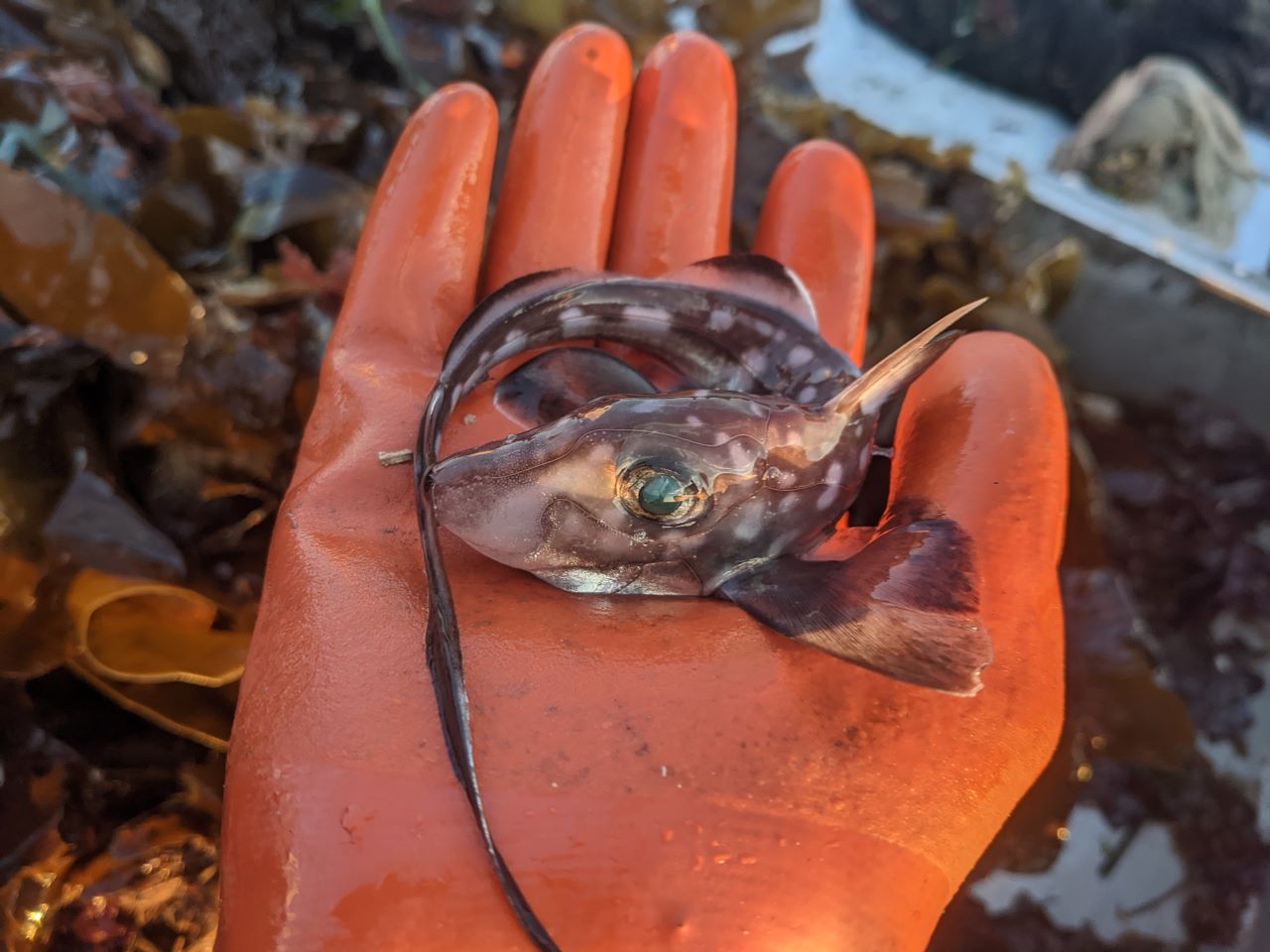
Male “ghost sharks” — eerie deep-sea fish known as chimaeras that are related to sharks and rays — have a strange rod jutting from their foreheads, studded with sharp, retractable teeth. New research reveals these are not merely lookalikes, but real rows of teeth that grow outside the mouth. What’s more, the toothy appendage is likely used for mating. Found only in males, the forehead rod — called a tenaculum — is the ghost sharks’ only source of distinct teeth, and it seems to be used to grasp females in much the same way sharks use their toothy mouths in mating. “If these strange chimaeras are sticking teeth on the front of their head, it makes you think about the dynamism of tooth development more generally,” said Gareth Fraser, Ph.D., a professor of biology at the University of Florida and senior author of the study. “If chimaeras can make a set of teeth outside the mouth, where else might we find teeth?” The team, including scientists from the University of Washington and the University of Chicago, studied both fossils and living specimens to solve the mystery. A 315-million-year-old fossil showed the tenaculum attached to the upper jaw, bearing teeth incredibly similar to those in the mouth. Modern chimaeras collected from Puget Sound revealed the same tooth-growing process on the head, seen in modern-day shark jaws. And genetic testing confirmed they expressed the same tooth-specific genes as oral teeth. “What we found is that the teeth on this strange appendage look very much like rows of shark teeth. The ability to make teeth transferred onto that appendage, likely from the mouth,” Fraser said. “Over time, the tenaculum shortened but retained the ability to make oral teeth on this forehead appendage.” Fraser collaborated with Washington’s Karly Cohen, Ph.D., and Michael Coates, Ph.D., from Chicago on the study, which was published this week in the Proceedings of the National Academy of Sciences. As experts in shark evolution and anatomy, the scientists were intrigued by these tooth-filled rods sprouting from the ghost shark foreheads. The central mystery: Is the tenaculum covered in true teeth related to oral teeth or more similar to the tooth-like scales plastering the skin of sharks and some ghost sharks? CT scans of the fossils and modern chimaeras gave the scientists unprecedented, detailed insights into the development of the tenaculum teeth, which looked remarkably similar to the teeth of today’s sharks. The nail in the coffin came from genetic evidence. The tenaculum teeth express genes found only in true teeth, never in shark skin denticles. "What I think is very neat about this project is that it provides a beautiful example of evolutionary tinkering or ‘bricolage,’” said Coates, a professor of biology at the University of Chicago. “We have a combination of experimental data with paleontological evidence to show how these fishes co-opted a preexisting program for manufacturing teeth to make a new device that is essential for reproduction." Cohen, a postdoctoral researcher at the University of Washington’s Friday Harbor Labs and first author of the paper, said scientists had never spotted teeth outside the mouth in this way before. “The tenaculum is a developmental relic, not a bizarre one-off, and the first clear example of a toothed structure outside the jaw,” she said. The bizarre path from a mouth full of teeth to forehead teeth used for mating demonstrates the impressive flexibility of evolution, the researchers say, always ready to repurpose structures for strange and unexpected new uses. “There are still plenty of surprises down in the ocean depths that we have yet to uncover,” Fraser said.


Gareth Fraser