Ilia Delio, OSF, PhD profile photo

Ilia Delio, OSF, PhD

Josephine C. Connelly Endowed Chair in Theology | College of Liberal Arts and Sciences Villanova University

  • Villanova PA

Sister Ilia Delio, OSF, PhD, works to find a new unity and synthesis in science and religion.

Contact
Villanova University logo

Villanova University

View more experts managed by Villanova University

Spotlight

5 min

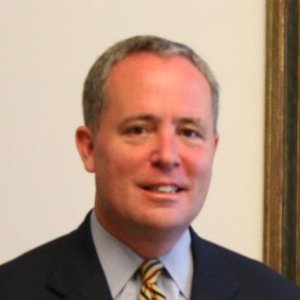
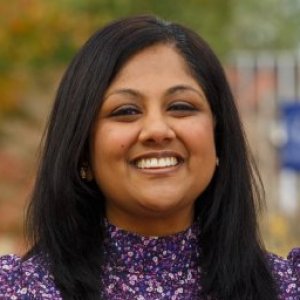
In his first appearance on the balcony of St. Peter’s Basilica, Pope Leo XIV shared with the world a message of hope, communion and reconciliation, emphasizing the need to “build bridges with dialogue and encounter so we can all be one people always in peace.” Throughout the last 12 months, the Pontiff has placed these values at the forefront of his work and ministry, pairing active collaboration with prayerful contemplation in his leadership of the world’s 1.4 billion Catholics. In the coming years, that emphasis is likely to continue, as the Pope addresses longstanding rifts and evolving challenges within the Church and beyond. Asked to consider the most striking aspects of his early papacy, and to reflect on the most pressing issues he currently faces, Villanova faculty members studying the pontificate had a wide variety of responses. Jaisy A. Joseph, PhD Assistant Professor of Theology and Religious Studies For Dr. Joseph, Pope Leo’s first year has been defined by a spiritual vision centered on unity, listening and shared responsibility. “From the beginning of his papacy, Leo emphasized that we are a synodal Church working towards peace and moving forward together. Leo’s Augustinian formation will absolutely leave its imprint on what Pope Francis started. While the two have distinct personalities and styles, there is a fundamental continuity with Francis that Leo has signaled. Leo stresses that at the core of the Church is a deeper desire for a spirituality of ‘we’—a Church rooted in deep listening and bold speaking. This is where the Augustinian charism makes itself known. “This unity does not erase differences. Instead, it asks, ‘How do we create friendships that are strong enough to bear the tensions of our differences?’ In a world shaped by ‘us versus them,’ Leo insists on recognizing Christ in the completely different ‘other.’ “Finally, his leadership style is marked by discernment. Listening is so critical to him, and any caution he displays is not out of fear but wanting to listen before speaking. In a noisy world, he insists that we just need silence—trusting that through shared listening, the Church can move forward together.” Luca Cottini, PhD Professor of Italian Studies For Dr. Cottini, Pope Leo’s first year has been marked by a clear effort to position the Church in active dialogue with the modern world—especially in response to emerging global challenges, migration and an increasingly interconnected faith community. He draws parallels to the priorities of Leo XIV’s namesake, Pope Leo XIII. “Catholic social doctrine is a doctrine that the Church established to address subjects that are not directly written about in the Gospel. This doctrine was important for Pope Leo XIII and is increasingly important for Leo XIV as well. ‘Leo’ is a name that relates back to Catholic social doctrine and the need to read the changing signs of the times. By choosing the name ‘Leo,’ the Pope signaled his desire to respond to contemporary issues. “Leo XIV has also harkened back to Leo XIII in his first year by viewing migration and immigration not as a plight, but rather as an opportunity to enter into contact with new worlds. This approach connects to Leo XIV’s own background and perspective, which includes both proximity to and distance from the United States, giving him both an outsider and insider perspective as well as a critical thinking lens on these issues. “Lastly, Leo XIV has used his first year to elevate this idea of a universal Church that is much needed, shaped by his global exposure and an ability to see the world through the lens of others. He sees that we can dialogue with the world, approaching modernity not as an enemy but as something to engage with.” Patrick McKinley Brennan, JD John F. Scarpa Chair in Catholic Legal Studies According to Professor Brennan, “One of the issues that is on the Pope’s radar and has been from before the conclave is the question of the traditional Latin Mass,” a cause championed by various cardinals, bishops, priests and lay faithful around the globe. As he shares, it is a matter of great interest to a small but growing number of Catholics who recall Pope Benedict XVI’s statement that the traditional Mass—the Mass as it was celebrated by most Catholics since 1570—was “never juridically abrogated” following the Second Vatican Council. “Pope John Paul II in the 1980s, and then Pope Benedict XVI in 2007, liberalized access around the world to the traditional Mass. But Pope Francis revoked most of those permissions, citing ‘facts’ that have subsequently been called into question by investigative journalists and others. Pope Francis issued a document called Traditionis custodes, which [went against] the permissions that Benedict XVI gave in a document called Summorum pontificum in July 2007. “Now, the leadership of the Society of St. Pius X [an anti-modernist priestly fraternity] have announced that they’re going to ordain new bishops, the exact thing that got some of their predecessors excommunicated in 1988, so that the traditional Mass can continue to be celebrated and other sacraments can continue to be provided to Catholics according to the traditional rites. Reading between the lines, I think the Society of St. Pius X is trying to force Pope Leo’s hand on the Latin Mass. He’s been biding his time, working out how to respond to this hard question, and I think they’ve just decided that it’s an all-or-nothing situation. “It’s an example of how Pope Leo inherited some big problems, and I think most of the cardinals who elected him thought that they had chosen someone who, because he can listen and is committed to unity, will try his very best to find a solution that remains faithful to Catholic doctrine while bringing in as many voices as possible. Ironically, Pope Francis reduced legitimate diversity in Catholic liturgy, and while Pope Leo has a chance to restore that diversity, he has to do so in a way that addresses the irregular situation of the Society of St. Pius X.” Ilia Delio, OSF, PhD Josephine C. Connelly Endowed Chair in Christian Theology Looking ahead, Sister Delio says one of the most significant social developments Pope Leo must face is the rise of advanced technologies—in particular, increasingly sophisticated artificial intelligence models. “Our theological anthropology needs a bit of updating, as it does not currently meet the needs of our very complex world today. There are a lot of discussions on artificial intelligence and advanced technology, but the problem is that these technologies are already here and rapidly advancing. “So, we have to face this reality, not by asking ‘What is happening to us?’ but ‘What are we becoming with our technologies?’ and ‘How best can we remain human in an AI world?’ I think Pope Leo is asking similar questions, considering what makes the human person the image of God, what makes us distinct and whether there are human values that cannot be downloaded or reproduced in a digital medium. “At the same time, we must ask: Can technology deepen the human spirit by enabling a new level of collective life? Can AI technology empower the Body of Christ?” To speak with any of these faculty experts, please contact mediaexperts@villanova.edu.

Ilia Delio, OSF, PhDJaisy A. Joseph, PhDLuca Cottini, PhDPatrick McKinley Brennan, JD

4 min

The death of Pope Francis marks a pivotal moment for the Catholic Church, ending a papacy that redefined the Church's relationship with the modern world. As the College of Cardinals prepares to gather in conclave, Catholics across the globe are closely watching to see whether the next pontiff will build upon Francis' legacy or chart a new course. The following experts are available to provide insight into a range of related topics, including Pope Francis' enduring impact and what lies ahead for the world's 1.4 billion Catholics: Massimo Faggioli, PhD Professor, Theology and Religious Studies Dr. Massimo Faggioli is a world-renowned expert on the history and administrative inner workings of the Catholic Church, with specific expertise in the papacy, Vatican II, the Roman Curia, liturgical reform, new Catholic movements and Catholicism and global politics. As quoted on NPR: "Historically, we see in different conclaves a certain swinging of the pendulum. What the conclave and the next pope cannot do is to ignore and deny the changing features of global Catholicism, which is much less European, much less white, less North American and more Global South..." Kevin Hughes, PhD Chair, Theology and Religious Studies Dr. Kevin Hughes is a leading historical theologian, offering insights into the life, legacy and impact of Pope Francis. He can also speak to the significance of the Pope in Catholicism and the influence of his teachings on the global Catholic Church. As quoted on Scripps News: "[Pope Francis' selection] was really the Church extending beyond the limits of its European imagination. His Latin American identity was really crucial to embracing a new moment within the Church and opening the door in so many ways, and I think he bore witness to that throughout his papacy." Jaisy Joseph, PhD Assistant Professor, Systematic and Constructive Theology Dr. Jaisy Joseph is a trained ecclesiologist, able to address a wide range of topics relating to the papacy, conclave process and Catholic Church. Previously, she has commented on the Church's presence in Asia and the Global South, offering expert commentary on its growth, challenges and shifting influence. As quoted by ABC News Digital: "[The election of someone from the Global South would be] a move in that direction of how to be a global church. That move from a Eurocentric church to a truly global church—I think that's what Francis really inaugurated." Patrick Brennan, JD Professor of Law; John F. Scarpa Chair in Catholic Legal Studies Professor Patrick Brennan is an expert on the conclave process and the main rules that govern it. He can also speak to topics such as the contemporary and historical importance of secrecy in the conclave, what the cardinals may be looking for in the next Pope and the factors that cause similarities and differences from one conclave to the next.  As quoted on Fox 29's Good Day Philadelphia: "The purpose of the general congregation is for the cardinals, who don't know each other in some cases, to get to know each other better as they learn about the current state of the Church and together decide on the needs of the Church and priorities for the new pontificate." Brett Grainger, ThD Associate Professor, Study of Spirituality and American Religious History Dr. Brett Grainger is a go-to source for discussions of the changing face and role of modern spirituality in America. He serves as an expert on contemporary religious trends and can also speak to the broader public reaction to Pope Francis' passing, especially outside of the Catholic faith. As quoted by Courthouse News Service: "People are disaffiliating from a tradition—that doesn't necessarily mean in fact that they don't believe in God anymore...What's more important is 'Is this giving me life? Is this making my life more meaningful? Is this giving me the kind of energy and purpose that I'm looking for?' That's where religion is going." Michael Moreland, JD, PhD Professor of Law and Religion; Director, Eleanor H. McCullen Center for Law, Religion and Public Policy Dr. Michael Moreland is a renowned scholar of constitutional law, religious freedom, public policy and ethics. He can provide expert commentary on items related to the Catholic right and the state of religious politics in the United States. As featured on NBC News Digital: Michael Moreland said the mass appeal of "Conclave" captured how, even in a secular modern age, there is still pervasive intrigue around "the ancient rituals of the Catholic Church." "The significance of the theological and spiritual aspects of Catholicism and this process of electing a pope was kind of reduced into partisan politics," he said. Ilia Delio, OSF, PhD Josephine C. Connelly Endowed Chair in Christian Theology Sister Ilia Delio addresses topics in her work such as theology and evolution, technology and human becoming and understandings of Catholicity in a world of complexity. She can provide expert insight into Laudato si', Pope Francis' position on the environment, the relationship between science and religion and integral ecology. As featured in the National Catholic Reporter: "We are clearly an Earth in crisis," with a reversal necessary to secure a sustainable future, said Ilia Delio... Delio posed a series of questions: about the relationship between religion and science; what Laudato si', and Christianity more broadly, can offer ecological movements; and whether the concept of kinship or creation as family might better reflect humanity's place within nature than "care for creation." To speak with any of these faculty experts, please contact mediaexperts@villanova.edu.

Ilia Delio, OSF, PhDBrett Grainger, ThDJaisy A. Joseph, PhD

Media

Areas of Expertise

Theology
Neuroscience
Artificial Intelligence and Becoming
Culture and Religion
Catholicity
Evolution and Culture
Integration of Science and Religion

Biography

Science and religion are often thought of as mutually exclusive; however, with areas of expertise grounded in both spheres, Sister Ilia Delio can explain how it is possible to find a new unity and synthesis in science and religion. She can address compelling topics like how technology has changed human consciousness, spirit as a type of energy, the import of artificial intelligence on life as we know it and the potential for achieving wholeness of being. Her work seeks to move beyond the dialogue of science and religion toward a mutually enriched integration of these disciplines for wholeness of being.

Education

DeSales University

BS

Seton Hall University

MS

Fordham University

MA

Select Accomplishments

2017 Madeleva Lecturer at St. Mary's College (Notre Dame)

The invited speaker is recognized as a prominent woman theologian in the United States.

Honorary Degree, Doctor of Science, St. Francis University

Conferred in 2015.

Catholic Press Book Award (2014)

Conferred for "The Unbearable Wholeness of Being: God, Evolution and the Power of Love" (Third Place, Faith and Science).

Affiliations

  • American Academy of Religion (AAR)
  • American Teilhard Association
  • Catholic Theological Society of America
  • The Maryknoll Institute of Theology, Lecturer
  • Rohr Living School of Theology, Guest Speaker

Select Media Appearances

The Rise of Silicon Valley's Techno-Religion

The New York Times  

2025-08-04

Each spring, Lighthaven hosts LessOnline, a conference where bloggers and commenters from Rationalist websites meet in person. Every Tuesday at 6:30 p.m., almost like a Bible study, people gather to read and discuss The Sequences, the ur-text that gave rise to the movement. "Religion is text and story and ritual," said Ilia Delio, a Franciscan sister and professor of theology at Villanova University. "All of that applies here."

View More

Listen and Surrender to the Presence of Love

National Catholic Reporter  

2025-03-22

"Life, I have to realize, moves like waves on the shore, each moment carrying its own intelligence, its own invitation. We stand perpetually on the cusp of becoming, where tiny wisps of future burst forth in the now, not according to our careful designs but in response to a deeper rhythm. When we truly inhabit this edge between what is and what is emerging, we discover that it holds everything—our fears and our courage, our losses and our awakening, our resistance and our surrender to love's continuous unfolding."

View More

How Technology Is Reshaping Religion

National Geographic  

2024-12-19

Villanova theology professor Sister Ilia Delio has closely observed the shifts of faith, belief and perception. And while she has watched the trends she doesn't believe that faith in God is vanishing. "It hasn’t gone away, but it's showing up in a new way," she says. "That really changes how we think about these questions of God or faith."

View More

Research Grants

Public Theologies of Technology and Presence (2018)

The Institute of Buddhist Studies at UC Berkeley

Public Theologies of Technology and Presence gathered and funded a cohort of leading scholars of religion, theologians and journalists for their work addressing a pressing concern of contemporary life: the ways in which technologies reshape human relationships and alter how people are (or are not) "present" with each other. The initiative was developed and directed by psychoanalyst and religion scholar Steven Barrie-Anthony, PhD, PsyD, RP, and was funded by the Henry Luce Foundation.

View more

Answers

Ilia Delio, OSF, PhDPatrick McKinley Brennan, JDJaisy A. Joseph, PhD

Pope Francis was very prophetic, and he had a spiritual charism—there was a freedom there. He saw where the Church needed to go. He saw that it was too sluggish, too staid and too reserved, and his Laudato si' encyclical was really groundbreaking in what it could call us to... A fear with Pope Leo is that he's going to be too moderate and too much of a statesman. He wants to keep everyone happy and together, but I don't think "The universal Church is universal" approach works anymore. Because it's such a very large, complex world, it's very hard to hold together something that is unifying. Unity can only work locally.

Select Academic Articles

Is Natural Law "Unnatural?" Exploring God and Nature Through Teilhard's Organic Theology

Theology and Science

Delio, Ilia

2017
Teilhard de Chardin turns revelation and nature into a complementarity of wholeness, expanding religion so that it better reflects God's revelation. Truth comes in two books: the Book of Nature and the Book of Scripture. In the tradition of Thomas Aquinas, the truths of natural reason are discovered by using the natural light of reason, that is, the capacity for intelligent thought that all human beings have by virtue of being human. Similarly, the truths beyond reason are outside the aptitude of the natural light of reason to discover or verify. They are available only through faith. What Teilhard teaches us is that the Book of Nature can no longer be separated from the Book of Scripture without denying God. The two together constitute an organic theology.

View more

From Aquinas to Teilhard: Divine Action and the Metaphysics of Love

The Heythrop Journal

Delio, Ilia

2016
"Although the question of divine action is a modern one, the roots of the question (as a philosophical-theological one) lie in the Middle Ages. Hence this paper begins by returning to the Middle Ages in order to understand divine causality as a function of cosmology. I begin with Thomas Aquinas and his ideas on primary and secondary causality, translated into the Latin West and modified by the Islamic philosophers of his age. Because Thomas' philosophy is deeply tied to monotheism and Neoplatonic metaphysics, I turn to his contemporary Bonaventure who sought to Christianize Neoplatonism by describing a philosophy of Christ the center and a new metaphysics of love. Although there is no explicit connection between Bonaventure and Pierre Teilhard de Chardin, Teilhard's ideas on God and evolution are supported by a metaphysics of love that resonates with Bonaventure's theology and the integral relationship between causality and cosmology. Teilhard envisioned God in relation to the whole (cosmos) and divine action as an ongoing work of love. I will argue that a metaphysics of love is essential to the ongoing work of creation in an unfinished universe."

Transhumanism or Ultrahumanism? Teilhard de Chardin on Technology, Religion and Evolution

Theology and Science

Delio, Ilia

2012
Transhumanism is a term used to describe the enhancement of human life through technology, seeking to overcome biological limits. Teilhard de Chardin has been described as a transhumanist, but a closer examination of his ideas reveals his distinction of ultrahumanism, a deepening of the whole evolutionary process in and through the human person. This paper examines ultrahumanism and Teilhard's vision of technology in the evolution of religion.

View more