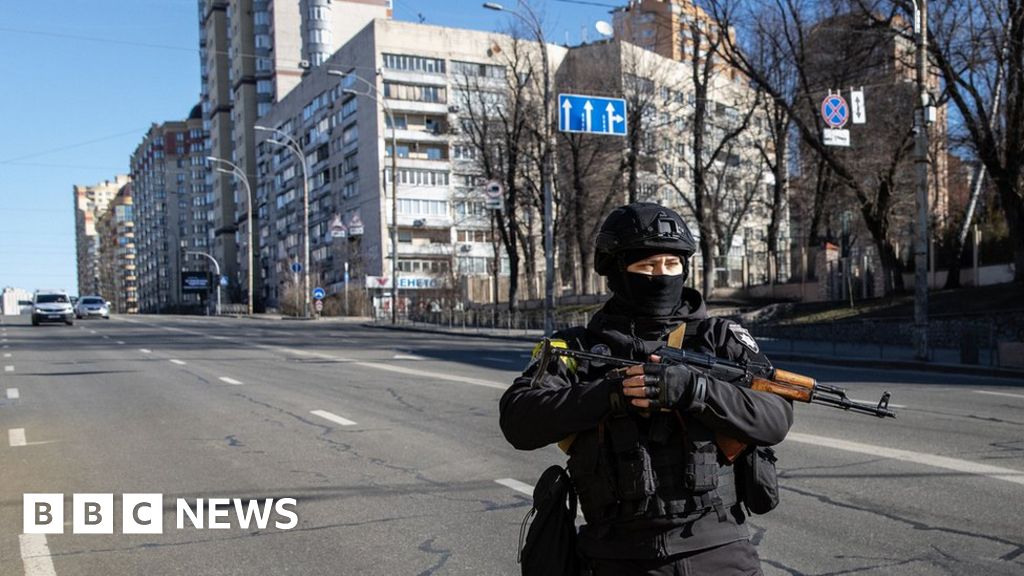
For a week the world has watched as Russian forces have pounded Ukraine from the sky and a full-on ground invasion is now underway.
Support in the form of sanctions, speeches and supplies has poured in from NATO and non-NATO allies from across the globe. Ukraine’s army is out-manned and out-gunned, but their resistance has so far defied expectations.
But how will this outright show of unprovoked forces that has shocked the world impact global relations moving forward?
If you are covering the ongoing invasion of Ukraine by Russia, then let our experts help with your questions and coverage. University of Mary Washington Political Science and International Affairs Professor Jason Davidson is an expert in American foreign and security policy, and international security. To arrange an interview with Dr. Davidson, simply click on his icon.
·
2 min
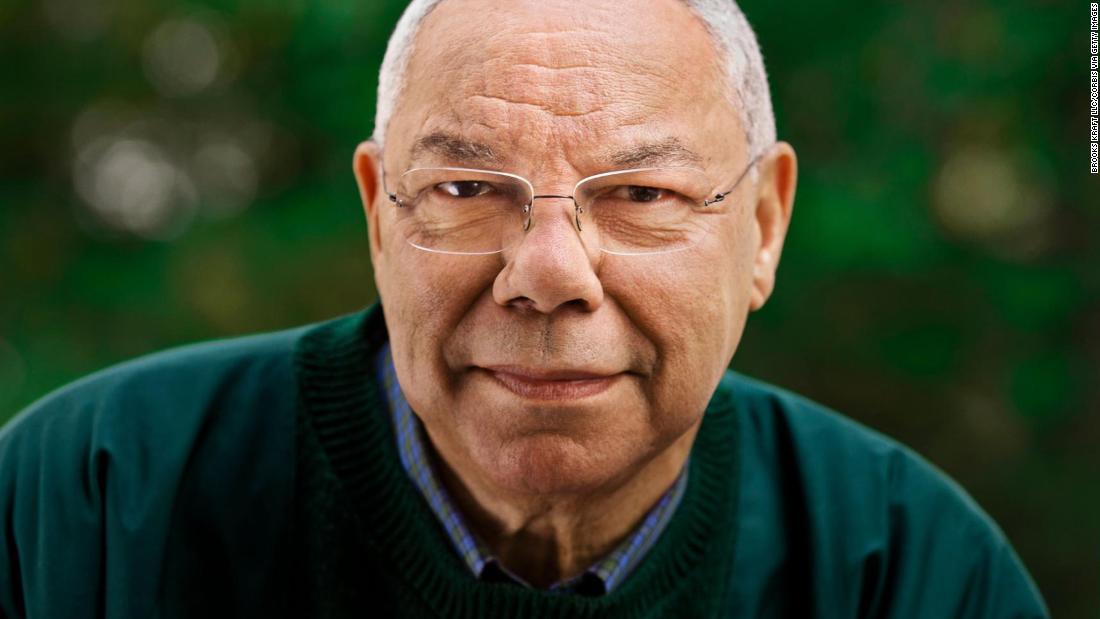
Colin Powell, the first Black US secretary of state whose leadership in several Republican administrations helped shape American foreign policy in the last years of the 20th century and the early years of the 21st, has died from complications from Covid-19, his family said on Facebook. He was 84. "General Colin L. Powell, former U.S. Secretary of State and Chairman of the Joint Chiefs of Staff, passed away this morning due to complications from Covid 19," the Powell family wrote on Facebook, noting he was fully vaccinated. A source familiar with the matter said Powell had multiple myeloma, a cancer of plasma cells that suppresses the body's immune response. Even if fully vaccinated against Covid-19, those who are immunocompromised are at greater risk from the virus. "We have lost a remarkable and loving husband, father, grandfather and a great American," the family said. October 18 CNN If you are covering the life and legacy of Colin Powell then let our experts help with your questions and coverage.
University of Mary Washington Political Science and International Affairs Professor Jason Davidson is an expert in American foreign and security policy, and international security. He is also the author of the commissioned study, "The Costs of War to United States Allies Since 9/11," which focuses extensively on the human and monetary sacrifices made by America's allies in these conflicts. Davidson, and the document, made waves this spring, landing in the likes of Forbes, The Guardian and The Daily Mail.
If you’re looking to arrange an interview with Dr. Davidson, simply click on his icon.
·
1 min
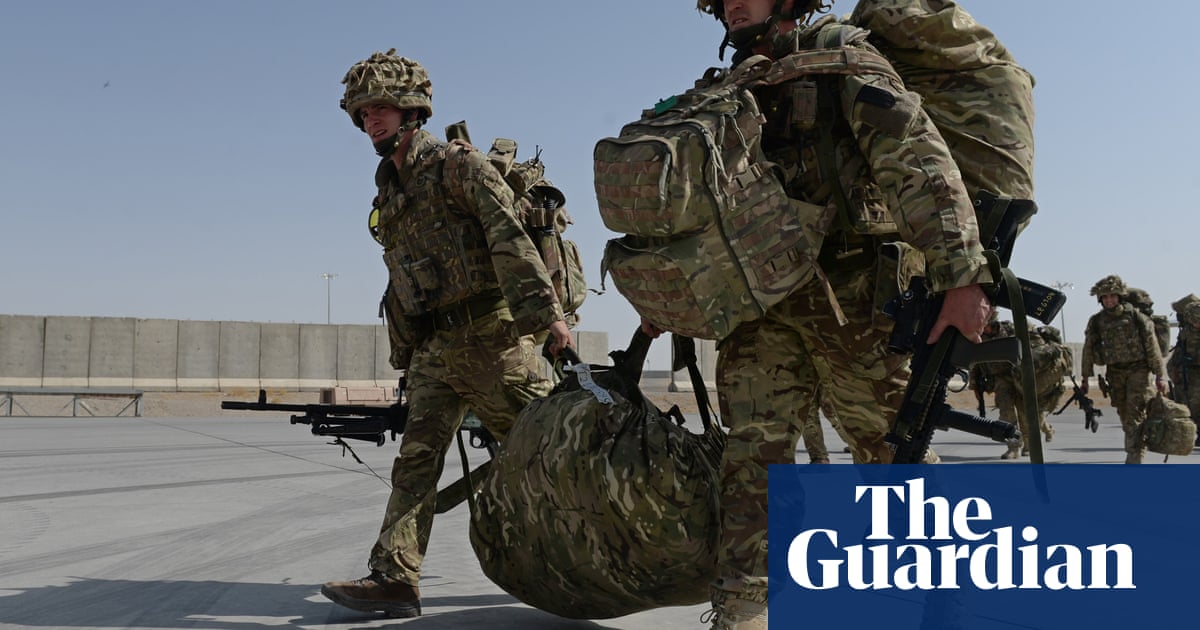
This Saturday marks the 20th anniversary of the September 11 terrorist attack. It was a day that forever changed how the United States viewed terrorism and its approach to foreign policy.
The Middle East, especially Iraq and Afghanistan, has seen upheaval in the wake of 9/11. Over the last two decades, America’s approach to how it deals with enemies and how it collaborates with allies has also been drastically altered.
University of Mary Washington Political Science and International Affairs Professor Jason Davidson is an expert in American foreign and security policy, and international security. He is also the author of the commissioned study, "The Costs of War to United States Allies Since 9/11," which focuses extensively on the human and monetary sacrifices made by America's allies in these conflicts. Davidson, and the document, made waves this spring, landing in the likes of Forbes, The Guardian and The Daily Mail. If you’re looking to arrange an interview with Dr. Davidson, simply click on his icon.
Media
Social
Biography
Jason Davidson, professor of political science and international affairs, specializes in American, British, French and Italian foreign and security policy as well as the North Atlantic Treaty Organization (NATO). His research and teaching also encompass broader issues of international security. He is a nonresident Senior Fellow at the Atlantic Council.
Davidson has delivered lectures at a range of prominent institutions, including the U.S. Department of State’s Bureau of Intelligence and Research, the U.S. Marine Corps War College, the University of Rome (Roma Tre), and the University of Bologna.
He has received multiple honors for his scholarship and teaching. Most recently, he was named a Waple Professor for 2022-24, a distinction established through a gift from alumna Shirley Van Epps Waple '52 that recognizes exceptional teaching, scholarship and service. He earned the UMW Alumni Association's Outstanding Young Faculty Award in 2007 and is a two-time recipient of the Academic Affairs Council Professors’ Appreciation Award. In 2005-06, he was awarded a UMW Jepson Fellowship for his project “Signaling Resolve in Contemporary American Foreign Policy.”
The author of four books – "The Origins of Revisionist and Status-quo States," "America’s Allies and War: Kosovo, Afghanistan, Iraq," "America's Entangling Alliance," and "NATO After Russia's Invasion of Ukraine" – Davidson's work explores the dynamics of alliance politics and the evolution of Western security strategies.
His articles have appeared in peer-reviewed journals, including "Contemporary Security Policy," "Modern Italy," "Security Studies," and "The Nonproliferation Review." He's also contributed chapters to volumes such as "Power in Transition: The Peaceful Change of International Order," "Sanctions as Economic Statecraft: Theory and Practice," and "Italy in the Post-Cold War Order: Adaptation, Bipartisanship, Visibility."
Areas of Expertise
American Foreign Policy
American Security Policy
International Relations Theory
International Security
British, French and Italian Foreign Policy
Comparative Politics of Western Europe
Accomplishments
Waple Professorship
2022-01-01
Named a Waple Professor for 2022-24, a distinction established through a gift from Mary Washington alumna Shirley Van Epps Waple '52 that recognizes exceptional teaching, scholarship and service.
Outstanding Young Faculty Award
2007-01-01
Earned the University of Mary Washington Alumni Association's Outstanding Young Faculty Award.
Jepson Fellowship
2005-01-01
Awarded by the University of Mary Washington for the project titled “Signaling Resolve in Contemporary American Foreign Policy.”
Professors' Appreciation Award
2003-01-01
Recipient of the Academic Affairs Council Professors’ Appreciation Award in 2002 and 2003.
Education
University of California at Berkeley
B.A.
Political Science
1996
Georgetown University
M.A.
Government
1999
Georgetown University
Ph.D.
Government
2001
Affiliations
Nonresident Senior Fellow, New American Engagement Initiative in the Atlantic Council’s Scowcroft Center
Media Appearances
The Ankara summit is an opportunity for NATO to ramp up engagement with its southern neighborhood
Atlantic Council online
2026-06-23
WASHINGTON—Recent years have seen a whipsaw of NATO engagement with its neighbors to the south.
WEB EXCLUSIVE: New Book Takes Nuanced Look at NATO’s Ukraine Coalition
National Defense Magazine) online
2026-02-23
“NATO is made up of 32 countries, and those 32 countries have different threat perceptions. They have different national interests, and they have different histories and identities that they bring to the table,” said Jason Davidson, a nonresident senior fellow with the Transatlantic Security Initiative at the Atlantic Council’s Scowcroft Center for Strategy and Security and a professor of political science and international affairs at the University of Mary Washington.
Trump said there's a framework for a Greenland deal. Let's break it down
Audacy online
2026-01-28
President Trump announced the framework of a deal concerning Greenland. We break it down with Jason Davidson, Professor of Political Science and International Affairs at the University of Mary Washington and author of NATO After Russia's Invasion of Ukraine.
NATO in Times of Russia’s War Against Ukraine and Trump II
Center for Security Studies at ETH Zurich online
2026-01-23
Davidson is featured in a Web Talk hosted by the Center for Security Studies (CSS) at ETH Zurich, a leading international research institution focused on security and defense policy. The virtual event is examining how shifting geopolitical dynamics are reshaping NATO, including evolving threat perceptions among key allies and the implications for alliance decision-making.
Why does President Trump want to take over Greenland?
WWL First News with Tommy Tucker on Audacy online
2026-01-08
Why is President Trump so interested in Greenland? Could the US really take action against an ally? Jason Davidson, Professor of Political Science and International Affairs at the University of Mary Washington and author of NATO After Russia's Invasion of Ukraine, joins the podcast.
“Ukraine has three years of bloody experience in its fight against Russia, and this is an asset for NATO, which believes that Moscow now represents the most significant and direct threat to its members,” commented political scientist Jason Davidson, a researcher in international security at the University of Mary Washington in Virginia, in an interview. “Ukraine has managed to defend itself and, above all, has demonstrated remarkable innovation in its combat methods, for example, by using inexpensive drones for reconnaissance and munitions transport.”
Professor of Political Science and International Affairs Jason Davidson contributed to a recent New York Times opinion piece titled "Europe vs. Europe." Davidson, who interviewed 98 security analysts in the United States, Germany, France, Britain, Italy and Poland for his upcoming academic book about NATO, told the columnist that Europeans have very different views about what constitutes the greatest threat. "Italy, for instance, is far more concerned with instability from the Mediterranean than Russia," he said, citing threats to maritime commerce and unauthorized immigration.
Professor of Political Science and International Affairs Jason Davidson was featured by WHRO Public Media in a With Good Reason Radio show segment titled "Entangling Alliances." George Washington famously warned against the dangers of alliances in his Farewell Address, but Davidson said that despite Washington's misgivings, America has relied on foreign alliances throughout its history.
America's Entangling Alliances: 1778 to the Present
Robert Elgie Brown Bag Seminar Series Zoom Lecture for Sapienza University in Rome, Italy
2021-11-03
Trump, Biden, and the Fate of America’s Alliances
RSIS Panel Webinar S. Rajaratnam School of International Studies in Singapore
2021-09-03
The Situation in Afghanistan
LBC Newscast LBC News in London
2021-08-24
Allies’ Contributions to America’s Wars: Free Rides or Shared Burdens?
Public Lectures Brown University & Pardee School of Global Studies at Boston University
2020-03-05
America Entangled: Explaining U.S. Alliances 1778-2016
War, Conflicts, and Peace-Building Lecture Series at the University of Genoa
2016-04-21
The Irrelevance of Radical Parties in Coalition Foreign Policy: Italy and the Extremity Hypothesis
The Italian Left and Foreign Policy conference University of Cambridge in the UK
2013-05-30
Italy’s Security Policy after the 2013 Elections: Still in the Game?
Invitation-only briefing organized by the National Intelligence Council and the State Department’s Bureau of Intelligence and Research U.S. State Department
2013-04-16
America's Allies and War
National Security Lectures Fredericksburg, VA
2012-03-07
America’s Allies and War: Kosovo, Afghanistan, and Iraq
Public Lectures Istituto Affari Internazionali (IAI) in Rome and the Scuola Superiore Sant’Anna in Pisa
2011-07-01
Air Force, National and iInternational Security Issues
58th Annual National Security Forum (NSF) Air War College, Maxwell Air Force Base, Alabama
2011-05-16
Articles
Three Roadblocks on Europe’s Path to Defense Independence
The National Interest
Jason W. Davidson
2026-02-13
Dependence on US military equipment, differing priorities, and distinct identities all impede the formation of a unified European defense policy.
Elite perceptions of the US’ commitment to NATO after Russia’s invasion of Ukraine: "the direction of travel is clear".
Journal of Transatlantic Studies
Jason S. Davidson
2026-01-06
The article seeks to explore elite perceptions of the US’ commitment to NATO in the leadup to the 2024 election, presenting findings from ninety-two interviews from 2023 and 2024 with policymakers and analysts from six leading NATO allies.
What Explains the Transatlantic Rift? It’s all About Threat Perception.
Atlantic Council
Jason W. Davidson
2025-06-05
Davidson argues that NATO’s current strains stem from diverging national threat perceptions and that an upcoming summit offers a critical opportunity for the U.S. and Europe to reaffirm mutual commitments, coordinate a gradual rebalancing of defense responsibilities, and strengthen the Alliance amid shifting global priorities.
Four Steps That NATO's Southern Flank Strategy Needs to Succeed
Atlantic Council
Jason W. Davidson
2024-06-25
This article explores NATO’s growing attention to its southern flank ahead of the Washington summit, where the Alliance will adopt its first-ever strategy for addressing instability in regions such as North Africa, the Sahel, and the Middle East. The article outlines how threats from Russia’s activities, terrorism, irregular migration, and organized crime in these areas affect NATO security and energy interests.
NATO Should be Ambitious With its New Southern Flank Strategy
Atlantic Council
Jason W. Davidson
2024-02-01
When the leaders of NATO member states gather for the Alliance’s seventy-fifth anniversary summit in Washington in July, they will have several high-profile items on the agenda. Russia’s war on Ukraine and NATO members’ aid for Ukraine will almost certainly dominate discussions. However, there is another item on the agenda that has not received as much attention in the press as it should: NATO is scheduled to adopt its first ever Southern Flank Strategy at the Washington summit.
No "Free-Riding" Here: European Defense Spending Defies. U.S. Critics
Atlantic Council
Jason Davidson
2023-03-13
Barack Obama and Donald Trump agreed on very little. Yet both former US presidents critiqued NATO allies for “free riding” off of US military power. Obama said that “free riders aggravate me” and pressured the British (seen by many as the United States’ closest ally) to spend more on defense. Trump reportedly threatened that the United States would “do its own thing” if NATO allies did not spend at least 2 percent of their gross domestic product (GDP) on defense. The free-riding critique extends far beyond Obama and Trump. The 2014 Wales summit agreement that NATO members “aim to move towards” spending 2 percent of GDP on defense within a decade has since been used by US policymakers and commentators to push for NATO allies to meet the 2 percent threshold. Has all of this criticism led to meaningful policy change? Or has it mostly created division within the Alliance?
On the eve of NATO’s Madrid Summit, one fact of European security has become increasingly clear: NATO is the only feasible guarantor of the security of European states and, thus, the European Union’s (EU) objective of achieving strategic autonomy is unlikely to become a reality anytime soon.
The End of Strategic Cacophony? The Russo-Ukrainian War and the Future of NATO
WarOnTheRocks.Com
Jason W. Davidson
2022-04-14
In the midst of Russia’s assault on Ukraine, NATO turned 73. Strangely, this might be the alliance’s best year ever. Or at least it seems that way: There is an emerging consensus among policymakers and analysts that Russia’s attack on Ukraine has unified the alliance like never before. For example, Jean-Baptiste Jeangène Vilmer recently wrote: “The war in Ukraine put an end to the metaphysical questions that some people might have had about the relevance or interest of NATO today, by clearly demonstrating a common and imperial threat.”
The Limits of Radical Parties in Coalition Foreign Policy: Italy, Hijacking, and the Extremity Hypothesis
Foreign Policy Analysis
Jason W. Davidson and Fabrizio Coticchia
2018-04-15
Davidson and Coticchia explore how Italy’s Second Republic challenges the common belief that coalition governments inevitably produce extreme foreign policies. Examining Italy’s military operations in Albania, Kosovo, and Afghanistan, they find that even when radical parties were crucial to the governing coalition, they did not block action. They argue these parties limited their influence because they prioritized domestic issues, feared triggering government collapse, and instead used symbolic gestures to appeal to voters while subtly shaping how military missions were carried out.
The revisionist state has been brought back in to international relations theory. The reintroduction of revisionist states to the study of international relations has provided scholars from a variety of theoretical perspectives with the tools to study myriad issues, including the origins of war, periods of concert, regional peace, bandwagoning, and the durability of international economic orders. The reintroduction of the revisionist state has, however, raised an important question. What are the roots of revisionism?
The International Spectator: International Journal of International Affairs
Jason W. Davidson and Roberto Menotti
2009-04-08
American primacy continues to characterise the international system, despite trends toward a diffusion of power. The discussion is too often biased in favour of multipolarity due to imprecise or misleading definitions of US primacy. On the basis of a simple definition of what a “pole” is, combining GDP and defence expenditure, only the US can be considered a global pole. The current economic crisis is not changing this reality. Even considering perceptions, soft power, and the ability to translate power into influence, rising powers like China or an aggregate power like the EU have a long way to go before they can get on an equal footing with the United States.
Italy-U.S. Relations Since the End of the Cold War: Prestige, Peace, and the Transatlantic Balance
Bulletin of Italian Politics
Jason W. Davidson
2009-01-01
Since the end of the Cold War the US has repeatedly engaged its military abroad and has frequently asked Italy and other allies for military support. Governments of the center-right and center-left have responded favorably to American requests on most occasions because of a bipartisan consensus that Italy should enhance its international prestige, maintain its image as a force for peace, and preserve strong ties to the US and European partners. The article provides a survey of relevant cases from the 1990 Persian Gulf War to the 2003 Iraq War.
The Prodi Government and Italy‐U.S. Relations: The Case for Optimism
The International Spectator: Italian Journal of International Affairs
Jason W. Davidson
2008-08-29
On March 1, 2006, Italy's centre-right Prime Minister Silvio Berlusconi addressed a rare joint session of the U.S. Congress. Speaking in the midst of a heated domestic electoral campaign, Berlusconi stressed Italy's solidarity with the U.S., which he referred to as "...the beacon of liberty, of civil and economic progress." At roughly the same time, Oliviero Diliberto, leader of Italy's far-left Italian Communist Part (PDCI), said of Berlusconi's visit "he went there to shake hands that are dripping with blood." While Berlusconi provided political support for the 2003 Iraq war and his government sent 3,000 Italians to assist the U.S. and its allies after the cessation of formal hostilities, members of the centre-left coalition led by roman Prodi frequently expressed their view that the Iraq war had been a costly mistake.
In and Out of Iraq: A Vote-Seeking Explanation of Berlusconi's Iraq Policy
Modern Italy
Jason W. Davidson
2008-02-08
This article seeks to explain the Iraq policy of Silvio Berlusconi's second government. Why did Berlusconi's Government declare ‘non-belligerency’ when the American-led war with Iraq began in March 2003? Why did the Government send a mission of 3,000 Italian troops to Iraq in April 2003? Why did Berlusconi announce the progressive withdrawal of that contingent in March 2005? This article recognises the Berlusconi Government's ideologically-rooted pro-American tendencies, but draws on liberal international relations theory to stress the importance of the electoral motive to explain the timing and nature of the Government's decisions. As the Italian public was highly critical of the Iraq war, the Berlusconi Government could not actively participate in the war; it had to frame the deployment as a peace mission and had to begin withdrawing Italian troops before Iraq was stable and secure.