
Jose Vazquez, MD profile photo

Jose Vazquez, MD

Infectious Diseases Augusta University

  • Augusta GA

Dr. Jose Vazquez studies and treats infectious diseases, including COVID-19, antibiotic-resistant superbugs and fungal infections.

Contact
Augusta University logo

Augusta University

View more experts managed by Augusta University

Spotlight

2 min

Chagas disease is often associated with Latin America, but new research from Augusta University is raising questions about how frequently the potentially serious infection may be going undiagnosed in the United States. Jose Vazquez, MD, division chief and professor of medicine in infectious diseases at the Medical College of Georgia at Augusta University, and his team recently tested farmworkers for antibodies associated with Chagas disease as part of a seroprevalence study. Of 155 blood specimens collected, 15 tested positive, a positivity rate of nearly 10%. The finding was particularly notable because Vazquez points to a recent study from Columbia and Greenville, South Carolina, that found a positivity rate of 2% to 3%. Chagas disease is caused by the parasite Trypanosoma cruzi and is found predominantly in Latin America. An estimated 240,000 to 350,000 people are infected in the United States. The disease can be especially difficult to identify because approximately 70% of cases are asymptomatic. When complications do develop, they can include serious cardiac and gastrointestinal problems. Dr. Jose Vazquez studies and treats infectious diseases, including COVID-19, antibiotic-resistant superbugs and fungal infections. View his profile Vazquez's interest in the disease became personal after someone he knew, originally from El Salvador, suffered cardiac arrest and was subsequently diagnosed with Chagas disease and severe cardiomyopathy. That experience helped prompt Vazquez to look more closely at the disease and its potential prevalence among populations in the region. “The reason why I’m doing it is twofold: One is if they’re positive, so we can treat them and maybe prevent these complications.” Jose Vazquez, MD For journalists covering Chagas disease, infectious diseases, health disparities, migrant and farmworker health, disease screening or emerging public health concerns in the United States, Vazquez can provide expert insight into what these findings mean and why greater awareness and screening may be important. Simply click on his profile now to arrange an interview today.
 Jose Vazquez, MD

2 min

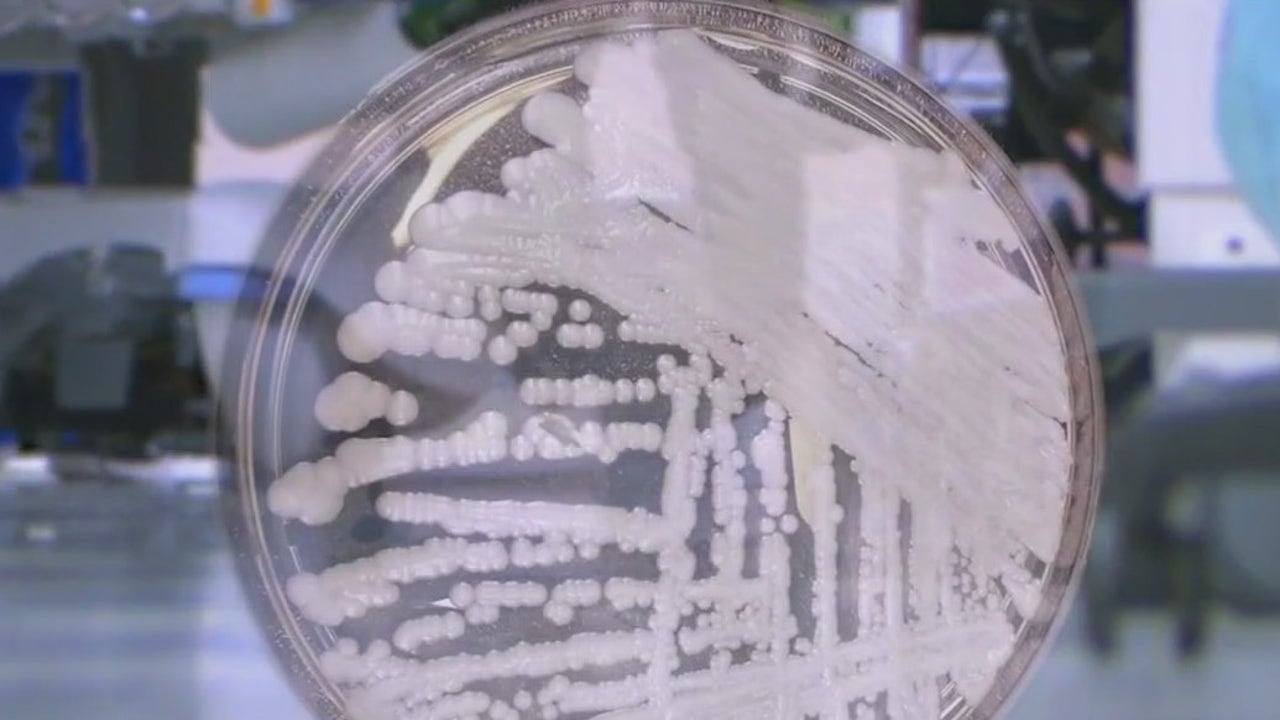
Candida auris is making headlines and for all the wrong reasons. The fungus can lead to severe infections causing long term health issues and even death. Recently, Fox News in Los Angeles was covering this emerging threat and reached out to Augusta University's  Dr. Jose Vazquez for his expert insight and opinion. Here's the piece: The Centers for Disease Control & Prevention says Candida auris, or C. auris, is an emerging health threat, a type of fungus can cause severe, potentially life-threatening infections in people hospitalized with compromised immune systems. Dr. Jose Vasquez, chief of infectious diseases at the Medical College of Georgia at Augusta University, says there are several reasons for concern about this fungus. "The biggest fear is that it is multi-drug resistant," he says. "So, it is resistant to many different drugs." The CDC says most C. auris infections respond to antifungal medication, but some do not. Vasquez says C. auris is also hard to detect without highly specialized lab equipment that many hospitals do not have. And, he says, it is hard to stop the fungus once it gets into a hospital setting, such as an ICU or nursing care facility. C. auris can live on a person's skin without causing symptoms, allowing it to be transmitted from one person to another, or to get into a patient's body through contaminated surfaces or medical equipment like mechanical ventilators, feeding tubes and central lines. 'It is one of the Candidas that lives the longest on a surface, and we're talking about weeks," he sys. "So it can live there, dry and desiccated. Once it gets there, it kind of sets up shop, and it is very, very difficult to eradicate."  The rest of the news story is attached: Looking to know more? That’s where Augusta University can help. Dr. Jose Vazquez, division chief and professor of Medicine at the Medical College of Georgia, is an expert in the realm of infectious diseases. He studies and treats infectious diseases, including antibiotic-resistant superbugs and fungal infections. He has been a reliable source for local, statewide and national media regarding the coronavirus outbreak. Dr. Vazquez is available to speak with media regarding this topic – simply click on his icon to arrange an interview.

 Jose Vazquez, MD

2 min

It is in the news daily the awareness campaigns are everywhere – but for Spanish-speaking Americans, a lot of the information on COVID-19 and vaccination efforts against the disease weren’t reaching home. That was leaving a large swath of the population unprotected against the virus. Pastor Angel Maestre takes to the airwaves for his radio show, 97 Oasis, each week, speaking about faith to his Spanish-speaking audience. When COVID-19 vaccines rolled out, he began including teachings about health and science. “It was my duty as a leader,” Maestre says. Vaccination rates among the Hispanic population were extremely low at the time. In Richmond County, less than 10 percent of this community was vaccinated. Maestre partnered with Dr. Jose Vaszquez, an infectious diseases physician at Augusta University Health. Vazquez began appearing on Maestre’s radio show. He also spoke and answered questions at Maestre’s church, Centro Cristiano Oasis de Bendicion. “The Hispanic community has been one of the toughest communities to get vaccinated,” Vasquez says. “They’re not anti-vaxxers. But, most of the education put out there is in English. A lot of it is not in Spanish. So, they didn’t understand.” According to Vazquez, the top three concerns among the Hispanic community were that the COVID-19 vaccine contained fetal tissue, caused infertility and could result in undocumented immigrants encountering problems with immigration authorities. “They thought if we took their name and number, that ICE or immigration would come and take them, which is not true.” Vazquez eased concerns, and vaccination rates increased quickly. “I’m proud to say because of our outreach programs with some of our partners, specifically going through the churches, that it has actually increased to 30 to 35 percent.” Are you a journalist looking to know more about how COVID-19 is impacting Hispanic communities and what else can be done to ensure every person in America has access to vaccines? That’s where Augusta University can help. Dr. Jose Vazquez, division chief and professor of medicine in the Medical College of Georgia, is an expert in the realm of infectious diseases. He studies and treats infectious diseases, including antibiotic-resistant superbugs and fungal infections. He has been a reliable source for local, statewide and national media regarding the coronavirus outbreak. Dr. Vazquez is available to speak with media regarding this topic – simply click on his icon to arrange an interview.

 Jose Vazquez, MD

Multimedia

Social

Biography

Vazquez chairs the Antimicrobial Stewardship service at Augusta University Medical Center and the Institutional Review Board at Augusta University. Prior to this, he was Professor of Medicine in the Division of Infectious Diseases at Wayne State University School of Medicine and Senior Staff Physician in the Department of Medicine, Division of Infectious Diseases at Henry Ford Hospital and Medical System both in Detroit, Michigan.

Areas of Expertise

Coronavirus
Translational Medicine in Infectious Diseases
Drug-Resistant Infections (CREs, KPCs)
Infectious Disease Clinical Trials
Antimicrobials and Antifungals
Infections associated with biofilms
COVID-19

Accomplishments

Exemplary Teaching Award (2017)

2018-01-19

Medical College of Georgia

Healthgrades Honor Roll

2018-06-01

Dr. Jose Vazquez, MD is an infectious disease specialist in Augusta, GA and has been practicing for 27 years. He specializes in infectious disease medicine and internal medicine.

Affiliations

  • The American College of Physicians
  • The American Society for Microbiology
  • HIV Medicine Association
  • Infectious Disease Society of America
  • International AIDS Society

Media Appearances

App uses AI to provide at-home assessment of coronavirus risk: Study

Business Standard  online

2020-03-05

"We are trying to decrease the exposure of people who are sick to people who are not sick," said Jose Vazquez, another co-author of the study.

View More

New coronavirus app combined with machine intelligence to enable at-home risk assessment

News-Medical-Net  online

2020-03-05

Dr. Arni Srinivasa Rao and co-author Dr. Jose Vazquez, chief of the MCG Division of Infectious Diseases, are working with developers to finalize the app which should be available within a few weeks and will be free because it addresses a public health concern.

View More

Coronavirus infectious but most cases are mild, studies find

The Augusta Chronicle  online

2020-03-02

"What was concerning out of the Chinese CDC were the 889 who tested positive but did not have symptoms yet," said Dr. Jose Vazquez, chief of infectious diseases at Medical College of Georgia at Augusta University.

View More

Answers

 Jose Vazquez, MD

So it's not like you, or I are going to be walking down the street, and say hello to somebody, and shake hands (and get infected), that's not going to happen. You have to be in the hospital, and then you have to have the risk factors which I mentioned: they are on broad spectrum antibiotics, or they're on mechanical ventilation, or they've been in the intensive care unit for a period of time.

 Jose Vazquez, MD

The biggest fear is that it is multi-drug resistant.. So, it is resistant to many different drugs. It is also hard to detect without highly specialized lab equipment that many hospitals do not have.

Articles

T2 Magnetic Resonance Assay for the Rapid Diagnosis of Candidemia in Whole Blood: A Clinical Trial

Clinical Infectious Diseases

2015

Background: Microbiologic cultures, the current gold standard diagnostic method for invasive Candida infections, have low specificity and take up to 2–5 days to grow. We present the results of the first extensive multicenter clinical trial of a new nanodiagnostic approach, T2 magnetic resonance (T2MR), for diagnosis of candidemia.

View more

Safety and Efficacy of Posaconazole in the Long-Term Treatment of Azole-Refractory Oropharyngeal and Esophageal Candidiasis in Patients with HIV Infection

HIV Clinical Trials

2015

Purpose: To evaluate safety and efficacy of long-term posaconazole in HIV-infected patients with azole-refractory oropharyngeal candidiasis and/or esophageal candidiasis.

View more

Clinical Practice Guideline for the Management of Candidiasis: 2016 Update by the Infectious Diseases Society of America

Clinical Infectious Diseases

2016

Invasive infection due to Candida species is largely a condition associated with medical progress, and is widely recognized as a major cause of morbidity and mortality in the healthcare environment...

View more
