Luca Cottini, PhD profile photo

Luca Cottini, PhD

Professor of Italian Studies | College of Liberal Arts and Sciences Villanova University

  • Villanova PA

Luca Cottini, PhD, is a scholar of 20th-century Italian design and literature and the creator of the YouTube channel "Italian Innovators."

Contact
Villanova University logo

Villanova University

View more experts managed by Villanova University

Spotlight

5 min

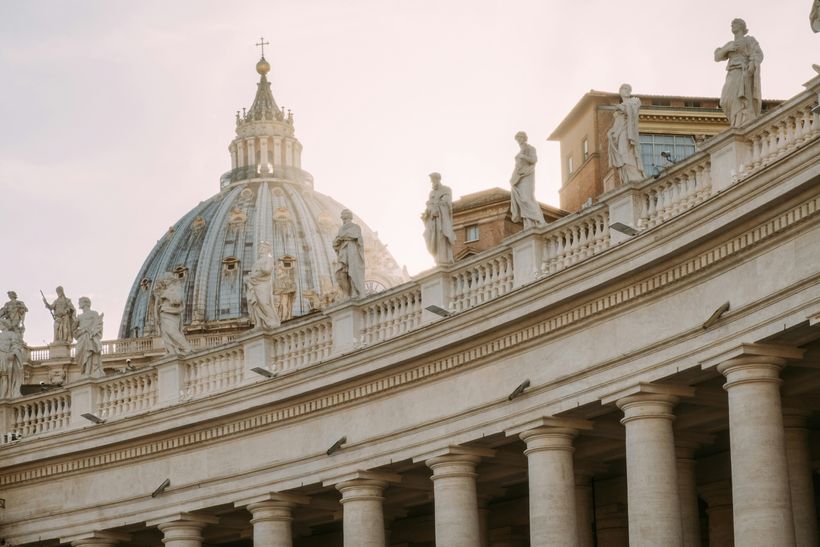
In his first appearance on the balcony of St. Peter’s Basilica, Pope Leo XIV shared with the world a message of hope, communion and reconciliation, emphasizing the need to “build bridges with dialogue and encounter so we can all be one people always in peace.” Throughout the last 12 months, the Pontiff has placed these values at the forefront of his work and ministry, pairing active collaboration with prayerful contemplation in his leadership of the world’s 1.4 billion Catholics. In the coming years, that emphasis is likely to continue, as the Pope addresses longstanding rifts and evolving challenges within the Church and beyond. Asked to consider the most striking aspects of his early papacy, and to reflect on the most pressing issues he currently faces, Villanova faculty members studying the pontificate had a wide variety of responses. Jaisy A. Joseph, PhD Assistant Professor of Theology and Religious Studies For Dr. Joseph, Pope Leo’s first year has been defined by a spiritual vision centered on unity, listening and shared responsibility. “From the beginning of his papacy, Leo emphasized that we are a synodal Church working towards peace and moving forward together. Leo’s Augustinian formation will absolutely leave its imprint on what Pope Francis started. While the two have distinct personalities and styles, there is a fundamental continuity with Francis that Leo has signaled. Leo stresses that at the core of the Church is a deeper desire for a spirituality of ‘we’—a Church rooted in deep listening and bold speaking. This is where the Augustinian charism makes itself known. “This unity does not erase differences. Instead, it asks, ‘How do we create friendships that are strong enough to bear the tensions of our differences?’ In a world shaped by ‘us versus them,’ Leo insists on recognizing Christ in the completely different ‘other.’ “Finally, his leadership style is marked by discernment. Listening is so critical to him, and any caution he displays is not out of fear but wanting to listen before speaking. In a noisy world, he insists that we just need silence—trusting that through shared listening, the Church can move forward together.” Luca Cottini, PhD Professor of Italian Studies For Dr. Cottini, Pope Leo’s first year has been marked by a clear effort to position the Church in active dialogue with the modern world—especially in response to emerging global challenges, migration and an increasingly interconnected faith community. He draws parallels to the priorities of Leo XIV’s namesake, Pope Leo XIII. “Catholic social doctrine is a doctrine that the Church established to address subjects that are not directly written about in the Gospel. This doctrine was important for Pope Leo XIII and is increasingly important for Leo XIV as well. ‘Leo’ is a name that relates back to Catholic social doctrine and the need to read the changing signs of the times. By choosing the name ‘Leo,’ the Pope signaled his desire to respond to contemporary issues. “Leo XIV has also harkened back to Leo XIII in his first year by viewing migration and immigration not as a plight, but rather as an opportunity to enter into contact with new worlds. This approach connects to Leo XIV’s own background and perspective, which includes both proximity to and distance from the United States, giving him both an outsider and insider perspective as well as a critical thinking lens on these issues. “Lastly, Leo XIV has used his first year to elevate this idea of a universal Church that is much needed, shaped by his global exposure and an ability to see the world through the lens of others. He sees that we can dialogue with the world, approaching modernity not as an enemy but as something to engage with.” Patrick McKinley Brennan, JD John F. Scarpa Chair in Catholic Legal Studies According to Professor Brennan, “One of the issues that is on the Pope’s radar and has been from before the conclave is the question of the traditional Latin Mass,” a cause championed by various cardinals, bishops, priests and lay faithful around the globe. As he shares, it is a matter of great interest to a small but growing number of Catholics who recall Pope Benedict XVI’s statement that the traditional Mass—the Mass as it was celebrated by most Catholics since 1570—was “never juridically abrogated” following the Second Vatican Council. “Pope John Paul II in the 1980s, and then Pope Benedict XVI in 2007, liberalized access around the world to the traditional Mass. But Pope Francis revoked most of those permissions, citing ‘facts’ that have subsequently been called into question by investigative journalists and others. Pope Francis issued a document called Traditionis custodes, which [went against] the permissions that Benedict XVI gave in a document called Summorum pontificum in July 2007. “Now, the leadership of the Society of St. Pius X [an anti-modernist priestly fraternity] have announced that they’re going to ordain new bishops, the exact thing that got some of their predecessors excommunicated in 1988, so that the traditional Mass can continue to be celebrated and other sacraments can continue to be provided to Catholics according to the traditional rites. Reading between the lines, I think the Society of St. Pius X is trying to force Pope Leo’s hand on the Latin Mass. He’s been biding his time, working out how to respond to this hard question, and I think they’ve just decided that it’s an all-or-nothing situation. “It’s an example of how Pope Leo inherited some big problems, and I think most of the cardinals who elected him thought that they had chosen someone who, because he can listen and is committed to unity, will try his very best to find a solution that remains faithful to Catholic doctrine while bringing in as many voices as possible. Ironically, Pope Francis reduced legitimate diversity in Catholic liturgy, and while Pope Leo has a chance to restore that diversity, he has to do so in a way that addresses the irregular situation of the Society of St. Pius X.” Ilia Delio, OSF, PhD Josephine C. Connelly Endowed Chair in Christian Theology Looking ahead, Sister Delio says one of the most significant social developments Pope Leo must face is the rise of advanced technologies—in particular, increasingly sophisticated artificial intelligence models. “Our theological anthropology needs a bit of updating, as it does not currently meet the needs of our very complex world today. There are a lot of discussions on artificial intelligence and advanced technology, but the problem is that these technologies are already here and rapidly advancing. “So, we have to face this reality, not by asking ‘What is happening to us?’ but ‘What are we becoming with our technologies?’ and ‘How best can we remain human in an AI world?’ I think Pope Leo is asking similar questions, considering what makes the human person the image of God, what makes us distinct and whether there are human values that cannot be downloaded or reproduced in a digital medium. “At the same time, we must ask: Can technology deepen the human spirit by enabling a new level of collective life? Can AI technology empower the Body of Christ?” To speak with any of these faculty experts, please contact mediaexperts@villanova.edu.


Luca Cottini, PhDJaisy A. Joseph, PhDPatrick McKinley Brennan, JDIlia Delio, OSF, PhD

4 min

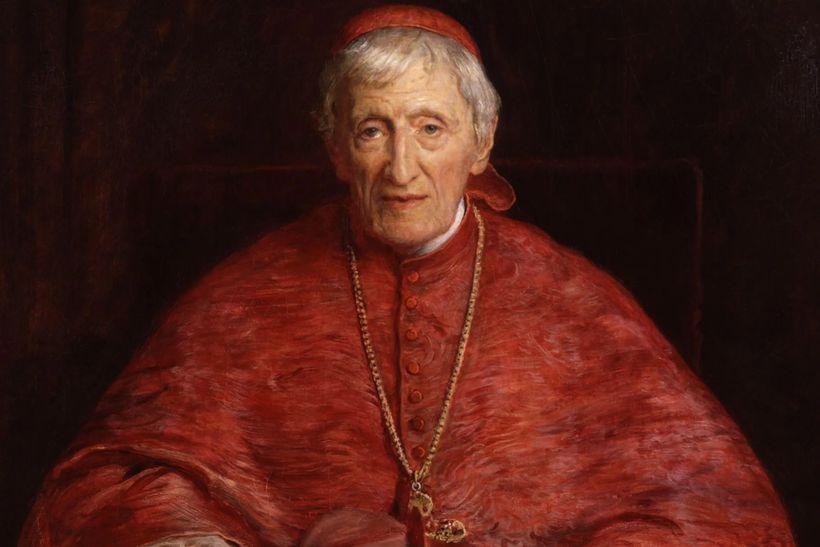
Pope Leo XIV's first year as leader of the Catholic Church was marked by observation, listening and careful communication, and was largely devoid of major doctrinal or political action. As reasonably expected of a new pontiff, he issued his first major document—the apostolic exhortation Dilexi te. He also embarked on his first international trip, traveling to Türkiye and Lebanon, where he celebrated the 1700th anniversary of the Council of Nicaea. But perhaps publicly overlooked was his elevation of a 19th-century saint to Doctor of the Church—a designation reserved for saints found to have made significant contributions to doctrine and spirituality through writings and teachings. After approving it in July 2025, Pope Leo issued that designation to St. John Henry Newman on All-Saints Day, making him only the 38th individual given the title. "The move to make St. John Henry Newman a Doctor of the Church was already underway, but Pope Leo verified it and actually carried it out, bringing Newman into a newfound kind of prominence," said Michael Moreland, PhD, professor of Law and Religion at Villanova University Charles Widger School of Law, and a scholar of St. Newman. A Bridge Between Anglican and Catholic Theology Newman, considered an influential individual in the shaping of modern Catholic theology and education, was not always Catholic. Born in England in 1801, Newman became an Anglican priest in his mid-20s. He later was a prominent leader of the Oxford Movement—one intended to recover elements of traditional Catholic heritage in Anglicanism. It led to the birth of Anglo-Catholicism and caused many Anglicans to convert to the Roman Catholic faith, including Newman himself. Newman was received into the Catholic Church in 1845 and was ordained a Catholic priest in 1847. He would go on to become an influential theologian for his contributions to the ideas of faith, conscience and doctrine. "He established what he called the 'evolution of the doctrine'—the idea that the deposit of faith is not something immobile, but something that grows in awareness over time," said Luca Cottini, PhD, professor of Italian Studies at Villanova University. "He [Newman] was also a person of the university; an intellectual," said Dr. Moreland. "He was known for his voluminous writings on all kinds of issues, including his famous book 'The Idea of a University.'" In 1878, Pope Leo XIII made then-Father Newman—who was not even a Bishop at the time—a Cardinal. Like the current Pope Leo, the elevation of Newman was one of Pope Leo XIII's first acts of government. "It's an astonishing resemblance between our current Pope and his namesake," Dr. Cottini said. "Both recognized this important theologian and his contributions to Catholicism within the first year of their papacy." Newman died in 1890 and is remembered as an influential theologian, scholar and an important bridge between Anglicanism, Catholicism and the modern world. He was beatified in 2010 by Pope Benedict XVI and canonized by Pope Francis in 2019 before Pope Leo XIV elevated him to Doctor of the Church. Newman's Promotion Shrouded in Significance Beyond its relative rarity—only five individuals have been promoted to Doctor of the Church since 1971—Newman's elevation is significant in many ways, according to Dr. Moreland. "He was an Anglican by birth who converted to Roman Catholicism," he said. "He was someone from the English-speaking world, not from continental Europe, and he was from the 19th century, which is relatively recent in this context." Newman is only the second Doctor of the Church from England, and aside from Thérèse of Lisieux, born in 1873, is the only Doctor of the Church born after 1700. Beyond the significance related to Newman himself, Pope Leo's recent action underscored a critical focus of the Church, and evidenced its personal importance to the pontiff himself. "It highlighted Newman's role in education," Dr. Moreland says. "That is something Pope Leo has been formed by in important ways: as a seminary rector, seminary professor and as part of the Order of St. Augustine, which values education highly." At the Mass elevating Newman to Doctor of the Church, Pope Leo also named Newman a co-patron saint of Catholic Education, joining 13th-century priest and theologian St. Thomas Aquinas. He then added Newman’s feast day of October 9—the day he converted to Catholicism in 1845—to the General Roman Calendar, thus bringing his memorial to the global Church. "I think Pope Leo elevating Newman to a Doctor of the Church, along with these subsequent actions, signifies the emphasis he is going to place on education during his papacy," Dr. Moreland said.

Luca Cottini, PhDMichael  Moreland, JD, PhD

5 min

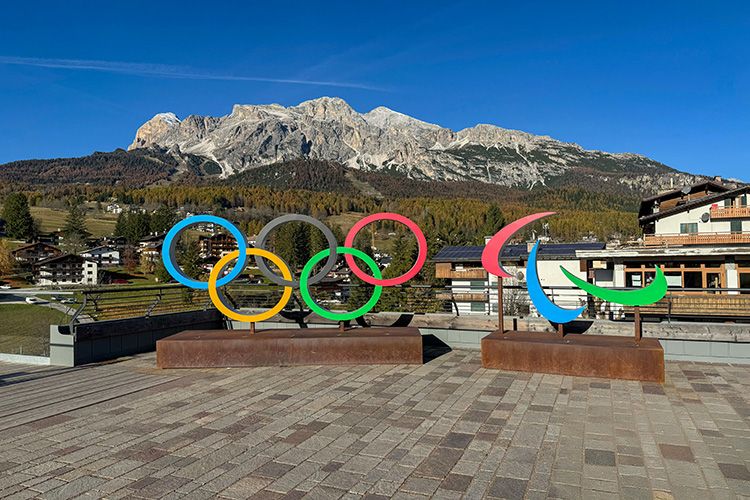
Long proclaimed Italy’s “moral capital,” Milan is renowned worldwide for its significant contributions to fashion, design and the arts. Soon, another point of pride will be added to the city’s storied history, when the regional hub—and partnering town Cortina d’Ampezzo—plays host to the 2026 Winter Olympics in February. Luca Cottini, PhD, is a professor of Italian Studies and an expert on the evolution of Italian culture, particularly through the 19th and 20th centuries. Recently, he shared some thoughts concerning Milan and Cortina’s successful joint bid for the Olympics, the themes and iconography expected to define this year’s opening ceremony and the symbolic significance of Italy’s selection as a host nation. Question: What was the role of past major events in Milan and Cortina—like the 2015 World’s Fair and the 1956 Winter Olympics—in helping to elevate their appeal for these games? Luca Cottini: I’ll start by saying that although people notice world’s fairs less than the Olympics, they are more impactful to a city and country because they generate more revenue, business, political relationships and positive reputation. They are events in which all the world comes together and each country exposes its excellence, while the host nation brings a visibility that it would not carry otherwise. In 2015, Milan hosted the world’s fair, which generated a completely new fairgrounds area and a visibility of politics, industry, technology and modernity in a way that brings the city to a global stage. I would say that is when the ascent of Milan really started, especially as a desirable destination. With Cortina, after the 2015 World’s Fair—and especially after the COVID-19 pandemic—the Dolomites became really a popular region for travelers to visit. Cortina is also symbolic to Olympic history, because it's the site of the first Olympics that took place in Italy, in 1956 during the reconstruction era. That was the Dolce Vita period, in the middle of the 1950s economic boom, and those games were followed by Rome’s Summer Olympics in 1960. They both represented a way in which Italy, coming out of the war destroyed, was reaffirming its rebirth. Over the years, fewer cities have wanted to host the Olympics because they tend to carry a lot of economic burden, financial debt and little return on investment. In this sense, Milan and Cortina, helped by increased popularity after the world’s fair, sold themselves as a sustainable Olympics. Ninety percent of the buildings were refurbished from older buildings, and they will serve purposes after the Olympics. It’s difficult to tell whether it’s economically sound or not, but it is a way to promote two cities that are in big moments of growth. Q: These Olympic Games will be celebrating Milan’s contributions to fashion. What is the city’s significance to the fashion world? LC: Milan is certainly the capital of fashion in Italy, and is one of the capitals of fashion in the world, along with Paris, New York and London. The fashion heritage that the city carries now in iconic brands like Armani, Versace, Moschino and Dolce & Gabbana is the outcome of a process that took shape in the late 1970s. Until then, fashion in Italy was mainly related to Rome, through cinema, and Florence, as that city represented a new Renaissance in the postwar years. But in the 1970s, much of this fashion world moved from those cities to Milan, because there was a conglomeration of labor, skills, capital and creativity that generated a complex productive and cultural system, or the so-called “Sistema Moda.” This is a particular approach to the industry in Italy that coordinates management and creativity around the figures of a big creative director and a big manager who work together in creating not just nice styles, but also sustainable outlets and markets in and outside Italy. In turn, with its reputation, Milan gives the Olympics that seal of grandeur and coolness. The connection with fashion and promotion of uniqueness is part of the national rhetoric that surrounds what we call “Made in Italy,” this idea of luxury, styling, beauty, order and measure that is endowed in the Italian DNA. Q: Andrea Bocelli—who also appeared in Torino’s 2006 closing ceremony—is supposed to sing once again in this year’s opening ceremony. Aside from his popularity, what is the symbolic significance of his selection as a performer? LC: Bocelli is an interesting case. He is a prototypical Italian success story, which is born in the peninsula but is then ratified outside of Italy. As Bocelli became a global sensation in the U.S., he then came back to his roots in Italy, where his voice has become a symbol of national unity, as epitomized in his solo concerto of Milan, during the pandemic, when he sang in front of the empty Piazza del Duomo, facing the city’s cathedral. In his Catholic faith and secular operatic repertoire, he symbolizes Italian culture as a similar piazza or open space where different voices can converge in a temperate balance. When you put together Bocelli, Mariah Carey and whoever else will be part of the ceremony, that same Italian identity will give rise to a new synthesis, as the encounter of tradition and novelty, grounded-ness and openness. Q: The Olympic flames are supposed to be lit in two cauldrons—one in Milan and one in Cortina—each with a design inspired by Leonardo da Vinci. What was da Vinci’s importance to Milan, specifically? LC: Da Vinci is part of the fabric of Milan. He spent 20 years in the city, painting “The Last Supper” and working at Castello Sforzesco, as well as many other places. His footprint is all over Milan, in its design, walls, canal system and more. He is an archetype of the Italian mind in as much as it represents the combination of engineering and beauty. The word Ingenium in Latin, meaning “genius,” overflows in English into the word “engineering” and also “ingenuity,” which reflects the creative mind. Da Vinci represents the synthesis of Italian Ingenium as a combination of aesthetics and problem solving, which you still see in the city today.

Luca Cottini, PhD

Media

Social

Areas of Expertise

Italian Design
Italian Industry & Advertising
Entrepreneurship & Innovation
Design Thinking
Italian Literature
Americanism & Americanization

Biography

Luca Cottini is Professor of Italian Studies at Villanova University and the host and creator of the YouTube show "Italian Innovators." He holds a doctorate from Harvard University, a master's from the University of Notre Dame and a bachelor's from the University of Milan.

He was trained as a classical philologist in Italy and a cultural historian in the U.S. His interests touch on Italian literature, visual arts and intellectual history throughout the 19th and 20th centuries—and on the birth of Italian industrial culture, advertising and design.

His books include a monograph on Calvino ("I passaggi obbligati di Italo Calvino"), a cultural history of the origins of Italian design ("The Art of Objects. The Birth of Italian Industrial Culture, 1878-1928") and a biography of chocolate tycoon Michele Ferrero ("Il fabbricante di cioccolato. Nel mondo di Michele Ferrero"). His YouTube channel "Italian Innovators" explores the Italian model of entrepreneurship and innovation through cultural profiles, interviews and lessons across different disciplines (fashion, food, technology, sports, music, engineering, etc.).

Education

Università degli Studi di Milano

BA

Classics

2003

University of Notre Dame

MA

Italian Studies

2007

Harvard University

PhD

Romance Languages and Literatures (Italian)

2012

Select Accomplishments

ISSNAF Award for the Humanities, Italian Scholars and Scientists in North America Foundation

2014

Veritas Research Award, Villanova University

2018

AAIS 2018 Book Prize, American Association of Italian Studies

2019

Select Media Appearances

Will San Siro Have Its Effect on the Olympic Games?

The Orange County Register  

2026-02-05

For decades, Italian soccer had been defined by catenaccio, a defense-first system and mentality. AC Milan didn't play catenaccio... "Milan played a very dynamic, aggressive, positive way of playing soccer that was unique," said Luca Cottini, a Villanova modern Italian literature and culture professor. "Instead of being defensive they played with personality. It was very Milanese."

View More

Milan Lifts the Veil on a New Winter Olympics Template

The Orange County Register  

2026-01-30

The IOC has also followed a trail of millionaires and billionaires to Milan... "Milano has a greater capacity of attraction for its industry, especially the fashion industry, but also in finance, especially after Brexit," said Luca Cottini, a professor and Italian cultural historian at Villanova. "Milano became a very, very important destination for a lot of professionals from the U.K., and so this really exposed the city to a larger international audience. It is a city that has a capacity of attraction, internationally and globally, for business and for culture that few other cities have."

View More

How Armani Transformed Professional Attire

Newsweek  

2025-09-04

Giorgio Armani's minimalist vision transformed the way work and professional attire was perceived, both in Italy and overseas. By stripping away excess and abandoning rigid tailoring, he elevated workwear from standard-issue "uniforms" into subtle but powerful statements of identity, Dr. Luca Cottini, Professor of Italian Studies at Villanova University and creator of the YouTube series "Italian Innovators," told Newsweek.

View More

Answers

Luca Cottini, PhD

For a long time, because the Church has been run in Italian and the Pope speaks Italian, there has been a kind of implicit sense that Italians own the Church and that all other expressions of Catholicism are not the "real thing." Pope Leo XIV brings this sense of the universal Church that is much needed, and his ability to speak English, Spanish, French and Italian emphasizes that. I think one of the reasons that he was chosen as Pope is because of his global exposure and global understanding, not just from his time spent in Peru but also from his experience as Prior General of the Order of Saint Augustine. He traveled to many different places in this role and gained an understanding of the different cultures that are part of the body of Christ and of the Church, and the different voices that exist and challenge us to think differently.

Jaisy A. Joseph, PhDPatrick McKinley Brennan, JDLuca Cottini, PhD

Pope Leo XIII was known as the "Pope of the East." He was actually listening to many of the patriarchs at the time who were opposed to a lot of the colonization that was happening—and Latinization. So, in my mind, it's notable that one of Pope Leo XIV's first addresses was to the Eastern Catholic Churches and that his first papal visit was to celebrate the 1700th anniversary of Nicaea [an ecumenical council that was among the first efforts to attain theological consensus among Christians]. To me, it signals his recognition of the concentric circles of unity that are needed. First of all, we Catholics have to figure out our own unity. But then what does it mean to be in right relationship with Churches that have equal dignity in terms of their apostolic heritage and have drifted away for historical reasons? I think Pope Leo XIV is trying to listen to the cry of our generation, and younger generations, and help us all discern what is the right response.

Michael  Moreland, JD, PhDLuca Cottini, PhD

There are a lot of noteworthy things about Pope Leo elevating Newman to be a Doctor of the Church. He was an Anglican by birth who converted to Roman Catholicism. He was someone from the English-speaking world—England specifically—not from continental Europe, and he was from the 19th century, which is relatively recent in this context. But the pope's action also highlighted Newman's role in education. He was a person of the university; an intellectual and a major figure in 19th-century theology. After Newman converted in 1845, he became a priest and was most famous for his writings. He had a voluminous product of writing on all kinds of issues, including his famous book called "The Idea of a University." At the Mass making him a Doctor of the Church during the Jubilee of Education, Pope Leo also made Newman the co-patron saint of Catholic education, alongside Saint Thomas Aquinas. Education is one of the major focuses of the Church, but it's also something Pope Leo has been formed by in important ways: as a seminary rector, seminary professor and as part of the Order of Saint Augustine, which values education highly. I think Pope Leo elevating Newman to a Doctor of the Church signifies the emphasis he is going to place on education during his papacy.