Luca Cottini, PhD

Professor of Italian Studies Villanova University

  • Villanova PA

Luca Cottini, PhD, is a scholar of 20th-century Italian design and literature and the creator of the YouTube channel "Italian Innovators."

Contact

Villanova University

View more experts managed by Villanova University

Spotlight

5 min

First Dual-City Olympics to Showcase Milan and Cortina d’Ampezzo With Ceremonies and Themes Celebrating Their History, Growth and Cultural Importance

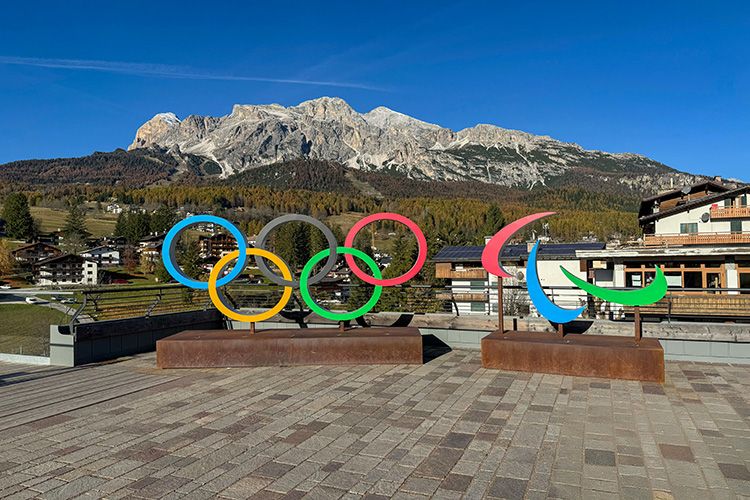
Long proclaimed Italy’s “moral capital,” Milan is renowned worldwide for its significant contributions to fashion, design and the arts. Soon, another point of pride will be added to the city’s storied history, when the regional hub—and partnering town Cortina d’Ampezzo—plays host to the 2026 Winter Olympics in February. Luca Cottini, PhD, is a professor of Italian Studies and an expert on the evolution of Italian culture, particularly through the 19th and 20th centuries. Recently, he shared some thoughts concerning Milan and Cortina’s successful joint bid for the Olympics, the themes and iconography expected to define this year’s opening ceremony and the symbolic significance of Italy’s selection as a host nation. Question: What was the role of past major events in Milan and Cortina—like the 2015 World’s Fair and the 1956 Winter Olympics—in helping to elevate their appeal for these games? Luca Cottini: I’ll start by saying that although people notice world’s fairs less than the Olympics, they are more impactful to a city and country because they generate more revenue, business, political relationships and positive reputation. They are events in which all the world comes together and each country exposes its excellence, while the host nation brings a visibility that it would not carry otherwise. In 2015, Milan hosted the world’s fair, which generated a completely new fairgrounds area and a visibility of politics, industry, technology and modernity in a way that brings the city to a global stage. I would say that is when the ascent of Milan really started, especially as a desirable destination. With Cortina, after the 2015 World’s Fair—and especially after the COVID-19 pandemic—the Dolomites became really a popular region for travelers to visit. Cortina is also symbolic to Olympic history, because it's the site of the first Olympics that took place in Italy, in 1956 during the reconstruction era. That was the Dolce Vita period, in the middle of the 1950s economic boom, and those games were followed by Rome’s Summer Olympics in 1960. They both represented a way in which Italy, coming out of the war destroyed, was reaffirming its rebirth. Over the years, fewer cities have wanted to host the Olympics because they tend to carry a lot of economic burden, financial debt and little return on investment. In this sense, Milan and Cortina, helped by increased popularity after the world’s fair, sold themselves as a sustainable Olympics. Ninety percent of the buildings were refurbished from older buildings, and they will serve purposes after the Olympics. It’s difficult to tell whether it’s economically sound or not, but it is a way to promote two cities that are in big moments of growth. Q: These Olympic Games will be celebrating Milan’s contributions to fashion. What is the city’s significance to the fashion world? LC: Milan is certainly the capital of fashion in Italy, and is one of the capitals of fashion in the world, along with Paris, New York and London. The fashion heritage that the city carries now in iconic brands like Armani, Versace, Moschino and Dolce & Gabbana is the outcome of a process that took shape in the late 1970s. Until then, fashion in Italy was mainly related to Rome, through cinema, and Florence, as that city represented a new Renaissance in the postwar years. But in the 1970s, much of this fashion world moved from those cities to Milan, because there was a conglomeration of labor, skills, capital and creativity that generated a complex productive and cultural system, or the so-called “Sistema Moda.” This is a particular approach to the industry in Italy that coordinates management and creativity around the figures of a big creative director and a big manager who work together in creating not just nice styles, but also sustainable outlets and markets in and outside Italy. In turn, with its reputation, Milan gives the Olympics that seal of grandeur and coolness. The connection with fashion and promotion of uniqueness is part of the national rhetoric that surrounds what we call “Made in Italy,” this idea of luxury, styling, beauty, order and measure that is endowed in the Italian DNA. Q: Andrea Bocelli—who also appeared in Torino’s 2006 closing ceremony—is supposed to sing once again in this year’s opening ceremony. Aside from his popularity, what is the symbolic significance of his selection as a performer? LC: Bocelli is an interesting case. He is a prototypical Italian success story, which is born in the peninsula but is then ratified outside of Italy. As Bocelli became a global sensation in the U.S., he then came back to his roots in Italy, where his voice has become a symbol of national unity, as epitomized in his solo concerto of Milan, during the pandemic, when he sang in front of the empty Piazza del Duomo, facing the city’s cathedral. In his Catholic faith and secular operatic repertoire, he symbolizes Italian culture as a similar piazza or open space where different voices can converge in a temperate balance. When you put together Bocelli, Mariah Carey and whoever else will be part of the ceremony, that same Italian identity will give rise to a new synthesis, as the encounter of tradition and novelty, grounded-ness and openness. Q: The Olympic flames are supposed to be lit in two cauldrons—one in Milan and one in Cortina—each with a design inspired by Leonardo da Vinci. What was da Vinci’s importance to Milan, specifically? LC: Da Vinci is part of the fabric of Milan. He spent 20 years in the city, painting “The Last Supper” and working at Castello Sforzesco, as well as many other places. His footprint is all over Milan, in its design, walls, canal system and more. He is an archetype of the Italian mind in as much as it represents the combination of engineering and beauty. The word Ingenium in Latin, meaning “genius,” overflows in English into the word “engineering” and also “ingenuity,” which reflects the creative mind. Da Vinci represents the synthesis of Italian Ingenium as a combination of aesthetics and problem solving, which you still see in the city today.

Luca Cottini, PhD

4 min

Success Is Sweet: Ferrero's Crown Jewel, Nutella, Turns 60

Six decades ago, on April 20, 1964, the first jar of Nutella left Gruppo Ferrero's factory in the Italian town of Alba. In its gooey wake, the chocolate-hazelnut treat would spread across continental Europe, and then the world, like a healthy schmear on toast. Today, Nutella is the crown jewel of Ferrero's confectionary empire, propping up a business that generates roughly 17 billion euros in revenue each year. Annually, a whopping 365,000-plus tons of the stuff are sold across 160 countries, and nearly one quarter of all hazelnuts harvested are devoted to its production. Luca Cottini, PhD, is an associate professor of Italian in Villanova University's College of Liberal Arts and Sciences and an expert on modern Italian culture, history and society. He also is the author of a book on Michele Ferrero, the mastermind behind Nutella and its meteoric rise: Il fabbricante di cioccolato. To mark the iconic Italian brand's 60th anniversary, Dr. Cottini shared some thoughts on its Willy Wonka-like creator, early (accidental) origins and recipe for international success. Here's a taste: Q: According to Business Insider, a jar of Nutella is sold every 2.5 seconds—just about the time it takes to finish this sentence. How did we get so "nuts" for Nutella, anyway? Dr. Cottini: Well, much of the success of Nutella relates to its novelty, to the idea of spreadable chocolate. At one point, to think that spreading chocolate would be popular was as crazy as to predict that spreadable coffee would be a hit. The idea developed because, in the mid-to-late 1940s, Michele Ferrero's father Pietro was to combine the scarcity of cocoa in his area with hazelnuts, which was the ingredient most available in Alba. It seemed like condemnation that they should have only hazelnuts. Well, he combined them with cocoa to produce this mix—it's called "gianduja" in Italian—and he sold it. But when the Ferreros sold it in southern Italy, they had a problem: The chocolate was melting with the summer heat; and a lot of the workers in Naples, to not waste it, started to spread it on slices of bread. And it's interesting. The Ferreros have a completely non-moralistic approach to failure. You sell chocolate; it melts. This is somewhat embarrassing. But their approach was instead to see this situation as the beginning of a new idea, of a new concept. Q: Is Nutella's story unique in this respect? DC: Several Italian innovators have similar stories to the Ferreros', especially during the 1930s. [Salvatore] Ferragamo, for instance, developed the wedge shoe because there was a shortage of steel, with an embargo imposed on Italy. So, he used Sardinian cork as a replacement, and that generated the wedge shoe. [Guccio] Gucci, during a leather shortage, started using hemp and decorating the hemp with a double "G," and that became the trademark of the company. [Alfonso] Bialetti, who produced the modern coffeepot, used the only metal that was allowed during Fascism, which was aluminum, since the Partito Nazionale Fascista would not import iron or prime metals. But Bialetti took this poor, hybrid ore and made it something that could become valuable. And so, he invented the moka coffeepot in 1933, which is one of the symbols of Italian design. That’s one of the keys of the Italian model of entrepreneurship: producing objects that are not just trendy for one season, but eventually become evergreen or classic. Q: What inspired the name "Nutella?" DC: It was the product of 18 years of research. For all intents and purposes, "Nutella" first came out in 1946. It was called "SuperCrema" and, before that, "Cremalba." But in 1962, there was a law in Italy that prevented companies in the food industry from using prefixes like "super" or "extra." So, that led Ferrero—by then, under the leadership of Michele Ferrero—to figure out a new alternative to SuperCrema. At the same time, the company was expanding into Germany and France, and they needed a brand name that could be pronounced easily. So, Ferrero joined the "ella" sound from mozzarella, stella, caramella—Italian words that people could recognize—with the word "nut," like the English "nut," which gave their product an international feel. It's really a "glocal" [global and local] name. It was conceived as a very rooted enterprise with a global horizon. Q: In 1964, were Ferrero's global ambitions practical? DC: It was honestly a bit of a gamble. In 1957, the European Economic Community was established, which is the beginning of the European Union. And that same year, Michele Ferrero organized in Rome the first conference of his company, which was by then somewhat national, to plan exportation in Europe. In the Italy of the 1950s and 1960s, this was very pioneering. Michele Ferrero was actually one of the first businesspeople to export products to Germany in the 1950s, at a time when there was a lot of resentment against Italians because of everything that happened during the Second World War. So, he entered this incredibly difficult market, and still today, Ferrero and Nutella are strong. Q: What do you think accounts for Nutella's continued popularity, 60 years after its introduction? DC: Michele Ferrero thought of his products as speaking products. It's something very common to the automobile industry in Italy. This is characteristic of Ferrari and Lamborghini; they produce cars that are appealing not just because they're "super cars," but because they say something. Nutella is a food that says something. When someone puts it on the table, it compels people to jump in and share their own stories—of trying it with a friend, of having it on a hike or of taking part in "Nutella Day." Today, if you're in the market for a chocolate-hazelnut spread, you might find products that are even better than Nutella. Actually, surely better. But they will never replicate the appeal and the grasp that Nutella has. Because Nutella has that aura of storytelling and mythmaking other products simply don't have.

Luca Cottini, PhD

1 min

Impact of Record-Breaking Floods in Venice

Over the last week, Venice, Italy, has been hit with historic flooding. On Sunday, November 17, water levels topped 1.5 meters for the third time since last Tuesday’s 1.87-meter flood, which marked the worst in more than half a century.   Venice’s mayor declared a state of emergency and has estimated the flooding damage at hundreds of millions of euros. The flooding is putting some of Venice’s most historic architecture at risk and threatening some of the city’s cultural marvels and priceless artwork.   The situation has also renewed the debates around the underwater barrier system—the MOSE flood defense project—that has been under construction for more than 16 years and is not yet operational despite five billion euros of public funding.   Luca Cottini, PhD, an associate professor at Villanova University, is a scholar of Italian culture. He recently discussed some of the issues currently facing Venice.   “The flooding in Venice makes visible once again not just the fragility of Italian beauty and the vulnerability of Italy’s geography, but also the inadequacy of Italian politics in the prevention and response to natural disasters,” said Dr. Cottini.   Dr. Cottini also addressed the city’s tourism and how tourists view the floods.   “The situation also illustrates the cynical nature of modern-day global tourism, observing high waters more as an attraction than a tragic event impacting invaluable monuments and the lives of many peoples,” he said.  

Luca Cottini, PhD
Show More +

Social

Areas of Expertise

Italian Design
Italian Industry & Advertising
Entrepreneurship & Innovation
Design Thinking
Italian Literature
Americanism & Americanization

Biography

Luca Cottini is Professor of Italian Studies at Villanova University and the host and creator of the YouTube show "Italian Innovators." He holds a doctorate from Harvard University, a master's from the University of Notre Dame and a bachelor's from the University of Milan.

He was trained as a classical philologist in Italy and a cultural historian in the U.S. His interests touch on Italian literature, visual arts and intellectual history throughout the 19th and 20th centuries—and on the birth of Italian industrial culture, advertising and design.

His books include a monograph on Calvino ("I passaggi obbligati di Italo Calvino"), a cultural history of the origins of Italian design ("The Art of Objects. The Birth of Italian Industrial Culture, 1878-1928") and a biography of chocolate tycoon Michele Ferrero ("Il fabbricante di cioccolato. Nel mondo di Michele Ferrero"). His YouTube channel "Italian Innovators" explores the Italian model of entrepreneurship and innovation through cultural profiles, interviews and lessons across different disciplines (fashion, food, technology, sports, music, engineering, etc.).

Education

Università degli Studi di Milano

BA

Classics

2003

University of Notre Dame

MA

Italian Studies

2007

Harvard University

PhD

Romance Languages and Literatures (Italian)

2012

Select Accomplishments

ISSNAF Award for the Humanities, Italian Scholars and Scientists in North America Foundation

2014

VERITAS Research Award, Villanova University

2018

AAIS 2018 Book Prize, American Association of Italian Studies

2019

Select Media Appearances

Milan Lifts the Veil on a New Winter Olympics Template

The Orange County Register  

2026-01-30

The IOC has also followed a trail of millionaires and billionaires to Milan... "Milano has a greater capacity of attraction for its industry, especially the fashion industry, but also in finance, especially after Brexit," said Luca Cottini, a professor and Italian cultural historian at Villanova. "Milano became a very, very important destination for a lot of professionals from the U.K., and so this really exposed the city to a larger international audience. It is a city that has a capacity of attraction, internationally and globally, for business and for culture that few other cities have."

View More

How Armani Transformed Professional Attire

Newsweek  

2025-09-04

Giorgio Armani's minimalist vision transformed the way work and professional attire was perceived, both in Italy and overseas. By stripping away excess and abandoning rigid tailoring, he elevated workwear from standard-issue "uniforms" into subtle but powerful statements of identity, Dr. Luca Cottini, Professor of Italian Studies at Villanova University and creator of the YouTube series "Italian Innovators," told Newsweek.

View More

Expert Explains How Armani Used Style to Innovate

Newsweek  

2025-09-04

Giorgio Armani's legacy as a designer and entrepreneur reflects a distinctly Italian model of innovation—one rooted in artistry, discipline and cultural synthesis. "Armani reflects a multidisciplinary understanding of business as a synthesis of 'works' (opera)," Dr. Luca Cottini, Professor of Italian Studies at Villanova University and creator of the YouTube series "Italian Innovators," told Newsweek. "Fashion is in fact not just the art of designing abiti (both clothing and habits), but also an art of styling objects, environments and lifestyles."

View More

Show All +