Mark C. Urban, Ph.D. profile photo

Mark C. Urban, Ph.D.

Professor, Arden Chair of Ecology and Evolutionary Biology University of Connecticut

  • Storrs CT

Dr. Urban is an expert on climate change impacts on biodiversity and evolutionary ecology of vernal pools, lakes, and streams

Contact
University of Connecticut logo

University of Connecticut

View more experts managed by University of Connecticut

Spotlight

3 min

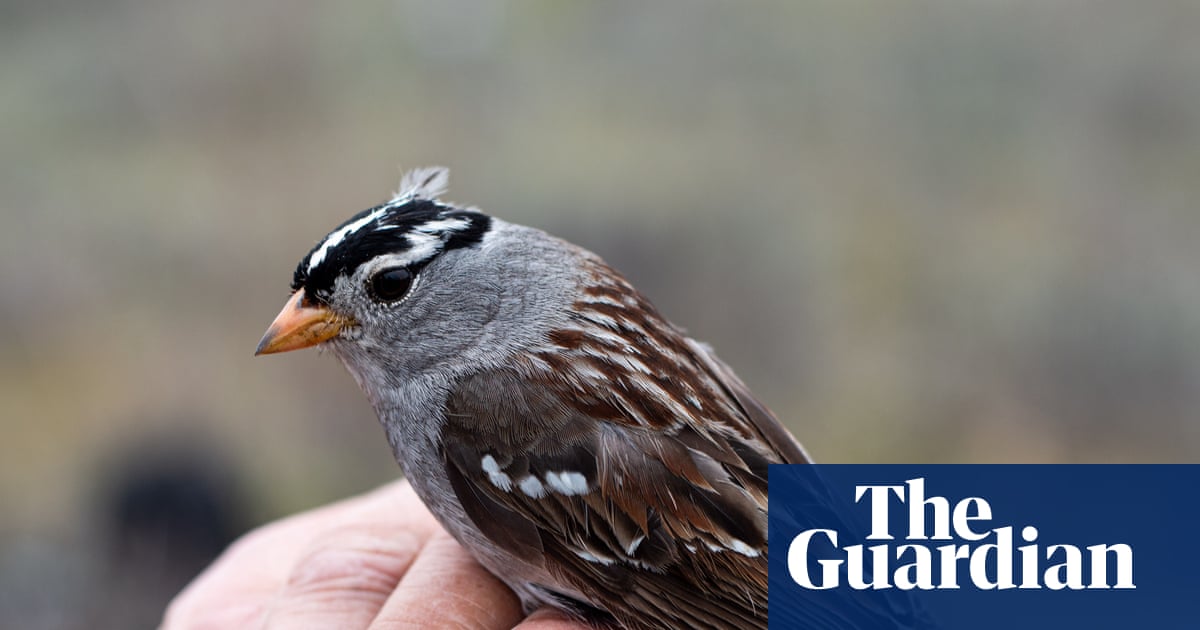
As scientists investigate whether an entire Arctic ecosystem can evolve in response to a rapidly warming climate, UConn’s Mark Urban brings leading expertise on the intersection of evolution, biodiversity, and climate change. Climate change is transforming the Arctic faster than almost anywhere else on Earth. Earlier snowmelt, warmer temperatures, and changing waterways are altering habitats and putting new pressures on the plants and animals that depend on them. But what if nature can evolve in response, not simply one species at a time, but as an interconnected ecosystem? That is the ambitious question behind a six-year, $15-million National Science Foundation-funded research project recently featured in The Guardian. Scientists working on Alaska’s North Slope are studying five interconnected species — white-crowned sparrows, feltleaf willow, Arctic grayling, aquatic mayflies, and ground beetles — to understand whether ecological relationships themselves can evolve as the climate changes. It is a question that sits squarely within the expertise of Mark C. Urban, Ph.D., Professor and Arden Chair of Ecology and Evolutionary Biology at the University of Connecticut. Urban is a global expert on the impact of climate change on biodiversity, eco-evolution, and extinction risk. His research integrates ecology, evolution, and genetics to better understand how species and ecological communities respond to environmental change. He has also conducted extensive field research in Alaska, including research involving Arctic grayling and their ability to respond to a rapidly changing climate. Recently, his work was featured in an in-depth piece by The Guardian. “Across hundreds of experiments, we have seen this happening,” says Mark Urban, an evolutionary biologist at the University of Connecticut working on the project. “There is this incredible buffer ability of adaptive evolution.” How the evolution of one species can help the holistic ecosystems depends on how an adaptive trait ultimately translates into ecological properties. For example, if a fish species can quickly evolve, it means that not only is the population maintained, but so is the stream’s productivity. “Any ecological properties that depend on those populations are maintained as well,” Urban says. To get a better idea of whether the Arctic’s stream and tundra habitats will continue to prosper, scientists are mapping the genetic diversity of each of the five study species to see if there is enough to allow for adaptation – influencing the ecosystems’ resilience potential. “We can get so far with ecology, but at some point we want to get down to the basics of why organisms do the things they do, and can they change the things they do,” says Urban. “That’s something only genetics can explain.” Certain genes control the traits associated with succeeding in different environments. “The holy grail in genomics is to find that one gene that affects everything. The gene that rules them all,” he says. “I think that’s optimistic. Most of the traits are going to be determined by hundreds of thousands of genes.”  The Guardian September 2026 Studies reveal that many plants and animals have been able to persist through evolutionary rescue – the process by which a population on the brink of extinction survives and rebounds through rapid genetic adaptation. Scarlet monkeyflowers in Oregon and California, for example, rapidly evolved during the 2010s to survive a four-year drought. The implications extend far beyond the Arctic. Scientists have traditionally examined how individual species might migrate, acclimatize, or evolve as their environments change. But ecosystems are networks. Fish depend on insects, insects depend on vegetation and water conditions, and predators depend on prey. If those relationships change at different speeds, the consequences can ripple throughout an ecosystem. Urban's work examines precisely these kinds of connections — how ecological and evolutionary processes interact and ultimately influence biodiversity and the resilience of natural systems. His recent research has also examined the growing risk of species extinction as global temperatures rise. The emerging science raises some fascinating questions: How quickly can evolution occur? Can genetic diversity give ecosystems a natural buffer against climate change? What happens when one species adapts faster than another? And are there limits to how much change an ecosystem can absorb before it begins to unravel? As scientists attempt to understand whether nature can keep pace with a rapidly changing planet, Urban can provide valuable perspective on what evolution can — and cannot — do, and what the findings could mean for biodiversity and conservation around the world. If you're interested in speaking with Mark Urban about climate change, evolution, biodiversity, Arctic ecosystems, or extinction risk, click on his profile below.

Mark C. Urban, Ph.D.

3 min

A recent study authored by the University of Connecticut's Mark Urban found that close to one third of species across the globe would be at risk of extinction by the end of the century if greenhouse gases continue to increase at current levels. His study, published in the journal Science, looked at more than three decades of biodiversity and climate change research. The findings are alarming. The study found that if global temperatures rise to 2.7 degrees Fahrenheit (1.5 degrees Celsius) above the pre-industrial average temperature, exceeding the target of the Paris Agreement, extinctions would rapidly accelerate — especially for amphibians; species in mountain, island and freshwater ecosystems; and species in South America, Australia and New Zealand. Earth has already warmed about 1.8 F (1 C) since the Industrial Revolution. Climate change causes shifts in temperatures and precipitation patterns, altering habitats and species interactions. For instance, warmer temperatures have caused monarch butterfly migration to mismatch with the blooming of plants they pollinate. Many animal and plant species are shifting their ranges to higher latitudes or elevations to follow more favorable temperatures. While some species might adapt or migrate in response to changing environmental conditions, some can't survive the drastic environmental changes, resulting in population declines and sometimes extinction. Global assessments have predicted rising extinction risks for over a million species, but scientists have not clearly understood how exactly this growing risk is linked to climate change. The new study, published Thursday (Dec. 5) in the journal Science, analyzed over 30 years of biodiversity and climate change research, encompassing over 450 studies of most known species. If greenhouse gas emissions are managed in accordance with the Paris Agreement, nearly 1 in 50 species worldwide — an estimated 180,000 species — will be at risk of extinction by 2100. When the climate model's temperature is increased to a 4.9 F (2.7 C) rise, which is predicted under current international emissions commitments, 1 in 20 species around the world would be at risk of extinction. Hypothetical warming beyond this point makes the number of species at risk rise sharply: 14.9% of species were at risk of extinction under a 7.7 F (4.3 C) warming scenario, which assumes high greenhouse gas emissions. And 29.7% of all species would be at risk of extinction under a 9.7 F (5.4 C) warming scenario, a high estimate, but one that is possible given current emissions trends. The increase in the number of species at risk increases steeply beyond the 1.5 C warming target, study author Mark Urban, a biologist at the University of Connecticut told Live Science. "If we keep global warming to below 1.5 C, in accordance with the Paris Agreement, then the [extinction] risk from today to 1.5 C is not a large increase," Urban said. But at a 2.7 C rise, the trajectory accelerates. Species in South America, Australia and New Zealand face the greatest threats. Amphibians are the most threatened because amphibians' life cycles depend heavily on weather, and are highly sensitive to shifting rainfall patterns and drought, Urban said. Mountain, island and freshwater ecosystems have the most at-risk species, likely because these isolated environments are surrounded by inhospitable habitats for their species, making it difficult or impossible for them to migrate and seek more favorable climates, he added. Limiting greenhouse gas emissions can slow warming and halt these growing extinction risks, but understanding which species and ecosystems are most affected by climate change can also help target conservation efforts where they're needed most. Urban hopes the results have an impact on policymakers. "The main message for policymakers is that this relationship is much more certain," Urban said. "There's no longer the excuse to do nothing because these impacts are uncertain."  December 5, 2024 Live Science This is an important topic, and if you're a journalist looking to learn more, we can help. Mark Urban is an international award-winning scientist; a professor of ecology and evolutionary biology and the Arden Chair Ecology & Evolutionary Biology at UConn; and a global expert on climate change impacts on nature. He is available to speak with media simply click on his icon now to arrange an interview today.

Mark C. Urban, Ph.D.

Biography

Mark C. Urban is an award-winning scientist, professor of ecology and evolutionary biology at the University of Connecticut, founder and director of the Center of Biological Risk, and global expert on climate change impacts on nature and evolutionary ecology. An avid field biologist, Mark takes every opportunity to get out in the field to learn about the diversity of life and its threats. He routinely spends time in ponds, lakes, and streams in regions ranging from New England to the North Slope of Alaska. He founded and directs the Center of Biological Risk, the first center devoted to forecasting the complex risks to society mediated by ecosystems. He has authored over 60 scientific articles, appearing in top journals such as Science, Proceedings of the National Academy of Sciences, and Nature Climate Change and has been cited more than 8000 times. By integrating ecology, evolution, and genomics, his work has uncovered new principles that routinely challenge existing ideas, including challenging the spatial scale of adaptation, the importance of adaptation in ecology, and an evolutionary reason for autoimmune disease. Most recently, his work has focused on designing global efforts to estimate and mitigate extinction risks from climate change on biodiversity.

His work on climate change impacts on species extinctions was highlighted as one of the top scientific discoveries of 2015 by Discover Magazine and in The Royal Society’s update to the 5th IPCC report. His research has been covered by news outlets around the world including The New York Times, NPR, CBS, CNN, BBC, Associated Press, Washington Post, The Guardian, and National Geographic. He has consulted on stories about climate change appearing in National Geographic, Sir David Attenborough’s documentary Climate Change – The Facts, and the television series, Years of Living Dangerously. His opinion pieces have appeared in The New York Times, Guardian, and Science. Since 2015, he has led an annual contingent of UConn students, faculty and staff to the United Nation’s summits on climate change. Mark has given more than 70 presentations on his work, including to TEDx, World Wildlife Fund, and the Association for the Advancement of Arts and Sciences. He was awarded the Young Investigator and Presidential awards from the American Society of Naturalists.

Areas of Expertise

Predictive Modeling
Eco-Evolution
Climate Change
Extinction Risk
Biodiversity

Education

Yale University

Ph.D.

Environmental Science

2006

Yale University

M.E.Sc

Environmental Science

2001

Muhlenberg College

B.S.

Environmental Science and Political Science

1998

Affiliations

  • Institute for Collaboration on Health, Intervention, and Policy (InCHIP)

Accomplishments

Arden Chair of Ecology and Evolutionary Biology

2021-02-11

Professor Mark Urban, whose work on ecological communities and climate change has broadly influenced the scientific community, has been named the first Arden Chair of Ecology and Evolutionary Biology. Along with the Rosalind Chair, the position honors scientists who have made a substantive impact on studies of biological diversity.

2016 Presidential Award Winner

2016
Best paper published in The American Naturalist:

Mark C. Urban and Jonathan L. Richardson. 2015. "The evolution of foraging rate across local and geographic gradients in predation risk and competition." American Naturalist 186:E16-E32.

Social

Media

Media Appearances

Can an entire Arctic ecosystem evolve to adapt to the climate crisis?

The Guardian  online

2026-09-09

Studies reveal that many plants and animals have been able to persist through evolutionary rescue – the process by which a population on the brink of extinction survives and rebounds through rapid genetic adaptation. Scarlet monkeyflowers in Oregon and California, for example, rapidly evolved during the 2010s to survive a four-year drought.

“Across hundreds of experiments, we have seen this happening,” says Mark Urban, an evolutionary biologist at the University of Connecticut working on the project. “There is this incredible buffer ability of adaptive evolution.”

View More

Climate or biodiversity? Global study maps out forestation’s dilemma

Mongabay  online

2026-03-06

That ability of forests to help slow climate change has driven a push to reforest degraded lands or even plant new forests where none existed before. It’s also spurred other strategies, like the cultivation of bioenergy crops coupled with carbon capture. But these approaches require a lot of land, and they could potentially put pressure on the species that live in these spots — if a forestation project or hectares of bioenergy row crops subsume native grasslands, for example. A recent analysis shows that around 13% of globally important, biodiversity-rich land overlaps with areas earmarked for these types of carbon dioxide removal (CDR) projects.

“It’s unfortunate that we face multiple global problems all at once, including both climate change and biodiversity loss,” said Mark Urban, a professor of ecology and evolutionary biology at the University of Connecticut in the U.S., who wasn’t involved in the research. “When we try to fix one, we can make things worse for the other.”

View More

A third of Earth's species could become extinct by 2100 if climate change isn't curbed

Live Science  online

2024-12-06

The increase in the number of species at risk increases steeply beyond the 1.5 C warming target, study author Mark Urban, a biologist at the University of Connecticut told Live Science.

"If we keep global warming to below 1.5 C, in accordance with the Paris Agreement, then the [extinction] risk from today to 1.5 C is not a large increase," Urban said. But at a 2.7 C rise, the trajectory accelerates. Species in South America, Australia and New Zealand face the greatest threats. Amphibians are the most threatened because amphibians' life cycles depend heavily on weather, and are highly sensitive to shifting rainfall patterns and drought, Urban said. Mountain, island and freshwater ecosystems have the most at-risk species, likely because these isolated environments are surrounded by inhospitable habitats for their species, making it difficult or impossible for them to migrate and seek more favorable climates, he added.

View More

Event Appearances

Welcome to the Heat Age

TEDxUCONN  University of Connecticut

2016-04-23

Articles

Climate Change: The New Normal Is Not Yet Here

Science - The Wire

Anji Seth, Mark Urban, and Prakash Kashwan

2021-08-28

We waited with trepidation for the summary report from the international body of scientists that weighs the global evidence for climate change and its impacts every 6-8 years, and which was published earlier this month.

Since the first report was published in 1990, the tone has changed from “Are we screwed?” to “How badly are we screwed?” Although the report reads like a disaster novel, what is new is the added confidence and clarity that what we do now matters most. If we stop emitting carbon dioxide, warming will stop fairly soon thereafter. This is good news – that we know the solution – but it presents us with a stark challenge and with a very short timeframe.

View more

Evolution on the smallest of scales smooths out the patchwork patterns of where plants and animals live

The Conversation

2020-10-02

The Douglas fir is a tall iconic pine tree in Western North America forming a forest that winds unbroken from the Western spine of British Columbia all the way to the Mexican cordillera. The environmental conditions of Canada and Mexico are obviously very different, but even on much smaller scales – say, the top of a mountain compared with a valley below it – the rainfall, temperature, soil nutrients and dozens of other factors can vary quite a bit. The Douglas fir grows well in so many of these places that it turns a dramatically varied landscape into one smooth, continuous forest complete with all the species it supports.

View more

Life without ice

Science

2020-02-14

For millions of years, Arctic sea ice has expanded and retracted in a rhythmic dance with the summer sun. Humans evolved in this icy world, and civilization relied on it for climatic, ecological, and political stability. But the world creeps ever closer to a future without ice. Last year, new reports documented how record Arctic warmth is rapidly eroding sea ice, and the United Nations Intergovernmental Panel on Climate Change detailed the manifold impacts from declining sea ice in a Special Report on the Ocean and Cryosphere in a Changing Climate. As the northern sea ice declines, the world must unite to preserve what remains of the Arctic.

View more
