2 min
Researchers work to reduce excessive noise in Florida cities
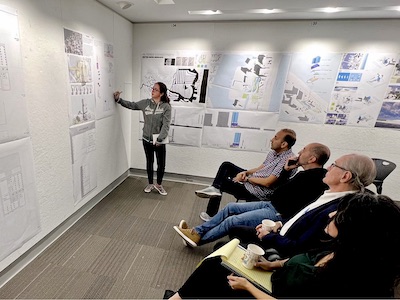
Excessive noise, or noise pollution, in cities has been linked in multiple studies to increased stress, sleep disturbances, and long-term health problems. Researchers from the University of Florida are on a mission to quiet things down, working with local governments and a private firm to improve both public health and urban living. Enter Martin Gold, an associate professor from UF’s School of Architecture, and his team of students. They recently partnered with Siebein Acoustic, a soundscape design firm that specializes in architectural and environmental acoustics. The team visited Fort Lauderdale, one of Florida’s busiest cities, known both as a party destination and a mecca for retirees. The team studied areas throughout downtown and by the beach to provide recommendations for reducing the impact of sound in the city at large. To inform their work, researchers recruited participants to walk the city and report on their observations about sound and sights, took photo documentation, acoustic measurements, geographical measurements and analyzed municipal code studies. The team proposed different improvement strategies including: Using vertical distance by requiring residential high-rise construction to limit residences in the lower floors of buildings. Limiting sound levels at windows or balconies of residential units. Building envelope systems, which are the building components that separate the indoors from the outdoors, that limit sound transmission and absorb sound. Designing new construction so buildings absorb and diffuse the sounds striking them rather than reflecting and subsequently amplifying the sounds or focusing the sounds in particular areas. Strategic zoning to incentivize designs along arterial corridors that fill the sites and provide acoustic barriers to the residential neighborhoods behind them. “We need to take a closer look at how we are designing the next generation of urban environments. There’s a lot we can do with soundscape architecture to positively impact issues moving forward.” —Martin Gold, associate professor from UF’s School of Architecture The findings and recommendations were presented at the International Congress and Exposition on Noise Control Engineering in Nantes, France. Gold and his students are currently surveying an area of Clearwater and plan to study more cities around the state and offer recommendations for reducing noise.