Michael  Moreland, JD, PhD profile photo

Michael Moreland, JD, PhD

Professor of Law and Religion; Director, Eleanor H. McCullen Center for Law, Religion and Public Policy | Charles Widger School of Law Villanova University

  • Villanova PA

Michael Moreland, JD, PhD, is an expert in the areas of law and religion, free speech, constitutional law and bioethics.

Contact
Villanova University logo

Villanova University

View more experts managed by Villanova University

Spotlight

3 min

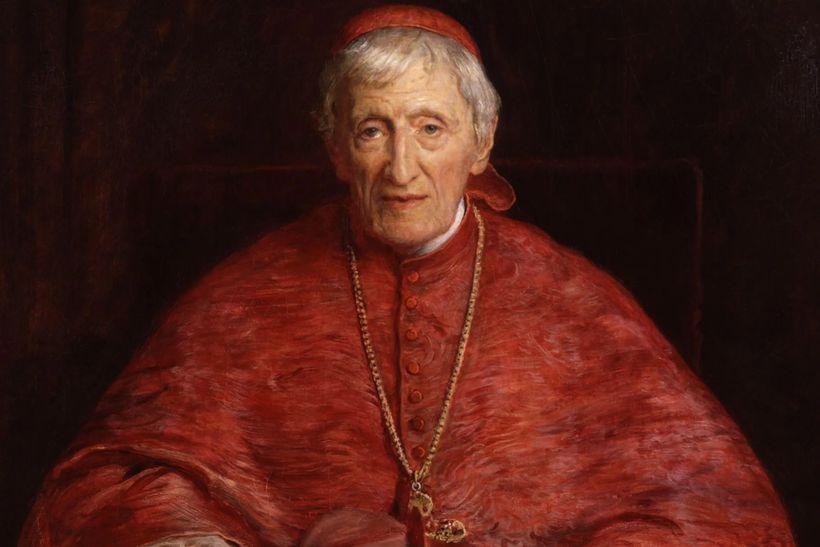
Pope Leo XIV’s first year as leader of the Catholic Church was marked by observation, listening and careful communication, and was largely devoid of major doctrinal or political action. As reasonably expected of a new pontiff, he issued his first major document—the apostolic exhortation Dilexi te. He also embarked on his first international trip, traveling to Türkiye and Lebanon, where he celebrated the 1700th anniversary of the Council of Nicaea. But perhaps publicly overlooked was his elevation of a 19th-century saint to Doctor of the Church—a designation reserved for saints found to have made significant contributions to doctrine and spirituality through writings and teachings. After approving it in July 2025, Pope Leo issued that designation of Newman on All-Saints Day, making him only the 38th individual given the title. “The move to make St. John Henry Newman a Doctor of the Church was already underway, but Pope Leo verified it and actually carried it out, bringing Newman into a newfound kind of prominence,” said Michael Moreland, PhD, Professor of Law and Religion at Villanova University Charles Widger School of Law, and a scholar of St. Newman. A Bridge Between Anglican and Catholic Theology Newman, considered an influential individual in the shaping of modern Catholic theology and education, was not always Catholic. Born in England in 1801, Newman became an Anglican priest in his mid-20s. He later was a prominent leader of the Oxford Movement—one intended to recover elements of traditional Catholic heritage in Anglicanism. It led to the birth of Anglo-Catholicism and caused many Anglicans to convert to the Roman Catholic faith, including Newman himself. Newman was received into the Catholic Church in 1845 and was ordained a Catholic priest in 1847. He would go on to become an influential theologian for his contributions to the ideas of faith, conscience and doctrine. “He established what he called the "evolution of the doctrine"—the idea that the deposit of faith is not something immobile, but something that grows in awareness over time,” said Luca Cottini, PhD, professor of Italian Studies at Villanova University. “He [Newman] was also a person of the university; an intellectual,” said Dr. Moreland. “He was known for his voluminous writings on all kinds of issues, including his famous book ‘The Idea of a University.’" In 1878, Pope Leo XIII made then-Father Newman—who was not even a Bishop at the time—a Cardinal. Like the current Pope Leo, the elevation of Newman was one of Pope Leo XIII’s first acts of government. “It’s an astonishing resemblance between our current Pope and his namesake,” Dr. Cottini said. “Both recognized this important theologian and his contributions to Catholicism within the first year of their papacy.” Newman died in 1890 and is remembered as an influential theologian, scholar and an important bridge between Anglicanism, Catholicism and the modern world. He was beatified in 2010 by Pope Benedict XVI and canonized by Pope Francis in 2019 before Pope Leo XIV elevated him to Doctor of the Church. Newman’s Promotion Shrouded in Significance Beyond its relative rarity—only five individuals have been promoted to Doctor of the Church since 1971—Newman’s elevation is significant in many ways, according to Dr. Moreland. “He was an Anglican by birth who converted to Roman Catholicism,” he said. “He was someone from the English-speaking world, not from continental Europe, and he was from the 19th century, which is relatively recent in this context.” Newman is only the second Doctor of the Church from England, and aside from Thérèse of Lisieux, born in 1873, is the only Doctor of the Church born after 1700. Beyond the significance related to Newman himself, Pope Leo’s recent action underscored a critical focus of the Church, and evidenced its personal importance to the pontiff himself. “It highlighted Newman’s role in education,” Dr. Moreland says. “That is something Pope Leo has been formed by in important ways: as a seminary rector, seminary professor and as part of the Order of Saint Augustine, which values education highly.” At the Mass elevating Newman to Doctor of the Church, Pope Leo also named Newman a co-patron saint of Catholic Education, joining 13th-century priest and theologian St. Thomas Aquinas. He then added Newman’s feast day of October 9—the day he converted to Catholicism in 1845—to the General Roman Calendar, thus bringing his memorial to the global Church. “I think Pope Leo elevating Newman to a Doctor of the Church, along with these subsequent actions, signifies the emphasis he is going to place on education during his papacy,” Dr. Moreland said.

Michael  Moreland, JD, PhDLuca Cottini, PhD

4 min

The death of Pope Francis marks a pivotal moment for the Catholic Church, ending a papacy that redefined the Church's relationship with the modern world. As the College of Cardinals prepares to gather in conclave, Catholics across the globe are closely watching to see whether the next pontiff will build upon Francis' legacy or chart a new course. The following experts are available to provide insight into a range of related topics, including Pope Francis' enduring impact and what lies ahead for the world's 1.4 billion Catholics: Massimo Faggioli, PhD Professor, Theology and Religious Studies Dr. Massimo Faggioli is a world-renowned expert on the history and administrative inner workings of the Catholic Church, with specific expertise in the papacy, Vatican II, the Roman Curia, liturgical reform, new Catholic movements and Catholicism and global politics. As quoted on NPR: "Historically, we see in different conclaves a certain swinging of the pendulum. What the conclave and the next pope cannot do is to ignore and deny the changing features of global Catholicism, which is much less European, much less white, less North American and more Global South..." Kevin Hughes, PhD Chair, Theology and Religious Studies Dr. Kevin Hughes is a leading historical theologian, offering insights into the life, legacy and impact of Pope Francis. He can also speak to the significance of the pope in Catholicism and the influence of his teachings on the global Catholic Church. As quoted on Scripps News: "[Pope Francis' selection] was really the Church extending beyond the limits of its European imagination. His Latin American identity was really crucial to embracing a new moment within the Church and opening the door in so many ways, and I think he bore witness to that throughout his papacy." Jaisy Joseph, PhD Assistant Professor, Systematic and Constructive Theology Dr. Jaisy Joseph is a trained ecclesiologist, able to address a wide range of topics relating to the papacy, conclave process and Catholic Church. Previously, she has commented on the Church's presence in Asia and the Global South, offering expert commentary on its growth, challenges and shifting influence. As quoted by ABC News Digital: "[The election of someone from the Global South would be] a move in that direction of how to be a global church. That move from a Eurocentric church to a truly global church—I think that's what Francis really inaugurated." Patrick Brennan, JD Professor of Law; John F. Scarpa Chair in Catholic Legal Studies Professor Patrick Brennan is an expert on the conclave process and the main rules that govern it. He can also speak to topics such as the contemporary and historical importance of secrecy in the conclave, what the cardinals may be looking for in the next pope and the factors that cause similarities and differences from one conclave to the next.  As quoted on Fox 29's Good Day Philadelphia: "The purpose of the general congregation is for the cardinals, who don't know each other in some cases, to get to know each other better as they learn about the current state of the Church and together decide on the needs of the Church and priorities for the new pontificate." Brett Grainger, ThD Associate Professor, Study of Spirituality and American Religious History Dr. Brett Grainger is a go-to source for discussions of the changing face and role of modern spirituality in America. He serves as an expert on contemporary religious trends and can also speak to the broader public reaction to Pope Francis' passing, especially outside of the Catholic faith. As quoted by Courthouse News Service: "People are disaffiliating from a tradition—that doesn't necessarily mean in fact that they don't believe in God anymore...What's more important is 'Is this giving me life? Is this making my life more meaningful? Is this giving me the kind of energy and purpose that I'm looking for?' That's where religion is going." Michael Moreland, JD, PhD Professor of Law and Religion; Director, Eleanor H. McCullen Center for Law, Religion and Public Policy Dr. Michael Moreland is a renowned scholar of constitutional law, religious freedom, public policy and ethics. He can provide expert commentary on items related to the Catholic right and the state of religious politics in the United States. As featured on NBC News Digital: Michael Moreland said the mass appeal of "Conclave" captured how, even in a secular modern age, there is still pervasive intrigue around "the ancient rituals of the Catholic Church." "The significance of the theological and spiritual aspects of Catholicism and this process of electing a pope was kind of reduced into partisan politics," he said. Ilia Delio, OSF, PhD Josephine C. Connelly Endowed Chair in Christian Theology Sr. Ilia Delio addresses topics in her work such as theology and evolution, technology and human becoming and understandings of Catholicity in a world of complexity. She can provide expert insight into Laudato si', Pope Francis' position on the environment, the relationship between science and religion and integral ecology. As featured in the National Catholic Reporter: "We are clearly an Earth in crisis," with a reversal necessary to secure a sustainable future, said Ilia Delio... Delio posed a series of questions: about the relationship between religion and science; what Laudato si', and Christianity more broadly, can offer ecological movements; and whether the concept of kinship or creation as family might better reflect humanity's place within nature than "care for creation." To speak with any of these media experts, please contact mediaexperts@villanova.edu.

Michael  Moreland, JD, PhDBrett Grainger, ThDIlia Delio, OSF, PhDJaisy A. Joseph, PhD

Media

Social

Areas of Expertise

Supreme Court
Free Speech
Supreme Court Nomination Process
Law and Religion
Constitutional Law
First Amendment
Separation of Powers
Gerrymandering
Bioethics

Biography

Professor Moreland is an expert on topics related to law and religion, free speech, constitutional law, tort law, and bioethics. Moreland previously served as Associate Director for Domestic Policy at the White House under President George W. Bush, where he worked on a range of legal policy issues, including criminal justice, immigration, civil rights and liability reform.

Education

University of Michigan Law School

JD

Boston College

PhD

Boston College

MA

Affiliations

  • AALS Law and Religion Section
  • Witherspoon Institute (Princeton, NJ) Task Force on Conscience Protection
  • Saint Thomas More Society of Philadelphia, Board of Governors
  • Federalist Society, Religious Liberties Practice Group Executive Committee
  • Peer Reviewer: Cambridge University Press, Harvard University Press, Journal of Law and Religion, Journal of Catholic Social Thought, Journal of the American Academy of Religion, Theological Studies

Select Media Appearances

How the Supreme Court's Injunction Ruling Advances Trump's Birthright Citizenship Fight

FOX News  online

2025-07-08

Michael Moreland, Villanova University law school professor, told Fox News Digital there has long been an academic debate about the language in the amendment. It states that babies born in the United States and "subject to the jurisdiction thereof" are citizens. The dispute, Moreland said, has centered on "how broadly or narrowly" to interpret that clause.

View More

Supreme Court Fight Over Catholic Charter School Could Clear the Way for Taxpayer-Funded Religious Schools

CNN  online

2025-04-29

The battle over St. Isidore of Seville Catholic Virtual School in Oklahoma has pit public school officials, traditional charter school advocates and the state's Republican attorney general against powerful religious groups... Michael Moreland, a law professor at Villanova University who specializes in religion, warned against "catastrophizing" the potential impact of a ruling for St. Isidore. Exactly how far the decision reaches will depend on how broadly the court rules and whether a state's charter school law is similar to Oklahoma's.

View More

How Does a Papal Conclave Work? People are Turning to this Oscar-Winning Film to Find Out

NBC News  online

2025-04-23

Michael Moreland, a professor of law and religion at Villanova University, said the mass appeal of “Conclave” captured how, even in a secular modern age, there is still pervasive intrigue around “the ancient rituals of the Catholic Church.”

View More

Answers

Michael  Moreland, JD, PhDLuca Cottini, PhD

There are a lot of noteworthy things about Pope Leo elevating Newman to be a Doctor of the Church. He was an Anglican by birth who converted to Roman Catholicism. He was someone from the English-speaking world—England specifically—not from continental Europe, and he was from the 19th century, which is relatively recent in this context. But the pope's action also highlighted Newman's role in education. He was a person of the university; an intellectual and a major figure in 19th-century theology. After Newman converted in 1845, he became a priest and was most famous for his writings. He had a voluminous product of writing on all kinds of issues, including his famous book called "The Idea of a University." At the Mass making him a Doctor of the Church during the Jubilee of Education, Pope Leo also made Newman the co-patron saint of Catholic education, alongside Saint Thomas Aquinas. Education is one of the major focuses of the Church, but it's also something Pope Leo has been formed by in important ways: as a seminary rector, seminary professor and as part of the Order of Saint Augustine, which values education highly. I think Pope Leo elevating Newman to a Doctor of the Church signifies the emphasis he is going to place on education during his papacy.

Select Academic Articles

A Survey of the U.S. Supreme Court’s Abortion Jurisprudence (Book Chapter)

Abortion: Global Positions and Practices, Religious and Legal Perspectives

Alireza Bagheri, Michael Moreland

2021

Justice, Love, and Duties of Care in Tort Law (Book Chapter)

Agape and Law

Robert Cochran, Zachary Calo

2017

View more

Institutional Conscience: From Free Exercise to Freedom of Association and Church Autonomy

The Conscience of the Institution

Michael Moreland

2014
