

Miguel Rodríguez García, PhD profile photo

Miguel Rodríguez García, PhD

Director, Supply Chain Cybersecurity Lab | Warehouse of the Future Initiative | Research Scientist MIT Center for Transportation & Logistics MIT Center for Transportation & Logistics

  • Cambridge MA

Dr. Garcia researches how to defend global supply chains against cybersecurity risks associated with the deployment of new technologies.

Contact
MIT Center for Transportation & Logistics logo

MIT Center for Transportation & Logistics

View more experts managed by MIT Center for Transportation & Logistics

Spotlight

3 min

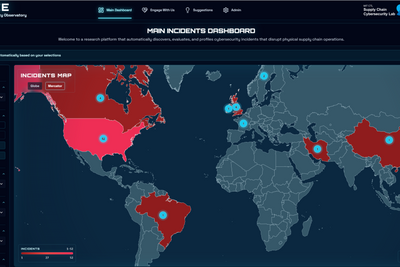
When cybercriminals target a business, the consequences can extend far beyond stolen data and compromised computer systems. Factories can shut down, shipments can be delayed, and disruptions can spread across entire supply networks, affecting businesses and consumers around the world. Recognizing these growing threats, the MIT Center for Transportation & Logistics has launched a new Supply Chain Cybersecurity Lab dedicated to helping organizations prevent, manage and recover from cyberattacks that threaten global operations. The initiative is co-founded by MIT researchers Dr. Miguel Rodríguez García and Dr. Camilo Mora, who are combining expertise in cybersecurity and supply chain management to address vulnerabilities that traditional IT security approaches may overlook. When a Cyberattack Becomes a Supply Chain Crisis The stakes are significant. A 2025 cyberattack against Jaguar Land Rover forced the manufacturer to suspend production at its UK facilities for five to six weeks, with an estimated economic impact exceeding $2 billion. Dr. Camilo Mora is a researcher at the MIT Center for Transportation & Logistics and Co-founder of the MIT Supply Chain Cybersecurity Lab. His research explores how ransomware, cyberattacks and digital vulnerabilities affect supply chain operations and resilience. View his profile And the risks are growing as manufacturers, warehouses and transportation networks become increasingly dependent on interconnected technologies, artificial intelligence, robotics and third-party software providers. For Dr. Camilo Mora, the importance of this research became clear after learning about a ransomware attack that disrupted a company's operations nationwide and required approximately three months to restore its systems. "That moment made me realize the enormous impact that a cyber-attack can have beyond the classic IT department, affecting the flow of goods, information, and money all at once, plus reputational damage across the entire network." The researchers are particularly concerned about smaller suppliers that lack the resources to defend themselves against sophisticated attacks, yet play critical roles in global supply networks. New Research to Identify and Prevent Disruptions The MIT lab is developing three research tools to help organizations understand and address these threats: TRACE: Tracks cyber incidents and their real-world consequences, including operational shutdowns, financial losses and disruptions to supply networks. RADAR: Identifies emerging cybersecurity risks associated with technologies such as autonomous systems, quantum computing and robotics. SCOUT: Helps smaller suppliers identify vulnerabilities and develop practical cybersecurity improvement strategies. The research also emphasizes that technology alone cannot protect supply chains. Employee awareness, leadership preparedness and coordination between IT and operational teams are essential to preventing disruptions and recovering when attacks occur. Protecting Global Supply Chains Before the Next Attack As global supply chains become increasingly interconnected, the work raises urgent questions for business leaders. How vulnerable are their suppliers? Could a cyberattack shut down their operations? And are organizations prepared to keep goods moving when critical technology fails? Dr. Miguel Rodríguez García is a Research Scientist at the MIT Center for Transportation & Logistics and Co-founder and Director of the Supply Chain Cybersecurity Lab. His research examines the cybersecurity risks associated with emerging technologies, automation, robotics and interconnected global supply chains. View his profile For Dr. Miguel Rodríguez García, addressing these challenges requires bringing together two disciplines that have traditionally operated independently. "We created this lab because supply chain and cybersecurity professionals have not been talking to each other. We're here to help companies continue operating even when technology fails, and we want to learn from companies that have suffered these attacks so we can bring those lessons back to the industry and make cybersecurity better for everybody." The lab's mission is straightforward: keeping supply chains moving even when technology fails. By combining research, industry collaboration and practical cybersecurity tools, MIT researchers hope to help organizations anticipate threats, strengthen resilience and recover more quickly when attacks occur. If you're interested in speaking with these MIT researchers about supply chain cybersecurity, ransomware, emerging technology risks, operational disruptions and protecting global commerce, simply click on the profiles of Dr. Miguel Rodríguez García or Dr. Camilo Mora to arrange an interview today.

Miguel Rodríguez García, PhDCamilo Andrés Mora Quiñones, PhD

Media

Social

Biography

Miguel Rodríguez García, PhD, is a Research Scientist at the MIT Center for Transportation and Logistics. He is the Co-founder and Director of the Supply Chain Cybersecurity Lab, and he also leads the Warehouse of the Future Initiative within the Omnichannel Supply Chain Lab.

His main research focuses on how to defend global supply chains against the cybersecurity risks associated with the deployment of new technologies. Miguel currently studies how large software networks, AI agents, robotics, cloud platforms, and complex third-party ecosystems, expand the attack surface and redefine supply chain cybersecurity risks across manufacturing, warehousing, and transportation.

Over his career as a researcher, he has collaborated with multiple global industry partners on supply chain cybersecurity, logistics automation and technology, e-commerce logistics, and warehousing and fulfillment operations. He is also a frequent presenter at international conferences, and his work has been published in some of the most prominent scientific journals in supply chain management.

Beyond his research, he played a pivotal role in advancing digital learning at MIT, leading Supply Chain Fundamentals, the largest online course within the MITx MicroMasters® Program in Supply Chain Management, for 4 years. The course served over 25,000 students annually during Miguel's leadership. He now teaches in MIT's graduate degree and executive education programs, equipping future leaders with the knowledge to drive innovation in supply chain management. He's the main instructor for SCM.292 Logistics Automation & Technology, and a co-instructor in SCM.289 Omnichannel Fulfillment Strategies.

Areas of Expertise

Supply Chain Cybersecurity
AI Agents
Risk Management
Supply Chain Technology
Technology Adoption
Humanoids
Warehouse Operations

Education

Universidade de Vigo

PhD

Advanced Processes and Technology, Operations and Supply Chain Management

2021

Languages

  • Spanish
  • English
  • Galician

Media Appearances

Supply Chain 2050: AI, Robotics, and Trust in the Physical World

Next Level Supply Chain with GS1 US  online

2026-07-15

In this episode, Reid Jackson and Liz Sertl were at GS1 Connect. Melanie Hilton sat down with Miguel Rodriguez Garcia from MIT, Frederik Bohn from Plug and Play Tech Center, and Lisa Morales-Hellebo from REFASHIOND Ventures to explore what supply chains could look like in 2050 and the challenges that must be solved today to get there.

View More

Automation Beyond 5G

Parcel and Postal Technology International Magazine  online

2026-04-01

“As a result, competitive advantages will depend less on access to technology and more on organizational readiness,” notes Dr Miguel Rodríguez García, a research scientist at the MIT Center for Transportation and Logistics.

View More

MIT report exposes key risks associated with highly automated warehouses

Supply Chain Xchange  online

2025-04-30

These suggestions are based on interviews with more than 40 subject matter experts and a review of more than 200 articles on automated warehouses. The report is authored by three researchers from MIT’s Center for Transportation and Logistics (CTL) and its Omnichannel Supply Chain Lab: Miguel Rodríguez García, Kellen Betts, and Eva Ponce.

View More

Research Papers

Managing technology-related disruptions and vulnerabilities in highly automated warehouse systems: an integrative review and research agenda

International Journal of Production Research

Miguel Rodríguez-García, Joakim Hans Kembro, Kellen Betts, Eva Ponce-Cueto

2026-03-04

Recent technological developments in warehousing have introduced new risks. This paper presents an integrative review that combines insights from highly automated warehouse systems (HAWS) and risk management, providing a comprehensive understanding of technology-related warehouse disruptions and vulnerabilities.

View more

Supply chains under (cyber) attack

Supply Chain Management Review

Miguel Rodríguez García and Eva Ponce

2025-11-03

Cyberattacks are crippling supply chains and exposing hidden vulnerabilities in the very technologies meant to drive efficiency. As cloud platforms, robotics, and connected systems expand, companies must treat cybersecurity as a core supply chain function, building redundancy, resilience, and cross-functional defenses to withstand the next inevitable strike.

View more

E-fulfillment cost management in omnichannel retailing: An exploratory study

Computers in Industry

Miguel Rodríguez-García, Iria González-Romero, Ángel Ortiz-Bas, José Carlos Prado-Prado

2024-08-01

The purpose of this study is twofold: investigating how omnichannel (OC) retailers manage e-fulfillment costs and establishing how these costs relate to the evolution of OC retailers' e-fulfillment strategies. Experts in e-fulfillment from 34 European OC retailers across various sectors participated in an exploratory survey.

View more

Event Appearances

Supply Chain 2050: AI, Robotics, and Trust in the Physical World

GS1 Conference 2026  

2026-07-15

Keynote Speaker

Keller Logistics Summit  

2025-09-24

Speaker

MIT Emerging Research Showcase (2025 and 2026)  

Availability

  • Keynote
  • Moderator
  • Panelist

Awards

University Award for Excellence in Academic Performance

Issued by University of Vigo (Spain)
Jan 2017

National Award for Excellence in Academic Performance 2020

Issued by Ministry of Education (Spain)
Oct 2020

Courses

SCM.292 Logistics Automation & Technology

Explores how technological developments are transforming logistics, with physical robots powered by AI increasingly taking over tasks once performed by humans. Uses a multidisciplinary approach to teach students to evaluate and develop new logistics technologies, focusing on aspects such as technology scalability and flexibility, long-term strategy, financial implications, risk management, human factors, and relationships with technology vendors. Through this approach, students identify the key drivers behind the success or failure of modern logistics technologies. Non-technical course that aims to inspire critical thinking and strategic decision-making through case studies, industry insights, peer-to-peer discussions, and hands-on projects. Students also engage in debates, Socratic method discussions, and real-world applications with guest speakers.

SCM.289 E-Commerce and Omnichannel Fulfillment Strategies

Explores supply chain challenges when implementing omnichannel strategies. Develops an in-depth understanding of how customers' expectations and e-commerce is transforming warehouses operations. Discusses the most relevant traditional warehouses operations and the most innovating fulfillment models in e-commerce and omnichannel. Includes presentations, guest speakers, team projects, and case discussions.
