M. Renée Umstattd Meyer, Ph.D., MCHES, FAAHB profile photo

M. Renée Umstattd Meyer, Ph.D., MCHES, FAAHB

Professor Baylor University

  • Waco TX

Avid researcher who promotes health and access to opportunities for healthy living through an active living lens.

Contact
Baylor University  logo

Baylor University

View more experts managed by Baylor University

Spotlight

4 min

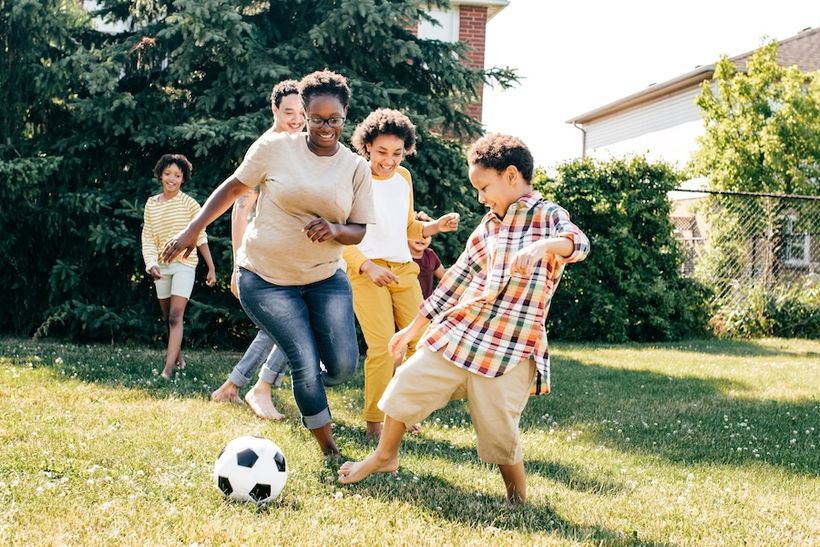
The simple act of playing outside offers a multitude of interconnected benefits, profoundly enhancing physical, mental and cognitive well-being. Healthy living expert Renée Umstattd Meyer, Ph.D., professor of public health in Baylor University’s Robbins College of Health and Human Sciences, recommends making outdoor play a regular part of your family’s routine, especially during the summertime when kids are out of school and schedules are typically lighter. “Being outdoors is an equalizer, or at least it can be. Nature offers a lot of opportunities, and there are benefits to all types of being outside, whether it be yards, parks or driveways bordered by trees,” Umstattd Meyer said. “Going outdoors does not require a sign-up fee or certain types of equipment; it is just there waiting for visitors.” Umstattd Meyer’s research focuses on promoting health and access to opportunities for healthy living through an active living lens by collaborating to foster healthy and active opportunities and lifestyles for all people. The benefits of simply being outside, she says, increase through the combination of five factors: movement, connection with nature, connection with others, a reset from busy school schedules and a sense of community. Movement Outdoor play gets kids moving, which inspires creativity, critical thinking and exploration. And research bears that out, Umstattd Meyer said, showing that exercise and physical activity, even in relatively shorter bouts, help with concentration, problem-solving, learning and memory. “Being outdoors beckons us to move our bodies, for kids to run, cartwheel, spin and twirl, play chase, build pill-bug houses, chase lightning bugs, start a pick-up game, and for adults, to walk, exercise, play with our kids, pull a few weeds out of a flower bed, plant and tend to a vegetable, herb or flower garden,” she said. Summertime Safety While playing outside comes with numerous benefits, Umstattd Meyer says a few simple steps will help families safely manage higher temperatures, sun exposure and those pesky mosquitoes: Find time for outdoor play during the cooler times of day. Make sure to have plenty of water and shade available. It's okay to take a break! Use sunscreen and mosquito repellent – reapply as needed. Connection with nature Time outdoors offers well-documented physical and mental benefits, increases awareness and can evoke a sense of environmental stewardship, Umstattd Meyer said. “Just being in nature, whatever the nature might be, from a driveway with a little green around it to local parks, offers those same benefits and connection,” she said. Connection with others Spending time outside also helps people reconnect and step away from the number of devices and screens that contribute to feelings of loneliness and isolation. “Outdoor play also allows opportunities for connection with others, from family members and friends to neighbors,” Umstattd Meyer said. “It provides time and space for adults to connect with others as well, to build relationships, familiarity and trust.” Reset from the schedules Summer play can provide a break from the structured routines of the school year, but Umstattd Meyer said that it requires intentionality. “Taking a break from the planned and orchestrated schedules and demands of the school year and associated stressors, along with a break from screens and devices, will actually foster curiosity and creative thought, opportunities for critical analysis and awareness of caring for our natural surroundings and the environment,” she said. Fosters a sense of community Outdoor play not only benefits children’s health and development, but it also creates natural opportunities for families to build connections and strengthen neighborhood relationships, Umstattd Meyer said. “Being outside with our kids gives us the opportunity to say hello and get to know our neighbors,” she said. “It also allows for parents to become more comfortable with their kids being outside while becoming more acquainted with neighbors, to build confidence that their kids are capable of exploring their surroundings and the outdoors.” Umstattd Meyer encourages everyone to find outdoor spaces and engage in play, which can be planned or spontaneous and is freely chosen at any age. “Play is pursued for enjoyment and recreation rather than serving a serious or practical purpose and enhances health, happiness and quality of life,” Umstattd Meyer said. While technology has improved people’s daily lives, it also has contributed to reduced social connection and engagement with the natural world, she said. At the same time, Americans of all ages are experiencing higher levels of stress and anxiety over demands for higher productivity and achievement. “I encourage each of us to create the time to enjoy nature and plan for ways to regularly engage in outside play in a way that allows you to connect with others and physically move your body,” Umstattd Meyer said. National Play Outside Day The first Saturday of every month marks National Play Outside Day, when people of all ages are encouraged to set their screens and devices aside and head outdoors with friends and families to play together, enjoy nature and discover the multiple benefits of play. Looking to know more or arrange an interview? Simply contact: Shelby Cefaratti-Bertin at Shelby_Cefaratti@baylor.edu today.
M. Renée Umstattd Meyer, Ph.D., MCHES, FAAHB

Media

Biography

Renée Umstattd Meyer is the Associate Dean for Research in Robbins College and a Professor in the Department of Public Health at Baylor University. She received her BSE in community health, graduating from the Honor’s program at Baylor University in 2000, MS in health promotion from the University of Mississippi in 2002, and PhD from the Arnold School of Public Health at the University of South Carolina in 2005. She completed a postdoctoral research fellowship in the psychology of physical activity at the University of Illinois Champaign-Urbana in 2006, served as faculty at the University of Alabama from 2006-2010, and joined the Baylor faculty in 2010.

Dr. Umstattd Meyer’s work focuses on promoting health and access to opportunities for healthy living through an active living lens. She collaborates with communities using mixed methods to understand cultural context and advance approaches and policies to foster healthy and active opportunities and lifestyles for all people. She focuses much of her work partnering with underserved rural communities and families, which has been supported by federal, foundation, and local sponsors. She leads the Rural Hub of the CDC-funded Physical Activity Policy Research and Evaluation Network (PAPREN) and is a Fellow and Past-President of the American Academy of Health Behavior, a multidisciplinary society of health behavior scholars and researchers.

Areas of Expertise

Underserved Populations
Access to Health Care
Active Living
Physical Activity
Sedentary Behavior
Healthy Living

Accomplishments

Outstanding Research Poster

American Academy of Health Behavior (AAHB) 22nd Annual Meeting
2022

Education

Baylor University

B.S.E.

2000

The University of Mississippi

M.S.

Health Promotion and Wellness

2002

The University of South Carolina, Arnold School of Public Health

Ph.D.

2005

Affiliations

  • Physical Activity Policy Research and Evaluation Network (PAPREN)
  • Society of Behavioral Medicine (SBM)
  • American Academy of Health Behavior (AAHB) : Fellow and Past President

Media Appearances

4 low-cost ways to create safe public spaces where all kids can play

The Conversation  online

2021-08-04

Outdoor play is critical for child development – it decreases stress, increases communication and social skills, attention and physical activity, and enhances physical development.

During COVID-19, opportunities for children to socially connect, reduce stress and play outside have been desperately needed but also greatly limited. As understanding of COVID-19 expanded, outdoor spaces emerged as an ideal place for activities to occur with limited risk.

View More

Rural Libraries and Community Well-Being

American Libraries  online

2020-10-06

At “How to Host Play Streets at the Library,” presenters Noah Lenstra (assistant professor of library and information science at University of North Carolina at Greensboro) and M. Renée Umstattd Meyer (associate professor of public health at Baylor University in Waco, Texas) introduced Play Streets, a program that has connected people in rural communities.

View More

Creative Solutions at the Heart of Rural Communities: Interview with M. Renee Umstattd Meyer

JPHMP Direct  online

2019-10-10

My first guest is Dr. M. Renée Umstattd Meyer, Associate Professor at Baylor University, and lead author of the paper around which this series, Views from the Front Porch, is centered. Her work focuses on promoting health and health equity through an active living lens.

View More

Research Grants

Play Streets: Preliminary research evaluating youth physical activity, community connectedness, and implementation in rural communities

Baylor University

2022 – 2024

Increasing physical activity in rural Pennsylvanians: The PA Moves Trial

National Institutes of Health, National Cancer Institute

2024 – current

Articles

Rural Active Living: A Call to Action 2.0, 10-Year Review and Recommendations to Advance the Field

Journal of Public Health Management and Practice

2025

Context & Objective: Written a decade ago, the 2015 Rural Active Living: A Call to Action (published in 2016) described rural-specific efforts in the fields of active living and physical activity (PA) and identified 8 recommendations to guide rural active living research and practice. Given that rural populations continue to experience a higher burden of PA-related chronic health conditions, the objective of this review was to revisit the 8 Rural Active Living Calls to Action, reassess the evidence base, summarize advances in each area, and identify emerging areas that warrant examination or further study.

View more

Multilevel determinants of paternal and child physical activity: qualitative research using dyadic interviews among Mexican heritage fathers living near the Texas-Mexico border

BMC Public Health

2025

Purpose
Families living near the Texas-Mexico border face disproportionate barriers to physical activity (PA), yet little research has explored how Mexican-heritage fathers perceive and overcome barriers to child PA. The purpose of this study was to examine and describe fathers’ perceptions of strategies to improve child PA through a social-ecological lens.

View more

Protocol for a naturalistic study of residents living in an agriculturally-integrated (“agrihood”) neighborhood

Frontiers in Public Health

2025

Background
Poor nutrition and inadequate physical activity are key contributors to rising chronic disease rates across the United States. It is well-documented that neighborhood built environments play an important role in shaping these modifiable health behaviors. Agriculturally-integrated neighborhoods (“agrihoods”) offer a relatively new and promising approach to health-promoting residential design and development. Centered around a working farm, agrihoods are designed to connect residents with fresh foods and outdoor spaces that encourage physical activity. However, no rigorous or longitudinal evaluations of their impact on resident health have been conducted to date.

View more
