5 min
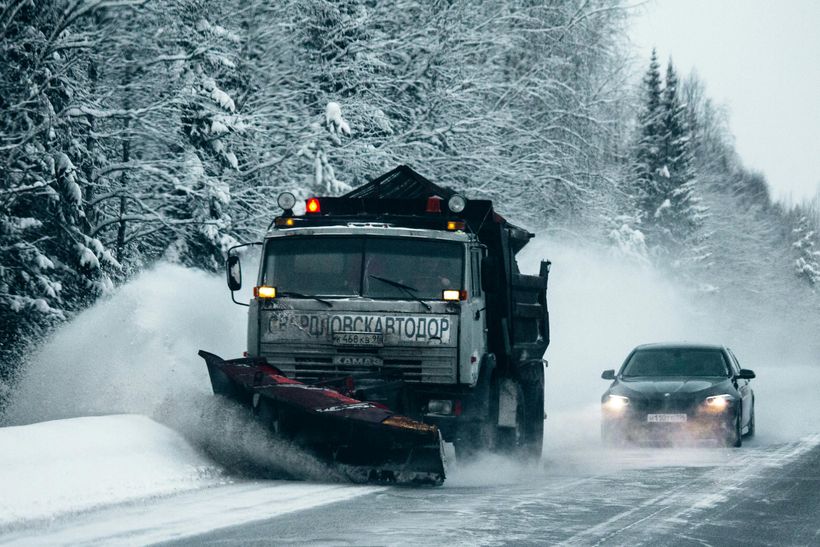
Streaks of white that coat roads and cars. Powdery footprints smudged into floors. It’s the time of year when much of the United States relies on road salt to keep ice at bay and accepts the nuisances that come with it. But beyond the inconvenience, all that salt has potentially serious, long-term effects on the environment, human health and infrastructure. Steven Goldsmith, PhD, an associate professor of Geography and the Environment at Villanova University, researches topics in watershed biogeochemistry and environmental health. A focus of his lab is the study of de-icing practices on water quality. Recently, Dr. Goldsmith shared insights from his work, exploring the widespread consequences of road salt and potential solutions to reduce its harm. Question: You have led or participated in research focused on the environmental impacts of road salt application, often locally, but with much broader implications. What have some of those studies found? Steven Goldsmith: In 2022, we published a paper showing that salt—sodium in particular—is seeping into Philadelphia's water supply, and it's timed with snow melts. We found that if you drank a glass of tap water during the peak period in the winter of 2018-19, your sodium intake would be six times what the Environmental Protection Agency (EPA) recommends within a glass of water for someone on a low-sodium diet. We are susceptible in this region because most of our water supply comes from rivers, and the rivers receive that salt runoff. Some of our findings indicate this is a chronic issue and not limited to winter months. All that contaminated shallow groundwater causes the concentration to rise year-round, even in the summer. In a recent paper, we discuss the issue of salt that lands on the side of the road. When it does, it infiltrates into soil, and then it goes into shallow groundwater before entering our streams. Oftentimes when salt is applied to the road and you receive that initial precipitation, you are left with runoff with salinity near the concentration of sea water, which is very bad for freshwater organisms. Q: Have those studies found other impacts beyond those created directly by sodium? SG: It’s certainly not just a sodium issue—it's also a chloride issue. Chloride does have a negative impact on aquatic organisms, but it can also corrode drinking water infrastructure. If you have lead pipes in that infrastructure, that can lead to a range of human health issues. Even just to prevent those problems, applying chemicals to protect from the corrosion of pipes increases costs. Perhaps the worst part is when road salt infiltrates shallow soil and groundwater, the sodium is left behind preferentially in soils because it's displacing other positively charged elements, which could then go into groundwater. The elements it replaces are metals. If we have more salt runoff on the side of the roads, chances are, if we look in those streams, we are going to see higher concentrations of heavy metals like copper, zinc and even lead. Q: You have mentioned the efficacy of brine. What is brine and why is it more effective than traditional road salt? SG: If you’ve ever driven behind a rock salt truck, you probably noticed it pelts your windshield and shoots salt everywhere. A lot of that rock salt ends up following the natural trajectory of the road, which is designed to drain towards the sides to keep water from pooling. As soon as a snowstorm happens, it's going to melt and flow into the storm drain. That, of course, is bad for the environment, but also doesn’t help remove ice from the road. With brine, the application is a diluted road salt with water mixture that is usually about 23 percent sodium chloride by volume, and it’s referred to as an “anti-icing” measure. The saltwater infiltrates the top layer of pavement and embeds in the roadway itself, which keeps ice from crystallizing when snow or water hits the surface. To use an analogy, let’s say you have a large rock that you placed on top of the pavement, but you also have a quarter of that rock’s volume in sand. If you put that sand onto the pavement, it will permeate into nooks and crannies. That's the same idea here: use less material and in a way that makes it stick better to the surface and reduces the need to reapply as often during and after storms. Q: What are potential positive impacts if municipalities switch from road salt to brine? SG: There are limited studies on this, but it's been shown that if done properly, brining can reduce salt runoff into streams by anywhere from 23 to 40 percent. If it's 40 percent, you have almost cut the problem in half, and that lower peak salt concentration and runoff would have a profound positive impact on aquatic organisms that are downstream. From a cost standpoint—and I say this theoretically because there are other up-front costs associated with brining at the municipal level—if you reduce salt concentrations by up to 40 percent it means you apply a lot less and therefore spend a lot less. Q: What can individuals do to decrease road salt runoff, and how much of an impact does individual use have? SG: We can start by addressing the household salt application problem. Another one of our recent papers suggests that other impervious surfaces, like driveways, sidewalks and parking lots, are probably contributing even more than the roadway application. The best estimate is that individual or private contractor use could be over 10 times what you see on roads. For researchers, part of addressing this is trying to understand why people apply so much salt on their personal properties: are they afraid of lawsuits? Keeping with the Joneses? Are they not aware of ordinances that say you have to shovel within a certain number of hours, which would negate the need for salt anyway? For homeowners and other individuals, one proposed solution is to use a coffee mug’s worth of salt for every 10 sidewalk squares. Think of it as a “low-sodium diet” to make sure you’re not overapplying. It’s a way we can limit our use of salt and do so in a way that doesn't jeopardize safety. These individuals can also sweep up salt applied before a storm that never materialized to use before the next one. This will prevent the possibility of rain needlessly dissolving the salt. Q: Are there effective alternatives to road salt that individuals can use? SG: The only truly effective alternative, unfortunately, is simply using less road salt. While some people apply sand, it also washes into local streams, causing environmental harm. Another option that has gained attention is beet juice—what I like to call the “Dwight Schrute” solution. Beet juice actually works better than road salt because its organic acids prevent ice from crystallizing at temperatures much lower than those at which rock salt is effective. However, from an environmental standpoint, beet juice contains high levels of nutrients, which can contribute to algae growth if it enters waterways. Additionally, recent studies suggest it may also be toxic to aquatic organisms. The growing consensus is that while some road salt is necessary, we need to use less of it.