Teresa Di Felice profile photo

Teresa Di Felice

Assistant Vice President, Government and Community Relations CAA Club Group

  • Thornhill ON

Teresa oversees CAA SCO's advocacy and community relations efforts in Ontario.

Contact
CAA Club Group logo

CAA Club Group

View more experts managed by CAA Club Group

Spotlight

3 min

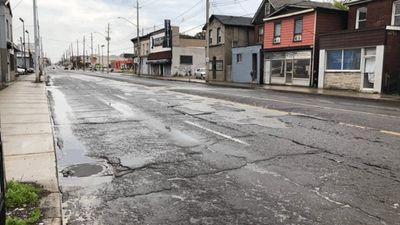
User-submitted photo of Barton Street in Hamilton, which placed second on Ontario’s 2025 top ten list. Concern about road conditions continues to be top of mind for Ontarians, with eight in 10 CAA members worried about the state of the province’s roads, according to new survey data released as CAA South Central Ontario (CAA SCO) launches the 2026 CAA Worst Roads campaign. The survey also found that nearly 70 per cent of CAA members don’t believe enough is being done to maintain Ontario’s roads, up five per cent from last year, reinforcing what many road users experience daily. Cracks in pavement remain the most common issue (88 per cent) identified by respondents, followed closely by potholes (87 per cent), uneven or bumpy road surfaces (81 per cent) and congestion (80 per cent). “Ontarians are telling us loud and clear that road conditions are not keeping pace with expectations,” says Teresa Di Felice, Assistant Vice President, Government and Community Relations for CAA South Central Ontario. “The Worst Roads campaign gives Ontarians a direct way to raise their concerns and helps decision-makers understand what roads need attention according to their constituents.” Despite widespread frustration, the survey suggests most concerns are not reaching decision-makers. It found that nearly 80 per cent of Ontarians commonly complain about road conditions to a spouse, co-worker or mechanic rather than to the governments responsible for road maintenance. CAA calls on Ontarians to nominate roads in urgent need of repair “We know this campaign works,” says Di Felice. “When Ontarians speak up and nominate roads they want to see repaired, we consistently see action.” Many nominated roads are critical trade and supply‑chain corridors, linking the CAA Worst Roads campaign to community growth and economic strength. “Growing population pressures in Ontario, particularly in the GTA, are driving the need for improved infrastructure to mitigate congestion issues, and the rapid wear and tear of our roads,” adds Di Felice. Poor road conditions contribute to vehicle damage, congestion, and safety risks for all road users, including pedestrians and cyclists. With the cost of living already high, the added expense of repairs caused by potholes and deteriorating roads is placing further strain on household budgets. The survey found that 80 per cent of Ontarians are paying out of pocket for those repairs, while ten per cent are forgoing repairs altogether. For more than two decades, the CAA Worst Roads campaign has influenced infrastructure decisions across the province. Roads that appear on the annual Worst Roads list often see repairs prioritized or moved up, as governments respond to public feedback. In the last five campaigns, over 10 roads have received attention due to their appearance on the CAA Worst Roads list. Most recently, County Road 49 in Prince Edward County received a large provincial investment supporting the repair of over 18 kilometres of the road. County Road 49 has been a popular road on the CAA Worst Roads Campaign’s top 10 list for some time. Ontarians can nominate any road for issues, including potholes, congestion, faded road markings, poor signage, traffic light timing, and pedestrian or cycling infrastructure. CAA SCO is encouraging all road users to participate. Nominations for the 2026 CAA Worst Roads campaign are open now and can be submitted online at www.caaworstroads.com until April 17. Once nominations close, CAA will compile and release Ontario’s Top 10 Worst Roads later this year, as well as regional top five lists. CAA conducted an online survey with 2,718 CAA SCO Members between January 6 to 14, 2026. Based on the sample size and the confidence level (95 per cent), the margin of error for this study was +/2 per cent.

Teresa Di FeliceBrian Pirvu

2 min

Every day, pedestrians and cyclists in Canada experience high-risk near-misses that could have resulted in serious injury or fatalities. A new seven-month study, commissioned by CAA, has uncovered over 600,000 near-miss incidents across 20 intersections nationwide, creating the largest dataset of its kind in Canada. While actual collisions are recorded by police, near misses are not. “The findings are clear, near-misses are not isolated events; they are daily warnings that demand attention,” says Teresa Di Felice, Assistant Vice President of Government & Community Relations at CAA South Central Ontario (CAA SCO). “The results of this study create an opportunity to proactively assess intersection design and implement measures that enhance safety for all road users.” Partnering with Miovision, the study used cameras and AI to monitor and analyze intersections across Canada in real time. Shockingly, one in every 770 pedestrians and one in every 500 cyclists experience a high-risk or critical near-miss. Near-Misses Are Predictors of Future Collisions The study found that near misses most often involved vehicles making a right turn. More than half (55 per cent of pedestrians and 50 per cent of cyclists) had a close call with a vehicle. More than a third (34 per cent of pedestrians and 36 per cent of cyclists) were involved in conflict with a left-turning vehicle. Most Canadian intersections accommodate thousands of pedestrians daily, meaning at least three serious incidents occur at a single location every day. “These aren’t just close calls; they are collisions waiting to happen,” says Di Felice. “By pinpointing near-miss hotspots, municipalities can now prioritize upgrades that prevent collisions before they happen.” Solutions That Make Intersections Safer The study highlights key design features proven to reduce near-misses, including: Dedicated left-turn lanes to prevent dangerous interactions. Leading pedestrian intervals, allowing pedestrians to start crossing before vehicles move. Advanced green lights for left-turning vehicles, reducing hesitation and confusion. Cities that implement these solutions can dramatically decrease the risk of collisions and make their streets safer for all road users. Traditional road safety measures rely on collision data, meaning changes only happen after injuries occur. Near-miss tracking is the next step in proactive safety planning, allowing experts to prevent crashes before they happen. CAA is urging municipal and provincial leaders to embrace technology-driven safety monitoring, citing the compelling benefits revealed by this study. Data was collected using 360-degree cameras at intersections of various designs across seven provinces, including Nova Scotia, Québec, Ontario, Manitoba, Saskatchewan, Alberta and British Columbia. Using AI-powered video analytics, Miovison was able to detect near misses and assess risk levels based on vehicle speed and trajectory. The study's detailed findings can be found here: CAA Intersection Safety Study Media Broll can be found here: https://vimeo.com/1094061982/90cf023ced

Teresa Di Felice

2 min

Ontarians have spoken, and the results are in. For a second consecutive year, the 2025 CAA Worst Road in Ontario is Aberdeen Avenue in Hamilton. Frustrations with potholes and poor road maintenance have kept this road in the number one spot. It first debuted on the top regional list for Hamilton in 2021 and moved onto the provincial list in 2023. In second and third place are Barton Street East in Hamilton and County Road 49 in Prince Edward County, two roads that have previously appeared on the CAA Worst Roads top 10 list six and seven times, respectively. Both roads are expected to receive significant upgrades and are in the planning stages. "Timely repairs, better communication, quick fixes, pothole funds, and using recycled aggregates are just some solutions to fix unsafe roads," says Teresa Di Felice, assistant vice president of government and community relations, CAA South Central Ontario. "CAA continues to urge all levels of government to prioritize road safety with stable funding to do so." This year, participants nominated over 2,400 different roads from 208 municipalities, up respectively from 2,000 roads from 145 municipalities in 2024 – a 20 per cent increase in roads nominated and a 42 per cent increase in the number of municipalities with roads nominated. Municipalities are responsible for approximately 140,000 kilometres of roads across the province. "For over two decades, the CAA Worst Roads campaign has given Ontarians a voice to spotlight unsafe roads in their communities and push for much-needed repairs,” says Di Felice. "This list provides a powerful snapshot to governments on where to prioritize budgets and move up road repairs, and we know that the public supports these efforts." CAA research shows that 26 per cent of survey respondents expressed dissatisfaction with road work projects, stating that they take multiple seasons to complete. However, 85 per cent are willing to put up with the inconvenience of construction in exchange for long-term improvements. Ontarians shared their primary reasons for selecting a road, with 84 per cent citing potholes, followed by poor road maintenance (77 per cent) and traffic congestion (15 per cent). Ontario's Top 10 Worst Roads for 2025 1. Aberdeen Avenue, Hamilton 2. Barton Street East, Hamilton 3. County Road 49, Prince Edward County 4. Eglinton Avenue West, Toronto 5. Hurontario Street, Mississauga 6. Leveque Road, South Frontenac 7. Highway 50, Caledon 8. Sider Road, Fort Erie 9. Gardiner Expressway, Toronto 10. Sheppard Avenue West, Toronto Worst Roads by Region Toronto – Eglinton Avenue West Hamilton – Aberdeen Avenue Halton-Peel-York-Durham— Hurontario Street, Mississauga Central—7th Line, Innisfil Eastern— County Road 49, Prince Edward County Niagara— Sider Road, Fort Erie North— Panache Lake Road, Greater Sudbury Southwest— Banwell Road, Windsor Western— Dundas Street, London Ottawa— Carling Avenue For the complete list of the 2025 Worst Roads, please visit www.caasco.com/worstroads The Residential and Civil Construction Alliance of Ontario (RCCAO) has verified Ontario's top 10 list. CAA is proud to have RCCAO as a technical partner in the CAA Worst Roads advocacy campaign.

Teresa Di Felice

Media

Social

Biography

Teresa is the Assistant Vice President of Government & Community Relations at CAA South Central Ontario (CAA SCO), Canada's largest CAA Club. She has been with CAA since 2005.

Road safety for all users is a key focus of CAA Club Group’s advocacy portfolio. Teresa is responsible for the overall direction and execution of the organization’s advocacy strategies and programs — including one of Canada’s largest elementary school safety programs, the CAA School Safety Patrol program — representing and raising awareness on relevant issues to over 2 million CAA Members and with policymakers in Ontario. She also coordinates public affairs strategies, particularly provincial government relations, with CAA's two other Ontario based clubs and works with CAA National on a number of public and government affairs files.

Teresa’s breadth and range of knowledge on infrastructure, transportation, safety, automotive and industry issues related to CAA’s work has resulted in many contributions to the development and execution of sound public policy. These include input into the province’s cycling strategy, being a member of the Premier’s panel on the Transit Investment Strategy, tow industry reform and on the transition team of the Mayor of Toronto, to name a few.

Over the last three years Teresa has released two Conference Board of Canada reports related to how much motorists contribute to the cost of infrastructure and various tools and strategies related to mitigating congestion.

Industry Expertise

Public Policy
Government Relations
Legislative Office
Automotive
Safety
Highways / Railtracks

Areas of Expertise

Community & Government Relations
Road Safety
Policy Advocacy
Towing Regulation
Congestion Management
Roadside Assistance
Electric and Hybrid Vehicles
Cannabis and Road Safety

Education

University of Toronto, Victoria University

B.A.

Political Science and Criminology

Media Appearances

New study reveals pedestrians narrowly miss being struck at intersections every day in Canada

CTV News  online

2025-06-19

A new study commissioned by the Canadian Automobile Association (CAA) uncovered more than 600,000 near-miss incidents involving pedestrians and cyclists at intersections across Canada. The seven-month study, conducted with Miovision, collected data at 20 intersections using 360-degree cameras and artificial intelligence to track near misses that aren’t typically recorded by police.

“These aren’t just close calls, they are collisions waiting to happen,” said Teresa Di Felice, assistant vice president of government and community relations at CAA South Central Ontario.

View More

CAA reveals Ontario’s top 10 worst roads of the year

CTV News  tv

2025-06-05

CP24’s Courtney Heels speaks with CAA’s Teresa Di Felice about the annual list of Ontario’s worst roads and the key factors behind the rankings.

View More

'Embarassing and frustrating,' but having the 'Worst Road in Ontario' can help northern towns land funding

CBC News  online

2025-03-28

CAA has run the campaign for over 20 years and several roads in the north have "won" in the past, but it's been a while, with southern streets dominating the top 10 in the last few years.
Teresa Di Felice, assistant vice-president of government and community relations for CAA, says drivers in some parts of the province are more used to rough roads than others.

View More