Trent M. Kays, PhD profile photo

Trent M. Kays, PhD

Assistant Professor and Director of Professional Writing and Rhetoric and faculty affiliate in Women's and Gender Studies Augusta University

  • Augusta GA
Contact
Augusta University logo

Augusta University

View more experts managed by Augusta University

Spotlight

2 min

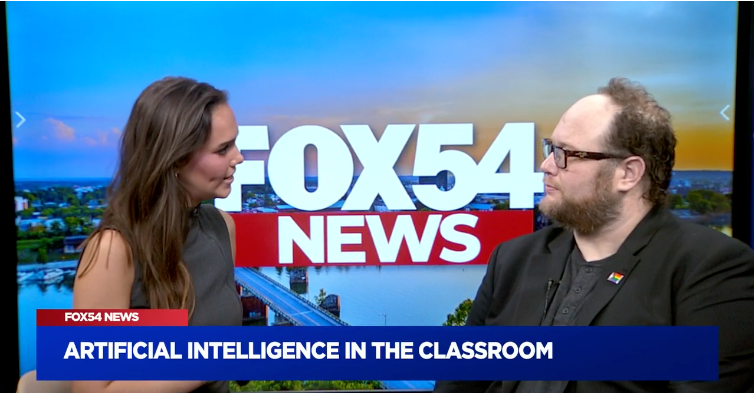
Artificial intelligence has moved from novelty to daily habit in classrooms across the country, and the debate over what that means for learning shows no sign of slowing down. Some schools have built AI into their curriculum. Others have banned it outright. Caught in the middle are students trying to figure out where the technology actually helps and where it quietly gets in the way. Trent Kays, PhD, an assistant professor and Director of Professional Writing and Rhetoric at Augusta University, has spent time researching exactly that question, and he recently sat down with FOX54 News to talk through what he's seeing firsthand. Kays, who also serves as a faculty affiliate in Women's and Gender Studies and specializes in digital rhetoric and machine writing, says students are already using AI for far more than quick homework help, from brainstorming and studying to building out entire lesson plans on their own. The bigger concern, according to Kays, isn't misuse in the obvious sense. It's what he calls cognitive offloading, students handing the thinking itself over to the machine. "Students are essentially using AI to do their thinking for them, which is not something that they should do," he said. It's part of why he keeps AI out of his firstand second-year courses entirely: those early classes are where students build the critical thinking skills they'll need before a tool can actually help. "They have to be able to think critically first before they can ask a tool to help them." Accuracy is its own problem. AI tools have gotten sharper, but Kays points out they still fabricate information regularly, including sources that were never real to begin with, something students are far less likely to catch than an instructor who actually reads the citations. None of this means Kays thinks AI belongs outside the classroom. He describes it as a potential process partner, something that can push a student's thinking further rather than replace it, as long as the structure around it is clear. As he put it, what schools need now is to "craft clear guidelines and structures for students to follow so that they know how to use it and how to use it well." Read the full interview and FOX54's coverage here: AI in the Classroom: Augusta University Professor Explains the Benefits and Risks Dr. Trent Kays is available for interviews on AI in education, digital rhetoric, and responsible AI use in academic settings. If you're covering similar stories, click on this icon to schedule time with him.


Trent M. Kays, PhD

Multimedia

Biography

Trent Kays, PhD, is an assistant professor and Director of Professional Writing and Rhetoric in the
Department of English & World Languages at Augusta University's Pamplin College of Arts, Humanities, and
Social Sciences, where he is also affiliated faculty in Women's and Gender Studies.

His research centers on digital rhetoric and online culture, exploring how communities build credibility and
authority outside formal institutions, and how digital platforms shape rhetorical practice more broadly. His
scholarship also examines queer rhetoric within digital spaces, arguing that queer identity and community
formation are foundational to how the internet functions as a rhetorical space.

More recently, Kays has focused on artificial intelligence and its effects on writing and composition instruction.
He was named a 2025 Georgia Governor's Teaching Fellow, one of sixteen faculty selected statewide, for his
work developing AI literacy curricula that teach students to use generative AI tools critically rather than as a
substitute for their own thinking.

Kays holds a PhD in Rhetoric and Composition/Writing Studies from the University of Minnesota and an M.A.
and B.A. in Professional, Technical, Business, and Scientific Writing from the University of Arkansas at Little
Rock. He serves as an officer of the Conference on College Composition and Communication's Queer Caucus and is
a member of its Committee for Change and Nominating Committee.

Areas of Expertise

AI Literacy in Writing Instruction
Digital Ethics and Misinformation
Machine Writing and Language
AI & Education
AI
Queer Rhetoric
Machine Writing
Digital Rhetoric

Accomplishments

Governor's Teaching Fellow

2025-05-27

Selected as one of 16 faculty statewide for Georgia's Governor's Teaching Fellows Program, run by the Institute of Higher Education at the University of Georgia, recognizing his work integrating AI literacy into writing instruction.

Education

University of Minnesota

PhD

Rhetoric and Composition/Writing Studies

2020

University of Arkansas at Little Rock

M.A.

Professional, Technical, Business, and Scientific Writing

2010

University of Arkansas at Little Rock

B.A.

Professional, Technical, Business, and Scientific Writing

2008

Affiliations

  • Conference on College Composition and Communication (CCCC), Nominating Committee — Member

Media Appearances

AI in the Classroom: Augusta University Professor Explains the Benefits and Risks

FOX54 News (WFXG)  tv

2026-08-17

Discussed how students are using AI for brainstorming, studying and writing; the risk of AI generating inaccurate or
fabricated sources; cognitive offloading and its effect on critical thinking; and the need for clear classroom guidelines
around AI use.

View More

Articles

Technical Communication Education in a Digital, Visual World

2012 IEEE International Professional Communication Conference (IPCC)

Co-authored conference paper arguing that technical and professional communication education must integrate
digital and visual media into classroom practice.

View more

Blog and Wiki Discourse

The International Encyclopedia of Language and Social Interaction (Wiley)

2015-04-07

Co-authored reference-work entry on the discourse patterns of blogs and wikis as genres of online communication.

View more

Digital Education and Oppression: Rethinking the Ethical Paradigm of the Digital Future

International Review of Information Ethics

2014-07-01

Examines how digital educational systems can reinforce existing inequities and argues for reconsidering the ethical
foundations of technology adoption in education.

View more