Delaware is taking a major step to strengthen its health care workforce. ChristianaCare, Bayhealth and the Philadelphia College of Osteopathic Medicine (PCOM) have announced the Delaware Collaborative Clinical Campus, a first‑in‑the‑region initiative that will expand medical student training opportunities, increase residency placements and build a more sustainable pipeline of physicians committed to caring for Delawareans.
This collaboration positions Delaware to attract, train and retain the clinicians our communities depend on — ensuring a stronger, more resilient health care workforce.
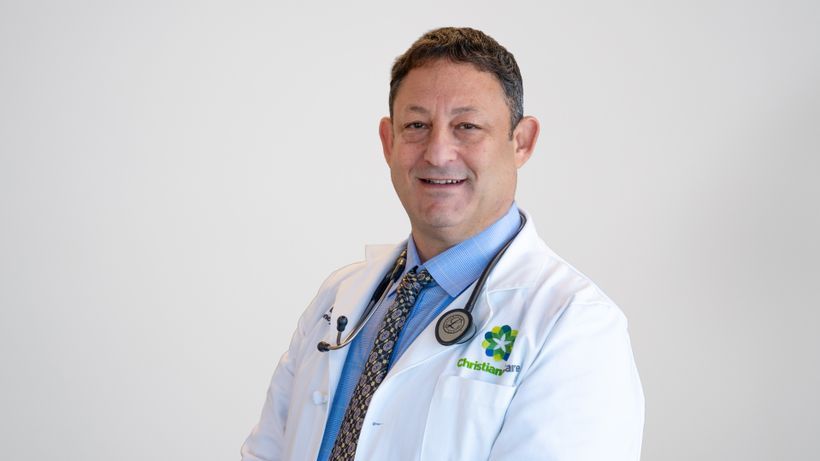
Brian Levine, M.D., chief academic officer and designated institutional official for ChristianaCare is available for interviews to discuss:
What the new clinical campus means for Delaware’s health care future How this collaboration strengthens the physician pipeline The impact on training, recruitment and long‑term retention of physicians in the state
·
2 min
ChristianaCare announced Feb. 12 the promotion of Brian Levine, M.D., to chief academic officer, along with his appointment as intellectual property administrator. He will also continue in his role as designated institutional official.
As chief academic officer and leader of ChristianaCare’s Department of Academic Affairs, Levine oversees 38 residency and fellowship programs encompassing 315 residents and fellows, along with the education and training of students across the continuum of medical education.
He leads the continued growth and strengthening of ChristianaCare’s undergraduate and graduate medical education infrastructure, ensuring that ChristianaCare continues to prepare physicians to care for our community well into the future.
In addition, Levine oversees physician assistant education and allied health educational programming, supporting workforce development and long-term community health needs.
As the largest academic medical center between Philadelphia and Baltimore, ChristianaCare has been a hub of academic excellence for over a century. ChristianaCare is one of the largest community-based teaching hospital systems in the United States.
ChristianaCare also serves as the Delaware Branch Campus for Sidney Kimmel Medical College and the Philadelphia College of Osteopathic Medicine. This unique program allows medical students to complete their third and fourth years of clinical rotations exclusively at ChristianaCare, providing a clear pathway to launch their medical careers in Delaware.
Each year, 55 students participate in the Branch Campus program, with many continuing into ChristianaCare’s highly sought-after residency programs and remaining in Delaware to serve local communities.
ChristianaCare is a destination of choice for medical students and residents because of its strong patient-centered culture, reputation for excellence, and diversity of clinical experiences that include urban and suburban campuses with a wide range of pathologies.
In his newly expanded role as intellectual property administrator, Levine manages and enforces ChristianaCare’s intellectual property policy, ensuring fair and consistent application in alignment with applicable laws and regulations. He also leads the multidisciplinary committee responsible for guiding organizational decisions related to intellectual property valuation, commercialization strategies and revenue distribution.
Levine brings deep experience in academic medicine, health system education and scholarly publishing to these responsibilities. An emergency physician, he led the development of widely used clinical reference guides published by the Emergency Medicine Residents’ Association. These pocket-sized tools — covering topics such as antibiotic stewardship, orthopedic injury management, and EKG interpretation — are used by thousands of emergency medicine residents worldwide.
Levine has held leadership roles at ChristianaCare for nearly two decades. Since 2018, he has served as associate chief academic officer and designated institutional official. Previously, he was program director of the Emergency Medicine Residency program from 2012 to 2018 and associate program director from 2006 to 2012.
Levine is a clinical professor of Emergency Medicine at Sidney Kimmel Medical College at Thomas Jefferson University and previously served as associate medical director for the LifeNet aeromedical transport program. He earned his medical degree from the University of Vermont Larner College of Medicine and completed his emergency medicine residency at ChristianaCare.
·
5 min
“Learning is a journey. It is continuous,” said nurse Hellen Okoth, MSN, CCRN, RN-BC, of the Transitional Surgical Unit. She was one of the learners on that journey through ChristianaCare’s professional development program Achieving Competency Today (ACT).
ACT, a 12-week graduate-level program dedicated to health care improvement, will celebrate its 40th session in 2025. Some 1,000 caregivers have graduated from ACT and have tested some 140 innovative project ideas since the program’s launch in 2003.
On April 9, three ACT teams presented their quality improvement projects at the John H. Ammon Medical Education Center on ChristianaCare’s Newark campus.
Interdisciplinary, experiential learning programs like ACT create a rich and dynamic learning environment,” said Tabassum Salam, M.D., MBA, FACP, chief learning officer for ChristianaCare.
“The emphasis on continuous improvement and real-world applications of the educational content sets our ACT graduates up for lifelong learning and repeated application of these new skills.”
The ACT course is a collaborative experience that brings together learners from diverse disciplines to tackle real-world health care challenges. Participants learn from health system leaders and gain a broad perspective on health care through coursework.
They work in teams to complete problem-solving projects from start to finish using the Plan-Do-Check-Act (PCDA) model of continuous improvement. Facilitators, who are experts in improvement science and team effectiveness, guide the teams through the process, ensuring that each project is meticulously planned and executed.
ChristianaCare offers many professional development opportunities. Click here for careers and benefits.
“The hands-on projects in ACT enable learners to innovate and test out solutions in settings that directly benefit patients, leading to better outcomes and a higher quality of care,” Salam said.
The three most recent teams presented improvement research that has the potential to expand beyond their pilot stage to other areas of the health system.
‘Hush! For the Love of Health’ In “Hush! For the Love of Health,” an interdisciplinary team worked to reduce noise levels on the Cardiovascular Critical Care Unit (CVCCC) at Christiana Hospital. Their goal was to decrease ambient noise levels by 10 decibels during the study period. Intensive care units often experience noise levels that can exceed 80 decibels. A quiet environment is 30 to 40 decibels.
Members of the “Hush” project found creative ways to reduce noise on an intensive care unit.
Ambient noise refers to all sounds present in the background, which research shows can interfere with communication, concentration and comfort. In a hospital setting, these sounds may include alarms, conversations, announcement and pages and carts moving by.
The team looked for opportunities to safely reduce the number of alarms sounding. By collaborating with Philips technology company to lower alarm volumes and eliminate redundant alarms, they reduced the number of alarms sounding from 10,000 to 3,000 daily and successfully decreased noise levels by 13 decibels, exceeding their goal.
“It’s good for patients to have a quiet environment and it fights alarm fatigue for caregivers,” said Dylan Norris, a pre-medical student from the University of Delaware and participant in the ACT course.
‘Show Up and Show Out’ Reducing the no-show rate among patients in primary care practices improves health outcomes and conserves resources. In “Show Up and Show Out: Boosting Patient Attendance in Primary Care,” the project team aimed to reduce the incidence of no-show appointments at the Wilmington Adult Medicine (WAM) practice by 10%.
The “Show Up and Show Out” project team used personalized communication outreach to patients to encourage keeping their primary care appointments.
“Our literature review showed that personal relationships with providers are one thing that can encourage people to attend appointments,” said team member Christi Karawan, MS, BSN, CCRN-CSC.
The key to their problem-solving strategy was using a secure messaging platform for automatic appointment reminders specifically for WAM that were personalized with the provider’s name and thanking the patients for letting WAM be a part of their healthcare team. Other steps on the road to success were signage around the practice encouraging patients to update their contact information and calls from office assistants and medical assistants to unconfirmed patients the day prior to their appointments.
The team achieved a 9.5% reduction in no-shows, just shy of their goal, over a two-week period.
An office assistant who participated in the pilot said, “Outreach has been helpful not only in getting people in but in getting people to reschedule or cancel. We can catch it before it becomes a no-show.”
‘Magnetic Efficiency’ To address delays in patient transport from MRI testing at Newark campus, an ACT team created a new communication workflow to directly connect patient escort dispatch to the MRI charge technician. The ACT team aimed to decrease patient wait times following MRI completion for stretcher transport back to patients rooms by 25% — and “a bold goal,” said one colleague — during the study period.
The “Magnetic Efficiency” team identified a new workflow to get patients back to their hospital rooms faster after MRI testing.
Using Vocera wearable communications tools, the team created a thread for direct communication between Escort Dispatch caregivers and MRI charge technicians. Also, when an Escort transporter dropped off a patient for an MRI, the transporter asked MRI staff if any patients were ready to go back to their rooms. These changes in communication and empowerment consolidated transports and led to a 17% reduction in wait time during the two-week pilot.
“We don’t want people to work harder,” said team member Tim Kane, BSN, RN. “We wanted to avoid preventable delays.”
Both teams expressed satisfaction and improved communication with the new process and they expressed interest in continuing the process after the pilot ended.
Future forward The ACT course has a rich history, originating from a specific initiative piloted by the Robert Wood Johnson Foundation with ChristianaCare among the early adopters along with Harvard University, the University of Pennsylvania, Johns Hopkins University and Beth Israel Deaconess Medical Center.
Through the years, ChristianaCare ACT team members have seen their projects live on both as permanent changes throughout the health system and, more personally, in their professional growth.
“I was able to enhance my creativity, organizational and problem-solving skills,” said Starr Lumpkin, a staff assistant who was on the “Hush” team. “This was a pivotal journey for me.”
ChristianaCare is growing its program to develop a pipeline for the next generation of health professionals, said Safety and Quality Education Specialist Claire Rudolph, MSM, CPHQ. “We have a varied group of learners and facilitators who are making an impact on health care quality, cost and safety.”
Dylan Norris was the first participant from a new partnership with the University of Delaware for pre-med students to get quality improvement experience.
“I have learned so much about what goes into a quality improvement project. Buy-in from the stakeholders is key in implementing any new project successfully,” she said. “I have also learned about the importance of the initial research that goes into creating a new project and how much pre-planning goes into it.”
Closing the event, Clinical Effectiveness Officer Christian Coletti, M.D., MHCDS, FACEP, FACP, called on the ACT graduates to use their newfound “superpowers” — “vision, seeing the future, catching something before it breaks.
“It’s not a glitch in the matrix,” he said. “You are the most important people at the bedside – hearing the alarms going off or the stretchers piling up. Work to identify problems and move toward solutions in your own microenvironments. Pass on your powers with reckless abandon.”
Biography
Brian Levine, an emergency doctor by training, is the chief academic officer, intellectual property administrator and the designated institutional officer at ChristianaCare.
As leader of ChristianaCare’s Department of Academic Affairs, Dr. Levine oversees 38 residency and fellowship programs encompassing 315 residents and fellows, along with the education and training of students across the continuum of medical education.
He also leads the continued growth and strengthening of ChristianaCare’s undergraduate and graduate medical education infrastructure, ensuring that ChristianaCare continues to prepare physicians to care for our community well into the future.
In addition, Dr. Levine oversees physician assistant education and allied health educational programming, supporting workforce development and long-term community health needs.
Dr. Levine has spearheaded ChristianaCare’s significant authorship in the development of pocket-sized reference guides used globally by thousands of emergency residents each year. The guides, published by the Emergency Medicine Residents’ Association, provide guidance on antibiotic use, the treatment of orthopedic injuries and administering EKGs, among other issues.
ACEP18 has just started and we already have experts “On the Air”! Today, ACEP Frontline host Dr. Ryan Stanton and his guest Dr. Brian Levine discuss antibiotic stewardship. EMRA has just released a new antibiotic guide and it has everything you need to know! This is one conversation you don't want to miss!
Host Ryan Stanton, MD, FACEP talks to Brian Levine, MD, FACEP on the development of the EMRA Antibiotic Guide, the overuse of antibiotics across medicine, and antibiotic education for physicians,PAs, and patients. Get the EMRA Antibiotic Guide on the ACEP Bookstore.
Predictors of a Top Performer During Emergency Medicine Residency
Journal of Emergency Medicine
2015 Emergency Medicine (EM) residency program directors and faculty spend significant time and effort creating a residency rank list. To date, however, there have been few studies to assist program directors in determining which pre-residency variables best predict performance during EM residency. To evaluate which pre-residency variables best correlated with an applicant's performance during residency. This was a retrospective multicenter sample of all residents in the three most recent graduating classes from nine participating EM residency programs.
High Single-dose Vancomycin Loading Is Not Associated With Increased Nephrotoxicity in Emergency Department Sepsis Patients
Academic Emergency Medicine
2016 Objective: Vancomycin loading doses are recommended, however, the risk of nephrotoxicity with these doses is unknown. The primary objective of this study was to compare nephrotoxicity in emergency department (ED) sepsis patients who received vancomycin at high doses (>20 mg/kg) versus lower doses (≤20 mg/kg).
Immediate Stress Echocardiography for Low-Risk Chest Pain Patients in the Emergency Department: A Prospective Observational Cohort Study
Journal of Emergency Medicine
2017 Background: Evaluation and disposition of low-risk chest pain (CP) patients in the emergency department (ED) is time consuming and expensive. Low-risk CP often results in hospital admission to rule out myocardial infarction, which leads to additional costs and delays. Objective: Our aim was to assess whether an immediate exercise stress echocardiogram (IESE) in the ED will allow safe, efficient, and cost-effective evaluation and discharge of patients with low-risk CP. Methods: Low-risk CP patients (TIMI [Thrombolysis in Myocardial Infarction] score 0-1) presenting to the ED with normal electrocardiogram, no history of coronary artery disease, and negative troponin T received IESE.
An Evaluation of the Incidence of Nephrotoxicity After a Loading Dose of Vancomycin in Patients With Severe Renal Impairment
Journal of Emergency Medicine
2019 Background: Loading doses of vancomycin assist in the rapid achievement of target trough concentrations. Patients with renal dysfunction have been excluded from studies evaluating loading doses. Objective: The purpose of this study was to investigate nephrotoxicity related to initial vancomycin dose in patients with severe renal dysfunction.
Visual outcomes after traumatic retrobulbar hemorrhage are not related to time or intraocular pressure
American Journal of Emergency Medicine
2019 The paucity of literature regarding the role of time and intraocular pressure (IOP) when treating ocular compartment syndrome (OCS) has resulted in limited guidance for emergency physicians (EP). Objectives: Our goals were to investigate the ideal time frame for lateral canthotomy, to understand the relationship between IOP and visual outcome, and to determine the impact of EP performance on visual acuity (VA).