Sue Pimento

Founder | CEO

  • Toronto ON CANADA

Focused on financial literacy and retirement strategies. Authoring new book on home equity strategies to help seniors find financial freedom

Contact

Spotlight

6 min

CPP, OAS, and the Retirement Timing Tango — The Most Important Dance of Your Life

You’ve been contributing to it your whole life—now let’s get it right. Every retiree dreams of mastering one crucial dance: the Retirement Timing Tango. And here’s the truth—next to good health, guaranteed, predictable income (GPI) sits at the top of every retiree’s wish list, mind list, and need list. Enough income opens the door to independence, autonomy, dignity, and the most sought-after prize of all: aging in place. Not enough income? That will rob you of sleep and enjoyment, creating a non-stop loop of 3 a.m. worry sessions that no melatonin can fix. A badge of a successful retirement starts with enough income to meet all your obligations. This matters far more than leaving an inheritance or making sure your ungrateful nephew gets the cottage. But here’s the thing about this particular tango: you need proper footwear. Orthopedic dance shoes, folks. Not slippers. Not boots. And definitely not Crocs (no shade here). Think support, stability, and a sole that won’t let you down over a long retirement. Here’s the sobering reality: 61% of Canadians fear running out of money in retirement. Women experience this anxiety even more—66% compared to 56% of men (CPP Investments, 2024). Meanwhile, 57% of working Canadians feel unprepared for retirement, and 13% don’t believe they’ll ever retire at all (HOOPP, 2024).  Many overlook this, but two powerful government programs—the Canada Pension Plan (CPP) and Old Age Security (OAS)—can form the foundation of retirement income. The CPP fund holds over $675 billion in assets and is expected to remain sustainable for at least 75 years. Nearly three in four Canadians depend on it. The key is timing. Get it wrong, and you could leave serious money on the dance floor. Get it right, and your decisions could result in over $100,000 more in lifetime income. That’s not small change—that’s peace of mind. Think of CPP and OAS as your retirement dance partners—two leads working together to keep you steady and confident. But timing is crucial. When you decide to claim these benefits can mean the difference between a smooth glide across the dance floor and a financial stumble. How Much Money Do OAS and CPP Pay Out? Canadian Pension Plan (CPP): The maximum CPP retirement pension at 65 is $1,433 per month, though most Canadians receive between $830 and $899 based on their contribution history. Old Age Security (OAS): Payments for OAS are up to $740.09 monthly for ages 65–74 and $814.10 monthly for those 75 and older—these benefits can support your retirement if used strategically. Let’s be crystal clear: CPP and OAS are not handouts CPP is your deferred earnings—your money, matched by your employer. OAS is your citizens’ dividend, earned through residency in Canada. As Grant Roberts, CFP, a financial planner with the accounting firm Welch LLP, says, “OAS is a security blanket. Society is better when people aren’t impoverished at the end of life.” Lose the stigma. You earned this. This is where the choreography becomes tricky. You must make lifetime decisions without knowing how long you'll live (fun, right?). According to Statistics Canada, a 65-year-old Canadian can expect to live another 20 years on average, and if you’re already 65 in good health, your personal runway might be even longer. Taking CPP at 60 lowers benefits by 36%. Waiting until 70 increases benefits by 42%. Using average benefits, deferring can result in more than $100,000 extra in lifetime income. If you live long enough. Fred Vettese, a former chief actuary of Morneau Shepell (now Telus Health) and a national thought leader on retirement issues who has published the bestseller, Retirement Income for Life (ECW Press) has some important insights to share on how age impacts these OAS and CPP payouts.  Vettese explains, “Approximately 75% of people win by deferring CPP to age 70 because they live past the break-even point.” His research indicates that about 75% of retirees benefit from delaying CPP until 70, while around 25% do not. Most people underestimate their longevity, but the odds are actually in favour of living long enough for the deferral to pay off. This is where inaction becomes dangerous. As Grant Roberts warns, “Inaction isn’t neutral—it’s a decision by default. While CPP does not start automatically at 65, OAS generally does for most people. The government won’t call to ask if you want to delay OAS for a higher payment—or remind you to apply for CPP at all. You have to ask, and you have to act.” And this isn’t theoretical. Roberts has seen seniors in their 70s who had never started CPP, simply because no one told them they had to apply. We’ve spent our entire adult lives being trained to save, so it’s unreasonable to think we can just flick a switch and suddenly become confident spenders the day we retire. As Grant Roberts puts it, “We teach saving for 50 years—no one teaches spending.” So here’s the real question: what’s your money brand? Saver? Spender? A hybrid in sensible shoes? Retirement requires a rebrand. Lifelong savers often need permission to spend—on experiences, joy, and yes, even dance lessons. Lifelong spenders may need to learn how to waltz with a budget (spoiler alert: let the budget lead). Either way, retirement isn’t about changing who you are—it’s about adjusting your rhythm so your money finally works for the life you’re living now. What About OAS Clawbacks? If your income exceeds about $90,000, the OAS clawback is 15 cents for every dollar. OAS clawbacks often discourage people unnecessarily. As I always say, "don’t let a dime stand in the way of a dollar." Strategic RRSP withdrawals between ages 65 and 70 can greatly reduce future clawbacks and enhance long-term results. This is choreography, not chaos. CPP and OAS planning should begin in your 50s, not at 64½. Ask yourself whether you intend to work past 65, whether you’re healthy enough to delay, and what income sources will fill the gap. Waiting for someone else to lead this dance is a sure way to step on your own toes. Proactively Managing Your OAS and CPP Benefits While most Canadians are automatically enrolled for Old Age Security (OAS) and will receive an enrollment letter around their 64th birthday, you may need to take action if you want to delay your start date to receive higher monthly payments. If you wish to delay, change your start date, or correct any information in your enrollment letter, you'll need to contact Service Canada directly. You can manage these choices in one of three ways: Go Online: Visit "My Service Canada Account" By Telephone: Call 1-800-277-9914 In-Person: Visiting a Service Canada Centre near you Don't assume automatic enrolment means the timing is right for you—review your options carefully, as the decision to delay could significantly increase your retirement income. The Last Dance (Remember the Poorly Lit High-School Gym?) Because the Retirement Timing Tango isn’t a sprint—it’s a 30-year dance marathon, and you are both the dancer and the charity you’re raising money for. CPP and OAS, timed well, aren’t about financial flash; they’re about stamina, balance, and staying upright long after the music changes. Get the timing right and your later years won’t feel like a frantic scramble under flickering gym lights—they’ll feel like a slow, confident final song where you know the steps, trust your footing, and aren’t worried about collapsing halfway through. That’s the point. Not just surviving retirement, but staying on the floor until the very last dance—with dignity, confidence, and enough income to enjoy the moment instead of counting the minutes until it’s over. Sue Don’t Retire… ReWire! Know someone who’s about to leave serious money on the dance floor? Forward this blog before the music stops. Consider it a public service announcement disguised as friendship. And if you want regular doses of retirement clarity, confidence, and choreography (no leotards required), subscribe here.

Sue Pimento

7 min

The H³ Plan: How to Retire Without Losing Your Mind & How You Can Support Older Relatives

MEDIA ADVISORY Retirement planning expert Sue Pimento introduces her H³ Plan — a research-backed framework for maintaining mental and emotional health in retirement that goes beyond financial planning. The framework identifies three essential pillars — Hope, Help, and Horizon — that help combat the emotional flatness many retirees experience after leaving structured work. Drawing on neuroscience research and clinical insights, Pimento offers a practical "emotional pension plan" for the growing population of Canadians navigating this life transition. Sue Pimento is available for interviews on retirement wellness, healthy aging, and the psychology of life transitions. Retirement doesn't arrive with a crash. It arrives quietly. One day, you stop setting alarms, stop racing against the clock, stop feeling urgently needed—and no one gives you the mental and emotional playbook for what comes next. There should be a chapter titled:  How to Keep Your Brain Engaged, Regulated, and Not Mildly Irritated by Everyone. Instead? 404 page not found.  (Translation: the system is actively seeking guidance… and coming up empty.) And if you're nodding along thinking "yes… exactly" — IYKYK. (If You Know, You Know. And if you don't yet, give it time.) Understanding Your Emotional Pension Plan After years of writing, researching, listening, and living through this stage myself, three factors consistently emerge as essential to maintaining mental and emotional health as we age. I call it H³: Hope, Help, and Horizon. Here's why each one matters—and why neglecting any of them leaves you emotionally drained. Think of them as your emotional pension plan — not optional, not fluffy, but essential. 1. Hope: Not Just Wishful Thinking — Agency, Clarified In her reflective New York Times article, "Your Hopes," journalist and believing host Lauren Jackson examines increasing cynicism, waning trust, and—most importantly—what research indicates truly can turn the tide.  One line sums up the difference perfectly: Optimism is believing the future will improve. Hope is believing you can make it so. Here's why that matters. Optimism versus Hope (Plain-English Edition) Optimism is passive: "Things will probably work out." Hope is active: "I can influence what happens next." Optimism awaits. Hope takes part. From a psychological perspective, hope is based on: Agency (I am able to act) Pathways thinking (I can find a way) Research from the University of Oklahoma's Hope Research Center indicates that hope is one of the strongest predictors of well-being, often surpassing income, education, and even past success. For retirees, this distinction is important because aging narratives often aim to gently remove us from the driver's seat. Hope replies with something more like: Back off, sister. I refuse to buy into outdated stereotypes. I've upgraded to a more modern version of aging—like a new iPod model. (Stereos are out of style. Keep up.) Hope maintains the nervous system in an engaged state rather than resignation. In fact, some see hope as far more nuanced. Frank O’Dea, best known for his personal comeback story — from being homeless to later becoming a very successful coffee entrepreneur as the co-founder of the Second Cup shares his thoughts in his book, “Hope is Not a Strategy.” His personal narrative reinforces a deep belief in hope as a powerful emotional engine, but never as a substitute for action. O’Dea, who later went on to be a co-founder of the Second Cup Coffee Company and is a recipient of the Order of Canada for his philanthropy and humanitarian work, speaks to the human tendency to confuse optimism with preparation — people often wish their way into opportunity, rather than work their way into readiness. I love this line from his book: “Hope is important — it gives us purpose. But without a strategy, it leaves us vulnerable. We win not by wishing, but by working.” — Frank O’Dea 2. Giving Back: Your Brain's Favourite (Unpaid) Job Giving back isn't about virtue. Or virtue signalling on social, for that matter. (It's not a branding exercise. No hashtag required.) It's about nervous system regulation. Over the holidays, I was listening to an interview on CBC Radio and found myself doing that thing where you stop playing Vita Mahjong mid-game because someone said something so logical but also completely fascinating. Gloria Macarenko’s episode with Vancouver-based psychologist and therapist Lawrence Sheppard explored in detail how giving back influences us and what he has personally observed in his practice. The message? Giving back is a key factor for mental health. Certainly, we've all heard the well-known phrase "tis better to give than receive"—or a version of it. But Sheppard wasn't referring to virtue or being kind. He was discussing what truly happens in the brain when we give. Here's the short version: Helping others shifts the brain out of threat mode and into meaning mode. So what's Happening Neurologically? Building on Sheppard's clinical work and broader neuroscience: Chronic stress forces the nervous system to stay hyper-vigilant. Rumination shifts inward and intensifies the sense of threat. Contribution shifts focus outward Helping activates reward pathways and emotional regulation. Giving back restores balance. purpose structure connection competence Giving back reminds your brain it's still engaged—just not earning money. (My definition of volunteering. Not Webster's.) And many retirees miss that feeling more than the salary. They also miss the tangibles: vinyl records, 99-cent bread, and the quiet satisfaction of being needed somewhere at 9 a.m. Importantly, giving back—like hope—helps regulate the nervous system by decreasing feelings of isolation and restoring a sense of predictability. Your brain prefers knowing where it belongs. 3. Something to Look Forward To: Anticipation Is Medicine This one is sneaky powerful—and well documented. Having something to anticipate generates excitement. And excitement is not merely a feeling. It's a nervous system event. Here's the connective tissue: All three pillars—hope, giving back, and anticipation—work because they shift the nervous system away from threat and stagnation, and toward engagement, reward, and regulation. The Science (Why Anticipation Works) Research by neuroscientist Wolfram Schultz showed that dopamine spikes most strongly before a reward—not during it.  Later studies in affective neuroscience confirmed: Anticipation boosts motivation and positive emotions. Future-oriented thinking diminishes depressive rumination. Predictable positive events enhance mood regulation. In plain English: Your brain lights up when it knows something good is coming. In many instances, anticipation offers more emotional uplift than the event itself. Think: first date first kiss first solo trip first "I can't believe I'm actually doing this" moment You cannot buy that feeling in a bottle. (Not even the little blue pill will do it.) Why This Matters in Retirement Work used to provide: deadlines milestones future orientation purpose feedback connection a sense of accomplishment And yes—before anyone writes me a letter—stay-at-home moms, caregivers, and volunteers: that is work. Don't get me started. When structured work concludes, those inputs aren't automatically replaced. Without things to look forward to: time flattens mood dulls life becomes emotionally beige Something—anything—on the calendar restores forward motion. What Giving Back Looks Like in Real Life My friend Janet retired at 63 with a solid financial plan and no emotional plan. Six months in, she was climbing the walls—bored, restless, wondering why she felt so flat when she "should" be enjoying herself. Then she started tutoring at the library (Help), signed up for a pottery course (Horizon), and realized she could actually shape this chapter however she wanted (Hope). Different person. Same retirement account. Completely different nervous system. Big Things Are Overrated Waiting for something big to look forward to is often just perfectionism wearing a sensible cardigan. We tell ourselves the next big milestone will fix everything, when in reality, progress usually happens in a game of inches. Small choices, taken consistently, create big shifts. Direction beats intensity every time.  As I wrote in my last blog about my Everest Base Camp and MBA journey: Even Cs get degrees. And I'll add: Consistent Bwork wins most races. Small counts: weekly plans standing dates tickets bought months ahead regular commitments Anticipation is hope with a calendar invite. The H³ Framework for a Happy Retirement (Hope. Help. Horizon.) All three regulate the nervous system and keep us engaged. Hope — I can still shape things Help — I'm useful and connected Horizon — My life has forward motion If life feels flat, add one from each column. That's the prescription. Retirement isn't just about slowing down. It's about re-wiring. In plain English: You are not done yet! Remember, hope keeps you engaged. Giving back keeps you grounded. Looking forward keeps you light.  Or, translated: A happy retirement isn't passive. It's practiced. A Note for Those Supporting Older Relatives If you have aging parents, relatives, or friends in your life, be on the lookout for signs of depression, resignation, or apathy. The signs are obvious if you're paying attention: flat affect, repetitive complaints, withdrawal, that vague sense they're just going through the motions, or their smile doesn't reach their eyes. Here's what not to do: point it out directly or suggest they "find a hobby" or "volunteer somewhere." Here's what does work: create Hope and Horizon by scheduling regular outings—lunch, a walk, a movie, anything with a date attached. Sometimes we underestimate how much seniors look forward to our visits and connections. It's better than any tonic or medication to lift spirits, young and old. In this scenario, action speaks louder than words. Talking about depression often brings up shame and further withdrawal. Instead, think of love as a verb, not a noun. You don't need to fix anything. Just show up. Regularly. Predictably. No grand gestures. No reinvention required. Just presence with a pulse and notifications on mute! Be that person! Don't retire. Re-wire. — Sue Want more of this? Subscribe for weekly doses of retirement reality—no golf-cart clichés, no sunset stock photos, just straight talk about staying Hip, Fit & Financially Free.  Subscribe Here

Sue Pimento

6 min

My MBA Journey at 69: Because Apparently, Climbing Everest Base Camp Wasn't Enough

If you watched CBS 60-Minutes host, Cecilia Vega set out on a challenging 10-day trek to Everest Base Camp (EBC) in the Himalayas, for last week's episode, you couldn't help but marvel at the gruelling physical demands and the profound experience of being at the foot of Mount Everest.  Her journey, which involved intense training, navigating dangerous suspension bridges, and dealing with extreme altitude, also highlighted the massive industry around Everest and the vital, underappreciated role of the Sherpa community.  Her journey is an inspiring look at how we can push our own boundaries.  Bravo Cecilia! Vega described hiking Everest Base Camp as "the hardest thing I've ever done physically," battling low oxygen (like breathing through a straw) and fatigue, despite months of training.  She experienced sub-freezing temperatures, crossed dizzying suspension bridges, and even witnessed close calls with avalanches, with trusty Sherpas conducting nightly tent checks to ensure her safety. Hiking to Everest Base Camp is hard.  I know.  Because I did it.  At 60 Let me explain. I have a tradition of celebrating milestone birthdays with a bang. When I turned 60, I gave myself six physical challenges — one for each decade lived. The grand finale? Climbing to Everest Base Camp. It was epic, exhausting, and left me with both altitude sickness and lifetime bragging rights. But as I approached 69, I craved something different. Not hiking boots this time — just highlighters. Not mountain peaks — mental peaks. I wanted an intellectual challenge that would prove my brain still had some miles left on it. No oxygen tanks required this time. Just caffeine, reliable Wi-Fi, and an iron will. How I Got Here (And Why I'm Questioning My Sanity) I've always wanted an MBA — partly for the knowledge, but let's be honest, mostly for the prestige. There's something irresistible about joining that club of spreadsheet-loving scholars. For years, I've imagined myself casually tossing around terms like "synergy" and "stakeholder engagement" while sipping something expensive in a sleek business lounge. What I didn't imagine was attempting this after a 46-year hiatus from university. Spoiler alert: It's harder than I thought. Like, significantly harder. Enter the MBA: Twenty-four courses. Two years or so, and approximately one hundred "What was I thinking?" moments. I enrolled at the Sprott School of Business at Carleton University, which offers a generous seniors' discount. I briefly debated whether to ask for the student discount or the seniors' discount — then thought, why not request both? I've earned these wrinkles and this tuition bill. Bonus perks: I qualify for the student medical and dental plans. My classmates use them for wisdom tooth extractions. I'm eyeing the denture clause. Term One: The Tech Tsunami Let's talk about the software situation.  Brightspace. Turnitin. eProctor. Excel (the betrayer). Word. APA 7th Edition. And about a dozen other platforms that might as well have been written in Klingon. I expected a gentle introduction — maybe some academic foreplay before diving into heavy coursework. Instead, I was shoved into the deep end with weights tied to my ankles. Each assignment came with a forest's worth of readings, PowerPoint slides, and discussion board posts. I was up at 5 a.m., trying to squeeze in extra hours in the day. (Spoiler: you can't.) Despite decades spent managing teams, I was barely scraping 60% on quizzes — the open-book ones. How is that even possible? Accounting became my personal Everest. People kept telling me, "Excel is your friend." That's a lie. Excel is that friend who borrows your car, crashes it, returns it on empty, and then asks if you've bothered reading the manual. Casualties of War: Family, Friends, and Dottie My family was neglected. My friends assumed I'd entered witness protection. Even my little dog Dottie stopped talking to me. She'd give me this look — a devastating combination of pity and disappointment — every time I said, "Sorry, no walk today. Mommy has to study debits and credits." You haven't experienced true shame until you've been judged by a 10-pound dog wearing a sweater. The Breaking Point (And the Breakthrough) I'll admit it — I had serious moments where quitting felt like the only rational option. The workload was relentless. The jargon was endless. The pressure was overwhelming. I contacted teaching assistants, professors, and even the university librarian, desperately searching for a lifeline. They were all kind and patient. But ultimately, I had to figure it out myself. And somewhere between the caffeine highs and APA citation lows, something clicked. Even Cs get Degrees! By midterm, I began to suspect something radical: perhaps the large amount of work was the real test. Not the material itself, but the sheer volume. Maybe this was the school's way of differentiating dedicated students from curious ones, the serious from the casual observers. Was it possible that the secret to MBA success was learning what not to do? After all, the passing grade is a B(70%). At this point in my life, I'd be happy with a 71% and a full night's sleep. Hence the title, Even Cs get Degrees! Working Smarter, Not Harder Somewhere between week three and mild hysteria, I made a radical decision: stop trying to do everything. I focused on lectures and study notes instead of drowning in supplementary readings. I prioritized assignments strategically. I stopped pretending perfection was achievable — or necessary. The results were immediate: My grades improved My panic attacks decreased Dottie started making eye contact again I also began scheduling regular Zoom calls with professors and TAs — not just for assistance, but to foster genuine relationships (my lifelong superpower). Once I stopped pretending, I had everything under control; everything truly improved. School life has improved. Home life has also improved. I was finally able to brush my hair again. Slowing Down to Soak It In Next term, I'm taking just one course. Because honestly, what's the rush? I'm not chasing a promotion or striving for a corner office. I'm doing this for myself — for the simple joy of learning and the satisfaction of knowing I still can.  I want to enjoy the journey, not rush through it gasping. I want to look forward to lectures rather than fear them. I want my sleep score (and my sanity) restored.  The goal isn't speed. It's savouring. What I've Learned So Far Here's what these first two courses have taught me: ✓ I can still learn — even when my brain occasionally reboots mid-sentence  ✓ I can focus — especially with enough coffee ✓ I'm still gloriously, endlessly curious ✓ I need sleep (The 5 a.m. club can keep their membership) ✓ I need fun (Revolutionary concept, I know) ✓ I love to learn (Turns out, I always have) ✓ I make mistakes — and they're not terminal ✓ I need help — and I must ask for it ✓ APA 7th Edition is real — and I finally understand what it means (Sort of. Mostly. Sometimes.) ✓ Even Cs or, in my case, a Bget a Degree — consistent, sustainable Bwork will win most every race Looking Ahead: The Big 7-0 By the time I graduate, I'll be at least 70 years old. And honestly? I can't think of a better birthday gift for myself. When most people talk about slowing down, I'm actually ramping up. While others are downsizing, I'm uploading assignments at 11:58 p.m. When my friends ask why I do this, I smile and say: "Because I still want to know what I'm capable of." To Be Continued... This is just the beginning of my MBA adventure. I've completed two courses out of twenty-four. Twenty-two more to go — one term at a time, one course at a time, one small victory at a time. I'll update this blog periodically with new stories, fresh insights, and probably more tales of Dottie's disappointment. As We Start the New Year Here's a toast to all of us who refuse to act our age. To everyone starting something new — whether it's an MBA, a marathon, or a pottery class.  To everyone who believes it's never too late to learn, to laugh, or to start again.  Because learning doesn't stop when you retire. Sometimes, it's only just beginning. Stay tuned for Term Two updates, where I'll tackle another course, hopefully retain my sanity, and continue proving that 69 is just a number (and so is 70, 71, 72...). All the best to you in 2026 and beyond!   Sue Don’t Retire… ReWire! Want to become an expert on serving the senior demographic? Just message me to be notified about the next opportunity to become a "Certified Equity Advocate" — mastering solution-based advising that transforms how you work with Canada's fastest-growing client segment. Here's the link to sign up.

Sue Pimento
Show More +

Social

Biography

Sue Pimento, a former banking executive and seasoned citizen, has over 25 years of experience in the lending market with a focus on home equity.

As an Equity Advocate, Sue is dedicated to helping solve financing retirement problems with a focus on financial literacy. “Retire with Equity” gives retirees and their adult children proven strategies to leverage equity in their homes.

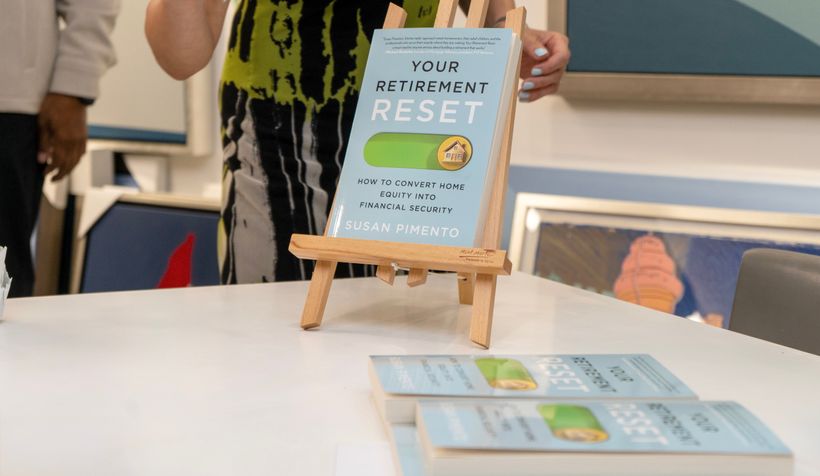
Her book "Retire with Equity" (to be released in 2025) explores various retirement topics, including goal setting, budgeting, downsizing options, and ways to generate cash flow while maximizing tax benefits. The book, coupled with intuitive online resources, will provide the tools and resources both retirees and their adult children need to best optimize their biggest asset and turn it into a reliable source of income.

Industry Expertise

Corporate Leadership
Financial Services
Banking

Areas of Expertise

Pension Reform
Interest Rates
Home Equity
Mortgages
Reverse Mortgages
Retirement financial security
Senior citizens
Financial Planning
Aging and Community
Real Estate
Retirement Planning
Psychology of Ageing

Accomplishments

Women of Influence, Canadian Mortgage Professionals

2018

Presidents Award of Excelence, HomeEquity Bank

2020

Education

York University

B.A.

General

1978

Affiliations

  • Mortgage Professionals Canada - Member Board of Directors (2015-2017)
  • Mortgage Professionals Canada - Member Board of Directors (2009-2011)
  • Invis - MI - Board of Directors (2008-20109)

Languages

  • English

Testimonials

VP, Consumer Sales

HomeEquity Bank

I’ve had an opportunity to see Sue speak on a number of occasions and she never disappoints. Her talk on ‘Living Wellthy’ really gave me something to think about - and I’m certain anyone else who’s living a hectic life - on the importance of balancing personal ‘Wealth and Health’. Speaking from the heart and from her own life experiences, Sue has an uncanny ability to connect with her audience. She is motivating, informative, entertaining and most importantly genuine!

VP, Marketing

HomeEquity Bank

I highly recommend Sue Pimento as a motivating and engaging speaker. She will delight you with her experiences and her sparkling stories. She delivers profound messages that speak to moments we all recognize but struggle to find words for until she enlightens you with hers. She is witty, animated, and always entertaining. If you get a chance to hear one of her talks, do yourself a favour and don’t miss it!

Executive Vice President – Operations and Legal

HomeEquity Bank

Sue has an energy that fills any room. Her passion to live a purposeful life is admirable and humbling. Sue is an excellent example of someone who has consciously decided what her bucket list is and actually makes it happen. Her engaging and commanding storytelling of her adventurous experiences draws the audience in, leaving them inspired, motivated and energized.

Media Appearances

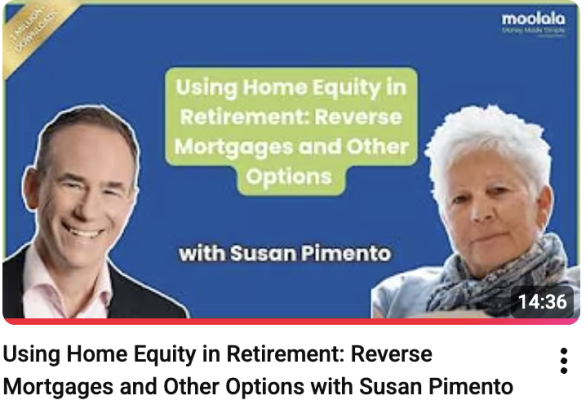
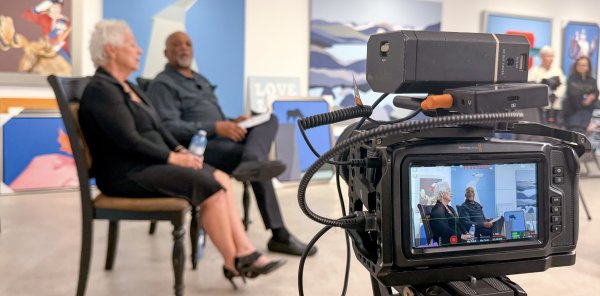
"Changing Demographics and Tips on Connecting With Your Audience" - Video Podcast

The Pocket Broker Podcast  online

2018-01-04

Video Interview

View More

The Trillion-Dollar Opportunity: The Retirement Wave - Online Article

Canada Mortgage News: Expert Analysis  online

2021-07-29

“Riding the Retirement Wave,” which drew the largest audience Home Equity has seen so far in its series of webinars, also featured Sue Pimento, vice president of referred sales at Home Equity Bank. Pimento highlighted the current market focus on first-time homebuyers and Millennials, explaining that, instead, savvy real estate professionals should be looking to the older demographic, both to help their clients and their business’s bottom line.

View More

Sue Pimento: A Trailblazer - Magazine Article

HomeEquity Bank  online

2023-01-23

When I asked her why she enjoys working for HomeEquity Bank, she said, “Anyone can sell mortgages, but I could see an underserved demographic, an older population who was misunderstood and underrepresented. Older Canadians need money like everyone else. Money gives you choice, and choice gives you dignity.” Sue points to the fact that Canadians are living longer than ever before, and that means having the ready resources to support and enjoy a long life.

View More

Show All +

Event Appearances

MC & Panelist

Rock Capital - Spring Conference  Horsehoe Valley Resort

2023-06-09

My Best Advice: The Words that Changed Me - Team 60's

Generation Women  Toronto

2023-04-18

Sample Talks

Keynote (Consumers) "Home Equity Strategies to Secure Your Financial Freedom"

Your home is more than just a place to live—it’s one of your most valuable assets. But how can you unlock its full potential to help fund your retirement, pay off debt, or supplement your income? In this session, we’ll take a deep dive into the world of home equity options and how they can serve as key financial tools for your future.

Whether you’re looking for ways to enhance your retirement income or create a solid financial plan, this session will equip you with the knowledge and confidence to make informed decisions.

Topics Covered
----------------------
- Understanding Your Income Options as a Homeowner:
- Do You Know Your Retirement Number? How to estimate how much money you’ll need for a comfortable retirement.
- Tapping Into Your Home’s Value to Pay Off Debt or Delay Social Security
- Protecting Yourself from Financial Scams & Fraud

Who Should Attend?
-----------------------------
This session is ideal for seniors, retirees, and homeowners who are considering using home equity to support their financial goals, as well as family members or caregivers assisting with financial planning.

Style

Availability

  • Keynote
  • Moderator
  • Panelist
  • Workshop Leader
  • Host/MC

Fees

$5000 to $15000*Will consider certain engagements for no fee

Research Focus

Retire With Equity

Research Projects for Upcoming Book (to be released 2025)

2025-09-01

Current Research: Focus Areas
--------------------------------------------
- Demographic shifts in Canada
- Key Issues affecting Canadians in retirement
- Pension reform
- Exploring New Home Equity Options
- Financial literacy strategies
- Intergenerational family dynamics & communication strategies related to money
- The neuroscience of money
- Mitigating financial risks related to fraud & scams

Courses

Mortgage Professionals of Canada

Instructor - Mortgage Agents Licensing Course

Mortgage Professionals of Canada

Instructor Mortgage Brokers Licensing Course