As reports emerge of a potential memorandum of understanding (MOU) between the United States and Iran, questions remain about whether any agreement can overcome decades of mistrust, competing national interests, and domestic political pressures.
Ralph Carter is the Piper Professor of Political Science at Texas Christian University (TCU). focuses on Middle East conflicts, U.S. foreign trade and defense policy, with an emphasis on the roles played by Congress. View his profile According to Texas Christian University political scientist Ralph Carter, the details of the agreement and whether both sides ultimately accept those terms, will determine whether negotiations can move forward.
"We have to know what's in the MOU itself and whether both sides agree on that. If it's acceptable to both sides, then domestic politics on both sides enters the picture." For the United States, Carter notes that President Trump is eager to secure a diplomatic victory while also maintaining his long-standing position on Iran's nuclear ambitions.
Carter says the administration faces competing pressures: demonstrating progress on national security, ensuring stability in global energy markets, and responding to economic concerns that matter most to American voters.
At the same time, Iran is unlikely to compromise on what it views as fundamental issues of sovereignty and national independence.
"Any Iranian regime, including this one, will insist on two things: Its territory is inviolate. It will not give it up. Its sovereignty is not negotiable." While Tehran may be willing to accept inspections or limits on highly enriched uranium, Carter says Iran is unlikely to abandon its nuclear program entirely simply to satisfy U.S. demands. Economic sanctions and their impact on Iran's economy will also remain central to any negotiations.
The timeline may present another obstacle.
"A 60-day window after the MOU is signed probably isn't enough time to reconcile these differences." As negotiations continue, Carter can provide expert analysis on U.S.-Iran relations, nuclear diplomacy, sanctions policy, Middle East security, international negotiations, and the domestic political considerations influencing both governments.
Ralph Carter is available to discuss U.S.-Iran relations, nuclear negotiations, international diplomacy, sanctions policy, and Middle East politics.
·
2 min
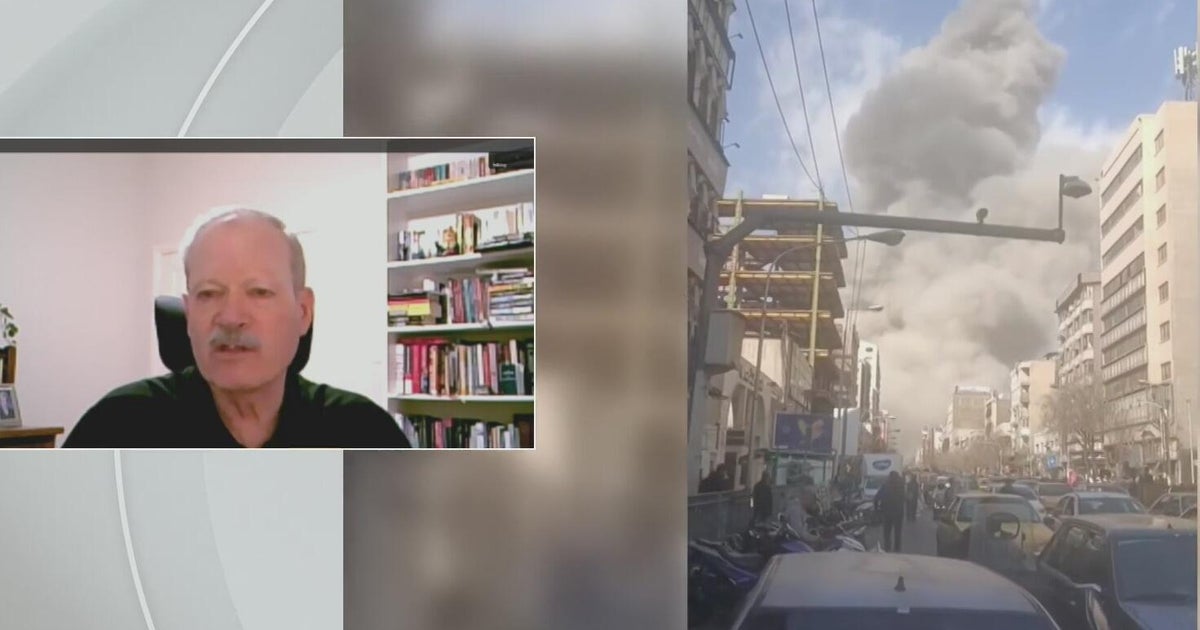
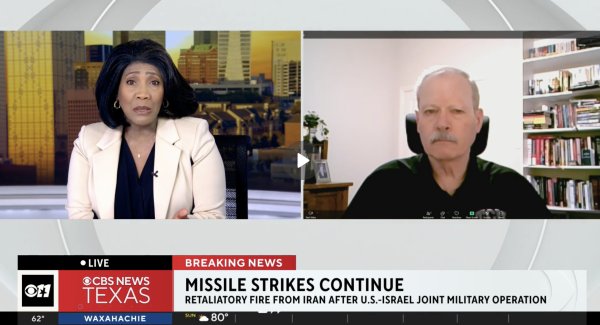
As the war against Iran continues to unfold, global media coverage has intensified, with major news organizations providing near-constant reporting on the conflict and its geopolitical implications. From live battlefield updates to analysis of regional alliances, energy markets, and international diplomacy, the story has become one of the most closely followed developments in international affairs. Networks such as CBS News are dedicating significant airtime to helping audiences understand the rapidly evolving situation and the broader implications for global stability.
To provide credible context and insight, these outlets often turn to academic experts who specialize in Middle East politics and international relations. Experts like Ralph Carter from Texas Christian University (TCU) are among those providing research-based analysis that helps explain the historical roots of the conflict, the motivations of the key actors involved, and what developments could come next. Their expertise allows journalists to translate complex geopolitical dynamics into clear, accurate information for audiences trying to make sense of a fast-moving global crisis.
Professor Ralph Carter teaches introductory courses in political science and international politics as well as advanced courses in Middle East conflicts, U.S. foreign policy and Russian foreign policy. He is the author or editor of eight books and the author or co-author of over 50 journal articles, book chapters, and other professional publications. His research agenda focuses on the making of U.S. foreign, trade, and defense policy, with a particular emphasis on the roles played by members of Congress.
Recently, Professor Carter's expertise was sought out by CBS News in Dallas/Fort Worth as journalists were updating Americans on the current situation in the war in Iran.
Ralph Carter is available to speak with the media about the ongoing war in Iran simply click on his icon now to arrange an interview today.
·
3 min
The 2024 Summer Olympics in France are a celebratory time for many – including a record nine Horned Frogs competing – but the Games are against the backdrop of dynamic circumstances throughout the globe. TCU News spoke to Ralph Carter, Piper Professor of political science, about viewing the Olympics through the lens of current affairs.
Q: Between the Russia/Ukraine conflict, the Israel/Palestine conflict and more, the Olympics are occurring during a tumultuous time in our world. Would you share your observations on that as a political scientist? The Olympics always take place against a backdrop of international politics. They often generate a surge in nationalism on the part of participating countries. There could be demonstrations for or against certain countries or their athletes that get the attention of the media, but the conflicts currently underway in the world will be largely unaffected. Q: This is not new. Do any other Games stick out in your mind that occurred during disruption? The 1980 Olympics were held in Moscow less than a year after the Soviet Union’s invasion of Afghanistan. As a result, many countries boycotted participating in those games, including the United States. Ultimately, 67 countries chose not to participate in 1980. In retaliation, the Soviet Union boycotted the 1984 Olympics held in Los Angeles along with a handful of pro-Soviet or anti-US countries. Nonetheless, 140 countries participated in 1984, making it the largest number of participating countries up to that point. Q: Do you feel the Olympic Games happening during times like these helps or hurts? Do you feel it brings a respite or instead makes things more uncomfortable? It magnifies both the good and bad emotions that arise with heightened nationalism. However, this is usually short-lived, and relationships return to their prior state pretty quickly. Q: For years the Olympics have looked past differences in governments, societies, politics, even human rights. From a historical and political standpoint, what do you think the impact of the Games has been? The Olympics are a mirror of current realities in international politics. The fact that in 1936 four Olympic gold medals were won in Berlin by a Black American – Jesse Owens – did not change Adolf Hitler’s racism. The 1980 boycott of the Moscow games did not result in a Soviet withdrawal from Afghanistan. In short, the Olympics have minimal impact on global politics, if that.
Q: Anything else you would like to add? In the past, many countries have gone on spending sprees to host an Olympics, building arenas and sporting facilities, “Olympic villages” of apartments, etc. Many of those countries have failed to recoup any meaningful return on their investments. Oftentimes, those facilities fall into disrepair and lead one to wonder how those financial resources could be better invested for the people of that country. Only a limited number of countries have the in-place sporting facilities and hospitality infrastructure to host such events. It’s long past time, in my opinion, for there to be some changes in the decision-making process regarding host countries. Ralph Carter is available to speak with media about the upcoming Olympic Games simply click on his icon now to arrange an interview today.
Media
Social
Biography
Professor Carter teaches introductory courses in political science and international politics as well as advanced courses in Middle East conflicts, U.S. foreign policy and Russian foreign policy.
He is the author or editor of "Making US Foreign Policy: The Essentials" (2nd ed., 2020); "Contemporary Cases in U.S. Foreign Policy: From National Security to Human Security" (6th ed., 2021); "IR: Seeking Security, Prosperity, and Quality of Life in a Changing World," with James M. Scott and A. Cooper Drury (4th ed. 2022); the 44-essay Foreign Policy Analysis component of the International Studies Encyclopedia, with Steven B. Redd, Valerie M. Hudson, Patrick James, and Jeffrey Pickering (2010); "Choosing to Lead: Understanding Congressional Foreign Policy Entrepreneurs," with James M. Scott (2009), and "Making American Foreign Policy, with John T. Rourke and Mark A. Boyer" (2nd ed. 1996). He is the author or co-author of over 50 journal articles, book chapters, and other professional publications.
From 2004-2009, he served as one of the inaugural editors of the journal Foreign Policy Analysis and previously served on the editorial boards of both Foreign Policy Analysis and International Studies Perspectives. His research agenda focuses on the making of U.S. foreign, trade, and defense policy, with a particular emphasis on the roles played by members of Congress.
In 2014, Professor Carter received the TCU Chancellor’s Award for Distinguished Achievement as a Creative Teacher and Scholar and was selected as one of 10 Piper Professors of Texas. In its 2012 inaugural edition, Princeton Review named Professor Carter one of The Best 300 Professors in the United States. In 2006, he became the first person from a non-doctoral program to receive the International Studies Association’s Quincy Wright Distinguished Scholar Award. He received TCU’s Deans’ Teaching Award in 2007 and was named one of five ‘Best Professors’ at TCU by the Texas Monthly 2004 Guide to Texas Colleges and Universities.
Professor Carter currently serves on the Prelaw Advisory Council for the Law School Admissions Council.
Areas of Expertise
Middle East
Russia
International Relations
War & Conflict
Foreign Policy
Foreign Policy Analysis
U. S. Foreign Policy in Film
North Korea
Promotion of U. S. Democracy
Accomplishments
Quincy Wright Distinguished Scholar Award
2006-11-11
Award for distinguished scholarship and service to the International Studies Association, awarded by its Midwest Region. Dr. Carter was the first recipient of this award to come from an undergraduate-only political science department.
The Best 300 Professors
2012-04-15
Named one of the best 300 professors in the United States, across all fields and academic disciplines, by Princeton Review
TCU Chancellor's Award for Distinguished Achievement as a Creative Teacher and Scholar
2014-10-16
Named top professor for both teaching and research at TCU
Piper Professor of 2014
2014-04-15
Named one of 10 best professors from all Texas community colleges, colleges, and universities, across all fields and academic disciplines, in 2014
Education
The Ohio State University
Ph.D.
Political Science
1980
The Ohio State University
M.A.
Political Science
1977
Midwestern State University
B.A.
Political Science
1974
Affiliations
Law School Admissions Council: Prelaw Advisory Council
Was getting into this war warranted? “No, I don’t believe it was, said Ralph Carter. He said, “President Trump was persuaded by Prime Minister Benjamin Netanyahu of Israel that two things were possible at this very moment. One of those things was it was possible to force a regime change in Iran. And, that the Iranian people, secondly, would rise up and create a new regime. It would be a low-cost regime change from outside. And neither of those things, unfortunately, was true.”
Expert on Middle East relations after retaliatory fire from Iran begins against U.S., Israel
CBS News Texas tv
2026-03-01
TCU political science professor Ralph Carter said he believes there won’t be a quick resolution to this new war. “Iran is going to attack targets in the United States if it has the capability to do so through terrorist attacks, through assassinations, cyber attack in the like.”
The Greenland connection: Fort Worth emerges as linchpin in U.S. policy push for critical minerals
Fort Worth Report online
2026-01-24
What does the recent U.S. interest in Greenland have to do with a Fort Worth factory manufacturing magnets?
Under the first Trump administration, Congress passed a little-noticed critical minerals legislation to increase the country’s supplies. Another event brought the issue back to the front burner, said Ralph Carter, a political science professor at Texas Christian University.
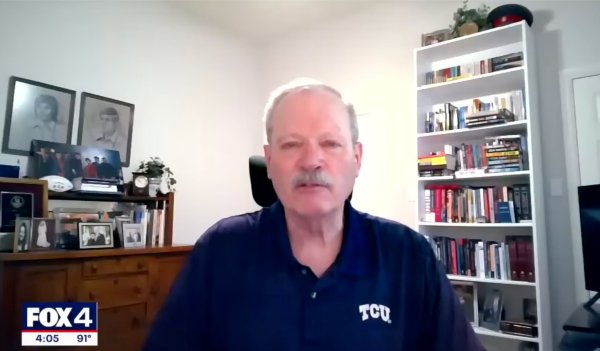
Ralph Carter is a professor of political science at Texas Christian University with a focus on international relations and Middle East foreign policy. He talked to FOX 4's Shaun Rabb about the Iranian missiles that were fired at a U.S. military base in Qatar, as well as the ongoing conflict between Israel and Iran.
North Korea Does ‘Not Care’ Whether Trump Wins the Election
Newsweek online
2024-07-23
Ralph G. Carter, a professor of political science at Texas Christian University, told Newsweek that the outcome of the election could be felt by North Korea.
"The Biden-Harris administration pursued closer military ties with South Korea and Japan — two of North Korea's greatest rivals and threats. A Harris presidency would almost certainly maintain those close ties," he said. "Trump sought to reduce the size of the US military presence in South Korea, canceled biannual joint US-South Korean military exercises, and generally signaled that South Korea was not a significant US national interest to defend."
Vladimir Putin has faced setbacks during his full-scale invasion of Ukraine.
TCU Professor Ralph Carter, an expert on Russia, said, "Domestically, Vladimir Putin is stronger than before. He's rallied public opinion behind his leadership, calling Western sanctions an attack that he's neutralized."
FLASHPOINT UKRAINE: As War Continues, Moscow Faces Challenges
Voice of America online
2022-07-01
Russian missiles struck the Black Sea city of Odesa, killing at least 18. What are the diplomatic challenges facing Moscow as economic sanctions force it to default on its debt for the first time in more than a century. And how a Ukrainian poet passes the time while on the front line in the Donbas.
FLASHPOINT UKRAINE: Zelenskyy Continues to Call for No Fly zone
Voice of America online
2022-03-09
Ukraine continues to call for a no-fly zone to be implemented over its skies after Russia’s invasion. Plus, several European Union countries look to begin setting up war crime units to ensure there is judgment for Moscow’s attacks on civilians.
‘You want a hug.’ Ukrainians in North Texas worry about family during Russia invasion
Star-Telegram
2022-02-26
Ralph Carter, a political science professor at Texas Christian University who specializes in Russian history, said he wasn’t surprised that Russia invaded Ukraine after troops moved into the eastern part of the country controlled by separatists. When Russian soldiers came through an area of neighboring Belarus close to Kyiv, Carter said he grew more concerned. “I thought they’re not going for the little nibble, they’re going for the big bite,” Carter said.
What's behind the scenes in terms of Vladimir Putin?
TVEyes
2022-02-25
TCU Professor Ralph Carter, an expert on Russia, said, "I think he's trying to recreate a Russian sphere of influence in Eastern Europe. If he had his druthers, I think he'd love to have the Russian Empire back."
Managing the Money: The President, Congress, and US Democracy Aid, FY2013-FY2019.
MidSouth Political Science Review 22, 97-134.
James M. Scott, Ralph G. Carter
2022
Democratizing Dictators? Non-Democratic Regime Conditions and the Allocation of US Democracy Assistance, 1975-2010.
International Political Science Review, 41 (3), 436-450
James M. Scott, Ralph G. Carter
2020
As the USA initiated strategies of democracy promotion to support the spread of democracy, a key element involved democracy assistance. However, some states receive substantial commitments of US democracy aid while other states receive little or none, and the mix of democracy assistance varies in allocation between civil society and institutional channels. This study examines democracy aid allocation, focusing on the role of regime conditions on the targeting and composition of the aid. We disaggregate regime type to differentiate among non-democratic governments and argue that such differences affect both the amount of democracy aid and whether aid packages target government institutions or civil society channels. We theorize how these regime conditions shape allocations, controlling for donor interests and recipient features, and test our argument against US democracy aid allocations by the US Agency for International Development (USAID) from 1975 to 2010. We conclude with discussion of the implications of these findings.
Distributing Dollars for Democracy: Changing Foreign Policy Contexts and the Shifting Determinants of US Democracy Aid, 1975-2010.
Journal of International Relations and Development, 22, 640-675
James M. Scott, Ralph G. Carter
2019
In the late 20th century, the United States adapted to changes in the international arena and initiated innovative strategies of democracy promotion by providing assistance to governments, political parties, and non-governmental organisations all over the world. Through the lens of foreign policy change, this analysis examines the factors shaping US democracy aid decisions in the context of two major paradigm shifts—the end of the Cold War (1989) and the 9/11 episode (2001)—which establish three distinct US foreign policy contexts: Cold War, post-Cold War, and Global War on Terror. Examining democracy aid allocations; ideational goals; US interests; and economic, political and social factors, we argue that the external foreign policy context of each time period generates a different blend of determinants that shape democracy aid allocations, with ideational factors more consequential in the post-Cold War and Global War on Terror contexts, and interest-based factors more significant in the Cold War and Global War on Terror contexts. Evidence from the period between 1975 and 2010 provides support for our argument. We conclude with a discussion of the implications of these findings.
Promoting Democracy in Latin America: Foreign Policy Change and U.S. Democracy Assistance, 1975-2010.
Third World Quarterly 37
James M. Scott, Ralph G. Carter
2016
Since the Cold War the USA has articulated and implemented explicit strategies of democracy promotion. One interesting target of such efforts is Latin America, in part because of the region’s geographic proximity to the USA and of the mixed record of US support for democracy there. This paper examines the impact of the end of the Cold War and the 9/11 episode on the nature, purposes, targets and consequences of US democracy assistance to Latin America. Examining democracy aid allocations, social and political factors and other variables, it traces changes in aid strategies, purposes and recipients generated by these paradigm shifts, and assesses the impact of such assistance on the politics of the region. It concludes with implications of these findings for US democracy promotion policies.
From Cold War to Arab Spring: Mapping the Effects of Paradigm Shifts on the Nature and Dynamics of U.S. Democracy Assistance to the Middle East and North Africa.
Democratization 22
James M. Scott, Ralph G. Carter
2015
Since the end of the Cold War, the United States has articulated and implemented explicit strategies of democracy promotion by providing assistance to governments, political parties, and other non-governmental groups and organizations all over the world. One particularly challenging region has been the Middle East and North Africa, where democratic development and democracy aid opportunities have been limited and constrained by a variety of factors related to social, economic, and political characteristics of the region and policy priorities of the United States. This article examines the impact of two major paradigm shifts – the end of the Cold War (1989) and the 9/11 episode (2001) – on the nature, purposes, and consequences of US democracy assistance to the Middle East. Examining democracy aid allocations, social, democratic and political factors in the region, and other variables, the analysis traces the shifts in aid strategies, purposes, and recipients generated by these paradigm shifts and assesses the impact of such assistance on the politics of the region. The article concludes with a discussion of the implications of these findings for US democracy promotion policies and the impact of the Arab Spring events as a potential third break point.
The Not-So-Silent Partner: Patterns of Legislative–Executive Interaction in the War on Terror, 2001–2009
International Studies Perspectives
James M. Scott, Ralph G. Carter
2014
The conventional narrative surrounding the post-9/11 “War on Terror” tends to characterize the US Congress as a mostly inactive and compliant bystander, bowing to an aggressive assertion of unilateral presidential authority and power by the Bush administration. However, clarifying the conceptual framework used to examine legislative–executive interactions and congressional foreign policy behavior to account for varying patterns of interaction and varying avenues of influence yields an alternative explanation. While there is some truth to the conventional wisdom about a Congress rallying to support the president in time of war, applying the refined conceptual framework brings a more complex story into sharper focus...
From Cold War to Arab Spring: mapping the effects of paradigm shifts on the nature and dynamics of US democracy assistance to the Middle East and North Africa
Democratization
James M. Scott, Ralph G. Carter
2014
Since the end of the Cold War, the United States has articulated and implemented explicit strategies of democracy promotion by providing assistance to governments, political parties, and other non-governmental groups and organizations all over the world. One particularly challenging region has been the Middle East and North Africa, where democratic development and democracy aid opportunities have been limited and constrained by a variety of factors related to social, economic, and political characteristics of the region and policy priorities of the United States. This article examines the impact of two major paradigm shifts – the end of the Cold War (1989) and the 9/11 episode (2001) – on the nature, purposes, and consequences of US democracy assistance to the Middle East. Examining democracy aid allocations, social, democratic and political factors in the region, and other variables, the analysis traces the shifts in aid strategies, purposes, and recipients generated by these paradigm shifts and assesses the impact of such assistance on the politics of the region. The article concludes with a discussion of the implications of these findings for US democracy promotion policies and the impact of the Arab Spring events as a potential third break point.
Understanding congressional foreign policy innovators: Mapping entrepreneurs and their strategies
The Social Science Journal
Ralph G. Carter, James M. Scott
2010
Since World War II, a small group of assertive MCs have chosen to lead on foreign policy issues about which they care, without waiting on the administration to take action. Significant foreign policy innovation has been the result. From the coldest days of the Cold War to the changed circumstances after 9/11, important congressional initiatives attributable to a few key individuals can be found. Drawing on an original quantitative dataset of post-World War II congressional foreign policy activity, interviews with members and their staffs, and primary and secondary research, this paper: (a) discusses the characteristics and impact of these policymakers; (b) develops categories of entrepreneurs, drawn from issues to which entrepreneurs have devoted their attention; and (c) derives strategies of entrepreneurship drawn from the activities and avenues utilized by the entrepreneurs.
Setting a Course: Congressional Foreign Policy Entrepreneurs In Post‐World War II U.S. Foreign Policy
International Studies Perspectives
Ralph G. Carter, James M. Scott, Charles M. Rowling
2004
“Congressional foreign policy entrepreneurs” are those legislators who initiate their own foreign policy agendas. These individuals seek to frame policy discussions and mobilize public and interest group interest; to direct congressional agendas toward specific foreign policy issues; to structure and influence the formulation of foreign policies by the executive branch; to revise, refocus, or reformulate foreign policies; to generate alternative and replacement foreign policies; and to fill policy vacuums with their own preferred foreign policies. This paper examines the evolution and impact of such entrepreneurs across the periods of the Cold War Consensus (1946–1967), the Cold War Dissensus (1968–1989), and the Post‐Cold War (1990–2000). The paper first provides an overview of the concept of foreign policy entrepreneurs. It then turns to case studies of entrepreneurial initiatives from three prolific entrepreneurs whose careers span the post‐World War II era: Senators Jacob Javits, Edward Kennedy, and Christopher Dodd. Together, the overview and cases shed light on the different avenues and activities that entrepreneurs use to address their preferred issues and the impact entrepreneurs have on policy, as well as highlight changes in both over time.