Getting to the moon wasn’t a one-and-done kind of effort. It took repeated missions, each one teaching scientists and engineers something new, and each one making the next attempt a little smarter and a lot safer. That’s a big reason lunar success eventually became possible: people kept going back, gathering more data, fixing problems, and building confidence step by step.
With all eyes on the Artemis II mission's final hours, University of Delaware space professor Bennett Maruca can talk all things space exploration and the race to the moon.
Have you ever wondered why Apollo 11 was named Apollo 11? It's because Apollo 1-10 were already taken! And mostly were fact-finding missions, with many barely leaving the ground, says Maruca.
Space program launches can cost billions of dollars. In order to ensure that they are successful, trial runs need to take place. Space travel leaves very little room for guesswork, and even small mistakes can have serious consequences. By launching multiple missions, experts could spot weaknesses, improve hardware, and make sure astronauts were better protected before taking on even bigger risks. In a way, each mission was like a rehearsal that made the final performances much more reliable.
Maruca can reveal facts like this and more. He has been featured in multiple publications. Click his profile to learn more.
·
2 min
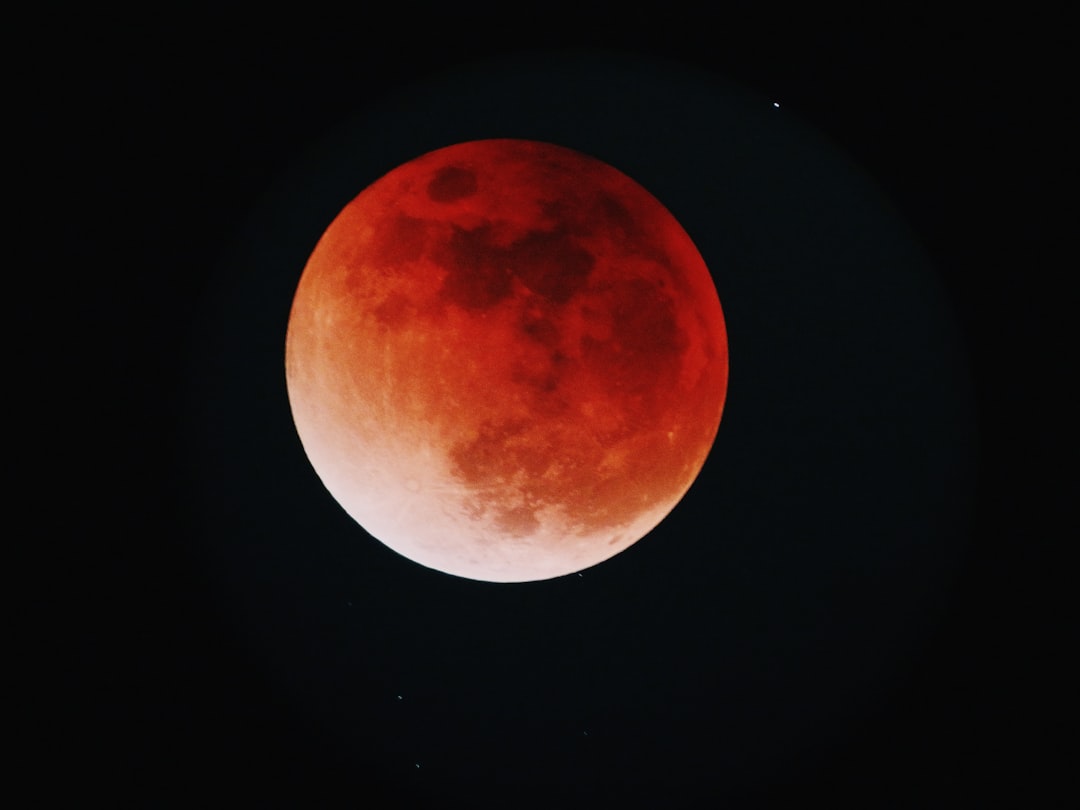
March's celestial event – a blood moon – is just around the corner. This captivating lunar spectacle isn't just a cool sight to behold; it has some neat science backing it up. The blood moon phenomenon happens during a total lunar eclipse.
"During a total lunar eclipse, the only light that reaches the surface of the moon is refracted through the Earth's atmosphere, which essentially acts like a lens. Light is a wave, and every color of the rainbow has a different wavelength – red the longest and violet the shortest," said Bennett Maruca, associate professor of physics and astronomy at the University of Delaware.
What adds to the excitement is the rare nature of total lunar eclipses. While partial eclipses occur more frequently, a full blood moon isn't an everyday event. Depending on where you live, the blood moon may only grace the night skies a few times a decade.
"One of my favorite things about total lunar eclipses is that it's hard to know ahead of time quite what it will look like. The moon can take on a color ranging from burnt orange to red to grayish brown," he said. "The closer the Moon passes to the center of Earth's shadow, the darker the color will be."
Maruca is available to speak about the event, which takes place in the wee hours of March 3. He can discuss when to wake up to see the phenomenon and how to best capture it.
"For photographing the moon, I would recommend a camera with some optical zoom – the moon is only about 0.5 degrees across. Because of the low lighting conditions, a tripod or other support would be helpful since a longer exposure time will be needed," he noted.
He has appeared in a number of outlets including Mashable and The Philadelphia Inquirer. He can be contacted by clicking on his profile.
ABOUT BENNET MARUCA Bennett Maruca serves as an associate professor in the University of Delaware's department of physics and astronomy. His research focuses on the sun, the solar wind and other space plasmas. He is a recipient of the Antarctic Service Medal and NASA's Silver Achievement Medal. He also serves as an associate director of the Delaware Space Grant Consortium and is currently mentoring over twenty undergraduate students developing experiments to fly into space to observe Earth's ionosphere.
Media
Social
Biography
After receiving his Bachelor of Science in Physics and Mathematical Sciences from Carnegie Mellon and his PhD in Astronomy and Astrophysics from Harvard University, Bennett A. Maruca became a Charles Hard Townes postdoctoral fellow at the Space Science Laboratory at the University of California, Berkeley. Ben now serves as an Associate Professor in the University of Delaware's Department of Physics and Astronomy. His research focuses on the sun, the solar wind and other space plasmas. He is particularly interested in how the solar wind is first heated and accelerated near the sun and then changes and evolves as it expands through the solar system. Ben is a member of the science teams for multiple current and upcoming NASA spacecraft, including Wind, Parker Solar Probe, and HelioSwarm, and he is a recipient of the Antarctic Service Medal and NASA's Silver Achievement Medal. He also serves as an associate director of the Delaware Space Grant Consortium and is currently mentoring over twenty undergraduate students developing experiments to fly into space to observe Earth's ionosphere. One of those projects, the Delaware Atmospheric Plasma Probe Experiment (DAPPEr), is a student-led CubeSat mission that, upon its launch, will become Delaware's first orbital spacecraft.
Industry Expertise
Aerospace
Areas of Expertise
Sun
Solar Wind
Solar Physics
Heliophysics
Space Engineering
Space Education
Space Instrumentation
Langmuir Probes
Faraday Cups
Coulomb Collisions
Sounding Rockets
Kinetic Microinstabilities
CubeSats
Lunar Eclipses
Solar Eclipses
Space Mission Development
Space Plasmas
Ionosphere
Science and Religion
Answers
A lunar eclipse occurs when the moon passes into the shadow of the sun. This happens when the sun, Earth and moon line up, with Earth in the middle. In a total lunar eclipse, the moon passes completely into the central portion of Earth’s shadow. If you were on the near-side of the moon during a total lunar eclipse, the entire surface of the sun would be blocked by Earth’s surface.During a total lunar eclipse, the only light that reaches the surface of the moon is refracted through Earth’s atmosphere, which essentially acts like a lens. Light is a wave, and every color of the rainbow has a different wavelength — red the longest and violet the shortest. As it happens, short-wavelength light is much more likely to be scattered when it passes through the atmosphere. This is why the sky looks blue during the day — the blue and violet sunlight passing overhead is scattered off its path, and some of it reaches our eyes. The red light isn’t scattered nearly as much, so more of it can pass through the atmosphere and, during a total lunar eclipse, reach the moon's surface.Unlike during a solar eclipse, no special safety precautions are necessary — it's perfectly safe to look at the moon (in or out of a lunar eclipse) with the naked eye. A pair of even low-power binoculars will certainly help show the moon in more detail. For photographing the moon, I would recommend a camera with some optical zoom — the moon is only about 0.5 degrees across. Because of the low lighting conditions, a tripod or other support would be helpful since a longer exposure time will be needed.On average, there are about two lunar eclipses per year, but only about one third of lunar eclipses are total. The next lunar eclipse will be in August; it will be a partial lunar eclipse. The next total lunar eclipse will occur at the end of 2028.One of my favorite things about total lunar eclipses is that it’s hard to know ahead of time quite what it will look like. The moon can take on a color ranging from burnt orange to red to grayish brown. The closer the moon passes to the center of Earth's shadow, the darker the color will be. Also, since the sunlight that reaches the moon during a total solar eclipse first passes through Earth’s atmosphere, atmospheric conditions — including clouds and even volcanic activity — can significantly affect the moon’s color.
Unlike during a solar eclipse, no special safety precautions are necessary – it's perfectly safe to look at the moon (in or out of a lunar eclipse) with the naked eye. A pair of even low-power binoculars will certainly help show the moon in more detail. For photographing the moon, I would recommend a camera with some optical zoom – the moon is only about 0.5 degrees across. Because of the low lighting conditions, a tripod or other support would be helpful since a longer exposure time will be needed.
Media Appearances
A total lunar eclipse will turn the moon blood red on Tuesday across several continents
Associated Press
2026-02-27
Astronomer Bennett Maruca described the experience of witnessing a total lunar eclipse. "You don’t have to be out there the whole time to see the shadows moving."
The Mysterious Green Flash at Sunset – The Science Behind the Myth and Where to See It
Discover Magazine online
2025-05-28
Bennett Maruca, associate professor of physics and astronomy, is quoted extensively in this article about the brief pop of green, yellow and sometimes blue coloring along an otherwise unadulterated horizon line.
The best reason to see the imminent total lunar eclipse
Mashable online
2025-02-22
"It's part of the thrill," Bennett Maruca, an astronomer at the University of Delaware who has witnessed a number of total lunar eclipses, told Mashable. "You don't know exactly what you're going to get."
A dramatic total lunar eclipse is coming. You don't want to miss it.
Mashable online
2025-02-15
"They are really dramatic to see," Bennett Maruca, an astronomer at the University of Delaware who has witnessed a number of total lunar eclipses and plans to watch the looming March event, told Mashable.
The space station has a risky leak. How bad is it?
Mashable online
2024-11-19
Some of the main modules of the International Space Station are nearly a quarter-century old. "That's considered classic for a car," said Bennett Maruca, an astronomer and physicist at the University of Delaware.
UD student club building first Delaware spacecraft
Delaware Online online
2024-12-06
The students' mentor and the project's principal investigator, Bennett Maruca, said the U.S. is a spacefaring nation, and the more we know about space, the better.
What is a geomagnetic storm? Why you saw the northern lights
Yahoo! News online
2024-10-11
The geometric storm has diminished some since Thursday night, according to the SWPC. But associate professor of physics and astronomy at University of Delaware Bennett Maruca said seeing the northern lights again tonight is "quite possible."
It won’t be an aurora encore for Philly this weekend, but a rare comet will be visible
The Philadelphia Inquirer online
2024-10-11
Bennett A. Maruca, professor of physics and astronomy, said another aurora light show could take place in the near future. “The sun remains very active — we’re only about halfway through solar maximum — so there are plenty more opportunities for additional storms,” he said.
Why Earthlings are safe when huge solar storms strike our planet
Mashable online
2024-05-18
"Without those we would be in real trouble," Bennett Maruca, an assistant professor of physics and astronomy at the University of Delaware who researches the sun, told Mashable.
April 8 solar eclipse: visibility, safety and watch parties
Milford Live online
2024-04-02
“These are really dramatic events because the sun touches every part of our life, it really does,” said Bennett Maruca, an associate professor of physics and astronomy at the University of Delaware.
A total solar eclipse will occur on April 8. All the info on path, time and solar glasses
Delaware Online online
2024-03-31
However you plan to celebrate, Bennett Maruca, a University of Delaware professor specializing in physics and astronomy, has some advice for making the most out of this rare experience.
Anisotropic Heating and Cooling within Interplanetary Coronal Mass Ejection Sheath Plasma
The Astrophysical Journal
2024
This study is the first to comprehensively explore the relationship between heating and cooling, temperature anisotropy, turbulence, and collisional age within ICME sheaths. Using Wind spacecraft data from 333 ICME sheaths observed at 1 au (1995–2015), we found that plasma unstable to proton-cyclotron (PC) and firehose instabilities is significantly hotter—by a factor of 5 to 10—than stable plasma. Additionally, these unstable regions exhibit higher magnetic fluctuations and lower collisional ages, especially at low proton beta (βₚ ≤ 2). Our findings highlight that heating dominates over cooling in producing temperature anisotropy within ICME sheaths, with collisional age and magnetic fluctuations playing key roles in maintaining plasma conditions.
Space-qualifying silicon photonic modulators and circuits
Science Advances
2024
Reducing the form factor while retaining the radiation hardness and performance matrix is the goal of avionics. While a compromise between a transistor’s size and its radiation hardness has reached consensus in microelectronics, the size-performance balance for their optical counterparts has not been quested but eventually will limit the spaceborne photonic instruments’ capacity to weight ratio. Here, we performed space experiments of photonic integrated circuits (PICs), revealing the critical roles of energetic charged particles. The year-long cosmic radiation exposure does not change carrier mobility but reduces free carrier lifetime, resulting in unchanged electro-optic modulation efficiency and well-expanded optoelectronic bandwidth. The diversity and statistics of the tested PIC modulator indicate the minimal requirement of shielding for PIC transmitters with small footprint modulators and complexed routing waveguides toward lightweight space terminals for terabits communications and intersatellite ranging.
HelioSwarm: A Multipoint, Multiscale Mission to Characterize Turbulence
Space Science Reviews
2023
HelioSwarm (HS) is a NASA Medium-Class Explorer mission of the Heliophysics Division designed to explore the dynamic three-dimensional mechanisms controlling the physics of plasma turbulence, a ubiquitous process occurring in the heliosphere and in plasmas throughout the universe. This will be accomplished by making simultaneous measurements at nine spacecraft with separations spanning magnetohydrodynamic and sub-ion spatial scales in a variety of near-Earth plasmas. In this paper, we describe the scientific background for the HS investigation, the mission goals and objectives, the observatory reference trajectory and instrumentation implementation before the start of Phase B. Through multipoint, multiscale measurements, HS promises to reveal how energy is transferred across scales and boundaries in plasmas throughout the universe.
Regulation of Proton–α Differential Flow by Compressive Fluctuations and Ion-scale Instabilities in the Solar Wind
The Astrophysical Journal
2023
Large-scale compressive slow-mode-like fluctuations can cause variations in the density, temperature, and magnetic-field magnitude in the solar wind. In addition, they also lead to fluctuations in the differential flow U p α between α -particles and protons (p), which is a common source of free energy for the driving of ion-scale instabilities. If the amplitude of the compressive fluctuations is sufficiently large, the fluctuating U p α intermittently drives the plasma across the instability threshold, leading to the excitation of ion-scale instabilities and thus the growth of corresponding ion-scale waves. The unstable waves scatter particles and reduce the average value of U p α . We propose that this “fluctuating-drift effect” maintains the average value of U p α well below the marginal instability threshold. We model the large-scale compressive fluctuations in the solar wind as long-wavelength slow-mode waves using a multi-fluid model. We numerically quantify the fluctuating-drift effect for the Alfvén/ion-cyclotron and fast-magnetosonic/whistler instabilities.
The Future of Heliophysics Research through Targeted use of Constellations
Bulletin of the American Astronomical Society
2023
This white paper seeks to outline the benefits and challenges of constellations, ranging from the Heliophysics System Observatory, to constellations consisting of a small number of spacecraft, to large-number constellations. In moving toward this constellation era, investments are required by our sponsors to best enable our continued scientific advancement in Solar and Space Physics.
The Solar Wind at Mesoscales — Revealing the Missing Link
Bulletin of the American Astronomical Society
2023
To address the fundamental gap in our knowledge of the heliosphere at mesoscales, new dedicated mesoscale missions are required in the next decade. This white paper outlines the current gaps in our understanding resulting from limited measurements at this critical scale and the need for an asserted effort in addressing these gaps.
Context. Though the solar wind is characterized by spatial and temporal variability across a wide range of scales, long-term averages of in situ measurements have revealed clear radial trends: changes in average values of basic plasma parameters (e.g., density, temperature, and speed) and a magnetic field with a distance from the Sun.