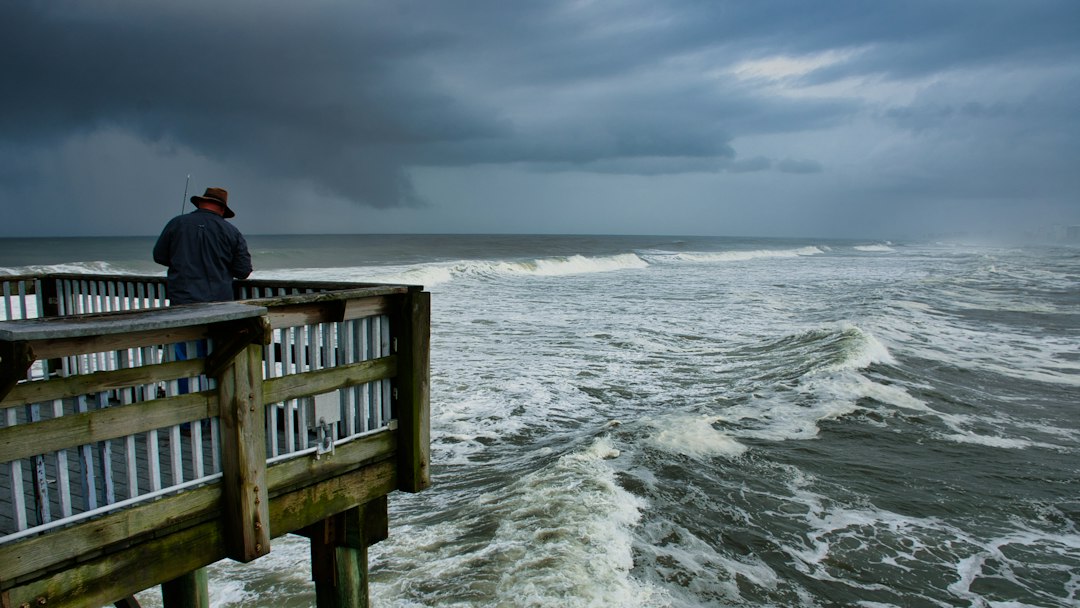
When hurricanes threaten communities already facing social and economic challenges, the need for effective disaster preparedness and response becomes even more critical. University of Delaware disaster research experts can discuss the challenges communities face before, during and after hurricanes, including Hurricane Isaias and its potential impacts across Alabama, Mississippi, the Florida Panhandle and other parts of the northern Gulf Coast.
The following experts from UD's Disaster Research Center are available to discuss the public health consequences of hurricanes, disaster preparedness and community recovery.
Sarah DeYoung, associate professor of sociology and criminal justice, can discuss the needs of refugee and immigrant communities before, during and after disasters, including challenges accessing information, assistance and essential resources. She worked for several years with refugee and immigrant communities in southern Alabama through a grant-funded project.
Jennifer Horney, professor of epidemiology, can discuss the public health consequences of hurricanes and other disasters, including evacuation decisions, the risks posed by inland flooding and the challenges communities face during recovery. She was part of the public health response to Hurricane Harvey and can discuss how communities still recovering from major storms may face additional challenges when another hurricane threatens the region.
Jennifer Trivedi, associate professor of anthropology, studies how disasters affect marginalized communities. She can discuss how disasters compound existing challenges for people struggling to meet basic needs, particularly when flooding disrupts housing, transportation, food access and other essential services.
Tricia Wachtendorf, co-director of the Disaster Research Center, can discuss the social impacts of hurricanes and inland flooding, including evacuation, preparedness, community response and recovery. She can also discuss how storms that are not the most powerful can nonetheless cause significant damage and disruption.
To reach these experts directly, visit their ExpertFile profile and click on the "contact" button. Interested journalists can also contact MediaRelations@udel.edu.
·
1 min
Floodwaters may recede quickly, but the health consequences of a major disaster can last for months or even years, says University of Delaware epidemiologist Jennifer Horney. Horney, an expert in disaster recovery and public health, can discuss the longer-term health challenges communities face after major flooding events, including the Aug. 26 flash floods in Nepal that resulted in 1,450 deaths, with 6,000 people still missing.
Horney can talk about: How damage to health infrastructure can make it more difficult for people to access medical care after a disaster, and what communities can do to prepare for and reduce longer-term health consequences following flooding and other disasters.
How contaminated water and food can increase the risk of infectious disease, and how standing water left behind by floods can create breeding grounds for mosquitoes that transmit diseases such as dengue, malaria, encephalitis and chikungunya.
The impact disasters have on physical and mental health well after the immediate emergency has passed.
To arrange an interview, visit Horney's profile and click on the contact button. Interested reporters can also send an email to MediaRelations@udel.edu.
·
1 min
As measles cases continue to rise in the United States, University of Delaware epidemiologist Jennifer Horney is available to discuss measles outbreaks, vaccination, vaccine hesitancy and the challenges of preventing the spread of highly contagious infectious diseases.
The deaths of two unvaccinated Pennsylvania residents from measles — the first measles deaths in the state in 35 years — underscore the continuing public health risks posed by the disease.
Horney, a former member of the Centers for Disease Control and Prevention’s Board of Scientific Counselors, is an experienced epidemiologist who studies infectious disease outbreaks and public health preparedness.
Horney can discuss: Measles outbreaks and transmission: Why measles is among the most contagious infectious diseases and how outbreaks spread.
Vaccination: The effectiveness of the MMR vaccine and the importance of maintaining high vaccination rates.
Vaccine hesitancy and misinformation: What influences vaccination decisions and how public health messaging affects perceptions of vaccine and infectious disease risks.
Measles prevention and treatment: Why outbreaks can reemerge when vaccination coverage falls, and the role and limitations of vitamin A and other treatments.
Outbreak response and preparedness: How public health officials investigate and respond to measles and other infectious disease outbreaks, and what can be learned from previous outbreaks.
To reach Horney directly and arrange an interview, visit her profile and click on the “contact” button. Interested reporters can also email MediaRelations@udel.edu.
Media
Social
Biography
Jennifer Horney is Professor and Founding Director of the Program in Epidemiology and Core Faculty at the Disaster Research Center at the University of Delaware. Her research focuses on measuring the health impacts of disasters, as well as the linkages between disaster planning and household actions related to preparedness, response, and recovery. Dr. Horney received her Ph.D. and MPH from the University of North Carolina at Chapel Hill. She was a member of a team of public health practitioners who responded to Hurricanes Isabel, Charley, Katrina, Wilma, Irene, and Harvey where she conducted rapid assessments of disaster impact on public health. She has also provided technical assistance to public health agencies globally around disasters, infectious disease outbreaks, and pandemic influenza planning and response.
Industry Expertise
Research
Health and Wellness
Areas of Expertise
Measles
Epidemiology
epidemic
COVID-19
Community Assessment for Public Health Emergency Response
Rapid Assessment
Applied Epidemiology
Outbreak Investigations
Disaster Epidemiology
Coronavirus
Pandemic
Answers
CaptionResizeWrap TextRemoveSupport for, and trust in, public health is at a nadir. Recent accomplishments include the rapid development and approval of a safe and effective COVID-19 vaccine, effective mpox response, declines in opioid overdose deaths through harm reduction, and evidence-based public health initiatives addressing root causes of gun violence. Despite these initiatives, which have significantly reduced the population-level impact of injury and illness, perceived missteps in the management of COVID-19, pervasive mis- and disinformation, increasing public distrust, and a lack of financial support have contributed to the deterioration of public health’s ability to respond to disasters and emergencies. The impact of false narratives and disinvestments interrupt the public health workforce pipeline, denying students opportunities to be trained for and participate in public health emergency preparedness activities. In 2003, I began my career as a disaster epidemiologist conducting household interviews for rapid needs assessments being conducted by the US Centers for Disease Control and Prevention (CDC), the N.C. Division of Public Health, and the University of North Carolina following Hurricane Isabel.For more than two decades, I deployed with students in partnership with local, state, and federal public health agencies to respond to disasters and collect data that contributed to both the immediate and long-term mitigation of the negative health impacts of disasters.This work, conducted in communities across the United States, is only possible because of a community’s trust in public health agencies and individuals’ willingness to share their postdisaster needs with our interview teams, which typically include a public health student and a local resident.The collection of perishable data in postdisaster contexts is challenging regardless of circumstance, and alterations have been made over time to ensure better representation of pregnant women, migrant workers, and rural populations in these postdisaster assessments. Yet, these assessments would not be possible at all without trusted connections between governmental agencies, academic public health, and disaster-affected communities.Politicization threatens our ability to respondPoliticization of disaster response and disaster assistance, and the mis- and disinformation that has now become prevalent around it, make it more difficult to collect these data. Following Hurricane Helene, one of my public health students at the University of Delaware worked with the western North Carolina nonprofit Sustaining Essential and Rural Community Healthcare to conduct key informant interviews and a Community Assessment for Public Health Emergency Response community survey. Both officials and residents reported that misinformation took time and attention away from response activities and disinformation led residents to distrust the response and recovery.After the pandemic, we have a dramatically under-resourced public health preparedness and response system, even in the face of more frequent and severe disasters and public health emergencies. These challenges will continue to mount as the Trump administration dismantles not only public health but also science more broadly. If the administration continues with their stated intent to dismantle the National Center for Atmospheric Research, this will further limit our ability to understand the human health impacts of extreme weather and weather-related hazards associated with climate change. This comes after significant damage to other federal agencies, including the CDC, the Environmental Protection Agency, and the Occupational Safety and Health Administration, all of whom monitor and collect data on disasters caused by natural, biological, and technological or industrial hazards and risks.A weakened workforce pipelineWith the rapidly changing landscape, students are learning about “how things used to be,” with an asterisk next to almost all federal disaster and public health policies and legal frameworks noting that the material could be outdated quickly. However, it is important that students are aware of the mechanisms and functionalities that have existed before this most recent political upheaval. For new public health professionals to help build back programs in more sustainable and resilient ways, it is vital that they have a comprehensive understanding of the policies that were dismantled, as well as their strengths and weaknesses. However, limited job opportunities and ongoing uncertainty will steer this generation of public health students away from governmental public health careers, leaving a long-term deficit of expertise.The difference between an emergency and a disaster is that in an emergency, actions can be taken to avoid a disaster, which exceeds the capacity of an impacted community. The Federal Emergency Management Agency’s (FEMA’s) workforce is 20% smaller under the Trump administration, and mitigation grants through the Flood Mitigation Assistance and Building Resiliency Infrastructure and Communities programs have been eliminated. Reducing community capacity to manage social, systemic, and infrastructural risks through disaster risk reduction, mitigation, and anticipatory action will result in emergencies more frequently progressing into disasters. Furthermore, without federal capacity to respond in agencies like FEMA or CDC, the risks that a given emergency will become a disaster also drastically increase simply because of the ways resources are allocated. Students will no longer have the opportunity to participate in fieldwork when there are no federally supported disaster responses or to learn about disaster epidemiology when there is no longer funding for academic programs that teach students public health in complex emergencies and disaster epidemiology concepts. A safety net that is frayed in nondisaster times will simply unravel during a public health emergency.Overall, it is critical for both the current and future public health workforce to continue to work to identify and understand the social drivers of health and the ways in which the current regulatory, technological, and political moment is affecting public health in both the short and long term. Discussing the ongoing stress impacts of the “triple disaster” in Japan in 2011 (i.e., earthquake, tsunami, and nuclear accident at the Fukushima power plant), Adam highlighted the importance of identifying and understanding the impacts of new and unexpected stressors on population health.A call to action Borrowing from this framing, the next generation of public health professionals must now begin to engage in quantifying the public health impacts of these policies to generate the essential evidence base for the future reinvestment in, and reinvigoration of, public health emergency preparedness.Current public health students can begin to actively capture the baseline state of public health, commit to ongoing active surveillance and measurement, and engage with both objective measures of health and self-reported perceptions to track how the human-made and unexpected stressors like artificial intelligence, climate change, and political polarization may affect us.While being “political” has often been seen as a negative for public health officials, now is not the time for public health students to be insular or isolated. Although engaging with the political, legislative, legal, and business sectors as a public health student or professional may feel daunting, public health must now more than ever engage with a variety of new partners and tools for public health practice. We cannot respond to the current attacks on public health in isolation. Businesses must speak up regarding how important a healthy and safe workforce is to their success. Local officials must advocate for the health of their residents and communities.The long-held sovereignty of local public health governance must give way to regional collaborations like the recently announced Northeast Public Health Collaborative, which brings together 10 states and New York City to work together on issues like vaccine policy, public health financing, and public health data collection, management, and analysis.Public health has always had the impetus to protect previous achievements—vaccination, robust surveillance systems, workplace and environmental safety, maternal and child health, reducing health disparities—through monitoring and evaluation, education, regulatory enforcement, and other essential public health services. For public health students, now is the time to find your passion, engage with partners that can support you, and prepare to lead.
The real concern will be the number of mutations on Pirola's spike protein and the recent approval of the boosters that target the current dominant variant, Omicron. We don’t know how effective that booster – which just became available after Sept. 12, 2023 – will be.
Media Appearances
Breathable air and clean water are crucial to the survival of those trapped in tunnels in Nepal
The Associated Press online
2026-08-31
Jennifer Horney, professor and chair of UD's department of epidemiology, had the lead quote in this AP story, which ran in dozens of major outlets. She talked about the need for protocols and training in the event of such a disaster.
Article features the expertise of Jennifer Horney, professor and director of UD's epidemiology department. She talked about the causes and potential for a larger spread of the virus after three people died on a cruise ship that was traveling across the southern Atlantic Ocean.
At least 6 kids sickened by measles in Delaware as outbreak grows
The News Journal online
2026-08-12
Jennifer Horney, professor and chair of the University of Delaware's Department of Epidemiology, said she believes the biggest concern should be parents of children who can't be vaccinated yet.
‘A prescription we’ve written for every Delawarean’: Gov. Meyer’s order lets virtually all residents get updated COVID-19 vaccine
WHYY online
2025-09-15
It’s critical for people to have ease of access to the vaccine and for insurers to cover the cost, said Jennifer Horney, founding chair of the University of Delaware’s Department of Epidemiology.
Jennifer Horney, director of UD's epidemiology department, appeared on NPR's "Morning Edition" to talk about the recent deadly floods in Central Texas. The interview with Horney, also core faculty with the Disaster Research Center, appeared on nearly 200 NPR affiliates nationwide.
Delaware professor: Low child vaccination rates may boost flu
Delaware State News online
2025-02-19
“We are currently still in a very severe respiratory virus season," said Jennifer Horney, the founding director of the University of Delaware’s Epidemiology Program.
As Helene’s immediate impacts recede, a public health threat rises
Grist online
2024-10-18
“Even after the water recedes, residents may underestimate the potential for contamination by unseen bacteria such as fecal coliform, heavy metals such as lead, and organic and inorganic contaminants such as pesticides,” Jennifer Horney, a disaster epidemiologist at the University of Delaware, warned in the wake of the hurricane.
New Covid FLiRT variants spark concerns of a summer spike
CNBC online
2024-05-26
It currently seems unlikely that the new strains will cause a major wave of infections as seen in the past when public immunity was lower, said Jennifer Horney, professor of epidemiology at the University of Delaware.
Pandemic? What pandemic? Four years later, coronavirus no factor in 2024 Biden-Trump rematch
Palm Beach Post print
2024-03-13
Jennifer Horney, professor and director of UD's epidemiology program, added to the argument that more discussion should be taking place regarding the impact and outcomes of the pandemic. "It is pretty clear that we had a larger share of deaths in the U.S. than proportionally should have been expected," she said.
6 people died by suicide in the aftermath of Hurricane Ian. Experts fear more.
Tampa Bay Times online
2023-09-27
Article quotes Jennifer Horney, epidemiology, who studies 281 natural disasters in the U.S. and found suicide rates leapt the highest two years post-disaster. “Recovery can be so long and arduous and expensive."
“With COVID-19 infections on the rise – concurrent with increased risk for infection with other cold weather respiratory viruses like influenza and RSV – many people may want to consider wearing a high-quality mask in crowded indoor spaces,” says Horney.
Diseases suppressed during Covid are coming back in new and peculiar ways
CNBC online
2022-06-10
“Covid has raised the profile of public health matters so that we are perhaps paying more attention to these events when they occur,” said Horney, adding that public health systems set up to identify Covid have also helped diagnose other diseases.
Confused By The CDC's New COVID Isolation Rules? Here's A Clear Guide.
Huffington Post online
2022-01-07
Tip: Wear a high-quality mask like a KN95 or N95. “The homemade 1-ply cotton mask is not going to cut it with omicron,” said Jennifer Horney, a disaster epidemiologist and founding director of the University of Delaware’s epidemiology program.
Taiwan reports second-most COVID-19 weekly cases, deaths behind U.S.
UPI online
2022-06-12
"During the Covid pandemic, access to primary care, including childhood vaccinations, was unavailable to many children," Jennifer Horney, professor of epidemiology at the University of Delaware, told CNBC.
Applying and Integrating Urban Contamination Factors into Community Garden Siting
Journal of Geovisualization and Spatial Analysis
2022
Local agricultural production provides opportunities for communities to cultivate resilience in local food supply systems, especially in urban areas underserved by supermarkets or other sources of fresh, affordable, healthy foods. While suitability analyses have traditionally been used to identify suitable locations for community-based food gardens, these models do not typically account for the potential for exposure to pollutants in urban settings, including contamination from industry, transportation infrastructure, or other sources. Using the city of Houston, Texas, as a case study, this paper describes a proposed suitability analysis for siting urban gardens that includes a pollution hazard index in addition to more typical criteria such as size, slope, and solar access. Geographical information systems spatial analyses were employed to determine if existing community gardens in Houston, Texas, are appropriately sited when a composite pollution hazard index score was added as a siting criteria. Results suggest a need to better optimize community garden siting to attenuate both disparate access to fresh produce and reduce risk of urban horticultural environmental exposure to contaminants in many areas.
This paper examines communities’ accessibility to critical facilities such as hospitals, emergency medical services, and emergency shelters when facing flooding. We use travel speed reduction to account for flood-induced partial road failure. A modified betweenness centrality metric is also introduced to calculate the criticality of roads for connecting communities to critical facilities. The proposed model and metric are applied to the Delaware road network under 100-year floods. This model highlights the severe critical facility access loss risk due to flood isolation of facilities. The mapped post-flooding accessibility suggests a significant travel time increase to critical facilities and reveals disparities among communities, especially for vulnerable groups such as long-term care facility residents. We also identified critical roads that are vital for post-flooding access to critical facilities. The results of this research can help inform targeted infrastructure investment decisions and hazard mitigation strategies that contribute to equitable community resilience enhancement.
Online Guidance for Domestic Violence Survivors and Service Providers: A COVID-19 Content Analysis
Violence Against Women
2023
To assess COVID-19 information and services available to domestic violence service providers, survivors, and racially and culturally specific communities in the U.S., a content analysis of 80 national and state/territorial coalition websites was performed in June 2020. COVID-19 information was available on 84% of websites. National organizations provided more information for survivors related to safety and mental health and for racially and culturally specific communities. State/territorial coalitions provided more information for providers on COVID-19 and general disaster preparedness. COVID-19 and social distancing measures implemented to control it diminished help-seeking in unique ways. Greater online access to information and resources may be needed to address changing needs of survivors during disasters and emergencies.