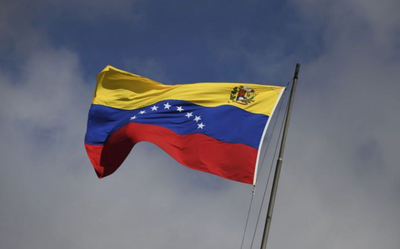
Venezuela’s enormous oil reserves have long been central to its economic development and geopolitical importance in the Western Hemisphere and globally. Efforts by the United States to gain greater access to Venezuelan oil supply could have major consequences for both countries, says the University of Delaware’s Kalim Shah. Shah, associate professor of energy and environmental policy, studies energy security, energy policy and governance, with a particular focus on the Caribbean and other energy-producing regions.
Venezuela has some of the world’s largest oil reserves, but years of political interference, underinvestment deteriorating infrastructure and expropriation of foreign assets under the Chavez-Maduro socialist model have severely reduced its production capacity, Shah says. Rebuilding the industry will require substantial investment from U.S. and other international energy companies.
Shah can discuss: U.S. energy security: How greater access to Venezuelan oil could provide an additional source of supply during future global disruptions and serve as an “energy shock absorber.”
Gas prices: Why increased Venezuelan production is unlikely to produce an immediate, dramatic reduction in U.S. gasoline prices.
Caribbean geopolitics: How energy resources can shape U.S. influence and relationships throughout the Caribbean and Western Hemisphere.
Venezuela’s recovery: How rebuilding the country’s oil industry can generate jobs, government revenue, infrastructure investment and broader economic recovery.
Energy governance: The importance of transparent contracts, regulation and revenue management in ensuring that energy development benefits Venezuela while protecting international investors.
The energy transition: The long-term risks and opportunities of investing in major oil resources as global energy systems increasingly move toward lower-carbon sources.
U.S. companies: The role American energy companies can play in rebuilding Venezuela’s oil industry, and the opportunities and risks that could come with greater U.S. investment.
To reach Shah directly and arrange an interview, visit his profile page and click on the "connect" button. Interested reporters can also send an email to MediaRelations@udel.edu.
·
2 min
Globally, the ousting of Nicolás Maduro in Venezuela has been met with a mix of reactions and cautious optimism. The University of Delaware’s Kalim Shah can discuss how regime change will play across the Caribbean and the spillover effect that will ripple throughout the region – and the world – in the years and decades to come.
Shah, professor of energy and environmental policy and an expert on the island nations of the Caribbean, says that although public statements have been muted and restrained, there is a shared understanding.
“For small island states that have absorbed the effects of Venezuelan collapse for more than two decades, this moment represents the possible end of a long and destabilizing chapter,” Shah said.
Caribbean governments are not celebrating regime change, Shah said. Rather, they are responding to the prospect of reduced systemic risk. “A Venezuela that no longer exports large-scale displacement, opaque energy leverage and permissive criminal governance is objectively preferable for the region.”
Shah can discuss several aspects of Venezuela’s political history, how the nation has arrived where it is, where it might be headed and the impact this will have on the Caribbean as a whole. Those include:
Venezuela’s political and economic deterioration during the Chávez–Maduro era and how that has translated directly into pressures felt across the Caribbean in the form of migration, fiscal exposure, security risks and regional uncertainty.
How the nation’s institutional collapse coincided with deepening organized crime activity across the Caribbean basin. Data from the United Nations Office on Drugs and Crime consistently places the region within major cocaine trafficking corridors linking South America with North American and European markets. For Caribbean governments, this meant higher interdiction costs, increased exposure to transnational criminal networks and growing pressure on already limited security institutions.
This moment invites a reassessment of China’s expanding footprint in the Caribbean, Shah says. He can discuss the ways in which Beijing has deepened its presence throughout the region.
Shah says that as this transition unfolds, five policy developments will determine whether the cautious optimism proves warranted:
The impact on Venezuelan outward migration to the Caribbean.
Whether Caribbean public systems receive durable support rather than short-term humanitarian fixes.
Organized crime and drug trafficking pressures in the Caribbean basin.
External security engagement in the Caribbean.
Whether the region avoids a return to dependency-driven energy and infrastructure politics.
“For the Caribbean, hope today is not naïve. It is conditional. The Chávez–Maduro years imposed real costs on the region. Their end creates an opening…but only if policy follows through,” Shah said.
To contact Shah directly for interviews, visit his expert page and click on the "contact" button. Interested reporters can also send an email to mediarelations@udel.edu.
·
3 min
The University of Delaware's Island Policy Lab has launched a first-of-its kind initiative to ensure that future development projects in the Caribbean are equipped to adapt to climate risks effectively. When completed, this work will set a new benchmark for sustainable development across the region. The research initiative is led by Professor Kalim Shah, Director of the UD Island Policy Lab, with colleagues at the University of the West Indies.
The collaborative effort, which kicked off this month in Barbados, will integrate climate services into Environmental Impact Assessments (EIA) and bring together key stakeholders from public agencies, academic institutions and private organizations. Funded by NOAA and the U.S. Department of State, the project aims to strengthen environmental governance by embedding scientific climate data into regulatory frameworks.
The work will cover multiple Caribbean islands chosen for their contrasting regulatory frameworks, with the aim of addressing critical gaps in how climate risks are incorporated into EIA processes, which often lack consistent and actionable climate data. On this first Barbados leg, the project has drawn support from the Barbados Meteorological Services, the Ministry of Environment and National Beautification, the Coastal Zone Management Unit and international financial institutions such as the Caribbean Development Bank and the Inter-American Development Bank. Private sector project developers are working alongside regulatory bodies and academic institutions to ensure the success of the initiative.
Minister of Planning and Development William Duguid emphasized the importance of the project during the launch event, held at the Savannah Beach Club in Christ Church. “Our very survival as a nation depends on building climate resilience,” Duguid said, highlighting the vulnerability of Barbados’ key infrastructure — such as airports, seaports, and hospitals — located along the coast. He stressed the significance of using climate data in EIA processes to mitigate risks such as sea-level rise and storm surges, which threaten the island’s long-term sustainability.
The initiative follows a phased approach, beginning with assessments of the existing institutional frameworks in Barbados, Dominica, Trinidad and Tobago, with other countries following in the future. The research team will evaluate how well current climate services align with the needs of both public agencies and private developers. In subsequent phases, stakeholders will participate in co-designing tailored climate tools to enhance EIA processes, leading to the development of Climate Services Implementation Plans. These plans will provide a roadmap for integrating climate services sustainably across sectors and jurisdictions.
“This project is about more than just collecting data – it’s about turning scientific insights into practical tools for decision-makers,” Shah explained. The co-design process, which involves collaboration with local stakeholders and international partners, aims to reduce conflicts between regulators and developers by embedding climate considerations early in the project approval process. This alignment will ensure that new developments are both environmentally sound and climate-resilient.
The research is expected to deliver several key outcomes, including enhanced coordination among regulatory bodies, improved access to climate data, and greater institutional capacity to manage environmental risks. Dr. Sylvia Donhert, Chief of the Inter-American Development Bank’s Compete Caribbean program, endorsed the project saying that it reflects the growing urgency for climate action across the region. “Embedding climate science into development planning is essential not just for policy but for the economic well-being of the region."
Media
Biography
Dr Shah is a recognized expert on public policy, regulation and governance in small island jurisdictions. As an institutional theorist, his research addresses science-based policy and regulatory design and administration for climate change, pollution prevention, clean technology, industrialization and sustainable production and consumption. His new work is on the effectiveness of tools such as technology needs assessments and regulatory impact assessments for informing policy decisions.
Dr. Shah was appointed as the Coordinator of the Universities Consortium of Small Island States, a UN Multi-stakeholder Partnership and served as Coordinating Lead Author for Environmental Policy Assessment of the UN Global Environmental Outlook 6 Report. He is the President of the Interdisciplinary Environmental Association. He is an active member of the AAAS Caribbean Committee.
Dr. Shah’s expertise continues to be called upon in the international sphere, where he has provided expert advice, research and analysis for organizations including the World Bank Group, InterAmerican Development Bank, United Nations Development Program, Pan-American Health Organization and various governments of island countries including Guyana and Suriname where he designed the national climate change policies. Dr Shah received his PhD in Public Policy from George Mason University with his dissertation on corporate sustainability and regulatory environmental management. He received his MSc in Natural Resource Management from the University of the West Indies and BSc in Natural Sciences at the University of the West Indies, Trinidad and Tobago.
Industry Expertise
Training and Development
Utilities
Energy
International Trade and Development
Areas of Expertise
Public Policy
Environment, Social, Governance (ESG)
Institutional Transformation
Small Island Developing States
Energy Security and Transition
Climate Change
Business and the Natural Environment
Innovation
Answers
Across much of the Caribbean, the collapse of the Maduro regime has been met with a restrained but unmistakable sense of relief. Yet beneath the diplomatic restraint lies a shared understanding: for small island states that have absorbed the spillover effects of Venezuelan collapse for more than two decades, this moment represents the possible end of a long and destabilizing chapter. Migration pressures were immediate. By 2025, nearly seven million Venezuelan refugees and migrants were living in Latin America and the Caribbean. While mainland countries absorbed the largest absolute numbers, Caribbean islands faced some of the most intense per-capita impacts. Trinidad and Tobago hosted an estimated 45,000 to more than 70,000 Venezuelans in a population of roughly 1.5 million, placing sustained strain on schools, healthcare access, housing markets, and immigration systems. Against this backdrop, it is unsurprising that the end of the Maduro regime has been quietly welcomed. This moment also invites a reassessment of China’s expanding footprint in the Caribbean. Over the past decade, Beijing has deepened its presence through port infrastructure, telecommunications, energy projects, concessional lending, and diplomatic engagement, often filling financing gaps when Western attention appeared episodic. The emerging environment is one of recalibration rather than rupture. Caribbean governments are navigating a landscape in which external engagement is becoming more consequential, not less. Geography has not changed, but expectations have.What to watch nextAs this transition unfolds, several policy developments will determine whether cautious optimism proves warranted.First, whether Venezuelan outward migration to the Caribbean measurably slows. Sustained declines or credible pathways for voluntary return would be the clearest indicator that conditions inside Venezuela are stabilizing.Second, whether Caribbean public systems receive durable support rather than short-term humanitarian fixes. Education, healthcare, housing, and immigration systems absorbed migration pressures for years; meaningful relief will require budget support and institutional strengthening, not emergency framing alone .Third, whether organized crime and drug trafficking pressures in the Caribbean basin begin to ease.Finally, whether the region avoids a return to dependency-driven energy and infrastructure politics.For the Caribbean, hope today is not naïve. It is conditional. The Chávez–Maduro years imposed real costs on the region. Maduro’s end creates an opening for an intriguing turn in the historic relations with the US, the region’s most important economic partner.
Media Appearances
Workshop aims to strengthen island’s climate resilience
Barbados Today online
2024-10-16
Sharing an overview of the project, principal investigator and Professor of Energy and Environmental Policy at the Biden School, Professor Kalim Shah, said: “This is a NOAA [National Oceanic and Atmospheric Administration] and the US Department of State-funded research project, and we are reviewing and understanding the climate services and products available in several Caribbean countries.” “One is to better understand how we can develop or co-design climate services and products that are useful to project developers in the development processes here in Barbados. The second objective is… how we can integrate these climate services and products… into the environmental and social impact assessment processes,” Shah said.
On the other hand, the Director of the Island Policy, Professor Kalim Shah, argues, “It is not a matter of more data; it’s a matter of more strategic data and what we do with that data.”
How small island 'renewables laboratories' are leading the way in transitioning from fossil fuels
Reuters online
2024-06-19
"Kalim Shah, director of the Island Policy Lab at the University of Delaware, U.S., points out that the small size of islands makes it difficult to develop projects that benefit from economies of scale, a challenge SIDS share with landlocked rural areas, which struggle to install renewable energy systems to serve remote, dispersed and often low-income communities in a cost-effective way. It also means they are often left at the back of the queue when developers seek to import components from overseas. Shah cites the supply chain bottlenecks in the aftermath of the COVID-19 pandemic, which sometimes led to Caribbean islands waiting up to 18 months for solar system components as manufacturers prioritised fulfilling larger orders from elsewhere."
Experts See Environmental Risk from China’s Small Island BRI Efforts
Voice of America online
2022-11-27
Large-scale infrastructure projects on such islands, common under China’s Belt and Road Initiative, increase risks to the environment, according to Kalim Shah, assistant professor at the University of Delaware specializing in governance in small island states.
University of Delaware | Climate Change Hub online
2021-11-09
As COP26 enters its second week, climate and energy experts from the University of Delaware are sharing their opinions about the proceedings, including pressing issues, conference goals, and future outlooks. In this entry, Kalim Shah, Assistant Professor in the Biden School of Public Policy and Director of the UD Island Policy Lab, shares his thoughts.
COFA 2023 Emerges as a Vital Lifeline for the Marshall Islands National Climate Adaptation Effort
Asia Pacific Bulletin
Kalim Shah
2024-12-04
The Compact of Free Association (COFA) between the United States and the Republic of the Marshall Islands (RMI) provides economic assistance, access to US social programs, and guaranteed defense provisions in exchange for US military access to the strategic Kwajalein Atoll. While the partnership allows the United States to maintain a significant presence in the Pacific, critical for regional security and broader geopolitical interests, it also traditionally provides the RMI with financial support for infrastructure, education, and healthcare, alongside granting certain rights, such as migration privileges to the United States. The 2023 Compact renewal marks a significant shift in how the agreement tackles climate change, reflecting both the RMI’s vulnerability to rising sea levels and the US strategic interest in the Pacific. The potential of this shift is now magnified under the reality of fallen finance commitments from developed nations at COP29 and uncertainty about climate finance as a Trump Administration priority. In addition to economic and defense provisions, the new Compact establishes a Climate Resilience Fund and directs a substantial portion of infrastructure grants toward climate-adaptive projects. By allocating funds specifically for resilience—such as flood defenses, renewable energy, and relocation planning—Washington not only helps the RMI prepare for climate-induced threats but also reinforces its military presence in a region increasingly contested by powers such as China. This evolution of the Compact serves both humanitarian and strategic purposes, securing critical geopolitical interests while ensuring the survival of the RMI. In 2023, after its acceptance by the RMI Cabinet, the National Climate Adaptation Plan (NAP) was launched in Dubai at COP28. It has since garnered international recognition, with media outlets like The Guardian and Hakai Magazine hailing the NAP as a model for Pacific islands, addressing climate threats with a blend of local cultural wisdom and innovative adaptation strategies. The New York Times commended the NAP for its clear-eyed acknowledgment of the risks posed by rising sea levels and its well-structured resilience framework, which includes nature-based solutions and relocation planning. The Secretariat of the Pacific Regional Environment Program emphasized the NAP’s global significance, highlighting its launch as a key moment in addressing climate change in the Pacific.
A Monte Carlo based approach to the resource assessment of Jamaica's geothermal energy potential
Philosophical Transactions of the Royal Society A
2022
The Eastern Caribbean chain of islands is commonly known to exhibit high-enthalpy systems for geothermal energy exploitation. The northernmost Caribbean Community member state of Jamaica possesses physical manifestations of 12 hot springs across the island. Previous investigations indicate that of the potential 12 hot springs, Bath, Windsor and Milk River springs have cogent geothermometry of their thermal fluids with estimated temperature ranges of (80–102°C), (128–156°C), and (158–206°C), respectively. The paper provides numerical findings for each geothermal system of interest and performs Monte Carlo simulations to optimize calculated findings. The determined quantitative findings are considered under the context of environmental savings and policy regime conditions for driving geothermal energy development. The three areas of interest are situated within the Rio Minho Basin, the Dry Harbour Mountains and the Blue Mountain South Basin. Through the consideration of a 25-year lifetime for production, a collective total of 94.81 MWe of geothermal power reserves can be absorbed into the national energy mix, displacing an estimated 0.38 million barrels of oil imports, resulting in approximately 0.44 million tonnes of carbon dioxide emissions being avoided per year.
Electric vehicle adoption in small island economies: Review from a technology transition perspective
Wiley Interdisciplinary Reviews: Energy and Environment
2022
Small Island States present features, such as compact road networks, low commuter distances, and often large tourism service sectors, that could make the adoption of electric vehicles for transportation which is an attractive way to reduce their costly dependence on imported fossil fuel and their greenhouse gas emissions. Through the transition theory lens, we review the national policy measures and broad clean transportation targets that small island countries are implementing to encourage electric mobility deployment. From information compiled for 18 small island countries, we find a growing trend in electric vehicle and infrastructure development incentives among broader clean transportation transformation policies and nationally determined contribution targets; and large country-to-country variations in enabling conditions to smoothen EV transition. Small island countries are not uniform but instead are very dispersed across the transition S-curve. The review, therefore, finds that the mobility transition requires island-specific approaches and solutions that will accentuate critical policy and management elements for fostering transitions.
Small island developing states, tourism and climate change
Journal of Sustainable Tourism
2022
Tourism resembles an indispensable source for financing national development and securing local livelihoods in Small Island Developing States (SIDS) with their sun-sea-sand tourism. Related carbon dioxide (CO2) emissions counteract sectoral development as climate impacts have begun to severely reduce the attractiveness of destinations. This is valid especially for disaster-prone SIDS where slow and rapid onsetting phenomena and severe, frequent weather events are already experienced, increasingly putting tourist assets, infrastructure, local livelihoods and unique biodiversity under pressure. Against this background, this review synthesizes the recent climate change and tourism literature relating to main SIDS regions, highlighting what is at risk. The authors provide latest evidence of the role tourism plays for these islands and elaborate the peculiar climate risks, impacts and consequences for tourism development. The current state of adaptation is explored and research priorities in SIDS regions are highlighted. Whereas SIDS show high mitigation ambition, the significance of CO2 emissions along the value chain and especially related to the transport to SIDS destinations remains a problem that developed nations must address in their national emission reduction plans. Further research at the interface of climate change and tourism is needed, contributing to the decarbonisation of tourism and successful adaptation in SIDS.
A global empirical analysis on the diffusion & innovation of carbon pricing policies
Journal of Cleaner Production
2022
There are 45 countries which have adopted a kind of carbon pricing policy – either a carbon tax or entered a cap–and–trade or both – while other countries do not have such policies implemented. As carbon pricing policies are considered as an effective lever to mitigate climate change, there is a need to understand what factors are motivating countries to adopt a carbon pricing policies and what factors might limit such endeavor. There is thus a need to examine how carbon pricing policies get adopted cross–nationally to examine pathways for climate change mitigation and incentivize other countries to follow. In this study, a model combining both internal and external diffusion factors is built (how one countries adoption of a carbon pricing policy affects another) to identify factors of adoption of carbon pricing policies. An Event History Analysis approach was used by compiling data for 127 countries running from 1990 to 2019. The findings show that the carbon pricing policies diffuse mainly through learning from neighboring countries and to a slight degree, by imitation. With a split sample analysis to account for policy heterogeneity, it was seen that both the carbon tax and the cap–and–trade system diffuse through the learning mechanism, however for the cap–and–trade, the policy can also diffuse through coercion and normative pressure if countries are part of EU. It was also found from the regressions that adoption of the carbon pricing policy by a country is motivated by a democratic political regime and from the level of coal production in the country. Among other groups, this finding is important for the international climate advocacy groups to decide which countries are more likely to adopt such policies where they can push forward this agenda.
Potential clean energy transition pathways in the US Virgin Islands using carbon sensitive policy options
Energy for Sustainable Development
2022
This study uses the LEAP–OSeMOSYS modeling tool to examine exploratory decarbonization scenarios in the U. S Virgin Islands (USVI). The method combines quantitative modeling of data gathered from utilities and power generators with qualitative information gathered through engagement with experts and diverse business and civil society stakeholder. The results show the effects of two utility scale energy systems - on the islands of St Thomas /St John and St Croix - and future optimized capacity addition with solar, liquefied petroleum gas and wind, whereby renewable energy targets can be achieved over time. Results are also modelled for electric vehicle deployment over time, on the islands. The models take into consideration the effects of extreme weather event impacts on electricity demand; and electric vehicles deployment on the grid, where grid destabilization is a potential risk. These findings can serve as inputs for updating comprehensive island energy strategies in the USVI to meet carbon emissions reduction goals.