Matthew Robinson profile photo

Matthew Robinson

Professor, Sport Management

  • Newark DE UNITED STATES

Prof. Robinson is an expert on international sport development.

Contact

Spotlight

2 min

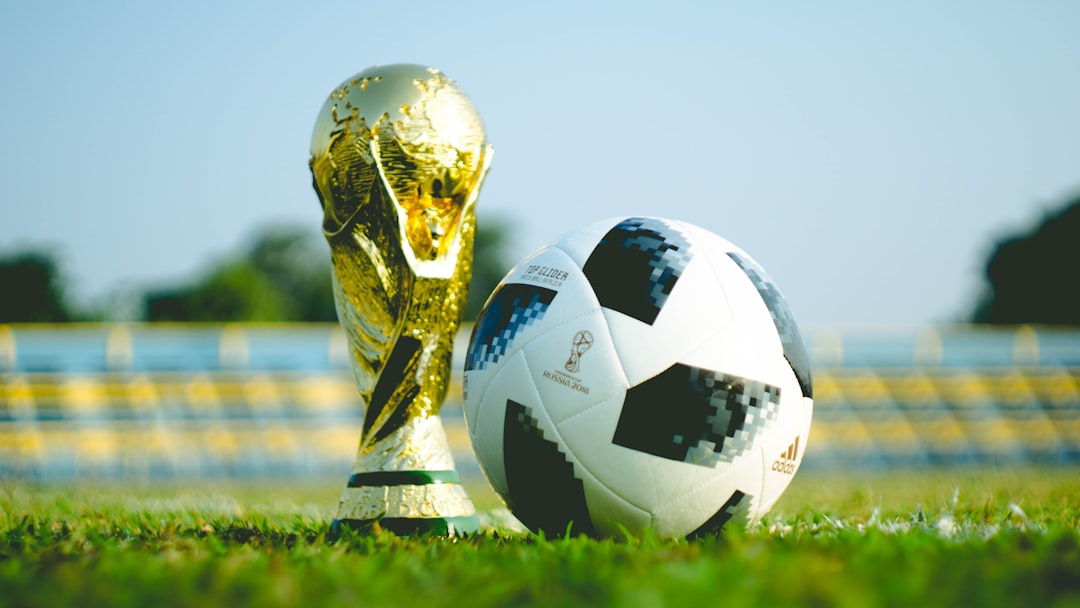
As the world gears up for the 2026 FIFA World Cup, experts from the University of Delaware are available to provide timely insight on the science, business, and human impact behind the global tournament. Player Safety, Concussions and the Future of the Game Tom Kaminski, professor of kinesiology and applied physiology, is a leading authority on player safety and head injuries. As the sole U.S. representative on FIFA’s Heading Expert Group, Kaminski is helping shape international guidelines around heading in soccer—particularly for youth athletes. He can speak to concussion risks, prevention strategies, and how evolving safety standards are influencing the modern game. Joining him is Tom Buckley, who also specializes in concussion research and athlete health, offering additional perspective on injury trends and recovery in elite competition. The Business of the World Cup: Tourism and Global Impact Matt Robinson from UD’s Lerner College of Business and Economics explores how mega-events like the World Cup drive tourism, economic growth, and global connection. Robinson can discuss how host cities benefit, the long-term economic ripple effects, and how sports act as a powerful unifier across cultures. Youth, Development and the Next Generation of Fans Sara Goldstein brings expertise in adolescent development, offering insight into how traditions with family shape youth identity, social development, and engagement with physical activity. Her perspective is especially relevant for younger audiences experiencing the World Cup through schools and community programs, including UD’s Lab School initiatives. Inside the Game: Sports Analytics in Action With the rise of data-driven performance, UD’s new Sports Performance Analytics major is preparing students to analyze gameplay at the highest level. Martin Heintzelman, department chair, can connect media with program leaders and practitioners including Jack Davis and Christina Rasnake, who are helping students apply real-time analytics to global competitions like the World Cup. The Science Beneath the Game: Playing Surfaces World Cup matches are required to be played on natural grass—a costly and complex requirement, especially for indoor stadiums. Erik Ervin can discuss how turfgrass systems have evolved, the science behind maintaining elite playing surfaces, and the massive investment required to meet international standards. Why Watching Together Matters Amit Kumar studies the psychology of happiness and shared experiences. He can speak to why gathering to watch World Cup matches—whether in stadiums, bars, or living rooms—boosts well-being and strengthens social bonds, making the tournament as meaningful off the field as it is on it. Connect with UD experts to explore every angle of the 2026 World Cup – from the pitch to the people. Email mediarelations@udel.edu to connect with these experts. 

Matthew RobinsonTom KaminskiAmit Kumar

2 min

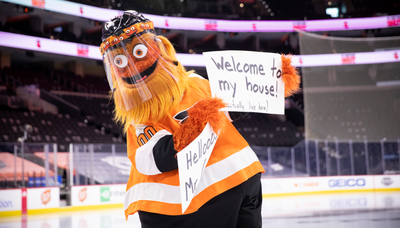
How did Gritty, the fluffy, orange, menacing whatchamacallit that backs the Philadelphia Flyers, go from a punchline when he was rolled out in 2018 to one of sports' most well-known and beloved mascots? The University of Delaware's Matt Robinson took a shot, and scored, with some answers. Robinson, a professor of sport management at UD's Lerner College of Business & Economics, said Gritty embodies the tough attitude that Philadelphia is known for. Also, some of his bizarre features and personality traits go straight to the heart of the demeanor and history of the Flyers, who are currently battling their way through the NHL playoffs. Those are among the ingredients that go into marketing and launching a successful mascot.  Robinson can discuss the following: Why some mascots take off and others flop. After his launch, Gritty was ridiculed as a concept on late night TV and "Saturday Night Live." But he was still garnering billions of views on social media and millions in earned media for the franchise. The Flyers kept pushing the concept despite its early unpopularity, which led to his eventual success. "Any public relations is good public relations," Robinson said. Mascots need to be authentic. Gritty embodies the team he represents and the city that team plays in. Robinson noted Philadelphia's "grit" and love of players who play hard, like the Broad Street Bullies – the nasty group of Flyers' players who led the team to two Stanley Cup wins in the 1970s.  The best mascots transcend sports. Robinson pointed to the film and character "Rocky," whose statue sits in the front of the city's Art Museum, as well as the city's reputation as one with a bit of an edge. "We're the ones who threw snowballs at Santa Claus," Robinson said, referring to the infamous 1968 incident when Philadelphia Eagles fans pelted Kris Kringle from the stands. Players and coaches come and go, but the mascot stays the same. Mascots can be part of ticket sales and community engagement in the offseason, when players may not be in the city or moving to another via free agency. Mascots offer an attachment point for fans that is not sport related. Kids respond to mascots and, from there, connection with the team, players and the sport can grow. To contact Robinson directly for an interview, visit his profile and click on the "contact" button. Interested reporters can also email MediaRelations@udel.edu.

Matthew Robinson

2 min

University of Delaware students, alumni and experts are very involved with this year's Olympics. The following are available for interview.  Alumni Attending Olympic Games  Shannon Colleton is a 2022 graduate of UD's Physical Therapy Sports Residency Program heading to the Winter Olympics with the U.S. Ski and Snowboard Team. She's specifically working as a PT for the women's speed skiing team (Super G and the downhill competitions). Students Covering Olympics Cris Granada, a senior communication major and member of UD's soccer team, has parlayed a summer internship with NBC Sports into a position as a production assistant with the network at the Winter Olympics. Professors with Olympic Expertise Matthew Robinson, professor of sport management in Lerner, is an all-around Olympics expert. He can talk about the host city, Milan, and the IOC's evolving model of hosting games in multiple locations. He can also talk about the idea of sport as a unifier despite what's going on in the world around us. Robinson can also talk about the burden the NHL faces, having to pause its season so players can compete on the world stage. While it's an honor to have an athlete represent their country on the world stage, it's also a risk to the professional team if they get hurt. The NBA feels similarly about the Summer Games. Soccer also pauses for the World Cup. Jeffrey Schneider, clinical instructor of kinesiology and applied physiology, has worked with Olympic figure skaters in the past and can speak as an expert on this sport. Thomas Buckley, professor of kinesiology and applied physiology, is an expert in ice hockey and bobsledding. He can talk about common injuries, risks/benefits. He noted that bobsledding has a surprisingly high rate of concussion and repetitive head trauma due to the speed of the sport. To contact Robinson and Buckley directly, visit their profile pages and click the "contact" button. Interviews for all the experts featured here can also be arranged by contacting mediarelations@udel.edu.

Matthew RobinsonThomas A. Buckley

Media

Social

Biography

Dr. Matthew J. Robinson serves as Director for Community Engagement at the University of Delaware. Dr. Robinson has been at the University since 2001 and is a full professor in the Sport Management Program in the Lerner College of Business and Economics. Dr. Robinson is the author of the highly successful sport management texts: Profiles of Sport Industry Professionals: The People Who Make the Games Happen and Sport Club Management and has authored over 25 articles and has made over 100 national and international scholarly and professional presentations. In 2020, Robinson was named to the President’s Council on Sport, Fitness, Sports and Nutrition Science Board for The United States of America Department of Health and Human Services and also served as the President of the University of Delaware Faculty Senate.

Prior to this appointment, Dr. Robinson served as interim Director of Athletics and Recreation for the University of Delaware during the 2016 Spring Semester. Robinson oversaw a $29 million budget, over 600 student athletes and 200 staff members. Under Robinson’s leadership two teams earned CAA conference titles, and the Women’s Field Hockey Team won the NCAA Championship the semester after he completed his interim duties.

In 2008, Robinson in partnership with the (USOPC), and the International Olympic Committee’s (IOC) Olympic Solidarity Fund created the International Coaching Enrichment Certificate Program (ICECP).www.udel.edu/ICECP. In 2013 again in partnership with the USOPC and the IOC’s, Olympic Solidarity Fund along with the Federation Internationale Basketball Association (FIBA) Robinson launched the International Coaching Apprenticeship in Basketball. Through the two programs, Dr. Robinson has worked with over 400 international coaches from 125 countries in 24 different sports and has personally oversaw the implementation of over 40 sport development projects in selected countries.

Industry Expertise

Sport - Professional
Writing and Editing
Education/Learning
Research

Areas of Expertise

Coaching
Sports as a Diplomatic Tool
International Sports Governance
U.S. Sports Model
Olympics

Media Appearances

Was Gary Bettman right to quit the Olympics?

CBC News Network  online

2017-04-08

Gary Bettman has always seemed comfortable playing the role of the villain. Every few years, the NHL commissioner is blamed by hockey diehards for "hurting the game," and yet he remains willing to put on the black hat. That's the case once again after the NHL's announcement that it plans to sit out the 2018 Olympics.

View More

The price of Russia’s absence from the 2018 Winter Olympics

Al Jazeera  online

2018-03-09

In a gritty commercial area in Seoul’s Dongdaemun District in the city’s northeast, there’s a cluster of streets where the signboards are more likely to be in Cyrillic than Korea’s Hangul script. Beside all the restaurants are the businesses that cater to Russians and Central Asians from the former USSR.

View More

Column: What if they had an Olympics, but no one would host?

USA Today  online

2018-10-12

What if they threw an Olympic party, but no one was willing to host it? That day could be coming, and sooner than you might think. With news Friday that Stockholm is likely to pull out of the race for the 2026 Winter Games — just days after it was approved as a candidate city by the International Olympic Committee — there is an ever-increasing chance that no one will be left to hear its name called by the time the final decision is made next year.

View More

Articles

Exploring the challenges facing female athletes as endorsers

Journal of Brand Strategy

2012

The purpose of this exploratory study was to investigate some of the potential reasons why female athletes, despite increases in female sport participation, are less commonly used as endorsers than male athletes. Using a combination of McCracken's meaning transfer model and three dimensions of source attractiveness, familiarity, likability and similarity, preliminary results indicate that female consumers find female athletes to be less effective endorsers due to low familiarity and because they are low in similarity and liking.

View more

The Impact of the Olympics on the High Performance Legacy of a Host Country

Routledge Handbook of Sport and Legacy

2015

There is sufficient evidence that the Olympic Games are the preeminent international sporting event in the world. For example, the 2008 Olympics in Beijing had 4.7 billion television viewers globally, 70 per cent of the world’s population; the 2004 Games had 3.9 billion viewers; while Sydney in 2000 had 3.6 billion. The 2012 London Olympics ranked as the most viewed television event ever in the United Sates with a total audience of 211 million, or an average daily audience of 27 million people.

View more

An examination of Oliver’s product loyalty framework

International Journal of Sports Marketing and Sponsorship

2016

The purpose of this paper is to test Oliver’s two-dimension (fortitude and community/social support) product loyalty framework.

View more

Accomplishments

University of Delaware Faculty Senate Award for Exemplary Service

2008

The Leon and Margaret Slocomb Professional Excellence Award

2016

The Joseph R. Bailor Award

2016

Education

York College of Pennsylvania

BA

Communications & English Education

1986

Western Maryland College

MS

Educational Administration

1991

Temple University

EdD

Athletic Administration

1995

Affiliations

  • Delaware Sport Commission : Chairman
  • Slam Dunk to the Beach/Hoophall East High School Boys Basketball Tournament : Chairman