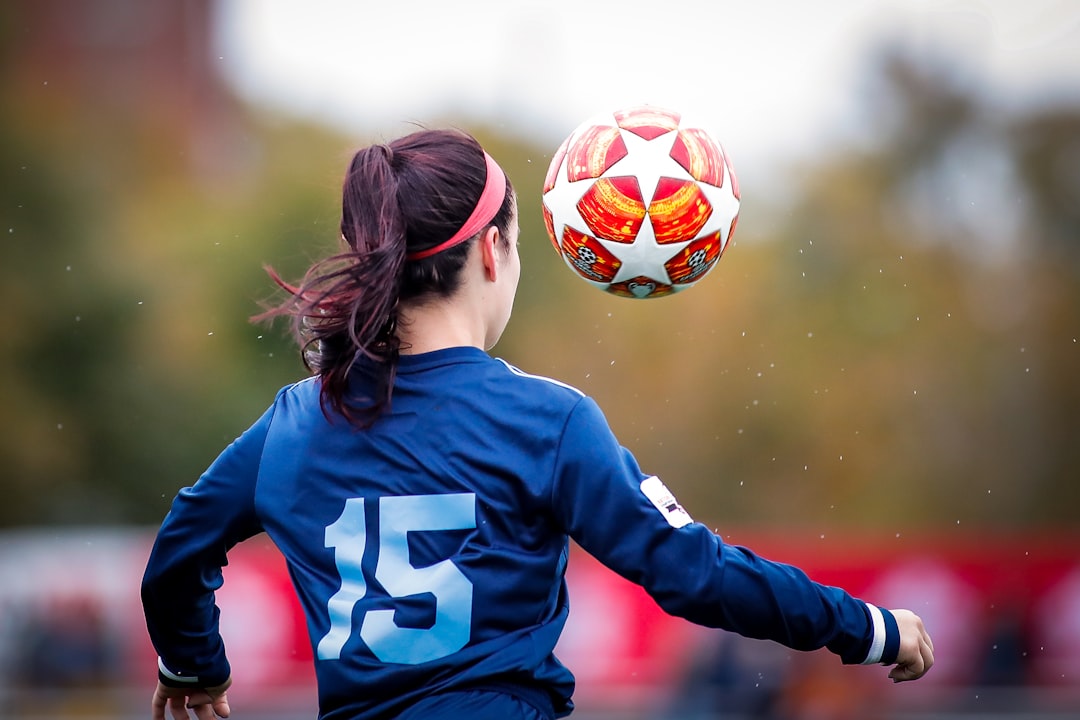
As the 2026 FIFA World Cup captures attention across North America and around the world, University of Delaware experts are available to help media examine the larger stories connected to the tournament, from player safety and youth soccer to tourism, sports analytics, playing surfaces and the shared experience of watching the game.
University of Delaware's World Cup Experts Hub brings together faculty and specialists who can provide timely commentary on the health, business, social and scientific issues shaping one of the world’s most watched sporting events.
Featured Topics The Business of Youth Soccer Youth sports participation, community impact, the business of soccer and how a major global tournament can influence local programs, families and the next generation of players. Player Safety and Concussions Head injuries, concussion prevention, heading guidelines, athlete health and how evolving safety standards are changing the way soccer is played and taught. Tourism and Global Impact How mega-events drive tourism, economic activity, host-city visibility and broader cultural connection across countries, communities and fans. Youth Development and Fan Engagement How family traditions, school programs and shared sports experiences shape youth identity, social development and interest in physical activity. Sports Analytics in Action The rise of data-driven performance, real-time game analysis and how students and practitioners are applying analytics to elite global competition. The Science of Playing Surfaces Natural grass requirements, turfgrass systems, stadium preparation and the science behind maintaining world-class fields for international play. Why Watching Together Matters The psychology of shared experiences, happiness, social connection and why gathering for World Cup matches can be meaningful far beyond the final score. Media can visit the University of Delaware’s World Cup Experts Hub to explore available experts and connect directly with the right source for their story.
·
1 min
University of Delaware professor Tom Kaminski leads FIFA’s research on header safety and avoiding concussions. NBC10 Delaware Bureau reporter Tim Furlong tells us more about his findings.
·
1 min
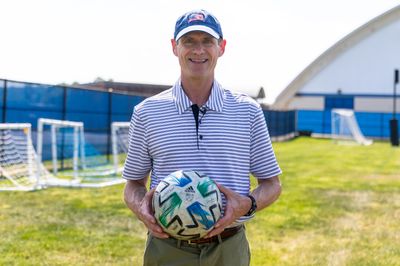
With a focus on concussion research, the University of Delaware's Thomas Kaminski serves as the sole U.S. representative on the FIFA Heading Expert Group, putting UD on the world soccer stage. Kaminski's contributions to the sport earned him a place in the National Athletic Trainers’ Association Hall of Fame.
Kaminski, professor of kinesiology and applied physiology at UD's College of Health Sciences, has studied heading in soccer and concussion risk for nearly three decades. It's just one of the many topics he can discuss in relation to the upcoming World Cup:
Concussion risks, prevention strategies and sports-related mild traumatic brain injuries.
Ankle instability and how evolving safety standards are influencing the modern game.
Purposeful headers in interscholastic and intercollegiate soccer.
Kaminski will be inducted into the National Athletic Trainers’ Association (NATA) Hall of Fame at the 77th NATA Clinical Symposia & AT Expo on June 30, 2026, in Philadelphia. The award represents the profession’s highest honor and honors members who have dedicated their lives to service and left a lasting impact on the profession.
“I’m honored and humbled to join such a distinguished group of athletic training pioneers – people who have shaped and pushed the profession forward to where it is today,” Kaminski said.
To reach Kaminski directly and arrange an interview, visit his ExpertFile profile and click on the "connect" button. Interested members of the media can also email mediarelations@udel.edu.
Media
Social
Biography
Tom Kaminski is a leading expert on issues related to purposeful headers in interscholastic and intercollegiate soccer. His research interests include concussions, sports-related mild traumatic brain injuries and ankle instability. He co-directs the Athletic Training Research Laboratory at UD's Human Performance Laboratory and is part of a team working on the landmark NCAA/Department of Defense project examining the history of concussions in intercollegiate sports.
Industry Expertise
Health and Wellness
Sport - Professional
Areas of Expertise
Chronic Ankle Instability
Repetitive Head Impacts
Recovery Assessment
Answers
"From a sports medicine perspective the unfortunate injury to the lower leg of US National Team star Christian Pulisic played a part in the USA downfall. He is a dominating force on the field, and he was certainly not at100% during the World Cup. Secondarily I believe that they fell victim to a bit of "over-confidence" with the hype of playing in the USA along with the media attention calling their feat extraordinary gave them a false sense that they could step on the field and dominate. Well, the Belgians proved them wrong! I'm sure that the national team sport psychology staff is 2nd guessing whatever it did to help the players prepare mentally for the contest!"
"Management of expectations, as a soccer country we are evolving and playing catch up. We have come a long way, the Belgium game showed us how far we still need to go. The world is getting better at the game because of globalization. Look, Brazil, where football is not a sport but a religion, was on the same bus as the US leaving the tournament. See how the African nations have improved for their best players are playing overseas. We too are benefitting. The majority of the players on the field who are elite international players. Seventeen players on the roster play in European Leagues. Sixteen years ago, we may have only two or three. But other countries, for example have elite players on the bench and not making the team. It is a shame that we did not advance beyond final 16, it is disappointing but don’t let us ignore the growth of the game in our professional league, the number of our players being identified to play overseas and the quality of international players coming to the US to play in MLS. This is evolution and not revolution.Note that soccer is drawing athletes way from traditional American sports as basketball and American Football, we continue to be much more athletic, but again we are still not there.We are still evolving. Compare it to the countries who are trying to catch the US in international basketball. WE had such a head start, but countries are coming by seeing the competitiveness in the Olympic games and World Championships, the number of internationals playing in the NBA. Basketball got its kickstart internationally with the 1992 Dream Team in Barcelona games, that led to the growth of the game. US has come far but we are not there. Were we all hoping to keep the dream alive while we are hosts, yes, but let this be the next step so that the next time we host, potentially in 20 years, we should expect to win and not just advance to round of 16 or 8."
"One: At the elite level, especially in knockout matches, teams that minimize mistakes can realistically upset stronger or higher-ranked opponents. The US, however, began the match cautiously and committed several costly errors that Belgium quickly exploited. One underlying issue is stylistic: the U.S. is less accustomed to playing a compact, defense-first approach and waiting for counter attacking opportunities, as teams like Paraguay, Iran, or Cape Verde often do against superior opposition. Those teams limit space, frustrate attacking sides, and capitalize selectively--indeed, both Iran and Egypt managed draws against Belgium using that approach. By contrast, the U.S. prefers an aggressive, high-pressing style, which, if not executed with precision, can leave significant space for opponents to exploit. That vulnerability was evident, particularly in Matt Freese’s critical error when he came off his line but failed to clear the ball, leading to an open-goal score. Moments like that can deflate a team just as it begins to build momentum, as the U.S. had early in the second half. I also don't think it is all that surprising that the US excelled against more defensively-minded opponents (Paraguay, Australia, and Bosnia) but in two matches where the opponents were offensively very sound and can control the tempo of the match (Turkey and Belgium), they lost and conceded 7 goals in just two matches. So playing styles are important, and against superior teams that have lots of offensive firepower and can control possession, the US has to learn how to play defensively and limit space to such opponents.Two: While there have been meaningful investments and improvements in U.S. youth soccer, the system remains largely cost-prohibitive and inaccessible to many families. From first hand observation, the financial burden on parents—often paid quarterly or annually—is substantial. Unless this structural barrier is addressed, it is difficult to see how the United States can consistently develop the depth of talent needed to become a legitimate World Cup contender."
Media Appearances
Soccer, concussions and women | UDaily
University of Delaware online
2021-12-14
Kaminski, a leading expert with decades of experience in research in this specialized area, was invited to speak at the conference in a discussion entitled, "Medical and Scientific Challenges in Women's Football."
“I’m humbled by the opportunity,” said Kaminski. “Because Manchester United, arguably, is the most popular brand of soccer in the world in terms of professional league...it’s top shelf stuff.”
Guests: Jamie Salter - High Performance Pathway Manager, Swimming Australia William, Charlie, Leo, Luke - Under 8 soccer players Thomas Kaminski - Director of Athletic Training Education, University of Delaware
Avoiding the “Bobblehead Effect”: Strength Training Could Help Soccer Players
Scientific American online
2018-06-29
Upper-body strength could even mitigate a major health concern among soccer players: brain injury from repeated headers, according to Thomas Kaminski, director of the Athletic Training Education Program at the University of Delaware. Kaminski’s own research investigates ways to reduce soccer’s adverse effects on the brain.
Soccer Headers Cause More Brain Damage in Female Players
Scientific American online
2018-10-01
Thomas Kaminski, a sports physiologist at the University of Delaware, who was not involved in the work, calls it “truly groundbreaking.” The research is unique in highlighting the cumulative effect of repetitive knocks on the skull, as opposed to major traumatic injuries, he says. “Very few of these subjects had a history of concussion.”
Optimizing concussion care seeking: a longitudinal analysis of recovery
The American Journal of Sports Medicine
2023
Background: Approximately half of concussions go undisclosed and therefore undiagnosed. Among diagnosed concussions, 51% to 64% receive delayed medical care. Understanding the influence of undiagnosed concussions and delayed medical care would inform medical and education practices. Purpose: To compare postconcussion longitudinal clinical outcomes among (1) individuals with no concussion history, all previous concussions diagnosed, and ≥1 previous concussion undiagnosed, as well as (2) those who have delayed versus immediate symptom onset, symptom reporting, and removal from activity after concussion.
King-Devick sensitivity and specificity to concussion in collegiate athletes
Journal of Athletic Training
2023
Context The King-Devick (K-D) test is used to identify oculomotor impairment after concussion. However, the diagnostic accuracy of the K-D test over time has not been evaluated. Objectives To (1) examine the sensitivity and specificity of the K-D test at 0 to 6 hours postinjury, 24 to 48 hours postinjury, the beginning of a return-to-play (RTP) protocol (asymptomatic), unrestricted RTP, and 6 months postconcussion and (2) compare outcomes between athletes with and those without concussion across confounding factors (sex, age, sport contact level, academic year, learning disorder, attention-deficit/hyperactivity disorder, migraine history, concussion history, and test administration mode).
Sensitivity and Specificity of the ImPACT Neurocognitive Test in Collegiate Athletes and US Military Service Academy Cadets with ADHD and/or LD: Findings from the NCAA-DoD CARE Consortium
Sports Medicine
2023
Background and Objective Computer-based neurocognitive tests are widely used in sport-related concussion management, but the performance of these tests is not well understood in the participant population with attention-deficit/hyperactivity disorder (ADHD) and/or learning disorder (LD). This research estimates the sensitivity and specificity performance of the Immediate Post-Concussion Assessment and Cognitive Testing (ImPACT) computer-based neurocognitive test in identifying concussion in this population.
Similar Concussion Rates in Spring Football and Preseason: Findings From the Concussion Assessment, Research and Education Consortium
Journal of Athletic Training
2023
Context Increasing attention has been directed toward identifying aspects of football participation for targeted policy change that reduces the concussion risk. Prior researchers evaluated concussion risks during the preseason and regular seasons, leaving the spring season largely unexplored. Design In this nationally representative observational investigation of 19 National Collegiate Athletic Association Division I collegiate football programs, we assessed concussion rates and head impact exposures during the preseason, regular season, and spring practices from 2014 to 2019. All participating programs recorded the incidence of concussions, and a subset (n = 6) also measured head impact exposures.
Incidence of Concussion and Associated Risk Factors in Collegiate Soccer: Findings from the NCAA-DoD CARE Consortium
Science and Medicine in Football
2023
This retrospective cohort study aims to examine concussion incidence rates (IR) in collegiate soccer players and compare IRs based on risk factors including sex, competition level, games/practices, history of concussion, and playing position. Collegiate soccer players were recruited (n = 2,471) from 23 institutions from the NCAA-DoD Concussion Assessment, Research, and Education (CARE) Consortium. Incidence rates for concussion per 1000 athlete exposures (AEs) were calculated across the 2015-16/2016-17 seasons. Incidence rates (IR) comparing risk factor groups were also calculated. A total 162 concussions occurred during the study, for an IR of 0.08/1000 AEs. Females were more likely to have a concussion than males overall (IR = 1.47), and were more likely to have a concussion in games (IR = 1.42) and practices (IR = 2.91).
“Principles of Rehabilitation with Lab” & “Foot and Ankle Injuries” & “Foundations Lab – Sport-Related Concussion Assessment Tests”
(2022) SEATA (Southeast Athletic Trainers Association) Athletic Training Student Symposium
"Athlete Recovery: Foundational Knowledge for the Athletic Trainer"
(2022) RMATA Clinical Symposium and Business Meeting Albuquerque, New Mexico
"De-ICED”: Weaning Athletic Trainers off Their Dependency on Rest-Ice-Compression 2022 and Beyond!
(2022) NATA 73rd Annual Meeting and Clinical Symposia Philadelphia, PA
Sagittal Plane Energy Absorption during Side Hops among Individual with Anterior Cruciate Ligament Deficit
(2022) 9th World Congress of Biomechanics Taipei, Taiwan
Electropuncture for the treatment of chronic ankle instability
(2022) 9th International Ankle Symposium Virtual
Patents
Materials and methods for enhancing muscle performance and recovery from fatigue
US6100287A
2000
The subject invention pertains to compositions and methods for enhancing muscle performance and recovery from fatigue in humans and animals. In a specific embodiment, the unique formulation is a glycine and L-arginine monohydrochloride salt of alphaketoisocaproic acid calcium (GAKIC).