You might also like...
Check out some other posts from University of Delaware
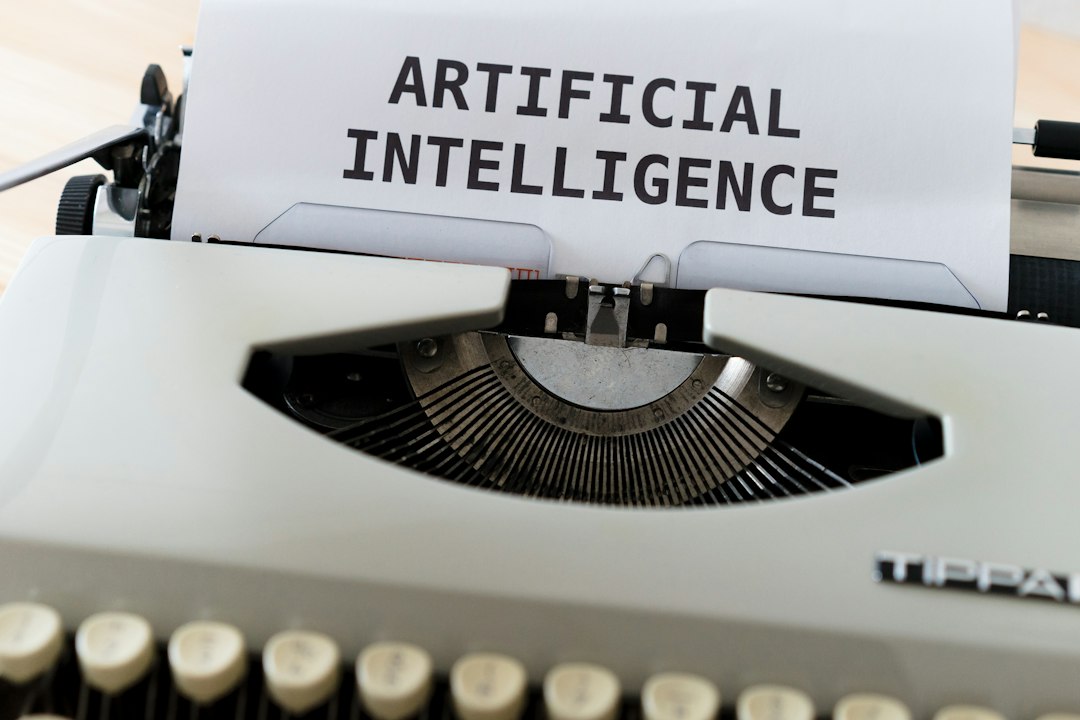
During a snowstorm last winter, University of Delaware philosophy professor Thomas Powers fixed his own thermostat by typing the error codes into ChatGPT and following the instructions it provided. As he discovered on that cold, snowy night, AI can make DIY projects that much easier, potentially saving time and money.
Ever the philosopher, Powers wondered about the ethics of his solution: What is the impact of taking the repair job away from someone who relies on the work? What about the risk of being wrong? Is the environmental impact of using AI worth the result?
After 20 years in the Department of Philosophy and as director of the Center for Science, Ethics and Public Policy, Powers is uniquely suited to explore questions about the ethics of AI.
What does “ethical AI” mean? POWERS: We want AI systems that are helpful and useful, but also safe. We want systems that don’t produce biased or dangerous results. One approach to achieve that, which I’m hopeful about, is to create systems that are “safe by design” or “ethical by design.” In other words, instead of relying entirely on outside regulation to prevent harmful behavior, we try to design the systems themselves so that they behave in ways we consider ethical.
Is it possible to make an AI system truly “safe by design” if it eventually becomes capable of acting in ways its creators didn’t anticipate? POWERS: There is a big difference between most technologies and AI. With the latter, especially current large language models (LLMs), it appears that there is some unpredictability in their behaviors. Thus, their apparent autonomy complicates the "safe by design" motto. AI autonomy introduces the need for "guardrails" that constrain what AIs can do. But even this may not be possible.
Why are AI companies hiring philosophers, and what does this mean for the field of philosophy? POWERS: Some of the hardest questions in AI aren’t purely technical questions. To build systems that are safe, fair or aligned with human values, you first have to decide what those concepts actually mean and how they can be translated into something a computer system can use. The challenge is to educate people who can move between those worlds — who understand the technology but can also ask the deeper questions about what we should want that technology to do.
How has AI changed philosophy? POWERS: Philosophers have long discussed the philosophy of action with the concept of agency. For decades we assumed that an agent must be human — someone who acts on their own behalf, or on the behalf of another person, with some kind of plan or attitude.
This concept transfers to discussions about AI, and whether it can be considered an agent and be responsible for its actions.
The next step is to ask harder questions: Are autonomous AI agents responsible, in some sense, for what they do, and does this suggest or imply that they are conscious?
I don’t think AI will become conscious any time soon, but I don’t think it is impossible, and other philosophers and scientists are broaching the question.
To speak with Powers further about the philosophy of AI, reach out mediarelations@udel.edu. ABOUT THOMAS POWERS Thomas M. Powers, Ph.D., is an associate professor in the Department of Philosophy at the University of Delaware. He is also the director of the Center for Science, Ethics & Public Policy at UD.
Powers' current research focuses on the ethics of information technology and the philosophy of technology. He contributes to scholarship on rule-based conceptions of machine ethics, computer agency, the ethics of artificial intelligence, and other philosophical issues involving emerging technologies, including human-robot interaction.

On an August morning last year, an American couple soon to embark on a European river cruise awoke in a luxury hotel in Lisbon.
Staring back at them from the headboard was a bloodsucking insect. It wasn’t a mosquito. It wasn’t a bedbug.They wondered: Could it have bitten them while they slept?
They’d later learn the culprit was an adult female kissing bug.
More than half of all kissing bugs travel with an accomplice — a parasite called Trypanosoma cruzi. The parasite causes Chagas disease which can lead to serious heart problems. T. cruzi is transmitted through the insect’s feces rather than its bite.
But how did this particular species of kissing bug, native to the southwestern U.S. and northwestern Mexico for its dry, desert-like climate, get to Portugal?
That question became the centerpiece of a scientific investigation led by University of Delaware assistant professor and medical entomologist Jennifer K. Peterson and her team of Blue Hen sleuths. Their findings were recently published in the journal Parasites and Vectors. A bug’s life When the couple returned to their East Coast home, they brought the now-dead specimen with them in a jewelry box. They reached out to Peterson for identification.
“When they first contacted me, I was super skeptical,” Peterson said. “My first response was, ‘Is there a Lisbon, Delaware? Because they can’t be referring to Lisbon, Portugal.’”
Peterson and colleagues identified the insect as a species of kissing bug, Hospesneotomae protracta, native to the southwestern U.S. and northwestern Mexico.
The insect traveled a 5,000-mile transatlantic journey. Could it have stowed away aboard a cargo shipment? Did it hitchhike in somebody’s suitcase and take an international flight?
No one knows how it got to Portugal.
Portugal imports hundreds of millions of dollars in U.S. agricultural products each year, and more than 2 million American tourists visit the country annually. Any number of pathways could explain its remarkable journey.
“This case demonstrates they are hardy enough to survive that journey and then continue on to do what they biologically do, which is, basically, eating,” Peterson said.
Six weeks after the incident, the American couple was tested for T. cruzi antibodies, which would indicate exposure to the parasite.
The results showed the couple was not infected; their worries were over. But for medical entomologists like Peterson, the case was far from over.
Medical entomologists in training Rather than simply presenting the case to her students, Peterson turned it into a collaborative class research project.
She gave her class the basic facts and challenged students to investigate the insect’s
biology, identify other hitchhiking cases and explore how the kissing bug might have reached Europe. She then combined the strongest elements of their work into one research paper.
“Writing, peer review and publishing are such a huge part of being a researcher,” Peterson said. “As university academics, it’s our bread and butter. I wanted students to experience that process from beginning to end.”
To Hunt Kinnaird, a UD Class of 2025 environmental science graduate and current master’s entomology student in Peterson’s lab, the case was a great experience in “digital detective work.”
“Our job was to explain why this matters and investigate how the kissing bug could have traveled so far,” Kinnaird said. “I looked at global trade. It’s fascinating that either international commerce or human travel can move an insect thousands of miles beyond its natural range.”
Increasing awareness The Lisbon case illustrates how easily this insect (and others) can travel across the globe.
Peterson said when any insect that can transmit pathogens or parasites journeys outside of its usual range, there can be medical consequences. Especially if the insect is able to lay eggs and start an infestation. In the case of the adventurous kissing bug, it was not carrying the parasite that causes Chagas disease.
The next one might.
“This particular kissing bug was not infected with T. cruzi, but others could be,” Peterson said. “What we don’t want is to see kissing bug populations in places where they aren’t. Because once that takes off, they’re really tough to eliminate.”
She hopes customs officials, border patrol agents and others who monitor for agricultural pests will become more familiar with kissing bugs.
To speak with Peterson more about this extraordinary discovery, email mediarelations@udel.edu.

Inspired by her middle school social studies teacher, University of Delaware Associate Professor Stephanie Smith Budhai has always believed that a classroom should be a space where students feel valued and nurtured. As a seasoned educator, she has helped teachers create these spaces using technology to support students in meeting learning outcomes, developing their skills and growing their confidence.
Now, Budhai is mentoring overwhelmed teachers to reclaim the classroom as a nurturing environment for all students. Her book, "Critical AI in K-12 Classrooms: A Practical Guide for Cultivating Justice and Joy" with co-author Marie Heath of Loyola University Maryland, supports teachers and students as they navigate the complicated interactions of AI, education and justice.
Budhai answered pressing questions about the already popular book.
How would you describe the central message or takeaway of this book? "I believe that classrooms should be joyous spaces where all students feel heard, valued, seen and loved. Dealing with powerful technologies that exacerbates the biases and harms of society such as AI can impact teachers’ ability to nurture such spaces. Thus, this book was written to provide a practical guide for teachers and students as they navigate the complicated interactions of AI, education and justice. It is our duty as educators not to dismiss the technology altogether, but to help teachers take a critical lens, as they use AI for teaching and learning."
What inspired you to pursue this line of research? "Before writing this book, I had already published 8 books and over 80 practitioner articles around technology, equity, teacher education and leadership. There had been other books that were quickly published about AI, but none focused on the harms of AI, how teachers could come to understand how AI really works and use it in ways that do not harm students."
What are some of the key ways that K-12 teachers can cultivate justice and joy through AI? "In the book, we have many examples of how to cultivate justice and joy. For example, in chapter 3, we provide strategies for teachers to build an equity-mindset while supporting students in developing a critical consciousness around AI technologies, which are inherently biased. In chapters 4 and 5, we provide framing for using culturally-sustaining, abolitionist and fugitive pedagogies in designing curricula and learning activities that include the just use of AI technologies. And, in chapter 6, we provide teachers with myriad personal, professional, pedagogical and participatory actions they can take when using AI for teaching and learning."
How could this work impact schools, teacher education programs and the broader public? "This work was created to support K-12 teachers, and many teachers have already shared how it has impacted them. K-12 teachers can immediately put the strategies and learning activities that we suggest in the book to use. We also situate AI in longer histories of technology injustice and provide accessible content on understanding how AI works through a critical algorithmic literacy perspective. Teacher education programs can use this work as they prepare teachers to navigate the complicated intersections of teaching, AI and justice. For the broader public, we also include content on justice-centered community activities and projects that are focused on critical AI."
About Stephanie Smith Budhai Stephanie Smith Budhai is an associate professor in UD’s College of Education and Human Development, specializing in educational technology. Her interdisciplinary research and practice lies at the intersections of technology, equity and civic engagement, across myriad K-16 settings. She has published 10 books on teaching and digital technologies. Among other professional appointments, she serves as the Chair of the Information Technology Council for the Society for Information Technology and Teacher Education and is on the Board of Directors for the Civics of Technology.
To speak with Smith further about AI in K-12 education, reach out to MediaRelations@udel.edu.